Telehealth is not going to wipe out lifestyle specialties—but it will punish people who plan badly.
Let me just say the quiet part out loud: you’re not crazy to worry that you’ll finish 7+ years of training and then get replaced by an app and a nurse practitioner working from home for half your pay. This isn’t some wild sci‑fi scenario. Pieces of it are already happening.
But the story everyone tells—“AI + telehealth will replace all the ‘easy’ lifestyle docs first”—is way too simplistic. And honestly, it’s scaring people into some terrible decisions.
You’re not trying to become a martyr. You’re trying to become a physician and still have a life. Sleep. Kids. Hobbies that don’t involve charting. You’re asking: if I pick a so‑called “lifestyle specialty” right now, am I basically choosing to be the first one on the chopping block when telehealth and AI finish their hostile takeover?
Let’s walk through this like adults who are slightly panicking but also need a plan.
The Brutal Truth: Which “Lifestyle” Jobs Are Actually Vulnerable?
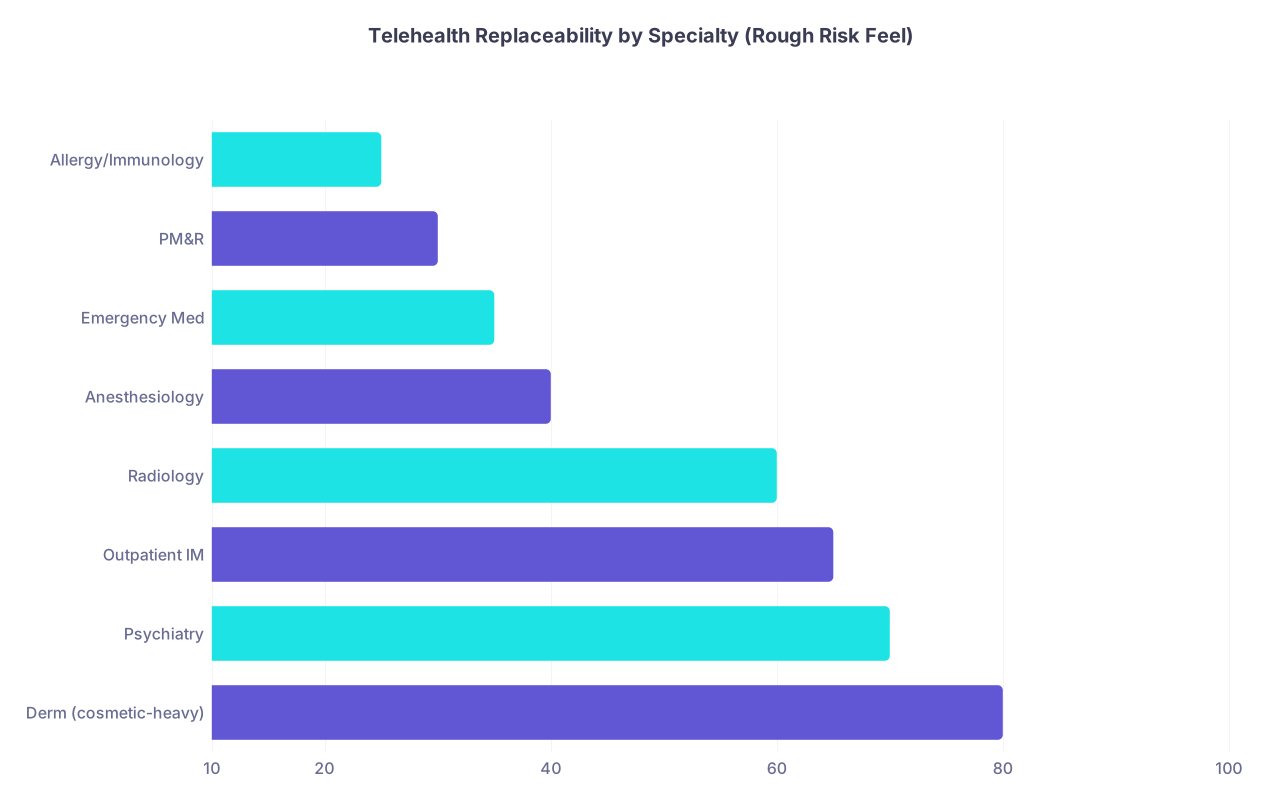
Here’s the part I wish someone had spelled out for me early on: telehealth doesn’t threaten entire specialties equally. It threatens task types across specialties. But some specialties are way more built around those vulnerable tasks than others.
| Category | Value |
|---|---|
| Derm (cosmetic-heavy) | 80 |
| Psychiatry | 70 |
| Outpatient IM | 65 |
| Radiology | 60 |
| Anesthesiology | 40 |
| Emergency Med | 35 |
| PM&R | 30 |
| Allergy/Immunology | 25 |
This is not a perfect model; it’s a “what keeps me up at 2 a.m.” model. But it tracks with what I’ve been seeing.
The high‑risk pattern is pretty simple:
- Repetitive, protocol‑friendly decisions
- Mostly outpatient
- Low procedural component
- Easy to shift to “see 30 patients a day from your laptop” volume mills
That’s why certain corners of family med, outpatient IM, and basic med management psych are already being chopped up and sold to telehealth startups.
The weird part? Some of the supposedly cushy “lifestyle” specialties are actually safer than the grindy ones—if you train and position yourself correctly.
Telehealth vs. Lifestyle: What It Actually Changes Day to Day
Telehealth is not one thing. It’s a different tool in each specialty. The question isn’t “will telehealth replace doctors?” The question is:
“Will telehealth make my skills cheaper, more replaceable, or more in demand?”
Let’s walk specialty by specialty with that lens.
Psychiatry: The Poster Child for Telehealth Anxiety
Psych is where everyone’s nightmare starts:
“Why pay a physician when a PMHNP on Zoom can refill SSRIs for less?”
I’ve watched:
- Big systems replace in‑person med‑management clinics with tele‑NPs + one psychiatrist “supervising” remotely.
- Psych residents get recruitment emails for pure telehealth jobs offering high volume, low control, “work from anywhere” deals that sound great until you realize you’re a prescription machine for 20 patients a day with 15‑minute slots.
But here’s the nuance nobody tells you:
Telehealth supercharges the low‑complexity, med‑management, grind‑style psych.
It does not replace higher‑level psychiatry. In fact, it makes complex, well‑trained psychiatrists more critical.
Safest zones inside psych:
- Complex mood and psychotic disorders
- Academic / consult‑liaison roles (med‑psych interface, transplant, oncology, neurology comanagement)
- Interventional psych (ECT, TMS, ketamine, advanced treatments)
- Forensic psych, pain psych, specialized clinics
Scariest zone:
- High‑volume, 15‑min, “ADHD/anxiety/depression for everyone” tele‑med shops where you’re basically there for DEA and liability. This feels lifestyle‑friendly at first… until you’re terrified you’re one malpractice case away from disaster and entirely replaceable by cheaper labor plus algorithms.
So is psych still a lifestyle specialty that’s “safe”?
Yes—but only if you refuse to build your career on the most commoditized piece of it. Your moat is complexity, procedures, and niches where your judgment actually matters.
Dermatology: Tele‑derm vs Real Derm
Derm gets dragged into this debate constantly. “AI can read rashes. Patients can send photos. Why do we need you?”
Here’s what I’ve actually seen:
- Tele‑derm is very good at: triage, acne follow‑up, simple rashes, med refills.
- Tele‑derm is absolutely not replacing: full‑body skin checks, biopsies, excisions, MOHS, cosmetic procedures.
The risk in derm isn’t “no job.” It’s job quality bifurcating:
- High‑end:
- Procedural, cosmetic, MOHS, complex derm clinics.
- High skill, high reimbursement, hard to automate, patients want you in the room.
- Low‑end:
- High‑volume tele‑derm or basic rashes/acne photos.
- Easy to outsource, easier to staff with NPs/PA + protocol + AI support.
Your lifestyle in derm stays excellent if you lean into procedures and complexity—things a camera and algorithm can’t fully own.
If your dream derm job is “answer photo consults in pajamas all day”… that’s ironically the part most likely to get price‑squeezed.
Radiology: Already Halfway to Digital—and Weirdly Still Strong
Radiology has basically been “telehealth” for years: telerads, overnight reads from a different state, images zipping across the internet.
Everyone loves to say: “AI will read the scans; radiologists are doomed.”
Reality check from what’s happening now:
- AI is very good at:
- Flagging obvious pathology (PE, bleeds)
- Serving as a second reader
- Reducing misses and fatigue
- AI is not good at:
- Integrating clinical context, prior studies, and subtle multi‑system findings
- Deciding what matters and what doesn’t
- Managing the liability and communication with clinicians
| Category | Value |
|---|---|
| Screening Reads | 80 |
| Complex Cases | 30 |
| Procedures | 10 |
| Clinical Communication | 20 |
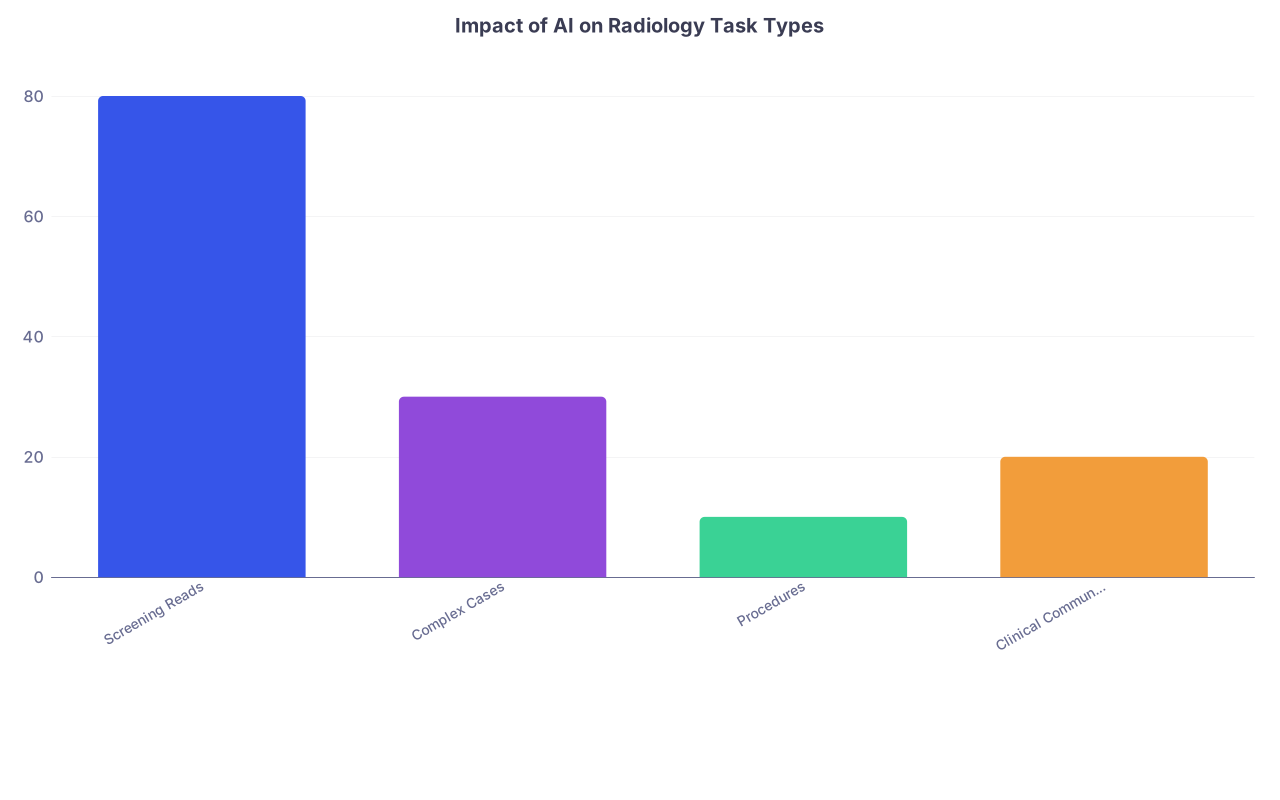
(Think of those percentages as “how much AI can realistically automate soon.”)
Telehealth in radiology is already normalized. It’s not the new threat; it’s the current state. The bigger threat is:
- Low‑complexity reads becoming ultra‑commoditized, race‑to‑the‑bottom contracts.
- Click‑for‑pennies telerad jobs with soul‑crushing volume.
How do you keep both lifestyle and some job security?
- Strong subspecialty training (neurorads, IR, body, etc.).
- Being the person clinicians call because your judgment is trusted, not just your ability to open images.
- Roles that mix imaging with procedures (IR, pain, biopsies, drains).
Radiology is still lifestyle‑friendly: flexible schedules, remote options, good pay. But you can’t pretend all rads jobs are equal. The safest ones lean into being more than “the report printer.”
Anesthesiology: Telehealth Can’t Intubate
Here’s one where the anxiety is usually overblown.
Telehealth can:
- Do pre‑op evaluations remotely.
- Assist with protocols and decision support.
- Help standardize peri‑op medicine.
Telehealth cannot:
- Intubate someone in a crashing airway through a screen.
- Adjust anesthesia in real‑time during a complicated case.
- Manage intra‑op disasters.
The slightly uncomfortable reality is this: your main competition isn’t telehealth. It’s CRNAs and AAs plus expanding supervision ratios.
Lifestyle here varies wildly, but in terms of being replaced by screens? Low risk. If you’re okay being in ORs and procedural spaces, anesthesiology remains a good balance of skill‑dependent, non‑telehealth‑replaceable work with relatively predictable patterns once you’re out of training.
Emergency Medicine & Urgent Care: The Tele‑Triage Problem
Emergency med has its own existential crisis (too many residency spots, corporate groups, contract volatility), but the telehealth part is… mixed.
Telehealth is creeping into:
- Low‑acuity “ER at home” services
- Virtual urgent care / triage (is this chest pain or just reflux?)
- Follow‑up visits for minor issues

| Step | Description |
|---|---|
| Step 1 | Patient with Symptoms |
| Step 2 | ED In Person |
| Step 3 | Tele Urgent Care |
| Step 4 | In Person Clinic or ED |
| Step 5 | Managed by Telehealth |
| Step 6 | Severe or unstable |
| Step 7 | Needs Exam or Imaging |
Telehealth can siphon off the lowest acuity stuff—the exact “easy” cases that sometimes make shift work more tolerable. But the real emergencies? They still need an ED, trauma bays, procedures, someone physically there doing the thing.
Lifestyle‑wise, EM is complicated because of nights, weekends, burnout, market oversupply. But telehealth alone is not the main existential threat to your job. It just peels off some of the gravy work.
Urgent care is more exposed: tele‑urgent‑care + in‑person NP clinics can eat a lot of that space. If your dream lifestyle is “chill urgent care only,” you need to be aware that this is exactly where telehealth companies are swarming.
PM&R, Allergy/Immunology, and Other “Quiet” Lifestyle Fields
These are the ones people whisper about in hallways:
“Allergy’s so chill.”
“PM&R has great hours.”
And then the follow‑up: “Won’t telehealth just replace them?”
Reality is a bit different.
PM&R (Physiatry)
Telehealth helps with:
- Follow‑ups, med management, patient education, pain contracts.
But PM&R still has:
- In‑person exams.
- Injections, EMGs, interventional pain, spasticity procedures.
- Inpatient rehab leadership roles.
The stuff that makes PM&R interesting and well‑compensated is heavily in‑person and procedure‑driven. Telehealth can support it; it doesn’t erase it.
Allergy/Immunology
Telehealth is decent for:
- History, med refills, symptom follow‑ups.
But allergy still depends on:
- Skin testing, challenges, desensitizations, biologic dosing, in‑office procedures.
- Complex immunology workups that aren’t “just seasonal allergies.”
If you actually lean into the core of these fields, you’re not easily virtualized. If you structure your life around “just do simple follow‑ups via video forever,” yeah, that’s where downward pressure shows up.
So… Is a Lifestyle Career Actually “Safe” from Telehealth?
Yes—with an asterisk big enough to have its own zip code.
Your career is relatively protected if you:
Pick a specialty where a substantial chunk of value is:
- Procedural
- Complex decision‑making
- Interdisciplinary / hospital‑integrated
- Hard to protocol‑ize into “step 1, 2, 3”
Avoid building a career that’s:
- 90% brief tele‑check‑ins
- Med refills based on simple algorithms
- Fully remote, high‑volume grind for some faceless company
Telehealth is like fire. If you control it, it makes your life better: flexibility, fewer commutes, more options. If someone else controls it and your work is totally interchangeable, it just burns you.
You can absolutely have:
- A reasonably chill schedule
- Protected evenings / weekends (at least more than surgery)
- A mix of in‑person and remote work
- Enough job security that you’re not in a constant “what if they just cut my rate in half” panic
But you need to stop thinking “lifestyle specialty” = “easy, low‑acuity, low touch, mostly virtual.” That’s the exact recipe telehealth and AI will eat first.
Practical Red Flags for Future You
You’re early, but it helps to know what to avoid later. If a future job offer looks like this, alarm bells should go off:
- You never physically touch a patient, ever.
- Every visit is 15 minutes or less, all via video.
- The company brags about “scalable protocol‑driven care” and “leveraging AI to optimize visits.”
- They emphasize patient volume more than clinical complexity or team support.
That doesn’t mean those jobs won’t exist. They will. You might even use them as temporary stepping stones. But don’t build your whole life on them and then be shocked when the pay and conditions slide steadily downhill.
Quick Reality Check: What Actually Matters When You Choose
You can’t predict every tech change. Nobody can. But you can tilt the odds:
- Favor specialties where your physical presence + skills matter: psych with interventional work, derm with procedures, rads with IR, PM&R with injections/EMG, anesthesia, allergy with in‑office testing.
- Within each specialty, aim for niches where doctors aren’t just there for DEA numbers or signatures.
- Be wary of jobs that sound “too easy for the money.” Those are usually the ones quietly being prepped for automation or cheaper labor.
| Specialty | Lifestyle Potential | Telehealth/AI Risk | Safest Focus Areas |
|---|---|---|---|
| Psychiatry | High | Medium-High | CL, interventional, complex psych |
| Dermatology | High | Medium | Procedural, MOHS, cosmetic, complex |
| Radiology | Medium-High | Medium | Subspecialty, IR, complex reads |
| Anesthesiology | Medium | Low | Cardiac, regional, critical care mix |
| PM&R | High | Low-Medium | Interventional, EMG, inpatient rehab |
| Allergy/Immunology | High | Low-Medium | Testing, immunology, biologics |
Is this table perfect? No. But it’s a better map than the binary “telehealth will kill all cushy jobs” panic most of us spiral into at 1 a.m.
FAQ (Exactly 6 Questions)
1. If I really want a “chill” lifestyle, is it dumb to choose psych or derm now?
No, but it’s dumb to choose them only because they seem “easy.” If you actually like psych or derm and you’re willing to do the parts that are higher‑skill—procedures, complex patients, niche work—they’re still excellent lifestyle choices. If your plan is “10-minute tele‑visits forever,” that’s where you’re walking into a telehealth meat grinder.
2. Should I avoid any specialty that can be done via telehealth at all?
Not at all. Almost every specialty will have some telehealth component: pre‑ops, follow‑ups, counseling. That’s not the problem. The problem is if your work is entirely tele‑friendly and low‑complexity. Telehealth can be a great lifestyle tool when it’s a part of your job, not the whole thing.
3. Is radiology still safe with AI coming for image reading?
Safe, yes. Identical to how it is now, no. AI will chew up the simplest, most repetitive tasks first. Radiologists who are subspecialized, integrated with clinical teams, or doing procedures (IR) are going to be fine—and probably in high demand. The danger zone is being the cheapest bidder doing pure high‑volume screening reads with no niche.
4. What if I like the idea of full‑time telehealth for the lifestyle?
Then be honest with yourself about the trade‑off. The same factors that make those jobs appealing (no commute, flexible location, easy cases) make them ripe for commoditization. You can use telehealth‑heavy jobs to buy time, pay loans, or bridge life events. Just don’t assume they’ll be stable in pay or security for 30 years.
5. Are hospital-based roles safer from telehealth than clinic-only roles?
Generally, yes. Anything tied to acute care, ORs, inpatient consults, or procedures is harder to push entirely remote. Clinics with high follow‑up and low complexity are easier targets for virtual “optimization.” That doesn’t mean you must be inpatient, but having at least some hospital‑integrated or procedural scope gives you a stronger safety net.
6. Bottom line—if I want a lifestyle specialty and I’m scared of telehealth replacing me, what’s the smartest single thing I can do?
Pick a specialty you genuinely like, then intentionally build a skill set that’s hard to outsource: procedures, complex cases, subspecialties that require deep judgment, roles where other physicians rely on you. Don’t chase “easiest day possible”; chase “work that’s interesting, sustainable, and too important to be fully handed to an app plus a cheaper clinician.”
Key takeaways:
Telehealth is not the end of lifestyle specialties; it’s the end of lazy career planning in them.
If you anchor your future in complex, hands‑on, high‑judgment work within a lifestyle‑friendly field, you’re about as safe as medicine gets in 2026—and you still get to have a life.