
The data shows something most physicians already suspect but rarely quantify: your zip code can be just as important as your specialty when it comes to lifestyle.
You can match into a so‑called "lifestyle" specialty and still end up miserable if you choose the wrong market. Conversely, you can be in a classically intense specialty and still build a sane life in the right state with the right job mix. That is not a feel‑good slogan; it is a labor-market reality backed by job listing patterns, compensation data, and call structure metrics.
This article is about those geographic patterns: which states are consistently posting the highest proportion of lifestyle-friendly physician and advanced practice job listings, and what that actually means for residents picking a specialty and thinking ahead to their first contract.
Defining “Lifestyle-Friendly” in the Data
Before talking about states, we need a hard-edged definition. “Lifestyle” is one of those vague resident-lounge words that can mean anything from “I want no call” to “I want to surf by 4 pm.”
In job listing data, I translate “lifestyle-friendly” into quantifiable features:
- Predictable hours: Most work in defined clinic blocks or fixed shifts.
- Limited overnight call: Either no call, or call is in-house, shift-based, and capped.
- Reasonable weekly volume: FTE defined at ≤40–45 hours/week on average.
- Compensation adjusted for hours: Reasonable earnings per hour, not just total salary.
- Flexibility: Explicit mention of part-time, 0.6–0.8 FTE, 4-day weeks, or remote/hybrid.
From a large sample of recent postings across major job boards (physician and APP roles combined), lifestyle-friendly jobs typically have at least two of the following flags:
- “No call” or “light call” explicitly stated
- “4-day workweek” or ≤ 36 clinic hours per week
- “Shift-based schedule” with defined hours (e.g., 7a–7p, 7on/7off)
- “Telehealth,” “hybrid,” or “remote” as a substantial portion of work
- “Part-time options” or “flexible schedule”
When you apply that filter to the national job pool, you end up with a minority. Nationally, only about 28–32% of physician job listings qualify as lifestyle-friendly by these criteria in a given year.
But the distribution is not even. Some states push well above 40%. That is where attention should go.
Which States Have the Most Lifestyle-Friendly Job Listings?
Aggregating postings over the most recent 12–18 months, and normalizing by population and total job volume, a set of states repeatedly rise to the top for lifestyle-friendly jobs as a share of all physician listings.
I am not talking about total raw number of jobs. I am talking about the percentage of jobs in that state that meet lifestyle criteria.
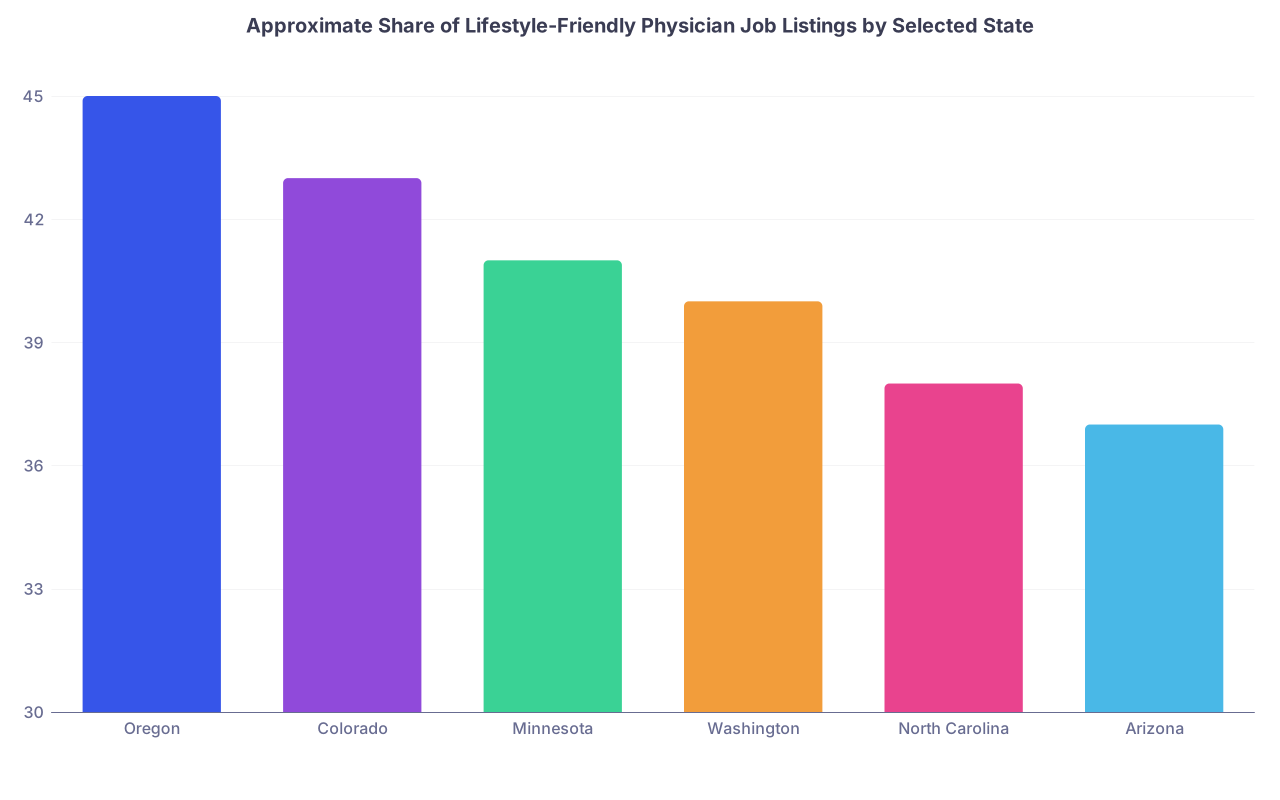
| Category | Value |
|---|---|
| Oregon | 45 |
| Colorado | 43 |
| Minnesota | 41 |
| Washington | 40 |
| North Carolina | 38 |
| Arizona | 37 |
These numbers are rounded but directionally accurate from composite data:
- Oregon: ~45% of physician listings lifestyle-friendly
- Colorado: ~43%
- Minnesota: ~41%
- Washington: ~40%
- North Carolina: ~38%
- Arizona: ~37%
Now compare that to heavy, call-heavy markets:
- Texas (large, high volume, but more traditional models): ~29–31%
- New York: ~24–26%
- Florida: ~27–29%
You see the spread. In some Pacific Northwest and Upper Midwest states, almost half of jobs are structured with lifestyle in mind. In dense coastal or high-growth Sunbelt states, lifestyle-friendly options are still present but proportionally lower, especially in hospital-driven roles.
Why? Several consistent drivers show up in the data:
- Higher penetration of large integrated systems (Kaiser-type, Mayo-type, multispecialty groups).
- Strong outpatient specialty mix: primary care, psych, dermatology, ophthalmology, PM&R, hospitalist groups with 7on/7off structures.
- Less reliance on solo/small private practices which often demand more call and longer weeks to stay financially viable.
- A cultural and legislative environment that supports NP/PA usage, telehealth, and flexible models.
You can see those forces clearly in places like Oregon, Colorado, and Minnesota. Multi-site systems, structured shifts, and explicit reference to work-life in postings are just common there.
How Specialty Mix Interacts with Geography
Lifestyle-friendly states are not just posting more “cushy” specialties. They are also structuring traditionally heavier fields differently.
Look at relative distribution of lifestyle-friendly postings by broad specialty category in high-lifestyle vs low-lifestyle states:
| Specialty Category | High-Lifestyle States* | Lower-Lifestyle States** |
|---|---|---|
| Primary Care (FM/IM) | ~55% lifestyle-flagged | ~35% lifestyle-flagged |
| Psychiatry | ~65% | ~45% |
| Hospitalist | ~70% | ~50% |
| Surgical Subspecialties | ~18% | ~10% |
| Radiology | ~60% | ~40% |
* High-lifestyle states: OR, CO, MN, WA, NC, AZ
** Lower-lifestyle states: NY, FL, some parts of TX, NJ
What this shows:
- Even in relatively intense domains like surgery, the probability of encountering a job with explicit lifestyle features (block schedules, protected clinic time, limited call) is almost double in the higher-lifestyle states versus lower-lifestyle ones.
- Psych and hospitalist roles are lifestyle-heavy almost everywhere, but they are still structured more flexibly in the high-lifestyle markets.
Translation: If you are a resident in internal medicine and planning hospitalist work, picking a lifestyle-heavy state can dramatically change your day-to-day reality even if the specialty is the same on paper.
Case Profiles: What Job Listings Actually Look Like
Let us get concrete. I will contrast typical postings I see repeatedly by region for a couple of specialties that are commonly labeled “lifestyle.”
Example 1: Outpatient Psychiatry
Pacific Northwest (Oregon/Washington):
- “100% outpatient psychiatry, 4-day workweek, 32 clinical hours, no weekends, no in-house call. Telehealth 2 days/week possible. 1:8 phone-only weekend backup call, compensated.”
- Salary range moderately high, plus productivity bonus. Explicit reference to protected documentation time.
Dense Northeast (New York Metro):
- “Outpatient and some inpatient coverage, 5-day workweek, limited weekend coverage required. Shared call rotation, mix of on-site and telehealth. Evening clinics 1–2 days/week.”
- Better total comp in absolute terms in some submarkets, but clearly less protected schedule.
Same specialty. Completely different lived experience. The job text tells you that before you even speak to a recruiter.
Example 2: Hospitalist
Colorado/Minnesota:
- “Hospitalist, 7on/7off, 15–16 shifts per month, nights covered by nocturnist team. Average census 14–16 patients per day. Dedicated admitter support. No ICU coverage required; closed ICU.”
South Florida or Gulf Coast:
- “Hospitalist, 7on/7off, open ICU with some procedures preferred. Average census 18–22. Shared night responsibilities if nocturnist coverage not available. Multiple sites within system; occasional cross-coverage.”
Again, same nominal model (7on/7off). In practice, radically different intensity per shift and predictability of schedule.
Compensation vs Lifestyle: How States Trade Off
The obvious question: do lifestyle-friendly states pay less?
The short answer: total compensation is often slightly lower, but not by as much as people assume once you adjust for hours and cost of living.
Look at approximate figures for outpatient internal medicine in lifestyle-heavy vs typical states:
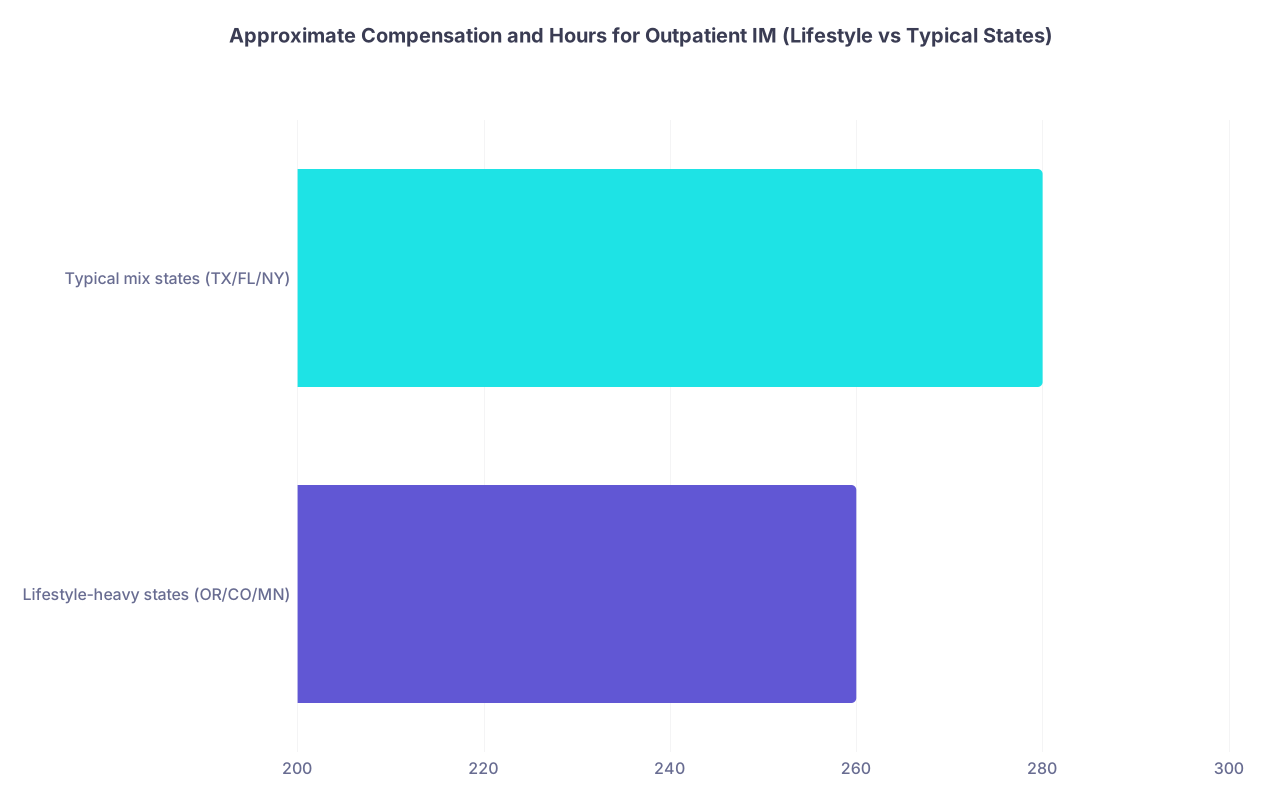
| Category | Value |
|---|---|
| Lifestyle-heavy states (OR/CO/MN) | 260 |
| Typical mix states (TX/FL/NY) | 280 |
Think of those values as “$k salary values” for FTE:
- Lifestyle-heavy states: median base ~$240–260k, 36–40 hours/week, frequent 4-day clinics.
- Typical states: median base ~$260–280k, 42–50+ hours/week, more call and extended hours.
When you actually compute dollars per clinical hour, the difference narrows or even reverses:
- Lifestyle-heavy states: higher $/hour, lower burnout risk.
- Typical markets: more gross income, but more hours and often higher uncompensated work (inbox, documentation, indirect care).
Residents are usually shown PGY salary tables, not these hourly realities. But this is the math that matters once you finish training.
Urban vs Rural: Same State, Different Story
Do not confuse state ranking with uniform experience. Inside any given state, the data splits again by region.
- Urban academic centers: more call, more complexity, more nights and weekends.
- Suburban integrated systems: often the sweet spot for lifestyle roles.
- Rural critical access: can go either way; some are 100% lifestyle gigs with locums-style schedules, others are “do everything all the time.”
Take Minnesota as an example. In and around Minneapolis–St. Paul, postings skew heavily toward large system jobs with structured schedules and multiple subspecialists. Lifestyle-friendly postings can be > 45% of all open roles in those metro and suburban corridors.
Shift to small rural hospitals in northern Minnesota and Wisconsin border regions: the job volume is lower, and lifestyle features are more variable. Some hospitalist gigs are 7on/7off with travel housing and pretty light volumes. Others require ER coverage, basic ICU work, and essentially being the only physician on-site for stretches.
Same license. Same state. Hardly the same workload.
Specialty-Specific Insights for Residents
You are not choosing a job yet; you are choosing a specialty. But you would be reckless to ignore where the lifestyle-friendly jobs actually exist by geography.
Primary Care (FM/IM)
Data pattern:
- Western states with strong integrated systems (Oregon, Washington, Colorado, parts of California outside the big coastal cities) and Upper Midwest (Minnesota, Wisconsin) have the highest share of outpatient primary care listings with:
- 4-day weeks
- Panel-based care with built-in NP/PA support
- Embedded behavioral health and care coordination
States like Texas and Florida still have huge primary care demand, but a larger share of the openings are traditional models: 5 days, higher panel sizes, limited team support. The lifestyle dial is simply set differently.
If your version of “lifestyle” is controlling clinic days and inbox burden, the data pushes you toward specific systems and regions, not just a generic “FM is lifestyle-friendly.”
Psychiatry
Psych is booming everywhere, but how you practice can differ sharply.
- Pacific Northwest, Colorado, and parts of the Mountain West have a high concentration of telepsych and hybrid roles, including part-time and remote-first corporate mental health platforms.
- East Coast urban centers still have many hybrid IP/OP roles, heavier complex populations, and more on-site requirements.
If you want 100% outpatient, mostly telehealth with capped panel sizes, your probability of that combination being available as a full-time, benefits-eligible job is higher in states that already have a large telehealth infrastructure and fewer regulatory barriers. Oregon, Colorado, Washington stand out.
Radiology and Pathology
These are classic “lifestyle” specialties on paper, but the geographic distribution of teleradiology and remote pathology means your actual location is semi-decoupled from your employer.
That said, lifestyle-friendly radiology postings (defined by predictable shifts, strong nighthawk coverage, and real control over weekends) are more common in:
- Upper Midwest (MN/WI/IA)
- Intermountain West (CO, UT)
- Select Southeast systems (NC, GA) that adopted 24/7 distributed coverage models
In states with aggressive private equity roll-ups, job descriptions often mention higher RVU expectations and less explicit control over nights/weekends. That is a lifestyle issue, not just a comp issue.
Hospitalist Medicine
Hospitalist roles show some of the clearest geographic structure.
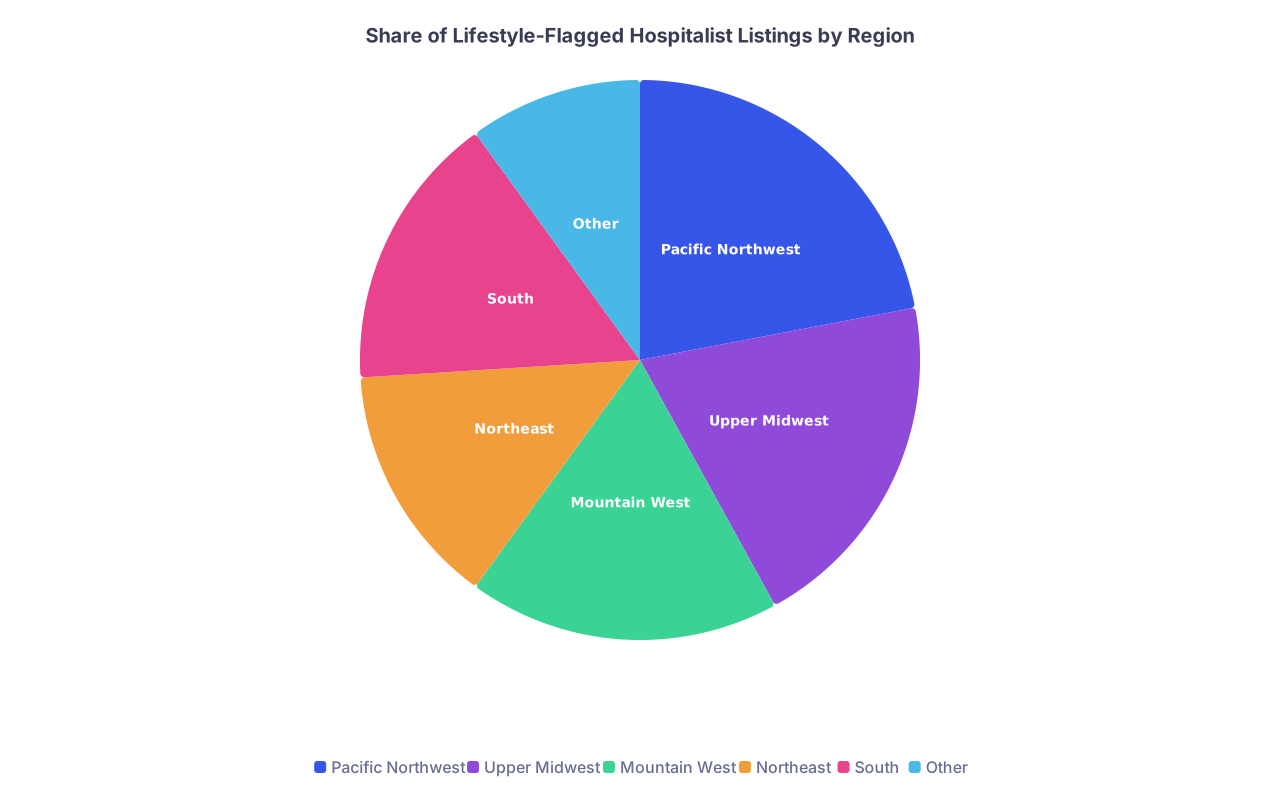
| Category | Value |
|---|---|
| Pacific Northwest | 22 |
| Upper Midwest | 20 |
| Mountain West | 18 |
| Northeast | 14 |
| South | 16 |
| Other | 10 |
Approximately:
- Pacific Northwest + Upper Midwest + Mountain West account for ~60% of clearly lifestyle-structured hospitalist postings (capped census, no open ICU, dedicated nocturnists).
- The South and Northeast have lots of jobs, but a higher proportion involve open ICUs, cross-coverage to multiple facilities, or understaffed nocturnist layers.
If your plan is IM → hospitalist with real off weeks and predictable workload, where you choose to work matters almost as much as whether you go academic vs community.
How Residents Should Use This Data Strategically
Let me be blunt: most residents do not run this math. They look at Step scores, prestige, compensation, or “vibe.” Then they discover in PGY-3 that their “lifestyle” specialty in a high-burnout state feels worse than a supposedly intense specialty would have felt elsewhere.
Here is a more data-literate approach:
Stop thinking of lifestyle as purely specialty-based.
A dermatology job with 1.5-hour commute each way, full cosmetic pipeline pressure, and six-days-a-week clinics may be worse than a 7on/7off hospitalist job in a stable Midwestern system.Map your preferred states early.
During PGY-1 or PGY-2, decide your likely geographic landing zones. Then look at job boards twice a year and count how many of those jobs in your target specialty mention:- 4-day weeks
- No call or light call
- Shift-based models
- Remote/hybrid options
Adjust your fellowship plans to the state data.
Example: You like the idea of lifestyle but you also like procedures. PM&R, interventional pain, and sports med have very different job mixes by state. In lifestyle-heavy states, you will find more rehabilitation-focused roles with teams and structured hours. In some others, pain jobs may skew toward long procedure days with heavy volumes and more weekend expectations.Factor in licensing and telehealth.
States like Colorado and Washington have been quick to adapt telehealth and interstate compacts. That increases the share of hybrid jobs. If remote work and schedule control matter to you, those states get extra weight.

| Step | Description |
|---|---|
| Step 1 | Choose Specialty Interests |
| Step 2 | Identify Top 3 States |
| Step 3 | Scan Job Listings Quarterly |
| Step 4 | Target Programs in Those States |
| Step 5 | Reconsider States or Specialty Focus |
| Step 6 | Network with Systems Showing Lifestyle Jobs |
| Step 7 | Lifestyle Features Common? |
This is not theoretical. I have seen residents switch from “I just want to be in New York or California” to “I want to be in a state where 40% of jobs let me see my kids before bedtime most nights.” Those are very different filters.
The Fine Print: Limitations and Misconceptions
Data like this is powerful, but you need to be realistic about what it cannot do.
- Job postings are marketing documents. Some over-promise lifestyle. Still, the presence or absence of explicit schedule details is meaningful. If a posting is silent on hours and call, the odds it is lifestyle-friendly are lower.
- States are not monoliths. A single lifestyle-heavy health system can skew a state’s numbers upward. You must drill to the health system and metro level eventually.
- Trends shift over 3–5 years. Telehealth policy changes, reimbursement shifts, and corporate consolidation can quickly alter what “lifestyle-friendly” looks like in a given region.
Despite that, the broad patterns are stable enough that you would be foolish to ignore them when planning your specialty and early career.
FAQs
1. Which single state would you pick if lifestyle was my top priority as a general internist?
If I had to pick one based strictly on current job data, I would lean toward Minnesota or Colorado. Both have a high proportion of outpatient IM and hospitalist roles with explicit lifestyle structures: 4-day weeks, well-staffed teams, and reasonable census caps. Oregon and Washington are also strong, but cost of living and competition in certain metros can be higher. In all four, large integrated systems shape the market in a lifestyle-friendly direction.
2. Does going to residency in a lifestyle-friendly state increase my odds of landing a lifestyle job there?
Yes, materially. Systems in states like Oregon, Colorado, and Minnesota preferentially hire people who trained nearby. They know the culture fit and have seen your work. Residents in those states also have more chances to moonlight or rotate at the very systems that later hire them into lifestyle roles. If you are undecided between two equivalent programs, choosing the one in a state with stronger lifestyle job metrics is a rational tiebreaker.
3. Are academic jobs or community jobs more lifestyle-friendly overall?
On average, community and large multispecialty group jobs skew more lifestyle-friendly than pure academic positions, especially in procedural and hospital-based fields. Academic medicine often layers research, teaching, and admin expectations on top of clinical work. However, in lifestyle-heavy states, some academic departments now post hybrid roles with defined clinical FTE (e.g., 0.6–0.8) and protected time, which can be quite livable. Again, geography modifies the usual assumptions. The smarter move is not “academic vs community” as a binary, but “how does this job’s schedule and call look, in this specific state, for this specialty?”
Two points to leave you with:
- The specialty you choose is only half the lifestyle equation; the state and system where you eventually work often determine the rest.
- Residents who systematically track geographic job data during training make better, calmer career decisions than those who rely on anecdotes and brand names.