
The harsh truth: most specialties will happily devour every extra hour you have if you let them. If you want time for side projects or entrepreneurship, you cannot ignore specialty choice and practice structure.
You are not just picking what diseases you’ll see. You’re picking whether you’ll ever have a clear Saturday to ship a product, build a company, or grow a serious side hustle.
Let me walk you through which specialties actually leave you time, what structures inside those specialties matter, and how to make decisions now so you do not end up the bitter PGY-3 working 80 hours a week and “ideating” on a startup only in your Uber rides.
Step 1: Get Honest About What You’re Actually Trying To Build
Before we touch specialties, you need to define your “side project” ambition. Otherwise you’ll get vague advice like “derm is chill” that is basically useless.
There are three different beasts people lump together:
Small creative/technical side project
Examples: indie app, blog, YouTube channel, niche newsletter, consulting, tiny SaaS, Etsy store.
Time: 5–10 consistent hours/week.Serious non-medical income stream
Examples: real estate portfolio, multi-product e-commerce, niche SaaS with paying customers, substantial content business.
Time: 10–20 hours/week consistently, plus mental bandwidth.Venture-scale or high-growth startup
Examples: funded health tech startup, device company, big digital health platform.
Time: Eventually 30–60 hours/week. Yes, on top of medicine. Or you go part-time/leave.
Different specialties work for #1 that absolutely do not work for #3.
If you’re in category #3, you’re not looking for a “lifestyle specialty”; you’re basically planning an exit strategy from full-time clinical work, using medicine for income and credibility. Own that.
Now, with that in mind, let’s talk about which specialties actually leave you time.
Step 2: The Core Variable Is Not Just Specialty – It’s Control
You’ve heard “ROAD to happiness”: Radiology, Ophtho, Anesthesia, Derm. Cute, and partly wrong.
Lifestyle is partly about what you do, but even more about:
- How predictable your schedule is
- How much overnight/on-call work exists
- How often emergencies blow up your day
- How easy it is to go part-time or shift-based
- How replaceable you are in the system (shift-based = more control)
So, inside almost every “good” specialty, there are good and terrible practice structures.
The same anesthesiologist might work 60 unpredictable hours in a cardiac-heavy academic center… or 35 tightly scheduled hours in a surgery center plus a thriving side business.
So I’m going to give you two layers:
- Which specialties tend to be friendliest to side projects
- Within each, what specific practice setups keep your calendar open
Step 3: The Usual Suspects – And How They Actually Play Out
Dermatology: The Poster Child for Time Flexibility
If you want maximum control and minimal disasters, derm is basically top of the food chain.
Reality check:
- Derm residency: busy, but usually not surgical-residency insane. Call is generally light. You can start a low-intensity side project in PGY-3/4 if you’re disciplined.
- Post-residency practice: clinic hours, usually weekdays, minimal emergencies, procedures are scheduled. Cosmetic-heavy practices especially can be 9–4 with protected weekends.
Why derm works well for side projects/entrepreneurship:
- Stable, predictable schedule → you can block recurring time for product work or a startup.
- Easy to go part-time once established; high hourly revenue means fewer clinical hours still cover your life.
- Clear niche authority → extremely good if you want to build a brand (acne-focused telederm, skincare products, content channels, etc.)
Catch: insanely competitive, and you can’t assume your life will be “chill” in residency. But long term, derm is near ideal for category #1 and #2 side projects. For a serious startup (#3), you transition to part-time clinical fairly cleanly.
Anesthesiology: Underrated for Entrepreneurs (If You Choose the Right Setting)
People think anesthesia = early mornings and brutal call. That can be true. It can also be the easiest shift-based job in medicine.
The knobs you can dial:
Practice type:
- Hospital-based with heavy trauma/OB → unpredictable, nights/weekends, post-call hangover.
- Outpatient surgery centers/GI centers/pain clinics → business hours, more predictable schedules.
Call structure:
- In-house 24s = rough on side projects.
- Home call or no call = much better for building things.
Why anesthesia can work:
- When it’s shift-based, you can truly turn off your brain after work. Compared to outpatient primary care where charts follow you home.
- Locums and per diem opportunities let you dial hours up or down if your side business needs a push.
- Pain management (as a subspecialty) can lean outpatient and procedural with relatively predictable hours.
Pitfall: Early years out, new attendings often get stuck with heavy call. If your goal is serious entrepreneurship, you want to deliberately hunt for outpatient-heavy or ASC-heavy jobs and negotiate schedule from day one.
Step 4: Other Lifestyle-Friendly Specialties That Actually Leave Space
Here’s where people usually get vague. Let’s be specific.
Radiology: Great On Paper, Depends in Practice
Radiology is attractive for a reason:
- Much of the work is shift-based
- Teleradiology exists
- No clinic panel texting you at 10 pm
But there’s a catch: your brain is cooked after a heavy read day. Starting a company after reading 100+ CTs is not “fun execution time”; it’s slog.
Radiology works best for:
- Side projects that need weekend deep work or 1–2 untouched weekday mornings
- Telerad setups that let you stack clinical work into blocks (e.g., 7-on/7-off, or nights-only for a period while you build)
I’ve seen radiologists do 7-on/7-off and build impressive businesses on their off weeks. That’s a real pattern. If you like bursty, focused work on your side projects, rads can fit beautifully.
PM&R (Physical Medicine & Rehabilitation): Quietly Flexible
PM&R flies under the radar, but if you like musculoskeletal medicine, rehab, sports, pain-adjacent work, it’s an excellent lifestyle play.
Why it’s good:
- Mix of inpatient and outpatient; you can tilt toward outpatient clinic and procedures over time.
- Lower emergency load than EM, surgery, OB.
- Chronic care and rehab planning → fewer late-night “the OR is calling” phone calls.
Entrepreneurship angle:
- Obvious side paths: sports performance businesses, rehab tech, digital platforms, coaching, medical-legal consulting.
- Schedule can be made fairly blocky. Half-days of clinic, half-days for business. This is built into some private practice models.
Psychiatry: Time + Mental Space (If You Avoid Certain Traps)
Psych has become a lifestyle favorite, and for good reason.
Advantages:
- Outpatient psych = scheduled visits, minimal emergencies if you structure it right.
- You can cap your patient panel. You can say “I see patients Tues–Thurs only,” and nobody dies.
- Tele-psych opens location independence and flexible scheduling.
But: the emotional load is non-trivial. Hearing severe trauma all day can leave you fried for product design or coding at night.
Still, for a content business, coaching, or mental health startup, being a psychiatrist gives you both credibility and schedule flexibility.
Ophthalmology: Procedures, Clinic, and Predictability
Ophtho resembles derm:
- Clinic-based, procedural, mostly elective or semi-urgent.
- Emergencies exist (retinal detachment, acute angle closure), but frequency is manageable compared to trauma surgery or OB.
Where it shines for side projects:
- Once you’re in a stable practice, hours can be tightly controlled.
- Surgical days + clinic days → easy to block off time windows for your business.
- Natural alignment with device innovation, vision tech, surgical tools.
Residency will be busy. After that, you have a lot of control if you pick the right group.
Step 5: Emergency Medicine – The Classic Shift Work Trap
Most people eye EM and think: “Perfect. Shifts. Then I’m done. I’ll use my days off for my startup.”
Sometimes that works. Often it does not.
Why EM could be ideal:
- 8–12 hour shifts, no pager once you’re done.
- Ability to stack shifts and free up multi-day blocks.
- Locums/PRN options if your business grows.
Why EM can secretly kill your side hustle:
- Irregular circadian rhythm makes consistent deep work hard. Nights, swings, random weekends. Your brain doesn’t care that your startup “needs” you.
- Emotional fatigue and adrenaline let-down after rough shifts.
- Many EM groups are cranking volume and documentation to painful levels.
Where EM does work:
- If you can lock into a stable schedule (e.g., mostly days, no more than 1–2 nights/month).
- If you genuinely tolerate sleep disruption well.
- If your side project can absorb uneven work patterns (bursty effort on your off blocks instead of daily 2-hour sprints).
For serious, steady entrepreneurship, EM is higher friction than people admit. For smaller side projects, it can still be fine.
Step 6: The “Don’t Do This If You Want a Business” List
You can absolutely build businesses from any specialty. Someone, somewhere, did it from neurosurgery. That does not make it smart.
If you know you want a meaningful side business and you’re not already locked in, think very hard before committing to:
- General surgery (especially trauma-heavy)
- Neurosurgery
- Orthopedic trauma
- OB/GYN (full-scope with L&D)
- CT surgery
- ENT with heavy call
Common pattern in these fields:
- Long, unpredictable OR days
- High call intensity
- Real emergencies at 2 am that you can’t ignore
- Culture that glorifies being constantly available
Can you still spin up a SaaS or e-comm store here? Yes. But your margin for error is tiny, and burnout risk skyrockets.
If you’re already in one of these and still serious about entrepreneurship, your path is usually:
- Subspecialize into a more elective niche (e.g., sports ortho vs trauma)
- Move to a high-control, private practice or specialty center
- Gradually shift to part-time/consulting while the business grows
Step 7: Practice Structures That Multiply (or Destroy) Your Time
Specialty is the broad brush. Practice structure is where your actual daily life gets decided.
Here’s how different structures usually look for entrepreneurship odds:
| Practice Structure | Schedule Predictability | Off-Hour Intrusions | Entrepreneur-Friendly? |
|---|---|---|---|
| Hospital-employed inpatient | Low | High | Poor |
| Academic with heavy call | Low–Medium | High | Poor–Fair |
| Outpatient clinic only | Medium–High | Medium | Good |
| Shift-based (ED, rads, gas) | High | Low after shift | Very Good |
| Telemedicine/telerad | High (if self-scheduled) | Low | Excellent |
If you want a side project to actually thrive, aim for:
- Shift-based work where someone else covers when you’re off
- Outpatient-only practices with minimal call and no inpatient
- Roles where you can cleanly reduce FTE to 0.8 or 0.6 later
Do not underestimate how disruptive it is to “just answer a few messages” at night. That context-switch kills deep work.
Step 8: Residency Reality – What You Can Actually Do During Training
Let’s be blunt: residency is not where you’re going to launch the next Epic or Stripe.
But you can absolutely:
- Validate ideas
- Build small, low-maintenance products
- Learn the skills (coding, marketing, design, sales)
- Build an audience or network
Expectations by specialty in residency:
- Surgical subspecialties, OB, EM: side project time is mainly on golden weekends and post-call when you’re not brain-dead. Treat it as learning and prototyping, not revenue.
- Derm, psych, PM&R, rads, anesthesia: still busy, but more predictable. You can often carve out 4–6 hours on weekends and maybe 1–2 evenings/week if you’re intentional.
You’re not lazy if you cannot grind on a startup after a 28-hour call. You’re human. Plan accordingly.
A useful mental model:
Residency = skill acquisition and testing ground
Early attending years = capital generation and structure setup
3–5 years out = serious scaling of the business if it works
Step 9: How to Decide If a Specialty Is Compatible With Your Plans
Here’s the practical checklist when you’re MS2–MS4 or early resident, thinking, “Will this specialty let me build a real side thing?”
Ask these questions, brutally:
- How often are people in this field getting called at night/weekends for true emergencies?
- Is there a common outpatient-only or shift-based practice path?
- What percentage of attendings in this field work 0.6–0.8 FTE by choice? (If it’s near zero, red flag.)
- Do I see attendings with non-clinical careers that actually look like what I want? Not just “I’m on a hospital committee,” but “I run a company / product / brand.”
Then, on rotations, literally ask residents:
- “Could you realistically work on a focused side project 8–10 hours a week right now?”
- “What kind of nonclinical work do attendings in this specialty actually do?”
- “If you had a serious business, would this specialty make that easier or harder?”
The tone of their answers will tell you a lot.
Step 10: Structuring Your Life So the Side Project Actually Happens
Choosing a “lifestyle-friendly” specialty is step one. Step two is protecting your time like it’s sacred.
Without that, even derm will swallow you.
Concrete moves once you’re an attending:
- Go 0.8 FTE intentionally, not “after I’m established.” Use that one day/week as your non-negotiable build day.
- Prefer locums/per diem or pure shift work if you want maximal flexibility for a startup sprint.
- Set firm communication boundaries: no email on your build day, no “just checking charts” during your creation window.
- Funnel your high-earning clinical hours into buying time: hire help for everything nonessential in your personal life so your few free hours aren’t spent doing laundry.
And during residency:
- Cap your side project expectations. Aim for slow, steady progress—one feature, one video, one chapter, one experiment per week.
- Pick projects that can survive pause/resume cycles and don’t implode if you’re gone for 2–3 weeks on ICU.
Visualizing Where Time Actually Lives
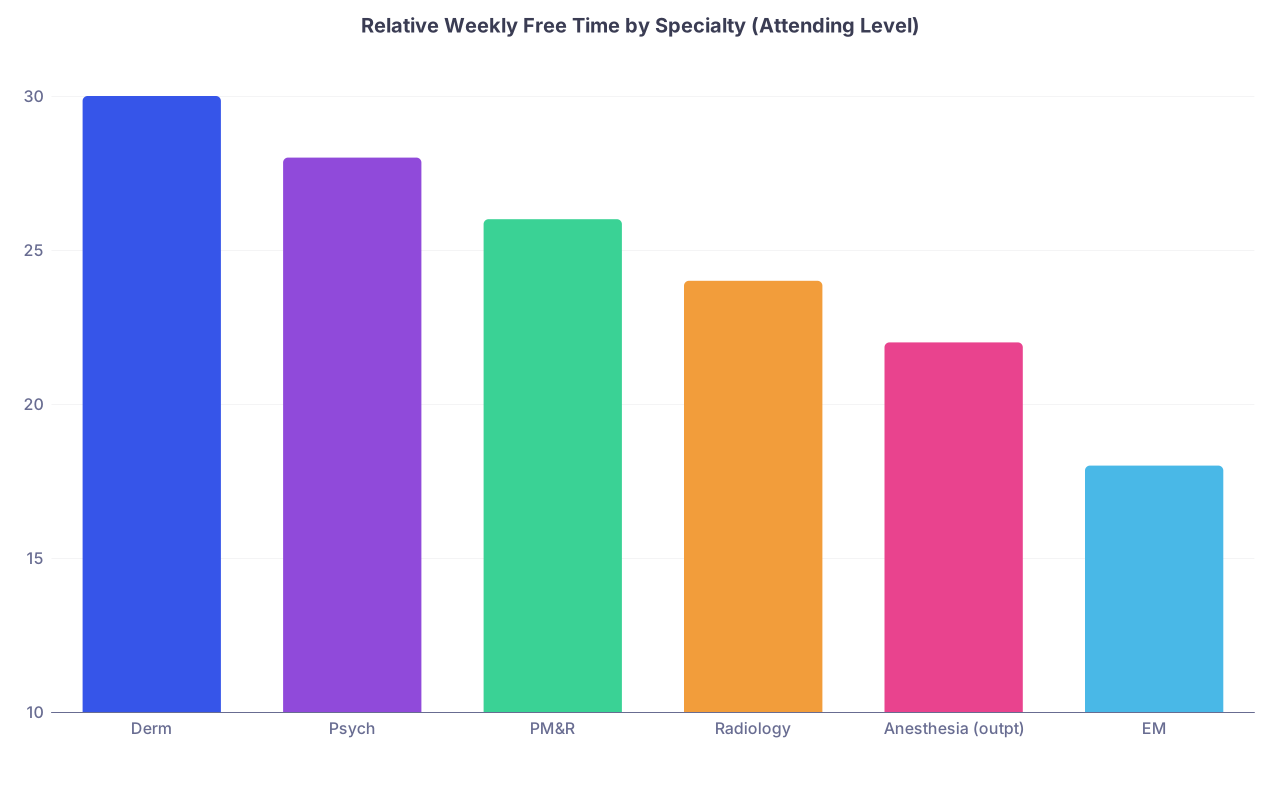
Here’s how time availability tends to feel across a typical week for different “good” specialties, once you’re a stable attending in a decent job:
| Category | Value |
|---|---|
| Derm | 30 |
| Psych | 28 |
| PM&R | 26 |
| Radiology | 24 |
| Anesthesia (outpt) | 22 |
| EM | 18 |
Think of those numbers as “reasonably usable hours/week for side projects” if you’re intentional. Not perfect, but the relative ranking is about right.
A Quick Timeline: How This Actually Plays Out
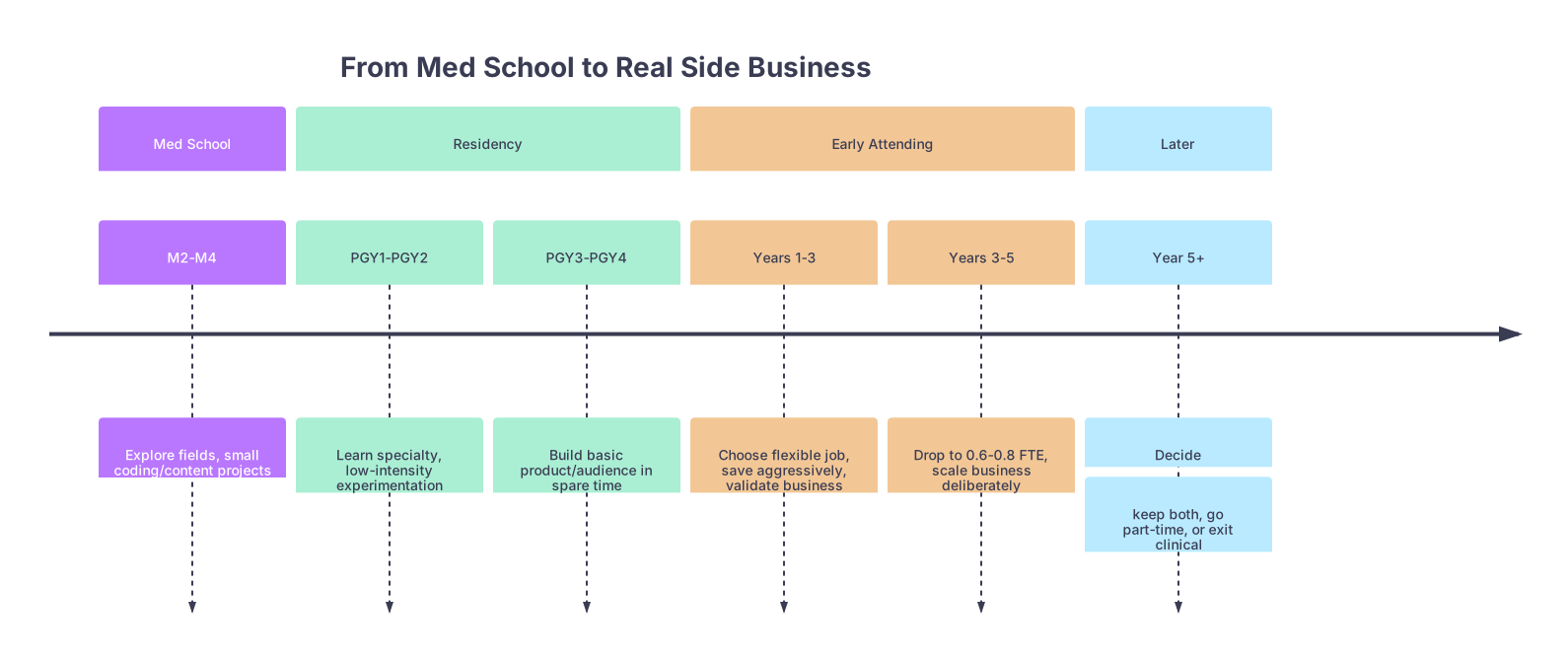
To make this concrete, here’s a rough pattern I’ve seen work for people who end up with substantial side businesses:
| Period | Event |
|---|---|
| Med School - M2-M4 | Explore fields, small coding/content projects |
| Residency - PGY1-PGY2 | Learn specialty, low-intensity experimentation |
| Residency - PGY3-PGY4 | Build basic product/audience in spare time |
| Early Attending - Years 1-3 | Choose flexible job, save aggressively, validate business |
| Early Attending - Years 3-5 | Drop to 0.6-0.8 FTE, scale business deliberately |
| Later - Year 5+ | Decide |
Notice the key decision point: job structure right out of residency. That’s where most people accidentally lock themselves into a life that’s hostile to entrepreneurship.
One More Angle: Where Nonclinical Paths Naturally Emerge
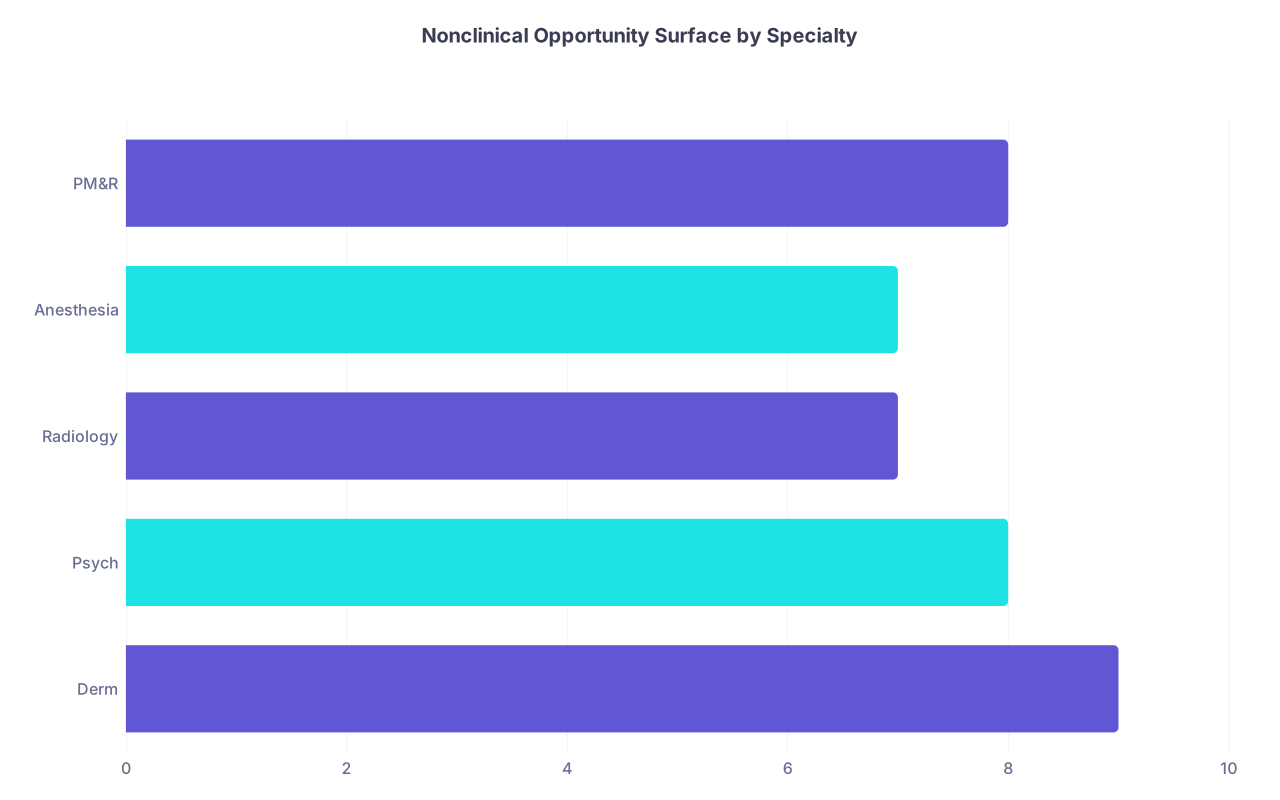
Some specialties have more obvious routes into nonclinical/entrepreneurial work. Think of this like “surface area” for opportunity.
| Category | Value |
|---|---|
| Derm | 9 |
| Psych | 8 |
| Radiology | 7 |
| Anesthesia | 7 |
| PM&R | 8 |
Higher numbers here mean: lots of natural adjacencies to products, content, consulting, and startups without having to stretch.
Derm: skincare products, telederm, cosmetics, medspa chains, content.
Psych: digital mental health platforms, coaching, content, self-help books, apps.
PM&R: rehab devices, sports performance, pain interventions, recovery tools.
Radiology & anesthesia: workflow tools, AI products, telerad/telengagement platforms, locums marketplaces.
You want to swim where the current already exists.
Pulling It Together – If You’re Actually Serious
If you’re reading this because you really want side projects or entrepreneurship, not just “better hours,” then stop treating specialty choice like a vibe check.
You should be asking:
- Will this specialty let me tightly control and eventually reduce my clinical hours?
- Can I get predictable chunks of time each week for focused work?
- Do I see actual role models in this field who built something similar?
If you haven’t picked yet and you lean entrepreneurial, specialties that usually play nicest with that goal:
- Dermatology
- Psychiatry
- PM&R
- Ophthalmology
- Radiology (with shift/7-on-7-off models)
- Anesthesia in outpatient/ASC/pain-heavy practices
- Select EM jobs with predictable shifts and limited nights
And you should be brutally cautious about:
- High-call, high-emergency surgical and procedural fields
- Any academic job where committee meetings and admin creep eat your “free” time
Final compressed version:
- Pick a specialty where shift work or clinic-based schedules let you control your calendar—derm, psych, PM&R, ophtho, rads, and outpatient-heavy anesthesia are standouts.
- Within that specialty, choose a practice structure (outpatient-only, ASC-based, tele-anything, or true shifts) that protects large, predictable blocks of time.
- Treat residency as training + slow experimentation, then use your first attending job to buy back time aggressively so your side projects have a real chance to grow into something bigger.