
Only 38% of psychiatry residents say their actual work hours match what they expected when they chose the specialty.
Not because psychiatry is secretly malignant. Because “lifestyle” in psychiatry depends almost entirely on where you sit: outpatient, consult-liaison (CL), or telepsychiatry. Same MD, same board certification, completely different day-to-day life.
Let me break this down specifically.
We will compare lifestyle within psychiatry across three common practice models:
- Outpatient psychiatry (traditional clinic-based)
- Consult-liaison psychiatry (hospital-based)
- Telepsychiatry (remote care, often from home)
And we will stay on the things that actually matter for your life: hours, emotional load, income vs time, call, documentation burden, and career trajectory.
Big Picture: How Lifestyle Really Differs
Before we drill down, you need a rough comparison. Otherwise you are just collecting anecdotes.
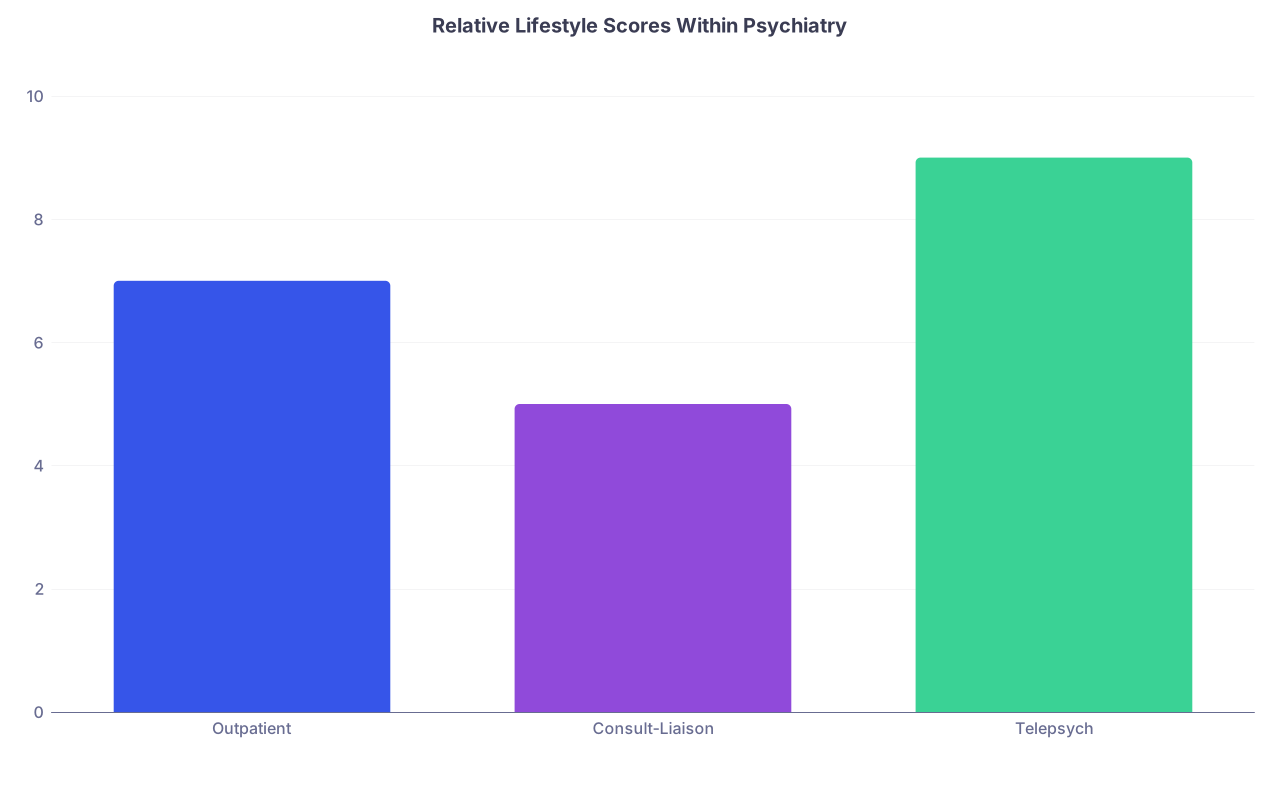
| Category | Value |
|---|---|
| Outpatient | 7 |
| Consult-Liaison | 5 |
| Telepsych | 9 |
These are broad, experience-based “lifestyle scores” out of 10, assuming:
- Full-time work
- Typical U.S. market
- Average ability to negotiate
Here is the more granular view.
| Factor | Outpatient Clinic | Consult-Liaison (CL) | Telepsychiatry |
|---|---|---|---|
| Typical Weekday Hours | 8–5 or 9–5:30 | 7–4 or 7–5 | 8–4 or 9–3 (flexible) |
| Nights/Weekends | Rare (depends on call) | Some call, weekend rounds | Very rare if outpatient-only |
| Control of Schedule | Moderate–High | Low–Moderate | High (if contractor) |
| Interruptions | Moderate (no-shows, calls) | Constant (pages, rapid evals) | Low–Moderate (tech, crises) |
| Documentation Intensity | High | High but briefer notes | Very High (tele requirements) |
| Emotional Intensity | Moderate–High | High (suicide, ICU, trauma) | Moderate (varies by population) |
| Income per Hour | Moderate–High | Moderate | High (if scheduled efficiently) |
| Burnout Risk | Moderate | High | Highly variable (often medium) |
Now let us go setting by setting and then line up the real trade-offs.
Outpatient Psychiatry: The “Default Lifestyle” Benchmark
This is what most people picture when they say psychiatry has good lifestyle: a clinic, 45–60-minute evals, 15–30-minute follow-ups, evenings mostly free.
What an Outpatient Week Actually Looks Like
A fairly standard full-time schedule in a private group or hospital-affiliated clinic:
- 32–36 patient-facing hours per week
- 4–8 hours for documentation, phone calls, refills, coordination
- 4-day clinical week is common in private practice; 5 days in hospital systems
Example schedule:
- 8:30–12:00: 4 follow-ups (30 min) + 1 new eval (60 min)
- 12:00–1:00: Lunch + quick charting, refill queue
- 1:00–4:30: 6 follow-ups (30 min), maybe 1 no-show
- 4:30–5:30: Finish notes, messages, prior auths, labs
If you are efficient and your clinic is reasonably run, you are walking out around 5–5:30 with the chart basically closed.
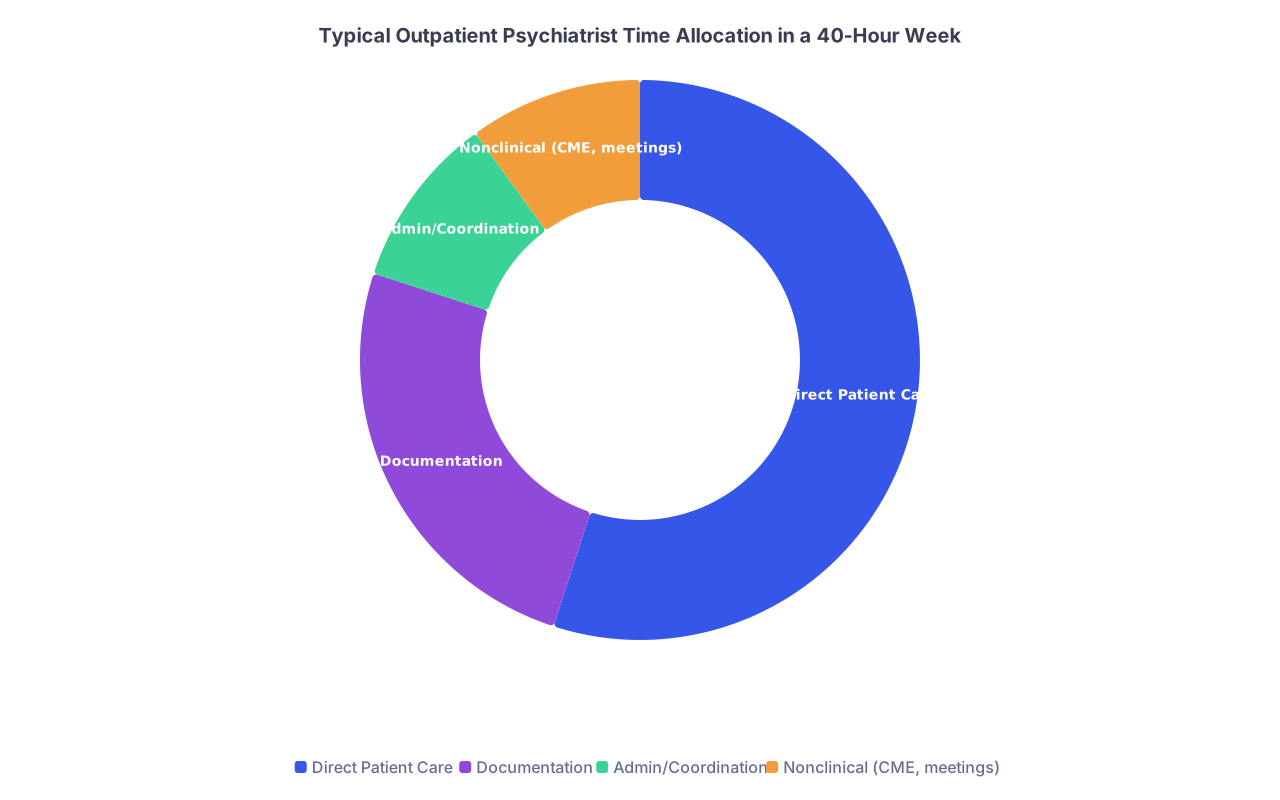
| Category | Value |
|---|---|
| Direct Patient Care | 55 |
| Documentation | 25 |
| Admin/Coordination | 10 |
| Nonclinical (CME, meetings) | 10 |
Lifestyle Positives
- Predictable days and nights
Most outpatient psychiatrists I know have:
- No routinely scheduled evening clinics
- Weekends off, except rare call or extra moonlighting
- Holidays off unless you volunteer for coverage
You know when you will see your kids. You can plan a weekly sports league. That alone is huge.
- Control over pace
Over time, you largely decide:
- How many new patients you accept per week
- Whether you want 15, 20, or 30-minute med follow-ups
- How quickly you close your panel
Hospital-employed? You will have more pressure to “optimize access.” Private practice or small groups? You can push back harder. I have seen people refuse 15-minute follow-ups entirely and live to tell the tale.
- Chronic, longitudinal relationships
From a lifestyle angle, that means:
- Fewer “unknown” high-intensity encounters each day
- You often know your patient’s baseline, so crises are more predictable
- The work becomes less cognitively chaotic and more pattern-based
The flip side is you also inherit their life chaos long-term. But at least you are not being surprised ten times a day by brand new disasters.
Lifestyle Negatives
Outpatient looks cushy from a resident’s vantage point. The hidden landmines:
- Documentation creep
Every year, your EHR grows more demanding. Checkboxes, PHQ-9s, suicide screens, prior authorization letters, disability forms.
The common pattern:
- Early career: “I am done by 4:30; this is amazing.”
- Mid-career: “I am in the EHR until 6:30 three days a week.”
The outpatient psychiatrist who is home at 4 consistently has either:
- ruthlessly pruned admin work,
- offloaded tasks to strong support staff,
- or is accepting slightly lower revenue/volume.
- Message and refill burden
You do not clock out at zero.
You have:
- Portal messages
- Pharmacy faxes
- School/work letters
- Lab follow-ups
Most clinics do not block schedule time explicitly for this. They say they do. They do not. So it bleeds into lunch, evenings, or that “admin half‑day” that miraculously fills with spillover patients.
- Emotional drain from chronic complexity
You are rarely dealing with simple, one-diagnosis cases. Instead:
- Bipolar + cluster B traits + chronic pain + opioid use
- PTSD + TBI + housing instability
- Treatment-resistant depression with 8 failed med trials
Outpatient is less “acute drama,” more “slow burn.” Burnout here looks like emotional numbness and cynicism, not ICU-level trauma, but it is very real.
Where Outpatient Shines (and Fails) for Lifestyle
Outpatient shines if you:
- Want predictable hours and minimal overnight work
- Enjoy slow, deep work with complex but stable-ish patients
- Care more about control and autonomy than maximum income
It fails you if:
- You hate paperwork.
- Your tolerance for chronic, non-resolving problems is low.
- You need lots of in-person collegial energy to stay engaged (many clinics are siloed, people see their 15 patients and leave).
Consult-Liaison Psychiatry: Lifestyle’s “Hidden Cost” Subspecialty
CL is the darling of a certain type of psychiatry resident. The ones who like medicine, like complexity, and like being the “expert consultant.”
Lifestyle-wise, it is not as friendly as students think. Still better than surgery. But significantly more disruptive than outpatient.
What CL Actually Feels Like Day-to-Day
You are covering psychiatric needs across:
- Medical/surgical floors
- ICU
- Sometimes ED
- Occasionally OB/cardiology/transplant specialty units
Your day is driven by consults. They are not scheduled. They land when they land.
A typical inpatient CL day:
- 7:00–7:30: Arrive, pre-chart, check overnight admissions
- 7:30–8:30: Huddle with medicine teams, triage consults
- 8:30–12:00: New consults (capacity evals, suicide risk, agitation, delirium)
- 12:00–1:00: Lunch + notes (unless a stat consult comes in)
- 1:00–4:00: Follow-ups + new consults + family/ethics meetings
- 4:00–5:30: Finish notes, follow up with primary teams, adjust meds
You are interrupted. Constantly. The pager does not care that you are in the middle of a suicidal risk assessment.

Lifestyle Positives
- Set daytime hours… mostly
CL services are typically:
- Daytime-heavy (7–4, 8–5)
- Hospital systems, so protected time is at least theoretically respected
- Team-based, so responsibility is shared
Most CL attendings go home around 5–6 pm on non-call days with the list reasonably wrapped up.
- No outpatient message/refill sludge
When you sign off, you really sign off from that patient.
No six months of portal messages from the family about disability forms. No chronic benzodiazepine management.
You trade long-term longitudinal complexity for high-acuity, one-time hits.
- Intellectually rich, high-variety work
Variety itself is a lifestyle asset. Your brain gets stimulation from:
- Differentiating delirium vs psychosis vs dementia
- Navigating capacity and ethics
- Managing transplant candidates, LVAD patients, peripartum women, post-ICU PTSD
Work feels meaningful. That protects against burnout, even when hours are not perfect.
Lifestyle Negatives
This is where the Instagram version of CL crashes into reality.
Most busy CL services have:
- Inpatient call
- Weekend rounds for active consults
- ED coverage attached to the service in community hospitals
The frequency varies wildly:
- Academic centers: q7–q10 weekends, in-house or home-backup call
- Smaller hospitals: more frequent home call, sometimes with ED psych attached
If you thought psychiatry = no weekends, CL will disillusion you.
- Unpredictable day flow
You cannot tightly script your day like an outpatient doc.
Common scenarios:
- You are halfway through a complex delirium workup. Rapid response goes off in another patient with severe agitation. You punt documentation. Again.
- A capacity consult comes in at 3:45 pm for a high-risk refusal of life-saving intervention. You are not leaving at 4.
You need high tolerance for interruptions and short-notice reprioritization. Some people love the pace. Some absolutely hate it.
- High emotional and moral stress
CL concentrates some of the hardest clinical scenarios in medicine:
- Challenging capacity decisions (pulling the line vs honoring refusal)
- Repeated encounters with suicide attempts, self-harm, deaths in ICU
- Families falling apart at the bedside
- Traumatic injuries, unexpected cancers, catastrophic obstetric cases
Burnout in CL is often moral distress + emotional overload. You are in the middle of repeated, unsolvable conflicts.
- Less control over long-term schedule
Hospital systems control:
- Which services you are assigned to
- The call schedule structure
- Vacation coverage norms
If they say everyone takes X weekends or X holiday blocks, that is it. Outpatient docs can sometimes side-step this with part-time or boutique practices. CL is less flexible.
Where CL Shines (and Fails) for Lifestyle
CL shines if you:
- Like medical complexity and want to stay plugged into hospital medicine
- Can tolerate interruptions and non-linear days
- Draw energy from acute crises and team interaction
It fails you if:
- Your definition of “good lifestyle” is minimal nights/weekends
- You want high schedule control
- You prefer stable, lower-intensity patient interactions
Telepsychiatry: The Lifestyle Outlier
The most extreme lifestyle swings within psychiatry right now are in telepsychiatry.
For some people, telepsych is 9–3 four days per week from home, high hourly rates, no commute, and near-complete control of schedule.
For others, it is a soul-killing 30 patients per day treadmill with video fatigue and severe burnout.
Both exist. The difference is which model you sign up for.
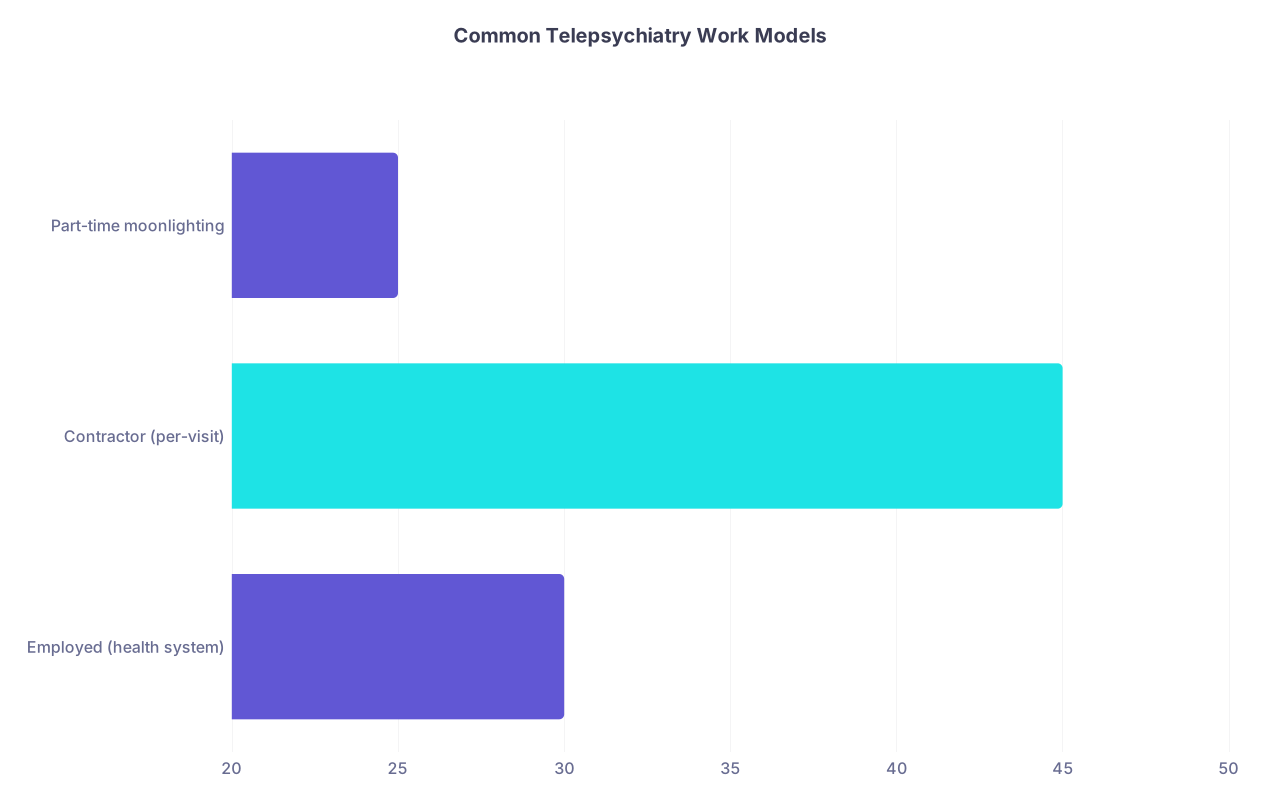
| Category | Value |
|---|---|
| Employed (health system) | 30 |
| Contractor (per-visit) | 45 |
| Part-time moonlighting | 25 |
That chart is rough distribution, not patients/day. Think of it as the share of telepsych jobs residents encounter.
The Basic Telepsych Setups
You generally see:
Employed telepsychiatry
- Salary + benefits
- Fixed clinic templates (often 30-min follow-ups, 60-min evals)
- Stable but less schedule freedom
Independent contractor / 1099
- Paid per encounter (flat fee per visit) or per hour
- You choose your shifts, often across multiple states
- No benefits, but high flexibility and income/hour potential
Hybrid outpatient-telepsych
- 2–3 days tele, 2–3 days in-person
- Growing in academic and large systems
Lifestyle Positives
- No commute, no physical clinic overhead
This matters more than it sounds.
- No driving 45 minutes each way
- No waiting on elevator traffic
- No random “hallway ask” from surgeons or admin
You can compress your day. An 8–3 tele day often feels shorter and less draining than an 8–5 in-person day with commuting and hallway chaos.
- Flexibility of hours and location
Contract telepsych especially lets you:
- Work early mornings and be done by 2 pm
- Stack your hours into 3–4 dense days and leave the rest open
- Move cities or even states without changing employer (non-licensing issues aside)
I know psychiatrists who:
- See patients Tues–Thurs 9–4,
- Do one evening shift on Monday,
- And have a 3.5-day weekend, every week.
- Potentially excellent income per hour
If you avoid exploitative volume contracts, you see:
- $200–$300+ per hour ranges for well-run teleadult practices
- Extra pay for off-hours or high-risk populations
- Ability to decline low-paying or chaos-heavy contracts
Some telepsych jobs are trash. But the good ones are very good on a dollars-per-hour basis.
- You control your micro-environment
You design:
- Your workspace (lighting, chair, screen setup)
- Your break structure
- The sensory environment (no hospital noise, fewer random interruptions)
For lifestyle, this is underrated. Comfort and control of physical environment are big burnout modifiers.

Lifestyle Negatives
The telepsych fantasy has some harsh realities.
- Video fatigue is real
Staring at faces on a screen for 6–7 hours straight is not the same as in-person contact.
Common complaints:
- Headaches and eye strain
- Feeling oddly drained despite “easy” work
- Reduced sense of connection, especially with new patients
If you introvert recharge by not looking at screens, telepsychiatry can be especially taxing.
- Productivity pressure and overbooking
Some companies:
- Demand 15–20 minute follow-ups back-to-back
- Penalize you financially for no-shows
- Push aggressive templates (e.g., 24–28 patients per day)
You traded hallway interruptions for relentless appointments. Outpatient burnout, just without the drive.
Telehealth is highly regulated and audited. Many groups respond by:
- Building incredibly rigid templates
- Requiring extensive boxes for every suicide screen, every visit
- Tracking your completion times and “note length” like a factory
You can be home in sweatpants and still feel like you are under a microscope.
- Professional isolation
Telepsychiatry can feel:
- Lonely
- Disconnected from a larger team
- Vulnerable when a patient destabilizes without on-site support
If you were counting on hallway consults, mentorship, and regular in-person case discussions, pure tele is a rough adjustment.
Where Telepsych Shines (and Fails) for Lifestyle
Telepsych shines if you:
- Value flexibility and remote work more than in-person team life
- Are disciplined with your schedule and boundaries
- Can negotiate or choose sane productivity expectations
It fails you if:
- You hate video interaction or long screen days
- You need in-person collegiality to stay engaged
- You accept high-volume, low-control contracts and hope they will “get better”
Side-by-Side: Lifestyle Trade-offs That Actually Matter
You do not choose between “good” and “bad” lifestyle here. You choose which problems you are willing to live with.
| Dimension | Outpatient | Consult-Liaison (CL) | Telepsychiatry |
|---|---|---|---|
| Hour Predictability | High | Medium | High (if self-scheduled) |
| Night/Weekend Burden | Low–Medium (call-based) | Medium–High | Very Low (outpatient-only contracts) |
| Acute Emotional Intensity | Medium | High | Low–Medium |
| Chronic Emotional Load | High (longitudinal) | Medium | Medium |
| Schedule Autonomy | Medium–High | Low–Medium | High (contractor) / Medium (employed) |
| Team Interaction | Low–Medium | High | Low (unless part of structured team) |
| Admin/Message Burden | High | Medium | Medium–High (varies by group) |
| Commute Time | Medium | Medium–High | None |
Notice the pattern:
- Outpatient trades predictability for chronic admin burden.
- CL trades intellectual richness and team energy for acute stress and call.
- Telepsych trades geographical and schedule flexibility for isolation and video fatigue.
Training and Career Trajectory: How Your Phase Changes Lifestyle
Lifestyle is not static. It changes as you move from PGY-1 to attending, and as you shift roles.

| Step | Description |
|---|---|
| Step 1 | Residency |
| Step 2 | Early Attending |
| Step 3 | Mid Career |
| Step 4 | Late Career |
| Step 5 | Outpatient Focus |
| Step 6 | CL Focus |
| Step 7 | Telepsych Focus |
| Step 8 | Hybrid Outpt Tele |
| Step 9 | Academic Leadership |
| Step 10 | Portfolio Practice |
During Residency
You will:
- See CL at its absolute worst (limited staffing, high-volume academic centers)
- See inpatient more than outpatient
- See almost no “good” telepsych jobs (residents get the leftovers)
Do not assume what you see in residency represents best-case lifestyle. It often does not.
Early Career
You have to pick your first real compromise:
- Accept more call/CL for academic alignment and interesting work?
- Accept more documentation/outpatient for a steadier clock?
- Jump early into telepsych and risk isolation before you build a network?
My bias: Your first 3–5 years should emphasize learning, mentorship, and solid skill-building. Lifestyle should be good, not perfect. Then you adjust.
Mid Career
The biggest lifestyle gains in psychiatry happen when:
- You prune low-yield tasks and patients
- You negotiate down call
- You diversify: outpatient + telepsych, or CL + outpatient, etc.
A lot of psychiatrists live in a “portfolio” model by year 8–10:
- 0.6–0.8 FTE outpatient or CL
- 0.1–0.3 FTE telepsych or niche consult work
- Some teaching/supervision on top
That mix can optimize both lifestyle and professional interest.
Common Traps and How to Avoid Them
A few patterns I have seen repeatedly.
Trap 1: Confusing “Academic” with “Lifestyle”
Many residents assume:
- Academic = lighter clinic loads, more teaching, more support
- Community = factory
Reality:
- Academic CL often has intense complexity, heavy ethics/ICU consults, and non-trivial call
- Academic outpatient can have full templates, unlimited messages, and strict RVU expectations
Do not assume the university logo buys you lifestyle.
Trap 2: Taking First Telepsych Offer at Face Value
Red flags in a telepsych contract:
- 20+ patients per day with 30-minute evals and 15-minute follow-ups
- No blocked admin time
- Penalties for no-shows that are outside your control
- Vague answers about “average documentation time”
Lifestyle-friendly telepsych looks like:
- 12–16 patients/day with sane eval/follow-up times
- Explicit admin time
- Some control of days/hours
- Transparent pay structure
Trap 3: Ignoring Commute and Geography
Two outpatient jobs with identical schedules:
- Job A: 12-minute commute each way, simple parking.
- Job B: 45-minute commute in traffic, paid parking, long walk to clinic.
That is easily 6–8 extra hours of your week gone, every week. Over a year, that is a month of full-time work.
Psychiatry’s “good lifestyle” reputation evaporates quickly when you donate that time back to the highway.
How To Match Yourself To The Right Setting
Last part. How to actually decide among outpatient, CL, and telepsych for lifestyle.
Ask yourself, bluntly:
Do I handle constant interruptions well, or do they make me simmer with rage?
- If they do: outpatient or telepsych > CL.
Do I draw energy from complex, high-acuity hospital cases?
- If yes: CL at least part-time.
Do I value in-person team interaction enough to trade some schedule control?
- If yes: CL or in-person outpatient over pure tele.
How much do I hate commuting? On a 1–10 scale.
- If you are a 9 or 10: tele or hybrid tele/outpatient is going to look better and better.
Am I disciplined enough to say “no” and set boundaries as a contractor?
- If no: employed outpatient may be safer than high-flex tele.
Try to design your first attending job with one of these as the anchor:
- Stable outpatient base, then layer in tele later.
- CL for interest, but tightly constrained call and clear weekend expectations.
- Telepsych as a base, with at least some in-person teaching or clinic to keep skills sharp and reduce isolation.
With outpatient, CL, and telepsychiatry mapped out like this, you are not just chasing the vague idea of a “lifestyle specialty.” You are choosing which specific trade-offs you are willing to live with for years.
Once you are clear on that, the next step is learning how to read contracts, RVU models, and call clauses so you do not get trapped in a “lifestyle” job that quietly eats your time. With those skills in hand, you are ready to shape not just your specialty, but the exact version of it you live in.
But that is a story for another day.