
The usual “What’s the culture like?” question is useless. You need questions that force residents to show you how they actually live, not how the program wants to be seen.
This is how you do that. With scripts. With intent. And with your eyes open.
1. Core Strategy: How to Use Scripted Questions Without Sounding Robotic
You are not just “chatting.” You are running a structured information-gathering interview while pretending it is casual conversation.
Here is the basic protocol that works across almost every specialty:
- Start broad – something low‑threat to warm them up.
- Drill into specifics – ask for concrete examples, not adjectives.
- Cross‑check – ask the same theme in different ways and to different residents.
- Watch the nonverbals – hesitation, side glances, joking tone about serious issues.
- Document right after – 5 minutes alone, notes in your phone before you forget.
You will use the same skeleton in “lifestyle‑friendly” specialties (FM, psych, derm, path, PM&R, radiology, anesthesia) and in the more malignant fields (surgery, OB, EM) if you are curious. The difference is what you listen for.
2. The Foundational Work‑Life Questions (Use These in Every Specialty)
These are your baseline scripted questions. I will give you the exact wording and what each one is designed to expose.
2.1 Actual Hours vs. Paper Hours
Script:
“On a typical week on [this rotation], what time do you usually get in, and what time do you usually leave? Like, yesterday for example?”
Why this works:
- “Yesterday” destroys the polished brochure answer.
- Forces them to give times, not “it’s manageable.”
Follow‑ups:
- “Is yesterday pretty typical or more on the light/heavy side?”
- “On your worst weeks this year, what have your hours looked like?”
You are listening for:
- 60–80 hour weeks casually normalized.
- “Well, officially…” followed by a different reality.
2.2 Real Call Burden
Script:
“How often are you on call, and what does a call actually look like here? Are you able to sleep, or is it basically nonstop?”
Follow‑ups:
- “If you have a golden weekend, how often does that really happen?”
- “For you personally, how many nights per month do you feel wrecked afterward?”
You will see residents either:
- Give concrete, survivable numbers (e.g., 1–2 calls/month, sometimes sleep).
- Or shrug and normalize brutal schedules with jokes.
2.3 The “Do You Have a Life?” Reality Check
Script:
“What do you usually do on your day off? Do you feel like you actually get to see friends/family or have hobbies, or is it mostly recovery and errands?”
Follow‑ups:
- “Have you been able to keep up with anything you did before residency?”
- “Do people here generally have time for relationships/kids, or do those tend to get delayed?”
You want narratives, not adjectives:
- “On my day off, I usually sleep, do laundry, and meal prep. I do not see other humans.”
- Versus, “I play in a soccer league on Thursdays and see my partner on weekends.”
2.4 The Burnout Barometer
Script:
“If you look around your class and the classes above you, how burned out do people seem? Like, are people mostly doing okay, or are a lot of them just hanging on?”
Follow‑up:
“Has anyone actually left the program in the last few years? What happened with that?”
You are checking:
- Do they instantly know who burned out?
- Is attrition mentioned, or studiously ignored?
2.5 The “Would You Choose It Again?” Question
Script:
“If you had to rank programs again, would you still put this one at or near the top? Why or why not?”
Then shut up. Let them talk.
If they:
- Pause. Laugh. Say “that’s a good question” and change the subject.
- Or say “yes” but cannot give a concrete reason…
…that tells you more than any brochure.
3. Specialty‑Specific Scripts for Lifestyle‑Friendly Fields
Every “lifestyle‑friendly” specialty has its own hidden landmines. Here is how to smoke them out, specialty by specialty.
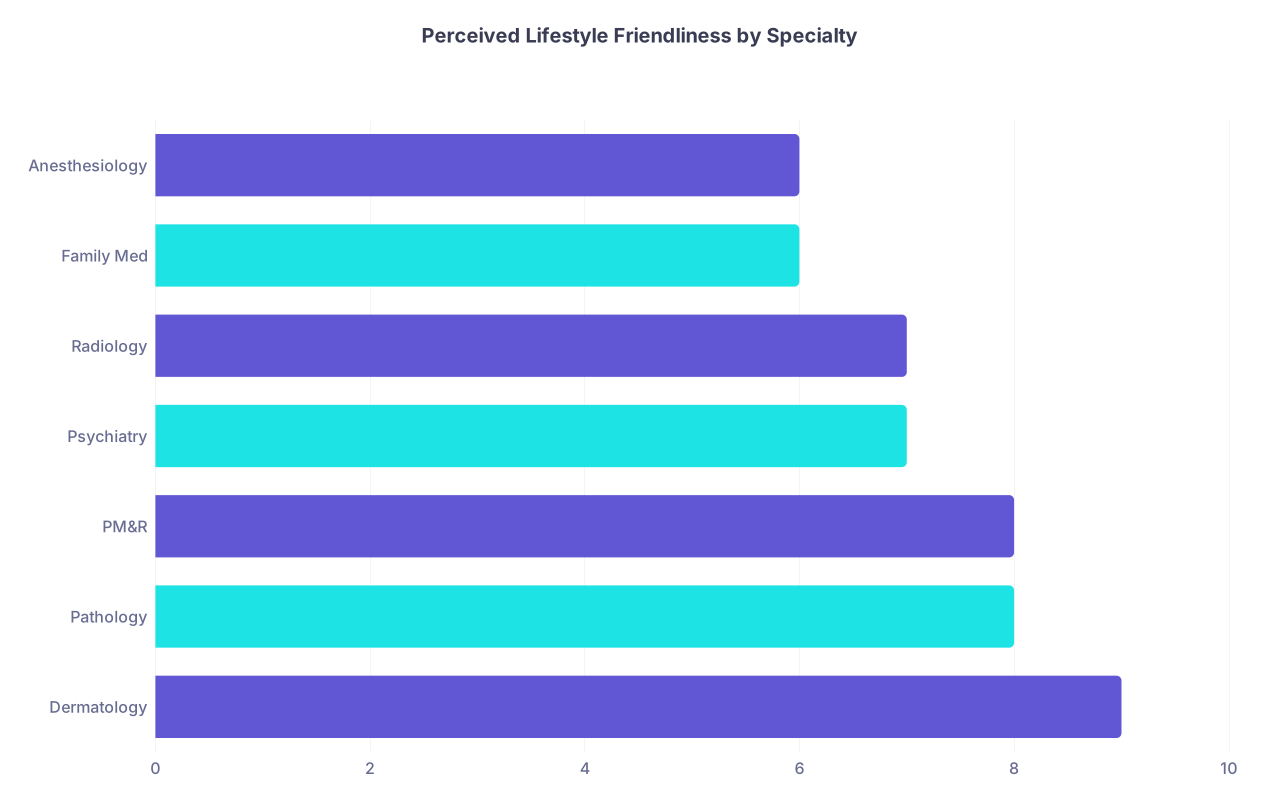
| Category | Value |
|---|---|
| Dermatology | 9 |
| Pathology | 8 |
| PM&R | 8 |
| Psychiatry | 7 |
| Radiology | 7 |
| Family Med | 6 |
| Anesthesiology | 6 |
3.1 Family Medicine: The Hidden RVU Trap
FM can be lifestyle‑friendly. Or it can be a factory.
Clinic Volume and RVUs
Script:
“In continuity clinic, how many patients do you usually see in a half day? And is there RVU pressure here, or not really?”
Follow‑ups:
- “Do you feel rushed in your visits, or do you usually have enough time?”
- “Are attendings talking about your numbers a lot, or do they mostly focus on education?”
Red flag:
- 10–12+ patients per half day as a resident.
- RVU talk every week. “We have to keep the numbers up.”
Inpatient vs Outpatient Balance
Script:
“What is the balance between inpatient months and outpatient months across the year? Do the inpatient months wipe you out or feel reasonable?”
Follow up with a concrete:
“On inpatient FM, what are your actual hours like on a typical day? And are you admitting all night or more just cross‑covering?”
You are looking for whether your “lifestyle specialty” becomes de facto hospitalist training with 6 a.m.–7 p.m. days and frequent call.
Procedures and Scope
FM lifestyle depends a lot on what they expect you to do.
“How heavily do they push procedures or OB here? Can people dial that up or down depending on what they want long term?”
If they say:
- “Everyone has to do full‑scope OB, including 24‑hour L&D call” – that is a different lifestyle than clinic‑heavy FM.
3.2 Psychiatry: The Safety and Emotional Load Question
Psych can be cushy. It can also be emotionally brutal and unsafe if the system is poor.
Safety and Support
Script:
“On inpatient psych or the ED, do you feel physically safe here? What happens when a patient escalates or becomes violent?”
Follow‑ups:
- “Have you ever felt like you were left alone with something you were not ready for?”
- “Does security respond quickly, or are you waiting forever?”
If they brush off safety with dark jokes, pay attention.
Call and Cross‑Coverage
Script:
“What is psych call like here? Are you covering multiple hospitals, doing lots of new consults, or mostly phone calls?”
“On a typical call night, how much sleep do you actually get?”
You are checking whether “lifestyle” means:
- 24‑hour home call that is actually 24‑hour pager hell.
- Or reasonable night float with backup.
Emotional Debriefing and Burnout
“When tough cases happen—suicide, bad outcomes—do you feel like there is structured support or is it more just figure it out yourself?”
Good programs have:
- Formal debriefs.
- Attendings who proactively check in.
The absence of that is a big deal in psych.
3.3 Dermatology: The Hidden Expectations Behind the Nice Hours
Derm has good hours. The stress shows up in different places.
Research and Academic Pressure
Script:
“Day to day the hours sound good, but what are the expectations outside of clinic? Are people doing a lot of research, QI, or extra stuff on their own time?”
Follow‑ups:
- “Do chiefs or attendings push you toward certain academic paths?”
- “Do people have time to enjoy the ‘good hours’ or are they spending evenings working on manuscripts?”
Clinic Pacing
Script:
“In a typical clinic half day, how many patients are you expected to see, and how much of the note and prior auth work falls on you versus support staff?”
Red flag:
- Slim support.
- Residents doing everything: photos, prior auths, pharmacy calls, EMR sludge.
3.4 Pathology: Lifestyle vs. Isolation
Path can be fantastic lifestyle‑wise but socially isolating or politically toxic.
Case Load and Turnaround Pressure
Script:
“What does a typical day look like for you—how many cases are you signing out, and is there a lot of pressure for fast turnaround?”
Follow‑ups:
- “Do you feel like you can take time to actually learn from cases, or is it mostly just keep up with the volume?”
- “How often do attendings stay very late to finish work? Does that spill down to residents?”
Culture and Isolation
“Do residents here hang out at all outside of work, or is everyone pretty separate?”
“Do you feel like attendings are approachable, or is there a lot of hierarchy and criticism?”
You are trying to detect whether:
- The lifestyle is good but the environment is cold, punitive, or lonely.
3.5 PM&R: Boundaries and Consult Sprawl
PM&R can be excellent lifestyle. Unless consults are unmanaged and you are everyone’s dumping ground.
Consult Services
Script:
“How does the consult service run here? Are you covering huge patient lists and multiple floors, or is it fairly controlled?”
Follow‑ups:
- “Do you ever feel like other services dump on you, or is there good collaboration?”
- “What is admission and discharge workload like on the rehab side?”
Procedures vs. Clinic Mix
“Across the program, do residents feel overbooked in clinic, or is there enough time for procedures, charting, and learning?”
You want to know if this is:
- Primarily high‑volume clinic.
- Or a balanced mix with teaching and manageable schedules.
3.6 Radiology: Call, Overnight Reads, and Isolation
Radiology lifestyle is very schedule‑dependent.
Call Structure
Script:
“What does call look like in this program—night float vs. home call, how many nights in a row, and what is the volume like overnight?”
Follow‑up:
“On your most recent call week, how many studies were you reading per night on average?”
Concrete numbers matter.
Interaction and Teaching
“Do you feel like attendings take time to teach during readouts, or are they mostly just trying to get through the list?”
“How much interaction do you have with the rest of the hospital—do you feel like part of a team or kind of in a silo?”
Radiology can become very transactional: high volume, little teaching, minimal human connection. That affects long‑term satisfaction more than people expect.
3.7 Anesthesiology: Early Mornings and Case Pressure
Anesthesia can be lifestyle‑friendly. Or you can be in the OR at 5:45 every day, exhausted.
Start Times and End Times
Script:
“On a typical OR day, what time are you actually walking into the hospital, and what time do you usually leave?”
“How many days a week do you get out close to your scheduled end time versus staying late?”
Case Mix and Autonomy
“Do you feel like the sickest cases and toughest rooms are fairly distributed, or do certain residents consistently get slammed more than others?”
You are probing:
- Whether junior residents are being used as workhorses.
- Whether there is any attention to equity in assignments.
4. Cutting Through Spin: Questions That Expose Culture Fast
Every program touts “collegial culture” and “supportive environment.” Forget their adjectives. Demand evidence.
4.1 The “Last Time Something Went Wrong” Question
Script:
“Last time a resident here had a really bad week—personal crisis, patient death, serious mistake—how did the program respond?”
Then listen.
If they:
- Tell a specific story where chiefs/PD stepped in, adjusted schedule, offered real support = good sign.
- Wave it off with “we are all family here” but zero concrete example = marketing, not reality.
4.2 The “Coverage When You Are Sick” Test
Script:
“If you wake up with the flu or COVID, how easy or hard is it to call out? Do you feel any pressure not to?”
Follow‑ups:
- “Who actually covers your work when that happens?”
- “Has anyone been made to feel guilty for being out?”
You are looking for:
- Actual backup systems vs. “we just make it work,” which translates to everyone getting crushed.
- Subtle punishment for being human.
4.3 How They Talk About Administration
Script:
“How responsive is leadership here—like the PD, chiefs, GME—when residents bring up concerns? Has anything actually changed from resident feedback recently?”
Then push:
“Can you give an example of something residents complained about that actually got fixed?”
If they cannot name anything:
- Either no one complains.
- Or nothing changes. Both are bad.
4.4 Treatment of “Difficult” Residents
Script:
“Without naming names, how does the program handle residents who are struggling—whether with performance or personal issues? Is it mostly punitive, or is there a real remediation/support process?”
You want to know:
- Is there a pattern of quietly forcing people out?
- Or is there structure, coaching, and second chances?
Programs that chew up their weakest residents will not hesitate to chew you up if life hits you hard.
5. Reading Between the Lines: What Their Answers Really Mean
You will not always get honest negativity. But you will get cracks if you pay attention.
Tell‑Tale Phrases That Should Make You Wary
“You just have to push through for a few years.”
→ Translation: burnout is normal, not addressed.“It is residency, it is supposed to be hard.”
→ Translation: any concern you raise will be dismissed with this line.“We are like a family here.” (with no examples)
→ Could be real. Often means nothing.“No one has ever had an issue with that.”
→ People always have issues with something. This is either denial or fear.
Green Flags That Actually Matter
Look for specific, concrete positives:
- “When X happened, the PD personally called, adjusted their schedule, and made sure they were okay.”
- “We complained about night float and they actually changed the schedule structure this year.”
- “I play pickup basketball every week, and several of us go together. It is kind of our thing.”
- “We have two residents on parental leave right now and the program handled it smoothly.”
Those things are hard to fake.
6. Targeted Scripts for Individual Priorities
Your priorities might not be the same as the person next to you on the interview trail. Use these question sets depending on what you care about most.
| Priority | Key Focus Questions |
|---|---|
| Family/Kids | Call coverage, parental leave, backup systems |
| Mental Health | Burnout talk, support after crises, therapy normalization |
| Moonlighting | Availability, restrictions, impact on hours |
| Academic Career | Research expectations, protected time |
| Geographic Stability | Commuting, housing, resident distribution |
6.1 If You Care About Family and Kids
Script Set:
“Are any residents here married or have kids? How has the program handled things like pregnancies, parental leave, or daycare issues?”
“What is the call schedule like for people with kids—does the program accommodate at all, or is everyone treated the same on paper?”
Follow‑up specifics:
- “Has anyone had to adjust their schedule for childcare problems? How did that go?”
- “Is there any flexibility about switching calls or are swaps a nightmare?”
6.2 If You Care About Mental Health
Script Set:
“How common is it for residents here to see a therapist or get mental health care? Is it normalized or kind of hush‑hush?”
“Does the program actually give you time to make appointments, or is it just ‘we support you’ in theory?”
And:
“Have there been any serious mental health crises among residents in the last few years, and if so, did the program respond in a way that felt supportive?”
You are not asking for gossip. You are assessing whether this place treats mental health as real or as PR.
6.3 If You Care About Money/Moonlighting
This matters a lot in “lifestyle” specialties where you might actually have bandwidth to moonlight.
Script Set:
“Is moonlighting allowed here, and if so, how many residents realistically do it and how much do they work?”
“Does moonlighting end up being necessary to feel financially comfortable, or more just a bonus for people who want it?”
Focus on:
- Whether the culture punishes or side‑eyes moonlighting.
- Whether moonlighting is patching inadequate baseline pay.
6.4 If You Care About Academic vs. Community Vibe
Script Set:
“Do you feel like the program leans more academic or more community in practice? For residents who are not going into academic medicine, does that feel okay here?”
“How are residents who want a non‑academic, lifestyle‑oriented career treated—supported or low‑key judged?”
If you want lifestyle, you do not want to be the “lazy sellout” in a cutthroat academic shop.
7. How to Actually Ask These Without Being Awkward
You do not need to unleash all 40 questions on one poor PGY‑2. This is how you structure it across a full interview day.

| Step | Description |
|---|---|
| Step 1 | Preinterview Planning |
| Step 2 | Prioritize 8 to 10 Core Questions |
| Step 3 | Morning Resident Breakfast |
| Step 4 | Hours, Call, Culture |
| Step 5 | Hallway Chats |
| Step 6 | Lifestyle Priorities |
| Step 7 | Afternoon Resident Panel |
| Step 8 | Cross check answers |
| Step 9 | Post day Notes |
7.1 Before the Interview
- Pick 8–10 questions that match your priorities.
- Save the rest as optional follow‑ups.
7.2 During Resident‑Only Time
These are the ideal spots:
- Pre‑interview breakfast.
- Resident lunch.
- Tours and hallway walks.
- Socials/dinners the night before.
Open with softballs:
- “Where do most residents live?”
- “What do you usually do on weekends here?”
Once they warm up, pivot:
“Can I ask you a more real question about hours and burnout here?”
That line works. It signals you are serious and not playing brochure‑games.
7.3 Ask Multiple People the Same Core Questions
You want pattern recognition:
- Ask one senior about hours.
- Ask a different intern about call.
- Ask someone in the middle about culture and burnout.
If three people independently describe:
- 7 a.m.–6 p.m. days.
- High call volume.
- “We are tired but we survive.”
Believe them. Not the glossy slide.
7.4 Right After the Day: Lock It In
You will forget specific answers by the fourth interview. Everyone does.
Take 5–10 minutes in your car, hotel room, or on the train and write:
- Actual numbers: hours, call frequency, patient volumes.
- Direct quotes that stuck with you.
- Color impressions: “Residents looked exhausted / energized / disengaged / tight‑knit.”
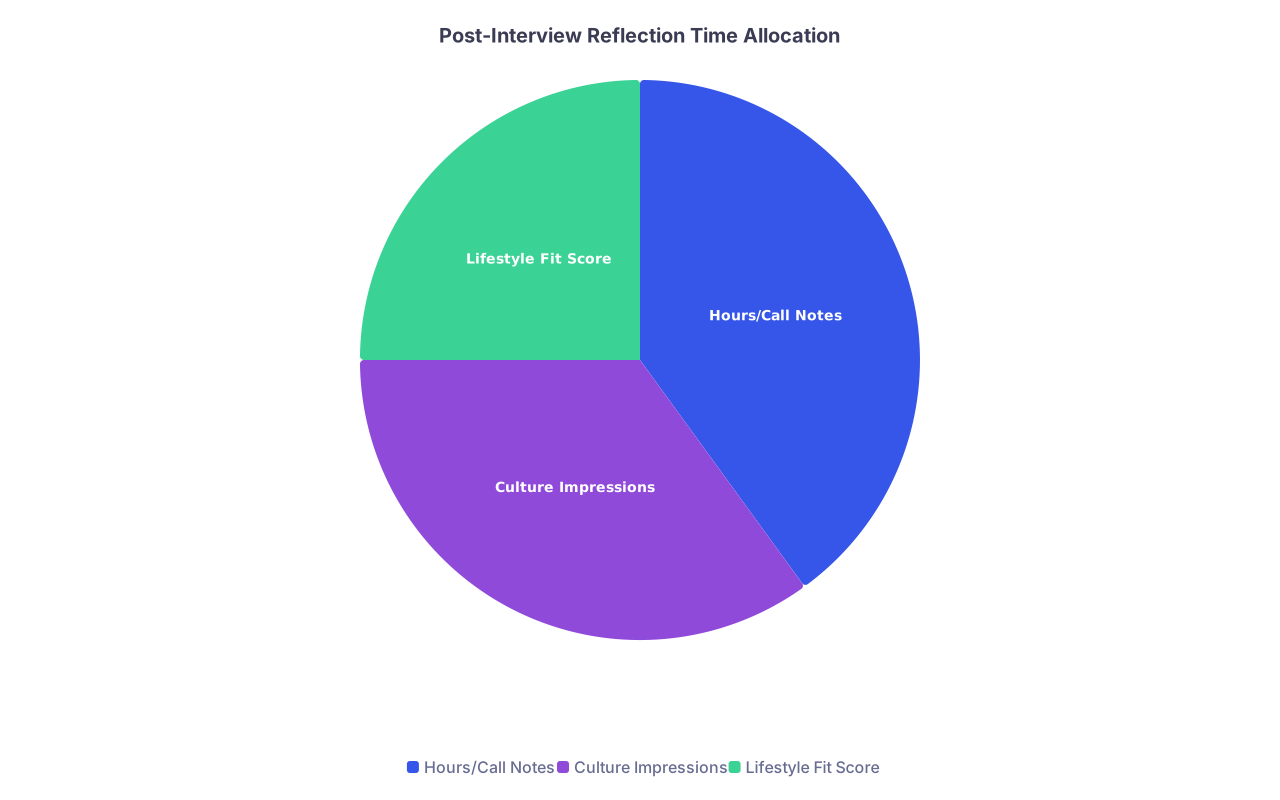
| Category | Value |
|---|---|
| Hours/Call Notes | 40 |
| Culture Impressions | 35 |
| Lifestyle Fit Score | 25 |
Then, when you make your rank list, you will not be relying on fuzzy vibes.
8. Quick Reality Checks by Specialty Type
To tie this all together, here is a compact view of what your questions are really probing in “lifestyle‑friendly” specialties.
| Specialty | Main Hidden Risk | Key Question Theme |
|---|---|---|
| Family Med | RVU/clinic overload | Patient volume, RVU talk |
| Psychiatry | Safety, emotional load | Crisis handling, support |
| Dermatology | Off-hours academic pressure | Research expectations |
| Pathology | Isolation, toxic hierarchy | Culture, feedback style |
| PM&R | Uncontrolled consult load | Consult volume, dumping |
| Radiology | Brutal night call | Call structure, overnight volume |
| Anesthesiology | Chronic early/late hours | Start/end times, equity of cases |
9. The One Thing You Must Not Do
Do not ask, “Is this a good lifestyle program?”
You will get a useless answer. Every resident has normalized whatever they are living through.
Force them into data:
- What time.
- How many.
- How often.
- What happened last time.
That is how you see through spin.
Open a blank note on your phone right now and list 10 scripted questions you actually plan to use—tailored to your top one or two specialties. If you are not walking into your next interview with that list ready, you are leaving your future lifestyle up to chance.