
The biggest mistake people make about “small-town vs big-city jobs” is pretending it’s just a vibe choice. It is not. It’s a set of very real tradeoffs in money, autonomy, lifestyle, and burnout risk that will hit you differently depending on your specialty and phase of training.
You’re not choosing “cute town vs cool city.” You’re choosing how you’re going to sleep, who you’re going to marry (or not), whether you’ll be covering OB at 3 a.m. when you’re an internist, and whether your outpatient “lifestyle specialty” actually feels like lifestyle…or like being on call for an entire county.
Let’s get specific.
First: Reality Check On “Lifestyle-Friendly” Specialties
Before talking small-town vs big-city, you need to understand what changes with setting even in “good” specialties like:
- Dermatology
- Outpatient-focused Internal Medicine (primary care, concierge)
- Family Medicine (with or without OB)
- Psychiatry
- Radiology
- Anesthesiology (esp. in community vs academic)
- PM&R
- Pathology
- Ophthalmology
- ENT (in selected practices)
They’re all potentially lifestyle-friendly. But the zip code changes everything.
In a big city, lifestyle specialties are usually:
- More subspecialized
- More siloed (call is narrower)
- More competitive but more standardized in pay and hours
In a small town/rural region, lifestyle specialties are:
- Less siloed (you do more types of work)
- More “all hands on deck” with call
- Often higher-paid but with more perceived responsibility and fewer backups
So the question isn’t “What specialty is lifestyle-friendly?”
The question is: “In this specialty, what does my life actually look like in a town of 30,000 vs a metro of 3 million?”
How Setting Warps Your Day-to-Day (Even In the Same Specialty)
Let’s walk this specialty by specialty for the most lifestyle-friendly fields, because that’s where people get blindsided. You match thinking, “Derm is derm,” and then you end up on call for all rashes in a 150-mile radius.

Dermatology
Big City Derm:
- You’re likely to subspecialize: cosmetics, complex medical derm, Mohs.
- Call is usually light and shared among many dermatologists.
- Patients are self-selecting and often insured; cosmetic side can be lucrative.
- Competition is fierce. Partnership tracks can be political and slow.
- Clinic days may be stacked with 30+ patients, but they’re mostly derm problems, not “solve everything.”
Small-Town Derm:
- You are “the” skin doctor for everything: rashes, weird lesions, inpatient consults, nursing home stuff.
- You may cover a large geographical area; telederm can blow up your inbox.
- On paper: better pay, signing bonuses, loan repayment.
- In reality: you may be constantly asked to “just see” things for IM, FM, ED because no one else is comfortable.
- Cosmetic volume may be limited initially, unless you intentionally build it.
If you’re a derm resident thinking about this:
Ask about:
- Inpatient consult expectations
- Call frequency and radius (“Who calls you, and how often?”)
- Breadth of cases: “Do I see pediatrics, rashes, procedural, inpatient, or mainly cosmetics?”
Psychiatry
Big City Psych:
- You can niche: perinatal, addiction, consult-liaison, treatment-resistant depression, etc.
- More controlled outpatient work, often hybrid/telepsych.
- Hospitals have larger psych teams; call is more distributed.
- Lifestyle can be genuinely 8–5 if you set boundaries.
Small-Town Psych:
- You are the default for everything: depression, psychosis, substance use, trauma, kids, geri, ED consults.
- You may be the only psychiatrist covering multiple facilities (hospital + community mental health + jail).
- You’ll have enormous impact and autonomy.
- But if you do not set firm boundaries, everyone will try to route their toughest patients to you.
Red flag wording in small-town psych job posts:
“Comfortable treating all ages.”
“Collaborative role with ED and primary care providers.”
Translation: you are the psych for the region.
Family Medicine
This is where setting can absolutely make or break your life.
Big City FM:
- You can choose outpatient only, no OB, no inpatient.
- You can join large systems or FQHCs with defined hours and call pools.
- But you may be paid less and feel like a cog in a huge RVU machine.
Small-Town FM:
- You can do full-scope: clinic, inpatient, ICU light, ED shifts, OB, procedures.
- Or you can negotiate to be narrower, but you must do it before signing.
- Call can be brutal if you don’t watch the fine print. Being 1 of 3 docs on call for the town is not “lifestyle,” no matter what the brochure says.
- You get faster leadership, community respect, and broader skill use.
For lifestyle FM in a small town, your priorities must be:
- Clarity on scope of practice: “I do not do OB,” “I do not admit ICU patients,” etc.
- Clear call structure: “How many nights per month?” “What’s the backup system?”
- NP/PA and specialist support: “Who takes over when I’m off?”
Outpatient Internal Medicine
Big City Outpatient IM:
- Pure clinic, often no weekends.
- Hospitalists handle all admits.
- Plenty of subspecialty backup; you don’t carry the whole diagnostic burden.
- Lifestyle is usually solid if you avoid toxic productivity expectations.
Small-Town Outpatient IM:
- Many “outpatient IM” jobs quietly expect:
- Admitting your own patients
- Taking unassigned call for the hospital
- Covering some ICU responsibilities if the intensivist model is weak
- You will be asked to stretch “comfort zones”: complex heart failure with limited cardiology access, etc.
- But pay will usually be significantly higher. You may also get leadership roles early.
Ask bluntly: “Do I admit my patients? Who covers nights? Who runs codes?”
If the answer is “we all share it,” and there are 4 of you, be very careful.
Radiology

Big City Radiology:
- High volume, high subspecialization.
- You might do only neuro, only MSK, or only breast.
- Call is rigorous but spread across large groups; telerad is common.
- Lifestyle can be strong: high pay, shift-based work, defined time off.
Small-Town Radiology:
- You’re often more generalist: reading everything from head CTs to mammo to MSK, maybe even some IR.
- You may be “the” person for urgent overnight calls if telerad coverage isn’t full.
- Can be extremely well-paid with strong negotiating leverage.
- But you’ll feel exposed if you’re not comfortable as a generalist.
If you want a chilled lifestyle, small-town rads can be great if:
- There’s telerad or a larger group structure backing you.
- Nights and weekends are either well-compensated or optional.
Anesthesiology
Big City Anesthesia:
- Possible to focus: cardiac, peds, regional, etc.
- Call can be intense in big trauma centers but with robust backup and defined schedules.
- More CRNAs and residents to share work; you may be supervising rather than doing every single case.
Small-Town Anesthesia:
- You cover everything: OB, ortho, general surgery, sometimes pain clinic.
- Fewer anesthesiologists = more call.
- You may be overrun by “add-on” cases and emergencies with less redundancy.
- Lifestyle can be very good if there’s a decent group size (6+ anesthesiologists) and clear call rules.
Watch the actual numbers:
| Setting | Group Size | Weeknight Call | Weekend Call |
|---|---|---|---|
| Big City Academic | 20 | 1 in 10 | 1 in 10 |
| Big City Community | 12 | 1 in 6 | 1 in 6 |
| Small-Town Regional | 6 | 1 in 3 | 1 in 3 |
| Solo Coverage Rural | 1–2 | Every night | Every weekend |
You can see why people burn out.
Psychiatry, Radiology, Derm, PM&R: Telehealth and Hybrid Options
One wild card: telehealth and remote work.
In lifestyle specialties like psych, derm, and rads, a hybrid approach can beat both extremes:
- Live in a small town with cheap housing and quiet life.
- Work for a big-city or multi-state group remotely, or commute only some days.
You get big-city pay structures with small-town cost of living. But you need serious discipline; working from home in a small community blurs boundaries fast.
Who Actually Thrives Where (Personality + Life Stage)
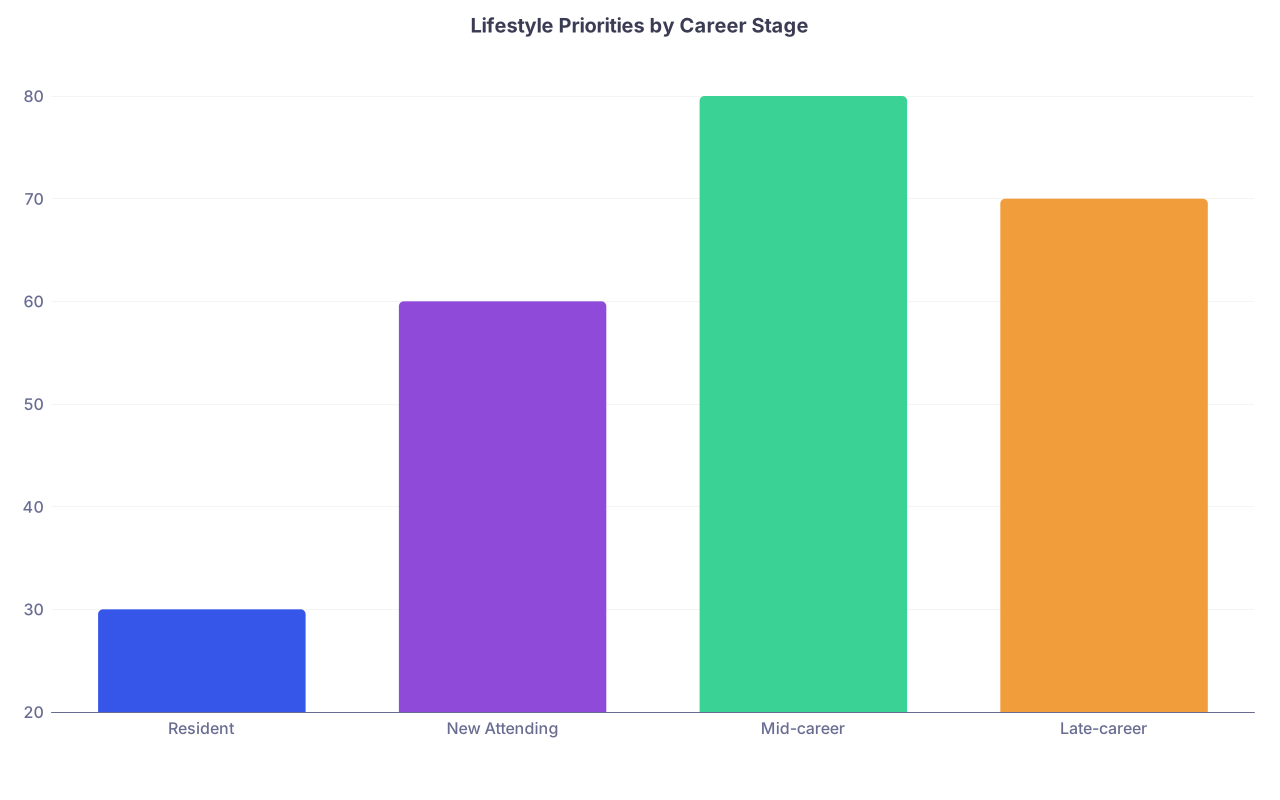
This is where you stop asking, “Which is better?” and start asking, “Who am I right now?”
| Category | Value |
|---|---|
| Resident | 30 |
| New Attending | 60 |
| Mid-career | 80 |
| Late-career | 70 |
(Think of the numbers as “how much lifestyle matters to you compared to prestige and training.”)
When a Big City Makes More Sense
You’re usually better off in a big city if:
- You’re still training or early attending and want subspecialty depth.
- You’re single and want dating options, social life, and anonymity.
- You’re not sure whether you’ll love your specialty and want exit options.
- You know you’re not great with being “on display” in a small community.
Lifestyle specialties in big cities can feel crowded and competitive, but they also offer:
- More colleagues to share burdens.
- Distance between your job and personal life.
- Easier transitions if a job is toxic (just move across town).
When a Small Town Works Better
You’re more likely to thrive in a small town if:
- You’re partnered, maybe with kids, and want more space, shorter commutes, and cheaper housing.
- You actually like knowing your patients outside the clinic and being part of a community.
- You want leadership roles: medical director, department head, etc., in your 30s instead of your 50s.
- You value autonomy more than layering of administration.
But you must be honest about:
- Your tolerance for being “on” all the time socially.
- Your partner’s career—small-town jobs for non-medical spouses can be scarce.
- Your comfort with broader scopes of practice, especially in FM, IM, psych, and rads.
Concrete Scenarios: What To Do If You’re In…
Situation 1: PGY-2 in a Lifestyle Specialty, Torn Between a Rural Scholarship and City Practice
You’re a PGY-2 psych resident. You’re staring at:
- A small-town job offering $50k sign-on, $200k loan repayment, and a 1 in 3 call schedule.
- A big-city academic job offering lower salary, no loan repayment, but manageable hours.
Here’s how to think about it:
Calculate your 5-year net, not just salary.
Add loan repayment + salary – cost of living. Sometimes the rural job wins by a mile.Ask for hard data from the rural site:
- “How many consults per day when on call?”
- “Average number of active inpatients you manage?”
- “Do you have an inpatient unit or is it all ED boarding + transfer?”
- “How many psychiatrists share call?”
If lifestyle is your priority, negotiate boundaries now:
- Telepsych backup coverage.
- Protected admin time.
- No expectation that you’re 24/7 available by text because “you’re the only psych.”
If they refuse to put boundaries in writing, walk away, regardless of the money.
Situation 2: FM Resident From a Big City Considering Staying vs Moving to a Small Town for Lifestyle
You’re a third-year FM resident in Chicago. You’re thinking:
- Stay in the city at an outpatient-only FQHC, 8–5, moderate pay.
- Move to a town of 40,000, do broad FM with OB and inpatient.
Action steps:
Go spend a weekend shadowing in the small town.
Do not rely on recruiter talk. Ask the other FM docs what they actually do on a Monday, a Thursday night call, and a Saturday of OB.Decide your non-negotiables:
- Do you actually want OB call? Yes or no.
- Do you actually want to manage ventilators and codes? Yes or no.
- Are you okay knowing you’ll run into your patients at the grocery store, constantly?
If you’re leaning small town but scared of scope, consider a 1–2 year stint with:
- Clear call protections.
- Access to tele-ICU or robust backup.
- A documented plan to narrow scope over time (e.g., “After 1 year, no more OB night call.”)
You can try it, bank money, and then pivot back to a city later if it’s not for you.
Situation 3: Radiology Fellow With Subspecialty Training, Offered Small-Town Practice Needing a Generalist
You did a neurorads fellowship. A regional hospital two hours from a major city wants you as a generalist reading everything.
Here’s the move:
Clarify percentage of subspecialty vs general work.
“What percent of my reads will be neuro vs other modalities?”Ask what happens when you’re uncomfortable with a case.
- Is there telerad or a larger group you can consult?
- Or are you expected to “figure it out” because you’re physically present?
Ask about schedule structure.
- Day-only vs nights vs weekends.
- Is remote work possible part of the week?
If they want you on site 5 days/week, covering 1 in 3 nights, generalist, and no telerad, that’s not a lifestyle job. It’s a trap with a big signing bonus.
How To Actually Compare Offers: Not Just Salary
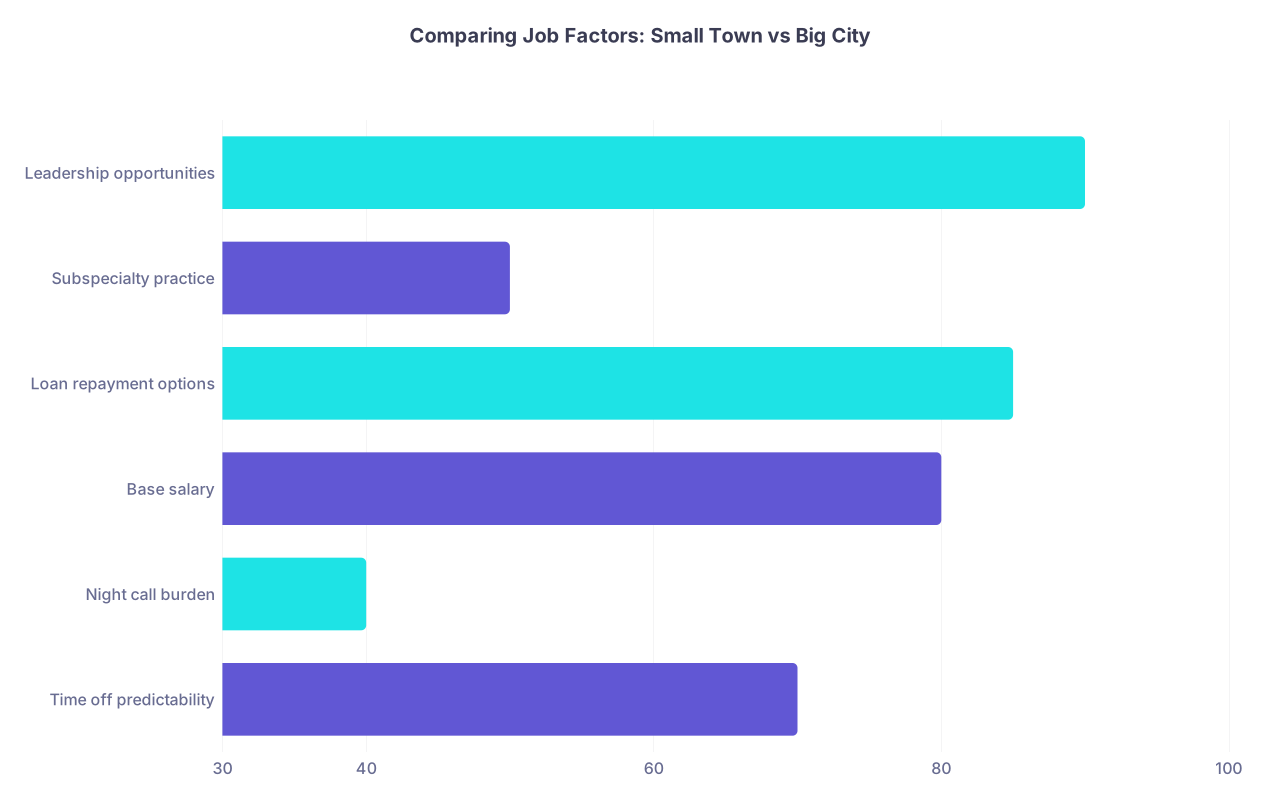
You need a simple framework. Think in buckets: time, stress, money, flexibility, and growth.
| Category | Value |
|---|---|
| Time off predictability | 70 |
| Night call burden | 40 |
| Base salary | 80 |
| Loan repayment options | 85 |
| Subspecialty practice | 50 |
| Leadership opportunities | 90 |
Imagine the slider higher = more in small-town settings, lower = more in big-city settings, depending on factor.
When you’re comparing two real offers, list them out:
- Weekly schedule: clinic/OR hours, admin time, call frequency.
- Inpatient vs outpatient mix.
- Backup: specialists, hospitalists, telemedicine.
- RD support: NPs, PAs, nurses, MA staffing levels.
- Spousal job market and schools (if relevant).
- Exit options: “If this job sucks, how hard is it to move?”
If you cannot see a graceful exit from a small-town job, you need extra caution. A high-paying job that you feel stuck in is not lifestyle-friendly; it’s just golden handcuffs with nicer views.
Red Flags That Kill Lifestyle—Regardless of Town Size
I’ve seen people sign “lifestyle” contracts in both big cities and small towns that turned out to be slow-motion disasters. Watch for these:
- Vague call language: “light call,” “reasonable call.” Get exact numbers.
- Any phrase like “we’re currently short-staffed but recruiting more.” You will be that gap filler for years.
- “We’re like family here.” Sometimes true. Often means poor boundaries.
- No clear policy on after-hours messaging, inbox time, or admin support.
- One or two older docs who “still do it all” and expect you to match their scope.
Ask to talk to someone who joined in the last 2–3 years. Not the founding partner who thinks 1 in 2 call is “how it’s always been.”
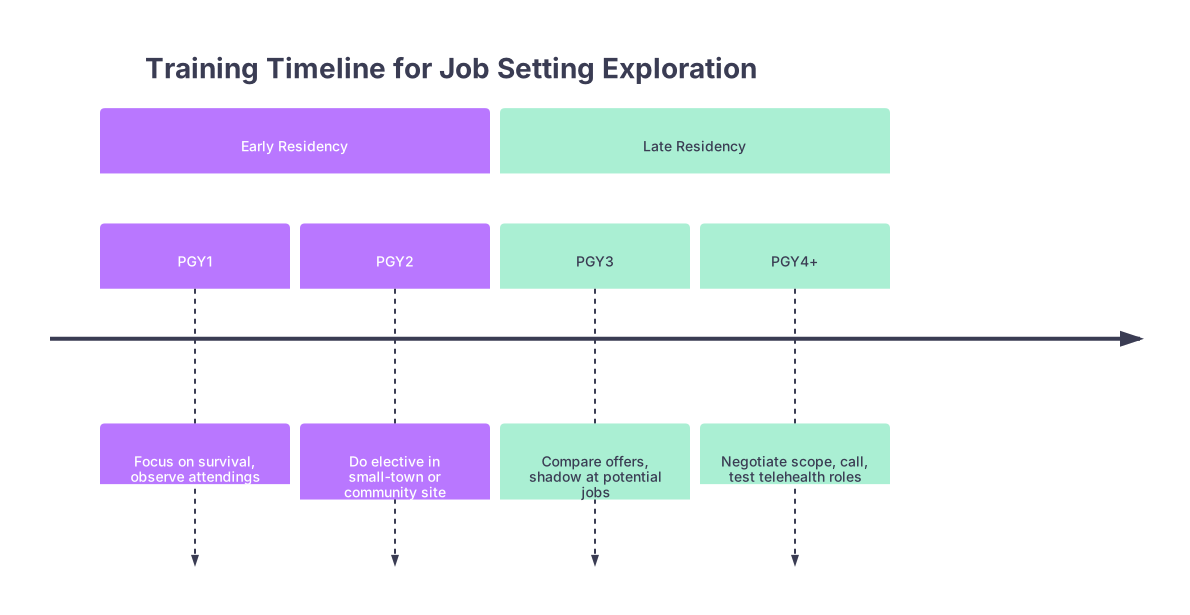
How To Use Residency To Test This Before You Commit
You do not have to wait until you’re signing an attending contract to figure this out.
| Period | Event |
|---|---|
| Early Residency - PGY1 | Focus on survival, observe attendings |
| Early Residency - PGY2 | Do elective in small-town or community site |
| Late Residency - PGY3 | Compare offers, shadow at potential jobs |
| Late Residency - PGY4+ | Negotiate scope, call, test telehealth roles |
During residency or fellowship:
- Do at least one community or rural rotation if you’re even mildly curious. See if you like the feel.
- Pay attention to how attendings seem in each setting: burnt out vs grounded, isolated vs supported.
- Talk to their partners and kids if you get the chance; they’ll tell you the truth about lifestyle.
If you’re already a resident in a major metro and never leave the academic bubble, you’re working with incomplete data.
Final Reality: You Can Move. But Moving Has Costs.
Here’s the part nobody tells you straight: Your first job is rarely your forever job. That’s fine. But every move has a cost:
- Emotional: uprooting families, kids changing schools, partner changing jobs.
- Professional: rebuilding referral networks, waiting out noncompetes.
- Financial: moving costs, potential gap in pay, signing bonus clawbacks.
So think like this:
Early career (first 3–5 years):
You can experiment more—big city now, small town later, or the reverse.Mid-career:
Moves get harder; invest more in truly matching your life stage.Late-career:
Some people choose a quiet small town as a glide path to retirement. Others move back to a city to be near adult kids.
The “best” choice at 30 might be a disaster at 45. Expect to reevaluate.
You’re not deciding your forever. You’re deciding your next 3–7 years.
With all that on the table, here’s your real task: stop thinking of “small town vs big city” as aesthetic. Start treating it like a clinical decision—data, risks, benefits, alternatives. Talk to people actually living those jobs, not just recruiters.
Once you see how your specific specialty morphs across settings, you can pick intentionally instead of drifting into the first offer with a shiny signing bonus. And once you’ve done that, you’re ready for the next layer of reality: how to negotiate those contracts so your “lifestyle job” actually protects your life. But that’s a story for another day.