
The worst third-year mistake is not failing a shelf. It is torpedoing your future lifestyle by stacking the wrong rotations in the wrong order.
You are not just picking blocks. You are setting up how tired you’ll be when you meet each specialty, how sharp you’ll be when attendings first remember your name, and how much gas you’ve got in the tank when it’s time to chase letters of recommendation. For lifestyle-friendly specialties, timing is not optional. It is strategy.
Let’s build this step by step, on an actual timeline.
Big Picture: How Rotation Order Really Shapes Lifestyle Choices
At this stage, you should be clear about one thing: “lifestyle specialty” is not a magical category. It is a function of:
- Call vs no call
- Clinic vs OR vs inpatient mix
- Predictability of schedule
- Culture of the specialty
Here are the usual suspects students ask about:
| Specialty | Lifestyle Reputation | Key Exposure Needed in MS3 |
|---|---|---|
| Dermatology | Excellent | Derm elective, IM background |
| Radiology | Very good | Radiology elective, medicine context |
| Anesthesiology | Good-Very good | OR time, surgery/ICU context |
| PM&R | Very good | Neuro, ortho, inpatient rehab |
| Ophthalmology | Very good | Dedicated ophtho elective |
| ENT | Moderate-Good | Surgery exposure, clinic vs OR feel |
Your third-year core rotations are usually some mix of:
- Internal Medicine
- Surgery
- Pediatrics
- OB/GYN
- Psychiatry
- Family Medicine
- Neurology (at some schools this is 3rd year, some 4th)
Lifestyle specialties live around these, not inside them. So the question becomes: when do you place lifestyle-oriented rotations or experiences relative to the heavy, exhausting ones?
Month-by-Month Strategy: Before Third Year Starts
At this point (late MS2 / early MS3 planning), your goals are:
- Protect your ability to study for shelves.
- Protect your energy so lifestyle fields do not look artificially amazing just because you are burnt out from surgery.
- Get early-enough exposure for any competitive lifestyle field you might realistically chase.
3–6 Months Before MS3 Starts
You should:
- Make a provisional rank list of specialties:
- Column A: “Serious interest”
- Column B: “Might consider”
- Column C: “No chance”
Any of these in Column A or B?
- Derm
- Radiology (diagnostic or IR)
- Anesthesia
- PM&R
- Ophthalmology
- ENT
If yes, you need a plan for:
- When you will see them
- When you will get letters
- When you will look good enough for them to actually remember you
Now is when you:
- Talk to a real human in each interest area:
- A PGY2+ resident
- Or a junior attending who still remembers the application process
- Ask one very specific question:
“If you could reorder your MS3 year to help with your specialty, what would you move earlier or later?”
Write those answers down. They’re usually brutally honest.
1–2 Months Before MS3 Starts
At this point, you should be:
- Looking at your school’s rotation blocks (often 4–6 weeks each)
- Mapping when each core is likely to fall (some schools let you choose, some give you 2–3 tracks)
You want to avoid two classic disasters:
- Discovering you like anesthesia in May of MS4.
- Doing every heavy rotation back-to-back and being wrecked for the electives that actually decide your lifestyle.
Ideal Macro-Order: Where Lifestyle Specialties Fit
Let me give you a template first. Then we’ll get into week-by-week and specialty-specific tweaks.
A Reasonable 3rd-Year Flow (12 months)
This is a pattern, not a script:
- Block 1–2 (Early Year):
- Internal Medicine
- Pediatrics or Family Medicine
- Block 3–4 (Early-Mid):
- Surgery
- OB/GYN
- Block 5–6 (Mid-Late):
- Psychiatry / Neurology / lighter core
- “Taste” elective or sub-rotation in interest area
- Block 7–8 (Late):
- Whatever core is left
- Elective in a possible specialty
Where do lifestyle specialties go?
Anesthesia / Radiology / PM&R
Best slotted:- Late MS3 or very early MS4 for sub-I / audition types
- But you want at least a taste by mid MS3
Derm / Ophtho / ENT
Hyper-competitive or early-application fields:- You need serious exposure by late MS3
- Preferably an elective in MS3 or the first block of MS4
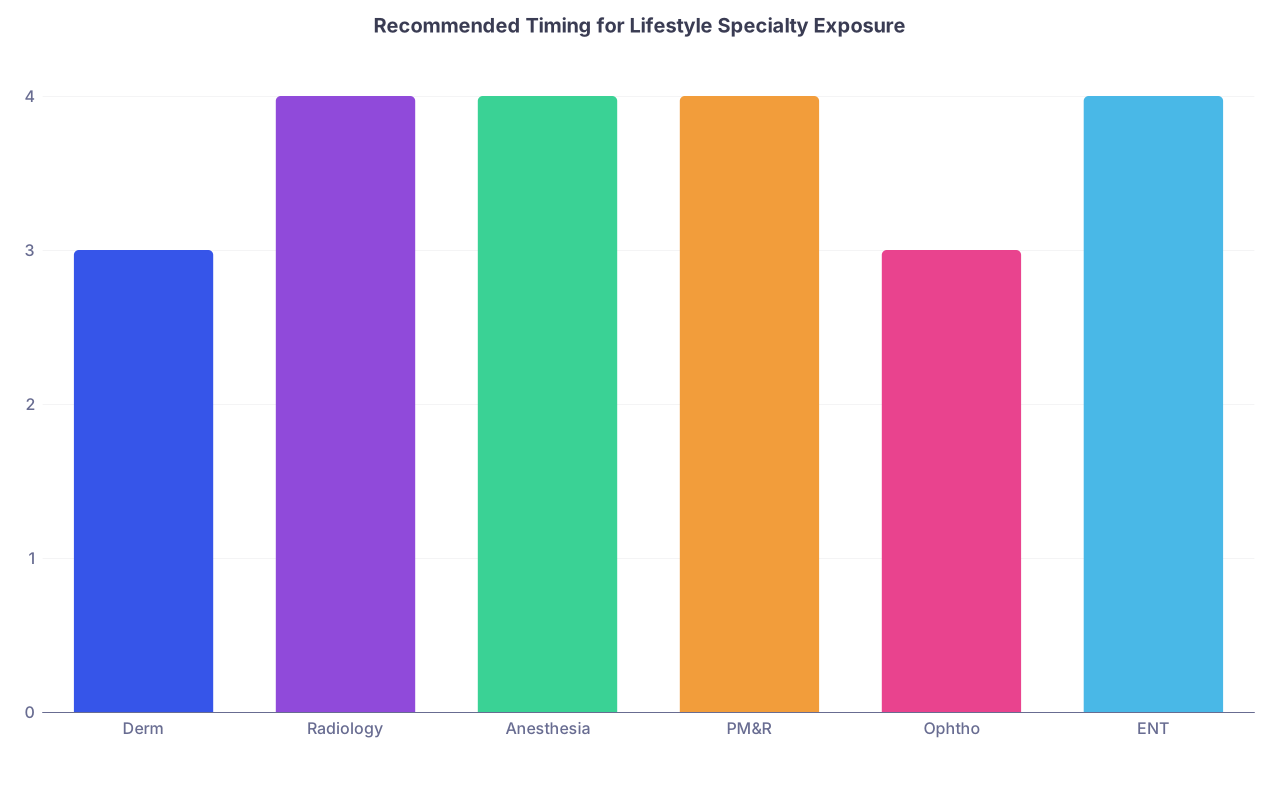
| Category | Value |
|---|---|
| Derm | 3 |
| Radiology | 4 |
| Anesthesia | 4 |
| PM&R | 4 |
| Ophtho | 3 |
| ENT | 4 |
(Scale: 1 = very early MS3, 5 = early MS4; lower is earlier exposure recommended.)
Week-by-Week: How to Use Each Core Rotation to Test Lifestyle Fit
You are not just surviving rotations. You’re gathering data.
On Internal Medicine (Whenever It Falls)
By Week 1–2:
- You should be watching:
- Do I like following patients for days?
- Am I okay living on the wards?
- How do I feel about long notes and cognitively dense days?
If you are lifestyle-oriented and hate chaos and codes, this matters.
By Week 3–4:
- Start asking:
- Could I tolerate this life 5 days a week, 40–50 hours, in clinic form?
- Do I like thinking through systems?
Practical move:
- By the end of the medicine block, you should:
- Have identified attendings who are supportive (maybe future letter writers if you consider IM or PM&R).
- Know whether cognitive, clinic-heavy fields (derm, PM&R, rheum, allergy, outpatient cards) sound appealing.
On Surgery
Surgery is the “distorter-in-chief” of lifestyle perception.
Week 1–2:
- You’ll probably be wrecked: early mornings, long cases, pagers, scrub sink drama.
- Don’t make big life decisions here.
Week 3–4:
- Start a running note for yourself titled:
- “Things I like about the OR”
- “Things I hate about the OR”
You’re not just deciding on surgery; you’re stress-testing whether:
- Anesthesia could work for you
- ENT is tolerable or a nightmare
- Ophtho’s version of OR life sounds ideal (shorter cases, more predictable)
By the end of surgery:
- You should know:
- “I never want to see an OR again” vs. “I like procedures but not this lifestyle.”
That distinction is critical if you’re aiming for anesthesia, ophtho, ENT, or interventional radiology.
Specialty-Specific: When to Schedule Lifestyle Fields
Now let’s get to the scheduling meat.
Dermatology: Schedule Like You’re Serious or Skip It
If derm is even 20% on your mind, you must treat timing like a competitive sport.
At this point (planning MS3):
- You should plan:
- At least 1 IM or peds block early in MS3
- A derm elective late MS3 or first block MS4
Why?
- You need:
- Strong medicine foundation
- Research time
- Enough lead time for letters and away rotations
Concrete timeline:
Early MS3 (Blocks 1–3):
- Medicine first or second
- Start sniffing around derm department – show up at didactics if allowed
Mid MS3 (Blocks 4–5):
- Reach out for a derm elective spot for late MS3 / very early MS4
- Ask how students typically get letters
Late MS3 / First Block MS4:
- Take your home derm elective
- At this point you should:
- Be ready to work hard, read constantly, and ask for a letter if it clicks
Radiology: Do Not Leave It For the End as a “Vacation Elective”
Radiology looks lifestyle-friendly and chill. Nobody should choose their career based on who seems to drink the most coffee while sitting down.
If you’re curious about radiology:
- You should see it by mid-to-late MS3.
Ideal order:
- Medicine → Surgery → Radiology
Why this order?
- Medicine gives you clinical context: What imaging is actually useful.
- Surgery shows you how imaging guides the OR and emergencies.
- Radiology then becomes interesting, not just “shadows in a dark room.”
At the point you finish surgery:
- You should schedule:
- A 2–4 week radiology elective within the next 2–3 blocks if possible.
- During that elective:
- Ask to see both diagnostic work and interventional sessions.
- Pay attention to:
- Call structure
- How attendings talk about burnout and telerad
- How much they read per day
Anesthesiology: Best After You’ve Seen Surgery, Not Before
Anesthesia makes the most sense when you already know what surgeons are like and what an OR day feels like.
Planning:
- Aim to do anesthesia:
- Right after surgery
- Or at least after you’ve done some OR-heavy experience
Sample sequence:
- Block 3–4: Surgery
- Block 5: Anesthesia elective
At that point:
- You’ll understand:
- The flow of cases
- Why induction times and turnovers matter
- How anesthesia quietly runs half the show
During your anesthesia elective (week-by-week):
- Week 1:
- Be in the room early, watch pre-op evals closely
- Week 2:
- Focus on:
- Do I like moment-to-moment vigilance?
- Am I okay not “owning” a patient long term?
- Focus on:
If you finish that elective thinking, “These people seem weirdly happy,” you might have found your lane.
PM&R, Ophtho, ENT: Timing for Each
PM&R (Physical Medicine & Rehabilitation)
PM&R is the stealth lifestyle specialty. Students “discover” it late all the time. That’s avoidable.
At this point in MS3 planning, you should:
- Try to schedule:
- Neurology or medicine before a PM&R elective
- Ortho or a musculoskeletal-heavy environment if possible
Ideal flow:
- Early: Medicine or Neuro
- Mid: Ortho exposure (can be as part of surgery)
- Mid-Late: PM&R elective
Why mid-late?
- You’ll:
- Understand stroke, spinal cord injury, TBI, joint issues
- Appreciate the rehab side as something other than “PT plus”
Lifestyle lens:
- During the elective:
- Ask attendings and residents:
- Inpatient vs outpatient lifestyle differences
- Call burden at different practice types
- Ask attendings and residents:
Ophthalmology
Ophtho is competitive and has an early match. You do not get to “accidentally” decide on it in late MS4.
At this point in MS3:
- If you even suspect interest:
- You should be planning an ophtho elective by:
- Late MS3 or
- First block of MS4 at the latest
- You should be planning an ophtho elective by:
Support rotations:
- Neuro helps
- Medicine is still important
- But the biggest factor is: getting into the department early
Timeline:
- Early MS3:
- Find the ophtho interest group, resident contact, or clerkship director
- Mid MS3:
- Shadow in clinic for a day or two if you can’t get a full elective yet
- Late MS3:
- Full ophtho elective
- At this point you should:
- Be asking explicitly how to line up letters and away rotations
ENT (Otolaryngology)
ENT is surgical, competitive, but often more lifestyle-friendly than general surgery long term.
Your move:
- Get:
- Surgery done early-mid MS3
- ENT exposure immediately after or near surgery
Why?
- You want the comparison fresh:
- OR life you already know from surgery
- Add ENT’s clinic, short cases, and call structure
Sample sequence:
- Block 3–4: Surgery
- Block 5: ENT elective
During ENT:
- Watch:
- How much time is clinic vs OR
- How often they stay late
- What residents say at 4 p.m. on a Friday (that’s when the truth leaks out)
Using “Lifestyle” Rotations to Protect Your Sanity (Without Sabotaging Yourself)
Everybody is tempted to stack “easy” blocks after hard ones. That can be smart, but done poorly it backfires.
Good Uses of Lifestyle-Friendly Blocks
At this point in third year, picture these as strategic breathers:
- Radiology elective after surgery
- PM&R elective after medicine or neuro
- Psych after a long stretch of inpatient rotations
These rotations can serve as:
- Shelf recovery time
- Step 2 CK prep breathing room
- Space to think about your actual career without being paged nonstop
Bad Uses
What you do not want:
- A string of “easy” blocks right before crucial audition rotations. Why?
- You get soft. Your workup speed drops. Your workday stamina fades.
If you know you have:
- A big audition elective (derm, ophtho, ENT, anesthesia sub-I) coming up in early MS4:
Then 2–3 blocks before it, you should:
- Avoid stacking only light electives
- Make sure at least one block keeps your inpatient or OR muscles active
Visual Timeline: Sample Third-Year Layout for Lifestyle-Oriented Student
Here’s one way to think about it.
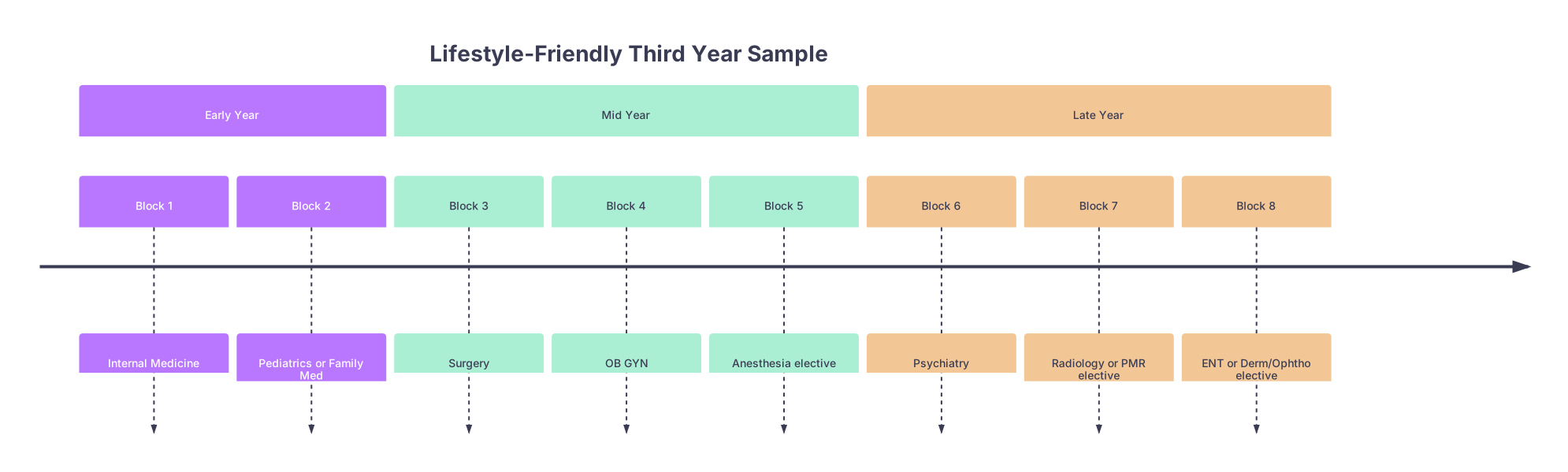
| Period | Event |
|---|---|
| Early Year - Block 1 | Internal Medicine |
| Early Year - Block 2 | Pediatrics or Family Med |
| Mid Year - Block 3 | Surgery |
| Mid Year - Block 4 | OB GYN |
| Mid Year - Block 5 | Anesthesia elective |
| Late Year - Block 6 | Psychiatry |
| Late Year - Block 7 | Radiology or PMR elective |
| Late Year - Block 8 | ENT or Derm/Ophtho elective |
You would flex the specifics depending on which field you lean toward, but the logic holds:
- Heavy cores early-mid
- Interest-focused, more lifestyle-friendly specialties mid-late
- Serious elective in your potential specialty by the end of MS3 or first block of MS4
Day-by-Day Micro-Strategy on Lifestyle Rotations
Lifestyle-friendly specialties can trick you into coasting. You cannot afford that if you want them to like you enough to write strong letters.
On a 2–4 week lifestyle elective (derm, rads, PM&R, anesthesia, ophtho, ENT clinic-heavy), at this point you should:
Week 1
- Show up early, stay engaged the entire day
- Learn the basic language:
- Radiology: common search patterns and report structure
- Derm: morphology terms, “primary lesion” descriptions
- PM&R: functional goals, ADLs, gait descriptions
- Ask one resident quietly:
- “What makes a student stand out in this department?”
Week 2
- Start pre-reading patient lists or cases the night before if possible
- Offer to:
- Present cases
- Draft notes or reports
- Do small, real tasks, not just shadow
By Day 10–12:
- You should have:
- Identified 1–2 attendings who might write letters
- Started producing consistent, solid work in front of them
Week 3–4 (If You Have Them)
- Explicitly ask for feedback:
- “If I were applying to this specialty, what would I need to strengthen?”
- If things are going well, ask for:
- A letter of recommendation
- Permission to list them as a mentor/contact
Quick Reality Check: When You’re Late to the Game
If you’re reading this mid or late MS3 and your schedule is mostly fixed, you are not doomed.
At this point you should:
- Identify:
- Which lifestyle specialties still realistically fit your remaining schedule
- Then:
- Slot at least one focused elective in that specialty:
- Late MS3 or
- First block(s) of MS4
- Slot at least one focused elective in that specialty:
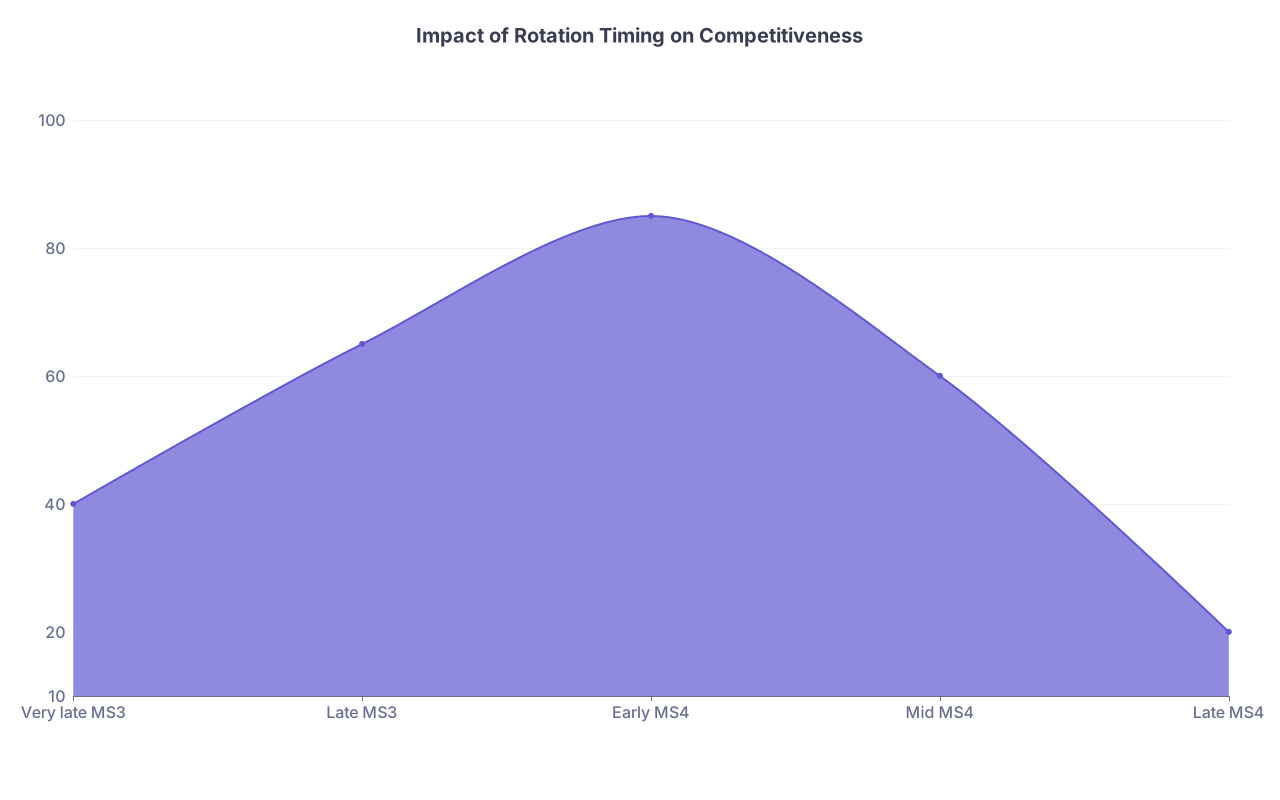
| Category | Value |
|---|---|
| Very late MS3 | 40 |
| Late MS3 | 65 |
| Early MS4 | 85 |
| Mid MS4 | 60 |
| Late MS4 | 20 |
(Interpretation: your ability to improve your application for lifestyle specialties peaks around late MS3–early MS4.)
If you decide on derm in October of MS4, fine. You’ll just be applying a year later, or applying to a different field now and derm later. Harsh, but that’s reality.
Final Takeaways
- Rotation order is not cosmetic. It controls when you see lifestyle-friendly specialties, how competitive you can be for them, and how burned out you are when you decide.
- By late MS3, you should have done at least one targeted elective in any lifestyle specialty you’re seriously considering—and lined it up after supportive cores (medicine, surgery, neuro/ortho) that make that field actually make sense.
- Use lifestyle rotations strategically: as breathing room after brutal blocks, as audition stages before applications, and as testing grounds for whether you like the work, not just the schedule.