
It’s July 1st. Residency just ended. Your inbox is full of recruiter emails offering “flexible locums,” your co-residents are signing W-2 contracts with RVU bonuses they barely understand, and you’re staring at a blank calendar asking:
“How do I turn this next year into a smart locum career, not just a series of random gigs?”
This is the 12‑month timeline I walk people through when they say, “I’m going locums for a year and want to do it intentionally.” Month by month, when to book, when to pause, when to reassess.
You’re not just filling shifts. You’re building leverage, skills, and options.
Big Picture: Your 12‑Month Locum Strategy
First, anchor the whole year. Here’s the high‑level structure you’re aiming for:
| Phase | Months | Main Focus |
|---|---|---|
| Foundation | 0–1 | Paperwork, strategy |
| Early Assignments | 2–4 | First jobs, learning |
| Optimization | 5–7 | Pay, locations, skills |
| Strategic Flex | 8–9 | Breaks, targeted work |
| Positioning | 10–11 | Decide next 1–3 years |
| Recommit or Pivot | 12 | Renegotiate or exit |
Now let’s walk it chronologically — what you should be doing when.
Month 0–1: Before You Say Yes to Anything
Think late PGY‑3/PGY‑4 through first month post‑residency. This is “set the table” time.
At this point you should:
Decide your primary goal for locums this year. One only.
Pick a main driver:- Maximize income and pay down debt
- Sample different practice settings before a permanent job
- Geographic flexibility (travel, partner’s career, family needs)
- Burnout recovery and schedule control
If you try to chase all four, you’ll end up with none. Commit.
Define your non‑negotiables. On paper.
Write down:- Minimum acceptable daily or hourly rate
- Maximum number of shifts per month
- Absolute “no” call/schedule scenarios (24‑hour in‑house, solo nights, etc.)
- States you won’t work in (malpractice environment, distance from home, licensing hassle)
Clean up your credentials now, not later.
Have ready:- Updated CV (reverse chronological, no fluff, no hobbies)
- Copies of med school diploma, residency completion, USMLE/COMLEX, DEA, state licenses
- List of references with direct cell/emails (program director, chair, senior attending)
- Clear malpractice history statement
This part is soul‑sucking but mandatory. Every delay later will trace back here.
Start state licensing strategically.
Look at:- Where you might want a permanent job
- States with good locum pay (e.g., often Midwest, rural, or high‑need states)
- Whether you qualify for IMLC (Interstate Medical Licensure Compact)
Start 1–2 licenses now. Locum agencies say they’ll help. They will. Slowly. Assume you’re the project manager.
Screen agencies like you’d screen a patient with vague complaints.
Do short calls with 3–5 agencies. You’re looking for:- A recruiter who actually knows your specialty (can talk census, support staff, procedures)
- Transparency on pay ranges
- Their typical assignment lengths and credentialing timelines
Red flag phrases:
- “Trust me, I’ll take care of everything” (no details)
- “Rates are kind of standard” (translation: lowball)
By the end of Month 1, you should have:
- At least one state license in process (or active)
- All documents in a single shared folder (cloud)
- A short written “locum goal + non‑negotiables” document you can reference when FOMO hits
Month 2: First Bookings, But Don’t Fill the Year Yet
This is where most people screw it up — they panic and overbook the entire year with mediocre rates and bad locations.
At this point you should:
Book a short, low‑risk first assignment.
Target:- 1–4 week block
- Reasonable census, hospitalist or ED with good backup, or clinic with low acuity
- Location that’s easy to get to from where you live
Your first assignment is about learning the locum game, not crushing your income goals.
Insist on written clarity.
On the contract, you want absolute specifics:- Daily/hourly rate
- Overtime and call pay structure
- Max patients per shift / per day
- Coverage (APPs, residents, other attendings)
- Housing: type, distance, who pays
- Travel: who books, coach vs reimbursed, car rental vs mileage
Do not:
- Sign anything longer than 3 months yet
- Lock into a low rate “to show you’re easy to work with”
- Agree to broad non‑competes in whole regions or states
By the end of Month 2, you should:
- Have 1 short assignment booked
- Have at least 1–2 more potential sites in discussion, but not locked in
Month 3–4: Learn Fast, Then Start Negotiating Harder
Your first real months working locums. This is your “data gathering” phase.
At this point you should:
Treat the first 2–3 assignments as field research.
Keep a running doc after each shift:- Actual workload vs what was promised
- How they orient locums (or don’t)
- How support staff function (nurses, APPs, techs)
- How often they ask you to “just help out with one more thing”
- Whether you actually like the setting (rural, academic, community)
Track your time and income obsessively.
For each site, track:
- Hours on site
- “Hidden” hours: charting at home, arguing with IT, answering late calls
- Total pay vs total hours → your real hourly rate
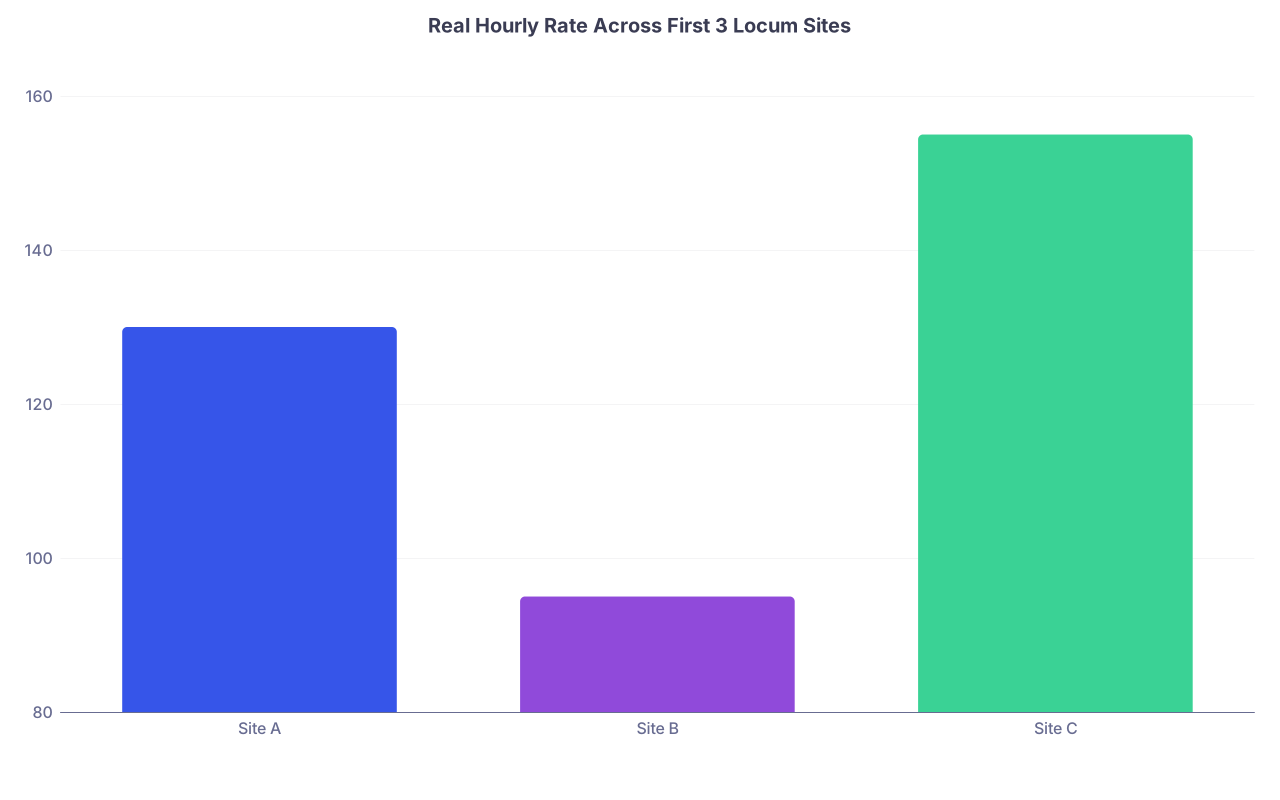
Real Hourly Rate Across First 3 Locum Sites Category Value Site A 130 Site B 95 Site C 155 I’ve seen people brag about $220/hour that turns into $90/hour once you factor unpaid charting and free call.
Mid‑Month 3: Pause and adjust your filters.
Ask yourself:- Which patient volumes felt safe vs sketchy?
- Which settings drained you vs energized you?
- Which agency actually delivered what they promised?
Use this to tighten your criteria. Drop bad agencies early. You owe them nothing.
End of Month 4: Start pushing for better rates at good sites.
If:- You’ve completed 1–2 assignments without disaster,
- The site likes you (and they will if you’re even moderately competent and sane),
Then you have leverage. Ask for:
- Higher hourly/daily rate
- Better call structure
- Commitment bonus for longer blocks
Worst case, they say no. Best case, your rate jumps 10–20% for doing the same work.
By the end of Month 4, you should:
- Know exactly which settings you prefer
- Have at least one “anchor” site you’d be willing to return to
- Have dropped at least one agency or recruiter who wasted your time
Month 5–7: Intentional Build — Income, Skill, or Lifestyle
This is the “real” core of your locum year. You’ve learned the ropes. Time to be deliberate.
At this point you should choose a primary focus for Months 5–7:
Option A: Income-Max Quarter
You want to hammer debt or build a savings cushion.
You should:
- Stack 2–3 high‑paying sites
- Aim for near‑full‑time (18–22 shifts/month hospital/ED, or 4–4.5 days/week clinic)
- Prioritize:
- Higher rates
- Tolerable but not perfect call/volume
- Sites willing to book you in multi‑week or multi‑month blocks
Watch your fatigue like a hawk. Burning out mid‑year kills your leverage later.
Option B: Skills and CV Building
You’re thinking about fellowship or a specific permanent job type.
You should:
- Choose sites that match your desired future practice:
- Academic vs community
- ICU‑heavy vs low acuity
- Rural independence vs big‑system protocols
- Accept slightly lower pay only if the skill/CV value is real:
- Meaningful procedural volume
- Specific EMR you want on your CV (Epic, Cerner, etc.)
- Leadership or QI involvement that can be documented
Option C: Lifestyle & Exploration
You’re using this year to test cities, regions, or work‑life patterns.
You should:
- Rotate through 2–3 different regions you could imagine living in
- Keep 1 “easy” site as a home‑base where you know the system
- Protect 3–5 days off between blocks to actually see the place, not just the hospital cafeteria
At the end of Month 6, sit down and review your numbers and sanity:
| Area | Healthy Sign | Red Flag |
|---|---|---|
| Income | Growing month-to-month total | Flat or dropping rates |
| Fatigue | Tired but functional | Dreading every upcoming shift |
| Variety | 2–4 regular sites | 6+ sites, constant orientation |
| Agency Use | 1–2 core recruiters you trust | Answering random cold calls |
If you’re stacked with 6+ different hospitals by Month 6, you’re not “flexible.” You’re being used as a permanent band‑aid.
Month 8–9: Built‑In Pause + Strategic Reassessment
This is where you deliberately do not just keep saying yes. You step back and re‑aim.
At this point you should:
Schedule a real break. On purpose.
1–2 weeks minimum. Block it on all recruiter calendars. You are “unavailable.”
Use it to:- Sleep like a human
- Review your tax situation (you’re 1099 — estimated payments matter)
- Decide what you want the next 12–24 months to look like
Run a simple year‑to‑date review.
Look at:
- Total gross income
- Total hours worked
- Effective hourly rate overall
- Travel days vs home days
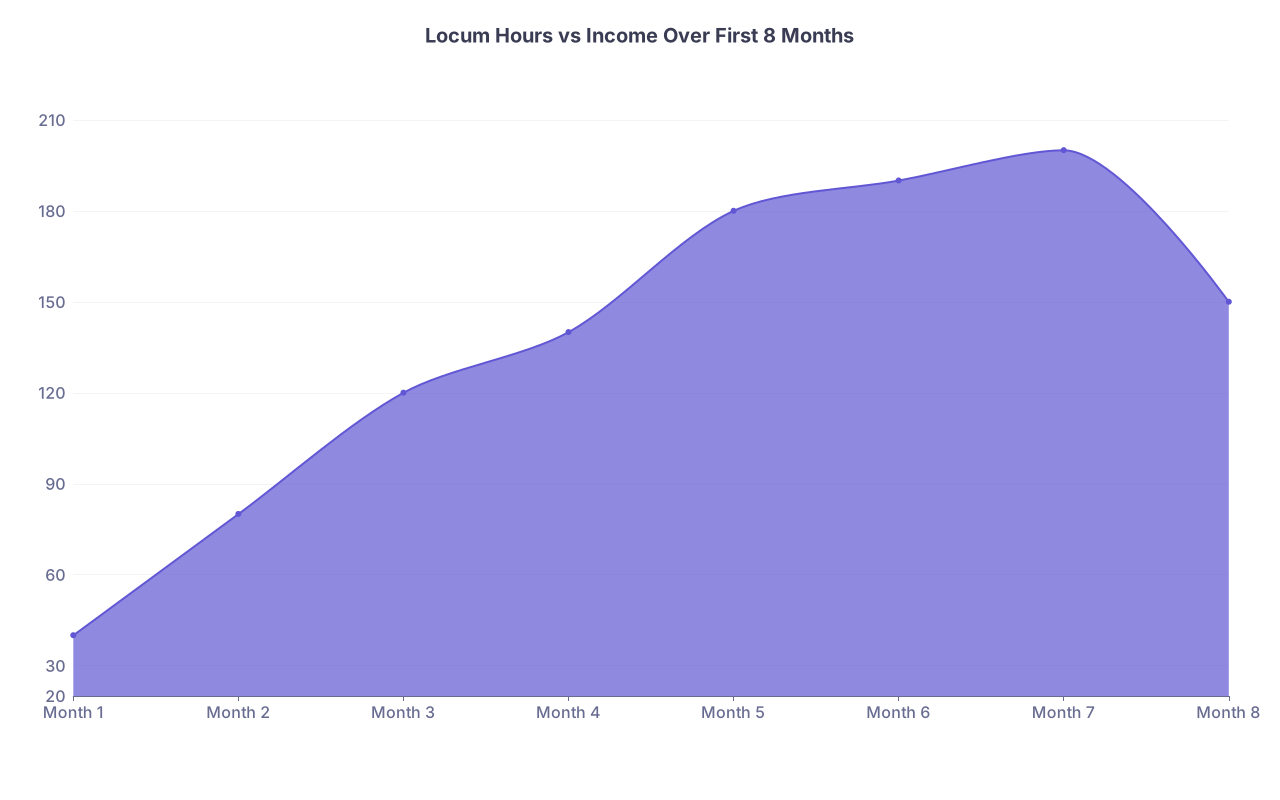
Locum Hours vs Income Over First 8 Months Category Value Month 1 40 Month 2 80 Month 3 120 Month 4 140 Month 5 180 Month 6 190 Month 7 200 Month 8 150 If your effective hourly rate hasn’t improved since Month 2, something’s off: you’re under‑negotiating, taking bad sites, or letting agencies dictate terms.
Reassess your original Year‑1 goal.
Ask:- Am I closer to my main goal than 6 months ago?
- What assignments moved me forward? Which were a waste?
- Do I still want the same thing next year?
People change their mind here a lot. That’s fine. The point is to change it intentionally.
Decide your path for Months 10–12.
You have three main paths heading into the home stretch:- Double‑down on locums for another year
- Use locums while targeting a permanent job
- Use locums as a taper while pivoting (fellowship, non‑clinical, relocation)
By the end of Month 9, you should:
- Have blocked time for a break (or already taken it)
- Have a clear, written plan for what you want your situation to be at Month 12
Month 10–11: Position Yourself — Either for Locums 2.0 or a Permanent Role
These months are about positioning, not just filling shifts.
At this point you should:
If you’re likely staying locums beyond a year
Identify 2–3 “anchor” sites you’d happily keep.
Criteria:- Reasonable volume
- Staff that do not hate their lives
- A scheduler who actually responds to email
- EMR you can tolerate for another year
Start pushing for longer‑term arrangements.
Example:- “I’d like to book 7 on / 7 off for 6 months at this rate.”
- “If I commit to 10 shifts/month, will you increase my rate by X?”
Long‑term blocks stabilize your schedule and income. They also increase your leverage elsewhere.
Trim everything that doesn’t fit your refined criteria.
You’re allowed to say:- “That rate no longer works for me.”
- “I’m not doing solo nights anymore.”
- “I prefer not to work with that group again.”
You’re not being “difficult.” You’re acting like a professional with actual standards.
If you’re aiming for a permanent job
You should:
Start targeting searches now, not at Month 12.
Hospital systems move glacially.
Timeline reality:- Applications → 2–4 weeks
- Interviews → 1–3 months
- Contract haggling → 1–3 months
- Credentialing → 2–4 months
You want overlap, not a 4‑month income gap.
Use your locum experience as a selling point — but with specifics.
When talking to employers:- “I’ve worked at three community hospitals with Epic and average census 16–20.”
- “I’ve covered both rural critical access and suburban sites; here’s what I learned about resource use.”
- “I’ve maintained procedure volume in X, Y, Z at Site A and Site B.”
Drop any locum site that would make you hesitate to put it on your CV.
If it was a chaos circus with awful outcomes and no support, stop going. You don’t need that reputation following you.
By the end of Month 11, you should:
- Either have early contract discussions for a permanent job
- Or have a near‑final locums‑2.0 structure built (anchor sites, target schedule, rates)
Month 12: Recommit, Redesign, or Exit
End of the 12‑month arc. This is the “no autopilot” month.
At this point you should:
Have a brutally honest conversation with yourself about locums.
Ask:- Am I financially ahead of where I’d be as a junior attending W‑2?
- Has my stress decreased, stayed the same, or increased?
- Do I feel more in control of my career, or more scattered?
Pick one of three clear decisions for the next 12 months:
Path 1: Double‑Down Locums (Intentionally).
- Keep 2–3 anchor sites
- Lock in longer blocks with better rates
- Cleanly exit the lowest‑value sites
- Tighten your boundaries on schedule and call
Path 2: Hybrid Year (Locums + Transition).
- Use 6–9 shifts/month (or 2–3 clinic days/week) as a stable income floor
- Fill the rest with:
- Permanent job onboarding
- Fellowship prep
- Non‑clinical projects (consulting, teaching, telemed)
Path 3: Exit Locums for Now.
- Wrap up with clear end dates
- Protect your references (leave on good terms, notify in advance)
- Keep at least one recruiter relationship “warm” in case you want back in later
Clean your paper trail.
- Update your CV with precise dates and sites
- Document your volumes and roles at each location
- Save copies of all contracts and pay stubs (taxes, credentialing, future negotiation ammo)
You want Month 12 to feel like a decision point, not just “I kept drifting, so I guess I’m still doing this.”
Quick Visual: Year at a Glance
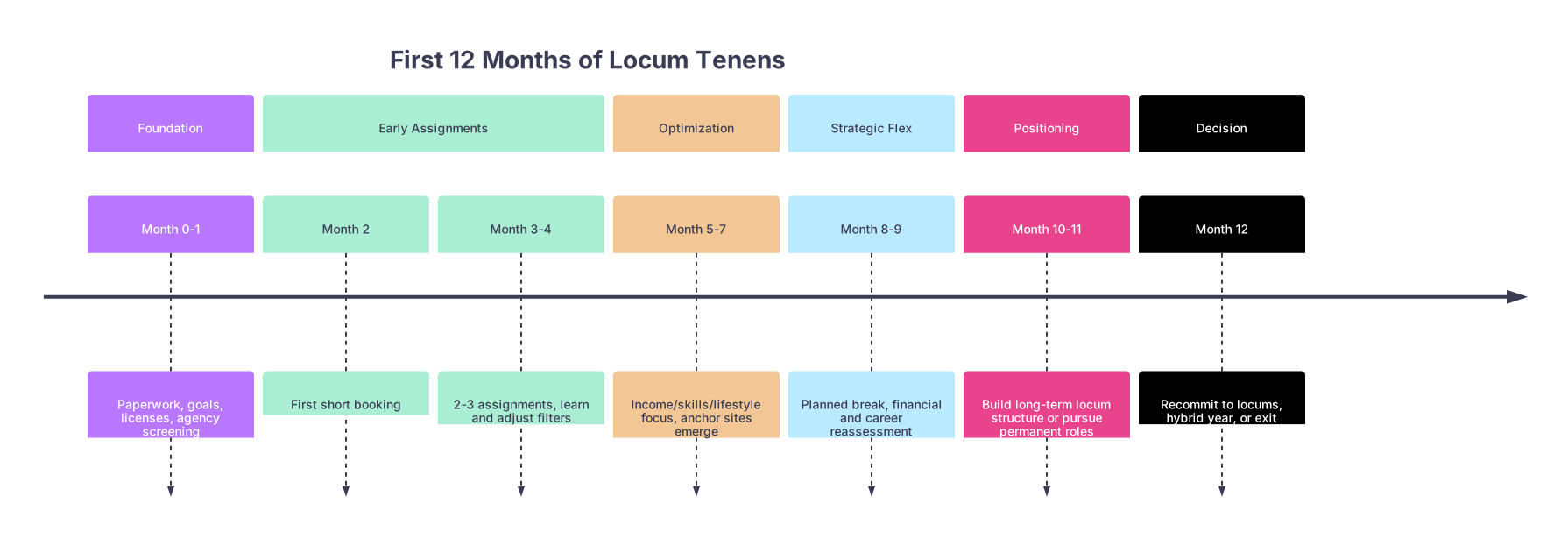
| Period | Event |
|---|---|
| Foundation - Month 0-1 | Paperwork, goals, licenses, agency screening |
| Early Assignments - Month 2 | First short booking |
| Early Assignments - Month 3-4 | 2-3 assignments, learn and adjust filters |
| Optimization - Month 5-7 | Income/skills/lifestyle focus, anchor sites emerge |
| Strategic Flex - Month 8-9 | Planned break, financial and career reassessment |
| Positioning - Month 10-11 | Build long-term locum structure or pursue permanent roles |
| Decision - Month 12 | Recommit to locums, hybrid year, or exit |
What to Watch For Throughout the Year
Sprinkled through all 12 months, there are a few signals that tell you when to pause and reassess even outside the formal checkpoints:
- Your rate hasn’t increased after your first 2–3 successful assignments → time to renegotiate or change agencies.
- You keep saying “just this one more bad site” → you’re drifting, not deciding.
- Your tax situation feels mysterious and terrifying → pause new bookings until you meet a CPA who understands locums and 1099 work.
- You’re saying yes to shifts because you’re afraid nothing better will come → classic scarcity mindset. Usually wrong in high‑demand specialties.
Your Next Concrete Step — Today
Do one thing today that pulls this out of the abstract:
Open a blank document and title it “Locum Year 1 – Goal & Non‑Negotiables.” Write:
- Your single primary goal for this year (income, exploration, skills, or breathing room).
- Three hard non‑negotiables (rate floor, schedule limits, dealbreakers).
Save it. Every time a recruiter calls or emails, that’s the document you look at before you answer.