
The biggest mistake new attendings make is treating locums like a backup plan instead of a deliberate first-year strategy.
If you’re finishing residency and thinking, “I’ll just do some locums while I figure things out,” you’re already behind. Locum tenens can give you freedom, money, and leverage—but only if you treat it like a project with a clear timeline, not a vague idea.
I’m going to walk you month-by-month through your first year after residency, assuming you’re using locums as your primary job structure (or at least a major piece of it). You’ll see exactly what you should be doing at each point, what people usually miss, and where the landmines are.
To keep this concrete, I’ll anchor it around a typical July graduation, then map out the year from March (PGY-3 spring) to the following July (1 year out). Adjust months if your end date is different—the sequence matters more than the calendar.
Months -4 to -3 (March–April, PGY-3): Quiet Setup, No Big Announcements Yet
At this point you should be laying foundations—silently. Do not broadcast “I’m doing locums!” yet. Programs, PDs, and even co-residents can get weird if they think you’re mentally checked out.
This is your research and paperwork window
Clarify your actual goals (not the Instagram version)
Sit down and be blunt with yourself for 20 minutes:- Do you want max income fast (e.g., pay off loans aggressively)?
- Do you want geographic freedom (travel, try coastal vs rural)?
- Do you want time flexibility (avoid burnout, 7-on/7-off, blocks)?
- Do you want exploration (test multiple practice settings before a permanent job)?
Rank those. You cannot optimize all four at once. Most people who “try to see what happens” end up with the leftovers: bad locations, bad schedules, mediocre pay.
Start a locums tracker file
At this point you should create a simple spreadsheet or Notion page with:- Column for each agency
- Recruiter name + direct number
- States and specialties they’re strong in
- Credentialing and travel contacts
- Notes on hourly/day rates they quote
You’ll thank yourself in three months when your inbox is chaos.
Reach out to 3–5 agencies (no more—for now)
Call or email you first, before they blow up your phone. For hospital-based specialties, I’ve seen better traction with firms like CompHealth, Weatherby, Staff Care, and a couple of strong regional players. For outpatient-heavy specialties, sometimes the boutique/regional firms win.At this point you should:
- Ask what states they’re most active in for your specialty
- Ask for ballpark pay ranges (per shift, per day, or per RVU)
- Ask typical credentialing timelines for their common hospitals
Do not sign anything yet except:
- A basic candidate profile
- Possibly a non-exclusive representation agreement (standard)
Walk away from:
- Exclusive contracts
- Any clause that blocks you from working directly with a hospital for a year+
-
If you only have a training license now, this is urgent. At this point you should:
- Decide on 2–3 target states you’d realistically work in for the first 6–12 months
- Confirm licensing timelines (your agencies will know roughly)
- Begin at least one additional license beyond your home state (especially if your home state is slow or over-saturated)
| Priority | State | Reason | License Time | Notes |
|---|---|---|---|---|
| 1 | Texas | High pay, volume | 2–4 months | Good for hospitalists |
| 2 | Oregon | Lifestyle, outdoors | 3–5 months | Smaller pool |
| 3 | Indiana | Faster license | 1–2 months | Good backup |
Clean up your CV and references
At this point you should have:
- 1-page CV, clean, reverse-chronological
- 3–4 references who actually like you (attendings who’ve seen you on busy rotations)
- A short, professional headshot (not you at the wedding bar)
Months -2 to -1 (May–June, PGY-3): Commit to a Strategy and Start Lining Up Work
This is where people either get serious or drift into “I’ll figure it out after graduation” territory. Do not drift.
Month -2: Lock in your first 3 months post-residency
At this point you should:
Choose your first primary state and practice setting
Example:
- State: Texas
- Setting: Inpatient hospitalist, 7-on/7-off
- Start: August 1
Once you pick, you give agencies a clearer target, and they stop throwing random junk at you.
Tell 2–3 agencies exactly what you want
Script it:
- “I finish residency June 30. I want full-time hospitalist work starting August 1. I prefer 7-on/7-off blocks, 15–18 patients/day max, no procedures, in Texas or nearby states. I’m willing to travel and stay in provided housing. Target rate is $200+/hr or equivalent per shift.”
At this point you should be reviewing:
- Short job summaries from agencies
- Typical schedules
- Pay structures (shift-based vs per diem vs RVU)
Mark anything that seems decent. You’re not committing yet, you’re establishing a baseline.
Start malpractice and credentialing conversations
For most locums:
- Malpractice is covered by the agency with claims-made or occurrence policies.
- You want: tail coverage provided if it’s claims-made. No tail = future pain.
At this point you should:
- Ask each agency: “Is the malpractice occurrence or claims-made? Who pays tail?”
- Get copies of sample COI (certificate of insurance) to review
- Identify any hospital systems with notoriously slow credentialing and plan around them
Plan your “off-ramp” from residency
In May/early June:
- Finish all your procedure logs and evaluations
- Get letters and references locked before people scatter
- Confirm with GME that your final paperwork will be ready on time (diploma, training letter, etc.—hospitals will ask for these)
Month 0 (July: Final Month of Training / Just After): Bridge and First Commitments
Reentry shock is real. One day you’re a resident. Next day, you’re unemployed with an MD and a lot of silence from HR.
Early July: Finalize your first locums assignment
If you’ve done the previous steps, at this point you should:
Sign your first actual assignment
Key things to double-check in the agreement:
- Rate (base + any differentials or bonuses)
- Call expectations (home call vs in-house, frequency)
- Patient load caps
- Cancellation terms (both ways)
- Travel and housing details (who books, what class, rental car vs rideshare)
Make sure your credentialing is moving
You should already be:
- Filling out hospital privilege forms
- Uploading documents (license, DEA, boards status, immunizations, TB, etc.)
- Doing required training modules (EPIC, safety modules, etc.)
If nothing is moving by mid-July, you’re behind. Call your recruiter and push.
-
July can be a dead zone:
- Last resident paycheck hits
- First locums paycheck might not come for 30–45 days
At this point you should:
- Have 1–2 months of expenses in cash
- Set strict spending for July–August
- If needed, pick up a short local per diem shift to plug the gap (PRN clinic, moonlighting, etc.)
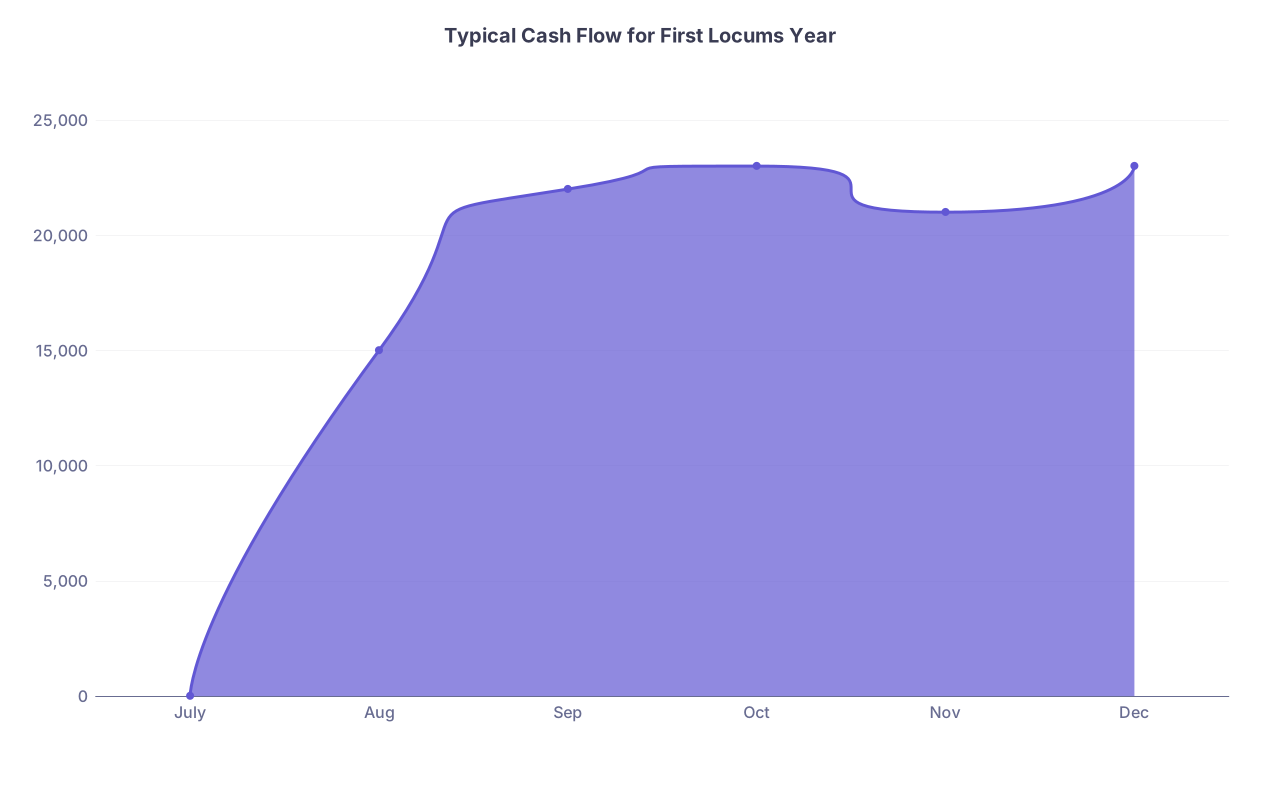
| Category | Value |
|---|---|
| July | 0 |
| Aug | 15000 |
| Sep | 22000 |
| Oct | 23000 |
| Nov | 21000 |
| Dec | 23000 |
Month 1 (August): First Assignment, First Reality Check
This is where fantasy hits the wall. At this point you should expect:
- Confusing EMR
- Different culture
- Being “the locums doc” (said with varying degrees of respect)
Weeks 1–2: Onboarding and Surviving the First Block
At this point you should:
Standardize your “first-day script”
On day 1 at a new site:
- Meet charge nurse: ask “Who are my go-to people when weird stuff happens?”
- Ask for:
- Admission expectations
- Handoff process
- Rapid response/code expectations for you vs others
- Confirm your productive patient cap with leadership (do not let them quietly creep it up)
Log real data
You’re building your personal case for future negotiations. Track:
- Daily census
- New admissions
- Night vs day shifts
- Any procedures you’re doing
At this point you should also:
- Note exactly what annoyed you (bad signout, unsafe volume, chaotic ED)
- Note what you liked (support staff, ICU backup, good night coverage)
Watch how you’re treated as locums
Some hospitals treat locums like second-class citizens. Others don’t care as long as you do your job.
If you see:- Chronic understaffing dumped on locums
- Constant schedule changes without your input
- “You’re locums, just deal with it” energy
Mark that site as short-term only. Never burn a bridge, but don’t come back long-term.
Weeks 3–4: Decide if this site is repeatable
By the end of your first full block, at this point you should:
- Decide: Would I work here again for this rate?
- Decide: Is this my “home base” site or just filler?
If “yes” for home base:
- Ask for future months’ blocks provisionally
- Make sure you understand how far in advance they schedule (some are 2–3 months out)
If “no”:
- Finish your committed blocks
- Tell your recruiter clearly: “Happy to finish this contract but do not rebook here long-term”
Months 2–3 (September–October): Build a Schedule, Add a Second Site
At this point you should be done with the “experiment” mindset. You know at least one site’s reality. Time to build an actual plan.
Month 2: Lock in 3–4 months of work
By early September, at this point you should:
Have work on the calendar through December
Ideal structure for beginners:
- Primary site: 7-on/7-off or 2-week blocks
- Secondary site: Fills your off weeks or months you want more money
- Built-in off time: 1 week every 2–3 months minimum
Do not allow:
- Non-stop blocks for 8–12 weeks just because the money looks good. That’s the fastest track to new-attending burnout.
Add a second hospital or state (carefully)
You want diversification:
- If one site collapses or changes leadership, you’re not stuck
- You learn what different systems expect and pay
At this point you should:
- Start credentialing with a second hospital in either the same or a neighboring state
- Reuse all your existing files (CV, immunizations, references) to speed things up
Refine your “rate floor”
You’ve now seen real pay vs real work. Set a minimum acceptable rate. For example:
- “For nights with >10 admissions, I won’t accept less than $X”
- “For day shifts with 18–20 patients, rate must be at least $Y”
Tell your agencies your rate floor. If you don’t, they’ll keep testing your limits.
Months 4–5 (November–December): Travel, Taxes, and Future-Proofing
You’re a few months in. The adrenaline fades. This is where you either get intentional or drift into chaos.
Month 4: Travel and lifestyle check
At this point you should review:
- How many days you’ve actually been home vs on the road
- How travel is affecting your sleep, relationships, and sanity
- Whether the extra income is worth the time away
If you’re constantly:
- Flying red-eye for cheap flights
- Charting late in hotels
- Eating garbage on the road
You’re building a burnout pattern. Fix it now:
- Request more clustered blocks at one or two sites
- Use one agency for 70–80% of your work to simplify logistics
- Push for longer engagements (e.g., 3–6 months recurring)

Month 5: Tax planning and entity setup
By December, at this point you should:
Stop pretending taxes will sort themselves out
You’re probably:
- Getting 1099 income
- Possibly a mix of W-2 and 1099 if you have side gigs
At this point you should:
- Hire a CPA familiar with physicians and 1099 work
- Discuss whether to form an LLC or S-corp (depends on your setup and state)
- Start quarterly estimated taxes if you haven’t already
Track expenses properly
Think:
- CME
- Licensing fees
- Travel not reimbursed
- Work-related phone, internet, etc.
You’re not doing this for fun—you’re doing it so next April doesn’t hurt.
Months 6–7 (January–February): Decide: Locums Long-Term or Bridge to Permanent?
By now you’ve had half a year as an attending in the wild. You know what you actually like, not just what sounded cool as a PGY-3.
Month 6: Honest assessment
At this point you should ask:
- Do I like the flexibility and variety enough to continue?
- Do I miss continuity with patients and colleagues?
- Is my income where I expected? (Be honest with monthly averages, not just “best month ever.”)
- How is my mental health compared to the end of residency?
If:
- You’re making strong income
- You’re not constantly stressed about the next contract
- You like the freedom
Then locums can absolutely be a multi-year or even long-term plan.
If:
- The instability bothers you
- Negotiating and hunting for assignments drains you
- You want to plant roots
Then at this point you should start quietly exploring permanent positions while keeping locums as leverage and income.

| Step | Description |
|---|---|
| Step 1 | 6 Months Locums Experience |
| Step 2 | Increase Rates or Sites |
| Step 3 | Continue Locums Long Term |
| Step 4 | Reduce Travel or Blocks |
| Step 5 | Reassess in 3 Months |
| Step 6 | Consider Hybrid Model |
| Step 7 | Locums Plus Part Time Job |
| Step 8 | Income Meets Goals |
| Step 9 | Lifestyle Sustainable |
Months 8–10 (March–May): Optimize or Transition
Whether you’re staying in locums or slowly shifting out, this is when you stop being a rookie.
If you’re staying heavily locums
At this point you should:
Standardize your year structure
Example:
- 3 “anchor” hospitals where you’re well known
- 1–2 backup sites for extra income or if volumes drop
- Planned 2–3 big breaks (1–2 weeks off at a time)
Negotiate like a known quantity
You now have:
- Concrete productivity numbers
- References from multiple medical directors
- A proven track record of onboarding smoothly
Use that:
- Push for higher rates at sites where you’ve proven value
- Ask for travel/housing upgrades or stipends
- Request more predictable block scheduling
Trim the recruiter herd
You don’t need 12 agencies emailing you anymore. At this point you should:
- Identify your 2–3 best recruiters
- Tell the rest (politely) to remove you from general blast emails
If you’re shifting toward a permanent job
At this point you should:
Use locums strategically for geography
Want to live in the Pacific Northwest? Great. Go work locums at:
- A mid-size hospital
- A large academic center
- Maybe a rural critical access hospital
You’ll quickly see what matches your long-term preferences.
Signal interest carefully
After a couple of good months at a site you like:
- Talk to the medical director or chief:
“I’ve really enjoyed working here as locums. If you ever consider a permanent hire, I’d be interested in talking.”
You’re not begging. You’re opening a door.
- Talk to the medical director or chief:

Let permanent offers compete with your locums numbers
You now have hard data:
- Average monthly income from locums
- Average hours
- Typical lifestyle and travel
When a permanent job offers $X, you can compare:
- Is the net take-home worth the trade-off in flexibility?
- Are the benefits (retirement, health, PTO) actually competitive?
If an offer is way below your locums earning potential with worse hours, you can just say no. Calmly.
Months 11–12 (June–July, One Year Out): Reset the Plan
You’re one year out from residency. You’re no longer “new.” You’re just an attending who happens to use locums.
At this point you should:
Do a full-year review
On paper, not in your head:
- Total 1099 income
- Time actually spent working vs traveling vs true time off
- States worked in
- Sites where you’d happily return vs never again
Spot patterns:
- Did certain agencies always underpay relative to others?
- Did certain hospital systems always push unsafe volumes?
- Did some schedules align better with your life?
Decide your Year 2 model
You have three realistic options:
- Full locums, but smarter: Fewer sites, better rates, more intentional breaks
- Hybrid: Permanent 0.5–0.8 FTE plus 0.2–0.5 FTE locums for margin and leverage
- Mostly permanent: One primary job, locums only occasionally for targeted goals (debt payoff, big expenses, trying new regions)
Tighten your infrastructure
By now, at this point you should:
- Have a solid relationship with a CPA
- Have clear systems for:
- Expense tracking
- Contract review
- Malpractice and license renewals
And you should’ve learned the most important locums lesson:
You’re a business, not just a body filling shifts.

| Category | Value |
|---|---|
| Clinical days | 180 |
| Travel days | 35 |
| Admin/paperwork | 25 |
| True days off | 125 |
Key Takeaways
- Treat locums as a planned strategy starting 3–4 months before residency ends, not a last-minute patch.
- By Month 3 of attending life, you should have multiple months of work scheduled, at least two sites, and a clear rate floor.
- At the one-year mark, use real data—your income, time, and sanity—to decide whether locums stays your main career engine, becomes a hybrid supplement, or did its job as a bridge to the right permanent role.