
It’s July 1st. You’ve got a fresh attending badge, the resident pager is finally gone, and HR just hit you with a “we’ll need a 3-year commitment” offer that makes your stomach turn. At the same time, recruiters are blowing up your inbox with “$250/hour, flexible schedule, paid housing” locum tenens pitches.
Here’s what you’re really asking:
Is going straight into locums after residency smart, or is it career suicide?
Let me be direct: for some new grads, locums right out of residency is an excellent move. For others, it’s a fast track to burnout, tax headaches, and feeling professionally unmoored. The trick is knowing which camp you’re in.
This is the decision map you actually need.
First: Is Locums Right After Residency Even Realistic?
Yes. Programs and groups absolutely hire fresh grads for locum work. But not all specialties and not all settings.
Here’s the pattern I’ve seen:
- Very common and realistic straight out of residency:
- Hospitalist
- Emergency medicine
- Anesthesiology
- Psychiatry
- Radiology
- Possible but more selective:
- General internal medicine / outpatient primary care
- General surgery
- OB/GYN
- Hard / niche / usually better with a few years’ experience:
- Subspecialty surgery
- Highly procedural specialties without strong independent experience in training
The biggest question facilities ask about a new grad is simple: “Can this person function independently on day one without hand-holding?”
If your residency prepared you to run a service alone at 2 a.m., locums is realistic. If you needed heavy backup even in PGY-3/4, jumping straight into locums will feel brutal.
The Three Big Questions You Need to Answer First
If you can’t answer “yes” to at least two of these, I would not jump directly into full-time locums as a new attending.
Clinical Independence:
Could you safely run a night shift solo at your training program—admitting, making dispo decisions, handling cross-cover, and calling for help only for true edge cases?Tolerance for Uncertainty:
Are you okay not knowing your income 6–12 months from now, and piecing together contracts rather than having a guaranteed salary?Self-Management Skills:
Can you handle your own licensing, credentialing documents, malpractice details, scheduling, and taxes without someone spoon-feeding you?
If your honest reaction is:
- “Clinically, yes. Admin and money stuff… not yet.” — you might be fine with locums, but you’ll need to build a support structure quickly.
- “I need structure and predictability.” — a permanent job first (even for 1–2 years) is probably smarter.
Key Advantages of Locums Right After Residency
Let’s talk about why people even consider this.
1. You Can Make Strong Money Fast
New grads often underestimate how quickly locums can move the needle financially, especially for student loans.
Typical scenario for hospitalist / EM / anesthesia:
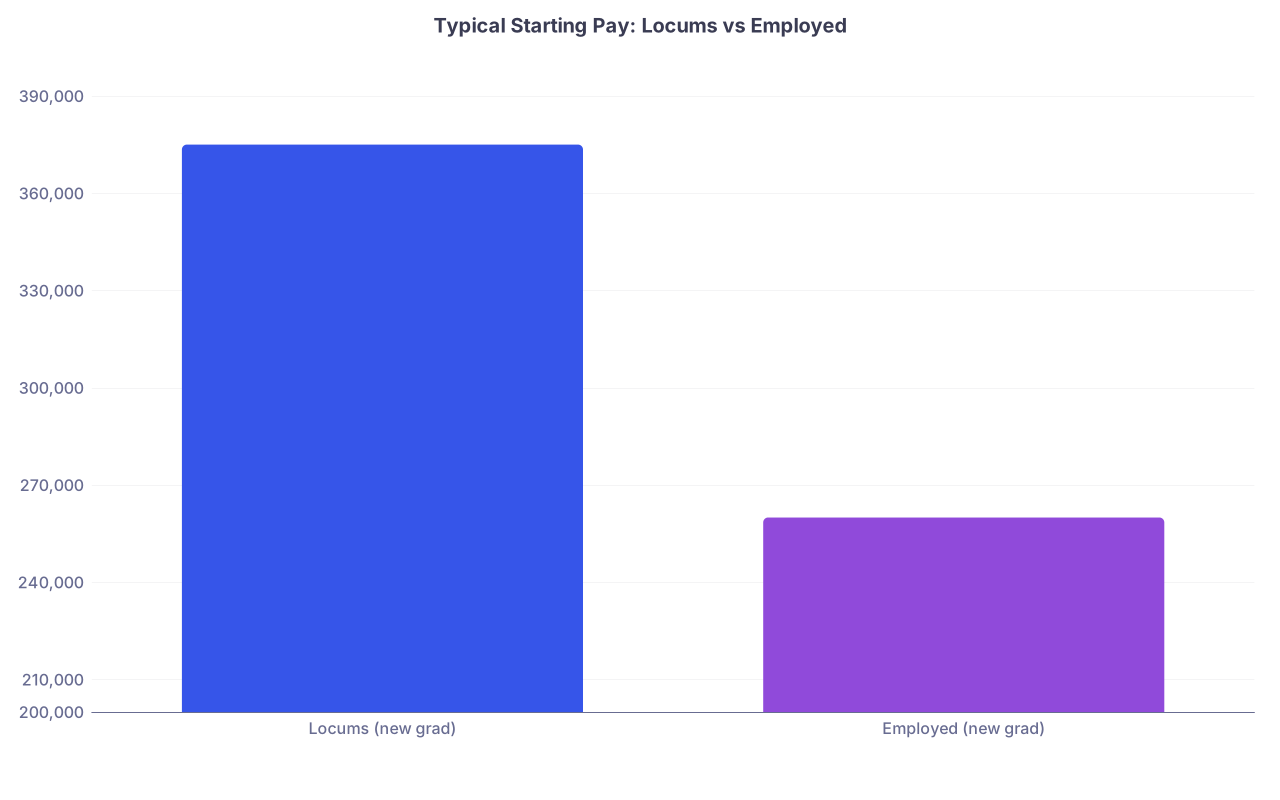
| Category | Value |
|---|---|
| Locums (new grad) | 375000 |
| Employed (new grad) | 260000 |
Those locums numbers are ballpark annualized based on:
- $200–$280/hr
- 12–14 shifts/month
Compare that to:
- Many hospital employed W-2 jobs starting $220–280k with RVU pressure and less control.
Two smart ways new grads use this:
- 1–2 years of heavy locums to:
- Kill high-interest debt
- Build a large emergency fund
- Save a down payment for a house in the city they actually want to live in
- Then transition to a permanent job with less financial anxiety
2. You Get To Date Before You Marry
Residency often lies to you about what “normal” practice looks like. Locums lets you sample different realities.
You can:
- Work in a small community hospital, then a large academic-adjacent system
- Try 7-on/7-off vs more traditional schedules
- See how different EMRs feel in actual practice (Epic vs Cerner vs “why does this still exist?”)
- Figure out what kind of group culture you actually want
I’ve seen more than one doc avoid a miserable 3-year contract because they did a short locums stint at a similar place and realized, “Nope—never again.”
3. Brutally Fast Skill Growth
This part is underrated.
You’re exposed to:
- New practice styles
- Different patient populations
- Varying resource levels (the “you’re the only person in-house at 3 a.m.” education is real)
You also learn:
- How to be efficient without your home institution’s crutches
- How to adapt quickly to new workflows and teams
- Where your true knowledge gaps are
If you treat locums like an extension of your training—intentional, reflective, willing to ask for feedback—you’ll grow fast.
Major Risks and Downsides You Should Not Ignore
Now the part recruiters gloss over.
1. Nobody Is “Responsible” For You
No program director. No department chair who “owns” your development. As a locums doc, you are a plug-and-play solution.
That means:
- Little to no formal feedback
- No protected educational time
- Minimal investment in your long-term growth
If you’re the kind of resident who benefited a lot from structured mentorship and regular hand-holding, that safety net is gone.
You’ll have to build:
- Your own mentors (from prior attendings, senior residents, or staff you click with)
- Your own CME and learning plan
- Your own clinical QA: case reviews, pattern-spotting in your own errors
2. Onboarding Can Be a Mess
Some sites on-board locums well. Many do not.
Typical bad scenario I’ve seen:
- You arrive for your first shift
- One rushed charge nurse shows you the ED layout in 5 minutes
- Nobody really explains the EMR order sets
- You don’t know how to call consultants or how transfers work
- But you’re on the schedule as “full attending coverage”
Can you survive that? Yes.
Will it feel safe and comfortable your first year out? Probably not.
3. The Tax and Benefits Reality
Locums = usually 1099 = you are an independent contractor.
You’re responsible for:
- Quarterly estimated taxes
- Your own health insurance
- Disability insurance
- Retirement accounts (solo 401(k), SEP-IRA, etc.)
- No paid vacation, no paid CME, no employer retirement match
If you do locums and treat it like a big W-2 paycheck, you will:
- Get wrecked by a big tax bill
- Miss out on key protections (disability, malpractice tail if you switch agencies, etc.)
You either:
- Learn this stuff quickly, or
- Hire a competent CPA/financial planner who understands physicians and 1099 income
Here’s a clean comparison:
| Factor | Locums (1099) | Employed (W-2) |
|---|---|---|
| Income predictability | Variable | Stable |
| Hourly rate | Higher | Lower |
| Benefits | You buy your own | Included (health, retirement) |
| Taxes | You handle estimates | Withheld automatically |
| Schedule control | High (if in demand) | Moderate to low |
Who Is a Good Fit for Immediate Post-Residency Locums?
If you’re nodding at most of this, you’re in the “good candidate” group:
- You finished strong and independently in residency
- You’re comfortable asking for help and saying “no” when a request feels unsafe
- You like variety over stability—for now
- You’re willing to treat finances and taxes like a second part-time job (or pay someone to)
- You don’t feel the need for a “big academic institution” name on your first attending job
On the other hand, think twice if:
- You had significant remediation, confidence issues, or needed heavy backup near the end of residency
- You’re moving with a partner or kids who need geographic stability and predictable benefits
- You’re targeting ultra-competitive fellowships and want a very clean, traditional CV trajectory
- The thought of not knowing your income for next year stresses you out
A Smart Middle Path: Hybrid Approach
You don’t have to choose “only locums” or “only permanent.”
Common hybrid strategy that works well:
Secure a permanent job with a reasonable schedule
- Aim for something with no insane RVU pressure
- Make sure moonlighting is allowed and not contractually restricted
Add limited locums on top (4–6 shifts/month for 6–12 months)
- Use it to:
- Try out different settings
- Build a financial cushion
- See if the locums lifestyle fits your personality
- Use it to:
Reassess after a year
- If locums feel energizing and your permanent job does not → consider flipping the ratio (locums primary, perm secondary or PRN)
- If locums feel chaotic and exhausting → keep the stability and drop the extra
Practical Steps If You’re Seriously Considering It
If you’re leaning toward locums right out of residency, here’s how to do it without being reckless.
1. Start the Process Before Graduation
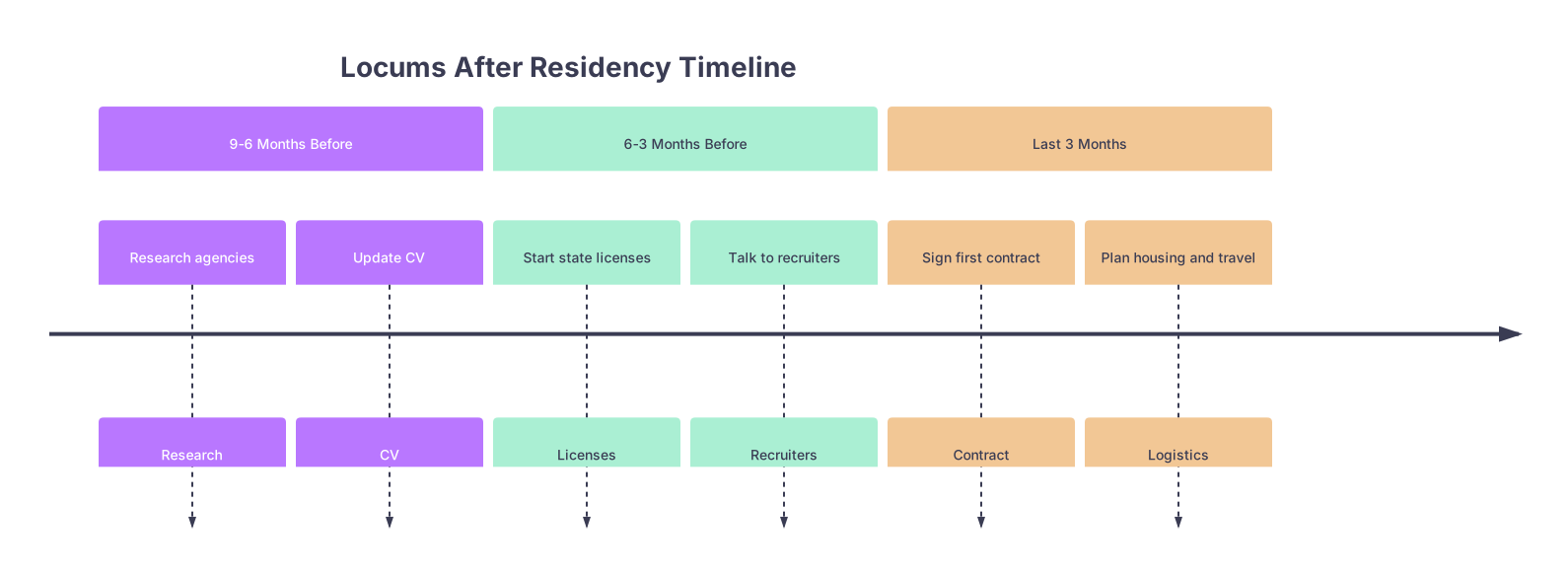
Good timeline:
- 6–9 months before graduation:
- Update your CV
- Talk to 2–3 reputable locums agencies (don’t sign exclusivity)
- Ask specifically: “How many new grads in my specialty are you currently placing, and where?”
- 3–6 months before graduation:
- Start state license applications (especially in locums-heavy states like AZ, TX, WA, CA, MT depending on your field)
- Get your references lined up
| Period | Event |
|---|---|
| 9-6 Months Before - Research agencies | Research |
| 9-6 Months Before - Update CV | CV |
| 6-3 Months Before - Start state licenses | Licenses |
| 6-3 Months Before - Talk to recruiters | Recruiters |
| Last 3 Months - Sign first contract | Contract |
| Last 3 Months - Plan housing and travel | Logistics |
2. Be Picky On Your First Assignments
For your first year, heavily favor:
- Sites that routinely use locums, not “we are desperate this one time”
- Settings with:
- Clear coverage structures (night backup, intensivist availability, etc.)
- Reasonable patient volumes and acuity for a new grad
- A decent onboarding reputation (ask other locums if possible)
Red flags:
- “You’ll be the only doc on at night with no in-house backup, and we’re offering you massive rates to fix our years-long staffing disaster.”
- “We’ve never had a locums before, but we need you to start next week.”
3. Get Your Financial and Legal Basics Right
Minimum responsible setup:
- A solid physician-focused CPA within 3 months of starting 1099 work
- Malpractice clearly spelled out (who provides, what limits, tail coverage details)
- A plan for:
- Health insurance (through a partner’s job, ACA marketplace, or private)
- Disability insurance (do not skip this if you’re the main earner)
- Retirement accounts (solo 401(k) or SEP-IRA)

| Category | Value |
|---|---|
| Taxes | 30 |
| Benefits & Insurance | 10 |
| Travel & Housing Gap | 5 |
| Licensing & CME | 5 |
| Net Take-Home | 50 |
These numbers shift by state, rate, and your personal choices—but they give you a rough mental model.
How This Plays on Your CV and Long-Term Career
Most hiring committees and private groups are fine with 1–3 years of locums, as long as you can explain it clearly:
- “I used locums to explore different practice settings and geographic areas before committing to a permanent role.”
- “I focused on high-volume community settings to broaden my experience quickly.”
It looks bad when:
- You’ve got 8 short stints in 2 years with vague reasons for leaving
- You can’t speak clearly about what you learned or why you moved around
It looks fine—even smart—when:
- There’s a coherent narrative: a few longer assignments, maybe in similar practice types
- Your references are strong and stable
Quick Self-Check: Should You Go Locums Right After Residency?
If I had to boil this down to a blunt rule of thumb:
- If you are clinically solid, financially curious, and comfortable with risk → locums right out of residency can be a powerful move.
- If you are craving mentorship, stability, and a clear structure → get a good W-2 attending job first and re-evaluate locums later.
Neither path makes you more or less of a “real doctor.” It just needs to match who you are right now.

FAQs
1. Will doing locum tenens right after residency hurt my chances for fellowship later?
It can, but not automatically. If you’re applying to highly competitive fellowships (cardiology, GI, some surgical subspecialties), programs usually prefer a clean, academic-leaning trajectory. One or two years of locums can work if you:
- Stay clinically sharp in a relevant setting
- Maintain strong relationships with mentors who can write updated letters
- Have a clear, logical explanation for the locums period
If fellowship is a serious goal and highly competitive, I’d lean towards a more traditional path or a clear academic-leaning job first.
2. Can I realistically pay off a big chunk of loans with locums immediately after residency?
Yes, especially in high-paying locums specialties (EM, anesthesia, hospitalist, radiology, psych). If you:
- Take higher-rate assignments
- Work more shifts during a defined 1–2 year window
- Keep your personal spending reasonable You can knock out a substantial amount of six-figure debt quickly. But this requires discipline and a deliberate financial plan, not lifestyle creep.
3. How many locums agencies should I sign up with as a new grad?
Usually two, maybe three. One agency often won’t have the right mix of locations, schedules, and specialties. Ten agencies is chaos. Work closely with 1–2 recruiters who actually listen to your preferences and understand that you’re a new grad and want safe, well-supported sites.
4. What’s the biggest mistake new grads make when jumping into locums?
They treat it like just another shift job and ignore the business side. The classic pattern is:
- No tax planning
- No clear understanding of malpractice coverage and tail
- Accepting unsafe workloads or poor coverage for a high hourly rate The result is financial shock at tax time and professional burnout. Locums is work + small business. You can’t ignore the second part.
5. Is it better to start with local locums or travel assignments?
If possible, start local or at least drivable. Early on, you’re learning:
- How onboarding feels
- How travel days affect your energy
- How much schedule disruption you can tolerate Local work lets you build confidence without layering on complex travel logistics. Once you’re clinically comfortable and understand your own tolerance, then consider travel-heavy or “fly-to” gigs.
Key takeaways:
- Locums right after residency can be an excellent move for the right personality—clinically solid, adaptable, and comfortable with financial and scheduling uncertainty.
- The big risks are lack of structure, weak onboarding, and the reality that you’re running a small business (taxes, benefits, contracts) from day one.
- If you’re unsure, a hybrid approach—stable W-2 job plus limited locums—often gives you the best of both worlds while you figure out what kind of attending life you actually want.