
The biggest mistake locums physicians make is waiting until they feel “ready to settle down” before planning for a permanent job. By the time you feel ready, you’re already 12–18 months behind.
You do not plan permanent work when you are done with locums. You plan it while locums is still going well.
Let’s walk this out, step by step.
Big Picture Timeline: When the Clock Really Starts
Before I break it month‑by‑month, you need the core rule in your head:
Most permanent physician jobs take 9–18 months from “I should look” to “first day on the job.”
Credentialing alone can eat 3–6 months. Hospital committees move slowly. Partners take vacations.
So:
- If you want to start permanent work next July, you should be:
- Soft‑scouting 18–24 months before (the July two years prior)
- Actively applying and interviewing 12–15 months before
- Signing a contract 6–9 months before
Here’s a simple view:
| Stage | Usual Timeframe |
|---|---|
| Clarify priorities | 18–24 months before |
| Market research | 16–20 months before |
| Applications | 12–15 months before |
| Interviews | 9–12 months before |
| Contract negotiation | 7–10 months before |
| Credentialing | 3–6 months before |
And visually:
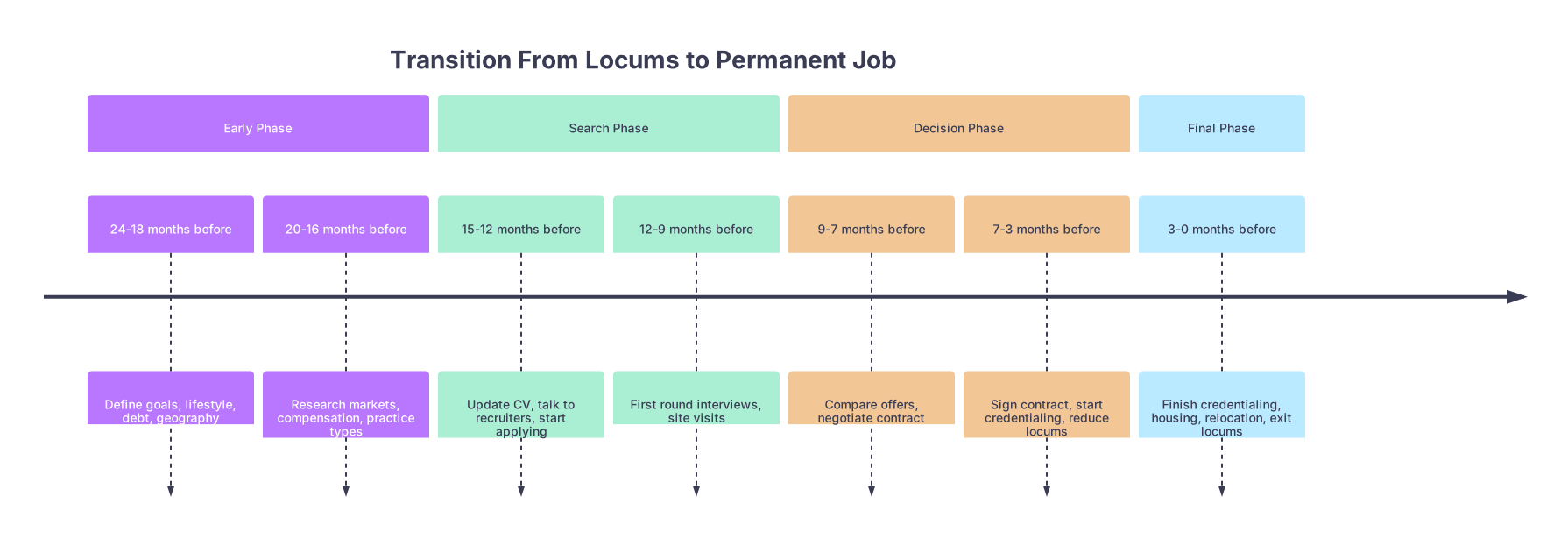
| Period | Event |
|---|---|
| Early Phase - 24-18 months before | Define goals, lifestyle, debt, geography |
| Early Phase - 20-16 months before | Research markets, compensation, practice types |
| Search Phase - 15-12 months before | Update CV, talk to recruiters, start applying |
| Search Phase - 12-9 months before | First round interviews, site visits |
| Decision Phase - 9-7 months before | Compare offers, negotiate contract |
| Decision Phase - 7-3 months before | Sign contract, start credentialing, reduce locums |
| Final Phase - 3-0 months before | Finish credentialing, housing, relocation, exit locums |
Now let’s go chronological and practical: what you should be doing, and when.
18–24 Months Before You Want a Permanent Job: Quiet Planning While Locums Is Fun
At this point you should still be enjoying the freedom: new hospitals, different teams, maybe working a stretch then disappearing to Costa Rica. Perfect. This is the time to build the foundation before you care about specific jobs.
At this point you should:
Decide your end date for “full nomad” life.
- Not exact, but a target year and season.
- “I want to be in a permanent job by July two years from now.”
- This date drives everything else. Write it down. Seriously.
- Not exact, but a target year and season.
Clarify what “permanent” actually means to you.
- Academic vs community
- Employed vs partnership‑track vs concierge vs direct care
- Rural, suburban, or urban
- Call vs no call, nights vs days, procedural vs clinic‑heavy
Audit your locums experiences and log them. After each assignment, jot down:
- What you liked (team culture, schedule, volume, autonomy)
- What you hated (EMR, admin attitude, patient load)
- What was surprising (good or bad)
This becomes your pattern finder later.
Start paying attention to markets, not just shifts. Not obsessively. Just eyes open:
- Notice where recruiters keep calling about “urgent needs”
- Note which regions are constantly advertising your specialty
- Ask permanent staff where people are leaving and why
At this stage, do not start formally applying. You’d just waste time and annoy recruiters by being too early. You’re laying mental groundwork.
16–18 Months Before: Turn Vague Ideas Into Actual Criteria
Now you’re still deep in locums, but you should start converting general feelings into specific filters. This is where locums gives you an edge—most new grads jump straight from training into permanent jobs with zero real‑world comparison.
At this point you should:
Write down your non‑negotiables.
Three or four. Not twelve. Examples:- No more than 1:4 call
- Protected OR time or clinic templates
- Must be within 30 minutes of a major airport
- No RVU‑only comp without a salary floor
Define your “strong preferences” (negotiable, but important):
- Group size
- Teaching or no teaching
- In‑house vs home call
- Max number of weekends per month
Translate that into 3–5 realistic geographic targets. Stop saying “I’m open to anywhere.” You rarely are.
- If family is East Coast, maybe you decide:
- Carolinas, Virginia, Georgia, Tennessee, or one backup in the Midwest.
- If your partner’s career only works in big cities, admit that and narrow appropriately.
- If family is East Coast, maybe you decide:
-
- Locums creates messy CVs: lots of short entries, overlapping dates.
- At this point you should:
- Standardize formatting
- Use “Consulting Physician – Locum Tenens, Multiple Sites” with bullet lists rather than 17 separate 2‑week jobs
- Make sure all licenses, board status, and certifications are clearly listed with dates
You are still not fully “on the market,” but now you know what you’re actually hunting for.
12–15 Months Before: Start the Search Before You Feel Ready
This is the first inflection point where most locums physicians screw up. They wait until they’re tired of travel, then “start looking.” That’s already late.
At this point you should:
Set a formal transition goal:
- “I want to start permanent work July 1 next year.”
- Then count back 12–15 months. That date is today’s action point.
Tell 2–3 trusted recruiters your rough timeline. Not all of them. Just a few:
- One national locums agency that also does permanent
- One or two firms that specialize in your specialty Tell them:
- When you want to start
- Where you’re most interested
- What types of jobs you’ll say yes/no to (so they stop spamming junk)
Start light outreach to specific institutions.
- Academic centers in your target area
- Large health systems where you’ve enjoyed a locums stint
- Independent groups you’ve heard good things about from colleagues
A simple email to a medical director:
“I’ve worked locums at X, Y, and Z. Planning a permanent transition for July next year and keeping your area on my radar. Are you expecting any openings in [your specialty] over the next year?”Block off time for interviews over the next 6 months.
- Protect 3–4 long weekends in your schedule specifically for site visits.
- Do not wait until last minute then realize your locums calendar is packed.

This phase is about visibility. Getting your name in the pipeline early, while you still have flexibility.
9–12 Months Before: Active Interviews While Still Doing Locums
Now the process becomes real. If you want a July 1 start date, this is roughly August–October of the prior year.
At this point you should:
Be actively interviewing. Video first. In‑person second.
- You should be having:
- Initial screens with recruiters/department chairs
- At least 2–3 serious leads by the end of this window
- You should be having:
Use your locums experience as leverage and filter. On visits, ask questions informed by what you’ve seen elsewhere:
- “At my last locums site, we had this volume with three docs—how does your staffing compare?”
- “What’s your actual wRVU distribution across the group, not just the median?”
- “How many people have left in the last 2 years, and why?”
People who’ve only done training do not ask these questions. You can. And should.
Track every opportunity in a simple system. Use a basic table or spreadsheet. For example:
| Site | Location | Practice Type | Base + Bonus | Call | Gut Feel (1-10) |
|---|---|---|---|---|---|
| A | NC | Employed | 350k + RVU | 1:4 | 8 |
| B | TN | Private | 400k + buyin | 1:3 | 6 |
| C | VA | Academic | 300k + stip | 1:6 | 7 |
- Reality‑check your comp expectations.
Use MGMA/AMGA data if you have it, or real‑world offers and recruiter intel.
Look at:- Starting salary ranges in your regions
- wRVU targets that are actually attainable
- Sign‑on bonuses, relocation, loan repayment
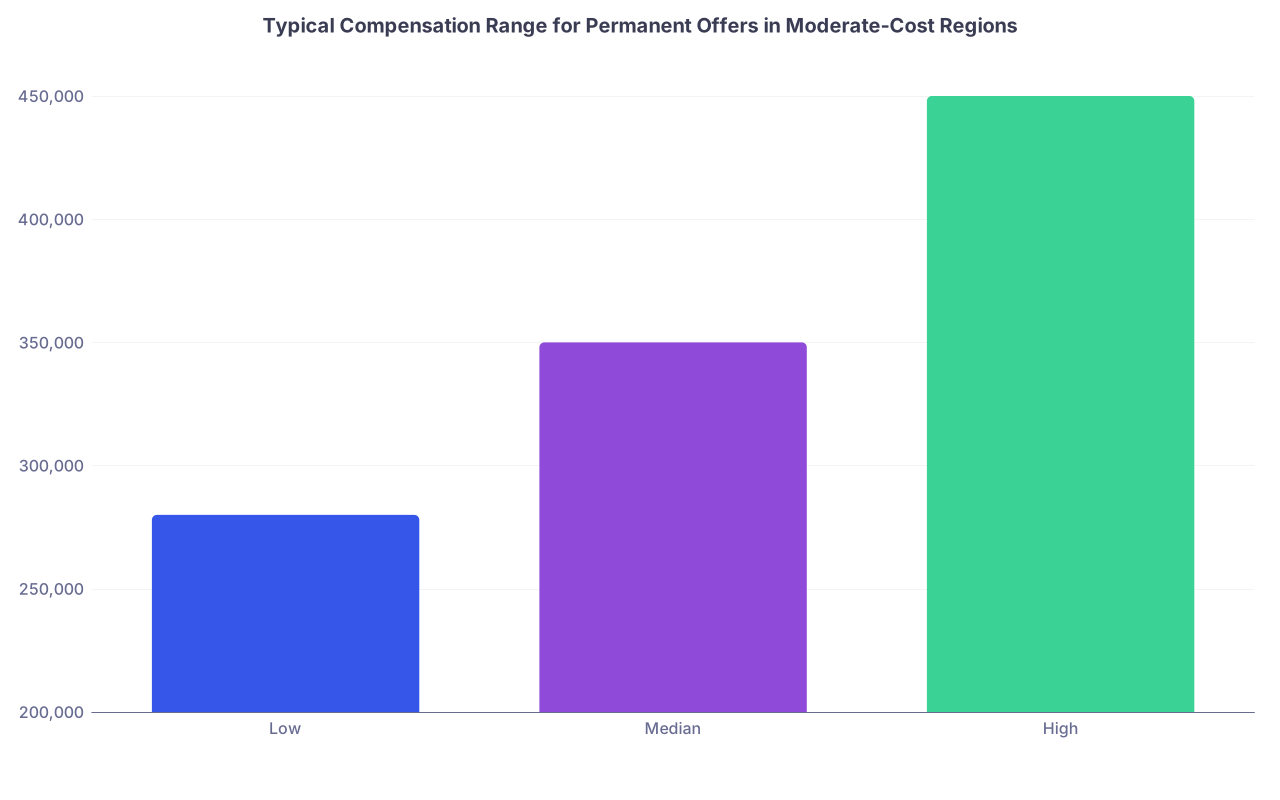
| Category | Value |
|---|---|
| Low | 280000 |
| Median | 350000 |
| High | 450000 |
If by the end of this window you have zero serious leads, you’re behind. Not doomed, but you need to push harder next phase.
7–9 Months Before: From “Maybe” to “This Is My Job”
This is decision time. If you want that July 1 start, this is roughly November–January of the prior year.
At this point you should:
Narrow to 1–2 front‑runner options.
- You might still be talking to 3–5 places, but you should know who’s in the lead.
- Revisit your written non‑negotiables. Do not talk yourself into ignoring them because the sign‑on bonus looks shiny.
Press for formal offers. If a place is still “thinking about posting a position” at 7–9 months out? That’s a yellow flag.
- Good sign: They have a draft contract, HR involved, and concrete timelines.
- Bad sign: “We’re still waiting on budget approvals, but we really like you.”
Start real contract review. Do not DIY this if you can avoid it. At this point you should:
- Hire a health‑care contract attorney (not your cousin who does divorces)
- Focus on:
- Termination clauses (without cause timelines)
- Non‑compete radius and duration
- Call expectations in writing
- Productivity targets and how they’re calculated
Map out your locums wind‑down. Look 6–9 months ahead on your locums calendar:
- Stop booking new gigs that might conflict with your potential permanent start
- Leave room for onboarding, orientation days, and last‑minute credentialing chaos
This is when you start shifting identity in your head from “full‑time locums doc” to “soon‑to‑be partner/employee at X.”
5–7 Months Before: Sign, Credential, and Taper Locums
If things are on track, this where ink hits paper.
At this point you should:
Sign the contract. Realistic sweet spot for signing:
- 6–9 months before start is ideal.
- Signing 2–3 months out is brutally tight and will cause unnecessary stress.
Submit all credentialing paperwork immediately. No procrastination. Credentialing delays kill start dates. You’ll likely have to juggle:
- Hospital medical staff applications
- Health system HR onboarding modules
- Payer enrollment (Medicare, Medicaid, major commercial plans)
- State licensing updates if you’re moving
Scale back locums volume slightly. Not to zero yet. But:
- Avoid back‑to‑back out‑of‑state assignments
- Keep some gaps for fingerprinting, physicals, onboarding sessions, and relocation prep
Lock in your move/housing plan.
- Short‑term furnished rental vs buying right away
- School districts if you have kids
- Commute realities (do the drive at your likely shift times; do not trust Google Maps at 2 p.m. on a Tuesday)

At this stage, if you still have no signed contract and your target start date is 5–7 months away, assume your actual transition will be later than you planned. You can still make it, but everything will be compressed.
3–5 Months Before: Final Locums Stretch and Exit Strategy
Now credentialing is (hopefully) underway. You’re still technically a locums doc, but you have one foot firmly in your next role.
At this point you should:
Stop taking new long locums commitments.
- No more 3‑month blocks.
- Stick to short assignments that you can drop if onboarding dates shift.
Protect a 2–4 week buffer before your permanent start if at all possible.
- Time for the move
- Time for admin onboarding
- Time to simply rest. You do not want day 1 of your permanent job to be day 3 after a brutal stretch of nights in another state.
Do an honest financial check.
- Locums often pays more. Your permanent paycheck might be a step down initially.
- Make sure:
- You have 3–6 months of expenses covered
- You understand any ramp‑up period before productivity bonuses kick in
- Sign‑on and relocation bonuses are clearly scheduled (and know the clawback terms)
Exit locums professionally.
- Give clear notice to agencies and facilities
- Leave good impressions—you may want per diem work there later
- Don’t ghost on the last month because you’re mentally checked out
0–3 Months Before: The Hard Pivot From Locums Mindset to Permanent Mindset
You’re basically done with the locums phase. Now the planning shifts from “when to start looking” to “how to land well.”
At this point you should:
Treat onboarding like a real job, not just another assignment.
- Learn names and power structures: practice administrator, lead APP, scheduler, not just the chair.
- Understand the metrics you’ll be judged on in year one.
Decide your backup plan for extra income. If your group allows moonlighting and your non‑compete is reasonable:
- Keep 1–2 locums sites PRN
- Maintain a couple of extra licenses that give you optionality
If they do not allow locums, respect the contract—but know that this should have factored into your choice months ago.
Close the loop on your nomad life.
- Cancel redundant licenses and DEA registrations you won’t use
- Clean up your CV to reflect the transition
- Update LinkedIn, Doximity, etc. with your permanent role
What If You’re Already “Late”?
Let me be blunt. If you’re:
- 6 months from when you “want” a permanent job and haven’t started searching,
- or burned out on travel and suddenly desperate to settle,
you’re not planning. You’re reacting. You can still fix it, but you’ll need a compressed version of the above:
- Pick a realistic target start 9–12 months from now, not 3–4.
- Blast your network and recruiters immediately with very clear criteria.
- Be flexible on geography or practice type to compensate for your timing.
- Use short, high‑pay locums blocks to bridge the gap rather than accepting a bad permanent job out of panic.
Late planning forces tradeoffs. Early planning lets you choose.
The Core Timing Rules (If You Remember Nothing Else)
- Start planning your transition 18–24 months before you want to be permanent. Not when you’re done with locums—while locums is still going well.
- Be actively interviewing 9–12 months before your target start date and signing a contract 6–9 months out. Credentialing and onboarding will eat the rest.
- Wind down locums strategically in the last 3–6 months, leaving room for credentialing, moving, and actual human rest. Do not book yourself into a corner and then blame the system.
You control the timing more than you think—as long as you start early enough.