The biggest reason locum physicians lose money isn’t low pay. It’s gaps between contracts.
If you want a true “no-gap” locums lifestyle, you cannot wing it week-to-week. You need to work backward from your ideal schedule like a project manager, not like a resident picking up extra shifts.
This is the exact backward timeline I use when I help people stack locum tenens contracts into a continuous, predictable income stream.
First, Know Your Non-Negotiables (12–18 Months Before Start)
At this point you should not touch a single recruiter email. You start with you.
Decide these five things up front:
Clinical reality
- Specialty and procedures you will/won’t do
- Day shift vs nights vs 24-hour call
- Max patient volume you’ll tolerate
- EMR systems you absolutely refuse (I’ve seen people quit over archaic systems)
Income floor
- Monthly after-tax number you must hit (mortgage, loans, family)
- Days per month you’re willing to work to hit that number
- Absolute minimum hourly/day rate you’ll accept
Lifestyle boundaries
- Regions you won’t work (snow, heat, politics, malpractice climate)
- Max flight time from home base
- How many consecutive days you’re willing to be away
Licensing strategy
- Decide if you’ll use the IMLC (if eligible) or go state-by-state
- Target 2–4 high-yield states that:
- Have strong locum demand in your specialty
- License reasonably fast
- Are not physician-saturated
Timeline anchor
- Pick your locums start month (e.g., August 1 next year)
- Count backward 18 months on a calendar. That’s now your planning horizon.
You do this before you ever say “yes” to a job or let some agency shotgun your CV to 40 hospitals.
Month 18–12 Before Start: Set the Infrastructure
At this point you should be quietly building the skeleton that will hold your entire locums life.
1. Choose Entity & Financial Setup (Week 1–3)
You’re building a business, not “picking up shifts.”
- Decide: work as 1099 under your name vs LLC/PLLC/S-corp
- Open:
- Business checking account
- Business savings/tax account
- Credit card solely for locums expenses
- Set up basic bookkeeping:
- Simple spreadsheet or QuickBooks; nothing fancy, just consistent
Why now? Agencies will start asking for deposit info once contracts appear. You do not want to be scrambling.
2. Licensing & IMLC (Month 18–15)
At this point you should start the slowest part: licenses.
- Identify 2–4 target states and put them in a simple table for yourself:
| State | Typical Licensing Time | Common Locums Need |
|---|---|---|
| Texas | 3–4 months | Hospitalist, EM |
| Arizona | 2–3 months | Primary Care, EM |
| Wisconsin | 2–4 months | Hospitalist, Psych |
| Florida | 4–6 months | Anesthesia, IM |
- If IMLC-eligible, start compact qualification immediately
- Submit at least 2 applications in parallel
- Build a license tracker:
- Columns: State, app date, fees paid, last contact, missing items, estimated approval
You assume every board will be slower than their website promises. Because they will be.
3. Malpractice Strategy (Month 16–14)
At this point you should know how you’re covered.
- Decide: rely on agency/hospital coverage vs keep your own policy
- Confirm:
- Claims-made vs occurrence
- Tail coverage responsibilities for each contract
- Keep:
- A running file with certificate copies and policy numbers
- Simple summary: who covers what, where, for which dates
Month 12–9 Before Start: Build Your Pipeline, Not Just Contacts
Now you’re close enough that real contracts can start forming, but far enough that you can be picky.
1. Build Your Professional “Package” (Month 12)
At this point you should look like someone who’s done this before, even if it’s your first locums gig.
- Clean CV (2–3 pages, no fluff, reverse chronological)
- One master privileging packet folder on your computer:
- CV (PDF + Word)
- Medical school and residency diplomas
- Board certification/eligibility letter
- State licenses (current)
- DEA, state controlled substance certs
- Immunizations, TB, flu, COVID docs
- Procedure logs (last 12–24 months)
- References list with contact info
You’ll send variations of this same packet a hundred times. Make it airtight once.
2. Start Interviewing Recruiters Intentionally (Month 12–11)
Keyword: interviewing them, not the other way around.
Talk to 3–5 firms and 2–3 independent recruiters. Keep:
- One simple spreadsheet with:
- Recruiter name
- Agency
- Specialty focus
- States they’re strong in
- Typical rates they’ve actually placed for your field
Ask blunt questions:
- “What’s your best paying current job for [your specialty]?”
- “How many days per month is realistically available at that site?”
- “How often does credentialing delay start dates here?”
You’ll quickly see who knows their stuff and who’s reading a script.
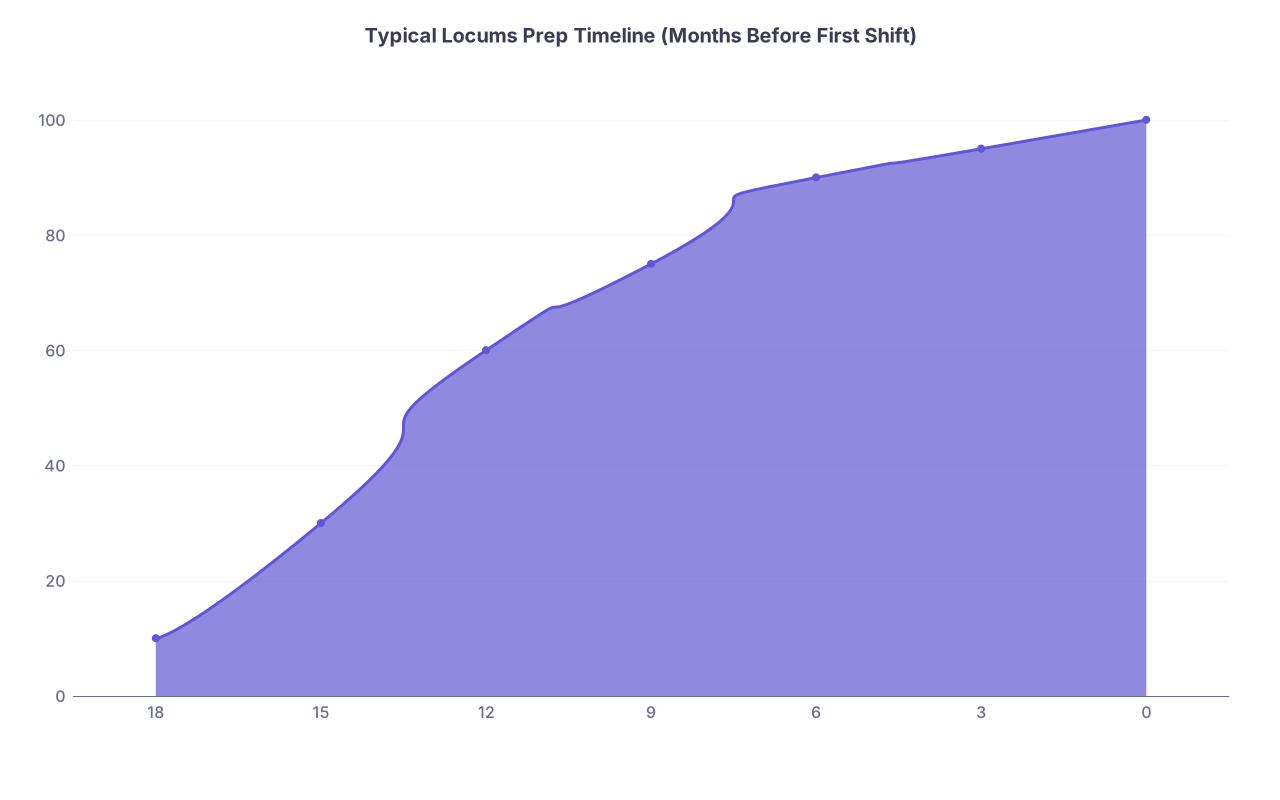
| Category | Value |
|---|---|
| 18 | 10 |
| 15 | 30 |
| 12 | 60 |
| 9 | 75 |
| 6 | 90 |
| 3 | 95 |
| 0 | 100 |
Month 9–6 Before Start: Secure Your First Anchor Contract
Your anchor contract is the backbone. Everything else stacks around it.
1. Define Your Anchor Pattern (Month 9)
At this point you should decide what your base month looks like.
Common patterns that stack well:
- 7-on / 7-off hospitalist schedule
- 14 on / 14 off rural EM or anesthesia
- 10–14 clinic days per month in blocks
Pick a pattern like:
“I want at least 10–12 guaranteed shifts per month at one primary site, with 4–6 extra shifts available at nearby sites.”
That’s your template.
2. Sign the Anchor Contract (Month 8–7)
Timeline reality:
- Credentialing: 60–120 days
- Background/drug screen: 1–2 weeks
- Travel setup: 2–4 weeks (usually sloppy if done last-minute)
So at this point you should:
- Have one contract fully executed that:
- Starts no later than your target month
- Has clear schedule expectations for first 3–6 months
- Includes cancellation terms you can live with (pay for canceled shifts, notice requirements)
Lock this first site even if it’s slightly less pay than a hypothetical unicorn job. Reliability beats theoretical rate.
3. Build a Visual 6-Month Grid (Month 7–6)
Print a physical 6-month calendar. Seriously. Your phone is not enough.
- Mark:
- All guaranteed shifts at the anchor site
- Travel days (day before / after if distance)
- Identify:
- “Open blocks” of 3+ consecutive days
- Regions reachable from your anchor city by short flight or drive
You’re looking for stackable windows, not random free days.
Month 6–3 Before Start: Stack Secondary Contracts Into the Gaps
Now the real game starts.
1. Target Secondary Sites (Month 6–5)
At this point you should be shopping very specifically.
Criteria for secondary contracts:
- Same state license as anchor (ideal) or neighboring compact state
- Similar EMR or practice style if possible
- Predictable blocks:
- Example: 3–5 day clinic runs, 2–4 weekend call blocks per month
You’re not looking for “anything.” You’re looking for:
“Three 3–5 day blocks per month that consistently line up with my anchor’s off weeks.”
Tell your recruiters exactly which calendar blocks you want filled.
2. Credential in Parallel (Month 5–4)
Do not serialize this step.
- While hospital A is credentialing you, you should be:
- Submitting full packet to hospital B
- Completing references for hospital C
- Maintain a “credentialing master sheet”:
- Site
- Contact person
- All forms submitted
- Items outstanding
- Estimated start date
At this point you should expect constant emails asking for the same information three times. That’s normal. Don’t fight it. Just have your packet ready.
3. Lock in First 2–3 Months of Stacked Coverage (Month 4–3)
Your goal:
By 3 months before your start date, your first 60–90 days should look something like this:
| Week | Mon | Tue | Wed | Thu | Fri | Sat | Sun |
|---|---|---|---|---|---|---|---|
| 1 | A | A | A | A | A | A | A |
| 2 | off | off | B | B | B | B | B |
| 3 | A | A | A | A | A | A | A |
| 4 | off | off | C | C | C | C | C |
- A = anchor site 7-on
- B, C = secondary sites filling 5-day blocks
At this point you should physically highlight:
- Travel days
- Turnaround times (e.g., post-night-shift travel is usually stupid)
You’re checking for human survivability, not just “no white space.”
Month 3–1 Before Start: Close Gaps, Don’t Create Them
You’re almost live now. This is where people get greedy and break the system.
1. Protect Travel and Recovery (Month 3–2)
At this point you should lock minimum buffers:
- No travel immediately after a brutal stretch:
- Example: after 7 consecutive ICU nights, block the next day completely
- For cross-country flights:
- Arrive at least 1 day before your first shift at a new site
- For driving assignments:
- Realistic drive time + fatigue
- Weather if you’re anywhere with real winter
If filling a “free” day means risking a missed flight → you’re creating future gaps when you get fired or burn out.
2. Short-Term Filler Strategy (Month 2–1)
Once your main grid is intact, then you can safely add:
- Single extra night shifts at anchor site
- Weekend call at nearby hospitals
- Telemedicine shifts that you can stack between on-site work
At this point you should tell recruiters:
“My priority is keeping my existing contracts happy and covering my confirmed shifts. I can add these exact days as extra work if it doesn’t conflict.”
That sentence has saved more locums careers than you’d think.
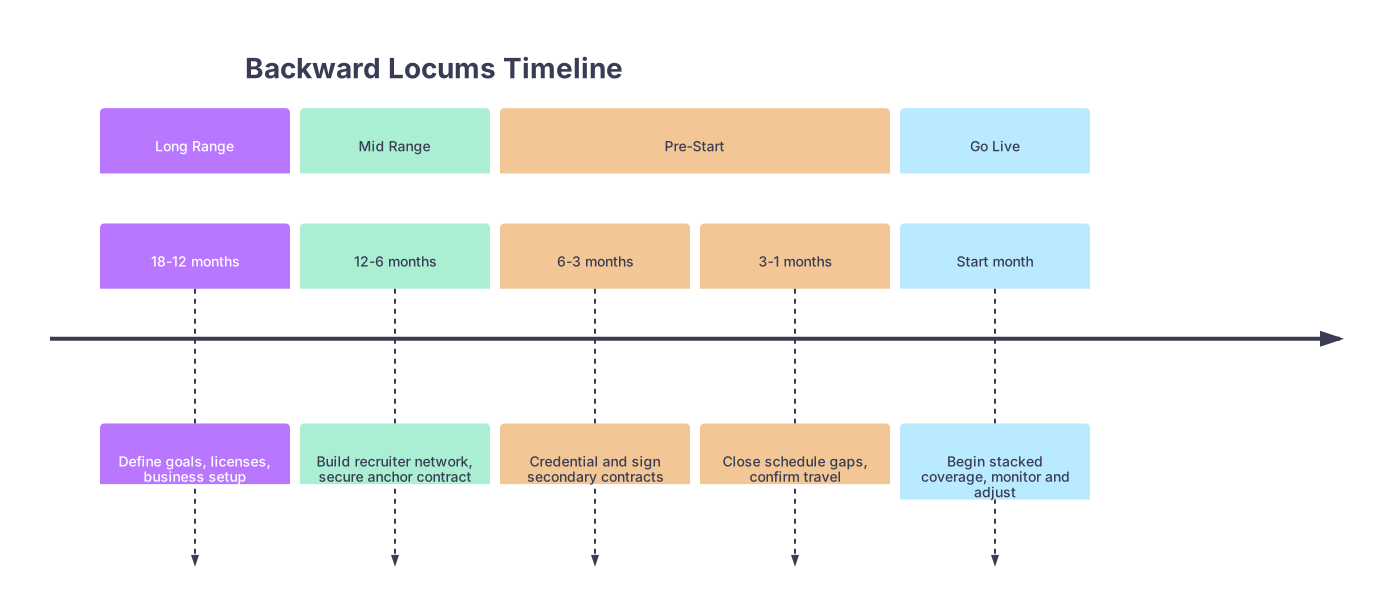
| Period | Event |
|---|---|
| Long Range - 18-12 months | Define goals, licenses, business setup |
| Mid Range - 12-6 months | Build recruiter network, secure anchor contract |
| Pre-Start - 6-3 months | Credential and sign secondary contracts |
| Pre-Start - 3-1 months | Close schedule gaps, confirm travel |
| Go Live - Start month | Begin stacked coverage, monitor and adjust |
Go-Live Month 0–3: Execute and Adjust Without Panic
You’re now working. The job isn’t over; it just shifted.
1. Daily / Weekly Check-In
At this point you should have a one-glance system:
- Weekly:
- Verify all upcoming shifts with each site (schedule changes happen silently)
- Confirm travel bookings and hotel confirmations
- Daily while on assignment:
- Update a simple log:
- Site
- Hours worked
- Issues or red flags
- Who to contact about schedule changes
- Update a simple log:
Anything that threatens future work (unsafe staffing, scope creep, EMR disasters) goes in that log.
2. 90-Day Forward Rolling Window
Always maintain a rolling 90-day calendar that’s:
- 60–80% filled with confirmed shifts
- 20–40% intentionally left open for:
- Rest
- Last-minute high-paying offers
- Emergencies
At this point you should not be chasing every extra shift. You’re maintaining stability, not maximizing chaos.
Months 3–12 in Practice: How to Avoid the Classic Traps
Here’s where most locum physicians blow it and end up with gaps or burnout.
Trap 1: Overcommitting to Unproven Sites
Solution:
First 1–2 months at any new site = test phase.
- Do not let one brand-new hospital take 100% of your availability
- Run with:
- 50–60% of shifts at your most reliable site
- 20–30% at secondary “test” sites
- 10–20% flex or off
Trap 2: Letting Recruiters Control Your Calendar
At this point you should be the one saying:
“Here are the exact dates I want to fill. Here are the states I’m already licensed in. What matches that?”
Not:
“Got anything in hospitalist work anywhere in the country?”
One question keeps you stacked. The other keeps you on their priority list, not yours.
Trap 3: Forgetting License Expirations
Use your tracker:
- Set reminders 90 and 60 days before each license expires
- If a license doesn’t support active or likely future work → consider letting it lapse
- If a site you like is in a slow-licensing state → start renewal early and tell your recruiter, “My license is active and will remain active; let’s plan long term.”
Quick Reality Table: How Far Ahead to Book
Here’s the rough lead time that actually works in the real world (assuming you already have the license):
| Assignment Type | Ideal Lead Time | Absolute Minimum |
|---|---|---|
| Anchor 7-on/7-off | 3–6 months | 2 months |
| New hospital site | 3–4 months | 2 months |
| Repeat known site | 1–3 months | 2–4 weeks |
| Extra single shifts | 2–4 weeks | 3–7 days |
Stop trying to book your entire life 12 months out. Most hospitals cannot plan that far. Aim for a solid 60–90 days that you’re constantly refreshing.
Final 60-Day Tightening Pass (Ongoing, Every Month)
Once you’re rolling, you run a monthly backward review.
At this point each month you should:
- Look 90 days out
- Identify any empty 3+ day blocks
- Check with your existing sites first to fill them
- Then look 60 days out
- Convert tentative holds to firm commitments
- Make sure travel days are built in correctly
- Finally 30 days out
- Confirm every single shift
- Avoid new sites unless the pay is obscene or the fit is perfect
This rhythm keeps you full without being frantic.
If You Remember Nothing Else
Keep these three:
- Decide your life first, then stack contracts around it. Not the other way around.
- Always operate with an anchor contract and a 60–90 day rolling plan. That’s how you avoid gaps without burning out.
- Credential and license in parallel, not sequentially. The bottleneck is never skill; it’s paperwork. Treat it like your second job.
Do this backward timeline once, commit to the process, and locums stops being “chasing shifts” and starts being a predictable, controlled career.