
The biggest lie in locums is that you can “pick up a shift next month.”
You are 90 days out, and if you treat this like picking up an extra call, you will miss your start date.
This is a licensing and paperwork map, not a vibes-based suggestion list. Follow it by the week and you will be on time. Drift from it and you will watch your first assignment evaporate because of a missing notarized form or a delayed primary source verification.
Overview: Your 90‑Day Locums Paperwork Timeline
At this point, assume you already have:
- Finished residency (or are about to in weeks)
- Decided to do locums (full‑time or as a bridge)
- A rough specialty target (e.g., hospitalist, EM, anesthesia, FM outpatient)
Now you are 90 days from your first planned locum shift. The clock is real.
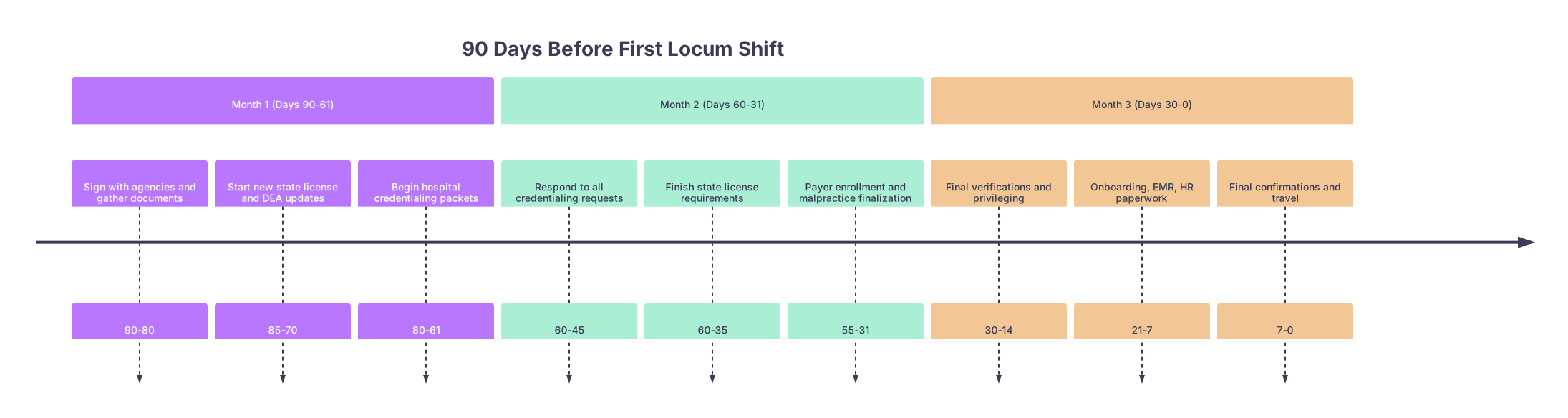
| Period | Event |
|---|---|
| Month 1 (Days 90-61) - Sign with agencies and gather documents | 90-80 |
| Month 1 (Days 90-61) - Start new state license and DEA updates | 85-70 |
| Month 1 (Days 90-61) - Begin hospital credentialing packets | 80-61 |
| Month 2 (Days 60-31) - Respond to all credentialing requests | 60-45 |
| Month 2 (Days 60-31) - Finish state license requirements | 60-35 |
| Month 2 (Days 60-31) - Payer enrollment and malpractice finalization | 55-31 |
| Month 3 (Days 30-0) - Final verifications and privileging | 30-14 |
| Month 3 (Days 30-0) - Onboarding, EMR, HR paperwork | 21-7 |
| Month 3 (Days 30-0) - Final confirmations and travel | 7-0 |
Here is how the 90 days should look, with explicit “at this point you should…” checklists.
Days 90–76: Foundation and Document Arsenal
The first 2 weeks are about building your credentialing toolbox and locking in your agency / assignment pipeline.
By Day 90: Commit to your path
At this point you should:
- Decide: one agency vs multiple
- Decide: which state(s) you are willing to work in
- Decide: inpatient vs outpatient vs ED only
If you are starting from zero, working with 2 agencies is reasonable. More than 3 and your inbox becomes unusable and documents scatter.
Days 90–85: Sign with agency(ies) and clarify timelines
At this point you should:
- Have introductory calls with 1–3 locums agencies
- Ask each:
- How long their average hospital credentialing takes for your specialty
- Whether they assist with state licensing and fees
- Whether they provide malpractice (and is it occurrence or claims‑made)
- How often they actually place in your preferred states
Then:
- Sign representation agreements with 1–2 agencies
- Pick a target first assignment date (e.g., July 1) and make them say out loud:
“To hit July 1, we need your completed packet by [date].”
Days 88–80: Build your “credentialing packet” once
This is where many new locums physicians waste time—filling the same data into 6 different forms by hand, over and over.
At this point you should create a master file set (digital, backed up) with:
Identity and eligibility
- Passport or driver’s license (front and back)
- Social Security card (if required)
- Copy of green card/visa if applicable
Education and training
- Medical school diploma
- Residency (and fellowship) certificates
- ECFMG certificate (if IMG)
Licensure
- Current state license(s) – wallet card or PDF
- DEA certificate
- State controlled substance registrations (if separate)
- ACLS / BLS / PALS / ATLS as relevant
Work and training history
- CV in month‑by‑month format. No gaps. If you were unemployed for 3 months, write “Planned time off.”
- Start and end dates for all jobs and training, to the month and year
References
- 3–5 current clinical references with:
- Name, title, specialty
- Direct phone and email
- Relationship (e.g., residency PD, current department chair)
- Tell them up front you are doing locums; they will get multiple verification calls and forms
- 3–5 current clinical references with:
Legal/disclosure
- Written explanations for:
- Any malpractice case (even if dismissed)
- Any board action, license issue, probation, etc.
- Keep each to 1–2 clear paragraphs, factual, consistent
- Written explanations for:
Standardized data sheet
- One-page document listing:
- Full name (exactly as on license)
- All prior names
- SSN
- DOB
- NPI number
- DEA number and expiration
- License numbers and expiration dates
- Board certification details
- Hospital affiliations (past and present, with addresses)
- One-page document listing:
You should store all this in a synced folder (Google Drive, Dropbox, OneDrive) with a simple structure: “ID,” “Licenses,” “Training,” “Malpractice,” etc.

Days 80–61: Licensing and First Credentialing Packets
This is where the real time sink lives: state medical licenses and hospital credentialing.
Days 80–75: Decide state strategy and launch applications
If your first assignment is:
- In a state where you already hold a full license → good, you are ahead.
- In a new state → start today.
At this point you should:
- Confirm if the state is part of the IMLC (Interstate Medical Licensure Compact)
- Confirm whether:
- They require fingerprinting
- They require FSMB profile
- They require NPDB self‑query
- They require notarized forms
| Scenario | Typical Timeframe |
|---|---|
| Existing active state license | 0–2 weeks |
| New license via IMLC | 2–6 weeks |
| New standard state license | 6–12 weeks |
| Difficult / high-scrutiny state | 10–16+ weeks |
If you are aiming for a new state and you are already at Day 80, you are cutting it close. Still doable with IMLC and a responsive board. But no slack.
Tasks for Days 80–75:
- Submit online application for the new state medical license
- Request FSMB Profile if required
- Initiate NPDB self‑query if requested
- Schedule/live-scan fingerprints as soon as possible
Days 78–70: Start your first hospital’s credentialing packet
Your agency will send:
- A hospital application (often a 20–40 page PDF or portal)
- Privilege request forms
- Release of information and background check forms
At this point you should:
- Block 2–3 hours uninterrupted to complete the entire packet
- Use your master data sheet to copy dates and details
- Keep all answers consistent with prior applications and your CV
- Answer “yes” to required disclosure questions when appropriate and attach your pre‑written explanation
Do not let this drag into “I will finish the last 5 pages later.” Those last 5 pages are always the ones with signatures and consents that hold up the whole process.
Days 60–46: Follow‑Through, Verifications, and Payer Reality
You are now in the middle phase where your main job is rapid response and no dropped balls.
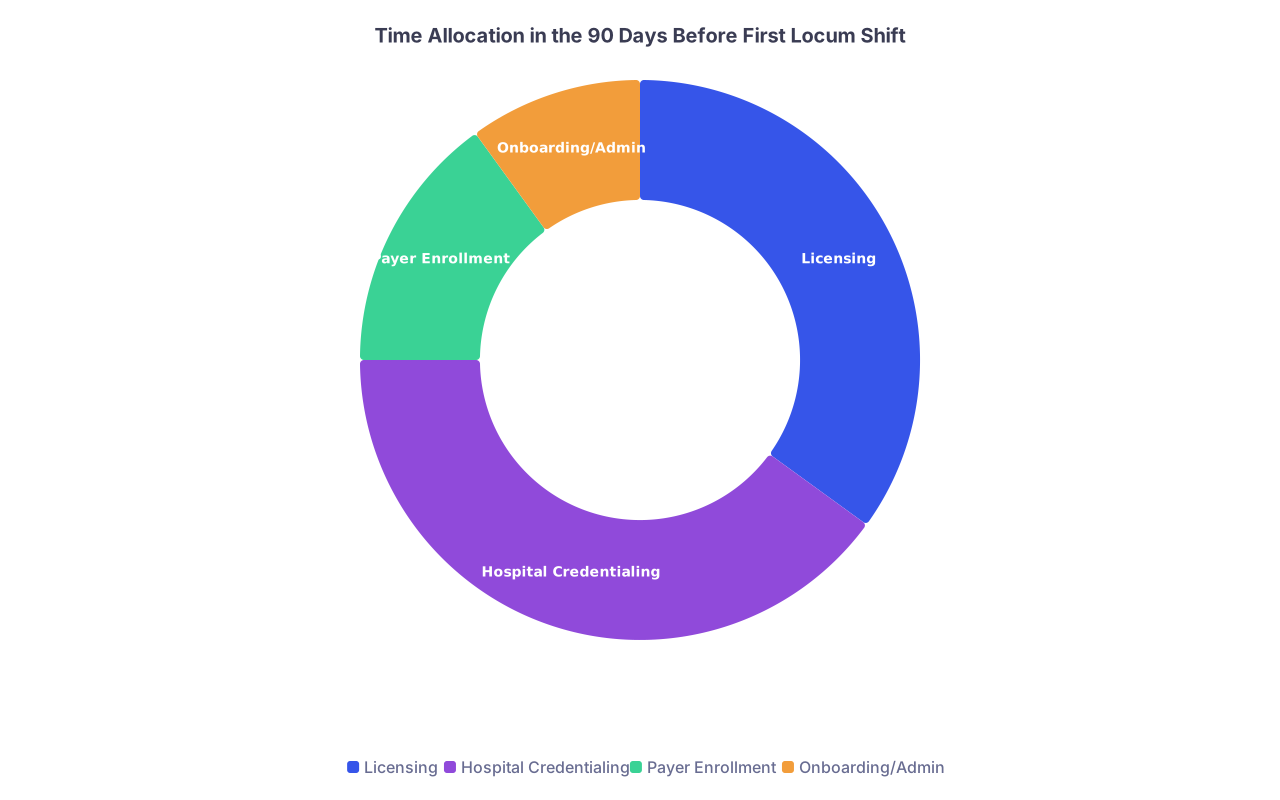
| Category | Value |
|---|---|
| Licensing | 35 |
| Hospital Credentialing | 40 |
| Payer Enrollment | 15 |
| Onboarding/Admin | 10 |
Days 60–55: Track everything
At this point you should:
- Have a simple tracking sheet (spreadsheet or notebook) with:
- Each state license in progress
- Each hospital/clinic credentialing file
- Which references have been contacted
- Which verifications are still pending
Columns to include:
- Item (e.g., “State X license,” “Hospital A privileges”)
- Submitted date
- Items they are still waiting for
- Last contact / update
- Next follow‑up date
You are not being “annoying” by checking in every week. You are being employed.
Days 55–50: Clean up missing items and push references
By this stage, credentialing offices will have:
- Run primary source verification for your degrees and training
- Sent forms to your references
- Requested malpractice history from your carriers
At this point you should:
- Email or call your references directly:
- “You should have received a form from [Hospital X] about my privileges. Could you complete it this week? It affects my start date.”
- Follow up with:
- Former employers if any practice verification is pending
- Malpractice carriers for loss run reports if the hospital requested them
If anyone says “We will get to it next month,” be explicit:
- “I am scheduled to start clinical work on [date]. The hospital will not let me work until this verification is done.”
Days 50–46: Payer enrollment reality check
For pure locums hospital work (ED, inpatient, anesthesia), payer enrollment may be handled by the facility and often is not your headache. For outpatient locums, it absolutely can be.
At this point you should:
- Ask clearly:
“For this assignment, do I need to be individually enrolled with Medicare/Medicaid/commercial plans, or will services be billed under the group?”
If you do need enrollment:
- Expect 30–90 days for certain payers
- Understand this may limit what you can do early in the assignment, or delay start
This is why I push people to aim their first locums gig at hospital‑based specialties or settings if they need to start quickly.
Days 45–31: License Finalization and Privileging Push
Now you are inside the window where delays actually kill start dates. You cannot coast.
Days 45–40: Close out your state license
At this point you should:
- Log into the state board portal
- Check for:
- “Application incomplete” flags
- Any status notes
- Call the board if your file has been silent:
- Ask what exactly is pending (often one verification or fingerprint result)
Common slowdowns I have seen:
- Training program never returned the verification form
- Malpractice carrier never sent a claims history
- Old address used for correspondence; letters never reached you
Solve those now. Do not wait “a few more weeks” and hope.
Days 40–35: Privileges committee timeline
Hospital medical staff offices usually batch files for:
- Credentials committee
- MEC (Medical Executive Committee)
- Board of trustees / governing body
These meetings are often monthly. Miss a meeting, lose 4 weeks.
At this point you should:
- Ask the medical staff office:
- “When is the next credentials committee meeting where my file can be reviewed?”
- “Is my file considered complete for that meeting?”
- If not complete, ask what is missing and how to get it turned around within a week
You want to be “file complete” at least 1–2 weeks before that meeting.

Days 30–21: Onboarding Avalanche
Once license and core privileges are close to complete, you shift into HR and onboarding hell. This is where details get missed:
Days 30–26: Confirm the big three
At this point you should have, in writing:
- Start date and schedule
- Exact days and shifts
- Call responsibilities
- Compensation and coverage
- Hourly / per shift rate
- Overtime rules (if any)
- Malpractice type, limits, and tail responsibility
- Travel and housing
- Who books flights/hotels
- Per‑diem arrangements
- Rental car vs rideshare covered
Get the locums confirmation letter from the agency and read it. Line by line. If there is any mismatch with what was said verbally, fix it now, not the night before you fly.
Days 25–21: Complete HR and compliance
At this point you should:
- Finish:
- Employee or contractor HR packets
- Background check consent
- Drug screen
- Occupational health / TB, Hep B, vaccine documentation
- Upload:
- Immunization records (MMR, varicella, COVID if required)
- Recent TB skin test or IGRA
- Fit‑test card if N95 is needed (or plan to do it on site)
You should also:
- Get EMR training scheduled:
- Remote modules (Epic, Cerner, Meditech, etc.)
- On‑site orientation hours
Expect:
- 1–4 hours of online modules
- Possibly mandatory live or video training session
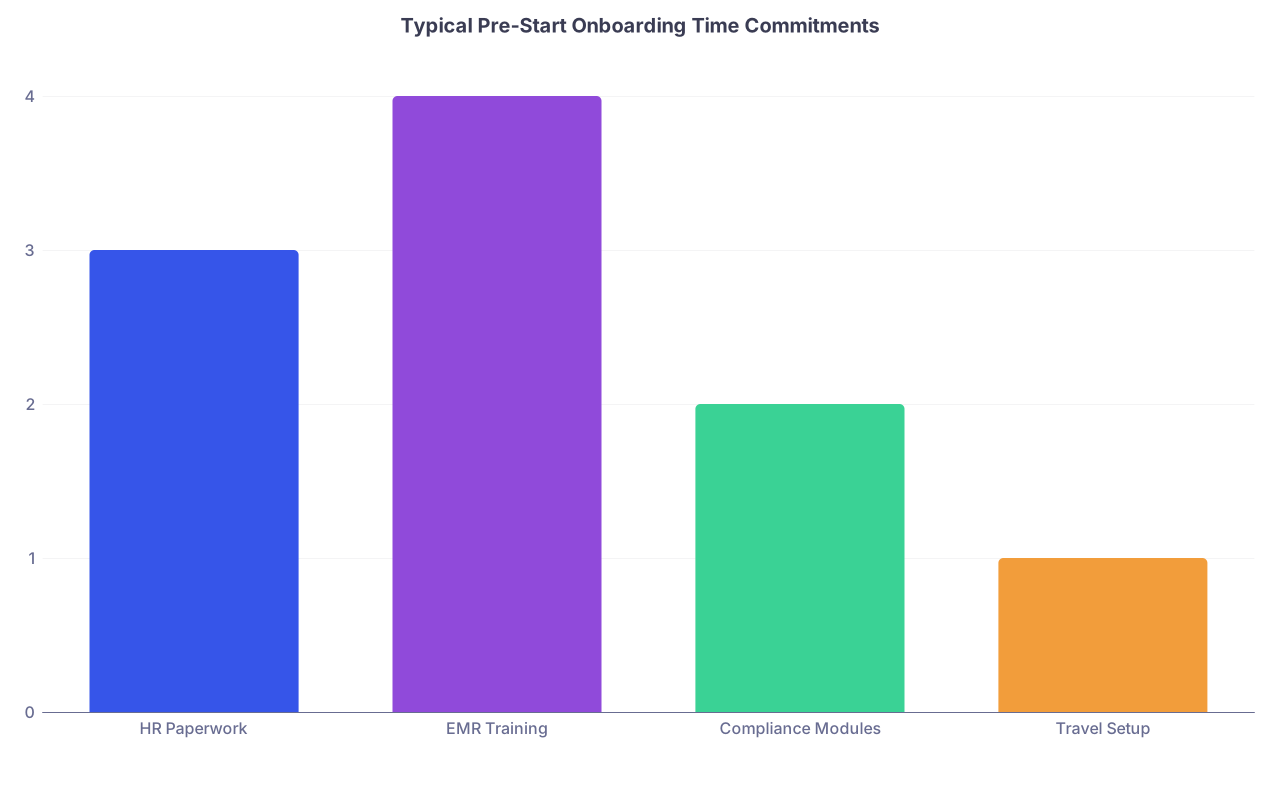
| Category | Value |
|---|---|
| HR Paperwork | 3 |
| EMR Training | 4 |
| Compliance Modules | 2 |
| Travel Setup | 1 |
Days 20–8: Last‑Mile Details and Backup Planning
This is your “do not get cocky” window. Things still fall apart here.
Days 20–15: Verify everything in one sitting
At this point you should set aside one focused hour and confirm:
Licensing:
- State license status shows “active” on the public site
- DEA address updated if required by state
- State controlled substance registration active (if separate)
Privileges:
- Medical staff office confirms:
- Credentials committee and board have approved you
- You have a start date for privileges (yes, they are dated)
Logins/access:
- You have:
- EMR username and password or instructions to obtain them
- Remote access instructions (VPN, token, etc.) if needed
- Dictation / voice recognition account plan
Logistics:
- Flight and housing confirmations in writing
- Contact person for first day (name, cell or direct line)
Days 14–8: Create your first‑day playbook
At this point you should:
- Write down:
- Where to park
- Where to report (office, HR, medical staff, ED, hospitalist workroom)
- What time to arrive (not just shift start; usually 60–90 minutes earlier on Day 1)
- Ask:
- “Will there be a formal orientation on Day 1, or do I report directly to the clinical area?”
You should also:
- Print or download:
- Confirmation letter
- License and DEA copies
- Privilege letter if available
- Emergency contact list (agency rep, medical staff office, department contact)

Days 7–0: Final Confirmations and Go/No‑Go
You are now in the danger zone where one missing step can still cancel your assignment.
Day 7–5: Explicit “Are we cleared?” check‑in
At this point you should:
- Call or email:
- Agency recruiter
- Hospital medical staff office
- Department contact or scheduler
Ask each very bluntly:
- Agency: “Is there any outstanding paperwork or requirement on my side that could delay this start?”
- Medical staff office: “Am I fully approved and in the system to start on [date]?”
- Department/scheduler: “Am I on the schedule in your system for these shifts?”
If anyone hesitates, you need to know today. Not at 5 p.m. the day before you fly.
Day 3–2: Travel and tech sanity check
At this point you should:
- Re‑confirm:
- Flight times and connection windows
- Hotel or housing address and check‑in details
- Test:
- Any needed remote access (VPN client installed, token working)
- Email access to hospital or agency communications
Pack a small locums kit:
- Printed licenses / documents
- Basic office supplies (pens, notepad, small clipboard)
- Specialty‑specific tools (otoscope, ophthalmoscope, reflex hammer, if outpatient; good penlight; etc.)
Day 1: First‑day execution
Arrive early. 60–90 minutes before your first clinical responsibility.
At this point you should:
- Report exactly where instructed
- Be ready to:
- Show ID
- Complete any last‑minute signatures
- Pick up ID badge
- Confirm your login works in a live system
Then you start the actual job. And if you followed this map, you are not scrambling to print your DEA from the nurses’ station between patients.
Quick Snapshot: 90‑Day Locums Paperwork Map
| Timeframe | Primary Focus |
|---|---|
| Days 90–76 | Agencies, master documents, CV, state plan |
| Days 75–61 | State license applications, first hospital packet |
| Days 60–46 | Verifications, references, payer reality |
| Days 45–31 | License completion, credentials committee deadline |
| Days 30–15 | HR, EMR, compliance, travel & housing |
| Days 14–0 | Final confirmations, access, first‑day logistics |

Strip it down to the essentials
- Locums paperwork is a 60–90 day project, not a two‑week errand. Treat it like one.
- Front‑load the hard pieces: state licenses, credentialing packets, reference coordination. Everything else stacks on top of that.
- Never assume silence means progress. At every stage, ask directly: “What is missing that could stop me from working on my start date?”
Follow the timeline. Hit the checkpoints. Then your first locum shift will feel challenging for the right reasons—the medicine, not the paperwork.