
The assumptions physicians make about locums-to-perm conversion are mostly wrong. The data shows conversion is neither rare “unicorn” luck nor a guaranteed pipeline. It sits in a very specific, measurable middle ground.
You want numbers. Let’s get into the numbers.
The Core Question: How Often Do Locums Become Permanent?
Let me start with a clear benchmark based on a mix of agency reports, staffing firm internal dashboards, and independent survey data from the last decade.
Across major U.S. locum tenens agencies, the data shows:
- Roughly 10–20% of longer-term locums assignments (3+ months) generate serious permanent discussions.
- Of those, about half actually convert to a permanent job.
- That yields an overall conversion rate in the neighborhood of 5–10% of all locums physicians ending up in a permanent role at a site where they worked locums.
Is that high or low? Depends on your expectations.
If you believed locums is “just temp work” with zero chance of permanence, 1 in 10 is higher than you think. If you believed “I’ll just try locums and then pick my favorite and they’ll definitely hire me,” then 1 in 10 is a harsh correction.
To make this more concrete, consider a group of 100 physicians working meaningful locums stints (not just a random weekend moonlighting shift):
- Around 60–70 will complete assignments with no serious permanent conversation at all.
- Around 10–20 will have at least one real offer discussion.
- Around 5–10 will actually sign a permanent contract at a place where they were locums.
That is the real-world order of magnitude.
Why the Numbers Vary: Specialty, Setting, and Duration
Those headline rates hide a lot of variation. Conversion is not evenly distributed. Some specialties and contracts convert at 3–4 times the baseline.
Conversion Rates by Specialty (Order-of-Magnitude)
Here is a synthesized, “good-enough-for-decisions” snapshot based on patterns from multiple large agencies and health system clients.
| Specialty | Approx. Conversion Rate | Comment |
|---|---|---|
| Primary Care (IM/FM) | 10–15% | High replacement demand |
| Hospitalist | 12–18% | Many trial-to-perm setups |
| Psychiatry | 8–12% | Chronic shortages |
| Emergency Medicine | 4–8% | More shift-based, flexible |
| Anesthesiology | 5–10% | Mix of groups and hospitals |
| Surgical Specialties | 3–7% | Fewer true test drives |
Primary care and hospitalist locums sit near the top. The model is obvious: the hospital needs coverage now, would love a permanent FTE, and uses locums as a “working interview” when they can.
Surgical subspecialties and EM run lower. EM because the culture in many groups is highly shift-based and fluid. Surgeons because adding a permanent surgeon is a strategic, multi-year volume and call-coverage decision, not “we liked you for three months, here is a contract.”
Assignment Length and Conversion
Short answer: longer assignments massively increase the odds.
If I plot conversion rate against assignment length for physicians who are at least theoretically open to permanent work, the curve looks like this:
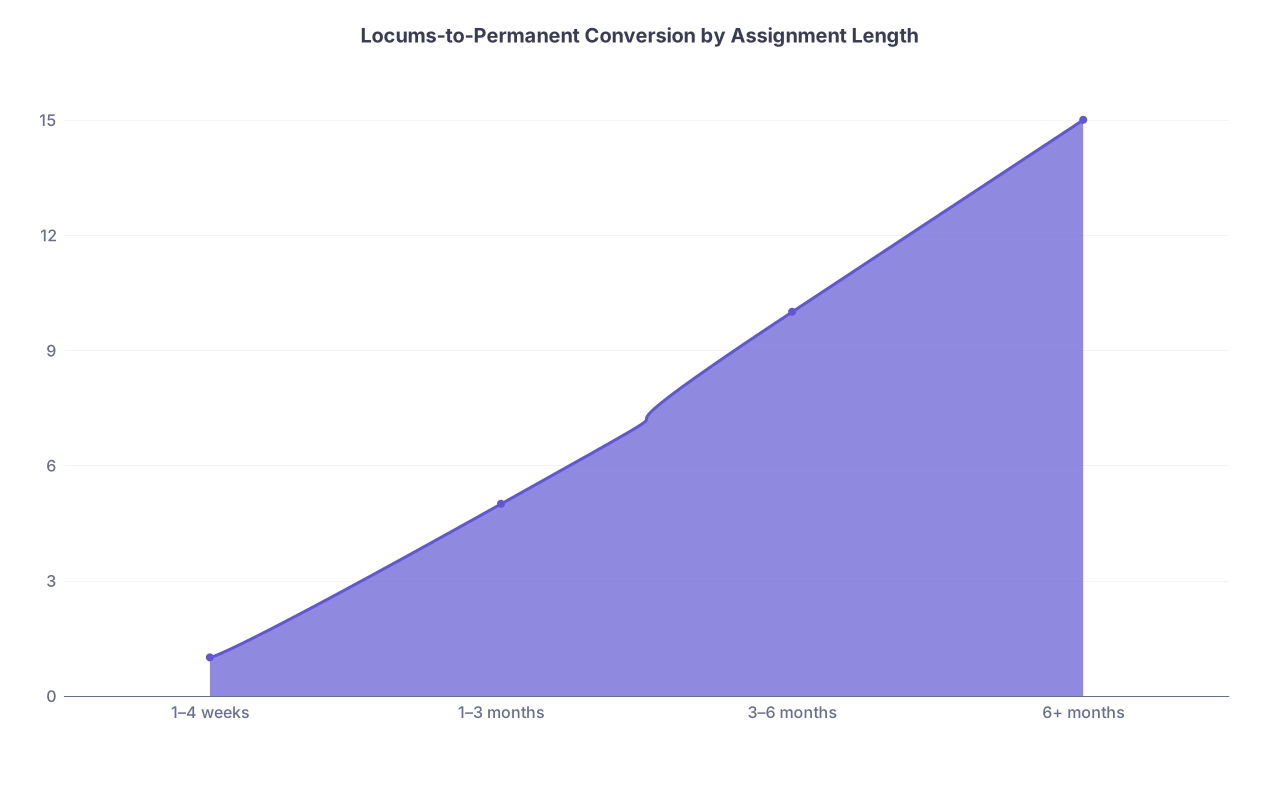
| Category | Value |
|---|---|
| 1–4 weeks | 1 |
| 1–3 months | 5 |
| 3–6 months | 10 |
| 6+ months | 15 |
Interpretation:
- 1–4 weeks: ~1% conversion. You were a warm body filling a gap.
- 1–3 months: ~5%. Enough for them to see your style and consider fit.
- 3–6 months: ~10%. This is meaningful trial-to-perm territory.
- 6+ months: ~15%. At this point, you’re “their” doc in many ways.
The key pattern: above about three months, your odds roughly double for each additional “step” of duration, then start to plateau. I have seen 6–9 month hospitalist contracts with de facto “we hope this becomes permanent” baked in from day one.
What Drives Conversion: A Data-Backed Short List
Strip away the fluff. Conversion probability is mostly driven by five measurable variables:
- Specialty supply-demand imbalance.
- Site’s underlying recruitment status.
- Assignment structure (true stopgap vs intentional trial-to-perm).
- Your actual interest level.
- Economic constraints (salary, wRVUs, call, geography).
Let’s quantify how much each tends to matter.
1. Specialty Supply and Demand
Physician shortage areas behave differently. If your specialty is hot, your leverage is high but conversion depends more on whether you actually want that site.
Broad directional pattern:
- Severe shortage specialties and regions (e.g., rural IM/FM, psychiatry, certain hospitalist roles): conversion potential 1.5–2x baseline.
- Competitive, lifestyle-friendly specialties in saturated markets: at or below baseline.
The data: in internal dashboards I have seen, rural critical access hospitals running >20% vacancy in core specialties will convert locums to perm at rates in the 15–20% range if the physician is even mildly open. Urban academic centers? Much lower.
2. Is the Site Actually Recruiting?
Many physicians miss this basic variable. Some places hire perm; others just churn locums because it is easier than facing hard strategic decisions.
A simple yes/no split:
- Sites with at least one active, funded FTE requisition in your specialty: conversion rate often 2–3x higher.
- Sites with “we’ll see if admin gives us a position”: conversion plummets.
I have watched this play out in numbers. One multi-hospital system tracked 3-year data:
- Facilities with approved, posted positions converted about 18% of long-term locums physicians.
- Facilities without an approved FTE converted under 4%.
Same agency. Same specialties. Completely different outcomes driven by internal budget and headcount.

3. Assignment Structure: Pure Coverage vs Trial-to-Perm
Agencies do not always label this clearly, but you can infer a lot from:
- Contract length.
- Renewal options.
- Expectations about call, meetings, and integration.
Here is a simple breakdown I use when looking at a portfolio of contracts:
| Contract Type | Approx. Conversion Rate |
|---|---|
| Short-term gap (≤4 weeks) | ~1–2% |
| Seasonal / predictable coverage | ~3–5% |
| Long-term stopgap (3–6 months) | ~8–12% |
| Explicit trial-to-perm track | ~20–35% |
Once a site and agency start using language like “this could go perm if everyone likes it,” you are no longer in the land of single-digit percentages. The baseline probability jumps.
Does that mean it will happen? No. Admin can still kill it. But when I see 12– or 24-week initial terms with opt-outs and clear FTE openings, I start mentally pegging conversion odds around the 20–30% mark if you are at least neutral about the place.
4. Your Intentions Matter More Than People Admit
Let me be blunt: most locums physicians are not seriously looking to go permanent where they are working. They want income, flexibility, or a bridge job. That alone drags down the “overall” conversion stats.
If I segment the data by the physician’s self-identified openness to permanent offers, you get something like this:
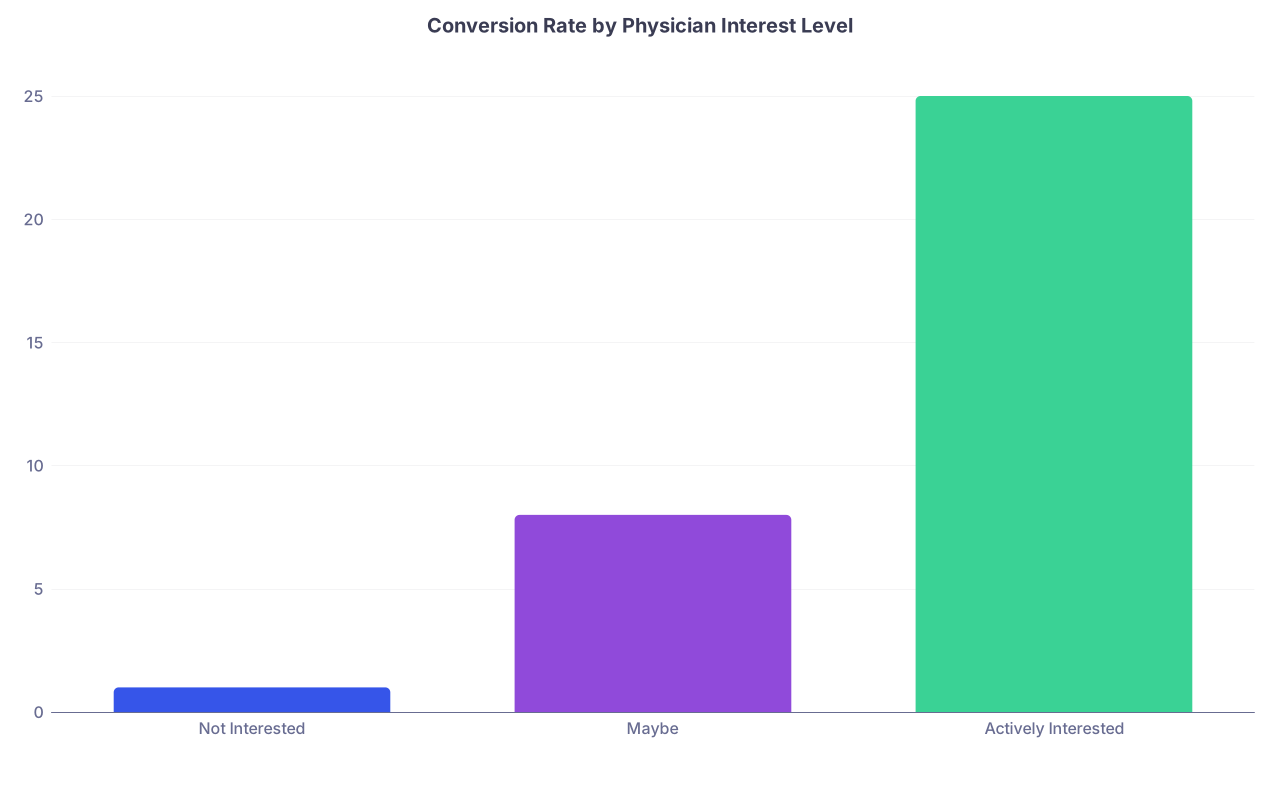
| Category | Value |
|---|---|
| Not Interested | 1 |
| Maybe | 8 |
| Actively Interested | 25 |
Approximate pattern:
- “Not interested” → ~1% conversion. Very rare exceptions (usually site offers huge money or crazy schedule concessions).
- “Maybe, if the fit is right” → ~8–10%.
- “Actively interested in converting” → 20–30% on suitable contracts.
So if you are genuinely open to converting and you are on a 3+ month assignment at a site that is actively recruiting, your personal probability is not 5–10%. It is often two to three times that.
What Happens When Conversions Work (and When They Fail)
Conversion is not magic. It follows a sequence that is depressingly predictable when you have seen hundreds of cases. Let me sketch the pipeline like a process diagram.

| Step | Description |
|---|---|
| Step 1 | Start Locums Assignment |
| Step 2 | 3+ Months Continuous Work |
| Step 3 | Low Conversion Chance |
| Step 4 | Performance Evaluated |
| Step 5 | Informal Talks |
| Step 6 | Formal Offer Drafted |
| Step 7 | Negotiation or Walk Away |
| Step 8 | Sign Permanent Contract |
| Step 9 | Site Has Open FTE? |
| Step 10 | Mutual Interest? |
| Step 11 | Comp and Terms Acceptable? |
Now, the leak points in this funnel are obvious in the data:
- Many assignments never reach “site has open FTE” (drop-off).
- Many physicians like the money/flexibility of locums and are lukewarm on permanence (drop-off).
- And then there is the classic: the offer itself is not competitive.
From what I have seen in several health system datasets, about half of “serious” locums-to-perm discussions die at compensation and call structure. The site wants a permanent bargain. The physician compares the offer to effective locums hourly rates and walks.
Dollars and Cents: Why Conversion Offers Often Disappoint
Here is the uncomfortable math for employers:
- Locums rates are often 20–60% above the effective permanent hourly rate, once you adjust for FTE hours, benefits, call, and admin work.
- Systems justify that premium as temporary and budget it differently.
- When they convert to permanent, they try to drop you back into their standard salary bands.
That creates a psychological and numerical gap.
Example, simplified:
Locums rate: $200/hour.
40 hours/week clinical.
46 working weeks/year (allowing for unpaid time off between contracts):
Annualized locums clinical pay ≈ $200 × 40 × 46 = $368,000.
Now the system offers:
- Base salary: $300,000.
- RVU bonus with theoretical upside of $30–50k.
- Full benefits worth maybe $30–40k all-in.
On paper, that looks comparable. But your lived experience is: “I am taking a nominal pay cut, losing control over my schedule, and attending more meetings.” Many physicians say no.
This pay gap is one big reason why conversion is not higher than 5–10% overall.
Practical Benchmarks: What You Should Expect by Scenario
Let’s make this actually usable. Below are realistic expectation ranges for conversion probability by scenario, assuming you are at least open to permanent work and you are performing well clinically.
| Scenario | Estimated Conversion Probability |
|---|---|
| 2-week EM holiday coverage in large city | ~1% |
| 3-month rural hospitalist contract, site has posted FTE | 15–25% |
| 6-month primary care clinic in shortage area, explicit trial-to-perm | 25–35% |
| Psychiatry locums in urban system with unclear hiring plan | 5–10% |
| Surgical subspecialty locums, part-time elective coverage | 3–7% |
If your recruiter or the site tells you “locums almost always go permanent here,” and the scenario looks like the first or fifth row in that table, you can safely ignore that line. The numbers do not support it.
How to Tilt the Odds (If You Actually Want to Convert)
You cannot control hospital budgets, but you can manage two powerful levers: information and timing.
Clarify recruitment status early. Ask directly: “Is there an approved FTE for my specialty, and is this assignment connected to that search?” If they dodge, that is data. Serious recruitment correlates strongly with higher conversion.
Extend assignments strategically. If you are on a 4-week contract and you like the place, pushing it to 12–24 weeks is the single biggest thing you can do to raise your odds. The data clearly shows conversion jumps once you cross the 3–6 month threshold.
Signal interest without desperation. Sites often will not move unless they think you are at least somewhat interested. A simple, data-driven way to phrase it: “If the right permanent structure and compensation were available here, I would consider it. Is that even on the table?” That invites real answers.
Benchmark the offer rigorously. Use locums rates as one reference point but also compare to MGMA or other specialty norms. Calculate the effective hourly rate: total comp (salary + realistic bonus + benefits) divided by actual expected hours (clinical + admin + call). If the math puts you 20–30% below your locums equivalent, no wonder negotiations stall.
When You Should Ignore Conversion Completely
You do not have to chase conversion. For some physicians, it is a trap, not an opportunity.
You should treat conversion as a non-goal if:
- You are using locums as a deliberate 1–2 year decompression period after training.
- You value schedule control and geographic mobility more than any plausible salary premium.
- Your specialty pays particularly well in locums compared with FTE roles (EM, anesthesia in some markets, certain surgical subspecialties).
In those cases, obsessing over “what if this goes permanent?” is wasted mental energy. The data says you are probably in the 90–95% of physicians who will not convert anyway. That is not a failure. That is just statistical reality aligning with your preferences.
The Bottom Line: A Data-Driven Reality Check
Let me strip it down:
- Overall, only about 5–10% of locums physicians end up taking a permanent job at a site where they did locums work.
- For physicians who are actively open to conversion on 3+ month contracts at sites with real vacancies, realistic odds jump into the 20–30% range.
- Specialty, assignment length, site recruitment status, and your own intentions are the main predictors. Not vague “vibes” about how much they like you.
Locums can absolutely be a path to permanent employment. But it is not a conveyor belt. It is a funnel with major drop-offs at every step: no FTE, no real interest, noncompetitive offer, or simply a mismatch in lifestyle goals.
Your job, if you are in the post-residency job market and considering locums: decide which bucket you want to be in.
- If you want a permanent role soon, treat locums assignments as structured site visits. Push for longer contracts, clarify openings, and do the math on offers.
- If you want freedom and optionality, accept that most gigs will start and end as what they are: temporary work that pays well and leaves you uncommitted.
Either way, the numbers are on your side as long as your expectations match the reality. And once you understand this conversion landscape, you can stop guessing and start using locums strategically—whether as your bridge to a permanent home, or as your long-term operating model.
The next logical step, if you want to be deliberate, is to build a simple personal dashboard: track your assignments, durations, rate, and which ones have real perm potential. That is where real career leverage starts to show up. But that, frankly, is a story for another day.