
The most dangerous thing a new locum physician can do is “set and forget” their life for a year. Locums only works if you re‑calibrate constantly.
You are not in a traditional job. You are in a 3‑month experiment that repeats. Every quarter you should be tearing down and rebuilding parts of your clinical life, your finances, and your future plans. If you don’t, you drift into bad contracts, toxic schedules, and burnout disguised as “flexibility.”
Here is how to structure that reassessment. Three‑month blocks. With specific checkpoints at Month 0 (start), Month 3, 6, 9, and 12.
The 3‑Month Cycle: Big Picture
Every 3 months as a new locum physician, you should systematically reevaluate five domains:
- Clinical work and schedule
- Money (rates, expenses, and savings)
- Travel / logistics
- Career trajectory and CV strategy
- Personal life and burnout risk
Think of each quarter as a mini “rotation year” you control. At this point in your career (post‑residency, early job market), you cannot afford to just hope it all works out. You need data.

| Category | Value |
|---|---|
| Clinical & Schedule | 25 |
| Financial | 25 |
| Travel & Logistics | 15 |
| Career Planning | 20 |
| Personal & Burnout | 15 |
Quarter 0: Before Your First Assignment Starts
At this point you should be setting baselines. You cannot evaluate what you never defined.
Week 0–2: Establish Your Starting Benchmarks
Set hard numbers and non‑negotiables:
- Clinical:
- Target weekly volume (shifts or RVUs)
- Max number of consecutive days on
- Acceptable call burden (e.g., no more than 1:3 call)
- Financial:
- Minimum hourly or daily rate you will accept
- Target quarterly savings or debt paydown
- Max monthly fixed expenses at home while traveling
- Personal:
- Minimum days off at home per month
- Maximum time away from partner / kids per stretch
Write it down. Not in your head. In a document you will open every 3 months.
| Domain | Baseline Target |
|---|---|
| Shifts/mo | 12–14 |
| Nights/mo | ≤ 4 |
| Daily Rate | ≥ $1,800 |
| Call | Max 1:4 |
| Savings/mo | $4,000 |
| Days Home | At least 7 per month |
If you do not define something like this up front, your recruiter will define it for you. And they will not be optimizing your sleep or your future.
Quarter 1 (Months 1–3): First Assignment Reality Check
By the end of Month 3, you should complete your first full quarterly review. This one matters the most because it sets the pattern for how seriously you treat locums as a business.
Month 1: Track Without Changing Too Much
At this point you should be collecting data, not blowing up your schedule.
Create a simple tracking sheet or note:
- Number of shifts worked
- Type of shifts (days, nights, weekends, call)
- Average census / RVUs / patient load per shift
- Actual hours on site vs paid hours
- Time charting after shift
- Any unsafe situations or near misses
- Staff / culture red flags (nursing support, consultant hostility, etc.)
Same for finances:
- Gross locums pay received
- Travel stipends vs out‑of‑pocket travel
- Housing costs vs housing stipend
- Licensing, CME, professional fees (malpractice, DEA, boards)
You are building your personal database. Later you will use it to negotiate or walk away.

Month 2: Early Pattern Scan
Now you start to see patterns. At this point you should ask:
- Am I consistently staying late? How many hours of unpaid work per shift?
- Is my “14 shifts” schedule actually feeling like 18 because of charting?
- Are nights killing my sleep for 3 days afterwards?
- Is the actual work matching what was described in the contract?
Make small adjustments:
- Ask for schedule tweaks for Month 3 (e.g., fewer back‑to‑back nights)
- Fix obvious logistical pain points (change housing, better airport, different rental car arrangement)
- Start logging specific examples of misalignment between contract promises and reality
Those specifics (“listed as average 12–14 patients, consistently 18–20”) are exactly what you use in your first real renegotiation.
Month 3: First Formal 3‑Month Review
Block off 2–3 uninterrupted hours. At this point you should step back and go through each domain.
1. Clinical Work and Schedule
Questions to answer:
- Was the patient load safe and sustainable?
- Did I learn anything new or was I just grinding?
- How many days did I truly have off (no charting, no calls)?
- How did this schedule feel compared with residency?
If the schedule felt like a worse version of residency with slightly better pay, something is wrong.
Action items for the next quarter:
- Decide: extend at current site, reduce shifts, or do not return
- Clarify specific scheduling requests:
- Example: “Max 3 nights per month, no more than 5 days in a row, no alternating day/night whiplash”
- Identify one clinical skill or procedural area you want exposure to in the next assignment
2. Financial Reality Check
You should know, down to the dollar:
- Average effective hourly rate (total pay / total hours including charting)
- Net income after all locums‑related expenses
- How much actually went to:
- Taxes (or estimated taxes)
- Debt
- Savings / investments
- Lifestyle
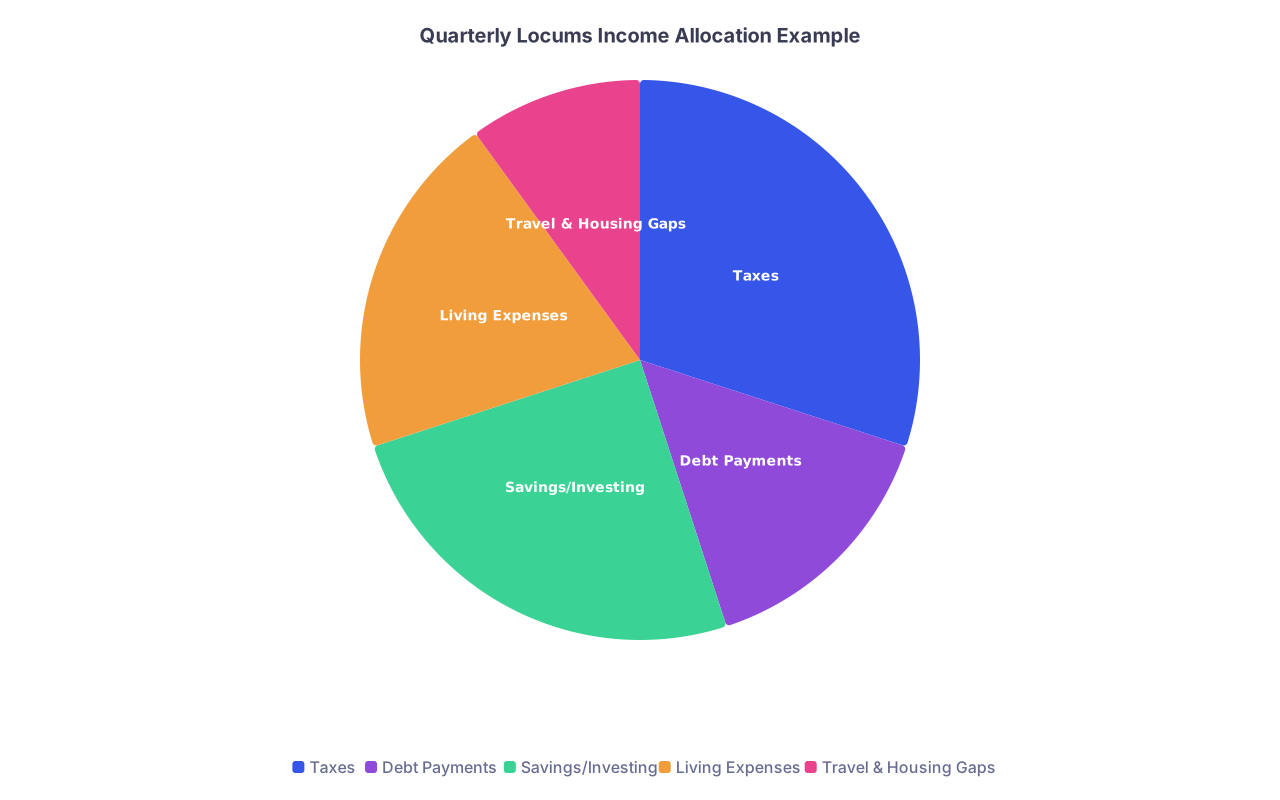
| Category | Value |
|---|---|
| Taxes | 30 |
| Debt Payments | 15 |
| Savings/Investing | 25 |
| Living Expenses | 20 |
| Travel & Housing Gaps | 10 |
Ask yourself bluntly: is this financially better than a standard employed job you could have taken? If the answer is “barely” and you are more exhausted, that is a red flag.
Adjust for the next quarter:
- Raise your minimum acceptable rate if justified by workload
- Change tax withholding / quarterly estimates
- Cut recurring expenses you are not using
- Set a specific quarterly savings or debt goal for Q2
3. Travel and Logistics
By Month 3 you know exactly which parts of travel are grinding you down.
Evaluate:
- Average travel time door‑to‑door
- Reliability of flights to that location
- Quality and consistency of housing
- How many days are “lost” purely to travel resets
If you are losing 3 days each month to bad flight times and transitions, fix it.
Adjustments:
- Shift to nonstop routes, even if slightly more expensive
- Negotiate for better housing or take stipend and choose your own
- Batch shifts into longer stretches followed by longer uninterrupted time at home
Quarter 2 (Months 4–6): Intentional Career Building
At this point you should stop thinking like “a resident who does locums” and start thinking like a physician running a small practice with one employee: you.
Month 4: Strategic Assignment Decisions
You now have data from your first site. Use it.
Decide:
- Will you:
- Stay and renegotiate?
- Leave and try a different practice style (rural vs suburban, community vs academic)?
- Split between two sites to compare?
Use your numbers:
- “Census was consistently 16–18 per day, including cross‑cover, at $1,700/day. Given this, I am seeking $2,000/day to continue here.”
- Or: “If rate is fixed, I need census capped at 14 and no more than 3 nights per month.”
If the site balks and you have other options, walk. Early in your locums career, learning to walk is as important as learning to bill.
Month 5: CV and Reputation Checkpoint
You are starting to accumulate real experience as an attending. At this point you should reassess how your locums work is shaping your future options.
Ask:
- What is showing up on my CV?
- One site with 6–12 month continuity?
- Or five random 2‑week stints that look like chaos?
- Who can actually write you a meaningful letter if you decide to apply for:
- A permanent job
- A fellowship
- A leadership position later
Make adjustments:
- If your CV looks too scattered, plan at least one anchor assignment of 6–12 months at a single site (even if it is still technically locums).
- Start deliberately cultivating 2–3 attendings or medical directors who know your work and can vouch for you.
- Document specific metrics you can quote later:
- Average length of stay
- Turnaround times
- Projects you helped with (protocols, quality initiatives, etc.)

Month 6: Second Major 3‑Month Review
This is your “Am I still doing locums on purpose?” checkpoint.
Reevaluate all five domains again, but add one more layer:
- Are you closer to or farther from:
- A possible fellowship application?
- A specific geographic area you want long‑term?
- A certain niche (rural critical access, tertiary ICU, telemedicine, etc.)?
If you are just drifting from contract to contract, fix that in Q3. Intentionality is what separates a strategic locums year from a wasted gap year.
Quarter 3 (Months 7–9): Optimization and Specialization
By now you know a few things:
- What kind of schedule wrecks you
- What type of hospital culture you tolerate
- Whether you actually like the constant movement or not
At this point you should start optimizing ruthlessly.
Month 7: Rate and Scope Reassessment
You are no longer a “brand new” attending. You have non‑trivial experience. Your value changes.
Reevaluate:
- Are your current rates aligned with your experience and market demand?
- Are you doing higher acuity work or procedures without corresponding pay?
- Have you taken on leadership or teaching tasks informally?
Possible moves:
- Renegotiate contracts at existing sites with clear justifications:
- “In the last 6 months I have consistently managed X census, taken Y nights of call, and helped with Z project. For continued coverage, I am seeking $___/day.”
- Narrow the scope of what you accept:
- Refuse unsafe environments
- Decline absurd schedule patterns (7 nights, 1 day off, then 7 days, etc.)
Do not be timid about walking away from underpaying or toxic sites at this stage. You have data and experience now.
Month 8: Lifestyle and Burnout Review
This is where many new locums physicians discover they quietly recreated residency.
You should explicitly track:
- Number of days you woke up dreading work this month
- Sleep quality (especially across night transitions)
- Exercise frequency and basic health maintenance
- Frequency of real, device‑off downtime
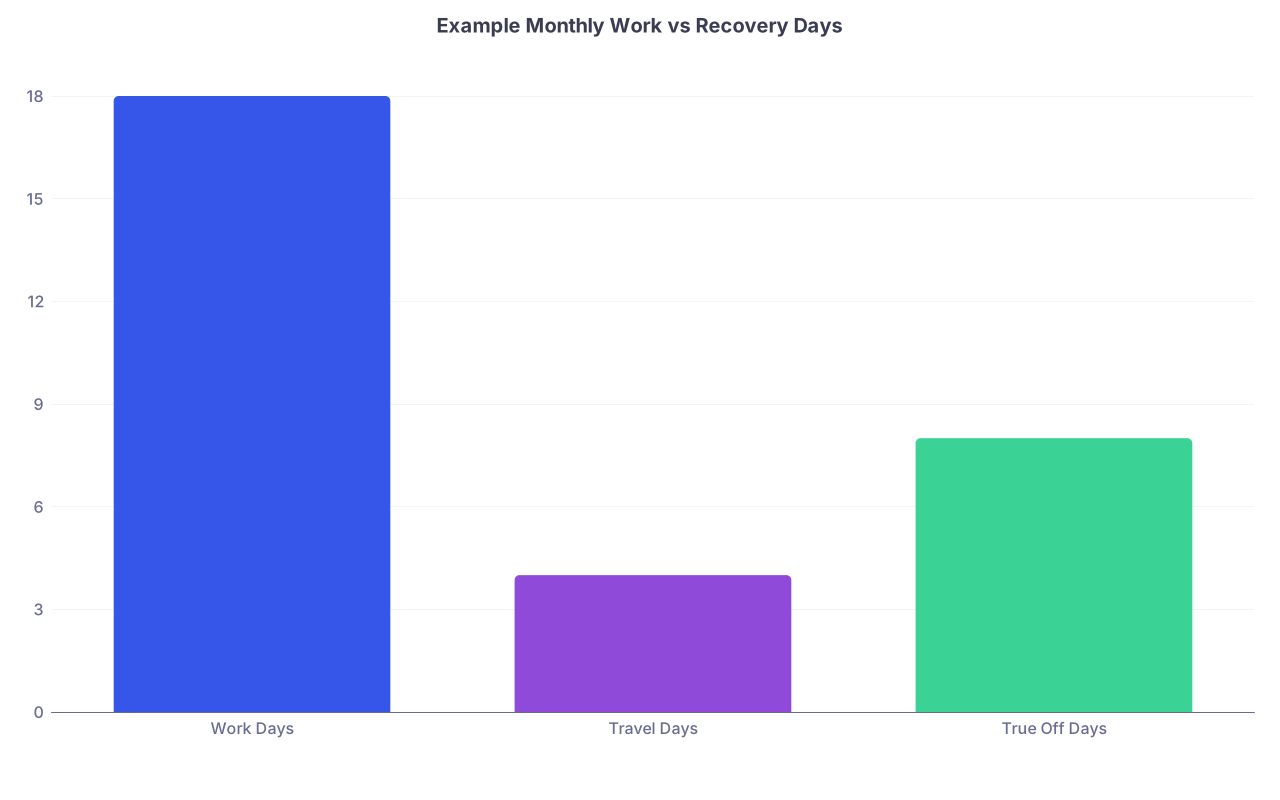
| Category | Value |
|---|---|
| Work Days | 18 |
| Travel Days | 4 |
| True Off Days | 8 |
If “true off days” are under 6–8 per month, that is a problem.
Adjustments:
- Hard‑cap your number of shifts per month
- Cluster work more aggressively to buy longer genuine time off
- Schedule non‑negotiable personal events 2–3 months in advance, then build contracts around them
Locums is supposed to be flexible. If you are always saying yes and living in airports, you missed the point.
Month 9: Third 3‑Month Review – Course Correction
By Month 9, you should feel one of three ways:
- Locums is great and you want to continue another year with more focus
- Locums has given you enough data, and you are ready to target permanent roles
- You are burned out and need to restructure aggressively
Your review now should include:
- Clinical:
- Do you want more complexity, less call, more procedures, more teaching?
- Financial:
- Are you on track for your annual financial goals?
- Is your effective hourly rate moving up or stuck?
- Career:
- Do you see a path from your current locums pattern to a role you would accept long‑term?
This is the quarter to either sharpen your locums practice or start aiming at a landing spot.
Quarter 4 (Months 10–12): Positioning for Year 2 or a Permanent Job
At this point you should be thinking beyond just “the next contract” and toward your overall 2–3 year plan.
Month 10: Market and Skills Reassessment
Reevaluate:
- What skills are in high demand in your specialty’s locums market?
- Example: nocturnists, ICU‑capable hospitalists, procedural internists, OB with high‑risk experience
- Which of those skills do you have or can you realistically develop?
Plan:
- Intentionally choose assignments that build one or two high‑value skills
- Drop sites that do not contribute to your skill stack or CV story
This is also when you recheck your licensing footprint:
- Do you want more state licenses to open better markets?
- Are you paying annually for licenses you never use?
Trim or expand strategically.

Month 11: Future Job Market Check
Even if you plan to stay locums another year, you should know your options.
Do a mini job search:
- Look at permanent postings in:
- Areas you are working
- Cities you want long‑term
- Talk to 1–2 department chiefs or medical directors informally
- Ask recruiters (carefully) what permanent options your profile would command now
Compare:
- Permanent job comp + benefits + stability
versus - Your locums income + flexibility + volatility
You may decide:
- To stay locums but target higher‑paying niches
- To pivot to a hybrid: part‑time employed + part‑time locums
- To start serious interviewing for permanent roles in Month 12–18
Month 12: Annual 3‑Month Review – The Meta‑Review
This is the biggest checkpoint. Think of it as the “attending year one” debrief, but for your locums practice.
You should look back quarter by quarter:
- Q1: What surprised you about reality vs expectations?
- Q2: How did you adjust? Where did you get better?
- Q3: Did you actually fix the lifestyle and financial problems you saw?
- Q4: Did you position yourself better for Year 2 and beyond?
Outline a Year 2 plan:
- Either:
- “Year 2: Focus on 2–3 stable sites, prioritize rate increases, rebuild savings”
- Or: “Year 2: Transition to one permanent job, keep locums license base as backup”
- Set hard Year 2 objectives:
- Financial (net worth, debt, savings)
- Career (fellowship application, leadership role, geographic move)
- Personal (time at home, travel frequency)
Quick Reference: What to Reevaluate Every 3 Months
Every quarter, run through this list without fail:
Clinical and Schedule
- How many shifts and hours did I actually work?
- Was the workload safe and sustainable?
- Do I want to extend, renegotiate, or leave this site?
Money
- What was my real effective hourly rate?
- How much did I actually keep after taxes and expenses?
- Am I closer to my annual financial targets?
Travel and Logistics
- How many days were lost to travel?
- Is my housing and commute tolerable or draining?
- Can I optimize routes, housing, or shift clustering?
Career Trajectory
- What does this quarter add to my CV story?
- Who can speak to my work from this period?
- Does this pattern move me toward or away from my future goals?
Personal Life and Burnout
- How many true days off did I have?
- How is my sleep, health, and mood?
- Am I still choosing this lifestyle, or just stuck in it?

| Step | Description |
|---|---|
| Step 1 | Start Quarter |
| Step 2 | Track Work and Money |
| Step 3 | Monthly Micro Adjustments |
| Step 4 | Quarterly 3 Month Review |
| Step 5 | Renegotiate or Continue |
| Step 6 | Plan New Assignment |
| Step 7 | Refine Goals for Next Quarter |
| Step 8 | Extend Site? |
Key points to remember:
- Locums is a 3‑month experiment that repeats. Treat each quarter as a controlled trial, not a blur.
- Your data – hours, pay, travel, burnout – must drive your decisions, not recruiter promises or vague impressions.
- Every 3 months, decide again: stay, renegotiate, or pivot. If you are not choosing on purpose, you are just recreating residency with better hotel points.