
The biggest mistakes physicians make with new locum assignments happen before day one.
You are not “flexible” if you spend your first week fighting credentialing issues, missing documents, or housing problems. You are just unprepared. The six weeks before a new locum tenens job will make or break the assignment.
Here is exactly what to do, week by week and day by day, so you walk in like you have done this a hundred times—even if this is your first.
Overview: The 6-Week Locum Countdown
At this point you should see the timeline like a project plan, not a vague “start date is in six weeks.”
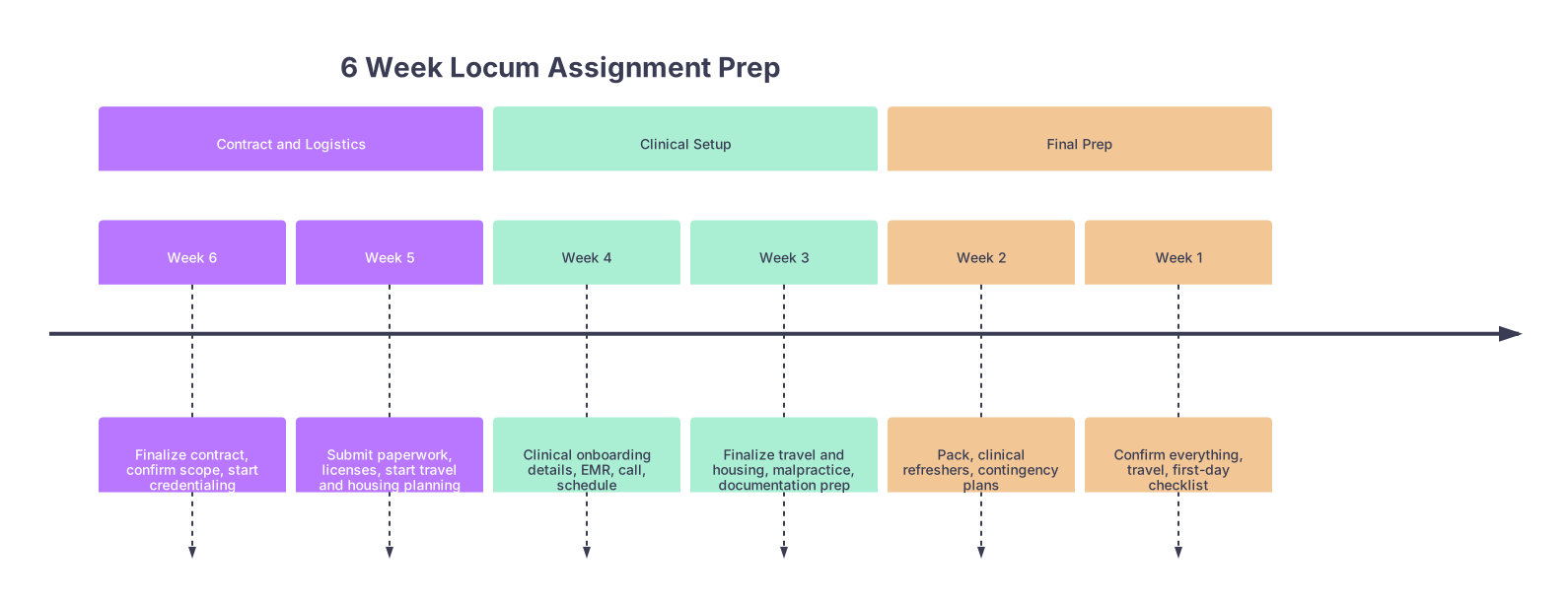
| Period | Event |
|---|---|
| Contract and Logistics - Week 6 | Finalize contract, confirm scope, start credentialing |
| Contract and Logistics - Week 5 | Submit paperwork, licenses, start travel and housing planning |
| Clinical Setup - Week 4 | Clinical onboarding details, EMR, call, schedule |
| Clinical Setup - Week 3 | Finalize travel and housing, malpractice, documentation prep |
| Final Prep - Week 2 | Pack, clinical refreshers, contingency plans |
| Final Prep - Week 1 | Confirm everything, travel, first-day checklist |
Think of each week as a theme:
- Week 6 – Commit and clarify
- Week 5 – Paperwork and permissions
- Week 4 – Clinical reality check
- Week 3 – Lock in logistics
- Week 2 – Pack and prep
- Week 1 – Confirm and execute
We will walk it straight down the calendar.
Week 6: Commit and Clarify
At this point you should stop “considering” and start locking things down.
1. Finalize the Contract (Days 1–2 of Week 6)
Do not accept “We can work that out later” from anyone.
Non‑negotiables to confirm in writing:
- Start and end dates, including travel days
- Location(s): main site and any satellite clinics / hospitals
- Scope of practice: procedures, age ranges, patient types you will and will not see
- Schedule:
- Clinic / rounding times
- Call expectations: frequency, in-house vs home, backup coverage
- Weekend and holiday obligations
- Compensation:
- Hourly or per‑diem rate
- Call pay and overtime rules
- Minimum guaranteed hours, if any
- Expenses:
- What is covered: flights, rental car, mileage, lodging, per diem
- Cap amounts (e.g., nightly hotel rate, rental car tier)
- Cancellation terms:
- What happens if they cancel the assignment or specific shifts
- What if census drops
If anything feels vague, fix it now. Vague turns into “we thought you knew” later.
2. Credentialing Kick‑off (Days 2–3)
At this point you should assume credentialing will be slower than promised. It usually is.
Ask for:
- Full credentialing packet or portal access
- Clear deadline for your part of the paperwork
- Contact information for:
- Hospital medical staff office
- Agency credentialing specialist
- Clinic onboarding / HR person
Create a simple checklist (you will thank yourself):
- State license(s) needed
- DEA and state-controlled substance registration
- Board certification documents or exam pass letters
- CV in month/year format with no gaps
- References (names, direct numbers, emails)
- Malpractice history and prior coverage certificates
3. Initial Life Logistics (Days 3–5)
You are six weeks out. That is exactly when personal life details get missed.
Decide:
- Are you driving or flying?
- Are you going solo or bringing family?
- Will you keep your primary home occupied, rented, or empty?
Start a “Locum Assignment – [City]” folder (digital and/or physical) for:
- Contract and addenda
- Contact list
- Credentialing documents
- Travel confirmations
- Housing information
By the end of Week 6 you should:
- Have a signed contract with specifics documented
- Know exactly who handles credentialing and how to reach them
- Have your personal life roughly aligned with the assignment dates
Week 5: Paperwork and Permissions
Now the bureaucracy begins. If you are passive this week, you will be scrambling later.
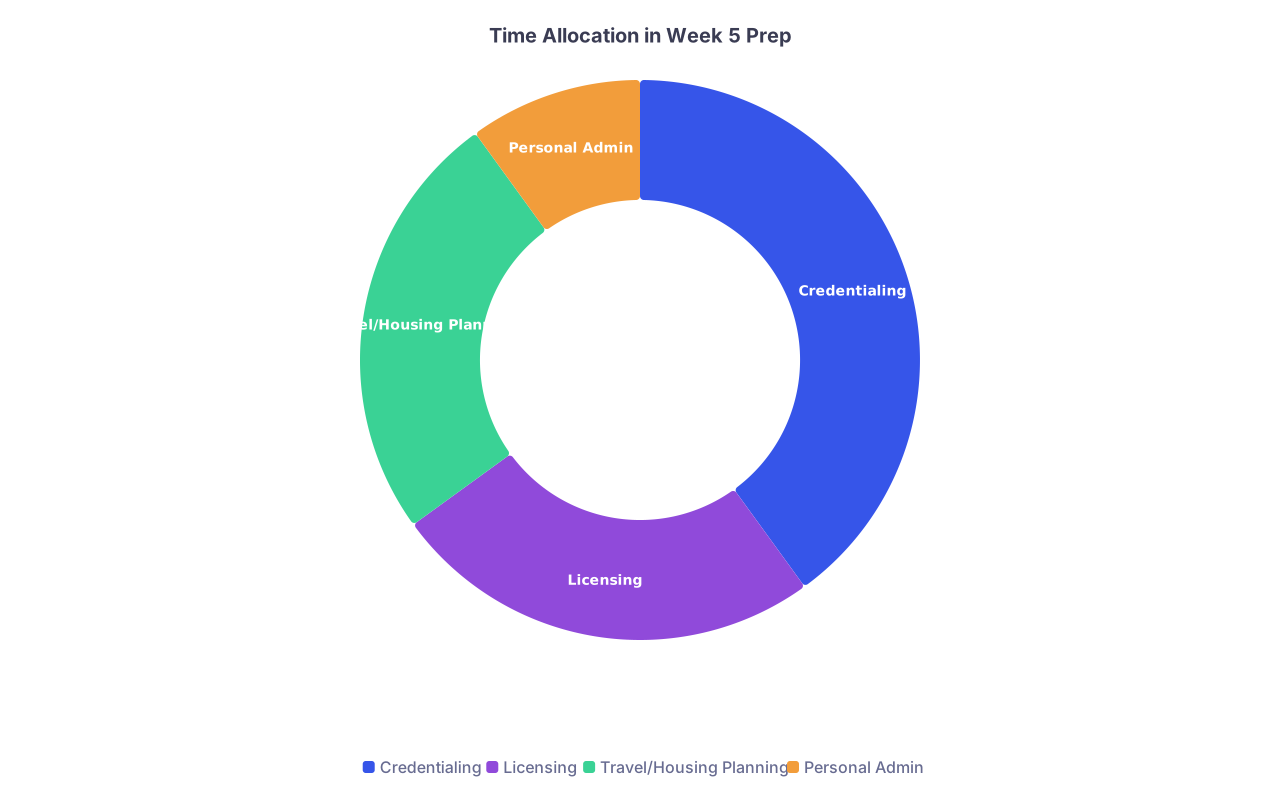
| Category | Value |
|---|---|
| Credentialing | 40 |
| Licensing | 25 |
| Travel/Housing Planning | 25 |
| Personal Admin | 10 |
1. Credentialing Deep Dive (Days 1–3 of Week 5)
At this point you should be completing, not just starting, credentialing forms.
Tasks:
- Fill out all hospital/clinic forms in one sitting if possible
- Upload or send:
- Medical school and residency certificates
- Board certification or eligibility letters
- Copies of active licenses and DEA
- Recent PPD or Quantiferon, immunization records, flu/COVID documentation
- Respond to any reference requests proactively:
- Email your references warning them they will be contacted
- Confirm their preferred email and phone are correct on your forms
Red flag: If the facility has not started primary source verification by end of this week, ping both your agency and the medical staff office. Daily, if you must.
2. Licensing and DEA (Days 2–4)
New state license or controlled substance registration can derail everything.
You should:
- Confirm exactly what is required for this state:
- Full license, telehealth license, emergency/temporary license
- State controlled-substance permit in addition to DEA
- Submit:
- State medical license application (if needed)
- State controlled-substance application
- Any jurisprudence exam scheduling
- Check processing times on the state board website and compare them to your start date. If the math does not work, have your agency escalate.
3. Early Housing and Travel Planning (Days 4–7)
Do not book yet (unless prices are going crazy), but get clear on your options.
Decide:
- Housing type:
- Extended-stay hotel
- Furnished apartment
- Agency-arranged housing vs stipend
- Commute reality:
- Distance from site
- Parking availability and cost
- Weather considerations (snow, ice, mountain driving, etc.)
Ask your recruiter or site:
- “Where do most temporary clinicians stay?”
- “Any areas to avoid?”
- “On‑site call room available?”
By the end of Week 5 you should:
- Have all major credentialing forms submitted
- Have any new licenses in process with realistic timelines
- Know your top 2–3 housing and travel options, with rough costs
Week 4: Clinical Reality Check and Onboarding
This is where you stop thinking like a traveler and start thinking like a clinician entering a new system.
1. Understand the Clinical Environment (Days 1–2 of Week 4)
At this point you should know what your actual work will look like—not the recruiter brochure.
Request a direct call with:
- Site medical director or lead physician
- Clinic manager or nurse manager
- EMR super-user or IT liaison if possible
Ask specific questions:
- Patient volume:
- Average patients per day
- New vs established ratios
- Typical acuity
- Support staff:
- Number of MAs/RNs per provider
- Scribes available or not
- Who handles refills, prior authorizations, follow-up calls
- Procedures:
- Exactly which procedures they expect you to perform
- Available equipment and support (e.g., ultrasound, conscious sedation policy)
- Call:
- Call structure, who is backup, how often you are really called in
2. EMR and Order Systems (Days 2–3)
If you walk in blind to a new EMR, you waste the first 3–5 days.
You should:
- Ask what EMR they use (Epic, Cerner, Meditech, Athena, etc.)
- Request:
- Any quick start guides or tip sheets
- Online training modules you can complete before arrival
- Clarify:
- Do you enter your own orders?
- Who handles discharge summaries?
- Are templates or smart phrases already set up for locums?
If they have remote training, schedule it this week.
3. Malpractice and Coverage Details (Days 3–4)
Do not assume your malpractice is “handled.” Verify.
Confirm in writing:
- Who provides malpractice coverage (agency vs facility)
- Policy type: claims‑made vs occurrence
- Tail coverage: who pays for it and under what circumstances
- Limits (e.g., $1M / $3M)
Ask directly: “Is there any scenario where I would NOT be covered for work done at this site?”
4. Schedule Preview (Days 4–5)
Push to see at least the first two weeks of your schedule.
Look for:
- Unrealistic template for a newcomer (e.g., double-booked from day one)
- Back‑to‑back call with no post‑call recovery day
- Clinic + hospital responsibilities stacked without buffer
If something looks unreasonable, address it now, not after you arrive.
By the end of Week 4 you should:
- Understand your daily workflow and clinical volume
- Have EMR training scheduled or materials in hand
- Have malpractice and schedule expectations clearly set
Week 3: Lock in Logistics
Now you solidify everything that physically gets you there and keeps you there.

1. Book Travel (Days 1–2 of Week 3)
At this point you should book, not just plan.
Decide:
- Fly vs drive:
- Driving makes sense for <8–10 hours or if you are staying long term
- Flying may require rental car or shuttle planning
If agency books:
- Approve proposed flights in writing
- Check:
- Arrival time (you should arrive at least one full day before your first clinical shift)
- Layovers and risk of delays (avoid last‑flight‑of‑the‑day arrival if possible)
If you book and get reimbursed:
- Confirm:
- Maximum reimbursable amount
- What documentation is required
- Timeline for reimbursement
2. Confirm Housing (Days 2–4)
By mid‑week, housing should be locked.
Options:
- Agency-arranged:
- Get exact address and photos
- Ask about:
- Wi‑Fi
- Kitchen setup
- Laundry access
- Safety / neighborhood
- Stipend and self-booked:
- Compare:
- Extended-stay hotels vs short‑term rentals
- Map commute during actual work hours (Google Maps traffic feature)
- Compare:
Clarify:
- Who to contact if housing is unacceptable (noisy, unsafe, dirty)
- Whether you can be moved if needed
3. Transportation on Site (Days 4–5)
Figure out how you will actually get from bed to bedside.
You should:
- Arrange rental car with:
- Pickup and drop‑off times aligned with travel
- Insurance coverage clarified (agency vs your own)
- Or confirm:
- Local bus/rail options if urban
- Bike or walking feasibility (weather and safety)
- Confirm parking:
- Physician parking availability
- Any permits or fees
4. Personal Life Loose Ends (Days 5–7)
This is where people forget the basics.
Checklist:
- Mail:
- Forward important mail or use hold service
- Bills:
- Set autopay for rent/mortgage, utilities, loans
- Family:
- Arrange childcare backup plans
- Share your schedule and communication expectations (FaceTime, etc.)
- Pets:
- Pet sitter, boarding, or bringing them with you (with pet‑friendly housing confirmed)
By the end of Week 3 you should:
- Have booked travel, secured housing, and arranged transportation
- Have home responsibilities covered so they do not blow up mid‑assignment
Week 2: Pack, Prepare, and Pre‑Brief
Now you prep yourself as the clinician, not just the traveler.
| Category | Key Items |
|---|---|
| Clinical Gear | Stethoscope, otoscope, reflex hammer, penlight |
| Documentation | License copies, DEA, contract, schedule |
| Tech | Laptop, tablet, chargers, hotspot |
| Clothing | Work attire, outerwear, comfortable shoes |
| Personal | Medications, toiletries, basic first-aid kit |
1. Build Your Clinical “Go‑Bag” (Days 1–2 of Week 2)
At this point you should assemble the essentials you want with you on day one.
Clinical items:
- Stethoscope (do not rely on the “shared” one)
- Penlight, reflex hammer, pocket reference (if you use one)
- Favorite pens and a small notebook
- Scrubs or professional clothing according to dress code
- White coat if required (some systems still expect it)
Documents (hard copy + digital):
- Copies of:
- State license(s)
- DEA and state controlled substance permit
- Driver’s license and passport
- Printed:
- First week schedule
- Key phone numbers: recruiter, medical staff office, clinic front desk, IT help desk
- Contract summary page with rate, hours, and call terms
2. Clinical Refresh (Days 2–4)
Especially post residency or early in your locums career, sharpen the edges.
Focus on:
- Common diagnoses in that setting:
- If hospitalist: sepsis, CHF, COPD, DKA, chest pain pathways
- If outpatient: diabetes, hypertension, chronic pain policies
- If EM: facility-specific stroke, STEMI, trauma protocols (if available)
- Local practice patterns:
- Ask if they have order sets you can review in advance
- Any formulary restrictions you need to know
Spend 1–2 evenings reviewing 10–20 “must‑not‑miss” scenarios relevant to your specialty.
3. Money and Documentation Prep (Days 4–5)
You are doing this for income. Set it up like a professional.
You should:
- Confirm:
- Pay cycle (weekly, biweekly, monthly)
- Method (direct deposit, paper check)
- Submit:
- Direct deposit forms
- W‑9 or other required tax forms
- Create a simple folder system for:
- Timesheets
- Expense receipts
- Mileage logs
4. Risk and Backup Planning (Days 5–7)
Assume at least one thing will go wrong. Prepare anyway.
Plan for:
- Travel disruption:
- Backup flight options
- Contact numbers for after‑hours changes
- Health:
- Your own meds refilled for the full assignment + extra week
- List of your health insurance info and nearest urgent care near housing
- Tech:
- Portable charger, backup internet hotspot if you depend on online access
By the end of Week 2 you should:
- Be clinically and logistically packed
- Have financial and documentation systems ready to track work and expenses
Week 1: Final Confirmation and Arrival
This is where many physicians either look like rock stars or arrive in chaos.

1. Seven Days Before Start: Confirmation Sweep
At this point you should verify everything. Do not assume.
Call or email to confirm:
- Travel:
- Flight times and confirmation numbers
- Rental car booking details
- Housing:
- Check‑in time, key or code instructions
- Parking and Wi‑Fi access
- Work:
- Exact time and location of first‑day check‑in
- Name of person you report to on arrival
- Dress code for first day (scrubs vs business casual vs white coat)
If anything sounds uncertain, escalate it now. You do not want to discover “We thought HR emailed you” at 6 a.m. on day one.
2. 3–4 Days Before Start: Final Personal Prep
Last chance to keep your life from bleeding into your assignment.
You should:
- Reconfirm childcare, pet, or household arrangements
- Set up:
- Out‑of‑office replies if you have another job or commitments
- Communication plan with family / partner (time of day you will usually be free)
Do a quick review of:
- Local area:
- Nearest grocery store, pharmacy, urgent care
- Driving route from housing to hospital/clinic
- Weather forecast:
- Adjust packing (layers, snow gear, rain gear)
3. Travel Day
Treat travel day as work‑adjacent, not vacation.
Checklist before leaving:
- Hard copies of:
- Travel itinerary
- Address and directions for housing
- First‑day instructions
- Fully charged:
- Phone, portable charger, laptop/tablet
On arrival:
- Get into your housing early enough to:
- Test Wi‑Fi
- Find the fastest route to work location
- Lay out clothes and gear for the morning
If you arrive late evening, you have zero margin for any unexpected issue.
4. Night Before Day One
You should be done scrambling. This is a short, focused run‑through.
Do:
- Re‑review:
- Start time and department location
- Name of first contact person
- Pack your bag:
- Badge if provided early, notebook, pens, stethoscope, small snack, water bottle
- Set two alarms (phone + separate device)
Then stop. Sleep. Your job tomorrow is to be present, flexible, and clinically sharp—not exhausted from last‑minute logistics.
First Day: On‑Site Micro‑Checklist
You made it. Now you set the tone.

At this point you should:
Arrive 20–30 minutes early. Then:
Badging and access
- Hospital/clinic ID badge
- EMR login and multifactor authentication
- Door codes, call room access, parking permit
Key intros
- Medical director or supervising physician
- Charge nurse or lead MA/RN
- Clinic manager / unit clerk
Workflow tour
- Where to:
- Pre‑chart
- Dictate or enter notes
- Print or receive labs/imaging results
- How orders are processed and who can assist
- Where to:
Safety and escalation
- Rapid response / code procedures
- Who to call when:
- Overwhelmed by volume
- Unclear about policy
- Concerned about your own safety
Take notes. Names. Extensions. Short policies. You will not remember otherwise.
The Bottom Line
Three points to keep:
- The six weeks before a locum assignment are not “waiting time.” They are the real work that determines whether the job is smooth or painful.
- Each week has a focus: contract and clarity, paperwork and permissions, clinical reality, logistics, personal prep, and final confirmations. Follow that order and you will not be caught off guard.
- If something feels vague or “we’ll sort it out later,” handle it now. Unclear expectations in week 6 become your biggest headaches on day one.