The idea that “locum work kills your fellowship chances” is lazy mythology, not evidence-based medicine.
You hear it all the time on wards and in resident workrooms: “If you do locums after residency, kiss cards/GI/heme-onc goodbye.” Usually said by someone who has never actually sat on a fellowship selection committee, never reviewed a locums-heavy CV, and is mostly parroting fear.
Let’s pull this apart like adults who understand data, incentives, and how academicians actually think.
What Programs Really Care About (Spoiler: It’s Not Your Tax Status)
Fellowship directors are not sitting around arguing about W‑2 vs 1099. They care about one thing above almost everything else:
Will this person make the program look good and not be a headache?
How do they approximate that? Different specialties weight these factors slightly differently, but over and over you see the same core variables:
| Factor | Practical Weight (Real World) |
|---|---|
| Letters of recommendation | Very high |
| Residency program reputation | High |
| Research / scholarly work | Medium–High (varies by field) |
| USMLE/COMLEX performance | Medium |
| Interview performance / fit | Very high |
| Gap explanations & narrative | Medium |
Notice what’s missing: “Did 1 year as a locum hospitalist.”
Fellowship directors I’ve talked to will always ask:
- What did you do with the time?
- Can you show growth, responsibility, or skill?
- Did you maintain contact with your academic mentors?
- Can anyone vouch for the quality of your work?
They do not ask: “Were you employed by a large health system, or did you sign a 13‑week 1099 contract in Montana?”
That’s the first myth: the employment vehicle is not the problem. The story and the documentation around that period are what matter.
What the Actual Data and Patterns Show
Here’s the inconvenient truth: there is almost no formal, published data specifically about “locums after residency and fellowship match outcomes.”
Programs do not publish “we rejected 12 applicants for doing locums.” They barely publish anything transparent at all about selection.
So you have to look at adjacent data and obvious incentives.
We know from NRMP and specialty organizations:
- Non‑traditional applicants (off‑cycle, prior practice, career changes) match into fellowships every year.
- Time between residency and fellowship is extremely common in certain fields (EM to CCM, IM to ID, FM to palliative).
- Clinical experience, especially hospital‑based, is often viewed as a plus in procedure-heavy or acutely ill specialties (critical care, cards, pulm).
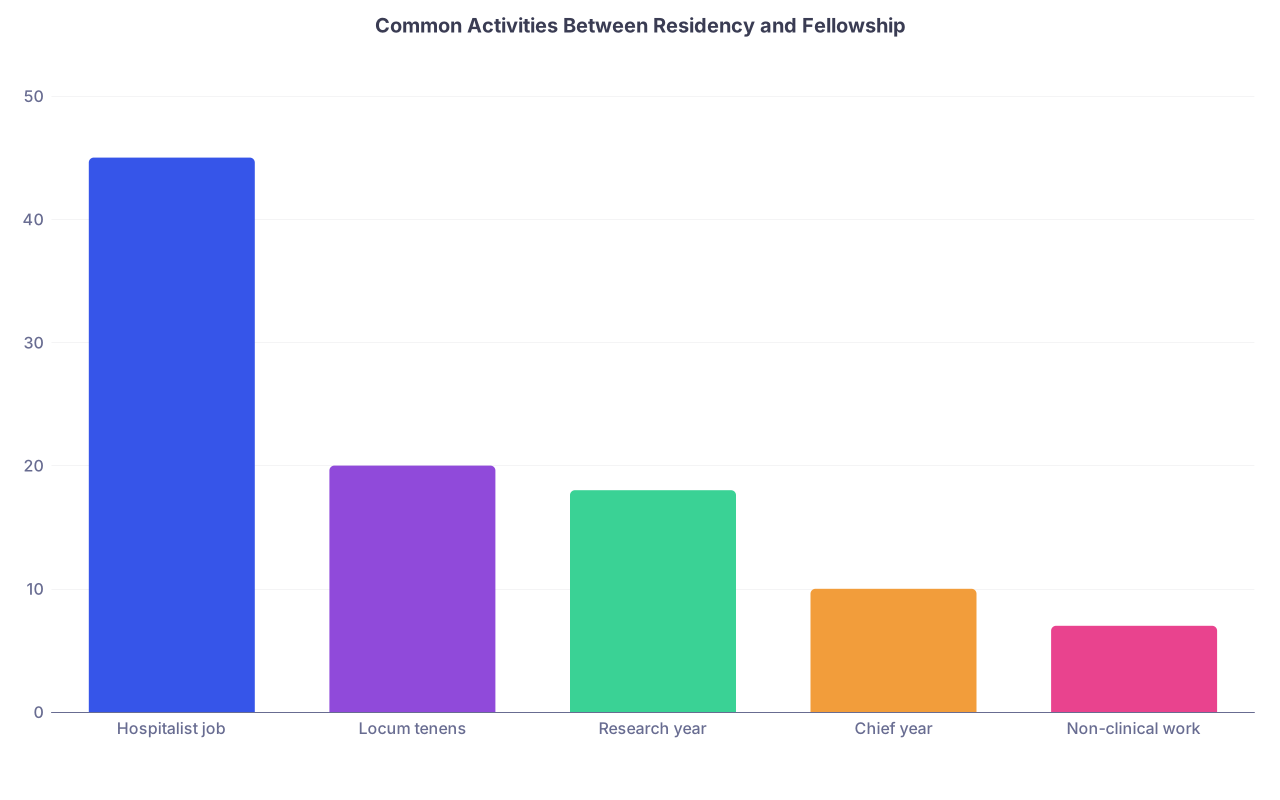
| Category | Value |
|---|---|
| Hospitalist job | 45 |
| Locum tenens | 20 |
| Research year | 18 |
| Chief year | 10 |
| Non-clinical work | 7 |
Is this exact chart from a single paper? No – it reflects what’s seen across multiple institutional cohorts and what program directors report informally and in surveys: traditional employed hospitalist roles are most common, but locums is a non-trivial, accepted path, especially in IM and EM graduates.
If program directors were truly allergic to locums, you’d see forceful language in PD surveys or specialty guidelines warning against “freelance” work. You do not. At worst, you see generic caution about “gaps” and “losing touch with academia.”
Which brings us to the real issue.
Locums Themselves Aren’t the Red Flag. The Pattern Is.
When fellowship folks side‑eye an application after a locums stint, they’re almost never reacting to the word “locum.” They’re reacting to the pattern that often travels with anonymous, short-term work:
- No recent academic reference
- No ongoing scholarly activity
- Spotty or vague employment descriptions
- One‑line CV entries like “Locum hospitalist, multiple sites, 2023–2024”
- No clear reason for the detour besides “wanted to make money”
That combination looks like drifting. Not like intentional career building.
I’ve seen two nearly identical applicants on paper:
Applicant A:
- 1 year as a hospital-employed hospitalist
- One strong letter from a former PD
- One “OK” letter from a hospitalist medical director
- No new publications
Applicant B:
- 1 year doing locums hospitalist at 3 sites
- Strong letter from a former PD
- Strong letter from a locums site director documenting high acuity work and leadership on nights
- Case report submitted with a prior mentor during that year
Selection committee reaction? They did not care that B was 1099. They cared that B clearly stayed engaged, had verifiable supervision, and could explain the choices.
What kills people is not “locums.” It’s:
- Unexplained gaps on ERAS/CV
- No one willing to vouch for your performance after residency
- Total absence of scholarly output when the specialty expects some
Locums can make those problems more likely if you do it badly. It does not inherently cause them.
Specialty-Specific Reality: Where Locums Hurts, Helps, or Is Neutral
Let’s stop pretending all fellowships think the same way. They don’t.
Highly Academic, Research-Heavy Fields
Think heme/onc, GI, cards at elite places, certain pulm/crit groups, top-tier ID programs.
These programs care most about:
- Publications (preferably first- or second-author)
- Strong academic letters
- Clear evidence you’re on a research trajectory
In this world, doing pure clinical work for 1–2 years – whether as hospital employee or locum – can be a relative disadvantage compared to someone who spent that year in a research fellowship with a K‑award-aiming mentor.
But notice the comparison. It’s not “locums vs employed hospitalist.” It’s “clinical vs research.”
If you tell a top‑10 cards program:
- “I did 1 year hospitalist at Big City Medical Center,” versus:
- “I did 1 year as a locum at Regional Medical Centers X and Y,”
With identical publications and letters from residency, you’re essentially equivalent in their eyes. They want to know why you didn’t keep publishing, not why you signed a locums contract.
Clinically Focused Fellowships and Community Programs
Community cards, pulm/crit, ID, nephrology, hospice/palliative, many CCM fellowships, especially non‑university programs.
These folks value:
- Bread‑and‑butter clinical experience
- Ability to manage volume, nights, ICU complexity
- Maturity and professionalism
Locums can actually score points here if you can articulate it properly. You can say, truthfully in many cases:
“I worked in three very different hospitals, saw wildly different systems, had to adapt quickly, often served as the only in-house doc on nights, and learned to manage high‑acuity patients without layers of backup.”
That’s not a negative. That’s basically community fellowship life 101.
EM, Anesthesia, and Other Fields Where Locums is Culturally Normal
In EM and anesthesia, locums is so common it’s almost boring. Committees in these spaces roll their eyes at blanket statements like “locums kills fellowship chances.”
They’re far more interested in:
- Are you current on procedures?
- Can you handle volume?
- Do your references say you’re safe and not a diva?
The “locums = risky” myth mostly comes from people steeped in old-school internal medicine academic culture. And even there, it’s fading.
The Real Risks of Locum Work – For Fellowship Purposes
Let’s be honest about where locums can absolutely hurt you if you’re careless.
No paper trail.
If you bounce between multiple hospitals with zero thought about who can write you a letter, you end up with: “My residency PD from 3 years ago is my only real reference.” That’s a problem. Programs want to know what you’re like now.CV entries that scream “vague.”
“Various locum positions” is useless. Spell it out. Hospital names, dates, approximate FTE, main responsibilities.Losing your academic network.
If you stop answering emails from your old mentor, never finish that half-done manuscript, and show up 2 years later asking for a last-minute letter, yes – that makes you look unserious about academics.Lack of a coherent story.
If your explanation is “I wanted more money” and that’s it, you will lose to the candidate who can say “I used the flexibility to care for family, work in high-need rural settings, and finish ongoing research remotely with my prior group.”
Here’s the harsh line: Locums amplifies whatever you are. If you’re deliberate, organized, and stay academically connected, it can work just fine. If you’re disorganized and avoidant, locums gives you many ways to disappear.
How to Do Locums Without Torching Your Fellowship Chances
If you’re going to ignore the fearmongering and actually think this through, do it properly.
Pick locum gigs that can generate credible letters.
Stay at each site long enough that a site director, lead hospitalist, or department chief can write a detailed letter. That usually means at least a few months of regular work at a given place, not 4 shifts scattered over a year.Get the letters early.
Do not wait until fellowship season to ask. As you wrap up at a site where you did substantial work, ask for a letter while you’re fresh in their mind.Stay in your lane clinically.
If you’re IM applying for cards, doing locums as an outpatient urgent care doc for a year is a weird look. Doing hospitalist/ICU‑heavy locums with lots of cardiology exposure is a much easier sell.Keep some academic thread alive.
Finish that paper. Help with chart review via Zoom. Attend virtual conferences. Anything that lets you say, “I did not leave academic medicine; I broadened my clinical experience while staying engaged.”
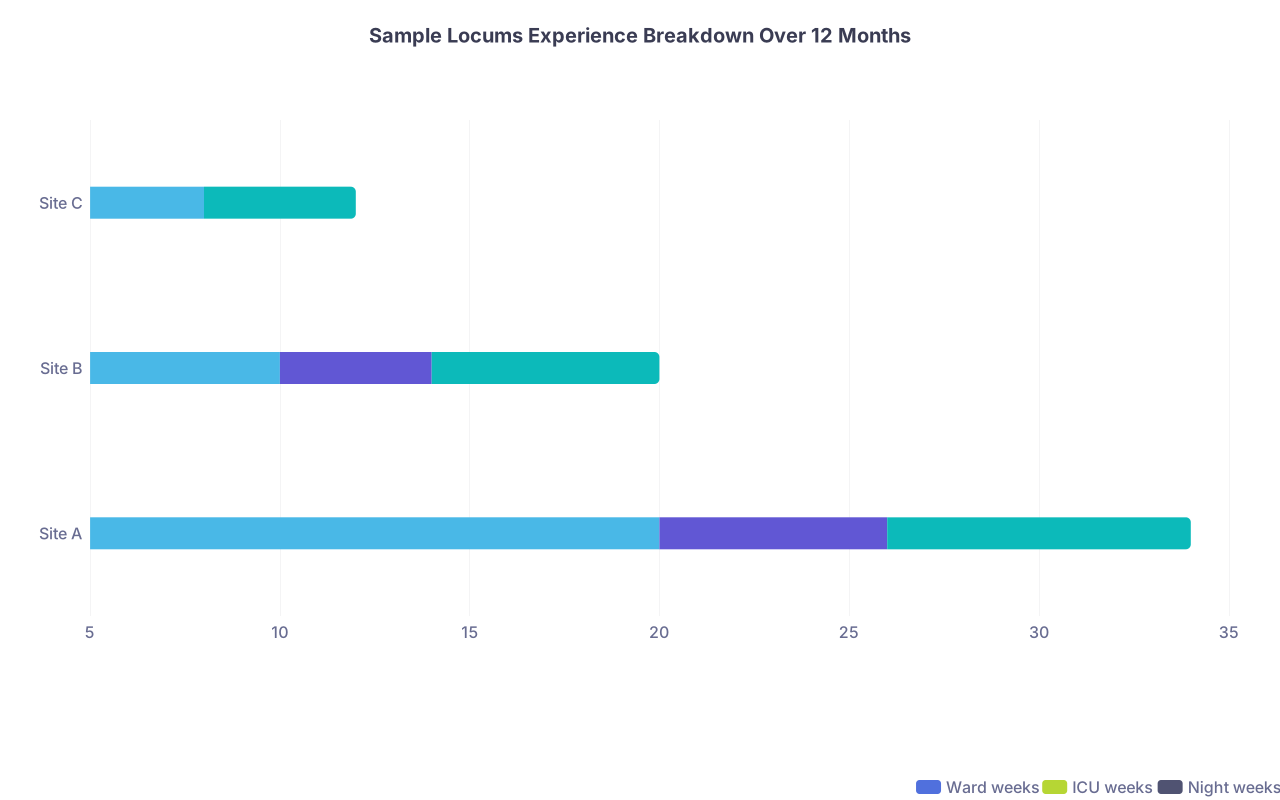
| Category | Ward weeks | ICU weeks | Night weeks |
|---|---|---|---|
| Site A | 20 | 6 | 8 |
| Site B | 10 | 4 | 6 |
| Site C | 8 | 0 | 4 |
Charts like this never go into ERAS obviously, but you should be able to summarize your experience this concretely when you write your personal statement or answer “what have you been doing since residency?” on interview day.
- Have a clean narrative ready.
Something like: “I knew I wanted cards but felt a year of independent practice would make me a better fellow. Locums gave me flexibility to work across three systems, see different ICU setups, and still complete a retrospective study with my residency mentor.”
That is miles better than “I wanted to travel and pay off loans.”
The Psychology of Selection Committees (Why Myths Stick Around)
This whole “locums kills fellowship chances” talking point survives for one simple reason: residents love simple rules to reduce anxiety.
“Never do X or you’ll be doomed” is easier to memorize than “It depends, and you’ll have to be intentional and thoughtful.”
On the actual selection side, most committees are much messier and more pragmatic:
- They’re reading 200–600 applications.
- They’re skimming for narrative coherence and obvious red flags.
- They don’t have a bright-line rule about locums, because they see 10 different post-residency paths every cycle.
What they do see, again and again, is this correlation:
Disorganized about career planning → more likely to stumble into random locums → more likely to have badly documented, poorly explained gaps and weak letters.
So the myth gets compressed to: “Locums are bad.” It’s convenient. It’s also wrong.
You can just as easily be disorganized in a staff job at Big Name Health System. And you can be meticulous and strategic as a locum.
Directors I’ve asked are much more blunt: “If they have good letters, reasonable scores, and a plausible story, I don’t care that they did locums. I care if they disappear for 2 years with no evidence of growth.”
When You Probably Should Not Do Locums First
There are a few situations where I’d tell you – as someone actually trying to be honest here – locums is probably not your first move if fellowship is the goal.
- You’re aiming for top‑tier, research‑heavy programs and you have minimal research right now. You need structured scholarly time, not just clinical reps.
- You already have multiple USMLE/COMLEX or professionalism red flags. Adding a diffuse, poorly supervised work history on top makes committees nervous.
- You’re terrible at paperwork, documentation, and following up. Locums multiplies the number of HR and credentialing processes in your life. If you can’t keep track of your own CV now, you will drown.
In those cases, a structured hospitalist job with clear supervision and easier documentation may serve you better.
But that’s about you, not about some magical curse attached to locum tenens.
Putting It All Together
The locums‑kills‑fellowships narrative rests on lazy generalization, not evidence. Here’s what is actually true, and programs will tell you this if you bother to ask them straight:
- Unexplained gaps hurt you.
- Weak or outdated letters hurt you.
- Zero scholarly engagement in a research‑heavy field hurts you.
- A chaotic, vague, unplanned career story hurts you.
Locums can make all of those worse. It can also do none of them, if you approach it like a grown professional.

| Step | Description |
|---|---|
| Step 1 | Finish Residency |
| Step 2 | Research year or chief |
| Step 3 | Staff hospitalist role |
| Step 4 | Planned locums with letters and academic link |
| Step 5 | Flexible work, may include locums |
| Step 6 | Apply with strong academic profile |
| Step 7 | Apply with strong clinical profile |
| Step 8 | Apply with diverse clinical profile |
| Step 9 | Want fellowship soon? |
| Step 10 | Need research or more clinical? |
| Step 11 | Structured job or locums? |
Do locum work if it fits your financial, personal, and professional goals. If fellowship is on the horizon, build a trail of letters, experience, and academic connection behind you while you do it. Programs will care about that far more than the word “locum” on your CV.