
The biggest way locum doctors get burned isn’t pay. It’s call.
You can negotiate a gorgeous hourly rate and still end up effectively making half of it because you did not nail down the on‑call expectations. I’ve seen physicians swear off locums forever after one brutal weekend where the “light call” they agreed to turned into 40+ consults and two sleepless nights.
Let’s make sure that is not you.
Below are the specific on‑call details locum tenens doctors forget to negotiate, why they matter, and exactly how to lock them down before you sign anything.
1. The Single Most Dangerous Phrase: “Light Call”
“Light call” is how you get trapped.
Recruiters and medical directors toss that phrase around like it means something objective. It does not. “Light” for a rural hospitalist who thinks 20 cross‑cover calls and three admissions is nothing… is “are you joking?” for someone else.
Here’s the mistake:
You accept “light call” or “reasonable call” without a written definition.
- “Usually not bad”
- “Rarely busy”
- “Light to moderate”
- “It’s fine, our docs never complain”
Translated: We haven’t thought about this carefully, and you’re about to be the pressure valve.
You need numbers. In writing. At minimum:
- Average number of calls per night in the past 3–6 months
- Typical range: low and high
- Average number of pages/messages per shift
- How many admissions/consults are expected on call
- Whether those calls are in‑house or home call
If they cannot (or will not) give you numbers, that’s a big warning.
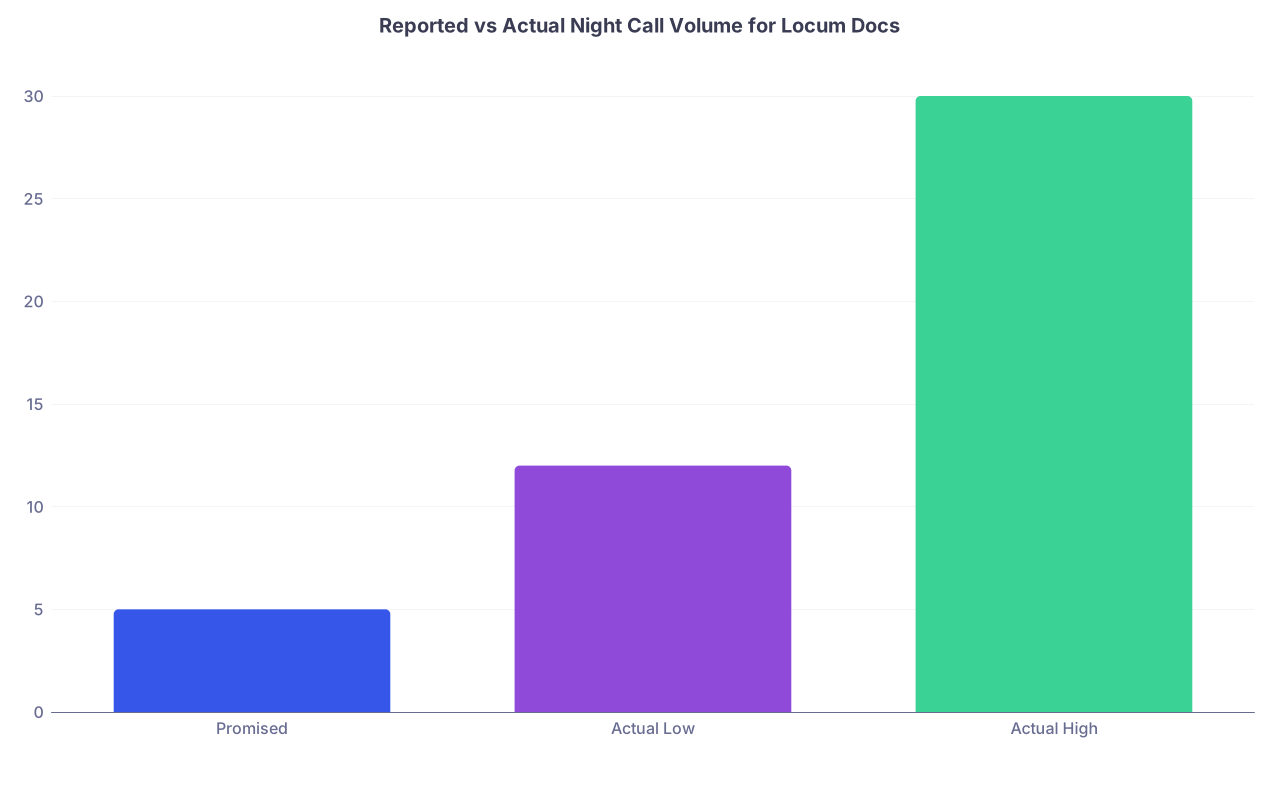
| Category | Value |
|---|---|
| Promised | 5 |
| Actual Low | 12 |
| Actual High | 30 |
You don’t need perfect precision. But you do need enough data so you can say, “At this rate and pay, this is (or is not) worth it.”
2. In-House vs Home Call: The Bait-and-Switch
The second rookie mistake: assuming “call” means home call.
I’ve watched this happen:
- Recruiter: “It’s call, but usually quiet.”
- Physician assumes: home, can sleep, maybe a couple calls.
- Reality: You’re physically in the hospital all night, covering multiple services, no sleep, same rate.
If a contract doesn’t specify “home call,” assume they mean “in‑house.” Do not trust verbal assurances.
Lock this down:
- Is call in‑house or home call?
- What exact hours define the call period?
- Are you required to stay on campus if it’s “home call” but you live X minutes away?
- What response time is expected (e.g., 20 minutes by phone, 30 minutes in person)?
If it’s in‑house call, your rate needs to reflect that this is another shift. Many locums underprice this because they treat it like a mild add‑on.
Here’s what smart docs do:
- Negotiate a higher hourly or a flat rate for in‑house night call
- Differentiate between “pager only” home call and “must come in” expectations
3. Call Frequency: The Silent Multiplier of Burnout
Too many people only look at the daily rate and forget to calculate how many calls that rate silently includes.
I’ve seen agreements like:
- “7 days on, 7 days off, call every other night”
- “Weekends: 24‑hour call Friday–Sunday”
- “1:2 call shared with another hospitalist”
On paper, the base rate sounds strong. But when you count “being on” every other night, that rate can crumble.
You must ask:
- How many call shifts per month are expected?
- Is there a maximum number of calls per block?
- Are you covering weekdays, weekends, or both?
Even better: put a cap in writing.
Example language you want:
- “Locum physician will be responsible for no more than 7 call shifts per 14‑day block.”
- “Call coverage beyond 7 shifts will require mutual agreement and additional compensation of $X per call shift.”
4. Scope of Call: How Many Services Are You Actually Covering?
This one burns specialists constantly.
You think you’re covering your specialty. They think you’re covering:
- Your specialty
- Cross‑cover for another service
- Occasionally ICU help
- “Simple” floor issues “while you’re already here”
Suddenly you’re:
- Admitting patients
- Managing complex ventilators
- Taking consults from the ED
- Fielding nursing calls for three different floors
And your contract? Just says “call coverage as needed.”
You should explicitly ask:
- What services are you covering on call?
- Are you covering floor patients only, new admissions, consults, or all three?
- Are you covering ICU? Step‑down? Telemetry?
- Are you cross‑covering other physicians’ patients? How many?
For hospitalists:
- Are you covering codes? Rapid responses? Whole hospital or just your service?
For surgeons:
- Are you covering trauma? Level I vs II vs III?
- Are you expected to take call for multiple hospitals from one site?
If the answer is “it depends” without detail, that’s where you push harder.
5. Call Pay Structure: Flat Rate vs Per-Shift vs Per-Call
Too many locums let call be bundled into the base pay “for simplicity.” That’s code for: “we want your free labor on the cheap.”
Common structures:
- No separate call pay (just “part of the job”)
- Flat fee per 24‑hour call
- Flat fee plus additional per consult/admission
- Hourly in‑house overnight rate
Here’s the big mistake: accepting “included” call with no volume caps.
If call is genuinely light and predictable, a flat “included” structure might be fine. But you need:
- A firm description of “light” (with numbers)
- A clause for additional pay if volume exceeds X consults or admissions
Example:
- “Base rate includes up to 6 new admissions and 20 calls/pages per 24‑hour call period. Above that, admissions will be compensated at $X each and calls/pages at $Y after the 20th.”
Will every facility agree to this? No. But if they refuse any objective guardrail, you should be suspicious.
| Model | Good For |
|---|---|
| Included in base | Truly low, predictable call |
| Flat 24-hr call fee | Moderate but stable workloads |
| Flat + per admission | Variable ED/consult volumes |
| Hourly in-house nights | High, continuous activity |
6. Weekends and Holidays: The Hidden Landmines
Weekend call is almost always worse than weekday call. Holidays are another level.
Yet locums repeatedly fail to:
- Ask how weekends differ from weekdays
- Negotiate separate weekend/holiday rates
- Cap the number of holiday shifts per contract
Questions that save you:
- What is the average census and call volume on weekends vs weekdays?
- Are weekends a separate rate? If not, why not?
- How many major holidays will I be expected to cover in this contract period?
Reasonable stance:
- Higher flat or hourly rate for weekend 24‑hour call
- Premium for major holidays (e.g., Thanksgiving, Christmas, New Year’s)
- Maximum number of holiday shifts, agreed upfront
If the facility says, “We treat all days the same,” that usually means they treat your time cheaply.
7. Who Backs You Up on Call (And How Often)?
Another common oversight: assuming there’s a reliable backup.
Then discovering, at 2 a.m. with three crashing patients, that:
- The “backup” is an attending who lives 45 minutes away
- The second call person is also on call at another hospital
- The ICU coverage is “tele‑ICU” that just says, “Do your best”
You need to clarify:
- Is there an in‑house resident, PA, or NP overnight?
- Is there a second call attending for complex cases?
- Who runs codes? Who responds with you?
For anesthesia, surgery, OB, and ICU especially, this can be a safety issue, not just comfort.
If you’re the lone doctor in house with thin backup, that risk should be compensated. Heavily.
8. The Documentation Trap: Call Without Protected Time
Here’s how a lot of locums get crushed:
They work a full day.
Then are on call all night.
Then work another full day.
And somehow are still expected to finish all documentation on time.
You must ask:
- Are call days followed by post‑call days off, or are they full shifts?
- Is documentation done during call, or are you expected to stay late the next day?
- Does the EMR support efficient note templates, or is this a documentation nightmare setup?
Some hospitals implicitly expect:
- You to stay after your 24‑hour call to round “for continuity”
- You to chart your overnight work on your own unpaid time
You want clarity:
- “After 24‑hour in‑house call, physician will not be scheduled for a subsequent day shift.”
- Or, if that’s not possible, higher pay that reflects the abuse you’re willingly walking into.
9. “Just Fielding Calls” — How Nursing Work Gets Offloaded to You
This one happens constantly on night call:
You’re told: “Mostly just fielding calls, nothing intense.”
Reality:
- You’re being used as the primary triage for nursing concerns
- You’re expected to handle chronic issues, social issues, discharge planning… at 3 a.m.
- Nurses call for non‑urgent things because that’s the culture
Signs of this problem:
- They brag that “our night nurses call a lot because they’re very diligent”
- Or, “We expect our doctors to be very available and responsive”
- High nurse‑to‑patient ratios with little support
Ask:
- How many nurse calls/pages do night docs average per shift?
- Are there protocols that nurses follow before paging?
- Are there mid‑levels on nights who filter calls?
If you’re handling 40+ pages a night, that’s not “light” by any definition that respects your sanity.
10. Multiple Facilities: One Call, Many Hospitals
Some groups quietly stretch their locums by having them:
- Take call for two campuses
- Cover both inpatient and ED consults
- Manage telehealth or remote sites “while you’re on anyway”
Again, this often shows up in contracts as:
- “Call responsibilities as assigned by the medical group”
Not good enough.
You need specifics:
- Are you covering just one hospital or multiple?
- Will you be expected to travel between sites while on call?
- Are those travel times built into response expectations?
- Is there additional pay for each additional facility?
If you’re covering multiple hospitals from home call, what happens when both need you urgently at the same time? You will be blamed for the delay, not the system design, unless you’ve clarified boundaries in advance.
11. The “Expectation Creep” Problem
Even if you negotiate good call terms, expectation creep is real.
Here’s how it goes:
- Week 1–2: They mostly respect the deal.
- Week 3: “Can you just cover one extra night? Our other doc is out.”
- Week 4: “You handled that great — can we put you on as backup for a few more weekends?”
- Suddenly, your call load is double what you agreed to.
You must:
- Treat each deviation as a temporary favor, not a new baseline
- Attach extra compensation to extra call, every time
- Be willing to say “no” explicitly
Phrase that works:
- “My agreement is for X calls per block. I’m happy to help with additional coverage at $Y per extra call night if needed.”
If you let creep slide “just this once” repeatedly, you’ve trained them to ignore the contract.
12. How to Actually Negotiate This (Without Being Labeled Difficult)
You do not need to be hostile. You do need to be specific and calm.
Strategy:
Ask for data, not adjectives.
“Can you send me the average night call volume — admissions, consults, and pages — for the last 3 months?”Separate base pay from call pay.
“I’d like the daily rate to reflect day work only, and call to be a separate line item.”Propose ranges and caps.
“At this rate, I’m comfortable with up to X admissions per night; above that I’d want $Y per additional admission.”Put it in writing.
Verbal “don’t worry about it” is how you get burned. Every important detail needs a sentence in the contract or an addendum.Be willing to walk.
If they resist any clarity, ask yourself why. You are not desperate. You’re post‑residency and in demand.

| Step | Description |
|---|---|
| Step 1 | Receive Opportunity |
| Step 2 | Ask for Call Data |
| Step 3 | Request Specific Numbers and Caps |
| Step 4 | Propose Call Pay Structure |
| Step 5 | Walk Away |
| Step 6 | Get Terms in Writing |
| Step 7 | Sign Contract |
| Step 8 | Data Clear and Reasonable |
| Step 9 | Still Vague |
13. Quick Self-Check Before You Sign
Run through this list. If any answer is vague, pause.
- Is call in‑house or home call, explicitly, in writing?
- What are the actual average admissions/consults/pages per call shift?
- How many call nights or 24‑hour periods per month are you expected to cover?
- Are weekends and holidays paid differently?
- Which services and how many facilities do you cover on call?
- Is there backup? Who, where, how quickly available?
- Is there a maximum volume before extra pay kicks in?
- Are post‑call expectations clearly stated?
If that all checks out and you’re still comfortable — then sign.
If you feel even a small knot in your stomach reading the answers, listen to it.
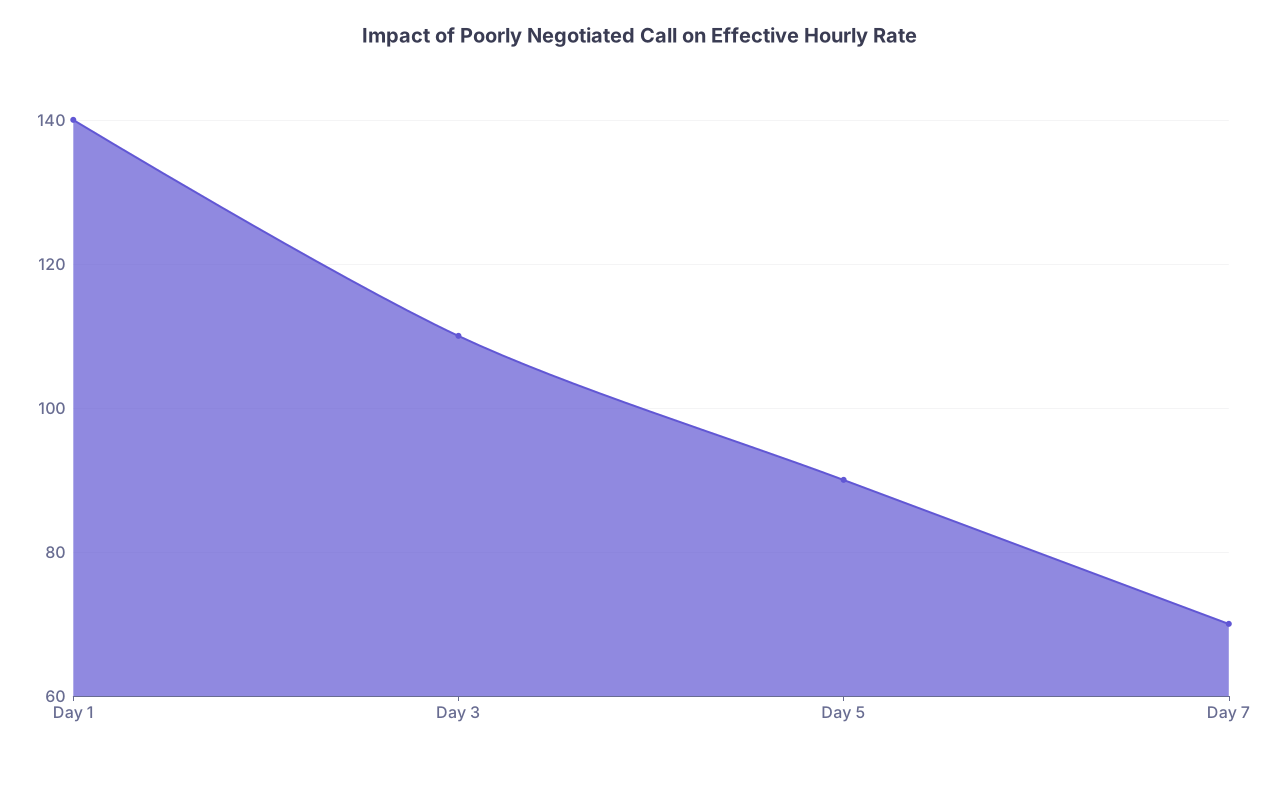
| Category | Value |
|---|---|
| Day 1 | 140 |
| Day 3 | 110 |
| Day 5 | 90 |
| Day 7 | 70 |

FAQs
1. The recruiter keeps saying “our other locums don’t complain about call.” Is that a red flag?
Yes. That’s emotional pressure, not data. The correct response is:
“Good to know. Can you send me the actual numbers — average admissions, consults, and pages per call night, and how many call shifts per month?”
If they keep leaning on “others don’t complain,” they’re telling you they don’t want scrutiny. That’s your cue to either push for specifics in writing or walk.
2. Should I ever accept call that’s “included” in the daily rate?
Sometimes. But only when:
- The volume is truly low and well documented
- You have a hard cap on what “included” means
- The base rate is high enough to justify occasional busy nights
If they refuse to define what’s included, don’t agree. “All call included, unlimited volume” is how you end up doing two jobs for one paycheck.
3. I already signed and call is way worse than they described. What can I do?
You still have options:
- Track your call volume meticulously (admissions, consults, pages, hours awake).
- After a few shifts, present the data to the recruiter or medical director: “This is significantly higher than was represented. For me to continue, we’d need to adjust the rate or scope.”
- If they refuse to adjust, finish the minimum commitment you ethically must, then decline any extensions.
And do not go back. Ever. Repeat offenders count on people quietly absorbing abuse.
4. Is it reasonable to walk away from a “great-paying” locums job just over call terms?
Not only reasonable — sometimes essential. An amazing day rate with abusive, undefined call is a trap. Once you factor in the nights you’re awake, the documentation load, and the risk, your effective hourly rate can be terrible.
You’re not just selling hours. You’re renting out your sleep, your judgment at 3 a.m., and your license under poor conditions. If they won’t treat that with respect — documented, defined, and paid — walk.
Remember:
- Never accept adjectives (“light,” “reasonable”) where you need numbers.
- Separate and define call: type, frequency, scope, and pay — in writing.
- If they resist clarity on call, you’re not “difficult.” You’re dodging a very predictable disaster.