Most dangerous locum tenens assignments do not look dangerous at first glance. They look lucrative.
The trap is almost always in the job description. Buried in phrases you have seen a hundred times. Smoothed over by a recruiter who “just placed someone there last month and it was great.”
If you are post‑residency and stepping into the locum market, you are absolutely the easiest target: hungry for income, short on context, and used to bad conditions. You will normalize red flags that seasoned locums walk away from in three seconds.
Let me walk you through the warning signs before you sign something you regret.
1. Unrealistic Pay or “Too Good To Be True” Rates
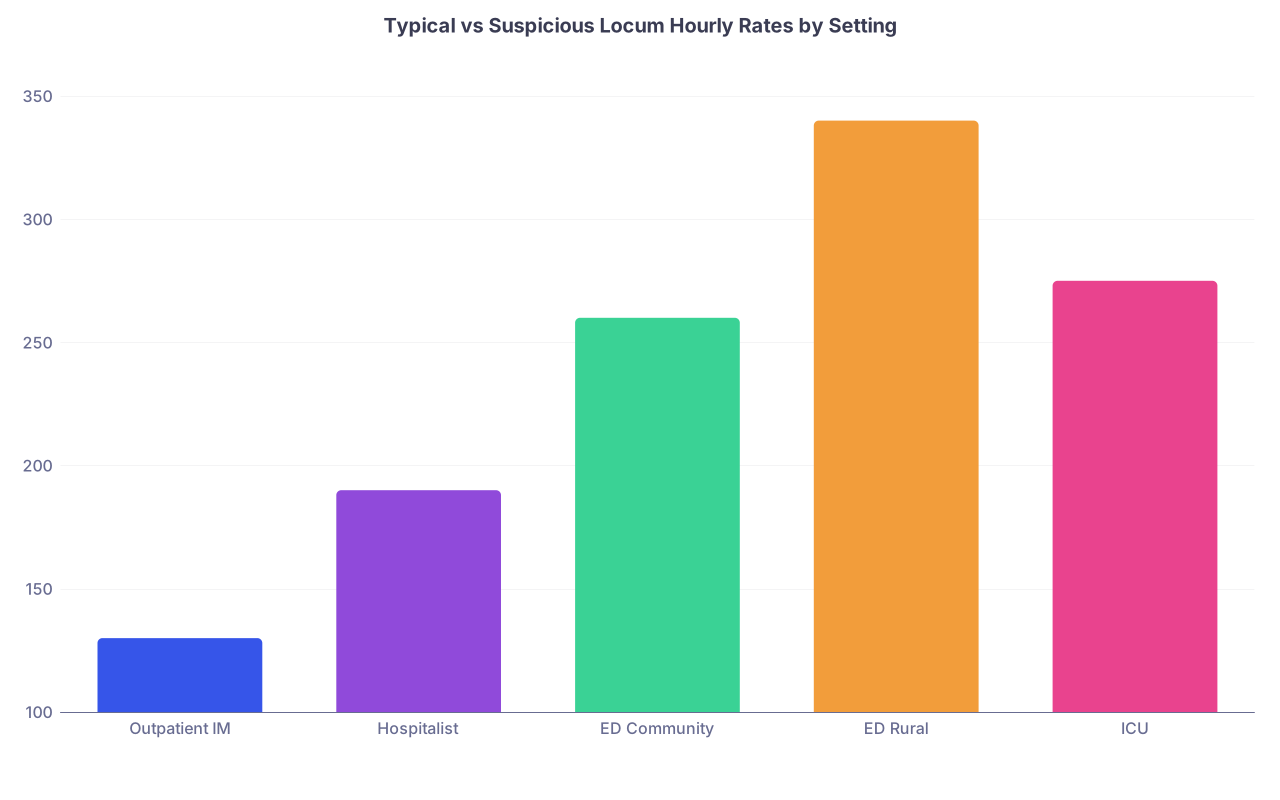
High pay is not automatically a problem. But if the rate jumps off the page, you ask why. Every time.
| Category | Value |
|---|---|
| Outpatient IM | 130 |
| Hospitalist | 190 |
| ED Community | 260 |
| ED Rural | 340 |
| ICU | 275 |
Those ED rural numbers? When I see $325–350/hr for a supposedly “low volume” site, my guard goes up. Same with outpatient clinics paying dramatically above regional norms.
Common red‑flag patterns:
- Rates far above regional average with vague explanation: “They just really value their locum docs.”
- Large “completion bonus” contingent on staying for many months or “not canceling any shifts”
- Aggressive push to sign quickly “before the rate changes”
Why this is dangerous:
- Extreme pay often signals:
- Chronically unsafe staffing
- Hostile administration or toxic culture
- Massive turnover of both locums and permanent staff
- You may be walking into:
- Solo coverage with no backup
- Non-stop high-acuity volume
- A hospital on the edge of losing accreditation or closure
Do not make this mistake: accepting a job just because “the money is insane.”
You should:
- Ask directly: “Why is the rate this high compared to area norms?”
- Ask: “How many physicians have rotated through here in the past 12–24 months?”
- Insist on your own due diligence: talk to current or recent physicians at the site (not just the recruiter’s hand-picked reference).
If the recruiter dodges these questions or gets defensive, that is your answer. Walk away.
2. Vague or Shifting Job Scope
The cleanest red flag: a job description that cannot give you a straight answer about what you actually do.
Lines that should set off alarms:
- “Other duties as assigned”
- “Some procedures required” (no list provided)
- “May include admissions” (but no number, no cap)
- “Split between clinics and hospital as needed”
- “You will be expected to be flexible with duties”
In practice, this often means:
- You thought you were doing clinic only; you are now covering inpatient, nursing home, and the ED “temporarily.”
- You were promised “light call backup”; you are now the only in-house doc at night, managing everything.
- You were told “we rarely do X”; you will do X every single shift.
I have seen this play out with hospitalist jobs that became unofficial ICU coverage, “low acuity” EDs suddenly expecting intubations and central lines with no RT/resident support, and “outpatient only” positions suddenly absorbing half the inpatient service because someone quit.
Do not sign a job description that will not commit to specifics:
- What is the exact clinical scope?
- What procedures are mandatory vs optional?
- What settings will you cover (clinic, ED, ICU, SNF)?
- What are you explicitly not responsible for?
If the description uses fuzzy language, your contract will not protect you once you are on site. Administration will point to “flexibility” and “team needs” and you will be stuck.
3. Call Expectations That Are Clearly Unsafe
Locums call can be abusive if you are not careful. Programs rely on the fact that new grads underestimate how brutal bad call can be.
Watch for:
- “24‑hour call every other day”
- “Q2 home call with occasional in-house requirement”
- “Post‑call clinic is expected” with full schedules
- “Primary call for multiple services” (e.g., medicine + ICU + ED admits)
And especially combinations like:
- Overnight in-house shift + required clinic next morning with full load
- “Home call” but in reality constant phone calls and drive-ins, no rest
- Call pay that is absurdly low relative to the volume and responsibility

The problem is not just fatigue. It is liability. If you are post-residency but young in practice, you do not yet have a sense of how susceptible you are to clinical errors at hour 27 with no real break. You will not realize until you are there that this is not sustainable.
Red flags in the description:
- “Call varies” with no range or cap
- “Shared call” but they will not say how many on the call pool
- “Some post‑call relief depending on staffing” (which usually means none)
- “Call not typically busy” without numbers to back that up
What to insist on seeing, in writing:
- Exact call frequency (q2/q3/q4, weekdays vs weekends)
- Whether post‑call days are protected time off or “half-days” (translation: not off)
- In-house vs home call distinction
- Average number of calls or admissions per night, not “light” vs “heavy”
If the description is evasive, or the numbers change between first conversation and draft contract, assume this will be much worse than advertised.
4. Unrealistic Volume and Productivity Expectations
Volume is the number one way locums get chewed up and burned out.
Outpatient red flags:
- “20–25 patients per day” that quietly becomes “25–30” as discussions go on
- “Double booked every 15 minutes” for new patients
- “Open access” clinics with walk‑ins added on top of your schedule
Hospitalist red flags:
- “Average 18–20 patients per day” with cross coverage for half the floor
- “Cap” that is not capped at all when someone calls out
- “Admits only” shifts with no documented cap on admissions
ED red flags:
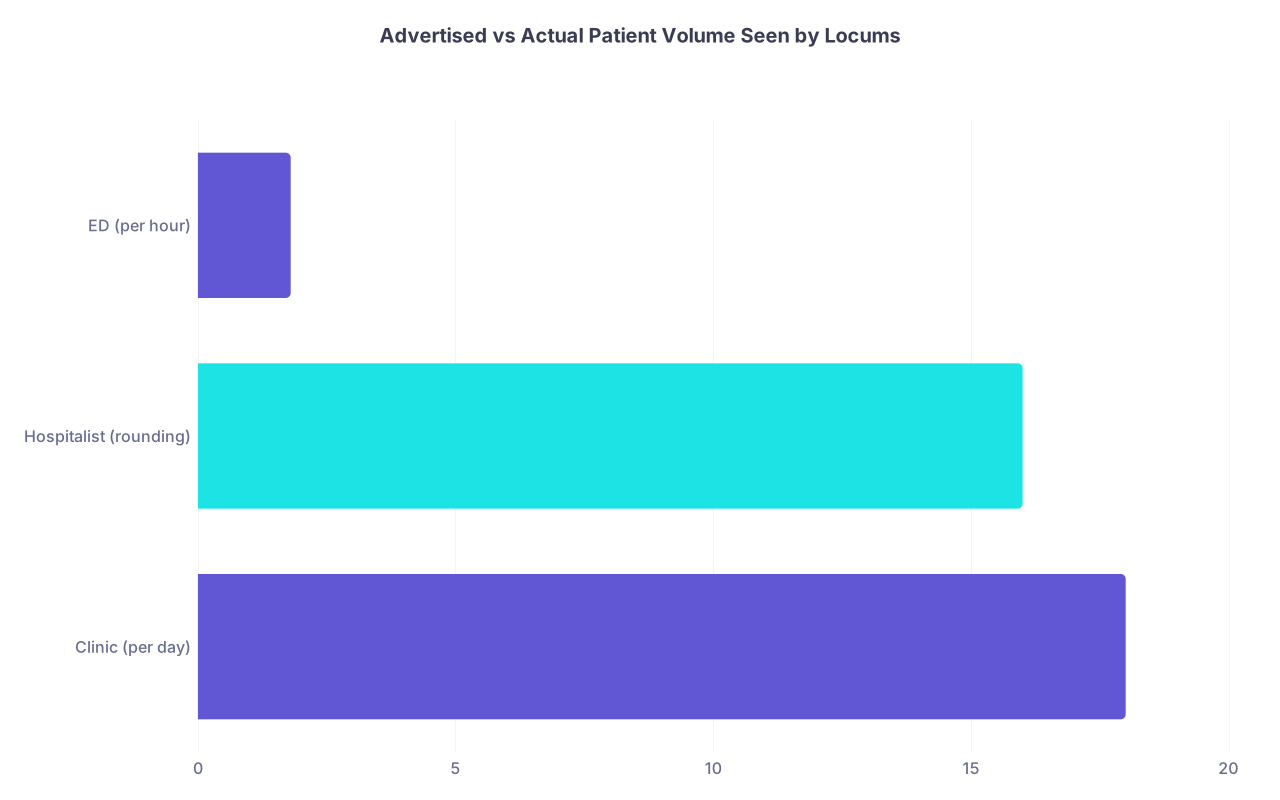
- “See 2–2.5 patients/hr” at a low-resource site with no midlevel or scribe support
- High volume + high acuity + no backup (night shifts especially)
| Category | Value |
|---|---|
| Clinic (per day) | 18 |
| Hospitalist (rounding) | 16 |
| ED (per hour) | 1.8 |
The table above would be the ideal. In reality, when descriptions are vague, the actual volume is often 20–40% higher than what was casually “mentioned” in that first call.
If a job description:
- Uses words like “busy” or “fast‑paced” without numbers
- Offers high productivity bonuses for RVUs (red flag for new locums)
- Heavily emphasizes “we need someone who can hit the ground running”
…you are probably walking into a volume problem.
You should:
- Demand specific numbers: average, range, and worst-case volume
- Ask how patients are scheduled and who controls the schedule (front desk? admin?)
- Ask what happens when someone calls out—are you covering extra patients?
If they cannot or will not quantify volume, assume it is unreasonably high.
5. Lack of Support Staff and Resources
The most obvious but most ignored problem in locums descriptions: inadequate support.
Recruiters almost never lead with this. You have to dig it out yourself.
Warning phrases:
- “Low-resource rural environment”
- “Lean staffing model”
- “Physician-led care team” without mention of nurses, MAs, NPs, or PAs
- “You will work independently” (fine, within reason)
Specific questions that often expose problems:
- How many nurses per shift? What is the nurse‑to‑patient ratio?
- Is there an on‑site pharmacist? Radiologist? Laboratory tech overnight?
- Are there midlevels? Scribes? Respiratory therapy?
- Is there an in‑house intensivist/OB/peds surgeon or is everything on transfer?
| Area | Green Flag Example | Red Flag Example |
|---|---|---|
| Nursing | 1:4 med‑surg, 1:2 stepdown | 1:8 med‑surg, no stepdown |
| ED Backup | On‑site hospitalist, RT | No hospitalist, RT on call only |
| Pharmacy | 24/7 on‑site | Remote pharmacy, frequent delays |
| Radiology | In‑house days, telerad nocs | Telerad only, long reads turnaround |
| Admin Support | Dedicated scheduler | “You manage your own schedule and calls” |
I have seen locum docs show up to “full‑service community hospitals” to find:
- One nurse for an entire ED at night
- No lab available after 11 pm
- No CT after hours unless you call someone in from home and beg
- No RT; you are managing vents essentially alone
You personally carry liability for decisions made under those conditions. “The system was understaffed” is not a defense that protects your license.
If the job description sounds light on support, push hard:
- Ask exactly who is on site during your shift, by role
- Clarify what services are transfer-out only
- Ask what the typical transfer time is for higher‑level care
Lack of specific answers is itself a red flag.
6. Evasive Answers About Why They Need Locums
Good sites are transparent about why they need help. Bad ones are vague.
Common shady explanations:
- “We are just a bit short‑staffed right now.”
- “We are in a transition period.”
- “We are growing quickly and just need temporary coverage.”
None of these actually answer the question.
What you want to know:
- Did multiple physicians leave at once?
- Did the group lose a contract?
- Has the site had difficulty retaining permanent staff?
- Are there ongoing legal, regulatory, or financial issues?

| Step | Description |
|---|---|
| Step 1 | Ask why locums needed |
| Step 2 | Lower risk |
| Step 3 | Ask follow up details |
| Step 4 | High risk - Walk away |
| Step 5 | Medium risk - Investigate further |
| Step 6 | Clear reason given |
| Step 7 | Still vague |
Red-flag answers (real examples I have heard):
- “We have had some differences of opinion with previous physicians.”
- “The last doctor was not a good fit for our culture.”
- “We had some documentation issues in the past but everything is fine now.”
Translation: someone fought administration, or got crushed under unsafe expectations, or both.
Ask bluntly:
- “How many physicians have left in the last 12 months?”
- “What are the main reasons people do not renew their contracts here?”
- “When was the last malpractice claim involving the department I would work in?”
If they refuse to answer or brush this off as “confidential,” they are telling you exactly what you need to know. They have a pattern they are not willing to disclose.
7. Credentialing and Compliance Corners Cut
Fast credentialing sounds great until you realize what it actually means.
Warning signs:
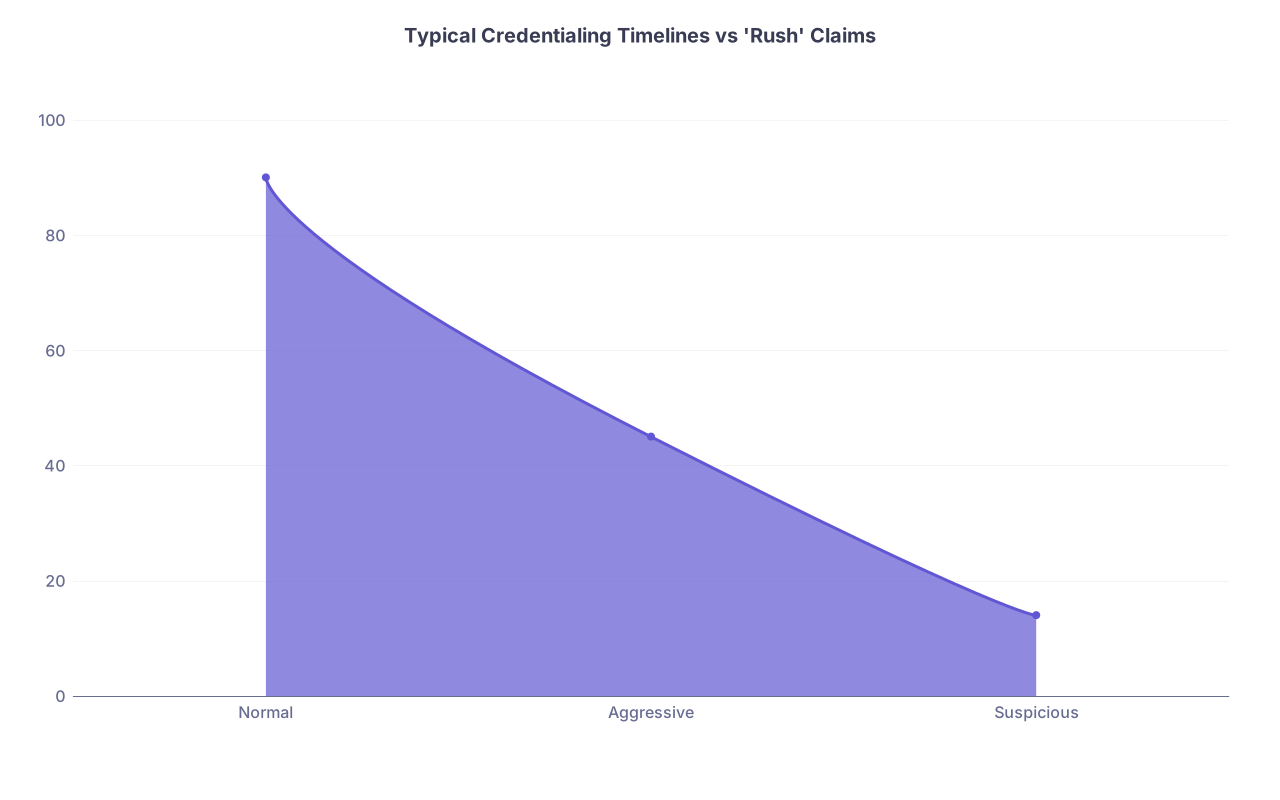
- “We can get you credentialed in under 2 weeks!”
- “No need for peer references; we can use your residency file.”
- “We can waive certain requirements to get you started.”
| Category | Value |
|---|---|
| Normal | 90 |
| Aggressive | 45 |
| Suspicious | 14 |
Normal: 60–120 days. Aggressive but still legitimate: 30–45 days with a very streamlined system and in‑state license already in place. Fourteen days? Something is getting skipped.
Why this matters:
- Rushed, sloppy credentialing often predicts equally sloppy chart review, QA, and compliance processes.
- Sites that cut corners here also cut corners in documentation standards, supervision, and billing practices.
- You are the one who answers to your board if there is a complaint or audit.
Common associated red flags:
- No formal orientation described in the job details
- No mention of EMR training, just “You will pick it up”
- No clear policy descriptions (sedation, restraints, consults, transfers)
If the description leans heavily on “we move fast” but you cannot get straight answers about how they credential, orient, and supervise locums, you should be very cautious.
8. Sloppy or One‑Sided Contract Language Hinted in the Description
Sometimes you can see the contract problems before you ever see the contract.
Job description phrases that often correlate with hostile contract terms:
- “Absolute reliability is expected” (often tied to huge penalties for canceling)
- “We expect strong loyalty to this site” (restrictions on working at competitors)
- “We want a long‑term commitment if possible” (but they will not commit to you)
You will frequently find, when you finally see the contract:
- Broad non‑compete clauses covering entire regions
- Massive financial penalties for canceling shifts, even with reasonable notice
- Unilateral termination clauses (they can end the contract immediately; you cannot)
- Indemnification clauses that push all risk onto you

You cannot always see all of this from the job description. But you can often smell it.
Ask early, before spending hours on applications:
- “Are there any non‑compete or geographic restriction clauses?”
- “What is the cancellation policy for booked shifts?”
- “Is malpractice occurrence‑based or claims‑made, and who covers tail?”
If the recruiter tries to brush this off with “We will sort that out later” or “The contract is standard,” assume it is written to protect everyone except you.
Do not let urgency push you into signing first and reading later.
9. “Flexible” Scheduling That Is Actually No Control
The word “flexible” in locum assignments is wildly abused.
Red flags in schedule descriptions:
- “Flexible schedule” but no guarantee of minimum shifts
- “We schedule based on facility needs” (and you have no veto power)
- “You should be available most weekends and holidays”
Flexibility should work both ways. Many sites mean: you are expected to flex around their gaps, not that you design your own shifts.
Common traps:
- They promise 7‑on/7‑off but quietly start adding extra days when others cancel.
- You think you can cluster shifts to travel efficiently; instead they scatter them.
- They expect you to be “available” on certain days even if not scheduled (informal soft call).
You want job descriptions that:
- Specify minimum and maximum shift commitments
- Clarify how far in advance schedules are finalized
- Describe your right to decline shifts or changes
If the description boils down to “we will plug you in where we need you” without clear limits, you are a staffing band‑aid, not a professional colleague.
10. Cultural and Communication Red Flags Between the Lines
You can learn a lot from how a job description talks about colleagues and patients.
Pay attention to language like:
- “We are looking for someone who can handle difficult patients” (translation: high conflict, often underserved, sometimes unsafe, minimal support)
- “Must be able to work with strong personalities” (toxic staff or leadership)
- “We have had issues with physicians who were too rigid” (someone refused unsafe practices or billing)
- “We need someone who is not too concerned with strict protocols” (this should terrify you)

Also pay attention to how they describe charting and metrics:
- “We expect thorough documentation to support billing” can be fine.
- “We expect you to meet productivity benchmarks similar to top-performing peers” combined with vague coding/billing support is a bad sign.
- “We expect minimal use of consultants” at a small facility with limited resources is dangerous.
If the description feels defensive, or obsessed with “fitting in” and “not rocking the boat,” ask yourself why. Healthy teams do not advertise themselves this way.
11. How to Sanity‑Check a Locum Job Description Before Saying Yes
Let me be practical now. Here is a simple mental checklist I would run on every new job description that hits your inbox.

| Step | Description |
|---|---|
| Step 1 | Receive job description |
| Step 2 | Ask for specifics |
| Step 3 | Reject - red flag |
| Step 4 | Continue review |
| Step 5 | Request numbers |
| Step 6 | Continue |
| Step 7 | Probe hard |
| Step 8 | Request contract |
| Step 9 | Scope clear? |
| Step 10 | Still vague? |
| Step 11 | Volume and call quantified? |
| Step 12 | Numbers dodged? |
| Step 13 | Support staff adequate? |
| Step 14 | Unsatisfactory answers? |
And one more step: once you have a contract draft, see if it matches the job description. Any major mismatch is a category‑five red flag. If they lied on paper once, they will do it again.
Final Thoughts: What To Actually Remember
Three core points, since you are probably scanning by now:
- Overly vague or overly glowing job descriptions are the biggest red flag. If they cannot give numbers (volume, call, staffing), or keep shifting the story, walk away.
- Safety and support matter more than rate. High pay, “flexible” schedules, and “fast credentialing” are the bait most often used to hide unsafe workloads and weak infrastructure.
- Every unanswered question before you sign becomes your problem after you arrive. If something feels off in the job description, trust that instinct and push hard—or pass.