The worst letters in residency applications aren’t bad ones. They’re boring ones.
And that’s exactly what you’re afraid your “lukewarm” attending will write.
You’re sitting there replaying every tiny interaction: the one time they corrected you on rounds and looked annoyed, the time they walked past you in the hallway and didn’t say hi, the fact that they never said “You’re doing great.” And now ERAS is coming, you need a letter, and your brain is screaming:
“What if they secretly hate me and tank my whole application?”
Let’s walk through this like actual humans who’ve been in clinics and workrooms, not some perfect fantasy world where every attending is an inspirational mentor who calls you “rockstar.”
First: Are They Actually Lukewarm, Or Are You Just Fried?
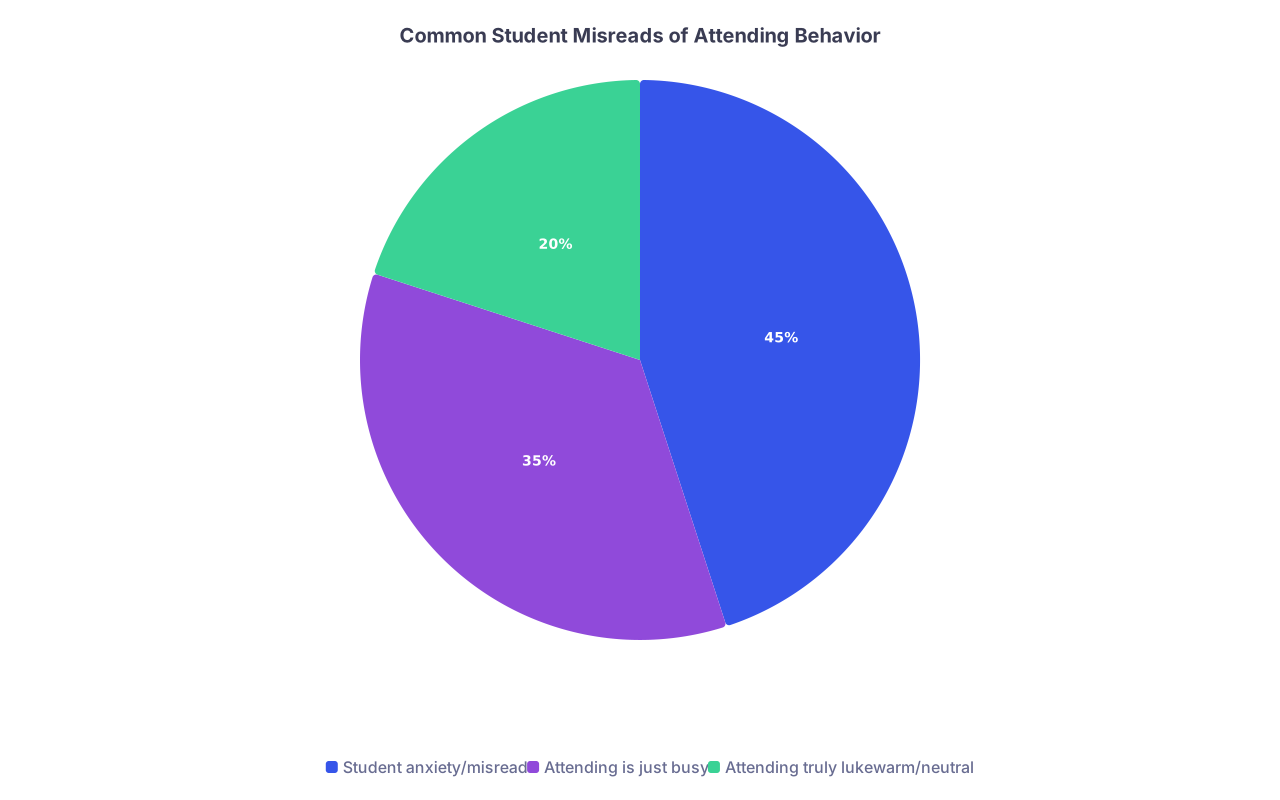
| Category | Value |
|---|---|
| Student anxiety/misread | 45 |
| Attending is just busy | 35 |
| Attending truly lukewarm/neutral | 20 |
Harsh truth: students are notoriously bad at reading attendings. Your internal monologue is way louder than whatever that attending is actually thinking.
Common situations you’re probably overinterpreting:
- They don’t smile much, seem flat → Could be their baseline personality, or they’re post-call and half dead.
- They give you constructive feedback → You hear “you’re terrible,” but they think they’re helping you grow.
- They don’t say “you’re one of the best students I’ve worked with” → That phrase is rare, not the baseline.
- They don’t chat with you much → They’ve got 18 MyChart messages, 2 angry families, and an admin email about RVUs.
I’ve watched attendings who absolutely loved a student say almost nothing directly to them but then write glowing evals and letters. I’ve also seen the opposite: super warm, jokey on rounds, and then the eval is “Meets expectations. Reliable. Quiet.” That one hurts.
So before you label them “lukewarm,” ask: what actual data do you have?
Real, concrete signs they might truly be lukewarm/neutral:
- Your written evaluation from them is literally average/flat.
- They rarely ask for your input or involve you meaningfully.
- They didn’t pick you for any extra responsibilities when they had the chance.
- They’ve praised other students openly but never you, despite time together.
Not automatic doom. But those are yellow flags.
The Real Question: What’s Your Alternative?
The decision to ask is never just: “Is this the perfect letter writer?”
It’s: “Is this better than my other realistic options?”
Here’s the mental math no one teaches you:
| Option Type | Typical Strength | Risk Level |
|---|---|---|
| Known but neutral attending | Medium | Low–Medium |
| Super enthusiastic fellow | Medium | Low |
| Famous but barely knows you | Low | High |
| Community preceptor who loved you | Medium–High | Low |
| Truly negative attending | Very Low | Extreme |
Ask yourself:
- How many strong letters do you already have or can realistically get?
- Is this lukewarm attending at least:
- In your specialty of interest?
- Able to comment on your clinical performance?
- Probably not actively negative about you?
If the alternative is:
- A letter from someone who barely knows you
- A faculty who saw you 2 days in clinic
- No letter from that specialty at all
Then yeah, even a “neutral-to-decent” letter from this attending might be the right move.
Programs aren’t expecting 4 love letters that read like marriage proposals. They’re expecting a mix:
- 1–2 strong/enthusiastic letters
- 1–2 solid, clinically descriptive, maybe-not-gushy letters
Those “solid but not over-the-top” letters are normal. Not fatal.
How to Quietly Test If They’ll Support You
You don’t just walk up and say, “Would you write me an absolutely amazing letter that guarantees I’ll match?” That’s what your anxiety thinks you need, but that’s not real life.
What you can do is use phrasing that forces some honesty.
Use this sentence (or close to it):
“Dr. X, I’ve really valued working with you on this rotation and I’m applying into [specialty]. Would you feel comfortable writing me a strong letter of recommendation?”
That word “strong” matters. It gives them an exit ramp if they’re not on board.
Things that usually mean yes:
- “Sure, I’d be happy to.”
- “Yes, I can do that.”
- “Of course, you’ve done well here.”
Things that mean proceed with caution:
- “I can write you a letter” (flat tone, no adjective).
- “If you need more letters, I can be one of them.”
- “I don’t know you very well, but I can say you were on the team.”
That vague noncommittal vibe? That’s your sign to maybe look elsewhere.
And if they say something like:
- “I don’t think I’m the best person to write for you.”
- “You might want to ask someone who’s worked more closely with you.”
That’s a hard no, and as painful as that is, they just did you a favor.
What Does a “Lukewarm” Letter Actually Do to Your Application?
You’re scared of a few scenarios:
They secretly hate you and will destroy your app.
Reality: True negative letters are rare, and most attendings will refuse instead of trashing you. They know how serious that is.They’ll write something generic and that alone will sink you.
Reality: One generic letter in a set of otherwise decent/strong letters won’t kill you. Programs read these in context.Programs will compare you to the “best student ever” language and think you’re terrible.
Reality: Program directors can spot hyperbolic letters. They care more about:- Specific examples of your work
- “Would happily work with this resident” type phrases
- Any hint of red flags or hesitation
The danger zone isn’t “not glowing enough.”
The danger zone is:
- Vague plus short
- No specific examples
- Any sentence that feels like a warning (“will benefit from close supervision,” “can complete assigned tasks with guidance”)
But here’s the twist: you have no control over their exact phrasing. What you do control:
- Who you choose
- How you ask
- What you give them to write from
How to Make a So-So Attending Write a Better Letter
If you decide to ask this attending, don’t just leave them in a vacuum. Faculty are busy and tired. Some of them barely remember who rotated last block.
Make it as easy as possible for them to write you something specific, not generic.
When they agree, follow up with an email and include:
- Your CV
- Your personal statement draft (even if rough)
- A short “brag sheet” or bullet list with:
- 3–5 concrete cases/patients you were involved in and what you did
- Any positive feedback they gave you (even small)
- Things you improved at over the rotation
- Why you’re applying to that specialty
You’re not being arrogant. You’re giving them material so they don’t write the deadliest line of all:
“[Student] rotated with us for 4 weeks and helped care for patients on our service.”
That sentence has been in more letters than I want to think about.
You want them to be able to say things like:
- “Took ownership of patient X with [condition] and followed them closely throughout admission.”
- “Presented concise, organized assessments on rounds.”
- “Was proactive in following up test results and communicating with the team.”
Not flashy. But solid. And solid is way better than generic.
Situations Where You Probably Shouldn’t Ask Them
Let’s be blunt. There are times your “lukewarm” attending is actually a bad choice.
Don’t ask if:
- They gave you a clearly mediocre or concerning evaluation.
- You had a major professionalism issue with them (even if “resolved”).
- They openly criticized your work in front of others repeatedly.
- You sense actual dislike, not just emotional distance.
If your gut says, “I think they genuinely think I’m below average,” don’t rationalize it into “maybe they’ll come around in the letter.” They won’t.
Instead, lean into:
- Attendings who liked you in other rotations (even if different specialty).
- Fellows who worked with you closely and can advocate for you.
- Community preceptors who actually saw you function day-to-day.
A solid letter from IM or FM that clearly says, “I’d be happy to have them as a resident” can do more for your EM, surgery, or OB application than a half-hearted letter from a specialty attending who barely tolerated you.
How Many “Strong” vs “Lukewarm” Letters Can You Survive?
You’re not aiming for perfection. You’re aiming to be good enough across the board.
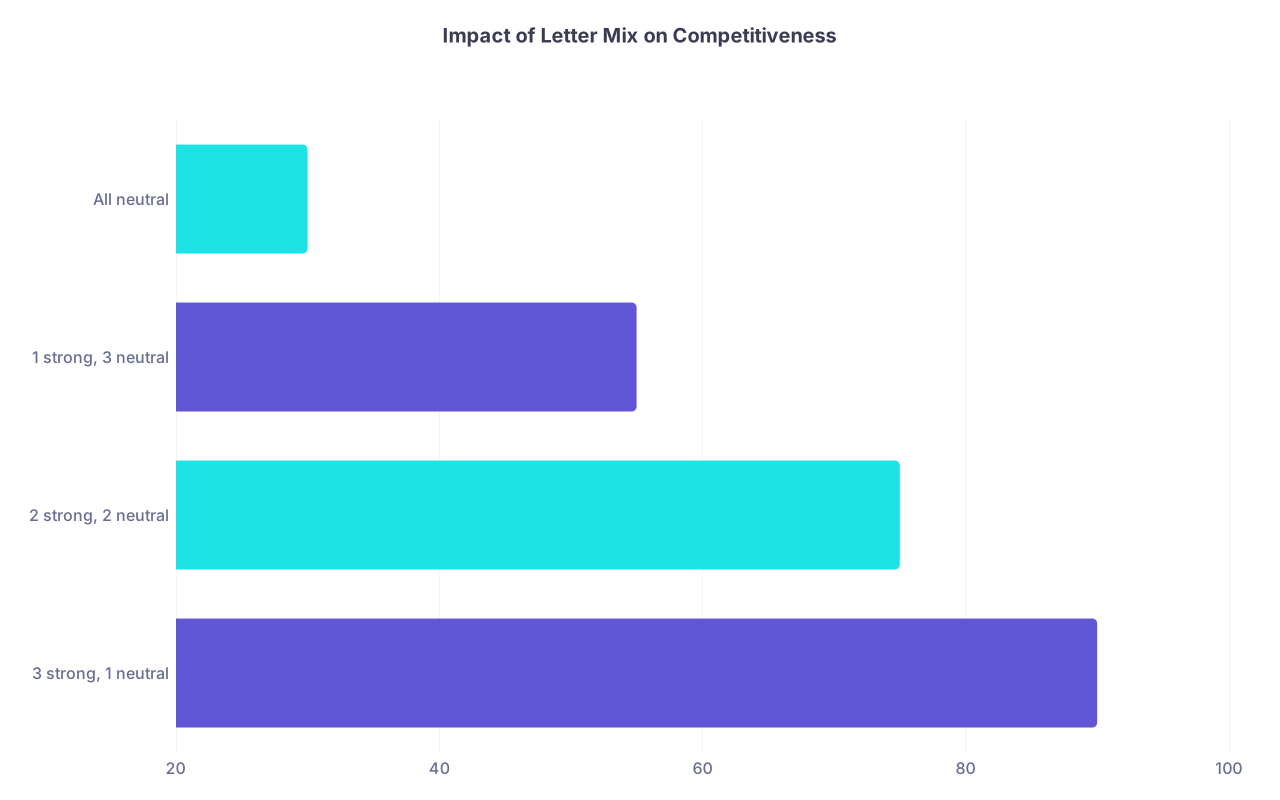
| Category | Value |
|---|---|
| 3 strong, 1 neutral | 90 |
| 2 strong, 2 neutral | 75 |
| 1 strong, 3 neutral | 55 |
| All neutral | 30 |
This is roughly how programs perceive sets of letters (obviously not exact numbers, but you get the idea).
You can absolutely match with:
- 1–2 strong letters + 1–2 neutral-but-positive letters
You’re in trouble if:
- You have 0 strong letters and all of them feel bland and generic
- Or one is clearly negative/hesitant
So the calculation isn’t “Is this attending obsessed with me?”
It’s “Is this letter likely to be at least decent—and is it better than my backup options?”
How To Ask Without Sounding Desperate (Even Though You Are)
You’re allowed to be anxious. Just don’t let that anxiety script your ask.
In person (ideal) or via email if in-person is impossible:
“Dr. X, I really appreciated the chance to work with you on [service]. I’m planning to apply to [specialty] this cycle, and I was wondering if you’d feel comfortable writing me a strong letter of recommendation for residency.”
If in person, shut up after that. Let the silence sit.
If they say yes:
- Thank them
- Ask if they prefer a CV/PS/brag sheet
- Ask when they’d like the materials
If they hedge:
- You’re allowed to say, “If you don’t feel you can write a strong letter, I completely understand and can ask someone else.”
- Then respect that answer and move on. Don’t push.
A Quick Reality Check Before You Spiral
Let me be blunt about something your brain keeps ignoring:
Most residents that matched didn’t have perfect letters, perfect relationships with attendings, or rotations where they felt 100% confident. They had:
- A couple of strong supporters
- A couple of “seems like a reasonable human, would not set the hospital on fire” letters
- And an overall app that told a coherent, honest story
You’re allowed to be scared. But don’t let that fear make you do something worse, like:
- Rely only on “big name” attendings who barely know you
- Or wait too long and end up scrambling for letters last minute
You don’t need magical letters. You need real ones, from people who actually saw you show up.

| Step | Description |
|---|---|
| Step 1 | Need another LOR |
| Step 2 | Ask strong options first |
| Step 3 | Consider lukewarm attending |
| Step 4 | Avoid asking them |
| Step 5 | Ask using strong letter wording |
| Step 6 | Send CV and brag sheet |
| Step 7 | Thank them and ask someone else |
| Step 8 | Any clearly strong options? |
| Step 9 | Were evals at least positive? |
| Step 10 | Response sounds confident? |



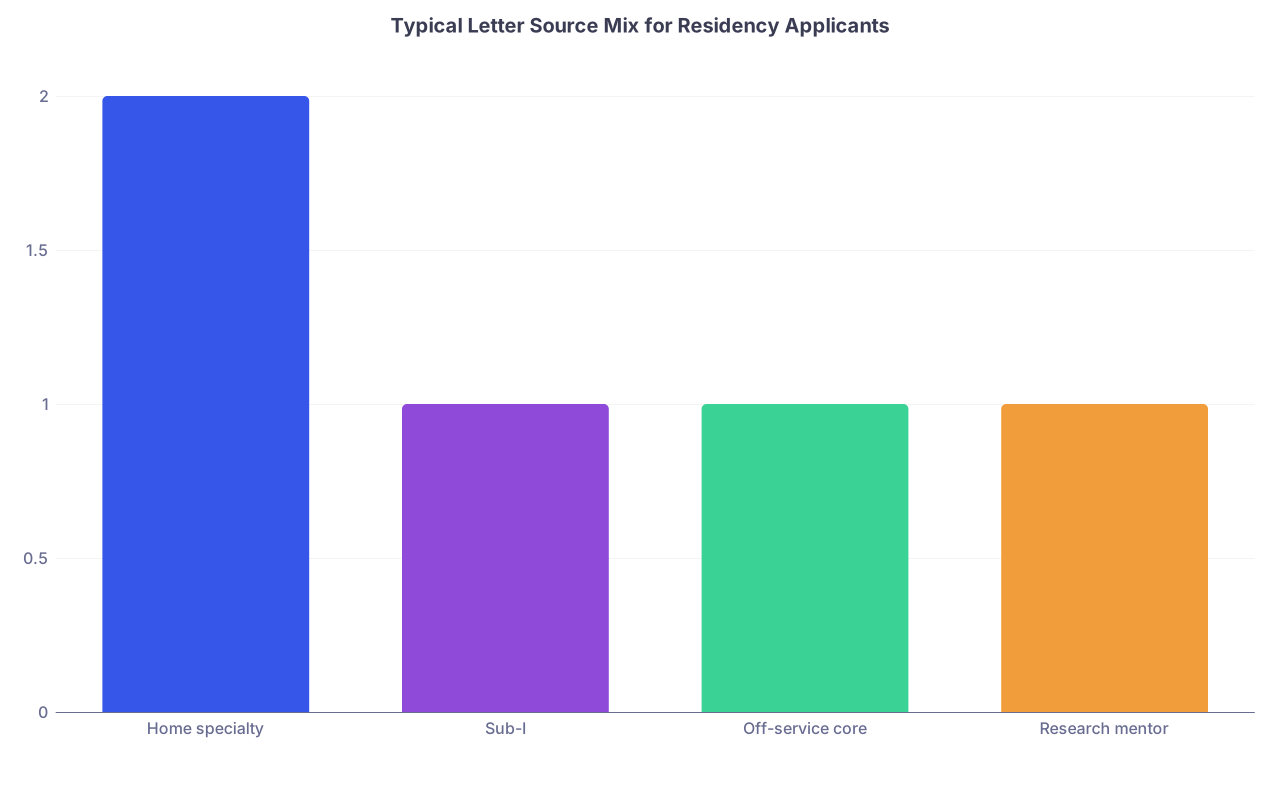
| Category | Value |
|---|---|
| Home specialty | 2 |
| Sub-I | 1 |
| Off-service core | 1 |
| Research mentor | 1 |
FAQs (Exactly 5)
1. What if they say “I can write you a letter,” but don’t say “strong”?
That’s a yellow flag. Not automatic no, but I’d try to get at least one or two letters from people clearly enthusiastic about you. If this attending is your only option from that specialty, you might still use them, but balance it with stronger letters from others who know you better.
2. Is it better to have a strong letter from a non-specialty attending or a lukewarm letter from my chosen specialty?
If you’re forced to choose: for many fields, a strong letter from someone who really knows your work (even in another specialty) is more valuable than a flat, generic specialty letter. Ideal is both, but if your specialty attending feels truly indifferent or negative, lean toward the person who will actually advocate for you.
3. Can a single neutral letter ruin an otherwise strong application?
No. Programs expect some letters to be more detailed and enthusiastic than others. One neutral, descriptive letter surrounded by otherwise positive application elements isn’t fatal. A pattern of vague/short letters, or one that hints at concerns, is more problematic than “just okay.”
4. Should I read my letter if my school allows it?
If your institution lets you see it, and you don’t waive your right, be prepared for the possibility it’s more bland than you hoped. If it’s truly bad or concerning, talk to your dean’s office about whether to exclude it. But remember: lots of good residents matched with letters that didn’t make them cry tears of joy.
5. I had a rocky start to the rotation but improved. Does that kill my chances for a letter?
Not necessarily. Some attendings actually like writing about growth. If by the end you were solid, responsive to feedback, and engaged, they might frame the early struggles as maturity and resilience. When you send them your materials, you can even highlight how you improved—give them that narrative to work with.
Key points to walk away with:
- “Lukewarm” in your head often just means “not excessively praising” in real life. That’s not the same as bad.
- Ask using the word “strong,” watch how they respond, and don’t be afraid to walk away if they hedge.
- Prioritize letter writers who know your work and can give specific examples, even if they’re not the most effusive humans on earth.