

You’re sitting at your parents’ dining table, half-finished cup of coffee next to a pill organizer you just refilled. Your phone still has that “We regret to inform you…” email open. You did not match. And now you’re staring at two very real problems colliding:
- You have major family responsibilities — maybe caring for an aging parent, a sick spouse, a disabled sibling, or young kids.
- You need to stay in the residency game without a neat, full‑time “gap year job” everyone on Reddit seems to think is mandatory.
You’re not just asking, “How do I fix my application?” You’re asking, “How do I do that while being the main caregiver and not burning out completely?”
Let’s treat this like a case. You have constraints. You have goals. You have time. You need a plan that is actually flexible and realistic.
Below is how I’d structure this year if I were in your exact spot.
Step 1: Get Clear on Your Non‑Negotiables
Before you even think about research positions or part‑time jobs, you need to know what your real bandwidth is. Not the fantasy version.
Grab a sheet of paper or a blank doc and answer these blunt questions:
- Who exactly are you caring for? One person or several?
- What do they need from you every day and every week?
- What are your hard time anchors? (dialysis days, chemo appointments, school drop‑off, nighttime care)
- How many hours per week are you truly locked into caregiving?
Be specific. “Help Mom a lot” is useless. “Mon/Wed/Fri: 7–10 am dialysis transport + meds; every evening 8–9 pm bedtime care” is useful.
Now translate that into something like this:
| Time Block | Commitment |
|---|---|
| 6–9 am | Morning care / meds / breakfast |
| 9 am–1 pm | Generally free |
| 1–4 pm | Appointments 2x/week |
| 4–8 pm | Family time / dinner / kids |
| 8–11 pm | Usually free but often exhausted |
This rough map will control what kind of gap‑year activities you can realistically take on. Most people skip this step and then wonder why they’re drowning by November.
If your caregiving is unpredictable (e.g., frequent hospitalizations), be honest about that too. Some positions will tolerate unpredictability; others absolutely will not. Better to know now.
Step 2: Set Your Match Goals for Next Cycle — Specifically
You cannot structure a good year around vague goals like “be more competitive.” You need targeted objectives based on why you did not match.
Do a harsh post‑mortem on your last cycle:
- Did you get zero interviews? Very few? Many but no ranks?
- Were your scores/grades below average for the specialty?
- Did you apply too narrowly or to unrealistic programs?
- Were your letters generic or weak?
- Did you have visa or geographic limitations?
- Did your personal statement or interview performance tank you?
If you have any trusted faculty, mentor, or PD who’s willing to look at your application, get their input. They’ll usually be more blunt than you expect, which is exactly what you need.
From that, define 3–5 specific upgrade goals. Examples:
- Add 1–2 strong new letters of recommendation from recent clinical work.
- Get U.S. clinical experience in my target specialty (if IMG/old grad).
- Show sustained commitment to specialty (research, QI, community work).
- Fix interview skills (mock interviews, deliberate practice).
- Improve Step 2 score or complete Step 3 (if strategic and realistic).
Now you know what your gap year has to do: create evidence that you’re fixable and dedicated.
Step 3: Choose Gap‑Year Structures That Actually Fit Caregiving
You are not in the same situation as someone who can move across the country tomorrow for a full‑time research job and pull 60‑hour weeks. Accept that. Then be smart.
Here are the main categories of things you can do, with commentary on how they fit a caregiver’s life.
1. Flexible Research (Best Option if You Can Land It)
This is the sweet spot: academic work that can be done remotely or with flexible hours.
Targets:
- Chart reviews / retrospective studies
- Database work (NSQIP, SEER, etc.)
- Quality improvement projects
- Systematic reviews / meta‑analyses
- Education projects (curriculum development, online modules)
When you reach out to faculty, be direct about your situation after they show interest, not in the first line. First you’re a serious applicant. Then you’re a caregiver who needs flexibility.
Example email structure:
I’m a 2024 graduate from X School who applied to Internal Medicine this year but did not match. I’m planning to reapply this upcoming cycle and am looking for research opportunities in [their focus area].
Brief background: [1–2 lines about your metrics/experience, not your life story].
I’m particularly interested in [specific topic they publish on]. Would you be open to a short meeting to discuss ways I could contribute to ongoing projects (e.g., data collection, chart review, manuscript preparation) over the coming months?
On the call, you can say: “I also have caregiving responsibilities at home, so I’m specifically looking for work that can be done largely remotely and on a flexible schedule. I can commit X hours per week reliably.”
If you can give them a consistent 10–15 hours/week, many will say yes. They care about reliability, not the exact hours.
2. Part‑Time Clinical / Observership / Volunteer Roles
This depends heavily on your status (US grad vs IMG, licensed vs not, visa vs citizen). But there are more options than people think.
Potential routes:
- Unpaid observership 2–3 days/week in your specialty
- Part‑time clinical assistant / scribe roles (if allowed)
- Free clinic volunteering (primary care, urgent care)
- Telehealth triage or health coach style roles (non‑physician)
You need recency of clinical exposure. Especially if you’re an IMG or older grad. But you don’t need full‑time. Two solid days per week in a clinic where someone will vouch for you is far better than five days of unfocused shadowing.
When you ask for observerships or volunteer work, make the “letter” part explicit early:
I’m hoping to volunteer consistently in your clinic 1–2 days per week over the next 6–9 months, with the goal of both helping your team and obtaining a strong letter of recommendation for my next residency application.
They need to know you’re not just passing through.
3. Paid Work Outside Medicine (If You Need Money…)
Sometimes finances make this non‑negotiable. You may need an hourly job that has nothing to do with medicine. That’s fine — if you frame it properly.
What works:
- Remote work (tutoring, editing, test prep teaching, data entry, etc.)
- Local jobs with predictable shifts (pharmacy tech, MA if possible, CNA, etc.)
What doesn’t work well:
- Totally chaotic gig work that leaves you exhausted and with no predictable schedule. You’ll tank both your caregiving and your application work.
If you do non‑medical work, you must still carve out a couple half‑days each week for something directly tied to your specialty or clinical exposure. Otherwise PDs just see a year of “drift.”
Step 4: Build a Weekly Structure That You Can Actually Maintain
You need a template week. Not aspirational. Realistic given sleep, stress, and family.
Start with your fixed blocks (caregiving, appointments, kids’ school). Then drop in:
- Clinical/observership/volunteering blocks
- Research/project blocks
- Application prep and logistics
- Rest. Yes, actual rest.
Here’s what a realistic caregiver‐unmatched schedule might look like:
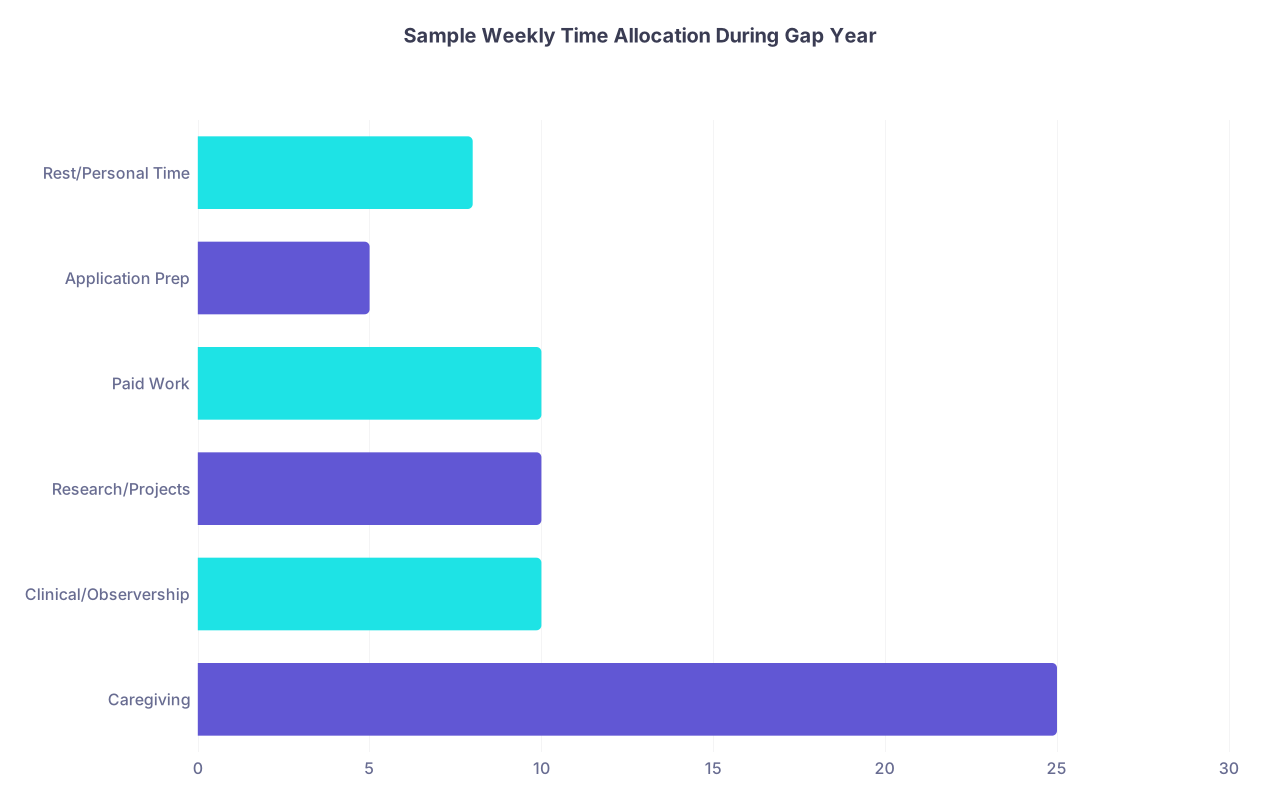
| Category | Value |
|---|---|
| Caregiving | 25 |
| Clinical/Observership | 10 |
| Research/Projects | 10 |
| Paid Work | 10 |
| Application Prep | 5 |
| Rest/Personal Time | 8 |
Nothing fancy, but it’s structured. Structure is what will keep you from waking up in December realizing you’ve done almost nothing to fix your application.
Step 5: Decide How Open to Be About Your Caregiving
You’re going to ask: “Do I tell programs I was caring for family?” Because you don’t want to sound like you’re making excuses, but you also don’t want them thinking you just drifted.
Here’s the blunt version.
Use your caregiving story when:
- It’s substantial, ongoing responsibility — not “I moved back home to help out sometimes.”
- It explains why you stayed in a specific location or chose flexible/part‑time work.
- You can tie it to concrete outcomes (you still did research, still got new letters, still showed growth).
Don’t lean on it when:
- It’s the only thing you did all year and you didn’t even try to add anything clinical or academic.
- You present it as “so I couldn’t do anything” instead of “so I restructured my plan.”
How to phrase it in a personal statement or interview:
Wrong:
I was unable to pursue research or additional clinical experience because I was caring for my sick parent.
Better:
During my gap year, I served as the primary caregiver for my mother following her stroke, which required daily assistance with medications, appointments, and activities of daily living. To accommodate this, I arranged flexible research work with Dr. X in [specialty] and volunteered two days per week in [clinic], where I deepened my skills in [relevant skills]. This year reinforced my ability to manage high‑stakes responsibilities while remaining committed to my clinical growth.
See the difference? Same reality. Very different message.
Step 6: Pick Activities That Translate Directly Into Application Strength
You don’t have unlimited hours. Every major commitment in this gap year should map clearly to one of your 3–5 upgrade goals from Step 2.
Some high‑yield combinations that work very well for caregivers:
Scenario A: You had few/no interviews, weaker scores, no research
Aim: show academic productivity + recency + commitment.
Plan:
- 1–2 days/week: observership or free clinic in your target specialty (letter source)
- 10 hours/week: remote research project under a faculty member in that specialty
- 3–4 hours/week: Step 3 prep (if IM/FM and realistic) or deep clinical reading for your field
Scenario B: You had multiple interviews but no rank / no match
Often this is a combination of interview performance issues, lukewarm letters, or subtle professionalism flags.
Plan:
- At least 1 consistent clinical environment where someone can say, “They show up. They’re reliable. I’d rank them.”
- 1 focused project that you can actually finish (poster, paper, QI) to show follow‑through
- Dedicated interview prep: mock interviews with faculty/friends, recording yourself, feedback, practicing behavioral questions
Scenario C: You’re geographically locked due to caregiving
You can’t move. Programs notice that. Use it, don’t hide it.
Plan:
- Embed yourself in 1–2 local hospitals/clinics as a consistent, reliable presence
- Get letters from local people who are known by the PDs in your region if possible
- Tell a tight geographic narrative: “My family responsibilities mean I am committed long‑term to this area, and I’m deeply invested in the patient population here.”
Programs like people who are likely to stay. Being geographically anchored can be a strength if you frame it correctly.
Step 7: Build a Lean, Repeatable Day Structure
Your days are going to be interrupted. That’s the reality of caregiving. So you need small, repeatable habits rather than big, elaborate plans that collapse the first time someone gets admitted again.
Think in 1–2 hour blocks:
- 60 minutes: data abstraction for research.
- 45 minutes: reading a core guideline or topic review.
- 30 minutes: writing or editing part of a personal statement or CV.
- 90 minutes: mock interview with a friend or answering common questions out loud.
Stack these during your “good” hours — usually when the person you care for is sleeping, at an appointment with someone else, or otherwise stable.
Consider a simple daily checklist:
- 1 clinical/research task
- 1 application‑prep task
- 1 caregiving/household improvement (organizing meds, setting up a better transport schedule, etc.)
- 1 rest or personal thing (walk, workout, calling a friend)
Not sexy. Very effective.
Step 8: Documentation: Make Your Year Legible to Program Directors
At the end of this year, a PD needs to look at your CV and see:
- Clear timeline, no mysterious gaps
- Increasing involvement in your specialty
- Some output (poster, abstract, letter, course, Step 3, etc.)
- Evidence you can handle responsibility without melting down
So as you go:
- Keep a simple log of hours and dates for each role.
- Ask early if someone would be willing to write a letter later if things go well.
- Save emails documenting your role and responsibilities.
- Track any outcomes: number of patients seen, projects completed, presentations given.
You’ll use this to fill out ERAS work/experience entries clearly:
“Role: Volunteer clinic assistant
Description: Assisted in triage, patient education, medication reconciliation 1–2 days/week (~8 hours/week), under supervision of Dr. X. Participated in QI project improving [X].”
Not: “Helped doctor in clinic.”
Step 9: Mental Health and Boundaries — Or You’ll Break
I’ve watched people in your spot try to be the perfect child/spouse/parent and the perfect unmatched applicant. They end up angry, exhausted, and worse off by the next cycle.
You need boundaries with:
- Family: Sometimes “I can’t do that appointment; I have research work” is the right answer.
- Faculty: “I can give you 10 hours/week consistently, but I can’t do overnight data collection.”
- Yourself: You are not going to fix everything in 3 months. This is a 9–12 month rebuild.
If you notice these:
- You’re resentful every time you open anything ERAS‑related
- You’re short with the person you’re caring for
- You’re skipping sleep regularly to keep all the balls in the air
Then you’re doing too much. Dial something down before you hit full burnout.
Even one protected half‑day per week that’s “no caregiving, no medicine, no ERAS” will keep you sane. Use respite services if available. Ask siblings or relatives to cover. People don’t magically step up until you clearly ask.
Step 10: Timeline: What Should Happen When
You don’t have infinite time. Matching is a calendar‑driven game.
Here’s a rough structure if you’re reapplying the very next cycle:
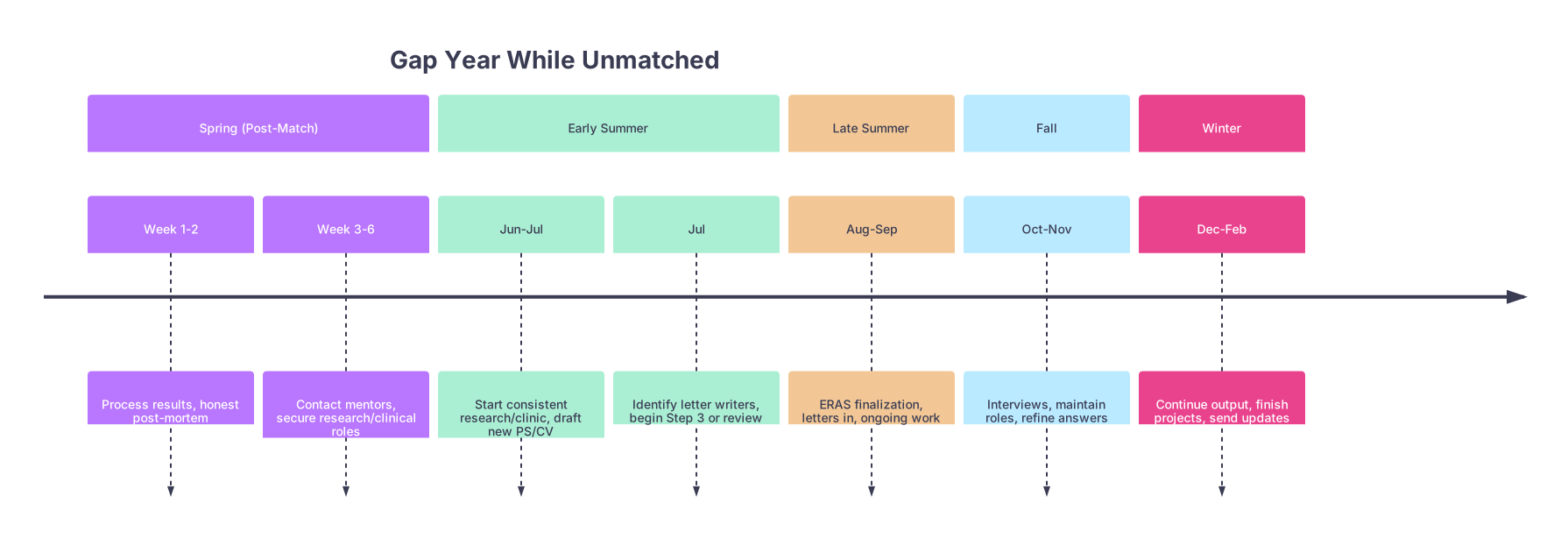
| Period | Event |
|---|---|
| Spring (Post-Match) - Week 1-2 | Process results, honest post-mortem |
| Spring (Post-Match) - Week 3-6 | Contact mentors, secure research/clinical roles |
| Early Summer - Jun-Jul | Start consistent research/clinic, draft new PS/CV |
| Early Summer - Jul | Identify letter writers, begin Step 3 or review |
| Late Summer - Aug-Sep | ERAS finalization, letters in, ongoing work |
| Fall - Oct-Nov | Interviews, maintain roles, refine answers |
| Winter - Dec-Feb | Continue output, finish projects, send updates |
If you’re planning a longer gap (>1 year), fine. But you still need a clearly productive “Year 1” to show programs you didn’t just stall indefinitely.
Quick Reality Check: Common Traps to Avoid
I’ve seen the same mistakes over and over:
- Saying “yes” to a non‑flexible “amazing” research job that clashes with family needs, then quitting 3 months in. Red flag on your record.
- Spending the entire year only studying for Step 3 and caregiving, with zero clinical connection to your specialty. PDs will question your interest and recency.
- Over‑explaining your family situation in applications so it reads like an excuse festival. Mention it once, crisply, as context — then focus on what you did.
- Waiting until August to start fixing your application. By then, your letters and experiences are half‑baked.
Stay boring and consistent instead:
- 1–2 clinical days/week
- 10–15 hours of research or structured project work/week
- 3–5 hours devoted to ERAS/interview prep/week
- The rest: caregiving, life, and whatever paid work you must do
Visual: Combining Roles in a Caregiver Gap Year
Here’s a clean view of how multiple part‑time roles can fit together:
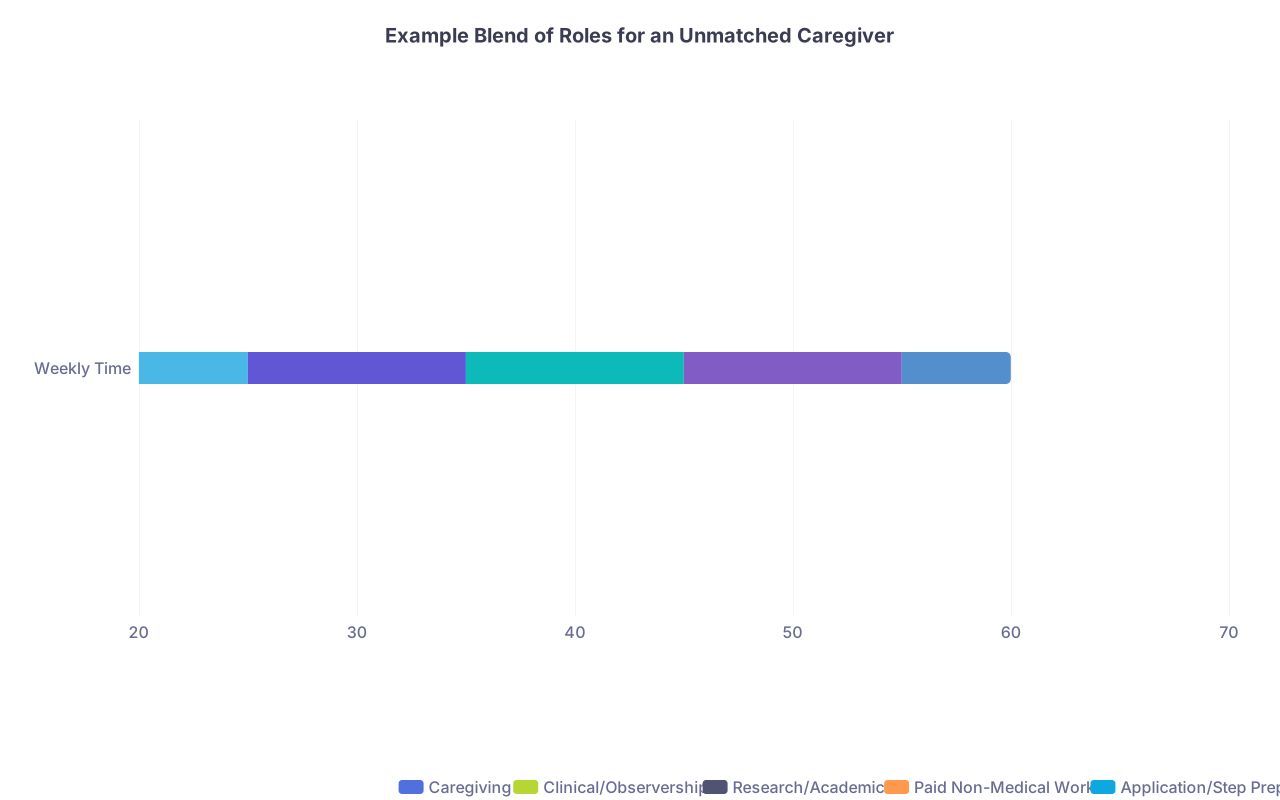
| Category | Caregiving | Clinical/Observership | Research/Academic | Paid Non-Medical Work | Application/Step Prep |
|---|---|---|---|---|---|
| Weekly Time | 25 | 10 | 10 | 10 | 5 |
Notice it doesn’t add up to 80 hours. You’re not a resident. You’re a caregiver trying to get back into the system. That’s okay.
One More Thing: Your Narrative Matters
At the end of this, your story to a program director should roughly sound like this:
I didn’t match last year. I returned home to become the primary caregiver for my [parent/child/spouse], which meant I couldn’t relocate for a full‑time position. To stay connected to [specialty], I arranged a flexible research position with [Dr. X] and have been volunteering weekly at [clinic/hospital]. Over the past year I’ve [completed X project, presented Y, strengthened my clinical skills in Z]. Balancing caregiving and professional growth has made me more focused, more efficient, and even more committed to residency training.
That’s strong. Human, but not apologetic.
Final Takeaways
- Start with your constraints — caregiving hours, location limits, energy — and then design your gap year, not the other way around.
- Pick 2–3 high‑yield, flexible roles (clinical + research/project) that map directly to specific weaknesses in your last application.
- Make your year legible: consistent work, clear responsibilities, and a cohesive narrative that shows growth, not just survival.
You’re allowed to care for your family and still be a serious residency candidate. The key is structure, not martyrdom.


