
It’s March. The Match email came. And it wasn’t what you wanted.
Now you’re staring down the barrel of another application cycle and one question keeps looping in your head:
“How honest should I be about my unmatched year in future interviews?”
You’re not alone. I’ve heard this in advising meetings, hallway whispers, and panicked late-night emails more times than I can count. Let me give you the straight answer:
You should be honest. But you should not be unfiltered. And you definitely shouldn’t be unprepared.
This isn’t about confessing your sins. It’s about controlling the narrative.
The Core Rule: Honest, But Strategic
Programs are not stupid. If you reapply, change specialties, or have a gap year in training, they know you didn’t magically take a “personal growth sabbatical” the exact year you applied.
Here’s what they really care about:
- Are you safe to hire (clinically, professionally, behaviorally)?
- Are you self-aware about what happened?
- Did you actually do something about it?
- Are you going to bring problems or solutions to their residency?
So the real rule:
Be factually honest.
Be selectively detailed.
Be relentlessly focused on growth and readiness.
If you try to hide that you went unmatched, it looks evasive. If you trauma-dump the entire story, it looks unstable. You want the middle ground: clear, concise, accountable, future-focused.
What You Have To Disclose (And What You Don’t)
Let’s separate what’s mandatory from what’s optional.
Things you must be honest about
If directly asked in applications or interviews, you must answer truthfully about:
- Did you previously apply to residency?
- Did you go unmatched?
- Any formal academic/disciplinary actions.
- Gaps in education or training (months not enrolled or working clinically).
- USMLE/COMLEX attempts and failures (where required).
If the question is on a form or in the interview and you lie, that’s a massive red flag. Programs share information. People talk. PDs move. You do not want to be the person who lied.
Things you can modulate
You can choose:
- How much detail you go into about what went wrong.
- How much you talk about specific programs or rejections. (Hint: don’t name programs.)
- How you frame your unmatched year: what you focused on, what you learned, how you grew.
- Which weaknesses you highlight vs. which ones you quietly fix behind the scenes.
You control the story arc, but not the facts.
How To Answer: “Why Did You Go Unmatched?” Without Burning Yourself
This question is coming. Pretending it won’t is how people blow interviews.
You need a 60–90 second answer you could almost say in your sleep.
Structure it like this:
- Brief context (what happened)
- Ownership (your part)
- Action (what you did about it)
- Outcome (why you’re better now)
- Forward link (why that matters for their program)
Let’s build a few examples.
Example 1: Low scores + weak application strategy
“I applied last cycle and went unmatched. Looking back, there were two main issues: my Step scores were below the average for the programs I targeted, and I applied too narrowly.
I took ownership of that. Over the last year I focused on strengthening my application: I completed a sub-internship in internal medicine with strong evaluations, did additional clinical work, and worked with mentors to apply more strategically to programs that match my profile. I’ve also spent time refining my communication skills and reflecting honestly on feedback.
I’m coming into this cycle with a better understanding of where I fit, a stronger track record, and a much more realistic application strategy, and I’m confident I can contribute from day one.”
Straight, honest, and not self-destructive.
Example 2: Red flags + remediation
“I went unmatched after my first application cycle. At that time, I had a professionalism concern in my record that understandably made programs cautious.
Since then, I’ve worked directly with my dean and faculty to address it. I completed a formal remediation plan, received positive evaluations in subsequent rotations, and took on added responsibility in a clinical setting where my supervisors trusted me with more autonomy.
I learned a lot about communication, reliability, and how my actions affect the team. I’m not proud of needing remediation, but I am proud of the changes I’ve made since. I’m confident those who’ve supervised me this year would say I’m reliable and ready to function well as a resident.”
You don’t need the blow‑by‑blow of the incident. You do need to show: I took it seriously, I changed.

How Honest Is “Too Honest”?
Let me be blunt: oversharing can sink you just as fast as lying.
Don’t do this:
- “I didn’t match because my school was unsupportive and my advisor screwed me.”
- “I was really depressed, so I kind of shut down during interview season.”
- “I ranked only five programs because I didn’t want to move somewhere lame.”
- “I had some conflicts with attendings who just didn’t understand my style.”
This makes you sound:
- Blaming
- Unprofessional
- Emotionally volatile
- Hard to supervise
Even if there’s truth in those statements, they’re not interview material.
Do this instead:
Distill the messy real story into professional themes:
- Poor strategy → “I applied too narrowly / not aligned with my competitiveness.”
- Personal issues → “I was dealing with some personal challenges that impacted my performance; I’ve since addressed them and built better support and coping strategies.”
- Conflict with faculty → “I received feedback about my communication and response to feedback; I’ve worked hard this year to improve that, and my recent evaluations reflect progress.”
You are not obligated to emotionally strip in front of an interview panel. You are obligated to be honest about the big picture and show credible growth.
What Programs Actually Want To Hear
Here’s what PDs and faculty are listening for under your words:
- Insight: Do you understand why you didn’t match, beyond “The Match is random”?
- Accountability: Do you own your part, or is it all other people’s fault?
- Pattern vs. one‑off: Are we seeing a fixable mistake or a recurring problem?
- Action: Did you use the year constructively or just wait for a different outcome?
- Risk: Are you going to drain time and energy, or pull your weight?
If your story hits those, you’re fine. If your answer sounds like a conspiracy theory about the NRMP, you’re not.
Use Your Unmatched Year As Evidence, Not Just a Story
This is where people either recover or stay stuck: what you actually did with that year.
If all you can say is, “I worked at a non-clinical job and reapplied,” you haven’t answered their real question: “Why should we believe next year will be different?”
You want to be able to point to real, concrete changes.
| Focus Area | Strong Example |
|---|---|
| Clinical Work | Research fellowship with 2+ clinic days/week |
| Letters | New LOR from specialty-aligned attending |
| Academics | Passed Step 3 or strong Step 2 retake |
| Professionalism | Documented remediation with excellent evals |
| Strategy | Wider, more realistic program list with advising |
Tie everything back to residency readiness.
“Going unmatched pushed me to…” followed by specific improvements programs actually care about:
- Hands-on clinical experience
- Evidence of reliability and professionalism
- Better communication and teamwork
- Clear specialty commitment
- Improved scores or remediation of past issues
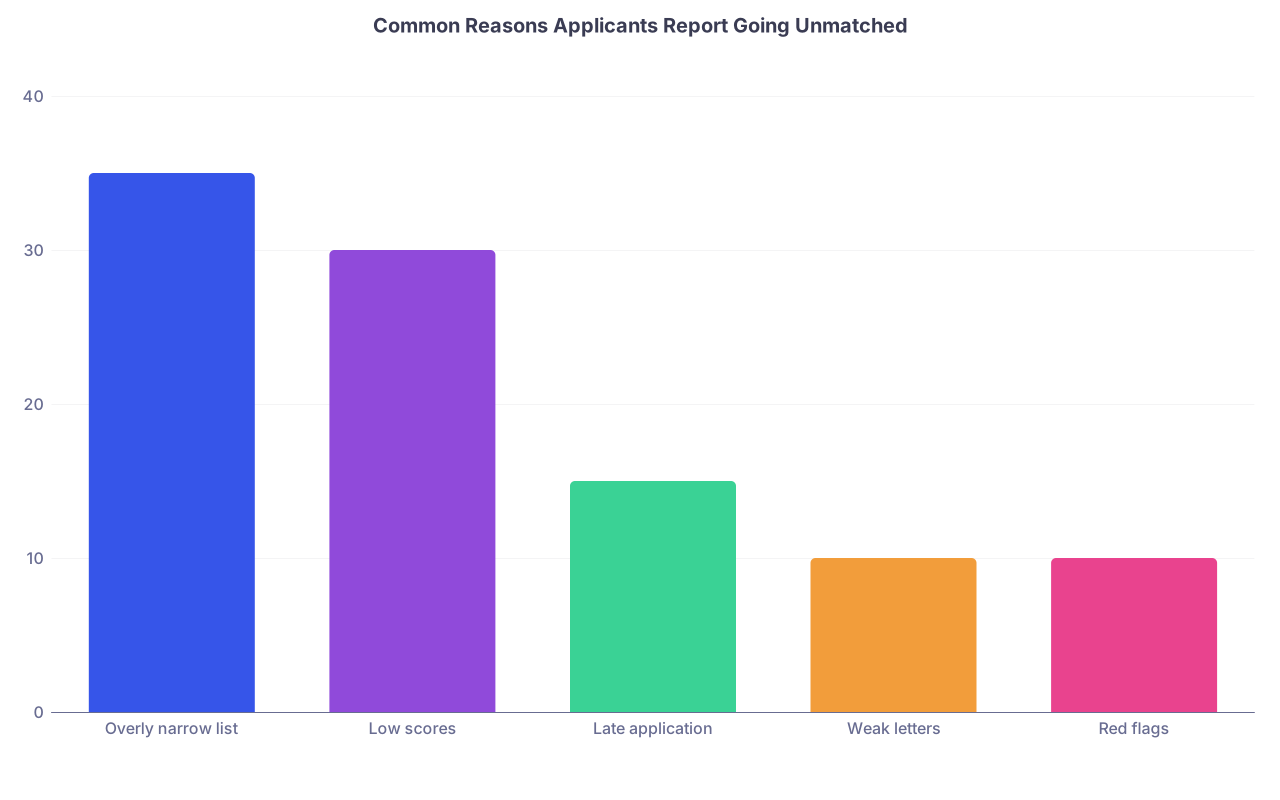
| Category | Value |
|---|---|
| Overly narrow list | 35 |
| Low scores | 30 |
| Late application | 15 |
| Weak letters | 10 |
| Red flags | 10 |
How Much Detail About The Match Process Itself?
You do not need to:
- List how many interviews you got.
- Explain exactly where you ranked each program.
- Show your rank list logic in granular detail.
That level of disclosure doesn’t help you. It just invites judgment and second‑guessing.
A reasonable level of transparency:
“I received fewer interviews than expected given my goals, and in hindsight my program list and timing weren’t aligned with my competitiveness. I’ve addressed that this cycle with earlier submission, broader applications, and closer guidance from mentors in this specialty.”
That tells them:
- You got the message.
- You changed the variables you control.
- You’re not going to repeat the same strategy and blame them when it doesn’t work.

| Step | Description |
|---|---|
| Step 1 | Unmatched Year |
| Step 2 | State the fact briefly |
| Step 3 | Identify 1-2 main causes |
| Step 4 | Take clear ownership |
| Step 5 | Describe concrete actions taken |
| Step 6 | Highlight current readiness |
| Step 7 | Connect to this programs needs |
What If The Reason Is Really Personal?
Sometimes the story behind the unmatched year is raw:
- Serious mental health crisis
- Family illness
- Trauma
- Major life event
Here’s the line you walk:
You can protect your personal privacy and still be honest at the professional level.
Bad idea: “I was suicidal and completely fell apart that year.”
Better: “I was dealing with significant personal and health challenges that affected my performance and focus. Since then, I’ve worked closely with professionals, built strong supports, and I’m in a stable, well-managed place now. My recent clinical work and evaluations reflect that I’m functioning at the level expected of an incoming resident.”
If they press, you can calmly repeat: “I’m comfortable sharing that it was a serious personal/health matter that’s now stable and well-managed. What I can show you clearly is how I’ve performed this past year and the support system I have in place going forward.”
You are being honest. You’re just not giving them your therapy notes.

Specific Phrases That Work (And Phrases That Hurt You)
Let me hand you some language. Use it, tweak it, but don’t wing it.
Helpful phrases
- “I went unmatched my first cycle.”
- “In hindsight, I underestimated how competitive X was given my scores/profile.”
- “I received clear feedback that…”
- “I took that seriously and focused this year on…”
- “My supervisors this year would describe me as…”
- “I’m grateful for the chance to have addressed this before starting residency.”
Phrases that set off alarms
- “It was really unfair because…”
- “I still don’t fully understand why I didn’t match.”
- “To be honest, I think my school/program didn’t support me.”
- “I was just unlucky.”
- “The Match is broken.”
Even if the system is broken in places, complaining about it in an interview makes you look like a problem, not a solution.

How Your Level of Honesty Changes By Situation
Different paths → slightly different framing.
If you reapply to the same specialty
You need to show:
- Better prep
- Better judgement
- Stronger evidence of fit
Honesty level: high about your earlier miscalculations and what you fixed. They’ll wonder, “Why will this be different?” Answer that directly.
If you switch specialties
Now the question becomes: “Did you not match, or did you realize this new field is a better fit?”
You say something like:
“I applied to X previously and went unmatched. In reflecting on that experience and through additional clinical exposure, I realized my interests and strengths align much better with Y. Over the past year I’ve done A, B, and C in Y to confirm that fit and demonstrate my commitment.”
Honest that you were unmatched. Clear that you’re not just fleeing; you’re choosing.
If you matched prelim but not categorical
You own the gap:
“I completed a prelim year in X but did not secure a categorical position that cycle. There were two main issues: [brief]. During and after that year, I’ve focused on addressing those, as you can see in my more recent evaluations/letters from…”
Programs know this situation. They’re evaluating your trajectory, not just the old outcome.
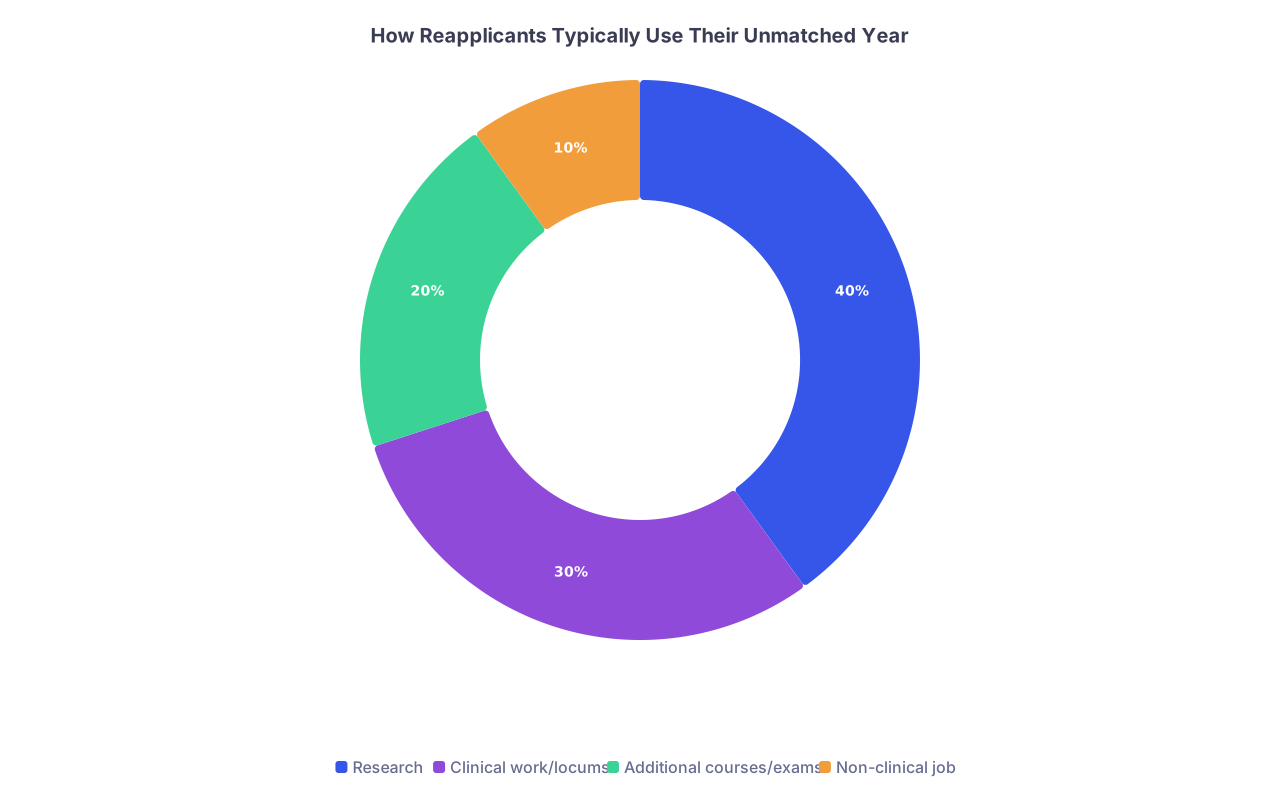
| Category | Value |
|---|---|
| Research | 40 |
| Clinical work/locums | 30 |
| Additional courses/exams | 20 |
| Non-clinical job | 10 |
Quick Do and Don’t List
You’re tired, so here’s the short version.
Do:
- Admit you went unmatched. Calmly. No drama.
- Identify 1–2 clear, believable reasons.
- Take ownership without beating yourself up.
- Show concrete, recent evidence of improvement.
- Connect your growth to what this program needs.
Don’t:
- Blame others or the system.
- Give excessive, raw personal detail.
- Pretend it was just “bad luck.”
- Get defensive when they ask.
- Wing your answer. Ever.
FAQ: Unmatched Year + Future Interviews
1. Do I have to explicitly say the words “I went unmatched”?
Yes. Use simple, direct language: “I applied last cycle and went unmatched.” If you dance around it, you look evasive. The key is to follow it immediately with what you learned and what you’ve done since.
2. How long should my explanation be in an interview?
About 60–90 seconds. Long enough to cover: what happened, what caused it, what you did, and how you’re better now. If you’re talking past 2 minutes, you’re either oversharing or rambling. Practice it out loud and time yourself.
3. Should I mention mental health issues as a reason I didn’t match?
You can acknowledge “personal/health challenges” in broad terms without giving specifics. The crucial part isn’t naming the diagnosis; it’s demonstrating that you’re stable, supported, and have recent performance that shows you’re functioning at a resident level.
4. What if I truly don’t know why I went unmatched?
You need to get an answer before interviews. Talk to your dean’s office, advisors, PDs, anyone who’ll be honest. Then in the interview you can say: “After discussing with my mentors and reviewing my application, I realized…” and share 1–2 specific, plausible factors plus what you changed.
5. Will being unmatched automatically kill my chances next cycle?
No. Programs take unmatched applicants every year, especially those who used the year well. What kills chances is: no change in your application, blaming others, vague explanations, and no new evidence of growth. A clear, honest, growth‑focused story can absolutely get you in the door.
Key Takeaways
- Be honest about being unmatched, but keep the explanation focused, professional, and forward‑looking.
- Own your part, show exactly what you did to improve, and use your unmatched year as evidence of growth, not just a sad story.
- Never wing this. Script, refine, and practice your answer until it’s calm, confident, and under 90 seconds.