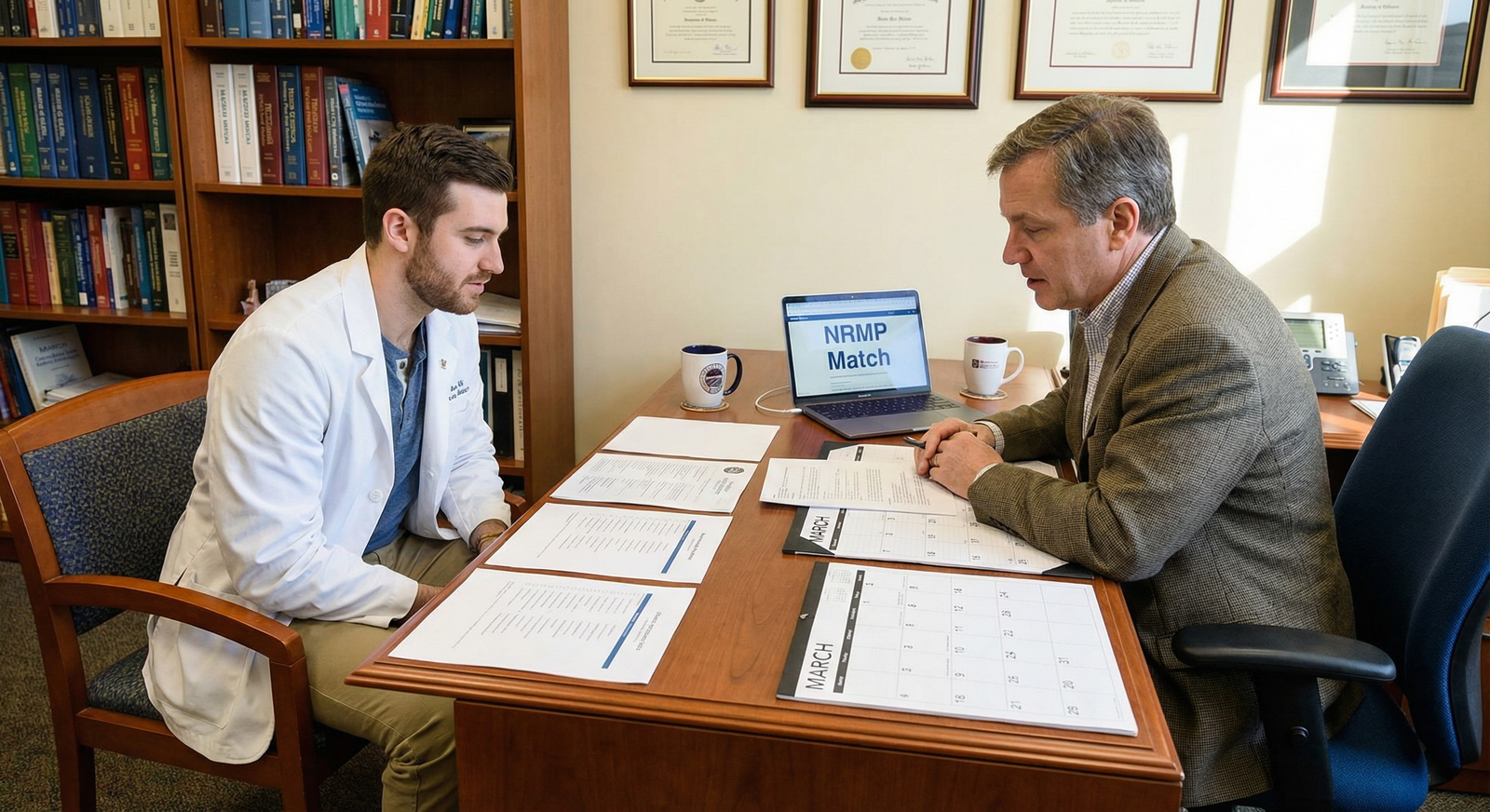
The National Resident Matching Program (NRMP) is the central gateway to U.S. residency training. For medical graduates—whether U.S. MD, DO, or international medical graduates (IMGs)—understanding NRMP Match Policies is not optional; it is a professional obligation. The NRMP Match is built on a foundation of fairness, confidentiality, and standardized procedures. When applicants or programs violate these rules, the consequences can be career-altering.
This guide examines NRMP Match Policies in depth, focusing on how to avoid non-compliance, what behaviors are considered violations, and how to protect your future as you navigate the residency application process.
Understanding NRMP Match Policies and Core Principles
NRMP Match Policies exist to keep the residency selection process fair, transparent, and predictable for both applicants and programs. The NRMP does not select applicants or make hiring decisions; instead, it manages the algorithm and enforces Match Policies that every participant agrees to follow.
What Is the NRMP and Why Does It Matter?
The NRMP:
- Operates the Main Residency Match and various specialty matches (e.g., fellowship matches)
- Uses a computerized algorithm to match applicants’ rank order lists with program rank lists
- Enforces Match Participation Agreements that define what is—and is not—acceptable behavior
For medical graduates, the NRMP is often the only realistic route into U.S. graduate medical education (GME). A serious violation can:
- Restrict or eliminate your ability to enter future NRMP matches
- Be disclosed to residency programs and state medical boards
- Damage your long-term professional reputation
Understanding the Match rules is therefore as critical as understanding the application process itself.
Key NRMP Policy Documents You Must Know
As an applicant, you are expected to be familiar with several core documents:
- Match Participation Agreement (MPA) – The legally binding contract you sign electronically when you register for the Match. It outlines rights, responsibilities, and possible penalties for non-compliance.
- NRMP Code of Conduct for Programs and Applicants – Defines appropriate behavior in interviews, communication, and post-interview contact.
- NRMP Match Policies and Procedures – Clarifies how the Match operates, including timelines, ranking rules, and post-Match obligations.
- NRMP Applicant and Program Guides – Practical explanations of how to participate correctly.
You are held accountable to these documents whether or not you’ve read them thoroughly. That’s why proactive review early in the application season is essential.
Core NRMP Match Policies Every Applicant Must Follow
Several core policy areas are particularly important for medical graduates and residency applicants.
1. Match Participation Agreement and Binding Commitments
The Match Participation Agreement (MPA) is the foundation of your relationship with the NRMP. When you register for the Match, you agree that:
- You will submit truthful and accurate information.
- You will participate in good faith.
- You accept the binding nature of the Match result.
Once you are matched:
- Both you and the residency program are obligated to honor the appointment for the full length of the first-year position (typically one year).
- You cannot simply “back out” to pursue another opportunity unless there is a formally approved waiver from the NRMP.
Failing to begin or complete a matched position, except under narrowly defined circumstances, often constitutes a Match violation.
2. Code of Conduct and Professional Behavior
The NRMP Code of Conduct is designed to maintain professionalism throughout the recruitment process. For applicants, this means:
- No attempts to pressure programs for promises or positions outside the Match
- No misrepresentation of other offers, ranking intentions, or credentials
- No harassment, discrimination, or unprofessional conduct during interviews or communication
Programs are similarly prohibited from:
- Requiring applicants to reveal rank intentions
- Offering incentives, guarantees, or “pre-Match” agreements in violation of policy
- Retaliating against applicants based on protected characteristics or lawful actions
When you participate in the NRMP Match, you represent not only yourself but also your medical school and the profession. Violations reflect poorly on all of these.
3. Ranking Rules: Submitting an Honest and Independent Rank List
The NRMP algorithm is designed to favor applicant preferences. To function fairly, it requires honest rank order lists (ROLs).
Key ranking rules:
- Rank programs in your true order of preference, not based on perceived probability or speculation.
- You may not coordinate rank lists with other applicants or programs.
- You may not submit a rank list that is deliberately false to manipulate the system.
Examples of problematic behavior:
- Agreeing with a friend to “swap” rankings of programs to increase the chance that you end up in the same city
- Ranking a program first after they promise to rank you highly only if you do so, then not following through
- Submitting a rank list knowing you do not intend to honor a particular program if matched
Your ROL is your professional statement of preference; manipulating it undermines the integrity of the Match.
4. Withdrawal and Changing Status
The NRMP allows applicants to withdraw from the Match under specific conditions and within defined deadlines:
- You may withdraw if you no longer intend to start residency in the upcoming cycle (e.g., pursuing research, personal reasons, or non-clinical paths).
- You must withdraw if you accept a position outside the Match that violates NRMP rules (e.g., certain non-NRMP GME positions that conflict with Match obligations).
However:
- Withdrawing late, after rank list deadlines, or after Match results, can constitute a violation.
- If your circumstances change (e.g., visa issues, graduation delays), you must communicate appropriately and may need to seek guidance from the NRMP and your dean’s office.
Never simply “ghost” programs or fail to show up for a position without formal withdrawal or waiver processes.
5. Communication Rules Between Applicants and Programs
The NRMP provides strict communication guidelines to prevent coercion and misinformation.
Applicants may:
- Express genuine interest in a program after the interview
- Send thank-you notes or update letters (if programs allow)
- Ask about program features, curriculum, and culture
Applicants may not:
- Request that programs reveal where they plan to rank you
- Promise a program that you will rank them #1 if you do not intend to do so
- Attempt to negotiate a commitment outside the Match process
Programs may not:
- Require rank disclosure
- Promise that you will match if you rank them highly
- Ask you to withdraw from the Match in exchange for a position
When in doubt, ask yourself: “Could this communication be perceived as coercive, misleading, or an attempt to create a side deal?” If yes, avoid it.

Common NRMP Non-Compliance Issues and How They Occur
Many NRMP policy violations arise not from malicious intent, but from lack of awareness, pressure, or panic. Understanding common pitfalls can help you avoid them.
1. Lack of Awareness or Misunderstanding of NRMP Rules
A major risk factor is simply not reading the rules carefully.
Examples:
- Assuming that it’s acceptable to accept an “informal offer” from a program to secure a spot, then remaining in the Match
- Not realizing that failing to start a matched residency without a waiver is a violation
- Relying on rumors or social media advice instead of official NRMP guidance
Mitigation:
- Read the NRMP Applicant Guide and Match Participation Agreement early in the application season.
- Attend information sessions from your medical school’s dean’s office or career advisors.
- When unsure, email or call the NRMP or consult your school’s Match advisor rather than guessing.
2. Rank Order List Manipulation or Dishonesty
Manipulating rank lists can be subtle but serious.
Problematic behaviors include:
- Ranking a program higher solely due to pressure from faculty or mentors, even though you intend not to go there
- Collaborating with other applicants to influence each other’s rank lists to achieve specific geographic or institutional arrangements
- Agreeing with a program director to misrepresent your ranking decision in exchange for their supposed “assurance”
These actions undermine the independence and truthfulness required in the ranking process.
3. Inappropriate or Non-Compliant Communication
Missteps often occur between interviews and rank list deadlines.
Risky situations:
- A program director says, “If you rank us #1, we’ll rank you highly and you’re essentially guaranteed to match.” You then feel obligated to promise them your #1 rank.
- You email multiple programs stating each is your “top choice” in hopes of improving your chances.
- You ask a program where they will rank you, or whether you are in their “top tier.”
These behaviors can cross into misrepresentation or coercive communication, both of which are discouraged and can lead to formal complaints.
4. Pre-Match or Side Offers
Although some specialties and regions once relied heavily on pre-Match contracts, the NRMP policies now closely regulate such practices.
Examples of violations:
- Accepting a position from an NRMP-participating program outside the Match while still registered for the same Match cycle
- Signing a contract that obligates you to a residency position that conflicts with your participation in the NRMP Main Residency Match
- Programs pressuring you to withdraw from the Match in exchange for an early commitment
If you are ever offered a position or contract before Match Day, consult:
- The NRMP (or review their policies on “All-In” and Match participation)
- Your dean’s office or GME advisor
- Your legal counsel, if needed
5. Failure to Honor a Matched Position
One of the most serious forms of non-compliance is:
- Failing to start a matched residency position without an NRMP-approved waiver
- Leaving the program early without proper procedures and without NRMP involvement when the Match obligation is still in force
While legitimate personal, medical, or visa-related reasons may exist, these must be handled through formal channels. Unilateral decisions to abandon a position can trigger NRMP violation investigations, with lasting consequences.
Consequences of NRMP Non-Compliance for Medical Graduates
The NRMP has a structured system for investigating suspected violations and imposing sanctions. These can significantly affect your career trajectory.
1. Formal Investigation and Due Process
When an alleged violation is reported:
- The NRMP initiates a confidential investigation, collecting statements and documentation from all parties involved.
- You have an opportunity to respond and provide your perspective.
- A violations review committee evaluates the case and determines whether a violation occurred and what sanctions, if any, are appropriate.
Taking the process seriously, responding promptly, and seeking guidance (e.g., from your dean’s office) is crucial.
2. Sanctions: From Reprimands to Bans
Potential NRMP sanctions include:
- Written reprimand – A formal warning that becomes part of your NRMP record.
- Probation – Conditional participation in future matches, often with requirements such as additional ethics training.
- Suspension from future NRMP Matches – Temporary or permanent bans from participating in NRMP matches, which can severely limit your options for residency.
- Monetary penalties – In some circumstances, particularly for programs, financial penalties may be imposed.
For individual medical graduates, the most impactful sanctions are often suspension from future matches and disclosure of the violation to programs and institutions.
3. Disclosure to Residency Programs, Medical Schools, and Licensing Bodies
Confirmed violations may be disclosed to:
- All residency programs that consider your application in future cycles
- Your medical school or sponsoring institution
- In some cases, state medical boards or other oversight entities
Consequences can include:
- Programs declining to interview or rank you
- Additional scrutiny during credentialing and licensing
- Delays in career progression
A single episode of non-compliance can follow you for years.
4. Financial and Career Ramifications
NRMP violations can lead to:
- Delayed entry into residency, requiring additional gap years or reapplication cycles
- Additional costs for exam registrations, applications, travel, and living expenses during unplanned waiting periods
- Loss of income from a delayed start in training and independent practice
For IMGs and other non-traditional applicants, visa issues and geographic constraints can magnify these impacts.
Strategies to Ensure Full Compliance with NRMP Match Policies
Proactive planning and ethical decision-making are the best ways to avoid trouble with NRMP Match Policies.
1. Educate Yourself Early and Thoroughly
Practical steps:
- Read the Match Participation Agreement as soon as you register for the Match.
- Review the NRMP Applicant Guide and your specialty’s guidelines from professional societies.
- Attend workshops hosted by your medical school’s career office or GME advisors.
- Bookmark and periodically review the NRMP website for policy updates.
Consider creating a personal “NRMP Compliance Checklist” including:
- Registration and certification deadlines
- Rank list submission date
- Policies on post-interview communication
- Rules about accepting positions outside the Match
2. Maintain Honest and Professional Communication
To stay compliant:
- Be truthful about your level of interest, but avoid making specific rank promises unless they are accurate and you are comfortable standing by them.
- Avoid asking programs about their rank list or position.
- If a program’s communication feels coercive, save the documentation and seek guidance from your dean’s office or the NRMP.
Example of a compliant message:
“Thank you again for the opportunity to interview at your program. I was particularly impressed with your curriculum and resident support resources. I remain very interested in your program and will be considering it strongly when I finalize my rank list.”
This expresses interest without making binding or misleading statements.
3. Submit a Thoughtful, Truthful Rank Order List
Before certifying your ROL:
- Rank programs in the order you genuinely wish to attend them.
- Do not let fear-based speculation override your true preferences; the NRMP algorithm is built to honor honest rankings.
- Double-check for errors (e.g., wrong program codes, missing desired programs).
- Avoid allowing others (friends, family, mentors) to override your authentic choices, especially if you suspect you would not be willing to honor a particular ranking.
If life circumstances change after you certify your list, contact:
- Your medical school or advisor
- The NRMP (if there may be implications for your Match obligations)
4. Handle External Offers and Changing Plans Correctly
If you receive an offer outside the Match or your plans change:
- Do not sign anything without understanding NRMP implications.
- Consult your dean’s office and the NRMP to determine whether accepting the offer conflicts with Match Policies.
- If you must withdraw from the Match, do so formally and promptly according to NRMP deadlines.
If you matched but later discover you cannot start (e.g., due to major illness, visa denial, family emergency):
- Notify the program and your school immediately.
- Contact the NRMP to inquire about a waiver of your Match obligation.
- Do not simply fail to appear; that almost always triggers a violation investigation.
5. Use Institutional Support and Mentors
You are not expected to navigate NRMP Match Policies alone. Rely on:
- Deans, advisors, and student affairs officers – They have experience with the Match and can interpret gray areas.
- GME offices and program coordinators – They can clarify program-level policies without violating NRMP rules.
- Professional organizations – Specialty societies often publish ethical guidelines for interviews and ranking.
When in doubt, ask for help before acting.

FAQs: Navigating NRMP Match Policies and Avoiding Non-Compliance
1. What exactly is considered an NRMP policy violation for applicants?
An NRMP policy violation can include:
- Failing to start or complete a matched residency position without an NRMP-approved waiver
- Providing false or misleading information in your application or during the Match process
- Accepting a residency position outside the Match that conflicts with your Match participation
- Inappropriately manipulating your rank order list or colluding with others to do so
- Engaging in coercive, harassing, or dishonest communication with programs or other applicants
If you are unsure whether a planned action could be a violation, seek clarification from the NRMP or your medical school before proceeding.
2. Can I tell a program they are my “top choice” or that I will rank them #1?
You may express strong interest in a program and even state you intend to rank them highly if that is true. However:
- You must not make dishonest or conflicting promises (e.g., telling multiple programs they are each your “#1 choice”).
- You should avoid language that could be construed as a binding contract or misrepresentation.
- Programs must not pressure you to disclose your rank list or require you to name them your top choice.
When in doubt, use sincere but non-binding language, such as “I remain very interested in your program and it will be ranked highly on my list.”
3. What happens if I need to withdraw from the Match or I cannot begin my matched residency?
If you need to withdraw before rank list certification or Match Day:
- Follow NRMP instructions to officially withdraw your participation.
- Inform your medical school and any relevant advisors.
If you cannot begin a matched position (for serious reasons such as illness, visa problems, or major personal crises):
- Notify your program and medical school immediately.
- Contact the NRMP to request a waiver of your Match commitment.
- Provide documentation and work collaboratively; do not simply fail to appear.
Abandoning a position unilaterally or without NRMP involvement is a common cause of serious violations.
4. How will programs know if I have an NRMP violation, and will it ruin my chances?
Confirmed NRMP violations are typically:
- Recorded in your NRMP history
- Disclosed to residency programs that review your application in future matches
- Sometimes shared with your medical school and relevant authorities
While a violation is a significant red flag, its impact depends on:
- The severity and nature of the violation
- The sanctions imposed (e.g., probation vs. suspension)
- Your subsequent professionalism and transparency
Avoiding violations is vastly preferable to trying to recover from them later.
5. As an international medical graduate (IMG), are there any special NRMP considerations I should know?
As an IMG, you must follow the same NRMP Match Policies as all other applicants, but you may face additional complexity:
- Visa issues can affect your ability to start a residency; manage these proactively and keep your programs informed.
- Some non-NRMP positions or contractual offers may intersect with Match rules; seek guidance before accepting any position.
- Because many IMGs reapply if they do not match, avoiding NRMP violations is especially important; a violation can severely limit future chances.
Work closely with your ECFMG advisor, mentors, and potential programs to ensure all commitments align with NRMP requirements.
By mastering NRMP Match Policies and consistently choosing ethical, transparent behavior, you protect more than just your match outcome—you safeguard your professional reputation and long-term career as a physician. Non-compliance is avoidable with education, caution, and the courage to ask for help when uncertainty arises.