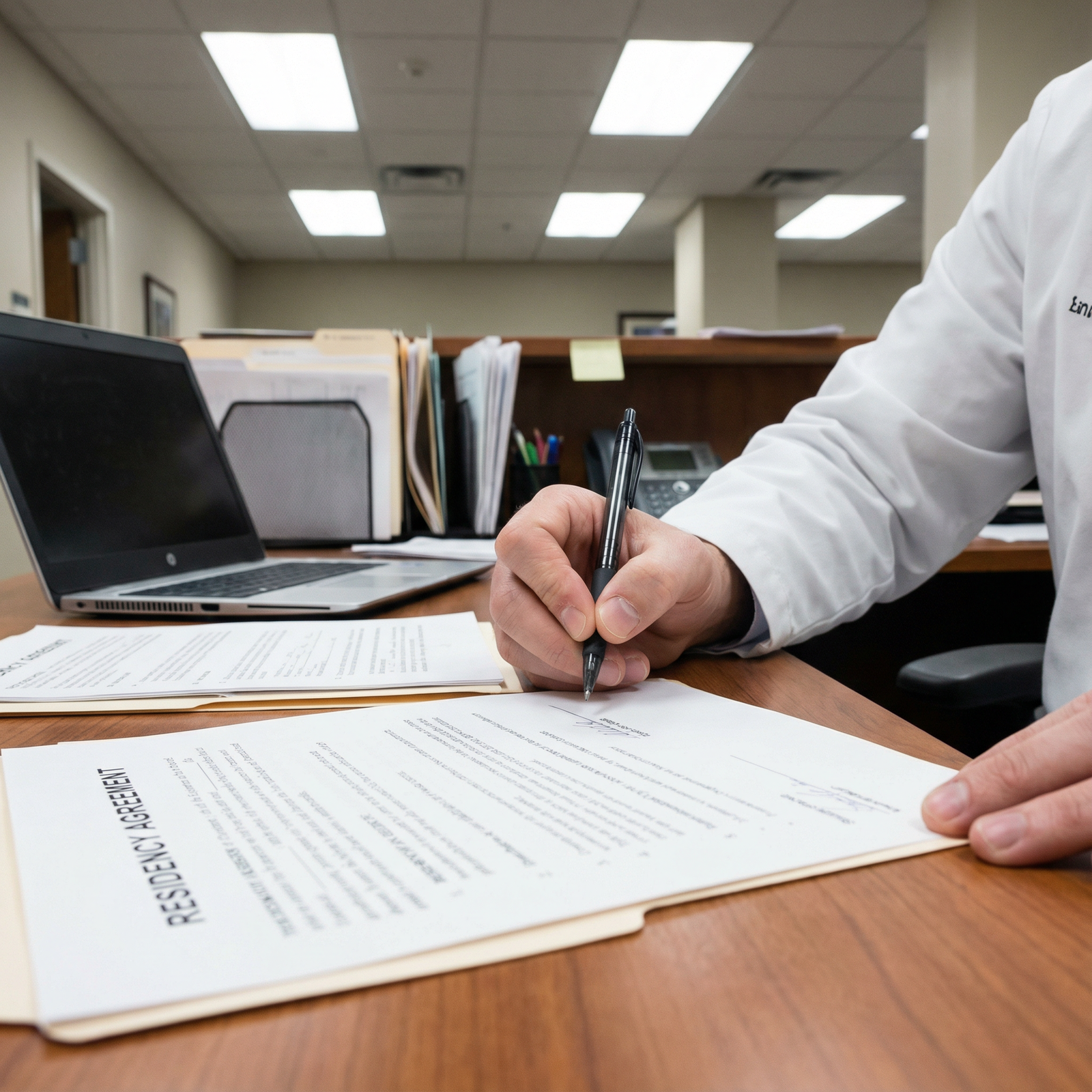
The NRMP Match is one of the most high‑stakes transitions in medical education. It determines where you will train, who will mentor you, and how your career will begin. Yet many applicants focus only on ERAS and interviews, without fully understanding their responsibilities in the NRMP Match process itself.
This guide breaks down what you are required and expected to do as an applicant—ethically, professionally, and procedurally—so you can navigate the Match Process confidently and avoid unintentional violations that can jeopardize your residency application.
Understanding the NRMP Match Process and Your Role
The National Resident Matching Program (NRMP) manages the Match Process that pairs residency applicants with graduate medical education (GME) programs. While ERAS handles most application logistics, the NRMP governs the actual matching and enforces rules that protect both applicants and programs.
How the NRMP Match Works in Practice
At a high level, here’s how the NRMP Match Process unfolds:
Application Submission (via ERAS or other services)
- You submit applications, personal statements, letters of recommendation, and other materials.
- Medical schools verify your credentials and often upload key documents.
Interview Season
- Programs review applications and invite selected candidates for interviews.
- Applicants attend interviews (in-person or virtual), meet residents and faculty, and learn about each program’s culture, curriculum, and expectations.
Ranking Phase
- After interviews, programs create a Rank Order List (ROL) of applicants in their preferred order.
- Applicants create their own ROL of programs, ordered from most to least preferred.
- These lists are submitted through the NRMP’s secure system.
The Match Algorithm
- The NRMP uses a sophisticated, applicant-proposing algorithm to match applicants and programs based on both sides’ preferences.
- The algorithm is designed to favor the applicant’s preferences when possible, within the constraints of program quotas.
Match Week and Match Day
- Early in Match Week, you learn whether you are matched or unmatched.
- Unmatched or partially matched applicants may participate in the Supplemental Offer and Acceptance Program (SOAP).
- On Match Day, matched applicants receive their specific program assignment.
Throughout this process, you have specific responsibilities—not only to optimize your chances of matching, but also to remain in compliance with NRMP policies and maintain professionalism.
Core Responsibilities Before and During Application Submission
Familiarize Yourself Thoroughly with NRMP Policies
Your first responsibility in the NRMP Match is to understand the rules governing it. Ignorance of NRMP policies is not a defense if a violation occurs.
Key steps:
Read the NRMP Applicant Agreement and Handbook
- Review eligibility, participation rules, timelines, and consequences of breach.
- Understand definitions such as “binding commitment,” “waiver,” and “reversion.”
Know which Match you are entering
- Main Residency Match (most categorical and preliminary positions)
- Fellowship Matches (for subspecialty fellowships)
Each has its own calendar and sometimes additional specialty-specific rules.
Stay updated on annual rule changes
- NRMP occasionally updates policies—such as rules around communication, second looks, or couples matching.
- Check NRMP and specialty organization updates early in the cycle.
By doing this upfront, you reduce the risk of accidental violations and can plan your strategy around what is allowed rather than hearsay.
Respecting Match and ERAS Timelines
Timeliness is a fundamental responsibility in the Residency Application and Match Process.
Actionable steps:
Create a master timeline
- Include: ERAS opening, application submission date, MSPE release, USMLE/COMLEX score reporting, NRMP registration deadline, ROL certification deadline, and Match Week.
- Add specialty-specific milestones (e.g., early application expectations for competitive specialties).
Start early and stagger key tasks
- Draft personal statements 3–4 months before ERAS opens.
- Request letters of recommendation at least 4–8 weeks before you want to submit.
- Confirm that all transcripts, exam scores, and evaluations will be ready.
Monitor application completeness
- Log into ERAS regularly to confirm that letters are uploaded, scores are reported, and all components are submitted.
- Don’t wait until the last day to certify your rank list; technical issues on deadline day are your responsibility.
Failing to meet deadlines can result in fewer interview invitations, incomplete applications, or even inability to participate in the NRMP Match.

Strengthening Your Application: Your Professional Obligations
Crafting an Accurate and Compelling Curriculum Vitae (CV)
Your CV is both a marketing tool and a legal document. You are responsible for ensuring that it is accurate, complete, and tailored to the Residency Application.
Best practices:
Be precise and honest
- Do not exaggerate roles, titles, or responsibilities.
- Clearly distinguish between ongoing and completed work (e.g., “manuscript in preparation,” “submitted,” “accepted”).
- Be prepared to discuss anything listed during interviews.
Highlight experiences relevant to your target specialty
- Clinical electives, sub-internships, and away rotations in the specialty
- Research aligned with your field (even if not yet published)
- Leadership roles, quality improvement projects, teaching experiences
Tailor strategically
- For dual applicants (e.g., Internal Medicine and Neurology), adjust emphasis in CV and personal statement to align with the specialty.
- Keep a master CV, then create specialty-focused versions emphasizing certain experiences.
Inaccuracies or misrepresentation on your CV are not just unprofessional—they can be considered Match violations if discovered later.
Securing Strong Letters of Recommendation Responsibly
Letters of recommendation (LoRs) are a critical part of your Residency Application, and you are responsible for managing this process ethically and efficiently.
Key responsibilities:
Choose appropriate letter writers
- Faculty who observed your clinical performance directly.
- Ideally at least one in your intended specialty, plus potential department or program leadership letters (e.g., Chair’s letter where customary).
- Research mentors for research-heavy specialties or academic medicine goals.
Ask early and clearly
- Request letters 1–2 months before you need them.
- Provide your CV, personal statement draft, and a summary of your work together.
- State the specialties and programs you’re targeting.
Waive your right to view letters
- Programs tend to value confidential letters more.
- This fosters honest commentary and strengthens the credibility of your application.
You must not write your own recommendation letter or edit letters on behalf of an author unless this is explicitly allowed and transparently acknowledged (which is uncommon and often discouraged). Misrepresenting authorship constitutes serious ethical misconduct.
Interview Preparation and Professional Conduct
Preparing Thoughtfully for Residency Interviews
Interview Preparation is not just about answering common questions; it’s about demonstrating professionalism, insight, and alignment with each program.
Your responsibilities include:
Researching each program thoroughly
- Curriculum structure (e.g., 4+1, night float, elective time).
- Patient population and clinical sites.
- Scholarly opportunities, fellowship outcomes, and resident wellness initiatives.
- Any program-specific pathways (e.g., global health, clinician-educator tracks).
Preparing structured talking points
- 2–3 patient care stories that highlight communication, teamwork, ethics, or resilience.
- 1–2 examples of leadership or QI involvement.
- Clear reasons you are interested in that specialty and that specific program.
Practicing delivery
- Conduct mock interviews with advisors, faculty, or peers.
- Prepare for behavioral questions (“Tell me about a time…”), ethical dilemmas, and red-flag discussions (e.g., exam failures, gaps).
Professionalism Before, During, and After Interviews
The NRMP Match Process expects applicants to uphold high standards of professionalism at all times.
Key behavior expectations:
Communication etiquette
- Respond promptly to interview invitations or scheduling emails.
- Cancel or reschedule interviews as early as possible if needed—late cancellations without explanation can damage your reputation.
- Use professional language and tone in all emails and messages.
Virtual and in-person decorum
- Dress appropriately (business formal is usually safest).
- Be punctual and prepared for technical issues in virtual interviews.
- Treat everyone—from coordinators to residents to faculty—with respect.
Post-interview communication within NRMP rules
- You may send thank-you emails, but they are not required and rarely decisive.
- Do not make statements that could be interpreted as binding commitments (e.g., “I will rank you #1”)—and be cautious interpreting such statements from programs.
- Be honest; misleading programs about your ranking intentions is unprofessional and can border on Match policy concerns if it leads to coercive behavior.
Programs are also bound by NRMP communication rules (e.g., they cannot require you to disclose rank intentions), but you are responsible for recognizing and avoiding inappropriate commitments.
Building and Submitting Your Rank Order List Responsibly
Your Rank Order List (ROL) is one of the most consequential components of the Match Process. You have a responsibility to create and submit it thoughtfully, independently, and honestly.
How to Strategically—and Ethically—Rank Programs
Your ROL should always reflect your genuine preferences, not what you think programs want or what your peers are doing.
Core principles:
Rank in true order of preference
- The algorithm is applicant-proposing, meaning it favors your ranking.
- Do not lower a program because you think you are “not competitive enough”—if a program ranked you high enough, the algorithm will match you there.
Only rank programs you would accept
- A Match result is a binding commitment.
- If you cannot realistically imagine training somewhere due to geography, program structure, or personal reasons, do not rank that program.
Use enough ranks to maximize your chances
- Most specialties show higher match rates for applicants with longer rank lists.
- Include a reasonable spread of program competitiveness, especially in more competitive specialties.
Consulting Advisors and Using Data Wisely
You are responsible for seeking and integrating data and guidance into your ROL decisions.
Consider:
Discussing your list with trusted advisors
- Clerkship directors
- Specialty advisors
- Program directors or deans
They can give perspective on your competitiveness and the realism of your list.
Reviewing objective data
- NRMP’s “Charting Outcomes in the Match” and specialty-specific match data.
- Program fill rates, typical applicant profiles, and geographic match trends.
However, do not allow anyone to submit your ROL for you. You must personally review and certify your list in the NRMP system, and you are ultimately responsible for its content.
Understanding the Match Algorithm and Its Implications
While you do not need to master every mathematical detail of the Match Process, you should understand how it affects your strategy:
- The algorithm starts from your first-choice program and works downward.
- If your first-choice program also ranks you high enough and has available positions, you match there.
- If not, the algorithm proceeds to your next choice, and so on.
Key takeaway:
Your best strategy is always to rank programs in true preference order. “Gaming” the system by sequencing perceived “safety” or “reach” programs out of order usually hurts your chances.
Contingency Planning: SOAP and Unmatched Outcomes
Even strong candidates can go unmatched due to specialty competitiveness, geographic constraints, or rank list strategy. You have a responsibility to prepare for this possibility without assuming failure.
Understanding and Preparing for SOAP
The Supplemental Offer and Acceptance Program (SOAP) allows eligible unmatched or partially matched applicants to apply quickly to unfilled positions during Match Week.
Your responsibilities regarding SOAP:
Know your eligibility
- You must be registered for the NRMP Match and be unmatched or partially matched to participate.
- Your medical school or dean’s office will often guide you through the process.
Prepare in advance
- Have a generic but adaptable personal statement ready for alternative specialties or broader program types.
- Maintain an updated CV that can be quickly tailored.
- Discuss possible “Plan B” specialties or locations with advisors before Match Week.
Act decisively but thoughtfully
- During SOAP, timelines are compressed (hours, not weeks).
- You must respond quickly to offers and make decisions with limited time.
- Remain professional in all communication; this is still part of the formal Match Process.
Long-Term Options If You Do Not Match
If you do not match, it is important to remember that many physicians eventually succeed after one or more application cycles.
Potential next steps:
Reassessing your application
- Identify weaknesses: exam scores, limited clinical exposure, few interviews, problematic geographic constraints, or overly narrow specialty choices.
- Work with faculty to develop a remediation or strengthening plan.
Pursuing interim opportunities
- Research positions
- Clinical research fellowships or observerships
- Additional clinical electives (especially for IMGs)
- Public health or quality improvement roles
Strategic reapplication
- Broaden specialty or geographic targets.
- Strengthen letters, clinical experiences, and/or exam scores where possible.
Your responsibility is to approach an unmatched outcome with professionalism, reflection, and a plan—not to disappear or abandon communication with your school or advisors.
Ethics, Compliance, and Professional Integrity in the NRMP Match
The NRMP Match relies on mutual trust, clear rules, and enforcement. As an applicant, you are bound by the NRMP Match Participation Agreement, which has the force of a contract.
Common NRMP Policy Areas You Must Understand
Binding Nature of the Match
- If you match, you are expected to attend that program for at least one year, barring exceptional circumstances and NRMP-approved waivers.
- Backing out without a waiver can result in NRMP sanctions, including being barred from future Matches.
Prohibition of Prematch Agreements (in NRMP-participating positions)
- Programs cannot require or offer contracts outside the Match for positions that are part of the NRMP Match.
- You should not enter into any side agreement that circumvents the Match.
Confidentiality of Rank Order Lists
- You must not share or publicize the content of your ROL.
- Avoid discussions that pressure others to reveal their lists or influence their ranking decisions inappropriately.
Avoiding Match Violations and Professional Pitfalls
Actions that can lead to serious consequences include:
- Misrepresenting your credentials, test scores, or training history.
- Failing to honor a Match commitment without obtaining a formal waiver.
- Signing or soliciting side contracts that undermine the Match.
- Encouraging or participating in coercive behavior around ranking or post-interview communication.
Violations can result in penalties such as being barred from NRMP Matches for a period of time, being labeled as having a violation in NRMP records, and potential professional repercussions with licensing bodies.
Your responsibility is to maintain integrity throughout the process—not just to secure a position, but to uphold the standards of the profession you are entering.

FAQs: Responsibilities in the NRMP Match Process
1. What are my key responsibilities as an NRMP Match applicant?
You are responsible for:
- Registering with the NRMP and agreeing to the Match Participation Agreement.
- Understanding NRMP rules, deadlines, and eligibility requirements.
- Submitting accurate, honest application materials through ERAS or similar platforms.
- Preparing professionally for interviews and communicating respectfully with programs.
- Creating and certifying a Rank Order List that reflects your true preferences.
- Honoring the binding commitment of the Match if you are matched.
- Participating responsibly in SOAP or reapplication if you do not match.
2. How does understanding the Match algorithm affect my responsibilities?
Knowing that the algorithm is applicant-proposing shapes your obligations:
- You must rank programs in true preference order; “gaming” the system usually works against you.
- You should only rank programs you are actually willing to attend, since a match is binding.
- You should avoid letting fear of rejection push preferred programs lower on your list—let the algorithm and program rank lists handle competitiveness.
Your responsibility is to create an honest rank list and trust the process, rather than attempt to predict each program’s behavior.
3. Am I allowed to tell a program that I will rank them #1, or ask them if they will rank me highly?
NRMP policy does not forbid expressions of interest, but both applicants and programs must avoid coercive or misleading communication.
In practice:
- You should not make promises you are not prepared to keep.
- Programs cannot require you to reveal your rank list or ranking intentions.
- You should not pressure programs to disclose how they will rank you.
- Any communication about ranking should be honest, voluntary, and non-binding.
Your primary responsibility is to maintain integrity and avoid statements that could mislead programs or compromise the fairness of the Match.
4. What should I do if my circumstances change after I submit my Rank Order List?
If major personal, health, or family circumstances change after your ROL is certified:
- Update your medical school, advisor, or dean’s office as soon as possible.
- If you match and cannot reasonably fulfill your commitment, you may request a waiver from the NRMP.
- Do not contact programs directly to “back out” of a Match; use the NRMP waiver process.
You are responsible for handling these situations through the appropriate formal channels, not informal agreements.
5. What are my responsibilities if I participate in SOAP?
If you are SOAP-eligible and enter the process, you must:
- Follow SOAP rules on communication (you cannot contact programs directly until permitted).
- Submit targeted but honest applications to unfilled positions.
- Respond promptly to interview requests and offers.
- Accept offers only if you are prepared to commit to that position.
SOAP outcomes are binding for that training year, and your conduct during SOAP is held to the same professional and NRMP standards as the main Match.
By understanding and embracing your responsibilities in the NRMP Match Process—from initial application to final Match Day—you not only improve your chances of a successful Residency Application, but also demonstrate the professionalism expected of a future physician.