
The first bad semester in a post-bacc doesn’t break you—pretending it didn’t happen does.
Let me just say the thing you’re probably too scared to say out loud: “What if I blow my first post-bacc semester and ruin everything?” You start strong, think this is going to be your glorious reinvention, and then… C+ in orgo, B- in bio, you bomb a midterm, and suddenly you’re on Reddit at 2 a.m. typing “did I destroy my chances” like it’s a ritual.
You’re not crazy for worrying. Post-baccs are often the “last shot” crowd. Career changers, reinvention applicants, people med schools have already side-eyed because of a rough undergrad. So one bad semester feels like proof of every fear: maybe they were right, maybe you can’t handle med school, maybe you’re not smart enough.
Here’s the uncomfortable truth: a rough first semester is survivable. A rough pattern is not. Your job now is to make damn sure this is a blip, not a trend—and to have a plan to explain it like an adult later.
Let’s walk through the damage control step by step, because you actually have more options than your panic is letting you see.
(See also: Worried I Picked the Wrong Post-Bacc: Can I Recover My Application? for more on recovery strategies.)
Step 1: Stop guessing—get brutally clear on the actual damage
You can’t fix what you won’t look at.
Don’t just stare at the letter grades and spiral. Pull up your transcript and do the grown-up thing: figure out exactly what happened on paper.
Ask yourself:
- What’s my current post-bacc GPA right now (science and overall)?
- How many total credits is that based on?
- What would I need next semester and beyond to get where I want?
If you started with 8–12 credits and ended up with, say, a 2.9–3.1 for that term, that’s not the end of anything. It’s not ideal, sure. But it’s not a fatal blow if it becomes your low point, not your norm.
The students who get into trouble are the ones who say “I’ll just do better next time” without any math, then find out two years later that a 3.0 → 3.6 jump is nearly impossible with limited credits.
Pull out a GPA calculator and play with it. If you’re at 3.0 after 12 credits, what happens if you get straight A’s in your next 12? (Spoiler: it climbs a lot faster than your brain is letting you believe right now.) The first semester is a small denominator. That’s a blessing for reinvention stories.
What med schools hate isn’t one rocky term. It’s a flat or zigzagging line with no clear upward trend. Your job now is to build a story of “I adjusted, I learned, and then I crushed it.”
Step 2: Figure out why you struggled—not the pretty version, the real one
Every committee member has seen the vague line: “I struggled initially due to the transition but then adapted.” It’s meaningless if you can’t back it up with specifics.
So, be specific with yourself first.
What actually went wrong?
- Did you overload your first term because you were trying to “prove” you’re ready for med school? (Four hardcore sciences with labs plus work is a great way to nuke your GPA.)
- Did you underestimate how different this would be from undergrad? Memorized your way through before, now critical thinking wrecked you?
- Were you working too many hours to survive financially?
- Was there something heavier—mental health, family illness, burnout, an awful commute, taking care of kids?
I’ve watched people repeat the same “I’ll just try harder” mistake 2–3 semesters in a row. No change in study methods, no change in schedule, just more anxiety and more coffee. That’s how you dig a hole deep enough that an “upward trend” becomes mathematically impossible.
Write out a blunt list:
“What I did” vs. “What the result was.”
Example:
- Took 14 credits (Gen Chem I + lab, Bio I + lab, stats, volunteer shift).
- Studied by rereading notes and rewatching lectures.
- Started homework the night before.
- Sleep: 4–5 hours on exam weeks.
Result: panic during exams, barely passing chem, B- in bio, constant exhaustion.
There’s your root cause. Not “I’m not smart enough.” It’s that your process and load were misaligned with your reality.
Step 3: Talk to someone who isn’t just there to “be supportive”
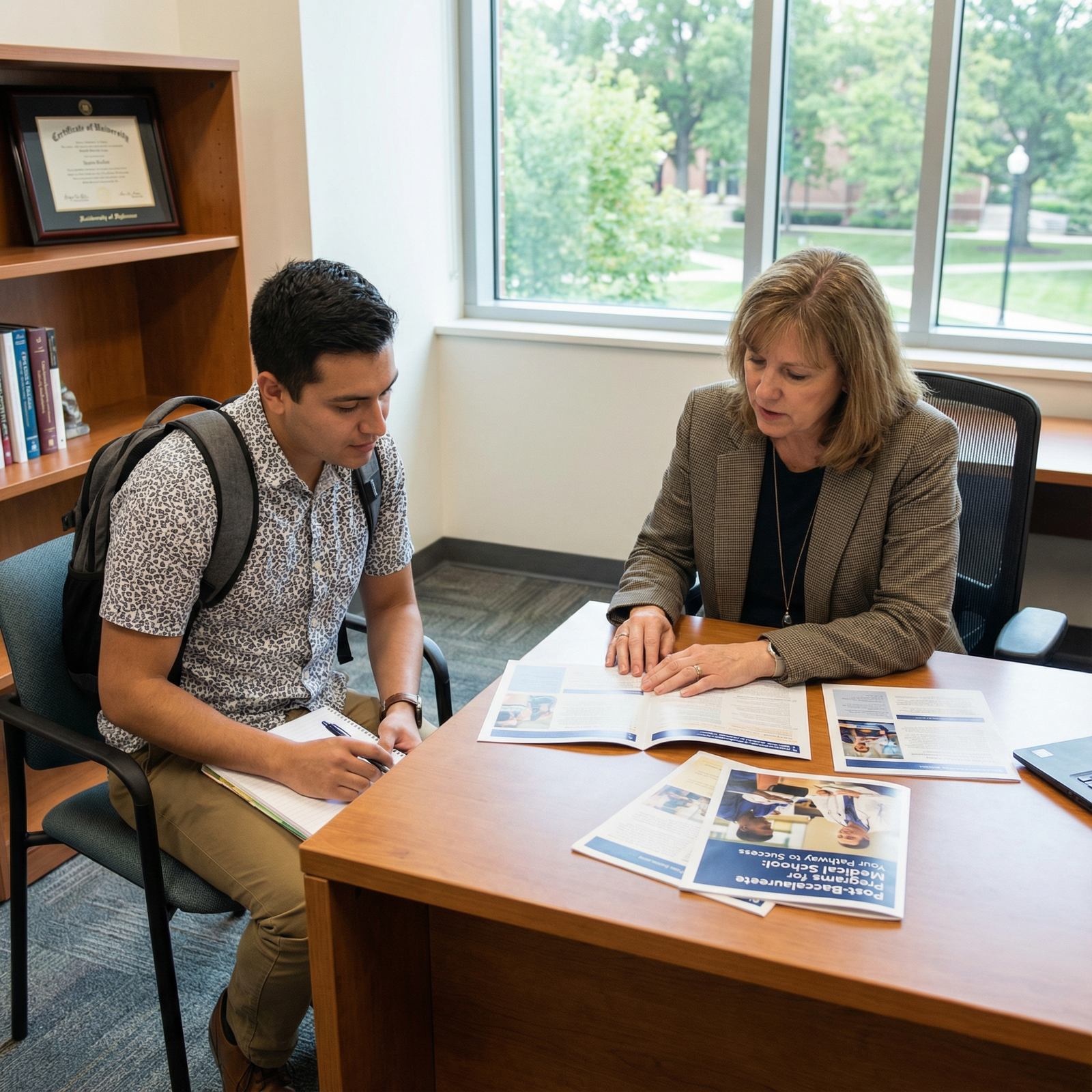
You need one or two reality-check humans right now: an advisor who’s seen post-baccs struggle and pull out of it, and maybe one professor you didn’t completely tank with.
Go to office hours. Yes, even if you’re embarrassed.
Say something like:
“I had a rough transition this term. I’m serious about medical school, and I need to understand exactly where I went wrong and what would look different from your perspective next semester for you to see me as a strong student.”
Then shut up and listen.
You want concrete feedback, not “you’re smart, you’ll be fine.” Ask:
- Were my exam scores lower because of content gaps, time management, careless mistakes, or how I approached questions?
- Do my study habits seem mismatched to this course? What do your A students typically do differently?
- If you saw this one term on a transcript, but the rest showed strong performance, would this be survivable?
Most faculty know the unwritten rules better than advisors: which mistakes are common, which are fatal, what a realistic comeback looks like.
And yes, you might hear some stuff that stings. That’s fine. Better now than two years and tens of thousands of dollars later.
Step 4: Ruthlessly redesign your next semester before it starts
This is the part people skip. They just “try harder” with the same overloaded, chaotic setup.
You need to be strategic now, not performative.
If your first term was:
- Gen Chem I + lab
- Bio I + lab
- Physics I + lab
- Plus work, plus volunteering
…then yeah, of course you got crushed. That schedule breaks people who already know how to study.
Damage control means you do this differently:
- Cut something. That might mean fewer work hours, fewer simultaneous heavy sciences, less volunteering, or dropping the extra “nice-to-have” classes. Med schools won’t give you extra points for martyring your GPA with an insane load.
- Balance the semester. Don’t stack three weed-out courses plus labs in one term and then do “easy” stuff later. Spread the pain so you can actually breathe.
- Be honest about your bandwidth. If you have to work 20–30 hours to pay rent, you simply cannot carry the same course load as someone fully funded by their parents. That’s not weakness. That’s physics.
I’d rather see you with 8–10 credits of strong A-/A work next term than 14 of chaos capped at B-/C+. Committees notice the pattern more than the raw number of credits in each term.
Step 5: Completely change how you study—don’t just “try more”
If your method was:
- Watching recorded lectures at 1.5x speed
- Highlighting slides
- Doing the problem sets once
- Cramming the weekend before exams
…you weren’t “bad at science.” You were underprepared for the type of thinking med-school-adjacent classes require.
This has to change fast. Next semester, you need active, ruthless, structured studying.
Think:
- Pre-lecture preview. Skim the chapter or objectives so lecture isn’t your first exposure.
- Daily problem practice. Not “night before quiz” chaos. I mean doing practice problems most days, especially in chem and physics. Struggle early, not on exam day.
- Spaced repetition. Anki, whatever system you’ll actually use consistently. Don’t review content in giant desperate chunks.
- Exam-level practice. Too many students “feel good” from easy questions or passive review but never suffer through exam-like questions under time pressure.
And here’s the anxiety-lowering part: when students shift from passive to active studying, grades often jump noticeably in literally one semester. Your brain isn’t broken. It was just undertrained for this level.
Step 6: Consider whether to retake or just move on
Here’s where the worst-case thinking gets loud: “If I don’t retake, they’ll think I’m fine with mediocrity. If I do retake, they’ll think I’m a disaster. If I do nothing, I’m doomed.”
Slow down.
You do not need to retake every B or even every B-. Medical schools care way more about the overall arc than one slightly ugly grade. A C or lower in a core prerequisite is where retake territory starts to make sense.
Ask yourself:
- Did I actually learn the material, or was it a lucky C+ and I’m still lost? Because that will haunt you in later coursework and on the MCAT.
- Is this the foundation for more advanced classes? A shaky C in Gen Chem before Orgo is a red flag.
- Is retaking this realistic without destroying your timeline and bank account?
Sometimes the smartest “damage control” is: accept the blemish, crush everything else, and be ready to explain. Other times, it’s worth pausing and fixing the foundation.
There’s no one-size-fits-all answer here. But retakes should be strategic, not panic-driven.
Step 7: Start quietly building your explanation now
You know that terrifying interview question:
“I see here you struggled early in your post-bacc. Can you tell me what happened?”
Future you will either freeze and ramble, or calmly say something like:
“My first semester of post-bacc, I overcommitted. I was working 25 hours a week, taking three lab sciences, and I tried to use my old undergrad study habits in a much more rigorous environment. The result was a 3.0 term, which was below what I knew I was capable of.
I met with my professors, cut back work hours, changed my study methods from passive review to active problem-solving, and adjusted my course load. From that point forward, over the next five semesters, I earned a 3.7 in my science coursework including upper-level classes. That semester was a hard wake-up call, but it forced me to build the systems I’ll rely on in medical school.”
That’s what you’re building toward right now. Not perfection. A convincing story.
To make that story real, you need:
- Clear changes: “I reduced work hours from 25 to 10,” “I stopped taking three labs at once,” “I started weekly review instead of last-minute cramming.”
- Visible results: a strong upward trend. That part isn’t negotiable.
Committees don’t expect you to be flawless. They expect you to respond like a professional when things go sideways.
Step 8: Zoom out—one semester is a chapter, not the whole book
This sounds like empty comfort when you’re staring at the grades, but it’s true: I’ve seen people match into competitive residencies with transcripts that look worse than what you’re panicking about right now.
I’ve seen:
- A career-changer whose first post-bacc term was a 2.8 because she tried to do everything at once. She slowed down, fixed her study habits, and finished with several semesters of 3.7–3.8 science. She got into a solid MD school.
- A student who had a medical issue during their first term, ended with a couple of Cs, then came back and absolutely destroyed the next few terms—enough that the early mess looked like a fluke. They leaned into the explanation and it worked.
- People who took an extra year, spread out their courses, and ended up with a much cleaner trend line that was far more compelling than a rushed, messy one.
The absolute worst outcome from a bad first semester isn’t the grades themselves. It’s letting panic push you into more bad decisions—overloading, hiding, not asking for help, or quitting before the trend can improve.
You are not the sum total of your first post-bacc report card. You’re the pattern you build from here.
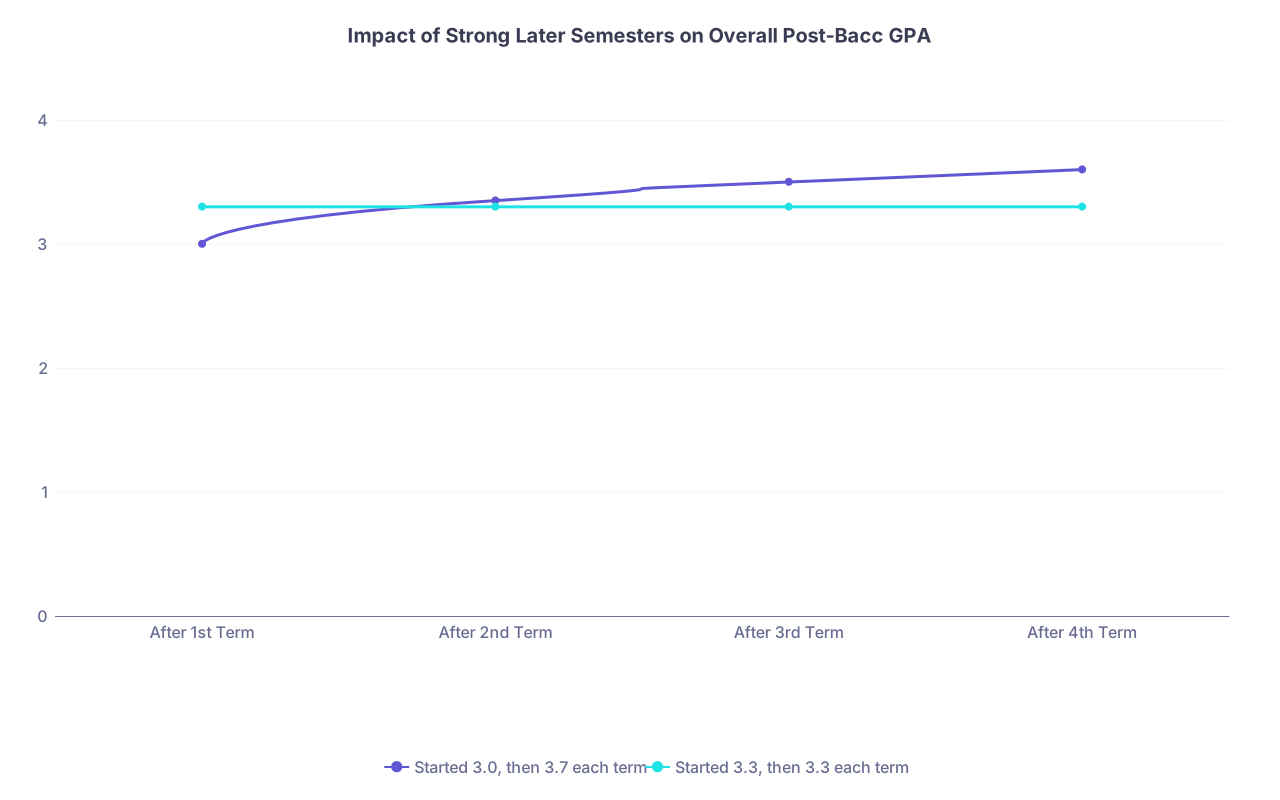
| Category | Started 3.0, then 3.7 each term | Started 3.3, then 3.3 each term |
|---|---|---|
| After 1st Term | 3 | 3.3 |
| After 2nd Term | 3.35 | 3.3 |
| After 3rd Term | 3.5 | 3.3 |
| After 4th Term | 3.6 | 3.3 |
The mental part nobody talks about
Let’s be honest: it’s not just the GPA that’s wrecking you. It’s the identity hit. You came into this post-bacc thinking, “This is my redemption arc. I’ll prove I’m capable.” Then your first real data point says the opposite.
That disconnect is brutal.
It’s really easy, from this place, to slip into all-or-nothing thinking:
- “If I couldn’t handle this, I’ll never make it through med school.”
- “Other post-bacc people are getting 4.0s; I’m clearly not cut out for this.”
- “One slip-up means admissions will toss my app in the trash.”
That voice in your head? It’s dramatic. And not very accurate.
Medical training is full of people who stumbled, recalibrated, and then did well. Residents who failed an exam once. Attendings who had to repeat a course. Nobody leads with those stories, but they exist everywhere.
The difference is: the ones who made it didn’t treat the stumble as a verdict. They treated it as data.
So if you’re lying awake doing mental math about how many A’s you need to “erase” this one term—take a breath. You don’t erase it. You outgrow it.

| Step | Description |
|---|---|
| Step 1 | Bad First Semester |
| Step 2 | Meet With Advisor & Professors |
| Step 3 | Adjust Course Load |
| Step 4 | Change Study Strategies |
| Step 5 | Stronger Second Semester |
| Step 6 | Compelling Upward Trend |
| Step 7 | Reassess Timeline or Backup Plans |
| Step 8 | Understand What Went Wrong |
| Step 9 | Sustained Improvement? |
Quick reality check: Are you actually “done” if you mess up this first term?
No. You’re not. You’re just out of the fantasy where reinvention is a straight, squeaky-clean 4.0 line.
You can still become a doctor if:
- This semester is the low point, not the start of a pattern.
- You take immediate, concrete steps to change how you schedule and study.
- You accept that your path might take a little longer or look a little different than the dream you had in your head.
You can’t ignore it and just hope med schools won’t notice. They will. But they’re also really good at seeing growth if you actually give them something to see.
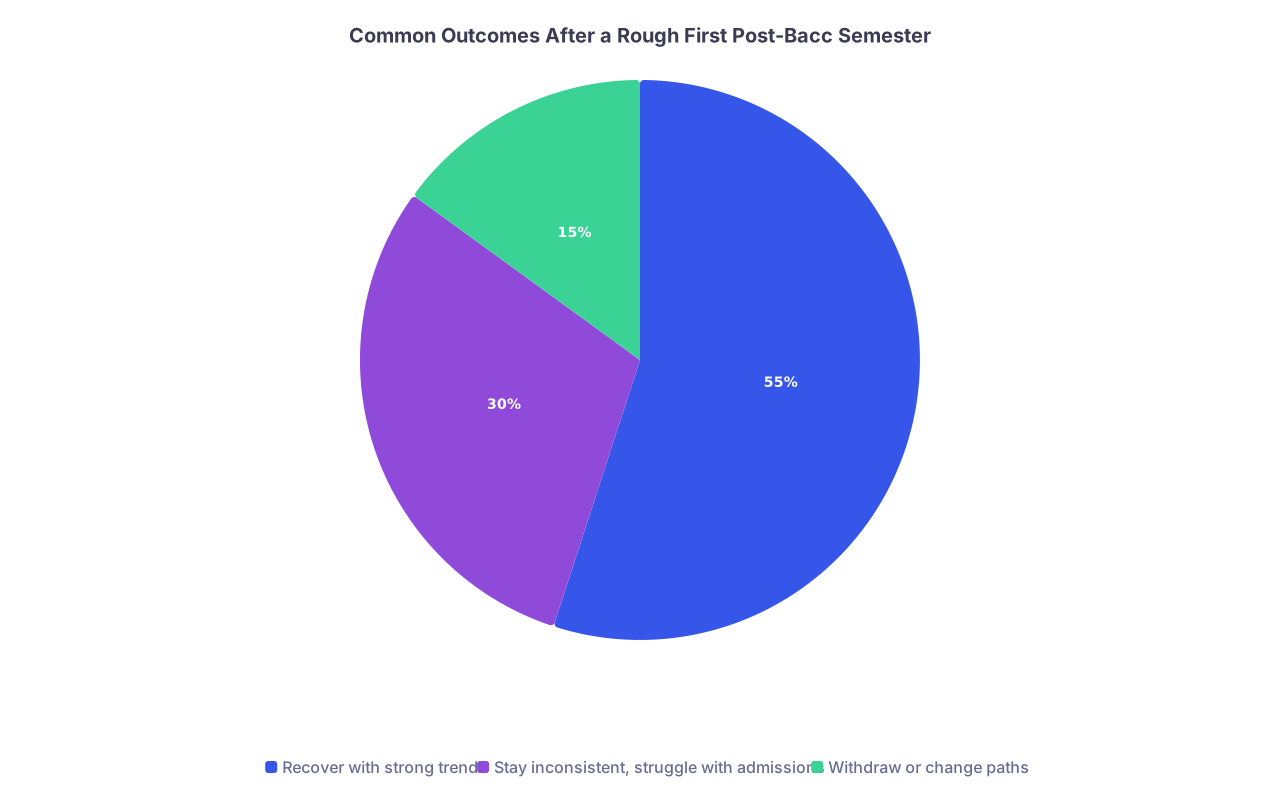
| Category | Value |
|---|---|
| Recover with strong trend | 55 |
| Stay inconsistent, struggle with admissions | 30 |
| Withdraw or change paths | 15 |
FAQ: Five questions you’re probably still freaking out about
1. Is a single bad post-bacc semester worse than my bad undergrad?
Not necessarily. Context matters. If your undergrad was weak and your post-bacc starts weak and never really lifts off, that’s a problem. But if undergrad was mediocre and your post-bacc shows a clear upward arc after this blip, committees will often care more about the recent, improved you. They want evidence that the version of you applying now is different from the one who struggled before. One rocky semester followed by consistent excellence is still a believable reinvention.
2. Should I delay applying to med school because of this?
Probably yes, if you were planning to apply right after finishing your post-bacc and this bad semester leaves you with too little time to build a strong trend. Applying with one good semester after a bad one is weak. Applying with two or three solid semesters after a bad one is much stronger. It’s better to apply one cycle later with a convincing story and clean data than rush in with “I promise I’ve changed” and only six months of proof.
3. Will DO schools be more forgiving than MD schools about this?
Often, yes. DO schools tend to be more open to reinvention applicants and can be more understanding about upward trends and nontraditional paths. That doesn’t mean you can be sloppy. You still need to show that the rough start was temporary and that you can succeed in hard science courses. But if your record ends up a little messier than you’d like, a strong DO list is absolutely a viable, respectable path to being a physician.
4. How much does the first post-bacc semester matter compared to the last ones?
The further you get from it, the less power it has—if your later semesters are clearly and consistently better. Committees are pattern-readers. If they see a bad first term followed by multiple terms of strong performance, they mentally tag that first term as “transition period” and move on. If your last semester is bad? That’s a much bigger red flag, because it looks recent and unresolved. So your mission now is to make sure your later semesters drown out this first one.
5. What if I do everything “right” from now on and still don’t hit a 3.7+ post-bacc GPA?
Then your path might change, but your life isn’t over. A lower-but-upward-trending GPA can still be competitive at some DO schools or less-selective MD programs, especially combined with a solid MCAT and strong clinical experience. If the numbers never quite land where you want, you also reevaluate: SMPs, other health careers, or a different combination of programs. But those are future decisions. Right now, your job isn’t to predict every possible outcome. It’s to make the next semester so much stronger that you actually have options.
Key takeaways:
- A rough first post-bacc semester isn’t a death sentence, but it is a loud warning—listen to it and change your approach immediately.
- Med schools care far more about your long-term trend and how you respond to setbacks than about one ugly term, as long as you build a clear, sustained upward trajectory.