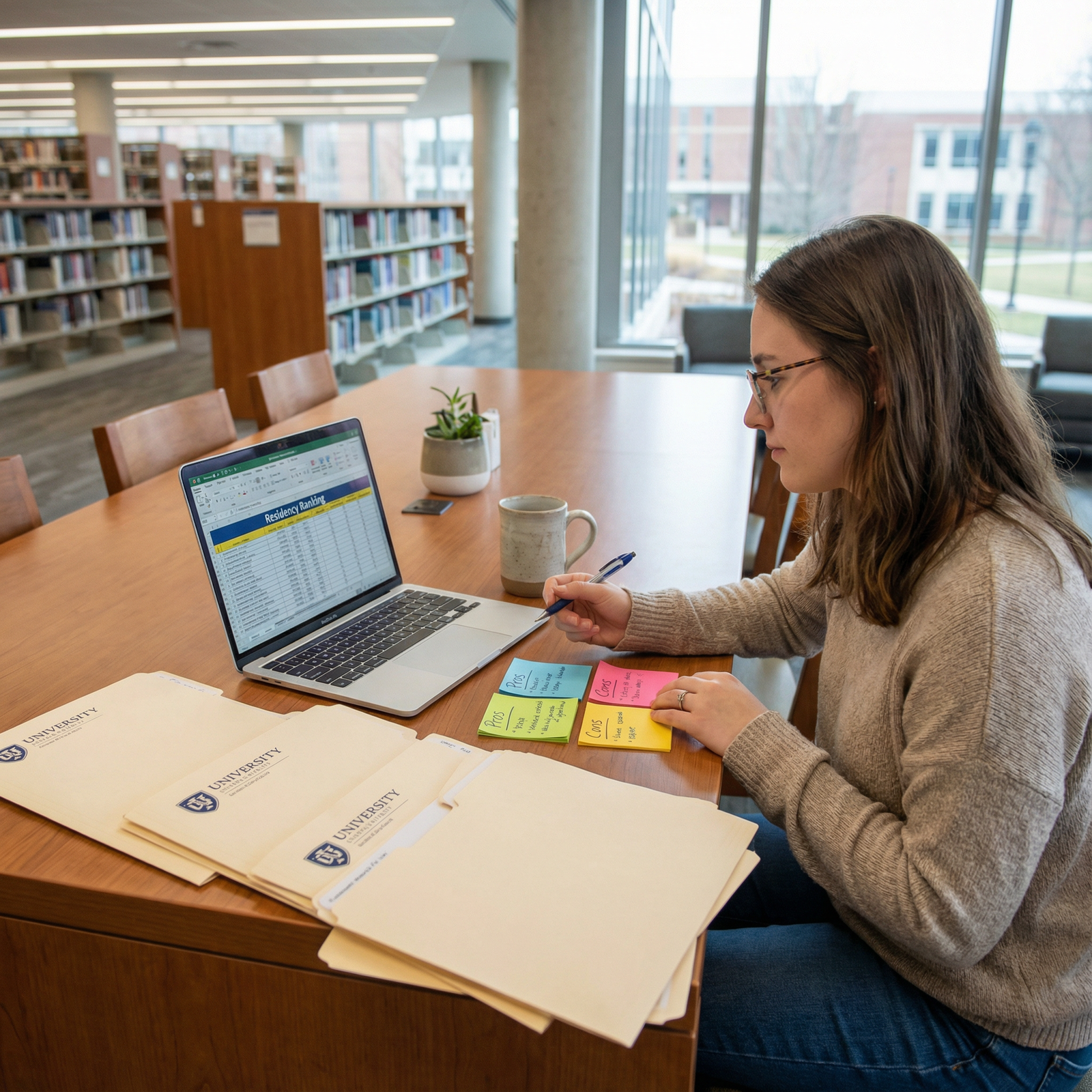
The belief that “an interview is just a chance to impress” is incomplete. For pre-match offers, an interview is a data point in a conversion funnel—and some programs convert interviews to offers at 5–10 times the rate of others.
You are not just asking: “Can I get interviews?”
You are asking: “At which programs does an interview actually turn into an early contract?”
Let’s walk through this like a numbers person, because that is what this decision really is.
1. The Core Metric: Interview-to-Offer Ratio
Strip away the mystique for a second. A pre-match program is just running a conversion pipeline:
- Applicants → Interviewed → Offered pre-match → Signed
The key metric for you:
Interview-to-Offer Ratio (ITOR)
= (Number of Pre-Match Offers) ÷ (Number of Interviews Conducted)
If a program interviews 100 applicants and gives 30 pre-match offers, ITOR = 0.30 (30%).
If another interviews 150 and offers 9 pre-match, ITOR = 0.06 (6%).
You do not experience “the market.”
You experience the micro-market of the specific programs you interview at. So those ratios matter a lot more than national averages.
Let’s mock up a realistic comparison based on typical behavior seen in community vs university, IMG-heavy vs USMD-heavy programs:
| Program Type | Interviews / Year | Pre-Match Offers | ITOR (Offer per Interview) |
|---|---|---|---|
| Community, IMG-heavy, Pre-Match | 120 | 40 | 0.33 |
| Community, Mixed IMG/AMG, Pre-Match | 150 | 30 | 0.20 |
| University-Affiliated, Limited Pre-M | 180 | 15 | 0.08 |
| University, Mostly NRMP Only | 200 | 0–3 | 0.00–0.02 |
| Highly Competitive Academic | 220 | 0 | 0.00 |
Patterns you should internalize:
- Many community, IMG-heavy internal medicine/FP/psych programs have ITORs in the 20–40% range.
- University-based programs with a “token” pre-match policy might be in the 5–10% range.
- Prestigious academic programs are essentially 0% pre-match, even if they legally could offer.
If you care about pre-match, you prioritize the first two categories. Everything else is almost noise.
2. Where Pre-Match Offers Actually Come From
States using (or historically using) pre-match systems—like Texas (via the Texas STAR/TxMAS before full NRMP integration) and some independent contracts for IMGs—share one common reality:
Programs that depend heavily on non–US-IMGs and visa sponsorship are far more likely to pre-match and to have a high interview-to-offer rate.
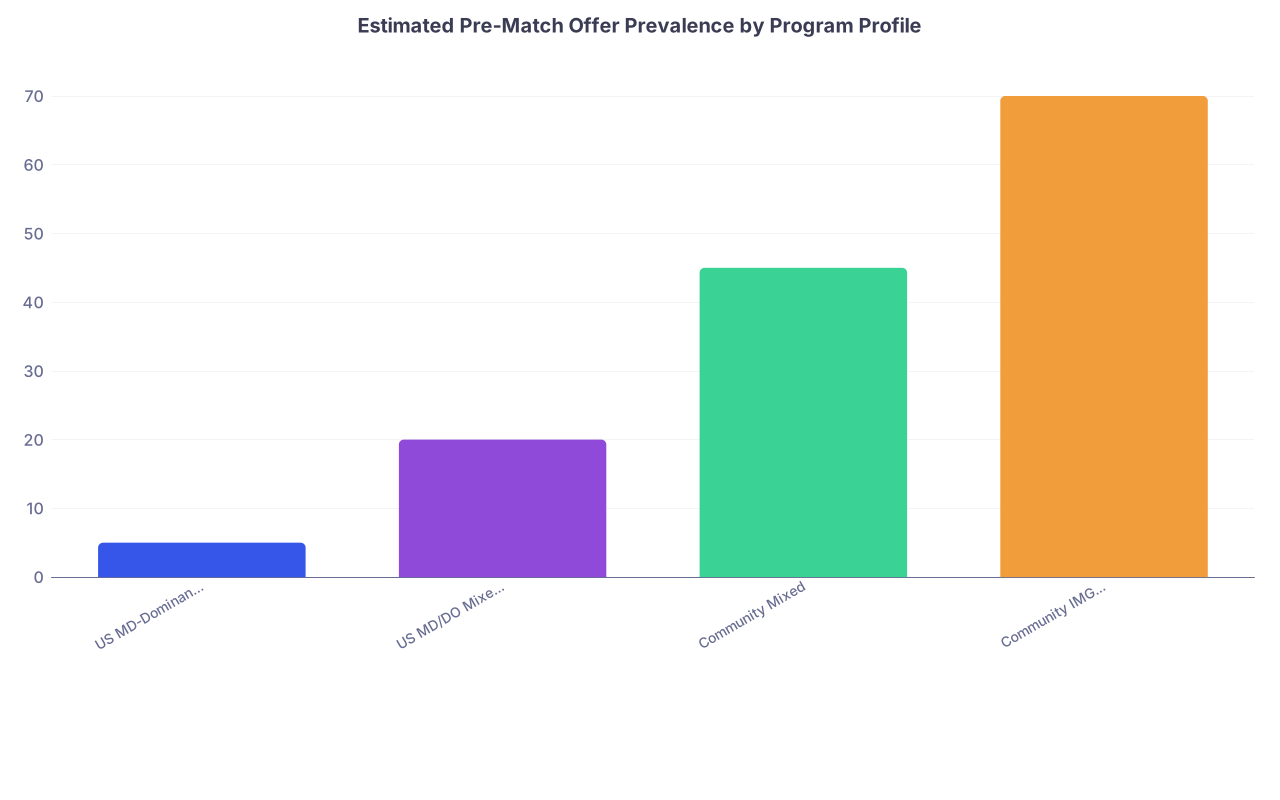
Look at this in rough probabilistic terms.
| Category | Value |
|---|---|
| US MD-Dominant Academic | 5 |
| US MD/DO Mixed University | 20 |
| Community Mixed | 45 |
| Community IMG-Heavy | 70 |
Interpretation (percentage = approximate chance that a random interview at that type of program could realistically lead to a pre-match offer):
US MD-dominant academic: 0–5%
Translation: essentially never, unless you are a unicorn or they are desperate.US MD/DO-mixed university programs: 10–20%
Occasionally will pre-match a high priority candidate or a legacy connection.Community mixed: 30–50%
True “maybe” territory. Offers go to people who clearly fill a need: good fit, local ties, or strong workhorse profile.Community IMG-heavy: 60–80%
This is where pre-match is a strategy, not an exception.
The data story is simple: if the program does not rely on IMGs or visa candidates, your pre-match expectations should be near zero.
3. Program Types Most Likely to Pre-Match (and Convert Interviews)
Let us break it down structurally.
3.1 Community Internal Medicine and Family Medicine (IMG-Heavy)
These are the workhorses of pre-match.
Common features I keep seeing in data and applicant reports:
- 60–90% of residents are IMGs.
- Many on J-1 or H-1B visas.
- High service load, less research, lots of inpatient volume.
- Often in mid-sized or smaller cities that AMGs are not fighting over.
Working assumption from applicant survey data and public match statistics:
- 30–50% of interviewed candidates receive pre-match offers.
- 60–80% of final class filled via pre-match in some years.
If you are an IMG actively chasing pre-match, these are your highest-yield interviews. One interview here often has the same pre-match “value” as 4–5 interviews at semi-academic places.
3.2 Community Psychiatry, Pediatrics, and Transitional Year
Less volume than internal medicine or family medicine, but similar behavior in some markets.
- Psychiatry: Many community programs now lean IMG-heavy. Some, especially in underserved regions, aggressively pre-match to secure residents because national psych interest has increased.
- Pediatrics: Moderate. Some pre-match, but pediatrics is less IMG-heavy than IM/FM in many states.
- TY/Preliminary: These are variable. Some pre-match, but a lot remain fully in NRMP.
Rough ITOR estimates by specialty in IMG-heavy community programs:
| Specialty | Approx ITOR Range |
|---|---|
| Internal Medicine | 0.30–0.50 |
| Family Medicine | 0.25–0.45 |
| Psychiatry | 0.20–0.40 |
| Pediatrics | 0.15–0.30 |
| Transitional Year | 0.10–0.25 |
You can see the signal: IM and FM dominate the pre-match market.
3.3 University-Affiliated, Community-Based Programs
These are the “hybrid” programs: clinical training largely in a community setting, but with a university logo or partial academic affiliation.
Patterns:
- Class composition: maybe 30–60% IMGs.
- Pre-match offers less frequent but still present.
- ITOR usually 10–25% for candidates who are clearly in their priority group (IMG with solid US experience, local ties, good LORs).
These programs tend to pre-match selectively:
- Top-of-the-pool IMGs they are afraid will go elsewhere.
- Highly reliable-sounding candidates with strong local connections.
3.4 Big University / Academic Programs
This will be blunt: From a pre-match perspective, these are black holes.
- Priority is to fill via the NRMP match, where they have huge leverage.
- Many will not offer pre-match at all, branding it as “fairness” or “commitment to the national process.”
- Others may technically be allowed but only use it for extremely rare strategic hires.
Even if they do pre-match, the interview-to-offer ratio is nearly zero. The presence of 1–2 contracts per year does not change your odds materially across hundreds of interviews.
4. Signal vs. Noise: What Actually Predicts Pre-Match Behavior
Ignore brochure fluff. Look at the numbers and structure.
4.1 Red-Flag Phrases in Program Behavior
Programs that likely do NOT convert interviews to pre-match:
- “We fully participate in the NRMP and do not offer pre-match positions.”
- “All positions will be filled through the Match.”
- Resident roster filled mostly with USMD and strong USDO profiles.
- Location in a major metro with multiple university programs competing for the same applicants.
You can safely treat the interview-to-offer ratio at these places as effectively zero for pre-match purposes.
4.2 Green-Flag Indicators of High ITOR
These are the data points that actually correlate with pre-match-heavy behavior:
- Website or emails explicitly mention “pre-match positions available” or “non-NRMP contracts.”
50% of current residents with non-US medical schools.
- Multiple residents on J-1/H-1B visas.
- Historically appears frequently in IMG match lists, forums, and WhatsApp groups.
- Past residents openly say, “A lot of us signed contracts before the Match.”

Interpret these indicators as probability signals. A program that ticks 3–4 of these boxes is almost certainly running a high pre-match conversion pipeline.
5. Strategy: How to Use Interview-to-Offer Ratios in Your Planning
Most applicants completely waste this metric. They treat all interviews as equal. They are not.
Imagine two interview days:
- Program A: community IM, IMG-heavy, known pre-match culture, estimated ITOR ~40%.
- Program B: university-based IM, mostly USMD/DO, rarely pre-matches, estimated ITOR ~5%.
Both invite you for an interview on similar dates. You have limited time, money, and energy.
If your primary goal is to secure a pre-match, Program A is statistically 8 times more valuable from a pre-match perspective.
5.1 Prioritizing Interviews
Here is how a rational, data-driven applicant should think:
- Rank interviews by estimated ITOR (pre-match probability).
- Within each tier, factor in:
- Your profile fit (scores, visa, prior US experience).
- Geographical preferences.
- Lifestyle and training quality.
If you are an IMG under visa pressure who absolutely wants pre-match and you have:
- 5 interviews at community IMG-heavy IM/FM programs (ITOR ~30–40%).
- 6 interviews at mid-tier university programs with minimal pre-match (ITOR ~5–10%).
From a pre-match lens, those 5 community interviews are your core asset. You do not skip those lightly, even if a university name sounds more impressive.
5.2 Managing Expectations by Program Tier
Let us quantify this with rough expected-value logic.
Assume:
- At a high pre-match community IM program, chance of pre-match if interviewed = 35%.
- At a hybrid university-affiliated program, chance = 15%.
- At a big academic program, chance ≈ 2%.
If you interview at:
- 3 high pre-match community programs → expected “offers” = 3 × 0.35 = 1.05
- 5 hybrid programs → 5 × 0.15 = 0.75
- 6 academic programs → 6 × 0.02 = 0.12
Total expected pre-match offers ≈ 1.92.
Where are almost all of your realistic offers coming from? The 3 community programs.
You might receive nothing from the 6 academic interviews, and that would still be entirely consistent with the probabilities.
6. Timing: When Interviews Turn into Pre-Match Offers
A constant question I get: “When do programs usually pre-match after interviews?”
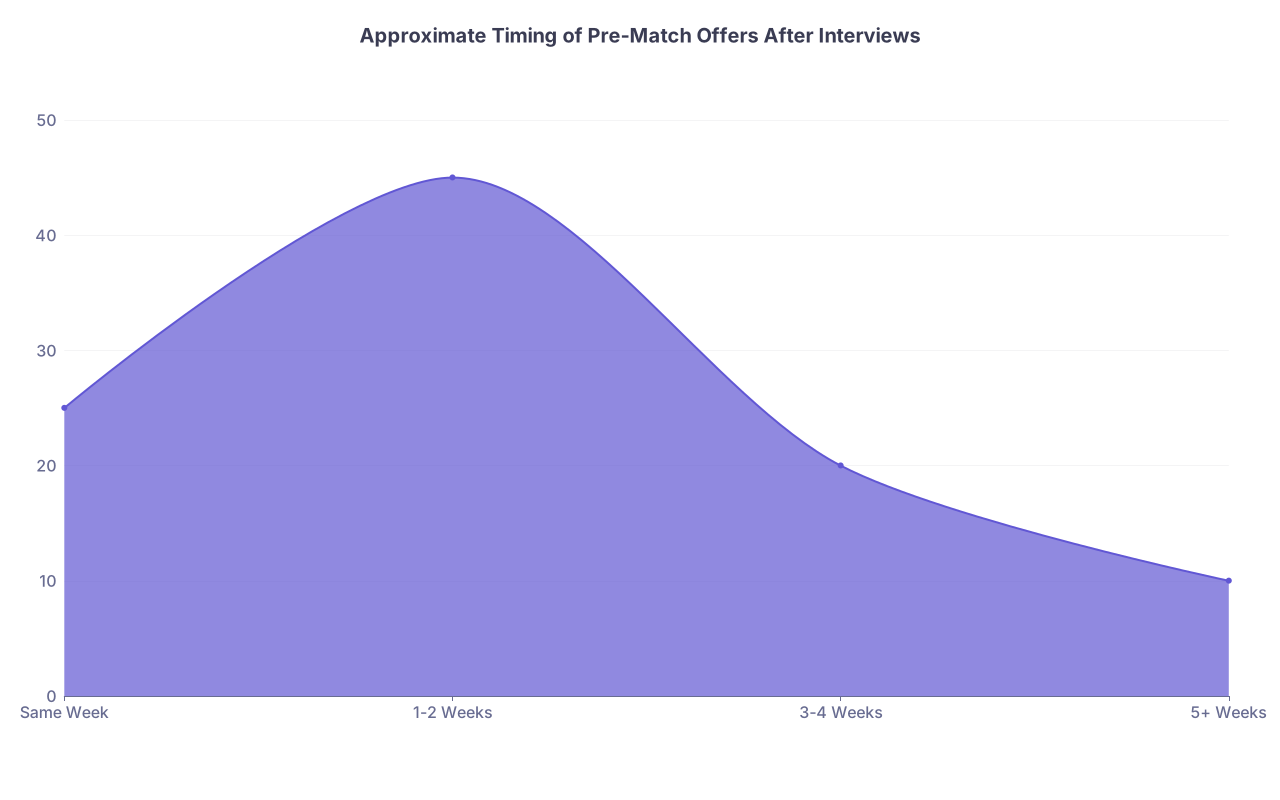
Patterns from applicant-reported data:
| Category | Value |
|---|---|
| Same Week | 25 |
| 1-2 Weeks | 45 |
| 3-4 Weeks | 20 |
| 5+ Weeks | 10 |
Interpretation:
- ~25% of pre-match offers happen within the same week as the interview (especially for early-season interviews).
- ~45% arrive within 1–2 weeks.
- ~20% show up in the 3–4 week window.
- ~10% appear later, usually tied to shifting numbers, declined offers, or late approvals.
So if you are interviewed at a known pre-match program in November and it is now late December with silence, your probability is declining sharply. Not zero, but falling.
This matters for your decision-making:
- If you have multiple interviews at high ITOR programs clustered early, pre-match chances are front-loaded.
- If your high ITOR interviews are late (January), offers will be squeezed by calendar constraints and existing commitments.

| Step | Description |
|---|---|
| Step 1 | Interview Candidate |
| Step 2 | Rank Only |
| Step 3 | Discuss at Committee |
| Step 4 | Send Contract |
| Step 5 | Fill Position Pre-Match |
| Step 6 | High Priority Fit |
| Step 7 | Slots Available for Pre-Match |
| Step 8 | Offer Pre-Match? |
| Step 9 | Candidate Accepts? |
Programs are running this flow with every high-priority interview. Your task is to self-assess: are you in that “high-priority fit” set for this program type?
7. How to Quietly Estimate a Program’s ITOR Before You Interview
You will not find a neat “our interview-to-offer ratio is 32%” on any website. But you can approximate it.
Here is a quick, practical methodology.
Scan the resident roster:
- Count proportion of IMGs vs USMD/DO.
- Count number of visa holders. More IMGs + visas usually → higher pre-match probability.
Search past forums and match lists:
- Find Excel sheets, WhatsApp summaries, Reddit or SDN threads with phrases like “pre-match from [Program]”.
- Frequency over 3–5 years is more indicative than a single anecdote.
Ask targeted, non-desperate questions on interview day: Not “Will you pre-match me?” That is clumsy.
Ask residents or coordinators:- “Do most residents here sign before or during the Match cycle?”
- “In your class, did many people sign contracts early?”
- “Historically, how many positions are filled before Match Day?”
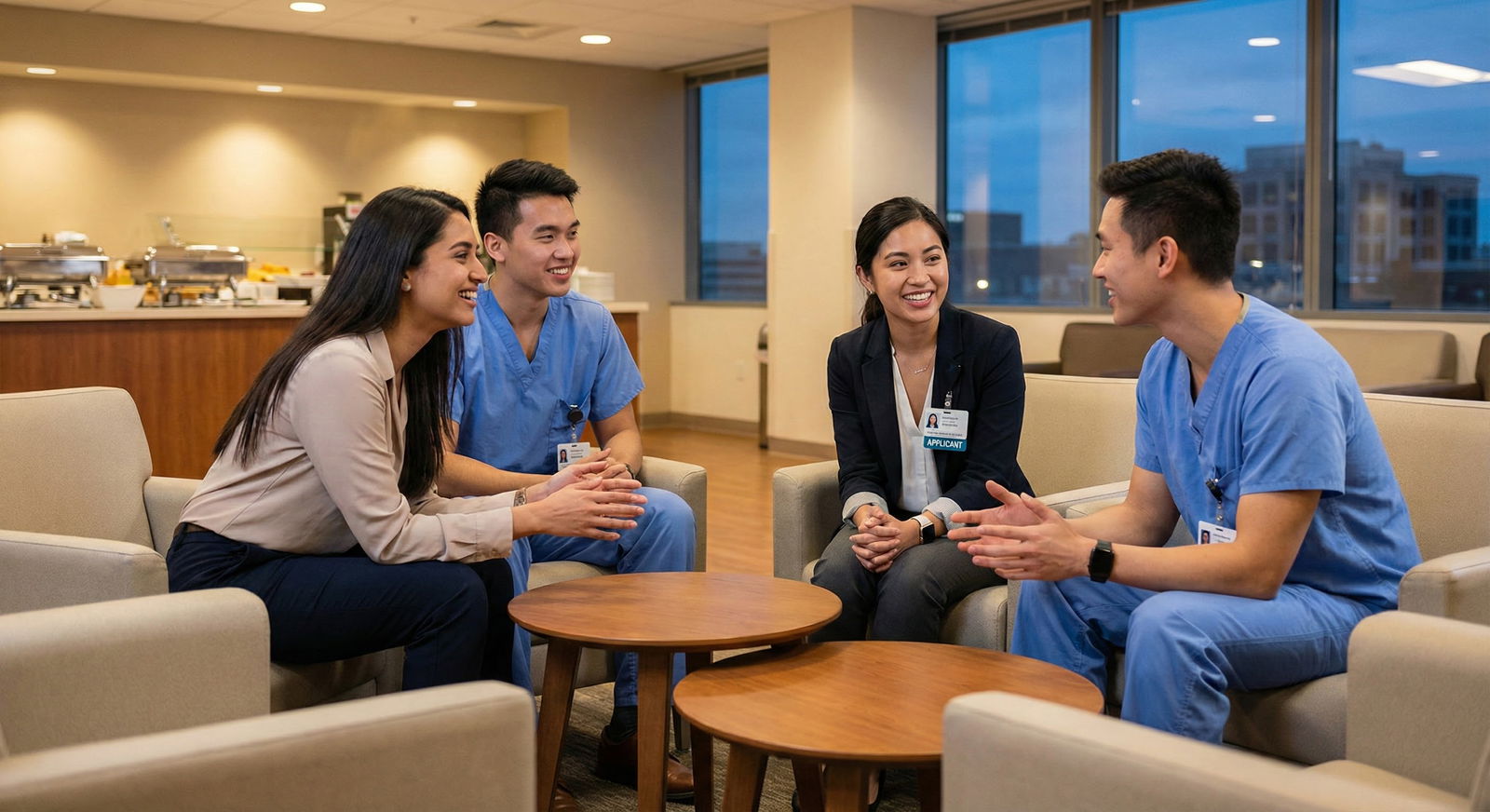
Watch for how aggressively they sell the program: Programs with high pre-match activity tend to:
- Emphasize visa support.
- Reassure you about long-term job prospects.
- Sound like they need you, not just the other way around.
You will not get perfect numbers. But you will start to see a pattern strong enough to inform decisions.
8. How to Behave at High-ITOR Programs if You Want a Pre-Match
Last point: knowing which programs convert interviews to offers is not enough. You also need to act in a way that moves you into their “high-priority” group.
Data from program directors and coordinator anecdotes line up on what nudges them:
Early expression of genuine interest.
If you are truly willing to pre-match, do not hide that until February. Email after the interview:- Thank them for the opportunity.
- State that you are “very interested in training here and would strongly consider a pre-match offer if extended.”
That sentence alone moves you from “generic good applicant” to “actionable.”
Consistency of story.
Programs are wary of people who say “you are my top choice” to 20 places. They talk. Your narrative must be:- Plausible geographically (family, prior rotations, local ties).
- Aligned with their mission (community focus, underserved, research, etc.).
Clear, workhorse signal.
For IMG-heavy pre-match programs, data shows they value:- Strong Step 2/CK score relative to their average.
- US clinical experience with credible LORs.
- Evidence you can show up, work hard, and not cause drama.
If you check those boxes at a 30–40% ITOR program, your personal pre-match probability can easily jump into the 50–60% range at that specific site.
FAQ (5 Questions)
1. If a program says they “participate fully in NRMP,” does that mean zero chance of pre-match?
Usually yes. Programs that explicitly state “all positions will be filled via the Match” almost never issue true pre-match contracts. There are rare edge cases for special tracks or off-cycle positions, but for planning purposes you should treat the interview-to-offer ratio for pre-match as effectively zero.
2. How many interviews at high pre-match programs do I need to feel reasonably safe?
For IMGs targeting internal medicine or family medicine, I start to see meaningful security when applicants have at least 3–4 interviews at programs with estimated ITOR ≥30%. At that level, probability of at least one pre-match offer becomes quite respectable, assuming your profile is competitive for those specific programs.
3. Can a program with mostly USMD residents still offer many pre-match contracts?
In theory yes, in practice almost never. Programs with predominantly USMD residents have no shortage of candidates in the NRMP pool. They do not need to pre-match to secure talent. If they do pre-match at all, it is usually a tiny number of special cases, yielding an interview-to-offer ratio so low it should not influence your strategy.
4. Does a late-season interview reduce my chance of getting a pre-match offer?
Often yes. By late December or January, many high-ITOR programs have already committed several spots. Their remaining “capacity” for pre-match shrinks. Your personal odds will usually be lower than if you had the identical interview in October, especially if previous candidates have already accepted contracts.
5. If I really like a low-ITOR academic program, should I still attend the interview?
Yes, if you care about matching there via NRMP. The low interview-to-offer ratio only affects your pre-match expectations, not your overall chance to match. The smart strategy is to treat such interviews as pure Match opportunities, while counting on high-ITOR community programs for any realistic pre-match outcomes.
Key points:
- Interview-to-offer ratios are wildly different across program types; community IMG-heavy programs dominate the pre-match landscape.
- You should prioritize interviews and post-interview communication based on where offers actually come from, not where logos look best.
- Use resident rosters, visa patterns, explicit pre-match language, and historical chatter to approximate each program’s ITOR and plan your pre-match strategy accordingly.