
Is It Normal to Feel Underwhelmed by Your First Pre-Match Offer?
What if that first pre-match email finally comes in…and instead of excitement, your first thought is: “Wait. That’s it?”
Let me just say this out loud because nobody tells you this part: yes, it’s very normal to feel underwhelmed by your first pre-match offer. Confused. Guilty. Low-key disappointed. Even a little sick that you’re not instantly over the moon.
You spend years picturing this moment as fireworks and tears of relief. Then it happens and you’re like…huh.
Now your brain starts doing its thing:
- “If I don’t grab this, I might end up unmatched.”
- “If I do grab this, am I settling for something I’ll regret for years?”
- “Does the fact that I’m not super excited mean something’s wrong with this program? Or with me?”
Let’s walk through this. Not from the fake overly-positive angle, but from the actual I-can’t-sleep perspective you’re in right now.
Why Your First Pre-Match Offer Often Feels…Off
You think the stress ends when an offer comes. It doesn’t. It just changes shape.
Here’s what’s probably happening in your head.
1. You built this moment up way too much (because we all do)
For months, the pre-match offer is the promised land. You imagine:
- You’ll cry.
- You’ll text your family in all caps.
- You’ll instantly know what to do.
Reality is more like: you’re half-distracted, you open your email, your brain lags for 3 seconds, you reread the message three times to make sure it’s actually an offer…then you feel this weird flatness.
Why? Because the fantasy in your head had zero risk. No trade-offs. No “what if I say yes and then X happens?”
The real email comes with strings:
- A deadline.
- Pressure.
- Loss of other potential options.
- The realization this choice actually shapes years of your life.
Excitement gets drowned by immediate decision paralysis. Totally human.
2. It might not be your dream program (or even close)
Let’s be real. Sometimes your first pre-match offer is:
- Your “safety” program, not your top one.
- A place you ranked as “I’d go here if I had to.”
- A specialty or track you’re not 100% sure about.
- A location you told yourself you could “tolerate,” not love.
So when that program moves faster than your favorites, they feel serious about you…but you’re not sure you feel serious about them. That mismatch is jarring.
And then you feel guilty. Because you should feel grateful. Right? Other people would kill for an offer. Your classmates are still waiting. So you start layering shame on top of uncertainty.
I’ve seen people talk themselves into accepting a pre-match offer just to avoid feeling ungrateful. That’s not a good enough reason.
3. Fear of missing out vs fear of being unmatched
This is the real war: FOMO vs WORST-CASE SCENARIO.
Your mind jumps between:
- “If I say yes, I’ll never know what else I could’ve had.”
- “If I say no, I might end up with nothing.”
It’s lose-lose in your head. Of course you feel weird.
You’re not just evaluating a program; you’re evaluating possible futures. And your limbic system doesn’t care about nuance. It just screams: “Danger if you choose wrong.”
So yeah. Underwhelmed + anxious is completely normal.
What a Pre-Match Offer Actually Means (Versus What Your Brain Thinks It Means)
Let’s pull this out of panic mode for a second and look at the situation through a colder lens.
| Situation | What Your Brain Says | What It Actually Means |
|---|---|---|
| Pre-match offer | Last and only chance | One real option on the table, not the final story |
| No offer yet | You’re doomed | You’re in the same boat as most applicants |
| Offer from backup | You’re settling or failing | A program values you and is moving quickly |
| Hesitating to accept | You’re ungrateful or broken | You’re taking the decision seriously (good sign) |
Your brain treats the first pre-match offer like some magical now-or-never fork in the road. Reality: it’s just one data point. One option. A real one, yes—but not a prophecy.
Sometimes the first offer you get is from a program that:
- Has a faster decision timeline.
- Needs to fill spots early.
- Prefers to lock in strong candidates before others move.
That doesn’t automatically make it “worse” than the ones that haven’t called yet. It just means they moved first.
How to Know if You’re Just Anxious…or Actually Not a Fit
Now the scary question: are you underwhelmed because you’re anxious, or because this is genuinely the wrong place for you?
Here’s where you need to be brutally honest with yourself.
Ask yourself three uncomfortable questions
If this were the only offer I got, would I rather do this than go unmatched and reapply?
If the honest answer is yes, that’s important data. Not automatic yes, but strong consideration.When I imagine actually working there, day to day, do I feel dread…or “I could live with this”?
Notice your gut reaction to the idea of parking there every morning, seeing those residents, that hospital, that city.If my top program called me tomorrow, would I regret having already signed this?
If that thought punches you in the stomach, pay attention.
You’re not looking for fireworks. You’re looking for: does this feel acceptable, safe, and not soul-crushing?
Because here’s the unromantic truth: not every residency is “the one.” Sometimes it’s just “good enough and won’t destroy me,” and that’s okay too.
Concrete Steps When You Feel Underwhelmed by a Pre-Match Offer
You don’t need another “follow your heart” speech. You need a plan.
Step 1: Get clarity from the program
Before spiraling alone, actually talk to them. Brief, professional, direct.
You can email the coordinator or PD something like:
“Thank you so much for the offer. I’m very interested, but I want to make an informed decision. Would it be possible to speak briefly with a current resident and get a little more detail on X, Y, Z?”
- Are people generally happy or just surviving?
- How are the hours actually?
- Do grads get fellowships/jobs they want?
- Any red flags they wish they’d known?
Sometimes underwhelm comes from fog. The more clear the picture, the more you’ll know if your emotion is anxiety or actual misfit.
Step 2: Put this offer in context with your goals
Not your fantasy life. Your realistic life.
Think through:
- Location: Is it safe? Affordable? Can you tolerate living there for 3–7 years?
- Training quality: Would you come out competent and employable? Do their grads match into solid fellowships if that matters to you?
- Support culture: Did residents seem burned out or supported?
- Your specialty competitiveness: Obvious but ignored—FM vs derm is not the same risk profile.
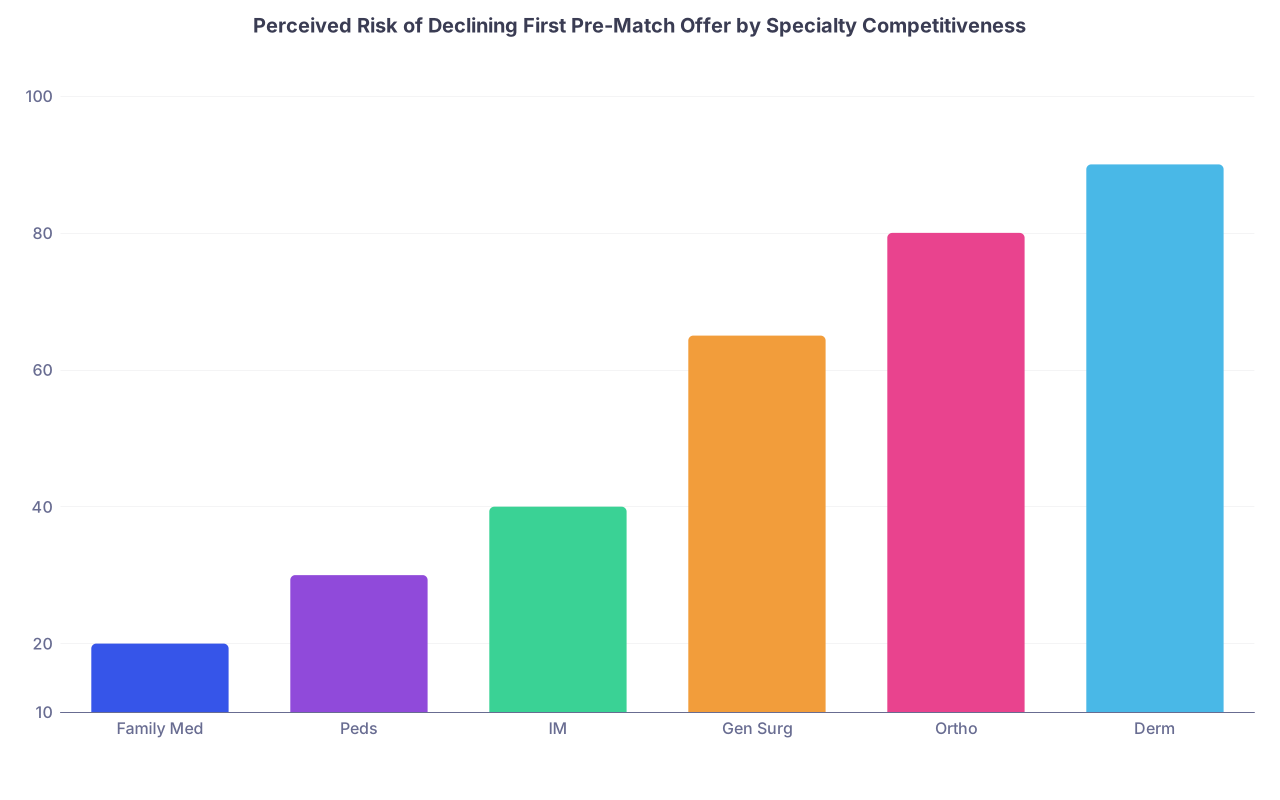
| Category | Value |
|---|---|
| Family Med | 20 |
| Peds | 30 |
| IM | 40 |
| Gen Surg | 65 |
| Ortho | 80 |
| Derm | 90 |
If you’re in a hyper-competitive field with a middling application, the risk of saying no is genuinely higher. Doesn’t mean you must say yes. Just means the fear is not totally irrational.
Step 3: Give yourself a 24–48 hour “no catastrophizing” period
If the deadline allows, take 24–48 hours where you are not allowed to ask “What if I end up unmatched?” every 5 minutes.
Instead, ask: “If fear didn’t exist, how would I feel about this program?”
Most people, once they shut off pure panic, find their actual answer is something like:
- “It’s fine. Not amazing. Not awful.”
- “Honestly, it’s better than I’m giving it credit for.”
- “No, even without fear, this doesn’t feel right.”
That last one matters.
Step 4: Talk to someone who’ll tell you the truth, not just “be grateful”
Not everyone is helpful here. Some attendings just say, “An offer is an offer, take it.” That’s lazy advice.
Look for:
- A mentor who actually knows your file and the specialty.
- A senior resident who’s been through the match.
- Someone who’ll say, “Yeah…that program’s known to be rough,” or “Honestly, that’s a solid option, you’re underrating it.”
If three sane people are saying, “This is actually a great safety net, don’t blow it lightly,” listen. You don’t have to obey, but don’t ignore it either.
What Nobody Tells You About “Settling” vs “Waiting”
Here’s the anxiety loop: “If I take this, I’m settling. If I don’t, I’m reckless.”
Let me be blunt.
You are not “settling” if:
- The program is decent.
- You’ll be trained well.
- You won’t be miserable every single day.
- It moves you toward your long-term goals (even if not in the most glamorous way).
You are potentially sabotaging yourself if:
- You turn down a solid pre-match based only on the fantasy that something better might appear.
- You’re chasing prestige more than fit.
- You care more about what your classmates will think than about your actual life.
But also, you are not “reckless” if:
- You have a strong application in a non-ultra-competitive field.
- Your gut is screaming no, and you have real reasons (toxic culture, serious red flags).
- You’d rather reapply than be locked into 3–7 years of misery.
Residency is not summer camp. You don’t just “tough out” a horrible fit without consequences. Burnout, depression, switching programs, quitting medicine altogether—I’ve seen all of that.
So yeah, sometimes the correct move is to walk away, even if everyone around you thinks you’re crazy.
How to Cope Emotionally While You Decide
Because the decision is one thing. The constant nausea and insomnia are another.
A few things that actually help in this specific situation:
Say out loud (or write down): “Feeling underwhelmed doesn’t mean this is a bad offer or that I’m ungrateful. It just means I’m human and this is a huge decision.”
Sounds cheesy. But it pulls you out of the shame spiral.Limit your comparison exposure. Stop refreshing group chats where people are flexing offers. Half of them are just as confused as you and pretending they’re not.
Set a decision deadline earlier than the actual deadline. If they give you 7 days, aim to decide by day 4. Last-minute panic decisions at midnight of day 7 are rarely your best thinking.
Remember: you’re not signing a lifetime contract with your identity. You’re choosing where you’ll train for a few years. Important? Yes. But not the single defining moment of your entire life.

| Stage | Activity | Score |
|---|---|---|
| Initial | See email | 4 |
| Initial | Realize it is an offer | 5 |
| Processing | Compare to dream programs | 3 |
| Processing | Imagine worst case | 5 |
| Decision | Gather info | 3 |
| Decision | Make choice | 4 |
If You’ve Already Accepted and Still Feel Underwhelmed
One more scenario: you panicked, said yes quickly, and now feel…stuck and slightly sick.
That’s also normal. Your brain is now mourning the paths you closed off, not judging the one you chose.
Ask yourself:
- Did I accept something objectively unsafe or toxic? Or just “not my dream”?
- Am I upset about the program, or about the idea that I didn’t get something flashier?
If the program is solid but not glamorous, your feelings will probably soften once the chaos of match season is over.
If you later discover truly serious issues, there are options—transfers, reapplying, etc. Messy options, but you are not permanently trapped forever.
FAQs
1. Is it a red flag that I’m not excited about my first pre-match offer?
No. It’s a sign you understand this is a high-stakes decision. Fear + numbness is a normal reaction when your brain is trying to protect you from making a “wrong” choice. What matters is whether, after the anxiety calms a little, you can see yourself training there without dread.
2. Should I ever turn down a pre-match offer?
Yes, sometimes you should. If the program has clear red flags (toxic culture, terrible resident support, consistently negative feedback from current residents) or you’d genuinely rather reapply than spend years there, declining can be rational. Especially if your application is strong for your specialty. Just don’t decline based only on prestige fantasies or vague “I could maybe do better?” vibes without evidence.
3. How much should fear of going unmatched factor into my decision?
It should factor in—but not completely dominate. If you’re applying to a very competitive specialty with a borderline application, the risk is real and fear is rational. If you’re in a less competitive field with decent stats and interviews, fear often exaggerates the risk. Try to get a reality check from someone who knows your specific situation (PD, advisor, mentor) rather than letting anxiety make up numbers in your head.
4. Is it “settling” to accept a program that isn’t my top choice?
Not automatically. “Settling” is choosing something that actively goes against your values or long-term goals purely out of fear. Accepting a solid, safe, decent program that isn’t glamorous but will train you well? That’s not settling. That’s being an adult in a system that doesn’t always give you your top option.
5. What if I accept this offer and then a better one comes later?
In most systems, once you pre-match and sign, you’re committed. That’s why this feels so heavy. But remember: you can’t chase infinite hypothetical “better” options forever. At some point, committing to a good-enough path is healthier than holding out for perfection that may never come. If you’re truly torn, clarify your specific deal-breakers before signing anything.
6. How do I stop feeling guilty for not being more grateful?
You’re not ungrateful; you’re scared and overwhelmed. Those are different things. Gratitude doesn’t mean you have to feel euphoria. You can be thankful a program wants you and still seriously question whether it’s the right fit. That’s called discernment, not entitlement. Be polite and professional with the program. Be honest and messy with yourself. Both can coexist.
Key points to hold onto:
- Feeling underwhelmed by your first pre-match offer is normal and doesn’t mean anything is “wrong” with you.
- Your decision should balance risk, realistic goals, and your own mental health—not just fear or prestige.
- One offer doesn’t define your worth as an applicant or lock in your entire future, even if it feels that way tonight.