
The fear that you’ll lose a pre‑match offer if you ask for changes is wildly overblown.
Let me be clear: politely asking questions or requesting reasonable changes to a pre‑match contract is normal and, done right, does not usually make the offer disappear. You’re far more likely to regret signing something you didn’t understand than you are to get “punished” for asking.
The trick is knowing:
- What’s realistic to ask for
- How to ask
- When you’re actually putting the offer at risk
Let’s walk through that.
What a Pre‑Match Offer Really Is (And Why Programs Use Them)
Pre‑match offers exist for one reason: programs want security.
They’re trying to:
- Lock in candidates they like before the main Match
- Reduce uncertainty (especially in less competitive or IMG‑heavy programs)
- Fill spots early so they’re not panicking in March
For you, a pre‑match offer is:
- A real contract, not a “soft” promise
- Typically outside the NRMP Match rules (depending on country/system)
- A binding commitment if you sign
What that means for your question:
If they’ve gone to the trouble of giving you a pre‑match offer, you already have leverage. They want you. Nobody casually hands out pre‑match contracts.
They may not negotiate like a Fortune 500 company, but you’re not going to lose the offer just for asking a few smart questions.
So… Is It Okay to Ask for Changes?
Yes. It’s okay. But you need to stay in the realm of reasonable.
Here’s the basic rule I tell people:
You rarely lose an offer for asking; you lose it for being unreasonable, adversarial, or very slow.
Reasonable =
- Clarifying unclear language
- Asking about the call schedule, electives, or vacation
- Requesting small changes that are common in that region
- Asking for time to review with a trusted advisor or lawyer
Unreasonable =
- Demanding a huge salary bump when the program uses a fixed GME scale
- Insisting on no nights, drastically fewer calls, or special treatment
- Delaying a response for weeks with vague excuses
- Threatening (“If you don’t do this, I’ll walk”) when you’re not actually ready to walk
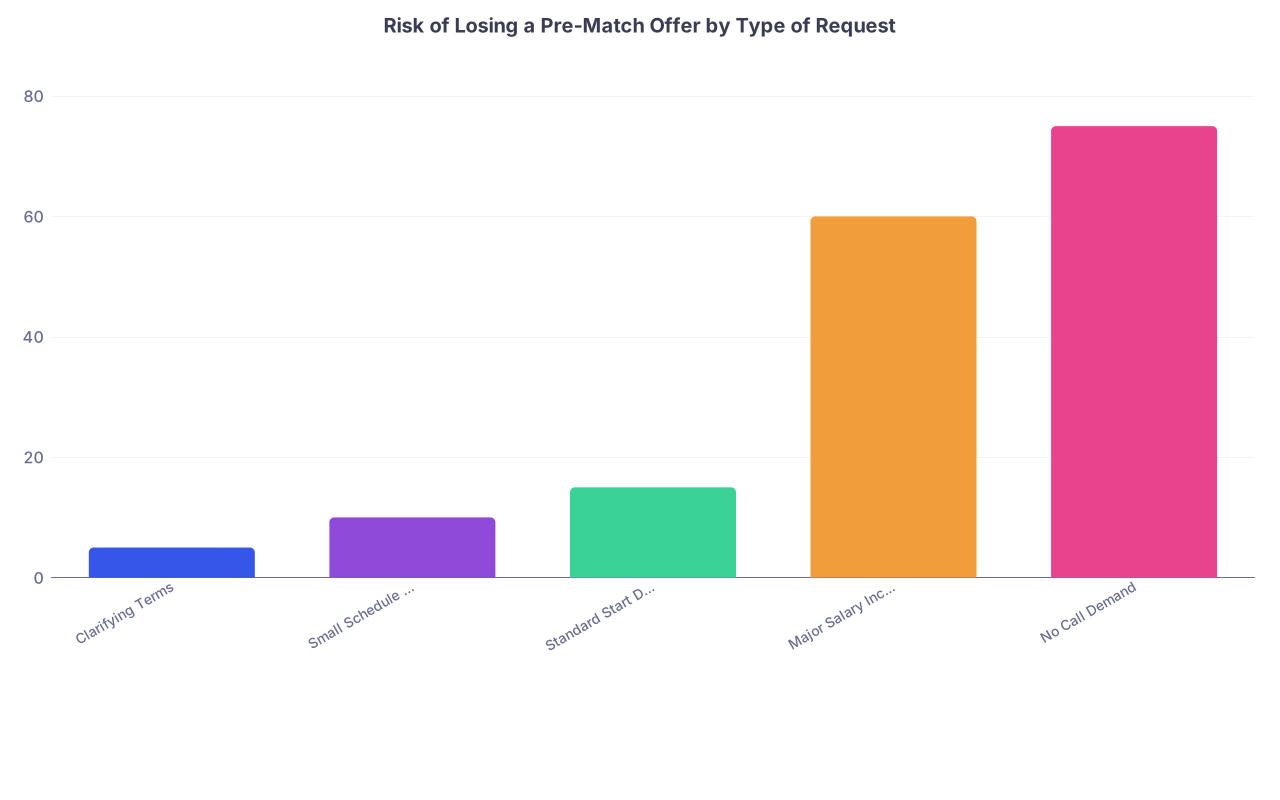
| Category | Value |
|---|---|
| Clarifying Terms | 5 |
| Small Schedule Adjust | 10 |
| Standard Start Date Shift | 15 |
| Major Salary Increase | 60 |
| No Call Demand | 75 |
Those “risk” percentages aren’t from a paper; they’re from watching this play out countless times. Most programs are perfectly fine with clarification and minor tweaks. They get annoyed when you try to renegotiate the structure of residency.
What You Can Safely Ask About (And How to Do It)
Here’s what’s usually fair game and low risk.
1. Clarifying the Contract
You should always understand what you’re signing. This is where most residents say nothing and regret it later.
Things you can and should clarify:
- Exact salary and step increases PGY1 → PGY2 → PGY3
- Call schedule expectations (home vs in-house, frequency, post-call days)
- Vacation and sick days: how many, how scheduled
- Moonlighting rules (if allowed, when, where, how paid)
- Termination clauses: under what conditions can they let you go
- Non‑compete or “service obligation” language (more common in some countries)
Language to use:
“Thank you again for the offer. I’ve reviewed the contract and had a few points I wanted to clarify just to make sure I fully understand the expectations before I sign.”
Then list questions as clean, neutral bullets.
Programs almost never pull an offer for this. They may be mildly surprised you’re reading it carefully, but that’s actually a good sign.
2. Small, Practical Adjustments
Minor changes are often possible, especially with timing and logistics.
Reasonable things to request:
- Start date shift by a week or two for visa or relocation
- A specific vacation block if they haven’t scheduled yet (e.g., for a wedding)
- A bit of flexibility around orientation dates if you’re transitioning from another country
Unreasonable:
- Starting months later
- Taking extended unpaid leave in PGY1
- Demanding you never rotate at a specific site for personal preference
How to ask:
“I’m very excited about the offer and fully intend to accept. I have one logistical concern I was hoping we might be able to adjust slightly…”
Lead with your enthusiasm. Signal you want to say yes. Then bring up the small request.
3. Things That Are Usually Non‑Negotiable
Don’t waste your political capital here.
Most of the following are fixed:
- Base salary (tied to institutional scale, union, or GME office)
- Benefits package (health insurance, retirement, CME money)
- Total number of vacation days
- Core rotation structure required for accreditation
You can ask about them (“Can you confirm that the salary follows the institutional GME scale?”), but trying to change them is usually a dead end.
| Element | Usually Negotiable? |
|---|---|
| Base Salary | No (fixed scale) |
| Start Date (±1–2 wks) | Sometimes |
| Vacation Dates | Sometimes |
| Call Frequency | Rarely |
| Contract Wording | Sometimes |
If you go in asking for special salary treatment, you’re signaling you don’t understand how residency employment works. That’s a fast way to burn goodwill.
Will Asking for Changes Make Me Look Bad?
Not if you do it right. In fact, it can make you look mature and detail‑oriented.
You look bad when you:
- Play hardball like it’s a private practice attending job
- Act suspicious or accusatory (“Why would you put THIS in here?”)
- Take an entitlement tone (“I deserve more because I’m top of my class”)
- Drag things out with slow responses
You look good when you:
- Respond promptly
- Are explicit that you’re excited and likely to accept
- Ask focused, relevant questions
- Accept “no” gracefully when something truly isn’t flexible
If a program is so fragile that a couple of polite questions scare them off, that’s a red flag about the culture. I’d be very cautious about training there.
The Real Risk: Time and Silence
Here’s where you can genuinely lose a pre‑match offer: delay.
Programs usually have:
- A limited window to get contracts back
- A list of backup candidates ready
- Pressure from GME to finalize their roster
If you sit on the contract for 2–3 weeks with vague “I’m still thinking” emails, yes, they might pull it and move on. Not out of spite—out of logistics.
What I recommend:
- Acknowledge the offer within 24–48 hours
- Ask for a clear deadline to respond (if not stated)
- If you need more time, ask once, specifically
Example:
“I really appreciate the offer and I’m seriously considering it. I’d like to review the contract with a mentor. Would it be possible to have until [date] to get back to you with my final decision?”
If you hit that new date with silence? That’s on you.

| Step | Description |
|---|---|
| Step 1 | Receive Pre Match Offer |
| Step 2 | Acknowledge in 24-48 hours |
| Step 3 | Accept or Decline by Deadline |
| Step 4 | Send Focused Questions |
| Step 5 | Decide and Sign or Decline |
| Step 6 | Need Clarification or Changes? |
| Step 7 | Program Responds |
Common Scenarios And What Actually Happens
Let me walk through a few realistic examples I’ve seen.
Scenario 1: You Ask for Clarification Only
You: Ask about call schedule structure, vacation rules, moonlighting.
Program: Answers by email or quick call.
Outcome: You sign, nobody cares that you asked. Six months later you’re glad you knew what you were getting.
Risk of losing offer: near zero.
Scenario 2: You Ask for a Small Schedule Change
You: Want one specific week off for a planned wedding.
Program: Says they’ll try but can’t guarantee exact days; offers rough accommodation.
Outcome: You either accept this uncertainty or not, but the offer itself usually stands.
Risk of losing offer: low, unless you keep pushing and act entitled.
Scenario 3: You Try to Renegotiate Salary
You: “I’d like the base salary increased by $5,000 given my prior experience.”
Program: Explains salary is locked by institutional scale; they can’t change it.
Outcome: They may start doubting whether you understand how residency works. If you keep pushing, they might question your fit.
Risk of losing offer: moderate, especially if you keep escalating.
Scenario 4: You Delay Repeatedly
You:
- Acknowledge offer
- Ask for one week to think
- After 9–10 days, still “deciding,” no firm questions, no clear timeline
Program: Has a list of other candidates willing to sign immediately.
Outcome: They may send a final “We need your answer by [date] or we’ll withdraw the offer.” If you still stall, they withdraw and move on.
Risk of losing offer: high—and you did it to yourself.
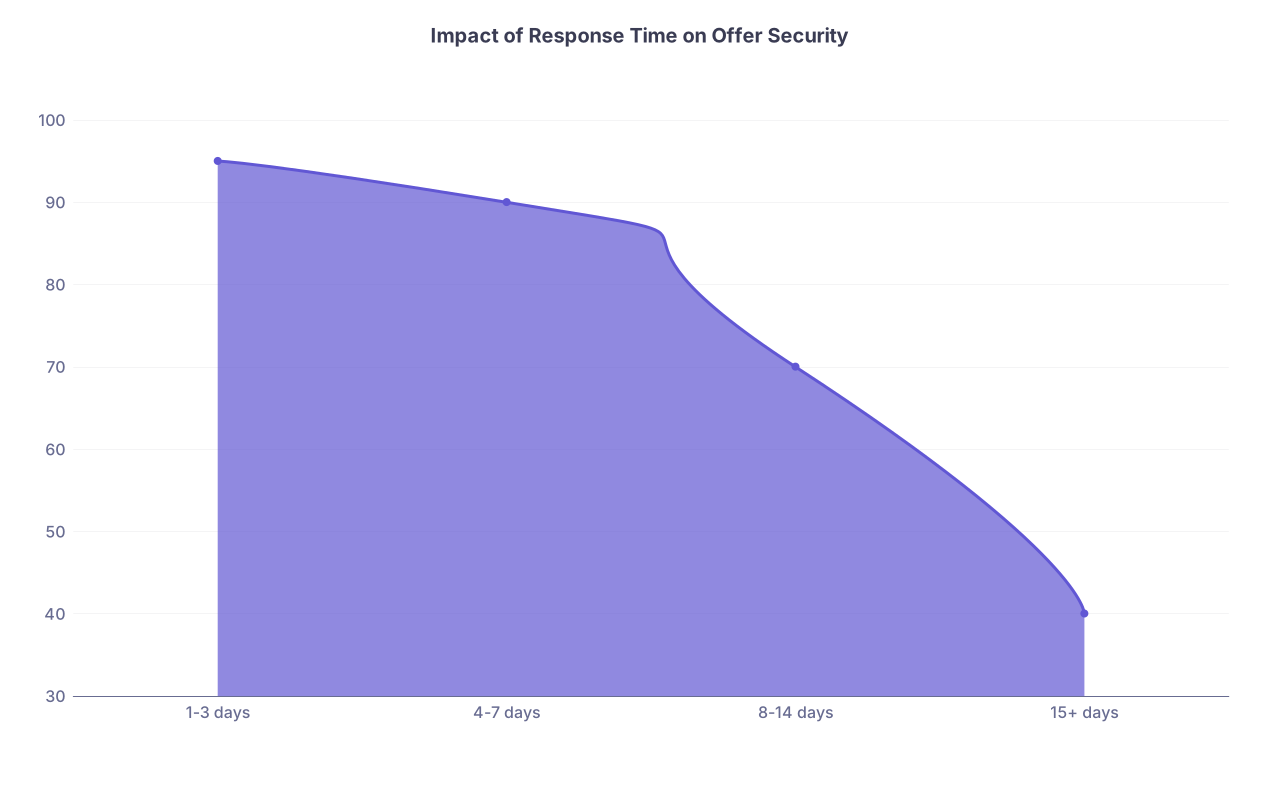
| Category | Value |
|---|---|
| 1-3 days | 95 |
| 4-7 days | 90 |
| 8-14 days | 70 |
| 15+ days | 40 |
How To Phrase Your Request Without Spooking Them
Steal this template. Tweak for your situation.
Subject: Residency Offer – Clarification and Next Steps
Dear Dr. [Name],
Thank you again for the pre‑match offer to join the [Program Name] [Specialty] residency. I’m very excited about the opportunity and am seriously considering accepting.
I’ve reviewed the contract and had a few points I wanted to clarify, just to be sure I fully understand everything before I sign:
- [Brief, specific question]
- [Brief, specific question]
- [Any small, realistic request if applicable]
I don’t expect major changes, but any guidance you can provide on these points would help me finalize my decision. I’m happy to discuss by phone if that’s easier.
Thank you for your time and consideration.
Best regards,
[Your Name]
Notice what’s happening:
- You lead with enthusiasm
- You’re concise
- You separate “clarifications” from “requests”
- You’re not threatening or bargaining
Programs are used to this. In most cases, they’ll just answer and move on.
When You Actually Should Consider Walking Away
Hard truth: some pre‑match offers aren’t worth accepting, no matter how desperate you feel.
Red flags in a contract:
- Vague or broad termination clauses (“for any reason deemed appropriate…”)
- No defined grievance or evaluation process
- Excessive penalties for leaving
- Non‑compete language that blocks practice across huge areas
- Serious mismatch between what they promised on interview and what’s written
If you raise serious, safety or ethics‑related concerns and they respond with hostility or “take it or leave it,” that’s worrying.
Promise yourself this:
You’d rather scramble for a better situation than commit years of your life to a toxic one just because you were scared to say no.

Quick Decision Framework
If you’re staring at your inbox right now stressing, use this:
Do I understand every major clause in this contract?
- If no → ask clarifying questions.
Am I asking for something that changes the core structure (salary, total hours, major duties)?
- If yes → you’re entering real negotiation land; be prepared for no.
Can I make my requests in one clean, polite email or short call?
- If yes → do it now.
- If you’re spiraling into 15 micro‑demands, stop. Prioritize 2–3 that matter most.
Can I live with this contract as written if they say no to every change?
- If yes → ask anyway; nothing to lose.
- If no → either negotiate seriously or walk away. Don’t “sign and hope.”

FAQs
1. Can a program legally withdraw a pre‑match offer if I ask for changes?
Yes, they can withdraw it, but they rarely do just because you asked polite, reasonable questions. They’re more likely to pull it if you delay excessively, seem disinterested, or demand major changes they can’t accommodate. Asking for clarification or small adjustments alone almost never triggers a withdrawal.
2. Should I get a lawyer to review my pre‑match contract?
If the contract is long, complex, or includes unusual clauses (non‑compete, penalties, service obligations), it’s smart to have an employment or health‑care lawyer look at it—especially in the US or for international agreements. Just don’t disappear for three weeks “reviewing with a lawyer” without telling the program your timeline.
3. Can I negotiate salary on a residency pre‑match offer?
Almost always no. Residency salaries are usually set by the institution, GME office, or union and are not negotiable on an individual basis. You can confirm the numbers and step increases; trying to negotiate a higher salary usually just makes you look uninformed, not powerful.
4. How long is it reasonable to ask for before giving a final answer?
Typically 3–7 days is reasonable. If they didn’t give a deadline, you can ask for up to about two weeks, especially if you’re waiting on another critical piece (visa, spouse job, mentor advice). Whatever time you ask for, actually respond by that date. Radio silence is how you lose offers.
5. What if I have another interview or potential offer coming—can I stall?
You can be honest in a measured way: “I’m honored by the offer. I do have one more interview already scheduled and would like to complete that before making a final decision. Would it be possible to have until [specific date] to get back to you?” Some programs will accept this; some won’t. Just don’t lie or string them along indefinitely.
6. Do programs talk to each other if I negotiate or decline a pre‑match offer?
They don’t have a big central gossip board, but people in the same specialty know each other. If you behave professionally—prompt responses, polite questions, honest decisions—you’re fine. The behavior that gets remembered and shared is stuff like dishonesty, last‑minute backing out after signing, or aggressive, hostile negotiation—not normal contract discussion.
Bottom line:
- Yes, it’s okay to ask for changes or clarification to a pre‑match offer—done politely, it rarely costs you the offer.
- Focus on understanding the contract and making small, realistic requests quickly; don’t try to redesign residency.
- The real danger isn’t asking questions—it’s delaying, disappearing, or signing something you don’t actually understand.