Is Virtual Shadowing Legit? Separating Real Value from Resume Filler
62% of premeds in a 2022 AAMC survey reported virtual shadowing experience—but only a minority could clearly explain what they actually learned from it.
That disconnect is the real problem. Not that virtual shadowing exists, but that most people are using it like glitter on a CV instead of a tool to answer the only question schools really care about: “Do you understand what this career actually looks like, and are you making a rational choice?”
Let’s cut through the marketing, the Reddit panic, and the Instagram “I logged 200 hours!!!” screenshots and look at what’s actually true about virtual shadowing.
(See also: Shadowing vs Clinical Volunteering: What AdComs Actually Value More for more details.)
What Admissions Committees Actually Think (Not What Reddit Says)
There’s a surprisingly durable myth that admissions committees have a single, unified opinion on virtual shadowing.
They do not.
Here’s what we actually know from advising dean statements, AAMC webinars, and school-specific guidance:
- Some schools explicitly say virtual shadowing counted during COVID but is now “supplemental only” (e.g., several mid-tier MD programs in 2023–24 cycles).
- Others accept it as part of clinical exposure but expect some in-person patient interaction somewhere else in your application.
- A few DO schools are openly more accommodating and see virtual shadowing as a reasonable piece of the puzzle, especially for rural or access-limited applicants.
What almost no serious school is doing: treating virtual shadowing alone, without in-person clinical exposure, as sufficient evidence that you understand medicine.
This matters:
- If your only clinical experience is 40–100 hours of virtual shadowing, you look like someone who’s more interested in checking boxes than getting your hands even slightly dirty.
- If you have a combination—say, 20–30 hours of focused virtual shadowing plus ongoing in-person clinical volunteering or employment—virtual shadowing starts to look like what it actually should be: a supplement, not the foundation.
The Myth: “Virtual shadowing is either completely worthless or just as good as in-person.”
The Reality: It’s neither. It’s context-dependent. On a file with zero real patient contact, it is weak. On a file that already shows hands-on exposure, it can add nuance and depth—if you use it correctly.
What Virtual Shadowing Can Actually Do (When It’s Not Just Passive Zoom-Watching)
Let’s be brutally honest about what you’re not getting from virtual shadowing:
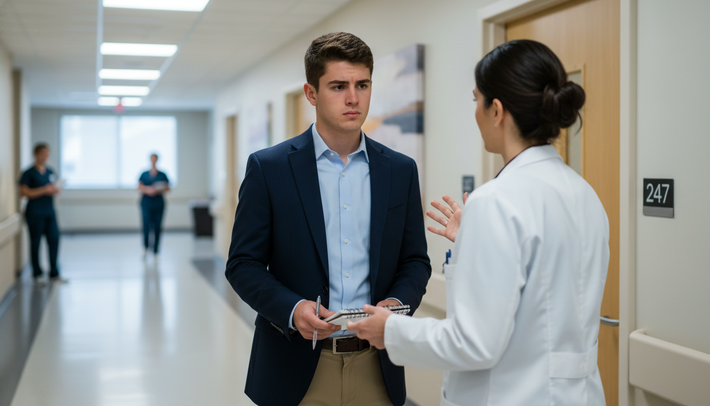
You’re not smelling the C. diff room.
You’re not seeing the family melt down in the hallway.
You’re not watching the nurse roll their eyes because the resident ordered something dumb.
Those sensory and interpersonal micro-details? They’re a big part of understanding clinical reality.
But virtual shadowing can do some things surprisingly well, sometimes better than traditional shadowing:
- Structured Case Exposure
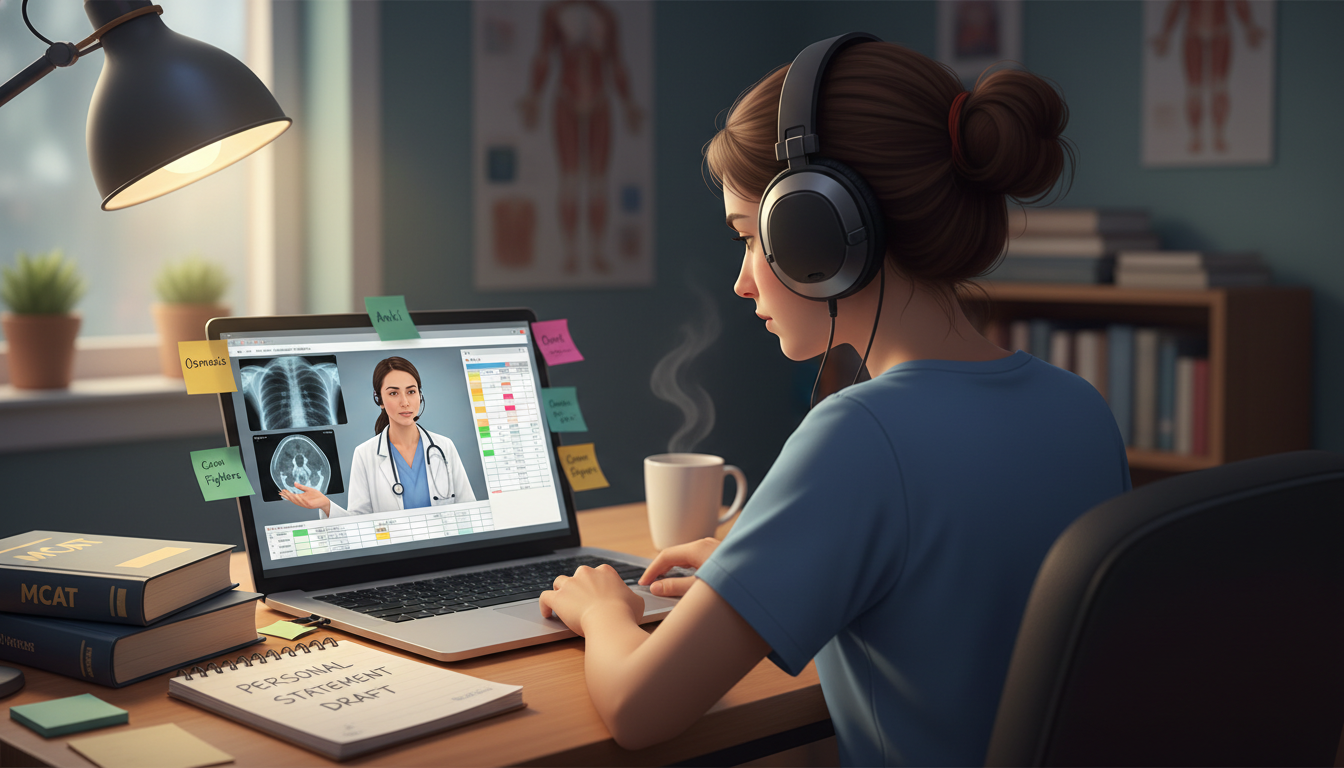
Many virtual shadowing programs (the legit ones, not the “type your name for a certificate” ones) actually walk through de-identified cases with imaging, labs, and clinical reasoning.
Ironically, a lot of in-person shadowing is basically: “Stand in the corner and try not to get in the way.” You see the surface-level interaction but not the inner logic. In contrast, a good virtual session might say:
- Here’s the chief complaint.
- Here’s what I’m thinking in my differential diagnosis.
- Here’s why I ordered these labs and not those.
- Here’s what I told the patient and why.
For understanding how physicians think, virtual can be excellent—better than walking 8 hours behind a surgeon who says ten words to you all day.
- Breadth Across Specialties
Shadowing three different specialties in person can take months of networking and schedule juggling.
Virtual shadowing can compress that into weeks: pediatrics, EM, psych, derm, hospitalist, rural primary care, etc. That breadth—if reflected thoughtfully in your essays—can strengthen your explanation of why you’re choosing medicine and how you explored different paths.
- Access for Students with Real Barriers
Not everyone lives near an academic medical center or has physicians in the family. Some are caregivers. Some work full-time. Some live in regions where hospitals shut down student access after COVID and never really reopened the door.
For those applicants, virtual shadowing can be the difference between zero physician exposure and some genuine window into clinical work.
Does that make it equal to in-person? No. But admissions folks are not robots. They read your context. If you explain:
- Geographic barriers
- Financial constraints
- Family caregiving responsibilities
then virtual shadowing stops looking like laziness and starts looking like realistic adaptation.
Where Virtual Shadowing Crosses the Line into Resume Filler
The worst use of virtual shadowing is volume chasing.
“I’ve got 120 hours with Virtual Shadowing Program X and 90 hours with Y and 60 hours of live webinars and–”
This is where committees start rolling their eyes.
Common red flags:
- Stacking endless hours from the same generic mass-attendance program that offers little interaction.
- Logging watching of recorded sessions as “shadowing hours.”
- Treating attendance certificates as though they are meaningful credentials. (They are not. They’re attendance stickers.)
Let’s be clear: no one on an admissions committee is impressed that you clicked a Zoom link 47 times.
They’re impressed if:
- You can name a specific patient case (de-identified) you observed.
- You can describe how it changed or refined your understanding of a specialty.
- You can connect that to decisions you made—courses you pursued, populations you chose to serve, or specialties you decided against.
In other words, the value is in what you do with the experience, not the certificate you paste into AMCAS.
How to Make Virtual Shadowing Actually Count (Instead of Hoping It Does)
If you want virtual shadowing to be perceived as “legit,” you have to treat it like something real, not a checkbox.
Here’s what that looks like in practice.
1. Be Ruthlessly Selective About Programs
Not all virtual shadowing is created equal. A few signals you’re dealing with something higher quality:
- Live sessions with actual attending physicians, not only students or coaches.
- Case-based discussions with some clinical reasoning explicitly explained.
- Q&A periods where you can ask questions about their career, training, and decisions.
- Explicit privacy/compliance statements and de-identification of cases.
Programs run out of academic departments or hospital-based outreach efforts tend to be stronger than faceless third-party “premed certificate” brands built mainly for volume.
2. Show Up Like It’s a Real Rotation
Most students show up like it’s a Twitch stream. They watch, maybe take one or two notes, then log the hours.
Act differently.
Before each session:
- Skim the specialty: what types of problems do they mainly handle? Typical day?
- Prepare 1–2 thoughtful questions, not “What’s your favorite part of being a doctor?”
During:
- Take real notes. Focus on: how they reason, how they handle uncertainty, how they communicate with patients, what surprised you.
After:
- Write a brief reflection: 5–7 sentences on what you saw, what you learned, and how it changed or reinforced your interest.
These reflections become gold when you’re writing your personal statement or secondary essays. They’re how you transform “I did virtual shadowing” into “Here’s something specific I internalized about patient care.”
3. Do Not Pad Hours; Curate Them
If you need to hear this bluntly: 25 engaged hours are more valuable than 150 background-noise hours.
For AMCAS/AACOMAS:
- Log only live sessions as shadowing.
- Do not include YouTube replays as “clinical experience.”
- Be honest about your time. Committees have a good sense of what looks inflated.
Then, in your activity description, don’t waste space describing the program logistics. Describe:
- What types of cases you saw.
- How physicians explained their decision-making.
- How that contributed to your understanding of the specialty or of medicine as a whole.
That’s how virtual hours avoid being dismissed as fluff.
The Non-Negotiable: You Still Need Real, In-Person Clinical Exposure
Here is the part people want to argue with, but the data and advisor consensus are overwhelming:
Applicants with only virtual experiences and no in-person clinical involvement are consistently weaker.
You do not need thousands of hours on an ambulance. But you need something involving:
- Real patients
- Real illness or vulnerability
- You physically present in a clinical or care environment
This could be:
- Hospital volunteer
- Medical assistant
- ER tech or scribe
- Hospice volunteer
- CNA or patient care tech
- Clinic receptionist in a setting where you’re around patient interactions
It doesn’t have to be glamorous. In fact, some of the “lowest status” roles (transport, CNA, hospice volunteer) give the clearest view of what chronic illness, death, and family dynamics look like.
Virtual shadowing cannot substitute for the emotional and sensory realities of those environments. It can only frame them.
An admissions dean doesn’t think: “Do they know what a cardiologist does?”
They think: “Has this person ever actually seen suffering up close and still wants to do this?”
Virtual shadowing alone rarely gives a confident “yes” to that second question.
How to Talk About Virtual Shadowing in Your Application Without Sounding Weak
The way you frame virtual shadowing matters nearly as much as the experience itself.
Weak framing:
“I completed over 80 hours of virtual shadowing across multiple specialties, gaining valuable exposure to the medical field.”
That tells them nothing. It’s clearly boilerplate.
Stronger framing:
“In a series of live, case-based virtual sessions with emergency physicians, I watched attendings articulate their differential diagnoses in real time while managing anxious families and limited information. One session on a young adult with chest pain forced me to confront how heavily emergency decisions lean on probability, risk tolerance, and clear communication about uncertainty. That framework later shaped how I talked with patients as a hospital volunteer when they asked, ‘What will happen next?’”
Notice the differences:
- Specific discipline (emergency medicine).
- Specific kind of case (young adult with chest pain).
- Specific learning (reasoning under uncertainty; communication about risk).
- Connection to another, in-person experience (hospital volunteer).
Now virtual shadowing looks like one stepping stone in a coherent exploration, not a random Zoom habit.
When Virtual Shadowing is a Smart Strategic Move vs. a Distraction
Used well, virtual shadowing can be strategically powerful in a few scenarios:
- You’re exploring less accessible specialties (e.g., neurosurgery, interventional radiology) that are hard to shadow locally.
- You come from a non-medical background and need broad initial exposure fast, then you transition to more in-person roles.
- You’re aiming to articulate a nuanced specialty interest in secondaries, and virtual shadowing gives you specific cases and conversations to draw from.
Used poorly, it becomes:
- A time sink that delays you from actually getting in-person clinical or non-clinical service.
- A false sense of security: “I’ve got 100 hours, so I’m good,” while you still have no real patient-facing experience.
- A crutch for those afraid of uncomfortable clinical environments.
You should treat virtual shadowing as prep work and amplification, not as your main event.
Do some sessions early. Get your head around how physicians think. Then push yourself into settings where you’re physically in the room with patients, staff, and all the messy human variables that do not fit on a PowerPoint slide.
Bottom Line: Is Virtual Shadowing “Legit”?
Three core realities, stripped of the hype:
Virtual shadowing is not a scam—but it is often misused. Programs can be educational and valuable, especially for understanding clinical reasoning and sampling specialties. But logging endless Zoom hours alone does not impress anyone.
It’s a supplement, not a substitute. Admissions committees expect at least some real, in-person clinical exposure. Virtual experiences work best when they enhance and frame what you’ve already seen (or will see) in the hospital, clinic, or hospice setting.
Its value depends entirely on how you use and describe it. If you can point to specific cases, insights, and decisions that came out of your virtual shadowing, it looks like intentional exploration. If you just wave around hours and certificates, it looks like resume filler.
Treat virtual shadowing like a tool, not a shortcut, and it will hold up just fine under admissions scrutiny.