
What actually happens if your Step 2 CK “expires” before you finish residency and need a medical license?
Let me be direct: this can quietly wreck your PGY‑3/PGY‑4 year if you do not see it coming. I’ve watched residents ready to sign attending contracts who suddenly discover their Step 2 CK is past a state’s validity window and the board decides they have not “met requirements.” Cue panic, program director emails, and sometimes delayed start dates.
You do not want to be them.
This is the guide for:
- MS4s ranking programs
- Interns and juniors in training
- Residents planning fellowship or first attending job
who realize (or suspect) their Step 2 CK date might collide with state licensure rules.
Let’s walk through what actually matters and what to do, step by step.
1. What “Step 2 CK Expiring” Really Means
Step 2 CK itself does not expire in the USMLE system. Your score stays on your transcript forever. The problem is state medical boards.
Many states have rules like:
- “All 3 steps must be passed within 7 years”
- Or “within 10 years”
- Or “within 7 years of the first attempt at any Step”
Some are looser for MD/PhD (often 10 years), some are strict for IMG/DO applicants, some have odd carve‑outs.
So “Step 2 expires” usually means:
Your Step 1 + Step 2 + Step 3 timeline violates a state’s “time limit to complete all steps” rule.
Examples:
- You took Step 1 in 2017, Step 2 CK in 2019. You will finish residency in 2026 and plan to take Step 3 during PGY‑3. In a 7‑year state, you would need all steps done by 2024. You’re already out of compliance if you aim for that state.
- Or you took Step 2 CK twice and a certain board has a limit on total attempts or re‑taking after X years.
The important thing:
It is usually not that Step 2 CK alone reaches some birthday and becomes invalid; it’s the total USMLE timeline the state is judging.
2. How This Actually Hits You During Residency
Here is how this bites people in real life. I’ve seen all of these:
PGY‑3 about to graduate IM, matched into a cardiology fellowship in a 7‑year state. Step 1 was in 2016, Step 2 CK 2018, Step 3 not yet taken. State board: “You must complete all 3 steps within 7 years from first exam; you are beyond the limit.” Fellowship start gets delayed while they appeal or reshuffle plans.
Preliminary surgery resident with Step 1 in 2015 and Step 2 CK in 2017, takes time off for research. Re‑enters training, now wants a state that enforces 7‑year rule for a full license. They technically do not meet the time limit. Program didn’t check early.
International graduate with multiple Step 2 CK attempts. Some boards have attempt limits or stricter rules for IMGs. They finish residency and then hear: “We don’t accept more than X attempts or more than X years between first and last exam.”
Notice the pattern:
The problem appears when you first try to get a full, unrestricted license, which is needed to:
- Start as an attending
- Begin some fellowships
- Moonlight independently in certain settings
And that process begins late PGY‑2 to PGY‑4 for most.
You can usually train under a temporary training license without meeting all step timing rules—but not always.
3. First Move: Figure Out Your Risk Profile (Now, Not Later)
You should not be guessing. Spend one evening and calculate your exposure.
Step 1: Write down your exact USMLE timeline
- Step 1: month/year of first attempt
- Step 2 CK: month/year of first attempt
- Step 2 CS (if relevant historically): month/year
- Step 3: if already done, month/year; if not, realistic target date
Step 2: Estimate when you’ll need a full license
- Many residents apply for a full license:
- PGY‑3 for IM/FM/Peds
- PGY‑4/PGY‑5 for surgical specialties
- Before certain fellowships
- Ask chief residents: “When did you apply for your full license for this specialty and state?” They’ll know.
Step 3: Check your likely states’ rules
You need to look at specific state medical board language. Not a blog. Not Reddit. The actual board.
Common phrases to watch for:
- “All steps must be completed within 7 (or 10) years”
- “Time limit begins from the date of the first attempt at any Step”
- “No more than X attempts per Step”
- “Graduation from medical school must be within X years of application”
Start with states you:
- Are training in now
- Are likely to work in (home state, where family is, major job markets)
- Have fellowship interest in
If you’re already in trouble for a specific state, good. Now you know. We can plan. Ignorance is worse than a bad rule.
4. How State Time Limits Actually Compare
Here’s a rough feel, not gospel. Always confirm on board websites because they change rules without asking your permission.
| State (Example) | Time Limit to Complete All Steps | Typical Exceptions |
|---|---|---|
| Texas | 7 years from first Step | 10 years for MD/PhD |
| California | 10 years | Sometimes extended for dual degrees |
| New York | No explicit USMLE time limit | Still has attempt limits |
| Florida | 7 years | Case-by-case waivers possible |
| Massachusetts | 7 years | 10 years for MD/PhD |
Again: this table is illustrative. You must check the current rules.
5. If You Haven’t Taken Step 3 Yet: You Still Have Leverage
If you’re early in residency and you’re bumping up against a 7‑year or 10‑year limit, your main lever is timing your Step 3.
Your goal:
Make sure the date you pass Step 3 keeps you inside the shortest relevant state’s window when measured from your first USMLE exam.
Example:
- Step 1: July 2019
- Step 2 CK: August 2021
- You want to be eligible for 7‑year states.
- That means all steps done by July 2026.
- Do not push Step 3 to late PGY‑3 or PGY‑4. You’re flirting with the deadline.
If you’re in this situation:
Confirm your program’s Step 3 policies.
Some programs want you to wait. Others strongly push you to take it during PGY‑1/early PGY‑2. If your timing rules are tight, you have a legitimate reason to push for earlier.Book Step 3 earlier than feels comfortable.
You’re not shooting for a 270 here. You’re shooting for “pass before the rule collapses on me.”Protect your Step 3 calendar.
That means:- Avoid scheduling during ICU or night float
- Tell your chief: “I have to be ready for this date due to licensing time limits.”
- Give Step 3 first call on your lighter rotations.
Document everything.
If you hit absurd scheduling barriers (e.g., only available test dates are after the 7‑year point), keep emails. Some boards will look at documented attempts to comply if you ever need a waiver.
6. If Your Timeline Already Violates Some States’ Rules
You’re PGY‑3 or PGY‑4, your Step 1 was eight or nine years ago, your Step 2 CK a bit later, and now you see that a 7‑year state is basically off the table. What now?
You’ve got options, but you have to be ruthless about priorities.
Option 1: Choose states without strict time limits
Plenty of states either:
- Don’t have USMLE time limits
- Have 10‑year limits you do meet
- Are more flexible / grant waivers
So your job search or fellowship targeting becomes narrower but realistic. You prioritize states whose rules you meet cleanly.
Option 2: Target states that give waivers
Some boards have a formal or informal waiver process. They care about:
- You being board eligible / board certified
- Clean disciplinary history
- Strong program director / chair letters
- Evidence that you weren’t just sitting around for years not taking exams
In that case:
- Start talking to the board 6–12 months before you apply for a license.
- Ask directly: “Given my USMLE dates, do you ever grant exceptions? What documentation do you need?”
- Get your program director prepared to write a strong support letter that addresses your performance and explains the timeline.
Option 3: Use another state for initial licensure
This one is underused.
Some people:
- Get their first full license in a more flexible state
- Work there for a few years (or have a remote/tele role with that license)
- Then later apply to a tighter state after they’re board certified, with years of clean practice
Having an established license and practice record sometimes makes boards more willing to look past old timing issues. Not always. But sometimes.
Option 4: Accept you can’t work in certain states
Harsh, but real. If a board has:
- Ironclad 7‑year rule
- No waivers historically
- And you’re at 11 years from Step 1 to Step 3
Then yes, they may permanently be off your map. That’s not career‑ending. It just cuts some geographic options.
7. Residents Still in Match/Application Phases: Choose Programs with Eyes Open
If you’re an MS4 or prelim resident and you know your Step 1 was early (maybe you took time off, did an MD/PhD, extended school, had personal leave), your first strategic decision is where to train.
Here’s the blunt truth:
Some programs aggressively help residents sort out licensing/logistics. Others basically shrug and assume you’ll handle it.
For you, it matters.
When you’re ranking or deciding on programs, here’s what I would explicitly ask (yes, out loud, in an email or at a second look):
- “Do your residents typically get licensed in [state where program is] before graduation?”
- “Have you had residents run into USMLE time limit issues with any states?”
- “Do you provide support or guidance regarding state board timelines and Step 3 scheduling?”
A program that has never thought about this is more likely to let you find out the hard way.
If you’re already matched, ask your chief or PD during orientation:
- “Are there any residents in the last 5 years who had trouble getting licensed because of USMLE timing?”
If the answer is yes, you need details. What state, what timeline, what fix (if any) worked.
8. Talking to State Medical Boards Without Shooting Yourself in the Foot
You will eventually have to actually call or email a state medical board. Annoying but necessary.
Here’s how to do it without causing more confusion:
Prepare your facts
- Exact dates of all steps
- Number of attempts per step
- Graduation date
- Current PGY level and specialty
Ask focused questions
Example email:“I am a PGY‑2 internal medicine resident planning to apply for full licensure in your state in mid‑2027. My Step 1 was passed in June 2019, Step 2 CK in July 2021, and I plan to take Step 3 in early 2024. Your website mentions a 7‑year limit from first attempt at any Step. Would my planned completion of all Steps meet your requirement, or would I need to seek a waiver?”
Don’t embellish
Don’t spin, don’t hide. Boards care more about accuracy than your story. If you had delays for health or family reasons, you can state that succinctly if they ask.Document their answer
Save the emails. If they gave you verbal guidance over the phone, you can send a follow‑up email:“Thank you for speaking with me today. My understanding is that with my current USMLE dates, I will/will not meet your 7‑year requirement without a waiver. Please let me know if that is incorrect.”
Boards are bureaucratic. Paper trail matters.
9. Common Scenarios and What To Do
Let’s run through a few concrete situations.
Scenario A: MS4, Step 1 was 5 years ago, just took Step 2 CK
You did research, dual degree, or took time off.
Risk: You’re already close to 7 years. If you want 7‑year states open, you have to be aggressive about Step 3.
Plan:
- Take Step 3 as early as your intern year schedule/sponsorship allows.
- When ranking, favor programs in states with 10‑year rules or no strict limit.
- During interviews, quietly ask about how early residents take Step 3 and whether there have been licensing issues.
Scenario B: PGY‑2, Step 1 was 7 years ago, Step 2 CK 5 years ago, no Step 3 yet
On paper, you already bust strict 7‑year states for “all 3 steps within 7 years.”
Plan:
- Accept that some 7‑year states may be unrealistic for your first license.
- Target 10‑year or lenient states for post‑residency jobs/fellowships.
- Start early conversations with any 7‑year state you really care about, asking if waivers are possible once you’re board eligible.
- Do not delay Step 3 further; it’s your ticket to at least some states.
Scenario C: IMG with multiple Step 2 CK attempts, approaching fellowship applications
Risk: Some boards have both time limits and attempt limits. Fellowships may require a full license in that state.
Plan:
- Get a list of states commonly used for your specialty jobs/fellowships.
- For each, check both: time limits and attempt limits.
- Talk to fellowship programs before ranking or signing: “Have you had any issues getting IMG fellows licensed due to USMLE attempts or date limits?”
- You may need to prioritize programs in states with more forgiving rules.
10. Don’t Let This Become a Silent Crisis
Programs rarely bring this up at orientation. Med schools barely mention it. But the state board will absolutely enforce it when you file your application.
So here’s the minimal responsible plan:
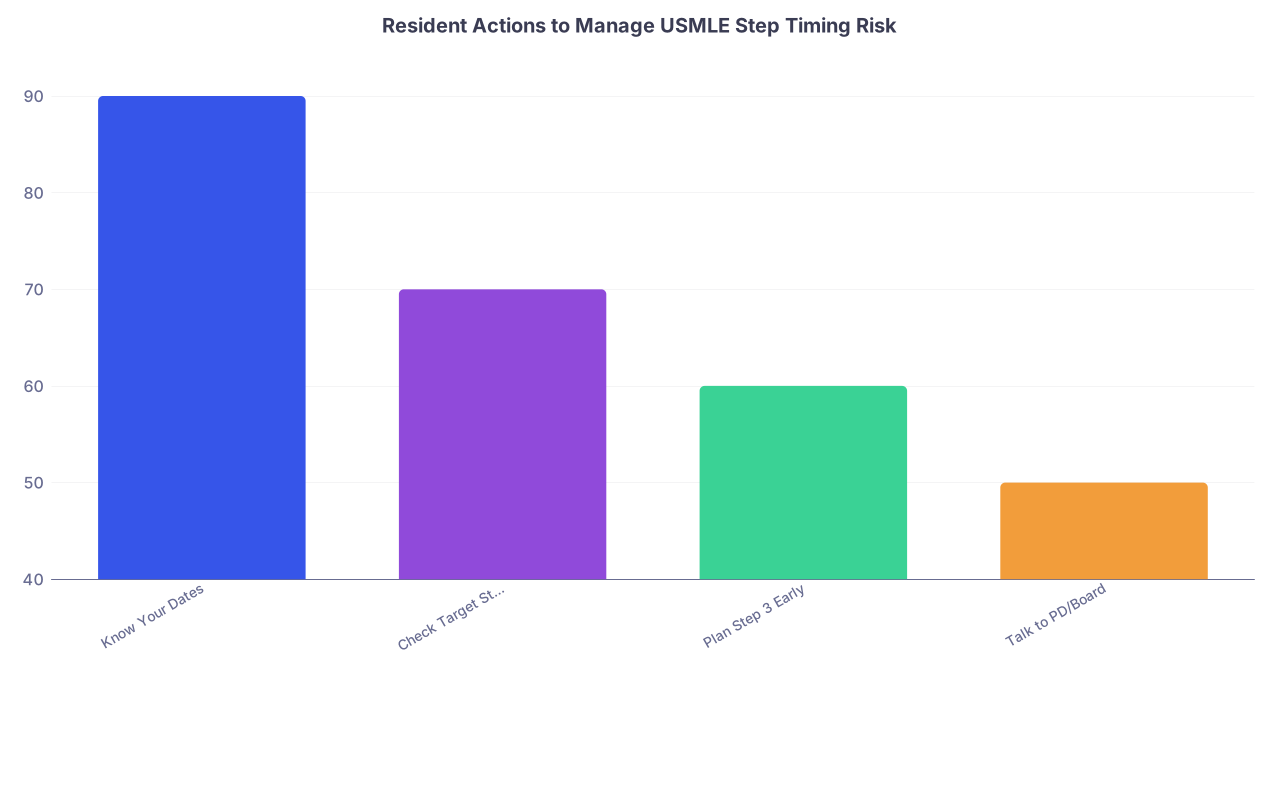
| Category | Value |
|---|---|
| Know Your Dates | 90 |
| Check Target States | 70 |
| Plan Step 3 Early | 60 |
| Talk to PD/Board | 50 |
Interpretation: Most residents at least know their dates. Far fewer actually talk to boards or program leadership early. Be in the 10–20% who do.
And if your Step 2 CK is old and making you anxious, use that anxiety constructively:
- Get your Step 3 booked
- Map your realistic job/fellowship states
- Start a calendar reminder 12–18 months before you’ll need a full license: “Check licensing requirements + contact boards.”
11. Quick Visual: When to Worry About Step Expiration
Here’s a simplified flow. If this already gives you a pit in your stomach, that’s your cue to act.

| Step | Description |
|---|---|
| Step 1 | Know all USMLE dates |
| Step 2 | Low risk - still check states |
| Step 3 | Focus on flexible states |
| Step 4 | Schedule Step 3 ASAP and call board |
| Step 5 | Ask boards about waiver options |
| Step 6 | Any step > 6 years ago? |
| Step 7 | Want 7 year states? |
| Step 8 | Step 3 done? |
12. Tools You Should Actually Use
Do not try to keep this in your head.
Use:
- A simple spreadsheet with columns: Step, Date, Attempts, Notes
- A state list: State, Time limit, Attempts allowed, Waiver notes, Contact info
- Calendar reminders at:
- 1 year before you expect to need full license
- 6 months before
- 3 months before
One evening of boring admin work now saves you from scrambling when an HR rep emails: “Board has flagged your application due to exam dates.”
13. Final Reality Check
Two blunt truths:
Most residents will never be burned by Step 2 CK “expiration,” because they:
- Took Step 1 and Step 2 CK close together
- Took Step 3 during PGY‑1/PGY‑2
- End up in states with generous timelines
The small percentage who do get burned suffer major fallout:
- Delayed start dates
- Lost job offers
- Scrambling to switch fellowship locations
- Financial stress when they expected attending pay but can’t practice yet
You don’t need to obsess. You do need to know which group you’re likely in.
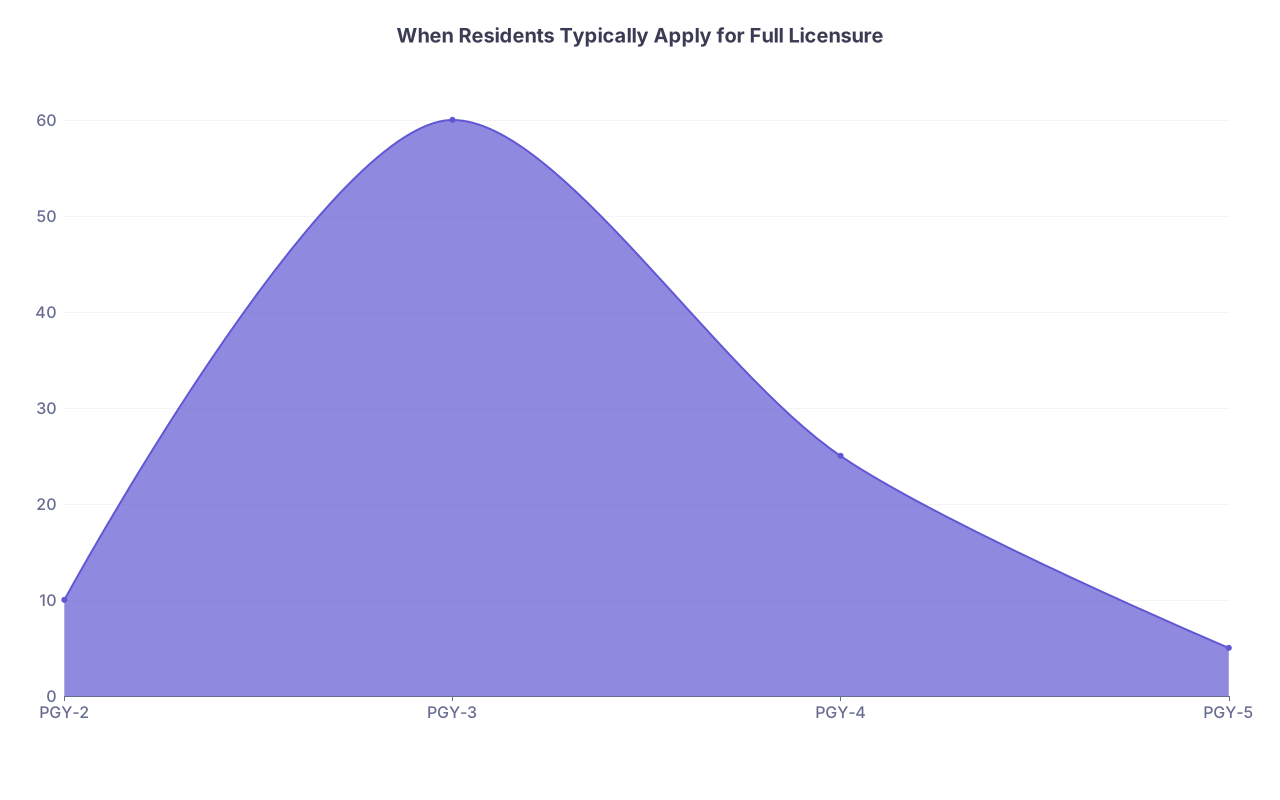
| Category | Value |
|---|---|
| PGY-2 | 10 |
| PGY-3 | 60 |
| PGY-4 | 25 |
| PGY-5 | 5 |
Most people are dealing with this in PGY‑3. If you’re close to 7–10 years out from Step 1 at that point, you’re exactly the person who can’t afford to ignore it.
FAQs
1. Can I retake Step 2 CK just because it is “too old” for a state?
Usually no. USMLE doesn’t let you retake a Step you already passed just to get a fresher score. “My score is expired” is not a valid reason. State boards are supposed to work with the score you already have, within their rules. If they don’t like your timing, the fix is usually waiver or choosing another state, not retaking Step 2.
2. Do fellowship programs care if my Step 2 CK is old?
Most fellowships care about two things: your board eligibility and whether they can get you licensed in their state. They rarely care about the age of Step 2 CK by itself. What they care about is whether your exam timeline violates their state’s board rules. So the problem usually surfaces during onboarding, not during ERAS application review.
3. I’m an MD/PhD and my exams are spread out. Does that help or hurt?
Often it helps. Many states give MD/PhD candidates a longer window, typically 10 years instead of 7, to complete all USMLE steps. You still need to check each state’s rule, but MD/PhD status is one of the most common official exceptions. Don’t assume it applies everywhere though—confirm on the board site or by email.
4. Who should I talk to first: my program director, GME office, or the state board?
If you’re early and just exploring risk, start with your program’s GME office or the designated licensing coordinator—they often know the local board’s quirks. If you already see a clear potential violation for a specific state, contact the state board directly with a precise, factual email. Then loop in your program director once you have an answer or if you’ll need letters/advocacy for a waiver.
Key points to walk away with:
- Step 2 CK doesn’t “expire,” but your combined USMLE timeline can violate state time‑limit rules.
- Know your dates, know your target states’ rules, and time Step 3 accordingly—preferably earlier than feels comfortable.
- If you’re already outside some limits, stop guessing, talk to boards and your program, and build a realistic plan around states and waivers instead of being surprised at the end of residency.