
The worst Step 2 CK prep plan is the one that destroys your clerkship performance. And that is exactly what most students accidentally create.
You’re not just studying for a test. You’re juggling:
- Full-time clinical work
- Shelf exams
- Evaluations that directly affect your residency application
- And then somehow… 250+ on Step 2 CK
You can’t brute-force this with “I’ll just work harder.” You need a timeline. By month. By block. By week. That tells you what to do when so you don’t tank your rotations while chasing a score.
This is that plan.
Big Picture: Your 6–9 Month Step 2 CK Timeline
At this point, assume three things:
- You’ve taken Step 1 (likely pass/fail).
- You’re in core clerkships or about to start them.
- You want a Step 2 CK score that helps — not hurts — your residency application.
Here’s the high-level structure:
- Months 1–2: Light foundation during early clerkships
- Get used to UWorld Step 2 style
- Build daily habits that fit a clerkship day
- Months 3–5: Serious integration with core rotations
- Use clerkships as content review
- Shelf prep = Step 2 prep
- Month 6: Dedicated ramp-up
- Pull content together
- NBMEs, UWSA, timing, weak spots
- Month 7 (optional buffer): Adjust, finalize, take Step 2
- Ideal: Take by late July–August of application year
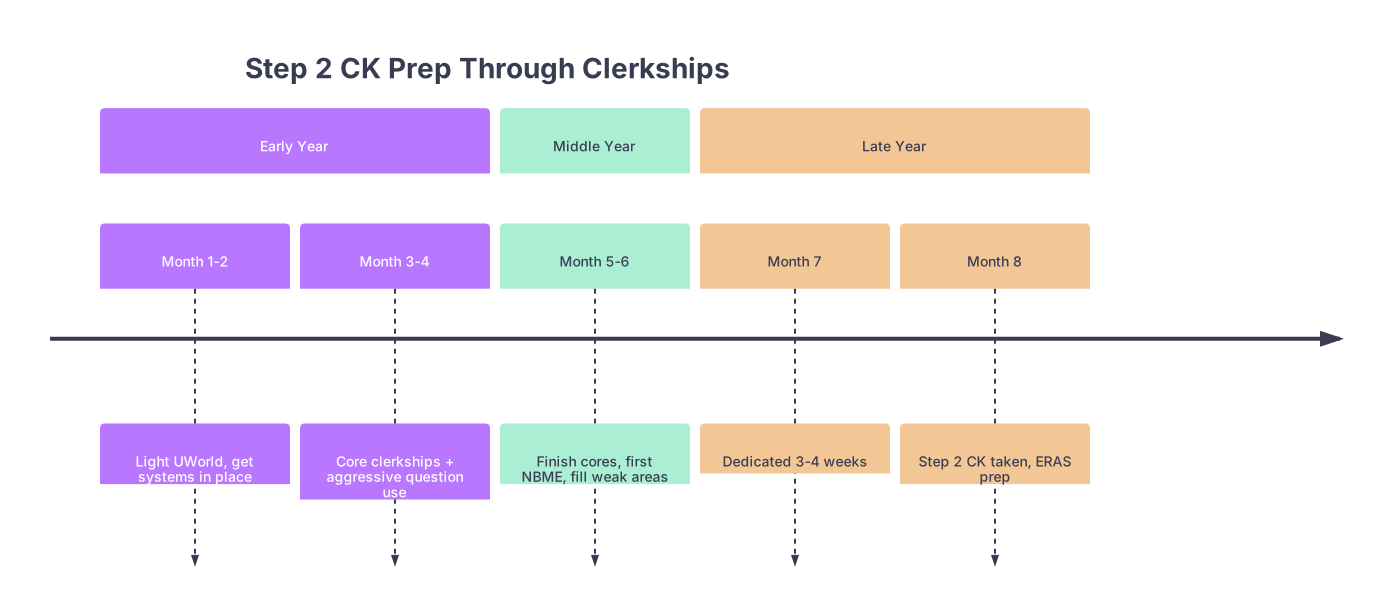
Let me show you how that actually looks on a calendar.
| Period | Event |
|---|---|
| Early Year - Month 1-2 | Light UWorld, get systems in place |
| Early Year - Month 3-4 | Core clerkships + aggressive question use |
| Middle Year - Month 5-6 | Finish cores, first NBME, fill weak areas |
| Late Year - Month 7 | Dedicated 3-4 weeks |
| Late Year - Month 8 | Step 2 CK taken, ERAS prep |
Months 1–2: Early Clerkships – Build the Machine, Not the Score
At this point you should not be chasing a UWorld completion percentage. You should be building a sustainable system.
Core goals this period
- Learn to study on a clinical schedule
- Get comfortable with Step 2 UWorld interface and question style
- Protect your transition into clinical life (don’t be the zombie on rounds)
Aim: 30–60 Step 2 questions per week, not per day, during your first 1–2 months.
Weekly structure in Month 1–2
On lighter rotations (FM, psych, outpatient):
- 3 days per week:
- 10–15 timed, mixed Step 2 UWorld questions after clinic
- 1–1.5 hours of review
- 1 weekend day:
- 20–25 questions + brief content review (like AMBOSS or OnlineMedEd topic)
On heavier rotations (surgery, busy IM):
- 2 weekdays:
- 8–10 questions each, untimed, done at night or early AM
- 1 weekend day:
- 20–25 questions timed, full review
Focus on:
- Internal medicine
- Emergency medicine
- Family medicine
- Ambulatory topics
Because those are the backbone of Step 2 CK.
Non-negotiables in Months 1–2
- Do UWorld on a laptop/desktop when possible. Phone questions are fine for review, not for main sets. You need real test posture.
- Always mixed systems, not “just cardiology week.” Step 2 CK is mixed from start to finish, and your brain must get used to switching gears fast.
- Review > volume. If you’re rushing through questions and not understanding why wrong answers are wrong, you’re wasting time.
At this point, your Step 2 prep should feel like a small add-on to clerkships, not a parallel full-time job.
Months 3–4: Core Clerkships = Step 2 Content Engine
Here’s where most people screw up. They treat shelf studying and Step 2 CK studying like two different things. They’re not.
Done correctly, every shelf block becomes a mini Step 2 block.
Your goal for these months
- Use each clerkship to overlearn that specialty at Step 2 depth
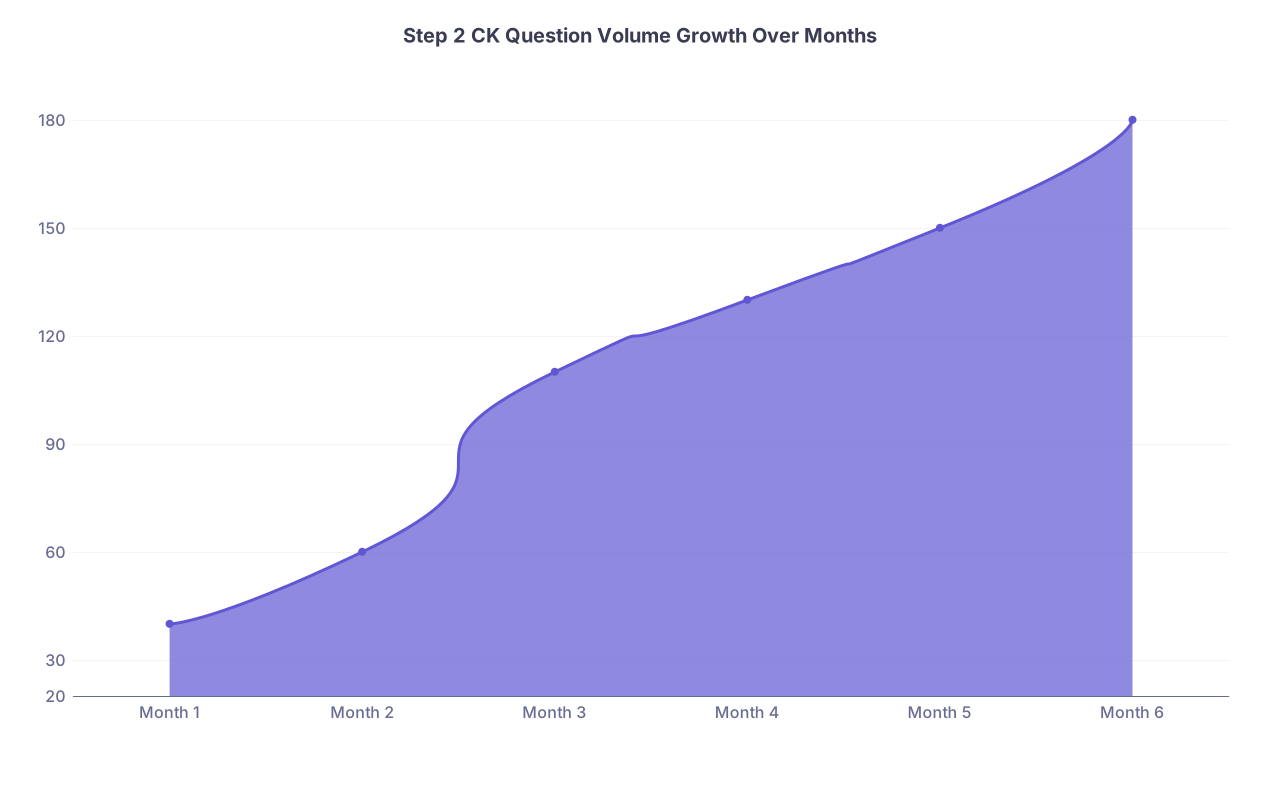
- Increase your question volume to ~100–150 Step 2-style questions per week
- Start tracking performance by system and discipline
| Category | Value |
|---|---|
| Month 1 | 40 |
| Month 2 | 60 |
| Month 3 | 110 |
| Month 4 | 130 |
| Month 5 | 150 |
| Month 6 | 180 |
Rotation-by-rotation strategy
Let’s say you’re on internal medicine for 8 weeks.
Weeks 1–2 (IM block):
- 8–12 UWorld IM questions per day, 5 days/week
- Use Step 2 bank (not just “IM shelf” mode if your resource allows filtering)
- Tie everything back to patients you’re seeing:
- Have a CHF patient? Do HF/HTN questions that night.
- Got burned by hyponatremia on rounds? That’s your topic tonight.
Weeks 3–6:
- Keep shelf-focused, but do mixed Step 2 blocks 2x/week:
- 10–15 questions, mixed subjects
- You’re training your brain to leave “IM silo” mode
Week 7–8 (Shelf lead-up):
- 50–75% questions in that clerkship domain
- 25–50% fully mixed Step 2-style blocks
Same structure applies to peds, OB/GYN, psych, surgery. Use the clerkship’s main bank (UWorld or NBME-style) but always keep some mixed Step 2 questions alive each week.
Daily template on a moderate rotation
You’re on pediatrics, admit until 5–6 PM most days.
At this point you should:
- Get home, decompress 30 min
- Do one of:
- 10–15 questions timed + 45–60 min review
- Or if exhausted: 5–10 untimed + fast review + 15 min reading
Aim for:
- 5 days/week of at least some Step 2-level contact
- One heavier weekend day with 20–40 questions if Friday was light
Months 5–6: Transition From “Clerkship Surviving” to “Score Building”
Around this time, you’re usually finishing your last core or starting early electives. Your score ceiling is now determined by how well you turn this pile of clinical knowledge into test performance.
This is where Step 2 CK flips from background process to primary academic priority.
At this point you should:
- Have ~50–60% of UWorld Step 2 completed (more is great, less is fixable but you need to be intentional).
- Be consistently above 60–65% correct on random timed blocks.
- Start formal self-assessments.
| Metric | Solid Position | Needs Attention |
|---|---|---|
| UWorld Step 2 Completed | 50–70% | < 40% |
| Recent 10-block Average | ≥ 65% correct | < 60% correct |
| NBME Self-Assessment | ≥ 225–235 | < 220 |
| Shelf Performance Trend | Mostly above average | Multiple low passes |
First NBME: When and why
By late Month 5 or early Month 6, take your first NBME Step 2 CK practice exam.
- Do it on a day off, simulate testing conditions
- Use it to:
- Identify weak systems (renal, neuro, OB, etc.)
- Identify weak question types (biostats, ethics, ambulatory)
If you’re:
- Below ~225: You need more content and question volume before your dedicated period.
- 225–240: You’re in striking range; focus on tightening weak zones.
- >240: Now it’s about consistency, timing, and endurance.
Dedicated 3–4 Weeks: The Final Build (Without Burning Out)
Ideal dedicated length for most students: 3–4 weeks of high-intensity prep after most cores are done. Some do 2 weeks and try to YOLO it. I’ve watched that go badly more than once.
Week 1 of Dedicated – Structured Volume
At this point you should:
- Commit to 2–3 UWorld blocks per day (40–60 questions)
- Always timed, random, and mixed
Daily schedule example:
- Block 1 (AM): 20 questions timed (mixed) → 1.5–2 hrs review
- Lunch + 30 min break
- Block 2 (PM): 20 questions timed → 1.5–2 hrs review
- Evening:
- 30–60 min high-yield review (e.g., OME/Boards & Beyond/Anki/AMBOSS)
Topics to especially prioritize:
- Ambulatory care and preventive medicine
- OB/GYN triage and labor management
- Pediatric well-child visits and vaccine schedules
- Biostatistics, ethics, consent, end-of-life
Because those get tested heavily and students consistently underestimate them.
Week 2 – Self-Assessment + Surgical Fixes
This is your “honesty week.”
- Take NBME or UWSA 1 early in the week.
- Same day or next day: Deep dive the mistakes.
- Tag each miss:
- Content gap
- Misread question
- Poor test-taking (overthinking, second-guessing)
- Tag each miss:
| Category | Value |
|---|---|
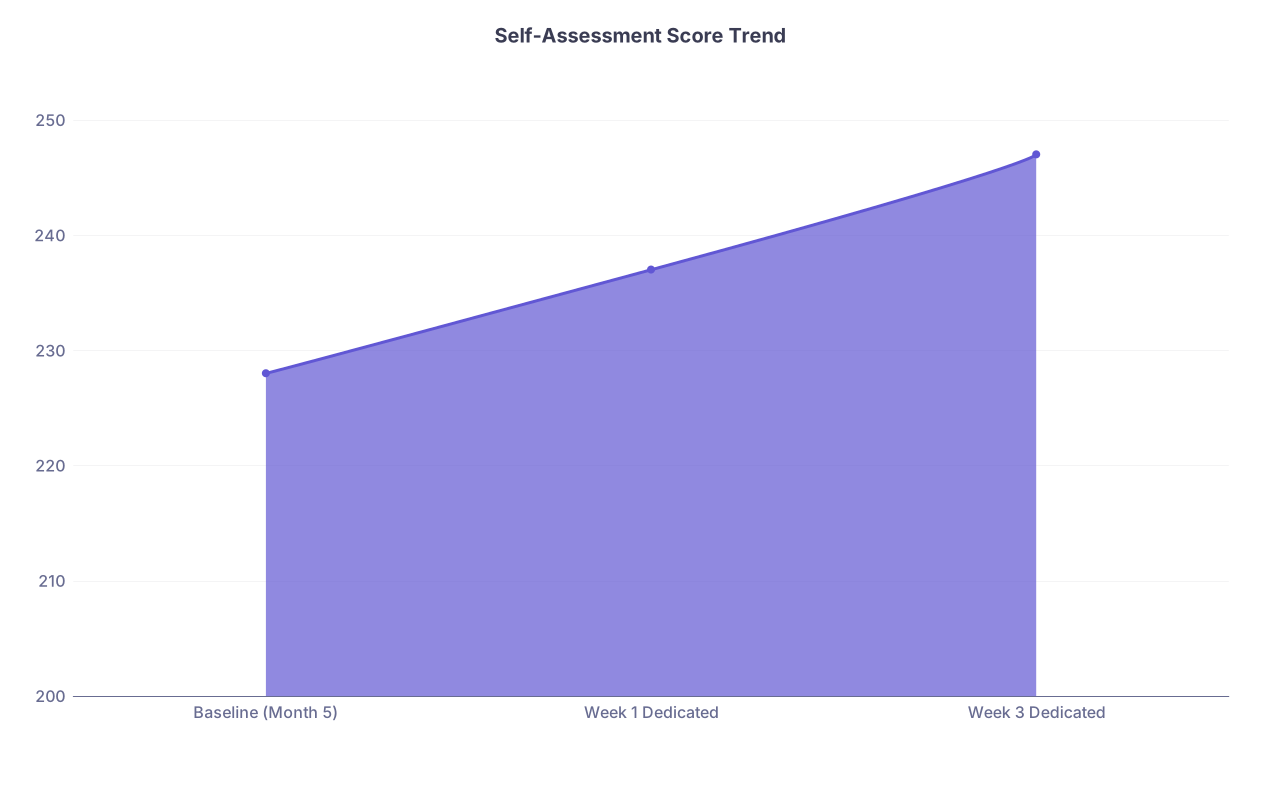
| Baseline (Month 5) | 228 |
| Week 1 Dedicated | 237 |
| Week 3 Dedicated | 247 |
Then:
- Double down on your bottom 3 systems
- Keep 2–3 blocks of UWorld per day
- Add 30–45 min biostats/ethics every other day (they’re easy points if you actually practice them)
Week 3 – Simulation and Endurance
At this point you should be:
- Consistently scoring in or near your target range on practice blocks
- Getting fatigued, but not collapsing
Your priorities:
- Take another self-assessment (NBME or UWSA 2) early this week
- Do at least one “long day” that mimics test day:
- 4 blocks in one day
- Full timing
- Same food, same breaks you plan for the real exam
Focus this week on:
- Endurance
- Timing (finishing with 5–10 minutes to spare)
- Reviewing only what moves the needle — this is not the time to open a 500-page textbook
Optional Week 4 – Buffer and Polishing
Use this if:
- You started dedicated a bit low and improved, but not yet where you want
- You’re waiting for a testing slot
- You had to split dedicated around a sub-I
Structure:
- 40–60 questions per day
- Light content review
- One last self-assessment 5–7 days before the test
How to Prep Hard Without Destroying Clerkships
You can absolutely ruin your clerkship evals by overdoing Step 2 CK. Attendings notice when you’re exhausted, unfocused, or clearly prioritizing your Kindle notes over your patients.
Here’s how you avoid that.
Protect these three things during rotations
Sleep floor: 6 hours
No discussion. The number of students I’ve watched turn into irritable, forgetful messes at 4.5–5 hours is not small. You don’t learn well, you don’t test well, and you certainly don’t impress anyone.
One true off-block per week
At this point each week you should have one half-day or evening with:
- No questions
- No lectures
- No frantic Anki catch-up
If your only personality trait becomes “boards studying,” you will burn out (and your team will quietly dislike you).
Presence on the wards
If you’re constantly:
- Ducking out to “use the bathroom” and really doing Anki
- Scrolling question banks during pre-rounds
- Missing details on your patients because your brain is on UWorld
That’s a red flag. Long-term, glowing evaluations and letters matter more than answering one more antibiotic question.

Weekend Structure During Clerkships
The weekend is where you win or lose Step 2 CK prep without sacrificing clerkship performance.
A realistic model (for a busy IM or surgery month):
Saturday
- Morning (2–3 hours):
- 1 timed block (20–40 questions) + full review
- Afternoon:
- Life stuff (groceries, reset, family)
- Evening (optional 1–1.5 hours):
- Targeted review on one weak topic
Sunday
- Morning (2–3 hours):
- 1–2 blocks (20–40 questions total) + review
- Late afternoon:
- Prep for Monday (read about your patients’ diseases, plan presentations)
- Night:
- Light, low-stress review (10 flashcards, or a short video)
That structure gives you 60–80 high-quality questions each weekend without you turning into a hollowed-out shell by Wednesday.
Aligning Step 2 Timing With ERAS and Match
Now let’s tie this to residency applications, because that’s the whole point.
When should you take Step 2 CK?
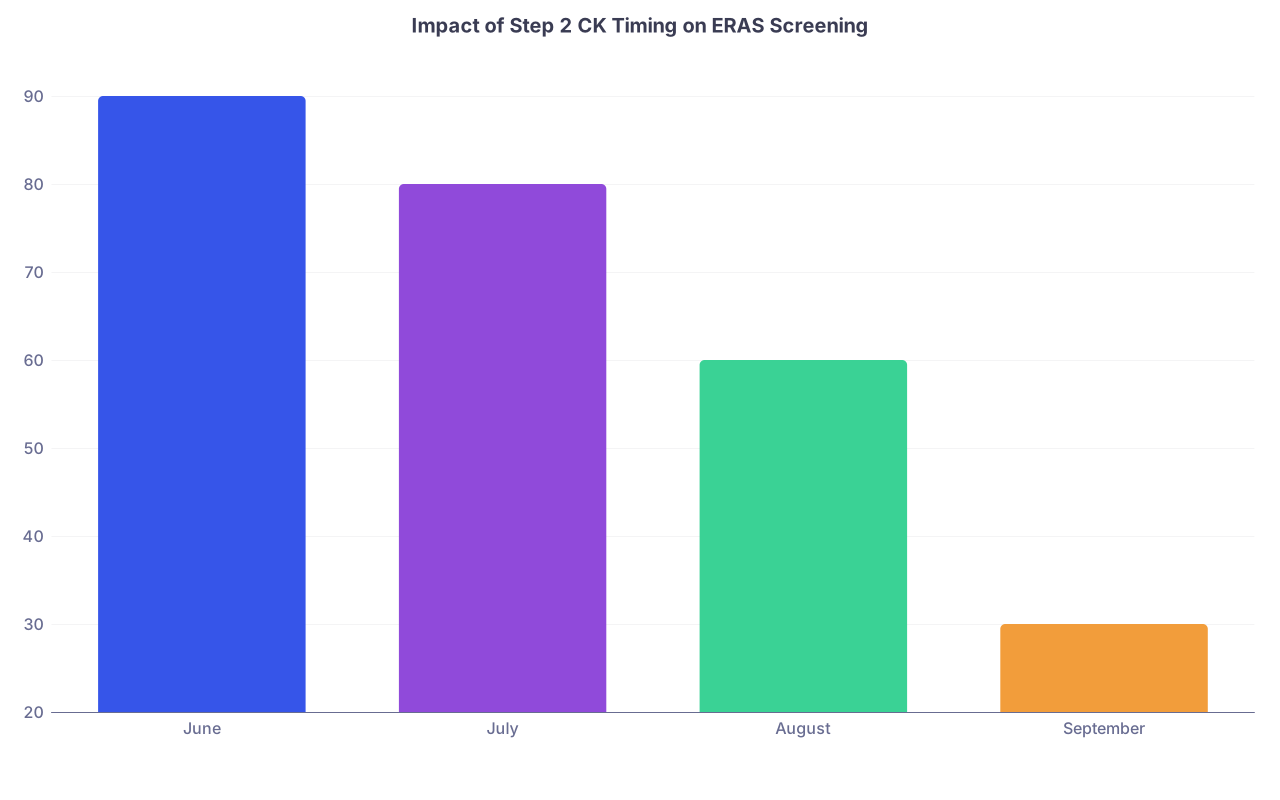
If you’re applying this cycle, you want scores in by early–mid September so programs see it when they first screen.
Work backward:
- Score release ≈ 3–4 weeks after exam
- ERAS submission mid-September
- Ideal Step 2 CK exam date: mid-July to mid-August
For competitive specialties (derm, ortho, ENT, plastics, neurosurg), I push people toward July when possible, especially if Step 1 was mediocre. Programs want proof you can crush a graded exam.
| Category | Value |
|---|---|
| June | 90 |
| July | 80 |
| August | 60 |
| September | 30 |
(Values = rough % of programs likely to see your score before early interview decisions. Earlier = better.)
Sample Month-by-Month Plan (Clerkship Year + Dedicated)
Let’s put this into a concrete timeline. Assume:
- You start clerkships in July
- You apply next September
- You want Step 2 done by late July
July–August (Months 1–2) – Early IM + Surgery
At this point you should:
- Get used to being in the hospital, learn workflow
- Start light Step 2 UWorld (30–60 questions per week)
- Build habits: 45–90 minutes most nights you’re not destroyed
September–December (Months 3–6) – Peds, OB, Psych, FM
Here:
- Question volume increases to 100–150 per week
- Use each rotation’s shelf studying as Step 2 studying
- Maintain 2 mixed Step 2 blocks per week regardless of clerkship
By December you should:
- Have 40–60% of UWorld done
- Be sitting around 60–65% correct on recent blocks

January–March (Months 7–9) – Finish Cores + First Self-Assessment
At this point you should:
- Take your first NBME Step 2 somewhere around Month 8–9
- Patch major weak spots (e.g., OB triage, neuro localizations, renal)
- Continue 100–150 questions/week
If your NBME is:
- ≥ 225: You’re well-positioned.
- < 220: You need to increase question volume and be more ruthless about review.
April–June (Months 10–12) – Early Electives + Dedicated Start
Good time to:
- Schedule a lighter elective before dedicated if possible
- Finish remaining UWorld (or get close)
- Plan 3–4 weeks of dedicated ending 1–2 weeks before your desired exam date
July – Dedicated + Step 2 CK
At this point you:
- Start dedicated with 70–100% UWorld completed
- Take 2–3 self-assessments across the month (NBMEs, UWSAs)
- Sit for Step 2 CK by late July

Quick Reality Checks
Let me be direct:
- If you try to “save Step 2 for dedicated only,” your score will almost always cap lower than it could. The students who break 250+ started integrating questions months earlier.
- If you sacrifice sleep and clerkship performance for a few extra late-night blocks, you lose twice: weaker evals and a brain that retains less.
- If you do thousands of questions and barely review explanations, you’re practicing test-taking motions, not learning medicine.
If You Remember Only Three Things
Start light, start early.
Months 1–2 are for building sustainable study habits around rotations, not for heroic UWorld marathons.Make clerkships and Step 2 work for each other.
Shelf prep is Step 2 prep when you use UWorld-style questions and keep at least some mixed blocks every week.Use dedicated to sharpen, not build from scratch.
Enter dedicated with most of UWorld done, a couple of NBMEs under your belt, and a clear map of your weak systems. Then your final 3–4 weeks can actually move your score, not just expose gaps.