
The biggest mistake students make before Step 2 CK is pretending it is “just another exam.” It is not. In a competitive Match cycle, your final 8 weeks before Step 2 CK are a weapon—or a liability.
I have watched strong applicants slide down rank lists because their Step 2 score came in late or flat. I have also seen mid-tier students catapult into competitive IM, EM, and even Derm interviews on the strength of a clean, early, and clearly improved Step 2 CK performance. At this point in the game, you cannot afford to drift.
This is your week‑by‑week, then day‑by‑day calendar for the final 8 weeks before Step 2 CK, written with one purpose: maximize your score and your value in the residency application pile.
Big Picture: How Your Step 2 Score Hits Your Application
Before the calendar, you need context. Timing and trajectory matter almost as much as the raw number.
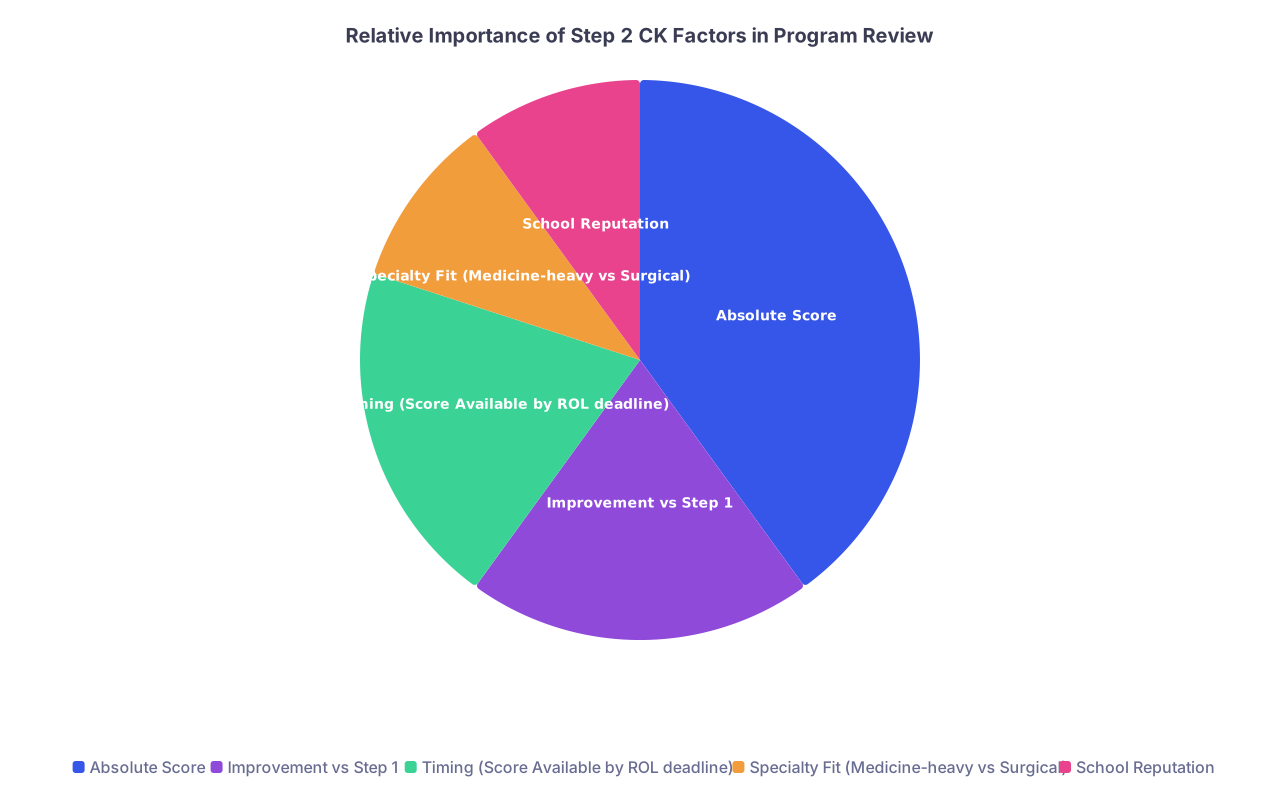
| Category | Value |
|---|---|
| Absolute Score | 40 |
| Improvement vs Step 1 | 20 |
| Timing (Score Available by ROL deadline) | 20 |
| Specialty Fit (Medicine-heavy vs Surgical) | 10 |
| School Reputation | 10 |
Here is the reality I tell every MS3/MS4:
Programs care about:
- Absolute score: Are you above their informal cutoff?
- Trend: Did you improve relative to Step 1, especially if Step 1 was mediocre?
- Timing: Is the score in ERAS when they screen, and before rank lists are finalized?
For competitive or Step‑1‑burned specialties:
- Step 2 CK becomes your primary quantitative filter.
- A strong Step 2 can rescue a pass/fail Step 1 or a weak preclinical record.
- A late Step 2 score can quietly kill you, even if the number is good.
So the question for the next 8 weeks is not “How do I cram everything?” It is:
“How do I structure these 56 days so I walk into the exam peaked, not burned out, with a score that programs trust?”
Let us build that.
Overview: 8‑Week Match‑Focused Step 2 CK Plan
Assumptions:
- Test at the end of Week 8.
- You have completed core clerkships.
- You can study ~6–8 hours/day minimum (more on light rotations, less on heavy ones).
- Main tools:
- UWorld Step 2 CK (non‑negotiable)
- At least 2 NBME forms + 1 UWSA
- Anki or your own review notes
- One core reference (e.g., OnlineMedEd, Step‑Up, Boards & Beyond, or similar)
High‑level phases:
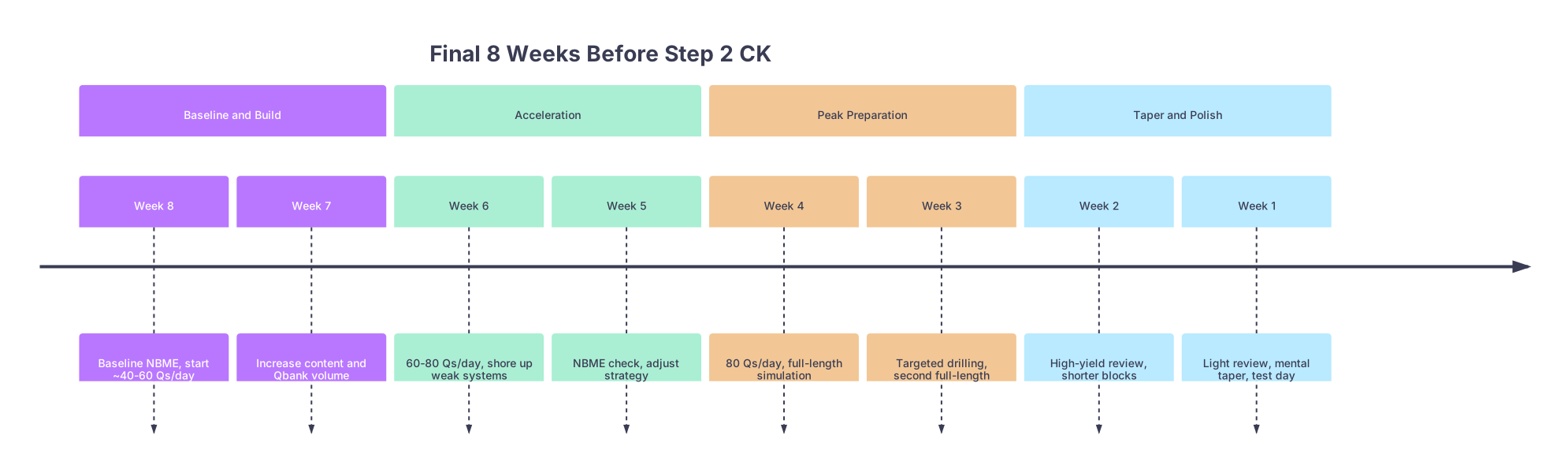
| Period | Event |
|---|---|
| Baseline and Build - Week 8 | Baseline NBME, start ~40-60 Qs/day |
| Baseline and Build - Week 7 | Increase content and Qbank volume |
| Acceleration - Week 6 | 60-80 Qs/day, shore up weak systems |
| Acceleration - Week 5 | NBME check, adjust strategy |
| Peak Preparation - Week 4 | 80 Qs/day, full-length simulation |
| Peak Preparation - Week 3 | Targeted drilling, second full-length |
| Taper and Polish - Week 2 | High-yield review, shorter blocks |
| Taper and Polish - Week 1 | Light review, mental taper, test day |
Now we go week by week, then zoom into the final 10 days with more detail.
Week 8 (Day 1–7): Baseline and Build
At this point you should stop guessing and get real numbers.
Day 1: Hard Baseline
- Take an NBME (e.g., NBME 10, 11, or the newest available) under strict exam conditions.
- No pausing.
- Proper breaks.
- Quiet environment.
- Record:
- Overall score
- Percent correct by system (cards, neuro, renal, etc.)
- Percent correct by discipline (IM, peds, OB, surgery, psych)
Create a simple table like this:
| Area | Percent Correct | Priority Level |
|---|---|---|
| Internal Med | 62% | High |
| Surgery | 70% | Medium |
| OB/GYN | 55% | High |
| Pediatrics | 68% | Medium |
| Psychiatry | 78% | Low |
This is your map. Do not study blindly.
Days 2–7: Build Core Volume
Goal this week:
- 40–60 UWorld questions/day, timed, random, 2–3 blocks/day depending on schedule.
- Start a daily review habit you can sustain.
At this point you should:
Set daily non‑negotiables
- 2–3 blocks UWorld (timed, random, mixed).
- Review every question (even the ones you got right).
- 30–45 minutes of targeted content (video or notes) on your worst system of the day.
Structure your day (example on light rotation)
- 08:00–10:00 – 2 blocks (76 questions) timed, random.
- 10:00–13:00 – Review those questions in depth.
- 14:00–15:00 – Short content block (e.g., OB hemorrhage, CHF management).
- 15:00–16:00 – Anki / flashcard review.
On a heavy ward month, compress:
- 1 block (38 Qs) pre‑rounds or post‑call.
- 1 block (38 Qs) in the evening.
- You still review all of them, even if you have to push some review to the next day.
By the end of Week 8 you should:
- Have ~250–300 new UWorld questions done.
- Know exactly which three systems are most concerning.
- Have selected your test date and registered (if not already).
Week 7 (Day 8–14): Volume with Intent
Now you ramp up without getting sloppy.
Target:
- 50–70 UWorld questions/day.
- Begin pattern recognition: common Step 2 CK “traps,” time sinks, and classic vignettes.
At this point you should:
Introduce system‑biased review
- Still use random blocks, but:
- Dedicate your content review to 1–2 weak systems per day.
- Example: Morning blocks mixed; afternoon content = OB + pediatrics.
- Still use random blocks, but:
Track your time
- A lot of students are fine on knowledge but bomb the exam on pacing.
- Watch:
- Time per block (aim ~70–75 minutes for a 40‑question block in practice).
- Items where you consistently run over 90 seconds.
Weekly mini‑audit (Day 14)
- Look at UWorld performance by system.
- Re‑rank your weak areas.
- Decide whether you need:
- More internal medicine depth.
- Or more OB/peds algorithms.
- Or psych/surg clean‑up.
By the end of Week 7 you should:
- Have ~600–700 total UWorld questions completed.
- See your percent correct trending upwards, even if slowly.
- Have a realistic idea of your likely Step 2 range (±10 points).
Week 6 (Day 15–21): Structured Acceleration
This is where serious score movement happens if you do it correctly. No autopilot.
Target:
- 60–80 UWorld questions/day on lighter rotations.
- 40–60/day if you are on nights or a brutal service.
Days 15–17: System Clean‑Up Blocks
- At this point you should:
- Run one mixed random block + one system‑focused block daily for 3 days.
- Example:
- Block 1: Random mixed.
- Block 2: OB‑heavy (or IM‑heavy, etc.).
- Content afterward should be algorithm‑based:
- Read treatment / diagnostic ladders:
- Chest pain workup.
- Prenatal screening sequences.
- Pediatric fever and sepsis evaluation.
- Pre‑op clearance, post‑op complications.
- Read treatment / diagnostic ladders:
Days 18–21: Full‑Exam Prep Mindset
- Start acting like the exam is near:
- Do occasional 2‑block runs back‑to‑back without long breaks.
- Practice managing fatigue and attention drop after 60+ questions.
By the end of Week 6 you should:
- Hit ~900–1,000 total UWorld questions completed.
- Have clearly shrinking “red zones” in your weak systems.
- Feel less surprised by vignettes; more “I have seen this flavor before.”
Week 5 (Day 22–28): Reality Check NBME and Course Correction
This week you connect all the work to an actual predicted score that matters for the Match.
Day 22 or 23: Second NBME
- Take another NBME under test‑day conditions. Use a different form than baseline.
- Compare:
- Score vs baseline.
- Systems that improved.
- Systems that are still stubbornly low.
You should see some improvement. If you do not:
- You are likely:
- Rushing through explanations.
- Not doing enough post‑question content review.
- Spreading yourself across too many resources.
Fix it now.
Days 24–28: Targeted Repair Week
At this point you should:
Pick 2–3 focus areas for the week
- For example:
- OB hemorrhage, shoulder dystocia, prenatal screening.
- Renal and electrolyte disturbances.
- Infectious disease workups and treatment durations.
- For example:
Daily structure example
- 2 random timed blocks (76 Qs).
- 1 focused block (38 Qs) in your worst system every other day.
- 1–2 hours reviewing:
- Algorithms.
- Tables.
- Classic “buzz phrases” that are actually Step 2 code (e.g., “polymorphic, waxing and waning joint pains + new murmur” → think endocarditis workup).
You should end Week 5 with:
- At least 50–60% of UWorld completed (if you started near 0).
- A concrete plan for finishing the bank by ~Week 2.
- A confirmed exam date that lines up with your ERAS timeline (score back before rank lists).
Week 4 (Day 29–35): Peak Workload and First Full‑Length Style Day
Now the calendar moves from “building” to “simulating.”
Target:
- 80 questions/day on most days, with at least one full‑test‑style day.
Days 29–32: High‑Volume Mixed Work
- At this point you should:
- Do 3 blocks/day (114 Qs) on at least 2 days this week if your schedule allows.
- On rotation: 2 blocks/day minimum; one pre‑rounds or during downtime, one evening.
This week your emphasis:
- Do not dodge weak systems. Force them into your random mix.
- Expand your comfort with typical testing traps:
- Choosing next best step, not “a possible step.”
- Distinguishing between “order test” vs “start treatment now.”
- Recognizing when the exam wants risk stratification tools (Wells, TIMI, GCS, etc).
Day 33 or 34: UWSA (or NBME, depending on your school preference)
- Treat this like a dress rehearsal:
- Same wake‑up time as test day.
- Same breakfast.
- Limited phone use.
- Timed blocks with real breaks.
Record:
- Overall score (UWSAs tend to slightly overshoot, NBME slightly undershoot; I aim to land in the overlap).
- Session feedback by discipline.
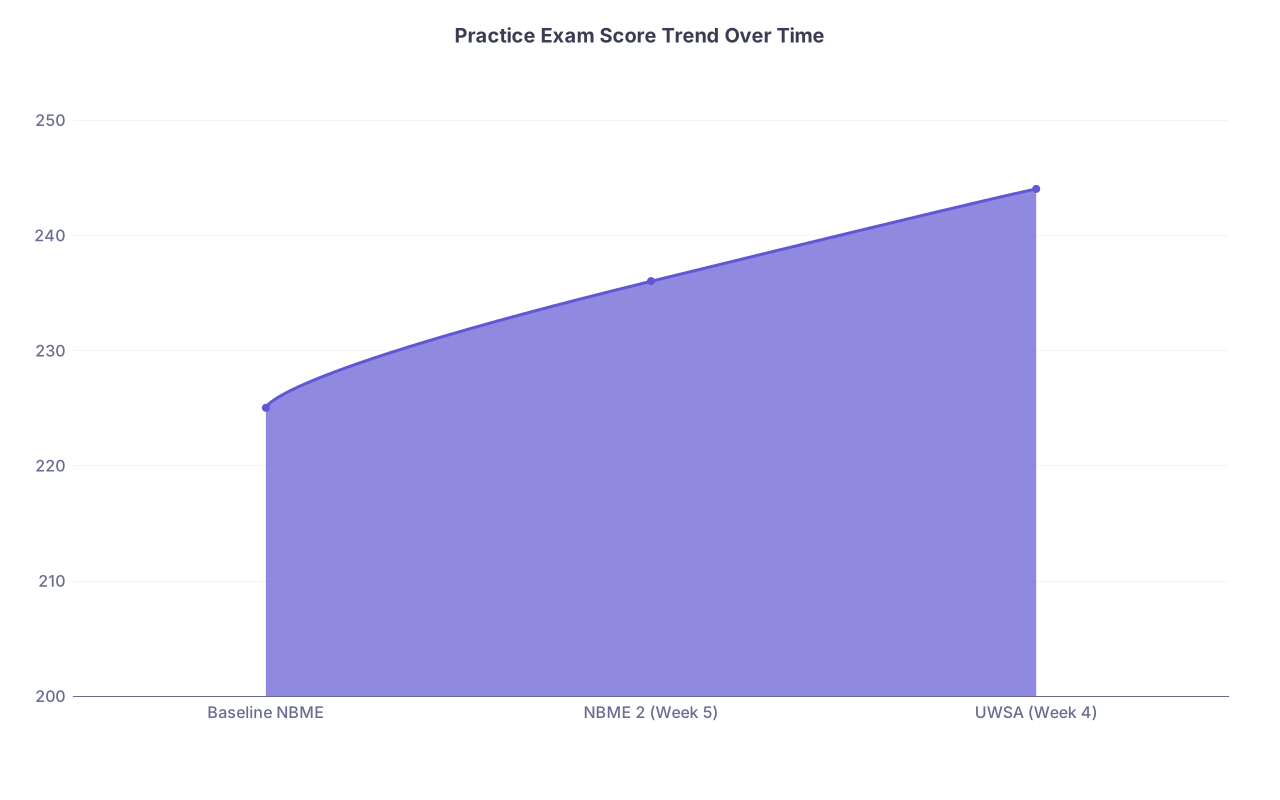
| Category | Value |
|---|---|
| Baseline NBME | 225 |
| NBME 2 (Week 5) | 236 |
| UWSA (Week 4) | 244 |
If your trajectory looks like this (upward), you are on track. If it is flat or dropping, you must adjust intensity or delay the exam if timing allows.
Days 35: Light Review + Debrief
- Instead of hammering more new questions, spend a half day:
- Reviewing missed/UW‑marked questions.
- Summarizing common patterns:
- Which topics are you still missing?
- Are your errors knowledge‑based or rushing/reading errors?
Week 3 (Day 36–42): Targeted Polishing and Second Full Exam Feel
This week is about refinement, not discovering new resources.
At this point you should:
- Have ~75–85% of your QBank completed.
- Be scoring near or above your target range on NBMEs/UWSA.
Days 36–39: Aggressive Weak‑Area Assault
- Each day:
- 2 mixed timed blocks.
- 1 focused block on weakest system or discipline (e.g., neuro, OB, or psych).
- 1–2 hours of:
- Reading through high‑yield tables.
- Re‑writing algorithms you still mix up (e.g., stroke management window, ACS steps, thyroid nodules).
Day 40–41: Second Simulation (Depending on your schedule)
- If you took an NBME last time, take UWSA now, or vice versa.
- Goal:
- Confirm stability of score.
- Identify any last landmines.
If this score is:
- Within 5–10 points of your target → keep your date.
- Well below your realistic program cutoff → consider:
- Whether delaying the test (and thus the score release) hurts more than a lower score.
- For very competitive specialties, a lower Step 2 can be more damaging than a late one. Brutal truth.
Day 42: Recovery + Light Consolidation
- Half‑day only:
- Review incorrects from practice exam.
- Refresh your most‑missed topics list.
You should now have:
- A pretty stable picture of your test‑day performance band.
- A nearly completed QBank.
Week 2 (Day 43–49): Taper the Volume, Sharpen the Edges
This is where many students blow it by trying to set personal records for number of questions. That is not the move.
Your brain needs:
- Repetition of highest‑yield patterns, not raw volume.
- Sleep and consistency to consolidate.
At this point you should:
- Decrease to 60–70 Qs/day for most.
- Focus on marked questions, weak systems, and error patterns.
Days 43–46: High‑Yield Circuit
Daily:
- 1–2 mixed blocks.
- 1 block entirely from:
- Marked Qs.
- Incorrect Qs you re‑added to a custom block.
Afterwards:
- 60–90 minutes of:
- Reviewing Anki / cards selectively:
- Antibiotics and their coverage.
- Vaccination schedules.
- Screening guidelines.
- Emergency management (airway, sepsis, status epilepticus, etc.).
- Reviewing Anki / cards selectively:
Day 47–48: “Mini‑Exam” Rehearsal
- Run 3 blocks back‑to‑back one day this week:
- Goal is stamina and timing, not new score data.
- Take short NBME‑style breaks.
- Afterward, do:
- Only brief review of major concepts.
- No 6‑hour explanation marathons. Protect your brain.
Day 49: Start the Taper
- 1 light block (or even none if severely fatigued).
- Review high‑yield cheat sheets, not textbooks:
- Emergency algorithms.
- OB emergencies.
- Pediatric rashes and “sick vs well” features.
- Classic neuro localizations.
By the end of Week 2 you should:
- Feel like you have “seen” most things that could show up.
- Be slightly mentally tired but not destroyed.
Week 1 (Day 50–56): Final Countdown – Day‑by‑Day
Here is where the timeline shifts to almost daily micromanagement. This is intentional. One bad decision this week can shave points off your score.
Day 50–52: Final Solid Work Days
At this point you should:
- Do 40–60 well‑chosen questions/day:
- Marked Qs.
- Weak topics.
- A few randoms to maintain variety.
And:
- Spend 1–2 hours on:
- Your personal “Top 20” list of topics you still dislike:
- Example: “Hyponatremia, adrenal insufficiency, peripartum cardiomyopathy, pediatric seizure types, peritonitis vs pancreatitis lab patterns.”
- Your personal “Top 20” list of topics you still dislike:
No new resources. No panic videos. Commit to the plan.
Day 53: Light + Logistics
Action items:
- 1 short block (optional).
- Review:
- Test center location.
- Travel plan if needed (parking, ID, snack list).
- Prepare:
- Snacks (nothing new the morning of the exam).
- Water bottle (if allowed).
- Comfortable layers of clothing.
You should also:
- Set your sleep schedule to match test day.
- If exam at 8 a.m., wake up at that time for several days.
- Do not flip your circadian rhythm the night before.
Day 54: High‑Yield Pass, No New Data
This day is for confidence, not experimentation.
- Do:
- Review condensed notes, high‑yield tables, algorithms.
- Skim through any missed “must‑know” Anki decks.
- Avoid:
- New practice tests.
- Massive new QBank chunks.
Your brain at this point is better served by reinforcement, not novelty.
Day 55: Day Before the Exam
At this point you should stop trying to prove anything.
Morning:
- 20–30 ultra‑light questions at most, only if they keep you calm.
- More important: brief review of:
- Test‑day strategy:
- Flagging questions but not over‑flagging.
- How you will handle a block where you feel behind.
- Test‑day strategy:
Afternoon:
- Close the resources.
- Move your body:
- Walk.
- Stretch.
- Set out:
- Clothes.
- ID.
- Snacks.
- Route and backup transportation to test site.
Evening:
- No studying after dinner.
- Aim for a consistent bedtime.
- Accept that your score is effectively locked. That helps your brain stop spinning.
Day 56: Test Day
Morning:
- Light breakfast you have tolerated before.
- No heavy sugar bomb. No experimental energy drinks.
- Quick glance at 1–2 calming notes only if it relaxes you. Otherwise, nothing.
During the exam:
- At this point you should:
- Stick to your practiced pacing (roughly 1–1.2 minutes/question).
- Use breaks the way you did during practice exams.
- Not post‑mortem earlier blocks during later ones.
Your performance is not about genius today. It is about executing the habits you built over the last 8 weeks.
One More Match‑Specific Reality Check
For residency programs, your Step 2 CK story reads like this:
- Did you:
- Take it early enough that the score was there when they needed it?
- Show an upward trajectory from Step 1?
- Land above their informal cutoff for your chosen specialty?
This 8‑week timeline is built to answer “yes” to all three.
Do not wait for the perfect moment or the perfect resource. Take one concrete step now:
Print a blank 8‑week calendar today and block out your NBME days, your UWSA day, and your test date. Then backfill which weeks are “build,” “simulate,” and “taper.” That single act turns Step 2 CK from a vague threat into a scheduled, beatable target.