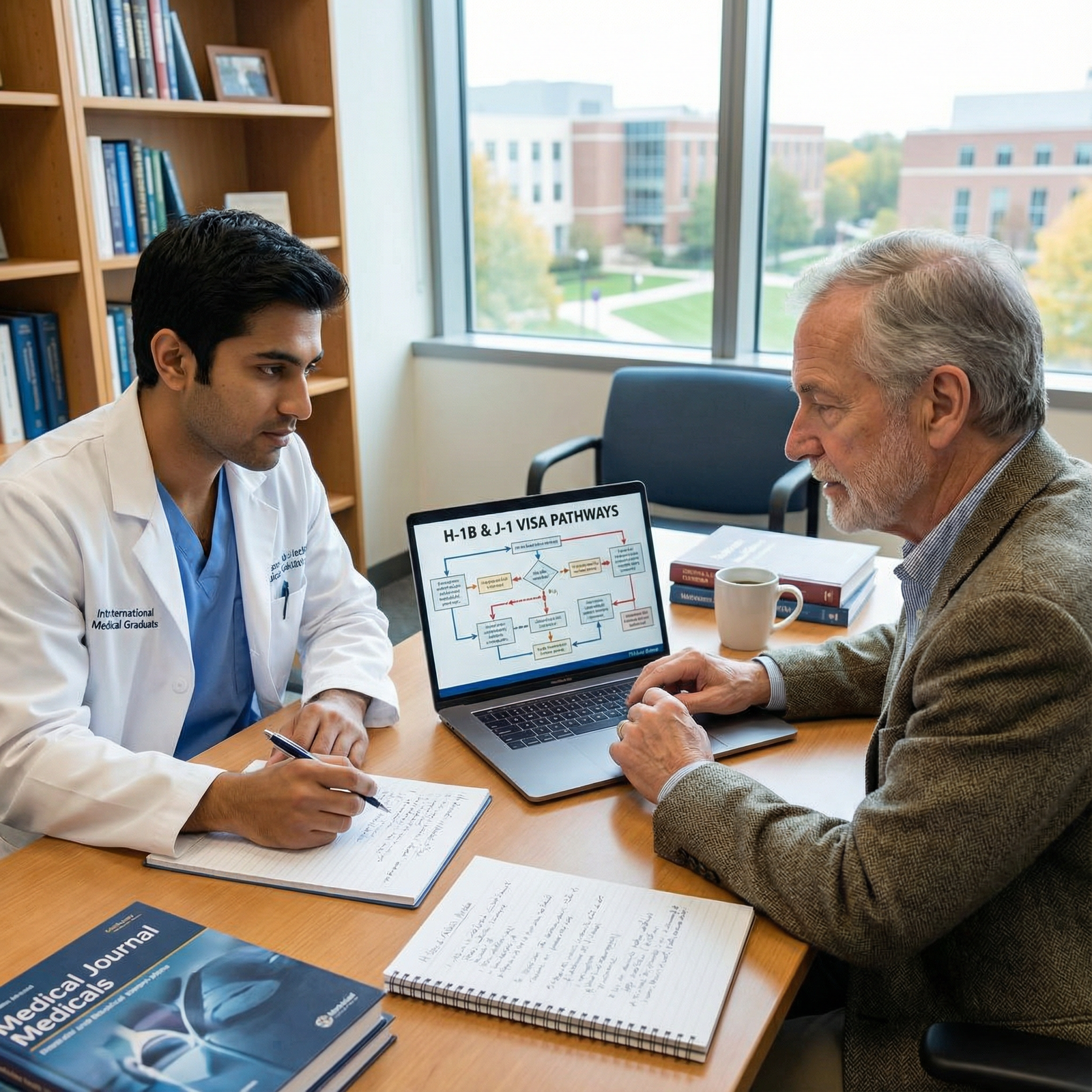
Understanding the Visa Landscape for Caribbean IMGs in Preliminary Surgery
For a Caribbean medical graduate pursuing a preliminary surgery residency in the United States, visa strategy is not an afterthought—it’s a core component of your overall residency application plan. This is especially true if you trained at a Caribbean medical school and are targeting a preliminary surgery year as an international medical graduate (IMG).
Caribbean schools (including large programs like SGU, AUC, Ross, Saba, etc.) send hundreds of graduates into US training each year. Many successfully secure residency through the NRMP Match, with strong outcomes such as the SGU residency match reports often highlighting US clinical placements. But matching into a prelim surgery residency as an IMG requires understanding residency visa realities just as much as USMLE scores and letters of recommendation.
This guide focuses specifically on:
- What visa types are most common and realistic for Caribbean IMGs in preliminary surgery
- How J-1 vs H-1B choices affect your career trajectory
- How to integrate visa strategy into your Caribbean medical school residency plan
- Practical steps and timelines to avoid last-minute visa surprises
Core Visa Options for Caribbean IMGs: J-1 vs H-1B and Beyond
For most Caribbean IMGs, there are two primary IMG visa options for residency:
- J-1 Exchange Visitor (ECFMG-sponsored)
- H-1B Temporary Worker (employer-sponsored)
A small subset may have other pathways (e.g., green card, F-1 OPT, or other dependent visas), but for the majority, the J-1 vs H-1B decision is central.
1. J-1 Visa for Residency (ECFMG-Sponsored)
The J-1 visa is the most common visa for IMGs in US residency programs, including those in preliminary surgery.
Key Features:
- Sponsor: ECFMG, not the hospital
- Training-focused: Specifically for graduate medical education (GME)
- Renewable annually for the duration of ACGME-accredited training
- Two-year home residence requirement (HRR) after completion of training, in most cases
Eligibility Basics:
To get a J-1 for residency, you typically need:
- Valid ECFMG certification
- A signed residency contract from an ACGME-accredited program
- Proof of sufficient funding/salary (usually met by residency stipend)
- Health insurance coverage for you (and dependents, if applicable)
- Compliance with ECFMG’s requirements and documentation deadlines
For a Caribbean IMG in preliminary surgery, the J-1 is often the most realistic and accessible option, especially for:
- 1-year preliminary surgery year
- Transitioning later into a categorical position or another specialty
Advantages of J-1 for Caribbean IMGs:
- Widely accepted by residency programs
- Structured and standardized process through ECFMG
- Many surgical programs are already optimized for J-1 sponsorship
- No need for USMLE Step 3 before starting residency
Main Disadvantage: Home Residence Requirement
Most J-1 physicians are subject to a two-year home residence requirement (the “212(e)” rule):
- After finishing training, you must either:
- Return to your home country (or last country of legal permanent residence) for 2 years, or
- Obtain a J-1 waiver (e.g., via Conrad 30 underserved program, VA, HHS programs, etc.)
- This HRR can complicate:
- Immediate transition to H-1B for fellowship or attending jobs
- Permanent residency (green card) pathways in the short term
For a Caribbean IMG whose country of nationality or residence is in the Caribbean, your “home country” for HRR purposes matters; it may be where you hold citizenship or your last legal permanent residence before entering the US on J-1.
2. H-1B Visa for Residency (Cap-Exempt)
The H-1B is a temporary worker visa that can be used for residency in some programs.
Key Features:
- Employer-sponsored (the hospital or residency program is the sponsor)
- “Specialty occupation” classification; residency qualifies
- Dual intent: You can pursue a green card without violating status
- Not subject to the regular H-1B lottery if the hospital is a cap-exempt institution (e.g., most academic medical centers)
ELIGIBILITY HURDLES SPECIFICALLY FOR RESIDENCY:
- You must have passed USMLE Step 3 before H-1B petition filing (most states and employers require this)
- The program must support and pay for H-1B filing
- State medical board rules: some states have unique requirements
Because Step 3 must be completed before petition submission, this can be a major barrier for Caribbean IMGs aiming for preliminary surgery, as:
- Many students focus on Step 1 and Step 2 CK to apply for the Caribbean medical school residency match
- Step 3 often is taken during or after PGY-1, which is too late for H-1B for that initial year
Advantages of H-1B:
- No automatic 2-year home residence requirement
- More flexibility for:
- Transition to fellowships on H-1B
- Pursuit of green card sponsorship as a resident or early attending
- Often preferred for long-term plans to remain in the US without needing a J-1 waiver
Disadvantages/Limitations for Prelim Surgery IMGs:
- Fewer surgical programs sponsor H-1B for preliminary positions
- Step 3 requirement is a major barrier before PGY-1
- Higher cost and administrative burden for the employer
- Some programs have a strict “J-1 only” policy
For a Caribbean IMG specifically targeting a prelim surgery residency, relying on H-1B as your primary visa strategy is usually high-risk, unless:
- You already have Step 3 completed early
- You have strong scores, US clinical experience (USCE), and program connections
- You identify surgical programs that explicitly support H-1B and are willing even for prelim slots
3. Other Statuses: F-1 OPT, Green Card, and Dependents
Some Caribbean IMGs may have alternative immigration contexts:
F-1 OPT (Optional Practical Training)
- Rarely used directly for residency; more common for research positions
- Some graduates from US-based master’s programs enter research years on OPT, then convert to J-1 or H-1B for residency
Green Card / US Permanent Resident
- If you already have a green card, you don’t need a residency visa
- Strongly simplifies your application; opens more options for prelim and categorical surgery
Dependent Visas (H-4, L-2, etc.)
- May allow you to be in the US legally, but often don’t permit employment
- You typically still need J-1 or H-1B authorization to work as a resident
- Strategy: switch to J-1 or H-1B once you secure a residency position
How Visa Type Interacts with Preliminary Surgery Pathways
Preliminary surgery is distinct from categorical surgery, and that distinction significantly affects visa navigation for Caribbean IMGs.
Prelim vs Categorical Surgery: Why It Matters for Visa Strategy
Categorical Surgery:
- A full 5+ year training track leading to board eligibility
- Programs are more likely to invest in long-term visa strategies (J-1 or H-1B)
- Easier for planning your J-1 training duration in one program
Preliminary Surgery (1-year, occasionally 2-year):
- Often used as:
- A stepping stone toward later categorical surgery
- A bridge to another specialty (e.g., radiology, anesthesia, categorical IM)
- A buffer year to strengthen your application (US experience, letters, networking)
- Programs may be less willing to sponsor complex visas for a 1-year slot
- Often used as:
Understanding these differences is essential before you commit to a particular residency visa approach.
J-1 and a One-Year Preliminary Surgery Position
J-1 works reasonably well with a prelim surgery year, especially if you are aiming to:
- Transition into a categorical surgery spot (within or outside the same institution)
- Pivot into another specialty (e.g., internal medicine, family medicine) in subsequent matches
Key considerations:
Training Duration on J-1
- ECFMG typically permits J-1 sponsorship for the full expected length of your GME training plan.
- For a one-year preliminary position, your initial DS-2019 will likely reflect that year only.
- If you later match into a new program (e.g., categorical surgery or IM), you must extend your J-1 with updated contract and program details.
Continuity of Visa Status
- As long as you remain in ACGME-accredited training and maintain J-1 sponsorship each year, you don’t fall out of status.
- The two-year HRR usually applies after your final year of J-1 training, not after each prelim year.
Strategic Use of Prelim Year
- Use the year to:
- Build strong US surgical letters of recommendation
- Improve your application for the next NRMP Match
- Explore J-1 waiver options you might pursue after completing total GME training
- Use the year to:
H-1B and Preliminary Surgery: Why It’s Rare
While technically possible, an H-1B for a one-year prelim is uncommon:
- Programs often prefer to reserve H-1B sponsorship for:
- Categorical residents they will train long-term
- Fellows or attendings
- The administrative and financial burden for a 1-year position is not appealing for many hospitals.
If a program does support H-1B for prelim surgery, expect strict requirements:
- USMLE Step 3 passed early
- Demonstrated commitment to surgery and strong application
- Sometimes, internal priority (e.g., research track or prearranged upgrade to categorical)
For most Caribbean IMGs targeting prelim surgery, it’s safest to assume:
- J-1 will be the primary, viable option
- If you aim for H-1B long-term, you may rely on:
- Transferring later in fellowship or attending roles
- Changing status after completing J-1 and obtaining a waiver
Practical Visa Strategy for Caribbean IMGs in Preliminary Surgery
To make visa issues an advantage rather than a barrier, you need a stepwise plan integrated with your overall residency goals.
Step 1: Clarify Your Long-Term Career Goal
Before comparing J-1 vs H-1B, ask:
Is your ultimate goal:
- Long-term surgical practice in the US?
- Flexible location (could practice in home country or region)?
- Non-surgical specialty after using prelim surgery as a stepping stone?
Are you open to:
- Working in underserved or rural US areas (J-1 waiver opportunities)?
- Returning to your home country for at least two years after training?
Example Scenarios:
Scenario A: Committed to Long-Term US Surgical Practice
You are a Caribbean IMG strongly focused on US surgery, willing to work in underserved areas.- J-1 for preliminary and categorical training
- Pursue Conrad 30 J-1 waiver in a state with strong surgical demand
- Later transition to H-1B and possibly a green card via employer
Scenario B: Interested in Flexibility, Possibly Another Specialty
You’re open to surgery, but also IM or anesthesia, and might return to the Caribbean later.- J-1 for prelim surgery to gain US experience
- Re-match into a different specialty on J-1
- HRR may not be a major concern if returning home is acceptable
Scenario C: Strong Preference to Avoid Two-Year HRR
Remaining in the US continuously is a high priority.- Aggressively pursue H-1B by:
- Taking and passing USMLE Step 3 before Match
- Targeting programs known for H-1B sponsorship
- Being realistic that this path is competitive and more limited for prelim surgery
- Aggressively pursue H-1B by:
Step 2: Research Program Visa Policies Early
When building your program list for Caribbean medical school residency applications, carefully review each program’s stance on residency visa types.
Actionable steps:
On program websites, look for:
- “We sponsor J-1 visas only”
- “We sponsor J-1 and H-1B visas”
- “We do not sponsor visas”
Email program coordinators early in the season if the website is unclear:
- Ask specifically:
- “Do you sponsor visas for preliminary surgery positions?”
- “Which visas (J-1, H-1B) do you support for prelim residents?”
- Ask specifically:
Prioritize:
- Programs that explicitly mention support for IMG visa options
- Large academic centers with a history of training many Caribbean IMGs
Step 3: Align Your Exam Timeline With Visa Strategy
For J-1:
- Focus on:
- Strong Step 1 and Step 2 CK scores
- Timely ECFMG certification
- Step 3 is not required to start on J-1, so you can take it:
- During your prelim surgery year
- Before applying to categorical or fellowship positions later
For H-1B:
- Plan to:
- Take Step 3 as early as possible (ideally before Match application season)
- Confirm state-specific requirements for sitting Step 3 (often need a USMLE/ECFMG pathway and some states require limited licensure or sponsorship)
- Recognize that rushing Step 3 might not be realistic or beneficial if it sacrifices Step 2 CK performance.

J-1 Visa Process and Timeline for Caribbean IMGs in Prelim Surgery
For most Caribbean IMGs heading into prelim surgery, you will navigate the ECFMG J-1 process. Understanding the timeline helps you avoid last-minute crises.
Key Steps in the J-1 Process
Match or Offer Acceptance
- After NRMP Match (or SOAP), you receive a contract for prelim surgery.
ECFMG Online Application for J-1 Sponsorship
- Create/Log in to your ECFMG OASIS/EVNet account.
- Complete the online J-1 sponsorship application.
Collect Required Documents (typical items include):
- Signed residency contract
- Copy of ECFMG certificate (or proof of certification)
- Passport biographic page
- CV or training history
- Proof of adequate financial support (usually your salary letter is enough)
Program Completes Training Authorization Form
- Your GME office submits a form to ECFMG confirming your position, level (PGY-1), and training dates.
ECFMG Issues DS-2019
- This is the official document that allows you to apply for the J-1 visa at a US consulate.
Visa Interview at US Consulate
- Schedule and attend an interview at a US embassy or consulate abroad.
- Present DS-2019, passport, and other required documents.
Travel and Start of Residency
- Enter the US in time for orientation (usually late June)
- Maintain SEVIS/ECFMG updates during training
Timing Tips for Caribbean IMGs
- Start your ECFMG J-1 process immediately after receiving your Match results or offer.
- Coordinate with your Caribbean medical school’s graduate affairs office; they often have experience guiding SGU residency match or similar cohorts through this process.
- US consulates can have variable appointment wait times in different Caribbean countries—check early and plan accordingly.
Handling Gaps and Transitions
If you complete a preliminary surgery year and then:
Secure a categorical spot in the same institution:
- Your program will submit updated training details to ECFMG.
- Your J-1 sponsorship is extended seamlessly.
Match into a categorical spot at a new program:
- You’ll need:
- New program’s authorization
- Updated DS-2019 reflecting the new institution and training dates
- ECFMG manages the transfer of J-1 sponsorship between programs.
- You’ll need:
Take a non-ACGME research year:
- You may need a different visa type or category; check with legal counsel or ECFMG.
- Be careful to avoid falling out of status if leaving ACGME-accredited training while on J-1.
Minimizing Risk and Maximizing Opportunity as a Caribbean IMG
Beyond understanding the legal framework, your success with visas and residency depends on tactical decisions.
1. Target Programs with Proven IMG and Visa Experience
As a Caribbean IMG, your safest bets for prelim surgery residency often include:
- Large university or academic centers with:
- A history of training Caribbean medical school graduates
- Transparent policies on residency visa sponsorship (typically J-1)
Indicators of a strong fit:
- Program rosters that list current residents with international backgrounds
- Website statements like:
- “We proudly support J-1 visas for qualified IMGs.”
- “We have a long history of successfully training international graduates.”
2. Use Your Prelim Year to Strengthen Long-Term Visa Options
During your preliminary surgery year, you can:
- Build relationships that may later support:
- A J-1 waiver job in surgery or related fields
- H-1B sponsorship for future roles
- Gain US-based research, QI projects, and publications that:
- Strengthen future Match applications (categorical surgery, IM, etc.)
- Position you for competitive J-1 waiver or fellowship positions
3. Stay Organized With Documentation
Keep a secure folder with:
- Copies of DS-2019s, visa stamps, and I-94 records
- All residency contracts and offer letters
- USMLE transcripts and ECFMG certification
- Employment verification and salary statements
You will need these repeatedly—for ECFMG renewals, visa renewals, future J-1 waiver applications, and possible green card processes.
4. Recognize When You Need Professional Legal Advice
While program coordinators and ECFMG provide guidance, there are times when consulting an immigration attorney is wise:
- Complex history (prior US visas, status violations, overstay)
- Concurrent or planned status changes (e.g., F-1 to J-1, J-1 to H-1B)
- Unique family situations or dependents with separate visa issues
- Planning an early green card strategy as a resident
FAQs: Visa Navigation for Caribbean IMGs in Preliminary Surgery
1. As a Caribbean IMG in a prelim surgery residency, is J-1 my only realistic visa option?
Not necessarily, but it is the most common and accessible. Many prelim surgery residency programs sponsor only J-1 for IMGs. H-1B is possible but rare for preliminary positions due to the Step 3 requirement and the short 1-year duration. Unless you already have Step 3 and a program specifically open to H-1B for prelim spots, you should plan primarily around J-1.
2. If I’m on a J-1 for prelim surgery, can I switch to a categorical surgery position later?
Yes. If you later secure a categorical surgery position (either at the same institution or another), your program and ECFMG can extend or transfer J-1 sponsorship. The key is to remain in continuous ACGME-accredited training and keep your ECFMG/J-1 documents updated. The total time in training must remain within ECFMG limits for your specialty.
3. How does my visa choice affect my ability to stay in the US after residency?
- On J-1, you typically face a two-year home residence requirement after completing your final year of GME unless you obtain a J-1 waiver (e.g., Conrad 30). After a waiver, you can often change to H-1B and pursue a green card.
- On H-1B, there is no HRR; you can transition directly into fellowship or attending roles and often pursue a green card earlier. However, H-1B is harder to get at the preliminary surgery stage.
4. Do SGU or other Caribbean schools guarantee visa sponsorship through their SGU residency match or similar programs?
No medical school can guarantee visa sponsorship. The SGU residency match and similar outcomes from other Caribbean schools reflect where graduates have matched, not guaranteed visa support. Visa sponsorship is determined by the residency program and, in the case of J-1, by ECFMG. Your school may provide guidance and data, but visa sponsorship is always program-specific.
Navigating visas as a Caribbean IMG in preliminary surgery can seem complex, but with early planning, clear long-term goals, and realistic expectations about J-1 vs H-1B, you can structure a pathway that supports both your residency training and your broader career ambitions. Integrate visa considerations into your program list, exam timeline, and post-residency planning—treating them as a vital component of your overall residency strategy, not an afterthought.