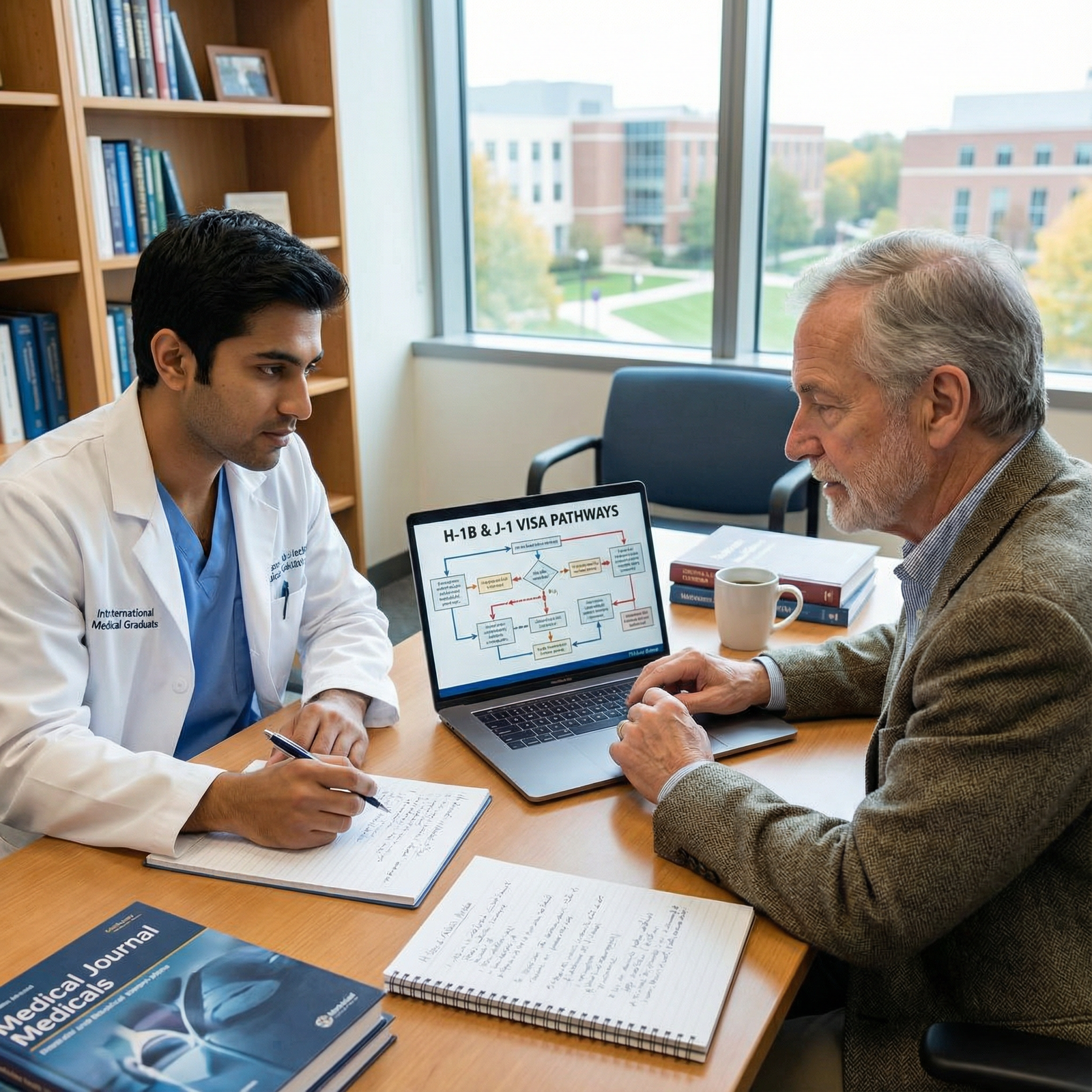
Understanding the Visa Landscape for Denver Residency Programs
Residency training in Denver is increasingly popular among international medical graduates (IMGs), thanks to strong academic centers, a balanced lifestyle, and the appeal of Colorado’s outdoor environment. But to train in Denver residency programs as a non–U.S. citizen, you’ll first need to navigate a complex web of immigration rules.
This article focuses on visa navigation for residency in Denver, with a practical emphasis on:
- Common visa types for IMGs (J‑1, H‑1B, and others)
- How Denver and Colorado residency programs handle visa sponsorship
- Strategic planning for J‑1 vs H‑1B
- Waiver options and long‑term planning after residency
- Specific tips for applying to Denver‑area programs as an IMG
While the principles are broadly applicable across the U.S., examples and nuances here are tailored to Denver and Colorado residency training environments.
Core Visa Options for IMGs in Denver Residency Programs
For most IMGs entering Denver residency programs, the central question is J‑1 vs H‑1B. Understanding both—and where they fit in Colorado residency training—is critical.
J‑1 Exchange Visitor (ECFMG‑Sponsored)
The J‑1 visa for physicians is the most commonly used visa type for IMGs in U.S. residency training.
Key features
- Purpose: Graduate medical education (residency and fellowship)
- Sponsor: ECFMG (not the individual hospital or residency program)
- Duration: Typically up to 7 years in total (residency + fellowship), though your DS‑2019 is issued year‑by‑year
- Restrictions: Requires a two‑year home residency requirement (known as 212(e)) after you finish training, unless you secure a waiver
Pros for training in Denver
- Accepted by most Denver residency programs, including large academic centers and community‑based programs.
- Less institutional burden: programs don’t file H‑1B petitions; they primarily provide documentation to ECFMG.
- Predictable framework: ECFMG has established procedures and timelines, and Denver GME offices are very familiar with them.
Cons / limitations
- The 2‑year home residency requirement can be a major obstacle for those who want to stay in the U.S. permanently after training, unless you obtain a J‑1 waiver.
- Moonlighting may be more restricted, depending on ECFMG rules and your specific program policies.
- Must demonstrate “non‑immigrant intent,” so concurrent U.S. permanent residency processes are complicated while on J‑1.
Typical J‑1 applicant profile in Denver
- IMG applying directly from abroad or from a U.S. observership/externship
- Comfortable with the idea of eventually doing a J‑1 waiver job, often in underserved or rural Colorado or neighboring states
- Prioritizing broader program options (more programs sponsor J‑1 than H‑1B)
H‑1B Temporary Worker (Physician in Graduate Medical Education)
The H‑1B is a dual‑intent, employment‑based visa. Some Denver residency programs—especially large academic institutions—sponsor a limited number of H‑1B residents each year.
Key features
- Purpose: Employment in a specialty occupation (residency/fellowship is considered employment)
- Sponsor: The residency program/hospital (not ECFMG)
- Duration: Up to 6 years total in H‑1B status (with certain extensions possible if in the green card process)
- Intent: Dual intent allowed (you may pursue permanent residency)
Pros for Colorado residency training
- No two‑year home residency requirement.
- More straightforward transition into H‑1B faculty positions or permanent residency after training.
- Easier to pursue immigration steps like PERM and I‑140 while in training.
Cons / limitations
- Not all Denver programs sponsor H‑1B, and some restrict it to:
- Categorical residents only
- Specific specialties (often internal medicine, pediatrics, etc.)
- Candidates who have already passed USMLE Step 3 by the rank list deadline.
- More costly and administratively complex for the institution (legal fees, USCIS filings, prevailing wage determination).
- Subject to the 6‑year H‑1B maximum, which can be tight if your training path is long (e.g., medicine + subspecialty fellowship).
Typical H‑1B applicant profile in Denver
- IMG with strong exam scores and completed USMLE Step 3 early.
- Interested in staying long‑term in the U.S., possibly in Colorado.
- Applying strategically to Denver residency programs known to sponsor H‑1B.
Other Visa Categories (Less Common in Denver Residency)
While J‑1 vs H‑1B captures the vast majority of scenarios, you might occasionally encounter:
O‑1 (Extraordinary Ability)
- Rarely used for residency; more common for senior researchers or highly accomplished attending physicians.
- If you’re already on O‑1 in Denver (e.g., research), consult your institution’s international office about transitioning to clinical training.
F‑1 with OPT
- If you obtained a U.S. medical degree on an F‑1 visa, you might use Optional Practical Training (OPT) for a short period before switching to J‑1 or H‑1B.
- This is less of a factor for foreign medical graduates (non‑US MD/DOs) applying directly from abroad.
For planning Denver residency programs as an IMG, focus your strategy primarily on J‑1 vs H‑1B, and treat others as niche exceptions.

How Denver Residency Programs Handle Visa Sponsorship
Denver is home to a mix of large academic centers, VA facilities, safety‑net hospitals, and community‑based training programs. Visa policies can vary significantly between them.
Typical Institutional Players in Denver
You’ll commonly see training opportunities linked to:
- Major academic hospitals and their affiliate residency programs in Denver
- VA medical center–based programs
- Community hospitals in the broader Denver metropolitan area
- Federally Qualified Health Centers (FQHCs) and safety‑net institutions that may later play a role in J‑1 waiver employment
While each institution sets its own policies, there are some broad patterns.
Common Visa Sponsorship Patterns
J‑1 Sponsorship Only
- Many Denver residency programs accept IMGs exclusively on ECFMG‑sponsored J‑1 visas.
- Rationale:
- Streamlined process and familiar requirements.
- Lower legal and administrative burden than H‑1B.
- For the applicant:
- Easier to meet baseline requirements.
- However, you must be prepared for the two‑year home requirement or a waiver plan.
J‑1 and Limited H‑1B Sponsorship
- Some Denver programs offer both J‑1 and H‑1B, but with very specific conditions, such as:
- H‑1B only if Step 3 is passed by a cutoff date (often before ranking).
- H‑1B only if funding and institutional cap allow.
- Competitive candidates may be prioritized for H‑1B slots.
- Some Denver programs offer both J‑1 and H‑1B, but with very specific conditions, such as:
No Visa Sponsorship
- A minority of programs will state bluntly: “Residents must be U.S. citizens or permanent residents; we do not sponsor visas.”
- These programs are essentially off the table for new IMG visa applicants.
How to Check Visa Policies for Denver Programs
When evaluating Denver residency programs in ERAS or on program websites, look specifically for a section labeled:
- “IMGs and Visa Sponsorship”
- “International Applicants”
- “Visa Policy”
Look for explicit statements like:
- “We sponsor J‑1 visas through ECFMG.”
- “We sponsor J‑1 and, on a limited basis, H‑1B visas for eligible applicants.”
- “We do not sponsor visas.”
If it’s vague or not mentioned:
Email the program coordinator
- Be concise and specific:
- Your citizenship
- Your current visa status, if any
- Whether you have Step 3
- Ask directly: “Do you sponsor J‑1 and/or H‑1B visas for incoming residents?”
- Be concise and specific:
Ask during interviews
- For example:
“I am currently an IMG requiring visa sponsorship. Could you describe your institution’s policies on J‑1 vs H‑1B sponsorship for residents, and any specific requirements (like Step 3 timing)?”
- For example:
Check GME Office / Institutional Websites
- Some Denver health systems have centralized GME policies for all programs.
Strategic Comparison: J‑1 vs H‑1B for Denver Residency
Choosing between J‑1 vs H‑1B isn’t only about the residency years; it profoundly shapes your post‑residency and long‑term immigration path within Colorado and beyond.
Training Phase: What Matters During Residency
1. Program Access
- J‑1: More Denver programs accept J‑1; you’ll have a broader pool.
- H‑1B: Fewer programs sponsor H‑1B; may narrow your options.
2. Exam Timing Requirements
- J‑1:
- Requires ECFMG certification and USMLE Step 1 + Step 2 (CK and OET pathway as relevant).
- Step 3 is not mandatory before starting residency.
- H‑1B:
- Most Denver programs require USMLE Step 3 by a specific date (often by rank order list deadline) because an H‑1B petition for a physician in graduate medical education must be supported by a passed Step 3.
3. Administrative Complexity
- J‑1:
- ECFMG handles most of the immigration side.
- Program assists by providing contract, offer letters, and DS‑2019 support documents.
- H‑1B:
- Program must file a Labor Condition Application (LCA) and H‑1B petition, usually involving attorneys and more paperwork.
- Timing must align with start date (e.g., July 1).
Post‑Residency: Staying in Colorado or the U.S.
This is where the J‑1 vs H‑1B decision in Denver residency has the biggest downstream effects.
If You Train on J‑1 in Denver
You will be subject (in almost all cases) to the two‑year home residency requirement, unless you secure a waiver. Most IMGs aiming to stay in the U.S. pursue a J‑1 waiver job.
Common J‑1 waiver routes relevant to Colorado:
Conrad 30 Waiver Programs (State‑Based)
- Each state, including Colorado, can recommend up to 30 J‑1 waiver slots annually.
- Most are for primary care and high‑need specialties in Health Professional Shortage Areas (HPSAs) or Medically Underserved Areas (MUAs).
- Some Denver graduates find waiver positions:
- In rural Colorado
- In underserved communities on the urban periphery or within metropolitan areas if designated as shortage areas
- Process usually involves:
- Securing a job offer in an eligible site
- State review and recommendation
- Final waiver decision by the U.S. Department of State and USCIS
Federal Waiver Programs
- VA, DHHS, and other federal agencies offer waiver mechanisms for positions in their networks.
- For example, a VA facility in or near Denver may have designated waiver positions for certain specialties.
Exceptional Hardship or Persecution Waivers
- Based on hardship to a U.S. citizen or permanent resident spouse/child, or fear of persecution if you return home.
- Highly case‑specific and more complex legally.
Practical implications after a J‑1 Denver residency:
- You must work in an approved waiver job (often 3 years full‑time) in a designated area.
- After the waiver job, you can:
- Transition to another H‑1B employer
- Pursue green card pathways (e.g., PERM, NIW)
This means your career immediately after training may not be in Denver proper, but perhaps elsewhere in Colorado or another state with good waiver opportunities.
If You Train on H‑1B in Denver
You do not incur the J‑1 two‑year home requirement.
Advantages:
- You can move directly into:
- Faculty jobs in Denver or elsewhere on H‑1B.
- Employer‑sponsored green card processes (e.g., PERM).
- No obligation to take a J‑1 waiver job in a shortage area unless you choose to.
Key considerations:
- Monitor the 6‑year H‑1B limit:
- If your residency + fellowship approach or exceed 6 years, you’ll need a strategy (e.g., timely I‑140 approval to extend beyond 6 years).
- Some employers in Denver may favor candidates already in H‑1B status because the transition is simpler.

Practical Steps for IMGs Targeting Denver Residency Programs
1. Clarify Your Long‑Term Goals Early
Before you even shortlist Colorado residency programs, ask yourself:
- Do I strongly want to stay in the U.S. long‑term, ideally in or near Denver?
- Am I willing to work in a rural or underserved area for 3+ years to obtain a J‑1 waiver?
- Can I realistically pass USMLE Step 3 early enough to be H‑1B eligible?
Your honest answers drive the rest of your visa strategy.
Example:
- If you dream of staying in metropolitan Denver and are less willing to work in rural Colorado, trying for H‑1B–friendly programs may align better, even if that narrows your program list.
2. Research Denver Programs with Visa in Mind
For each program you’re considering:
Check ERAS and program websites for:
- Accepted visas (J‑1, H‑1B, both, none)
- Specific requirements for H‑1B (Step 3 timing, prior U.S. clinical experience, etc.)
- Any notes about IMG visa preferences or limitations
Categorize programs:
- Group A: J‑1 only
- Group B: J‑1 + H‑1B
- Group C: No visa sponsorship
Prioritize realistically:
- If you don’t yet have Step 3, Group B may functionally become J‑1‑only options for you, unless you can pass Step 3 before their cutoffs.
3. Plan Your Exams Strategically
For J‑1 eligibility:
- Ensure:
- ECFMG certification (including primary source verification and passing Step 1 & 2CK, plus English requirements).
- Timely documentation submission to ECFMG once you get a Match.
For H‑1B eligibility:
- Aim to complete USMLE Step 3:
- Ideally before the start of the ERAS application season, or
- At least by the time programs prepare their rank lists.
- Book Step 3 early, particularly if you’re abroad or in a different time zone.
Denver‑specific tip:
Programs in highly desirable cities like Denver often receive many applications. H‑1B‑sponsoring programs may use Step 3 completion as a screening tool. Early Step 3 is a competitive advantage.
4. Communicate Clearly and Professionally with Programs
When discussing visa matters with Denver programs:
- Be transparent about your needs.
- Express flexibility when you have it:
- For example: “I’m open to either J‑1 or H‑1B; I already have Step 3 and would appreciate whichever option aligns with your institutional policy.”
- Avoid sounding like visa sponsorship is your only interest. Always lead with:
- Your dedication to patient care
- Reasons you’re interested in that specific program and Denver/Colorado
- Your academic and professional strengths
5. Understand the Role of GME and International Offices
Most large Denver institutions have:
- A Graduate Medical Education (GME) office
- An international services or international scholars office
These offices:
- Coordinate DS‑2019 paperwork (for J‑1)
- Work with legal counsel for H‑1B petitions
- Enforce institutional deadlines for document submission
As a matched resident, respond promptly to all document requests, particularly:
- Passport scans
- Medical school diplomas and transcripts
- ECFMG certificate
- Prior immigration records, if any
Delays here can jeopardize your visa processing timeline and on‑time start in July.
Beyond Residency: Building a Long‑Term Immigration Path from Denver
Your visa strategy shouldn’t end at Match Day. Think about how your time in Denver residency can set up a sustainable future—whether in Colorado residency and practice or elsewhere in the U.S.
For J‑1 Trainees
Explore J‑1 waiver pathways early in residency:
- Attend informational sessions from your program’s GME or local legal experts.
- Network with alumni: Ask how they secured waiver jobs (in Colorado or nearby states like Wyoming, Kansas, or New Mexico).
- Track Conrad 30 policies in Colorado—requirements, timelines, and typical accepted specialties.
Tailor your CV for shortage areas:
- Seek rotations or electives in community health centers, FQHCs, or rural sites.
- Develop language skills or community health expertise that appeal to underserved settings.
Timeline planning:
- Many waiver jobs are filled 12–18 months before the job start date.
- Start looking for jobs fairly early in your final year of residency/fellowship.
For H‑1B Trainees
Monitor your H‑1B time usage:
- Residency years count toward your 6‑year H‑1B cap.
- If planning fellowship + faculty, discuss timing with your program and immigration counsel early.
Consider green card strategies:
- PERM (Employer‑Sponsored): Often via academic or private employers in or around Denver.
- EB‑1 or NIW (National Interest Waiver): For those with strong research or service in critical shortage areas.
Career planning in Colorado:
- Denver’s growing population and surrounding rural/urban underserved areas create demand in many specialties.
- Positions in health systems, group practices, and academic centers may all be available to H‑1B holders.
Frequently Asked Questions (FAQ)
1. Do most Denver residency programs sponsor J‑1 or H‑1B visas?
Most Denver residency programs that accept IMGs sponsor ECFMG‑sponsored J‑1 visas. A subset—typically larger academic programs—also sponsor H‑1B for candidates who meet additional criteria (usually including USMLE Step 3). A smaller number of programs do not sponsor any visas and require U.S. citizenship or permanent residency. Always confirm on each program’s website or by emailing the coordinator.
2. Is it easier to get a residency visa in Denver compared to other U.S. cities?
The difficulty level is more related to national immigration rules than to Denver specifically. However, Denver is a desirable city, so residency spots (especially H‑1B‑sponsoring ones) can be competitive. The process and standards for a Colorado residency visa are similar to other states: J‑1 is more accessible; H‑1B is more limited and requires early Step 3 plus a willing sponsor.
3. Can I switch from J‑1 to H‑1B during residency in Denver?
Switching from J‑1 to H‑1B during residency is rare and complicated. Once you start training on a J‑1, you typically remain on J‑1 through the end of your GME program. Changing to H‑1B generally doesn’t erase the two‑year home requirement and can introduce significant immigration risk. If you anticipate wanting H‑1B, it’s better to secure it before starting residency.
4. After finishing a J‑1 residency in Denver, can I stay in Colorado for my waiver job?
It’s possible but not guaranteed. You’ll need to find an employer in Colorado willing to sponsor your J‑1 waiver, typically in a designated shortage area (often outside central Denver or in specific underserved neighborhoods). Colorado participates in the Conrad 30 program, but slots are limited and competitive. Many J‑1 graduates from Denver programs do find waiver jobs in Colorado or neighboring states, but it requires proactive job searching and early planning.
Navigating visas for Denver residency programs is a strategic process that starts long before you submit ERAS. By understanding the J‑1 vs H‑1B landscape, clarifying your long‑term goals, and researching Colorado residency programs’ visa policies carefully, you can position yourself to not only Match in Denver but also build a sustainable future in the U.S. healthcare system.