Understanding the J-1 Pathway for Family Medicine in the Rural Midwest
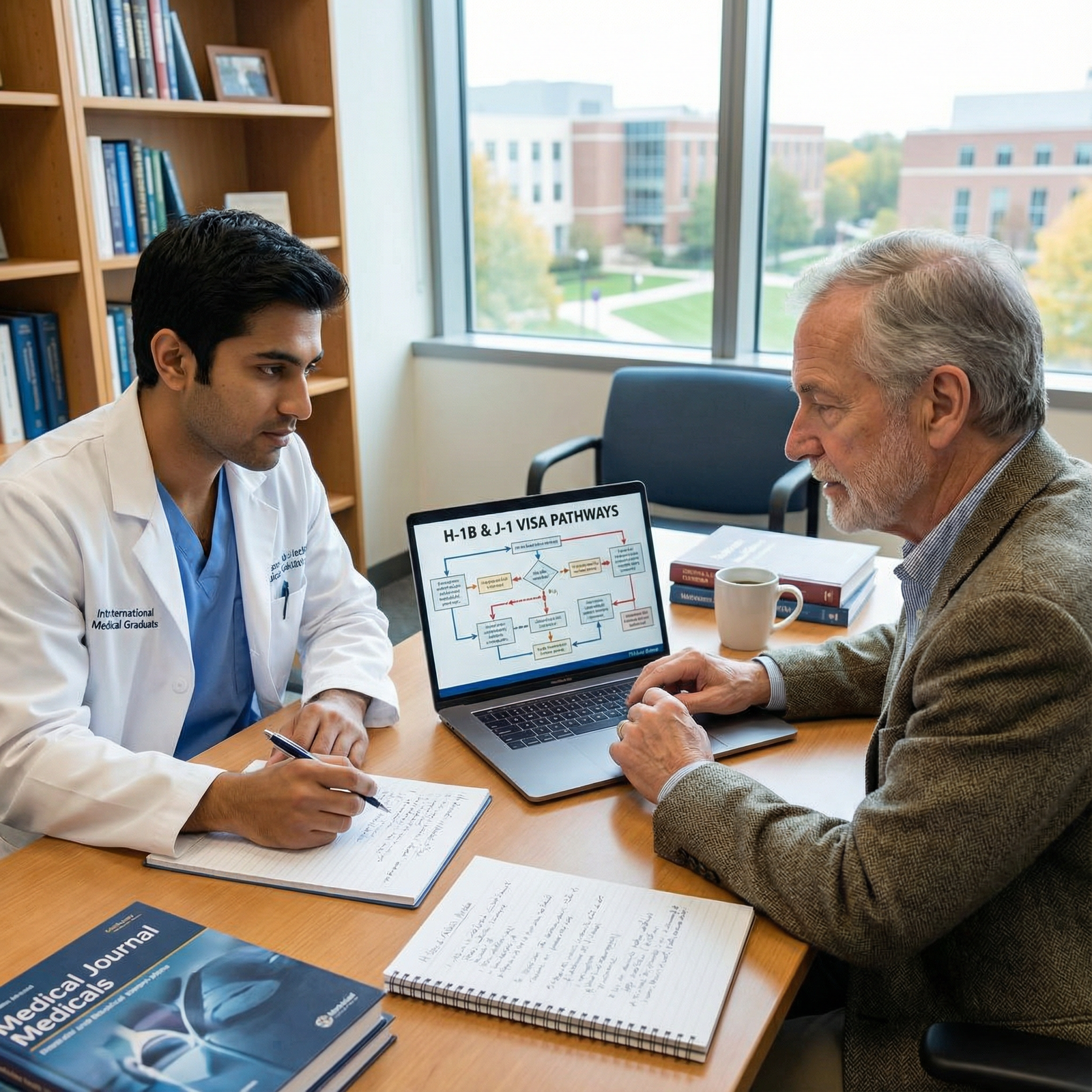
For many international medical graduates (IMGs), a family medicine residency in the United States—especially in a rural Midwest residency program in states like Iowa or Nebraska—is both a professional dream and a strategic path to long-term practice. Yet the J-1 visa and waiver landscape can be confusing, and the consequences of missteps are serious.
This guide explains how to leverage family medicine residency training in the rural Midwest to position yourself for a J-1 waiver, with special focus on the Conrad 30 program and other underserved area waiver options. While examples often highlight Iowa Nebraska residency pathways, the core strategies will apply to most rural Midwest states.
Disclaimer: This article is for educational purposes only and is not legal advice. Always consult an experienced immigration attorney for individualized guidance on your situation.
1. Big Picture: How J-1, Waivers, and Family Medicine Fit Together
1.1 The Basic J-1 Process for IMGs
As an IMG entering a family medicine residency, you will usually be sponsored for a J-1 visa by the Educational Commission for Foreign Medical Graduates (ECFMG). Key points:
- Visa type: J-1 “Alien Physician”
- Purpose: Graduate medical education (residency/fellowship)
- Duration: Length of your ACGME-accredited training program (typically 3 years for family medicine)
- Two-year home residency rule: After training, you must return to your home country for 2 years unless you obtain a waiver of this requirement.
The challenge: without a waiver, you cannot change to H-1B or permanent resident (green card) status in the U.S., nor get certain visas, until you fulfill that 2-year home residence requirement.
1.2 The Role of J-1 Waivers in Career Planning
A J-1 waiver removes the requirement to return to your home country, allowing:
- A change to H-1B status (or sometimes other employment-based status)
- Long-term practice in the U.S., often in an underserved area
- A realistic path to permanent residency and stability
For family medicine, especially in the rural Midwest, the Conrad 30 state waiver program and other underserved area waiver options are particularly favorable.
1.3 Why the Rural Midwest Is Strategically Advantageous
Midwestern states like Iowa, Nebraska, Kansas, the Dakotas, and others share several features that make them J-1–friendly for family physicians:
- High need for primary care providers in rural and frontier communities
- Many clinics and hospitals located in Health Professional Shortage Areas (HPSAs) or Medically Underserved Areas/Populations (MUAs/MUPs)
- Historically, less competition for Conrad 30 slots in some rural states compared with coastal urban states
- State health departments and employers often familiar with sponsoring J-1 waivers for family medicine
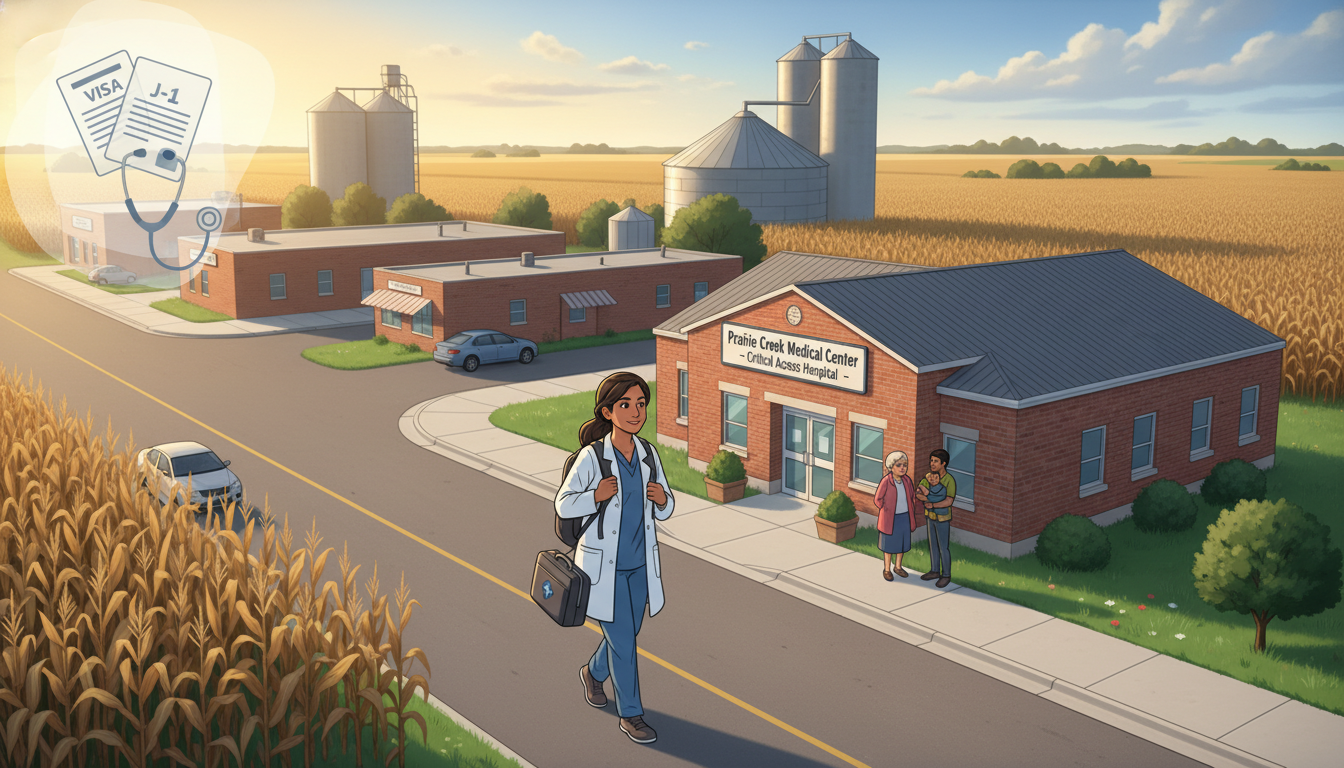
For IMGs who complete a family medicine residency in a rural Midwest residency program (for example, an Iowa Nebraska residency), this environment can translate to more realistic and flexible waiver options.

2. Core J-1 Waiver Options for Family Medicine in the Rural Midwest
2.1 Conrad 30 State Waiver Program: The Workhorse Option
The Conrad 30 program is the backbone of J-1 waiver strategies for family medicine in the Midwest. Each state can recommend up to 30 J-1 waivers per fiscal year for physicians who agree to serve in designated shortage areas.
General Requirements (vary slightly by state)
Most states, including Iowa and Nebraska, require:
- Completion of an ACGME-accredited residency (family medicine fits perfectly)
- An offer of full-time employment (often defined as ≥ 40 hours/week, direct patient care)
- A 3-year contract minimum
- Practice in a HPSA/MUA or area serving an underserved population
- A no-objection letter from your home country if your training was government-funded (varies by circumstances)
Why Conrad 30 Favors Family Medicine
- Primary care is specifically targeted by most state programs.
- Many states reserve a portion of their 30 slots for primary care or rural placements.
- Family medicine skills are especially valuable in critical access hospitals and rural health clinics.
State-by-State Nuances (Iowa and Nebraska as examples)
While details change, typical patterns include:
Iowa residency / Iowa Conrad 30
- Strong emphasis on rural service and underserved populations.
- Preference often given to primary care specialties like family medicine, internal medicine, pediatrics.
- Many opportunities in small towns and rural counties, including hospital-employed and FQHC positions.
Nebraska residency / Nebraska Conrad 30
- Large geographic area with significant rural and frontier regions.
- Historically supportive of family medicine physicians willing to practice outside Omaha/Lincoln.
- May consider “flex” slots allowing practice at facilities not strictly in HPSA/MUA if a substantial underserved population is served.
Actionable Tip:
As early as PGY-1, familiarize yourself with your state’s Conrad 30 guidelines (and possibly one or two neighboring states) and track how quickly they fill each year. This helps you decide whether to:
- Focus on your current state (e.g., Iowa Conrad 30 after an Iowa residency), or
- Look across state lines (e.g., practicing in Nebraska after an Iowa residency, or vice versa).
2.2 Federal Underserved Area Waiver Options
In addition to Conrad 30, rural Midwest family doctors may pursue:
2.2.1 VA (Veterans Affairs) Waivers
- The Department of Veterans Affairs can sponsor J-1 waivers for physicians working in VA facilities.
- Most VA hospitals are not rural, but some Community-Based Outpatient Clinics (CBOCs) in the Midwest serve smaller communities.
- Focus is on serving U.S. veterans rather than geographic HPSAs.
2.2.2 Department of Health and Human Services (HHS) Waivers
Historically more focused on research and teaching hospitals, HHS has increasingly considered:
- Primary care positions at certain community health centers and FQHCs (depending on evolving rules).
- Must usually be in high-need HPSA locations.
While these federal options may be more complex than Conrad 30, they can:
- Serve as a backup if Conrad 30 slots are exhausted.
- Be strategically useful for IMGs whose employers are large systems or academic centers with federal relationships.
2.3 Hardship and Persecution Waivers (Less Common Path)
Some IMGs apply for:
- Exceptional hardship waivers (e.g., U.S. citizen or permanent resident spouse/child would face exceptional hardship if you return)
- Persecution waivers (fear of persecution if you return to your home country)
These are not tied to rural practice but have:
- High evidentiary standards
- Long and uncertain adjudication timelines
For most family medicine IMGs targeting a career in the rural Midwest, these are backup paths rather than first-line strategies.
3. Crafting a J-1 Waiver–Friendly Training and Career Strategy
3.1 Choose Your Family Medicine Residency with Your Future Waiver in Mind
When comparing family medicine residency programs in the Midwest, look beyond prestige:
Factors that Help Your Waiver Prospects
Rural Training Emphasis
- Programs with rural tracks, continuity clinics in small towns, or rotations in critical access hospitals.
- Example: An Iowa or Nebraska residency that sends you to a 5,000–10,000 population town for continuity clinic.
Patient Population
- High percentage of underserved or medically complex populations (e.g., migrant workers, low-income communities).
- Strong partnerships with FQHCs and Rural Health Clinics (RHCs).
Program History with J-1 IMGs
- Ask: “How many recent J-1 residents successfully obtained a waiver?”
- Programs that regularly train and graduate J-1 IMGs understand timing, documentation, and employer needs.
Connections to Rural Employers
- Faculty who previously practiced in small towns.
- Existing pipelines to community hospitals or group practices in shortage areas.
Practical Example:
A Nebraska-based family medicine residency with a long-standing relationship with several rural health systems can introduce you to potential Conrad 30 employers in PGY-2, giving you a head start on your job and waiver application.
3.2 Build a Profile That Appeals to Rural Midwest Employers
Employers in rural Midwest residency catchment areas often seek:
- Procedural competence: prenatal care, basic OB, inpatient rounding, ED coverage, common office procedures (skin lesion removal, joint injections), sometimes basic endoscopy (depending on the community).
- Long-term commitment: they prefer physicians who will stay beyond the 3-year waiver obligation.
- Cultural adaptability: comfort living in a smaller community, engaging with local schools, churches, and civic organizations.
How to Demonstrate This During Residency:
- Choose rural elective rotations and document them on your CV.
- Participate in community outreach events (free clinics, health fairs, migrant farmworker outreach).
- Learn basic Spanish or other locally relevant languages, if applicable.
- Ask faculty mentors to highlight your rural interest in letters of recommendation.
3.3 Timeline: When to Start Planning Your J-1 Waiver
PGY-1
- Understand your visa terms and the basics of Conrad 30 and underserved area waivers.
- Begin networking with faculty who have rural or J-1 waiver experience.
PGY-2
- Narrow your target states: e.g., “Iowa, Nebraska, and one backup state.”
- Attend state health department webinars or conferences when possible.
- Start exploratory conversations with rural clinics/hospitals (through faculty, alumni, or job fairs).
Early PGY-3
- Finalize your job search in your target states.
- Secure a contract at an eligible site (HPSA/MUA and meeting state requirements).
- Work with your employer and immigration attorney to prepare the waiver application.
Late PGY-3
- File Conrad 30 (or other waiver) application as early as state windows allow.
- After state recommendation and federal approval, file for H-1B so you can transition from J-1 to H-1B shortly after residency graduation.
Key Strategy:
Because Conrad 30 slots are limited, treat them as “first-come, first-served within priority categories.” Applying early in the state’s fiscal year cycle increases your odds, especially in more competitive states.

4. Navigating State-Specific Nuances and Rural Employer Realities
4.1 Iowa and Nebraska as Case Studies
While policies are subject to change, typical patterns:
Iowa
- Emphasis on:
- Primary care
- Rural and underserved populations
- Often open to:
- Hospital-employed positions in rural critical access hospitals
- FQHCs and RHCs in small towns and agricultural communities
- May require:
- Detailed service commitments and reporting
- Evidence of community need and recruitment efforts
Nebraska
- Broad geographic distribution of needs:
- Critical access hospitals, frontier clinics, and small multi-specialty groups.
- Flexible in recognizing:
- Both traditional HPSA locations and sometimes “flex” placements where patients from underserved areas receive care.
- Expect:
- Clear 3-year service commitment
- Full-time outpatient primary care, sometimes with inpatient or ED call
Strategic Insight:
If your family medicine residency is in Iowa but you identify an excellent employment and waiver opportunity in Nebraska (or vice versa), you are typically free to apply with that state’s Conrad 30 program, provided you satisfy their rules. Your residency state does not have to equal your waiver state.
4.2 What Rural Employers Need to Know—and How You Can Help Them
Many rural hospitals and clinics:
- Have never sponsored a J-1 waiver before, or
- Have done it sporadically and may be unfamiliar with updated rules
You can increase your chances of getting an offer by:
- Educating (gently) and providing resources
- “I’m on a J-1 visa and would need a J-1 waiver, typically through the state’s Conrad 30 program. Here are some links to the state health department’s J-1 program page and a general process outline.”
- Introducing them to experienced immigration counsel
- Many state Conrad 30 program sites have lists of attorneys or at least guidance. You can offer suggestions without overstepping.
- Clarifying timelines
- Let them know when you graduate, when the state’s application window opens, and how long USCIS processing may take.
Example Conversation Starter:
“I’m completing a family medicine residency in Iowa on a J-1 visa. I’m very interested in your position, and I wanted to be upfront that I’ll need a J-1 waiver through the state’s Conrad 30 program. It’s a fairly standard process for rural primary care positions; I’d be happy to share information and connect you with an attorney who has done this before.”
This reassures potential employers that hiring you is administratively manageable and that you’ll be an active partner in the process.
4.3 Contract Considerations for J-1 Waiver Positions
When reviewing your employment contract for a J-1 waiver position in the rural Midwest, pay special attention to:
- Term Length: At least 3 years, full time.
- Location: Exact practice addresses, ensuring they match the HPSA/MUA or underserved area criteria (or flex rules).
- Duties: Must align with direct patient care in family medicine; purely administrative or research roles will not qualify.
- Non-compete clauses:
- Restrictive covenants might harm you if you later want to stay in the region but change employers.
- Salary and benefits:
- Should be competitive and meet or exceed local prevailing wage.
- Reasonable relocation assistance, malpractice coverage (including tail), and CME support.
Always have both an immigration attorney and, ideally, a healthcare employment attorney review your contract before signing.
5. Avoiding Common Pitfalls and Maximizing Long-Term Options
5.1 Common Mistakes to Avoid
Waiting too long to start the job search
- If you only start in late PGY-3, some states may have already filled their Conrad 30 slots.
Accepting a job in a non-qualifying location
- Not every rural-looking town is in a formally designated HPSA/MUA.
- Always confirm with the state health department or your attorney before committing.
Assuming all employers understand J-1 rules
- Do not rely solely on verbal assurances; verify written policy and legal advice.
Underestimating the personal impact of rural living
- Rural areas can be professionally rewarding but socially isolating for some; think through your and your family’s needs honestly.
5.2 Positioning Yourself for Life After the Waiver
Your 3-year J-1 waiver service period is often just the beginning:
- Many physicians stay longer in their initial community—especially if they enjoy the practice and lifestyle.
- During your waiver period, your employer can often:
- Sponsor an immigrant petition (I-140) based on employment.
- Start the process toward permanent residence (green card).
- Some physicians, after fulfilling their 3-year service, move:
- To larger Midwest cities
- To academic centers
- To other states, depending on career goals
If your goal is to eventually move, consider:
- Negotiating flexible non-compete terms.
- Maintaining academic or regional professional relationships.
- Continuing CME and procedural skill development to remain competitive.
6. Practical Action Plan for FM IMGs Targeting J-1 Waiver Opportunities in the Rural Midwest
To bring it all together, here is a step-by-step roadmap:
Before the FM Match
- Prioritize family medicine residency programs in states with strong J-1 support and rural training (e.g., Iowa, Nebraska, Kansas, Dakotas, Missouri, Minnesota, Wisconsin).
- During interviews, ask about:
- J-1 alumni outcomes
- Relationships with rural employers
- Faculty experience with Conrad 30 and underserved area waivers
PGY-1 to Early PGY-2
- Clarify your long-term goal: practice in the U.S. long-term, ideally in a rural setting, using the J-1 waiver as your path.
- Build relationships with mentors who:
- Understand rural practice
- Have gone through J-1 waiver processes
- Choose rural and underserved rotations whenever available.
Mid PGY-2
- Identify target states and begin monitoring their Conrad 30 processes.
- Update your CV to highlight:
- Rural experience
- Language skills
- Interest in primary care for underserved populations
Late PGY-2 to Early PGY-3
- Attend job fairs, primarily those focused on rural or underserved recruitment.
- Apply for positions in eligible HPSA/MUA communities.
- Be transparent with employers about your J-1 status and waiver needs.
Mid PGY-3
- Finalize employment contract.
- Engage immigration counsel (you and your employer).
- Prepare Conrad 30 application and gather:
- Letters of support
- Community need documentation
- Contract details and employer attestations
Transition to Practice
- After state and federal waiver approval, file for H-1B.
- Move to your rural Midwest community and begin your 3-year underserved area waiver service.
- Work with your employer to plan green card strategies if you wish to remain in the U.S. long-term.
FAQs: J-1 Waivers and Family Medicine Programs in the Rural Midwest
1. Do I have to do my family medicine residency in the same state where I plan to get a Conrad 30 waiver?
No. Your residency state and your waiver state do not have to match. For example, you can complete an Iowa Nebraska residency in Iowa and accept a waiver position in Nebraska, or vice versa. What matters is meeting the waiver state’s rules, including HPSA/MUA criteria and application timelines.
2. Are family medicine applicants more competitive for Conrad 30 waivers compared to other specialties?
Often yes. Many states explicitly prioritize primary care specialties, especially family medicine, pediatrics, and general internal medicine. In rural Midwest states with abundant primary care shortages, a family medicine physician willing to serve full-time in an underserved area is typically highly attractive for a Conrad 30 or other underserved area waiver.
3. How early should I start searching for a J-1 waiver job during residency?
Start seriously exploring options in PGY-2, and begin formal applications by early PGY-3. Because some states fill their FM match–era J-1 waiver slots quickly, early job search and contract finalization can significantly improve your chances of securing a waiver.
4. Can I move to a different job during my 3-year J-1 waiver service?
Changing jobs during your 3-year service is possible but complex. It typically requires:
- Approval from the state health department (if Conrad 30)
- Evidence that the new job also meets waiver criteria (HPSA/MUA, full time, underserved focus)
- Proper USCIS filings to amend your H-1B
Frequent or poorly planned changes can jeopardize your waiver obligations. Always consult your immigration attorney before considering a move.
By understanding the interplay between family medicine residency, the FM match, and J-1 waiver options like Conrad 30 in the rural Midwest, you can transform your training years into a clear, realistic pathway to long-term practice in the United States.