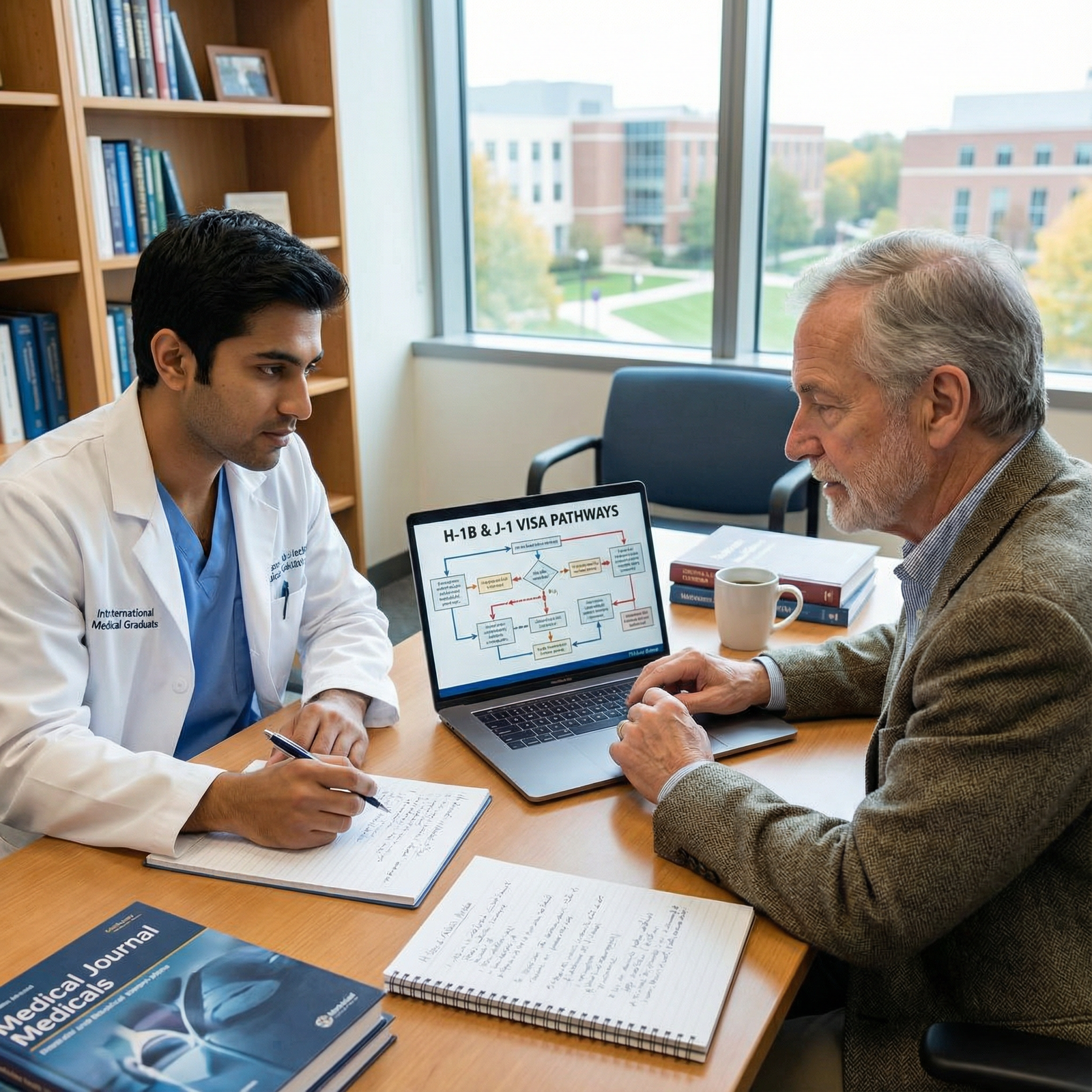
Understanding the Visa Landscape for Great Lakes Residency Programs
International medical graduates (IMGs) applying to midwest residency programs in the Great Lakes region—Illinois, Indiana, Michigan, Minnesota, Ohio, Wisconsin, and nearby states—face two major challenges at once: matching into a strong program and navigating U.S. immigration rules. Those two are closely linked. Your visa status affects which programs you can apply to, how they rank you, and what your career options look like after graduation.
This article focuses on visa navigation for residency in the Great Lakes Region, with a special emphasis on:
- Common IMG visa options for residency (J‑1 and H‑1B)
- How J‑1 vs H‑1B plays out in real life for Great Lakes residency programs
- Regional trends—what’s typical in Great Lakes and midwest residency programs
- Strategy tips to align your visa choice with your long‑term career goals
- Practical planning timeline for ERAS, interviews, and Match
Throughout, keep in mind: immigration policies can change. Always verify details with your program, an immigration lawyer, or the Educational Commission for Foreign Medical Graduates (ECFMG).
Core Visa Options for IMGs: J‑1 and H‑1B
For clinical residency training, IMGs almost always use one of two visa categories:
- J‑1 Exchange Visitor (ECFMG-sponsored physician category)
- H‑1B Temporary Worker (Specialty Occupation)
Other visas (F‑1 with OPT, O‑1, TN, green card holders) exist but are less common, especially for initial residency training. In the Great Lakes region, the vast majority of IMGs in residency are on J‑1 or H‑1B.
J‑1 Visa: The Default Pathway for Many IMGs
Most IMGs in U.S. residency programs—across the country and specifically in Great Lakes states—enter on a J‑1 visa sponsored by ECFMG. This is often the “default” option for programs because:
- It’s standardized and well-understood
- The program does not have to act as immigration sponsor; ECFMG does
- Processing is usually faster and simpler for the institution
Key Features of the J‑1 Visa for Residency
- Sponsor: ECFMG (not the residency program itself)
- Eligibility:
- Valid ECFMG certification
- A contract or offer letter from an ACGME‑accredited residency or fellowship
- Proof of adequate funding (your residency salary qualifies)
- Sufficient English proficiency
- Duration: Given for the length of your residency/fellowship, renewed annually via ECFMG. Maximum usually 7 years total in the physician category (with certain exceptions).
- Funding: Typically salaried by the residency program.
- Dependents: J‑2 dependents (spouse, unmarried children under 21) may accompany you; they can usually apply for work authorization (EAD).
The Two‑Year Home Residency Requirement (212(e))
The most important catch with J‑1 for physicians is the two‑year home-country physical presence requirement, often referred to as “212(e)”:
- After finishing your J‑1 training, you must either:
- Return to your home country (or country of last permanent residence) for a total of two years, before you can:
- Obtain H‑1B or L‑1 status, or
- Obtain a U.S. immigrant visa or permanent residency
- OR obtain a waiver of this requirement
- Return to your home country (or country of last permanent residence) for a total of two years, before you can:
This is where the Great Lakes Region becomes particularly important. Many states around the Great Lakes are highly active in J‑1 waiver programs, especially for primary care and certain specialties in underserved areas. That means J‑1 can still be a strong choice if you are open to practicing in the region after residency.
H‑1B Visa: Fewer Programs, Different Trade‑offs
The H‑1B is an employment‑based visa for specialty occupations, including physicians. In residency, it is less commonly used compared to J‑1, but several large academic centers and some community programs in the Great Lakes region do sponsor H‑1B residents.
Key Features of the H‑1B Visa for Residency
- Sponsor: The residency program (employer) files and maintains the H‑1B petition.
- Eligibility:
- You must have passed USMLE Step 3 before H‑1B filing in most states (critical timing issue).
- Must have a contract or offer letter from the residency program.
- Must meet state medical licensing requirements for trainees (e.g., training license).
- Duration:
- Generally up to 6 years total in the U.S. (including all prior H‑1B time).
- Residency years (e.g., 3 years of IM) count toward that 6‑year cap.
- Dependents: H‑4 dependents (spouse, unmarried children under 21). H‑4 spouses can work only if they qualify separately (e.g., under specific I‑140–related circumstances), which many residents do not have yet.
Advantages of H‑1B for IMGs
- No two‑year home residency requirement like J‑1. You can:
- Move directly from residency into fellowship (on extension or transfer of H‑1B).
- Apply for a green card while in training or immediately after.
- Employer flexibility: You can sometimes change employers (with transfer petitions) without dealing with 212(e) issues.
- Stronger long‑term path if you aim for permanent settlement in the U.S.
Challenges of H‑1B for IMGs
- More limited availability: Fewer Great Lakes residency programs sponsor H‑1B, especially community hospitals or smaller midwest residency programs.
- Administrative burden and cost: Legal and filing fees, plus institutional policies, make some programs hesitant.
- Timing with Step 3: You usually must pass USMLE Step 3 early enough for H‑1B filing—often before March or April of the Match year. This is a major planning point.
Because of these challenges, an IMG targeting H‑1B needs to be much more strategic—both in program selection and exam timing.
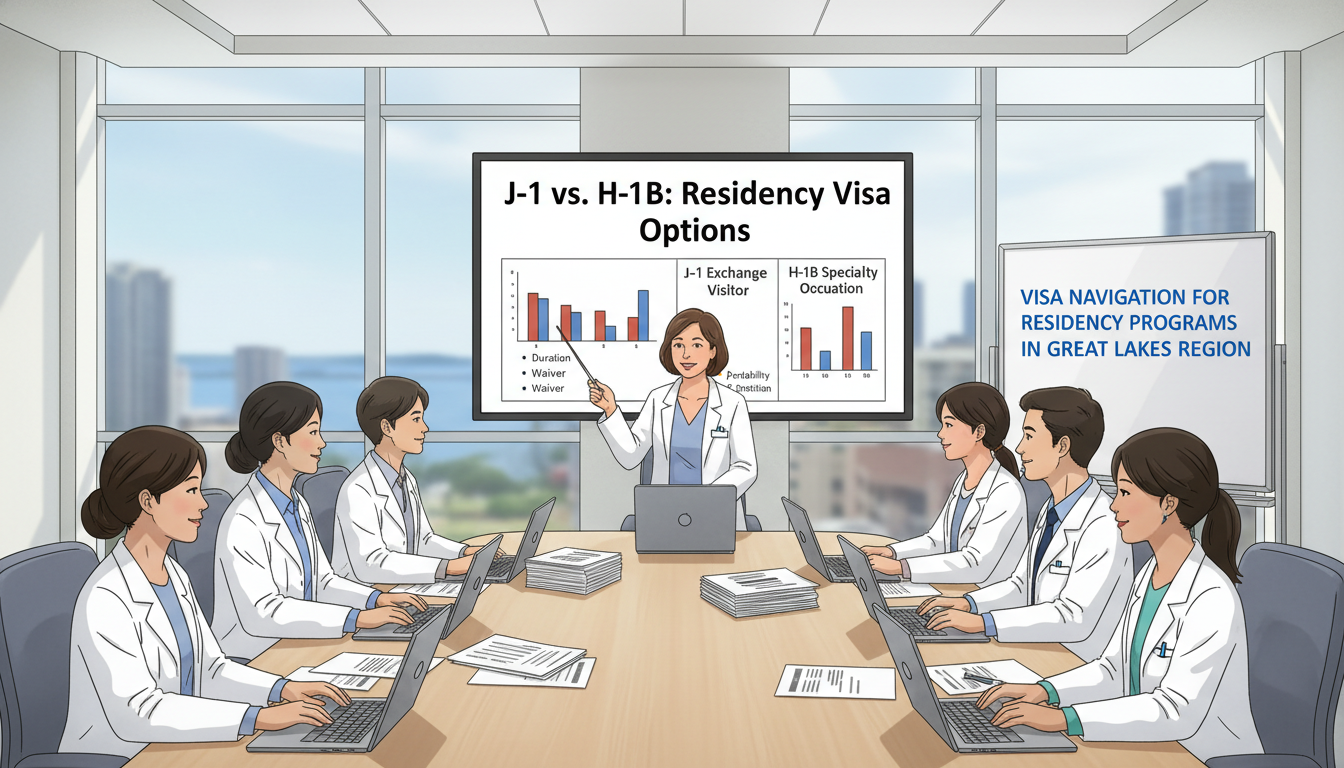
J‑1 vs H‑1B in Great Lakes Residency Programs
Understanding regional patterns can help you prioritize where to apply and how to talk about your IMG visa options during interviews.
Typical Patterns in the Great Lakes Region
The Great Lakes region includes several high‑density medical education hubs (e.g., Chicago, Detroit, Minneapolis, Cleveland, Columbus, Milwaukee, Indianapolis). General trends:
Large Academic Centers (e.g., major university hospitals, large health systems)
- Often sponsor both J‑1 and H‑1B.
- May have clear, written policies on their websites.
- More likely to support H‑1B in specialties such as internal medicine, anesthesiology, neurology, pathology.
- Some programs prefer J‑1 for certain primary care tracks but are flexible.
Mid‑size and Community Programs
- More likely to accept J‑1 only.
- Some accept permanent residents/citizens only; confirm before applying.
- H‑1B sponsorship may be rare or handled on a case‑by‑case basis.
State‑Specific Differences
- Certain state medical boards in the Great Lakes region have stricter rules for foreign‑trained doctors, particularly about Step 3 timing or licensing.
- Some states are very active in J‑1 waiver employment after training (e.g., Michigan, Ohio, Wisconsin, Minnesota) which makes the J‑1 route more attractive if you’re open to staying in the region and working in underserved areas.
Pros and Cons of J‑1 vs H‑1B for Great Lakes Training
J‑1 Strengths in the Great Lakes Context
- Broader program access: Many more midwest residency programs accept J‑1 than H‑1B.
- Easier sponsorship: ECFMG handles most of the process; programs are familiar and comfortable.
- Friendly post‑training options: The region has many J‑1 waiver job opportunities, especially in:
- Family medicine
- Internal medicine (primary care and hospitalist)
- Psychiatry
- Pediatrics
If your long‑term goal is to work in a medically underserved community or in a smaller Great Lakes city, J‑1 plus a waiver job can be a clear, workable path.
H‑1B Strengths in the Great Lakes Context
- Direct path to fellowship and green card: Especially useful if you’re academic‑career oriented and aiming for competitive subspecialties (cardiology, GI, pulmonary/critical care, oncology, etc.).
- Attractive to academic centers: Some major university hospitals in cities like Chicago or Minneapolis prefer to keep strong trainees on H‑1B for long‑term faculty or specialty tracks.
Practical Considerations: J‑1 vs H‑1B Ranking Strategy
- If a program states “J‑1 only” or “We do not sponsor visas,” there is almost no flexibility.
- If a program states “J‑1 and H‑1B considered,” ask during the interview:
- How many residents are on H‑1B currently?
- Are there extra conditions (e.g., must have Step 3 passed by a certain date)?
- Do they prioritize H‑1B for certain specialties or highly competitive applicants?
Many IMGs in Great Lakes residency programs choose J‑1 simply because it opens more doors during the Match. Then, they plan strategically for a waiver job in the region. Others with very strong applications and early Step 3 completion aim specifically for programs with H‑1B sponsorship.
J‑1 Waiver Options in the Great Lakes Region
If you choose J‑1, the long‑term path usually involves a J‑1 waiver job after residency or fellowship. The Great Lakes region is one of the most active areas for such positions.
Common J‑1 Waiver Pathways
The most widely used pathways are:
Conrad 30 Waiver (State Department of Health)
- Each state can recommend up to 30 J‑1 waiver slots per year for physicians.
- Focused on medically underserved areas or populations.
- You must work full‑time for typically 3 years in a designated site.
- Each state’s Department of Health sets its own priorities and timelines.
Federal Programs
- VA (Department of Veterans Affairs)
Some Great Lakes VA hospitals sponsor J‑1 waivers for physicians serving veterans. - Health and Human Services (HHS)
Primarily for research institutions and certain public health priorities.
- VA (Department of Veterans Affairs)
Specific State/Federal Hybrid Programs
- Some states around the Great Lakes have additional targeted initiatives or prioritizations (e.g., for certain specialties like psychiatry or rural primary care).
Great Lakes Region Highlights for J‑1 Waivers
While details change regularly, typical patterns include:
- Michigan, Ohio, Wisconsin, Minnesota
Historically robust use of Conrad 30 waivers, with strong demand for:- Rural and small‑town primary care
- Psychiatry
- Hospitalist medicine in community hospitals
- Illinois, Indiana
Strong urban and rural underserved needs, often with high interest in FM, IM, pediatrics, and psychiatry.
If you train in a Great Lakes residency or great lakes residency fellowship, you’ll be geographically and professionally well‑positioned to learn about J‑1 waiver employers, network with alumni, and connect with local recruiters familiar with IMGs.
Practical Steps for J‑1 Residents Planning a Waiver
Year 1–2 of Residency (PGY‑1/PGY‑2)
- Learn the basics of J‑1 waivers and your state’s Conrad 30 priorities.
- Attend any IMG or immigration info sessions your hospital offers.
- Start exploring which states in the Great Lakes region you’d be open to working in.
Final Year of Residency/Fellowship
- Begin job search 12–18 months before your planned start date.
- Target employer sites familiar with J‑1 waivers (they often advertise this).
- Confirm:
- They are in a qualifying location (HPSA/MUA or state‑designated).
- They have prior experience sponsoring J‑1 waivers.
Application Timing
- States open Conrad 30 applications at specific times (often fall).
- Early applications are often more successful, especially in high‑demand states.
A well‑planned J‑1 waiver job can be a secure path to permanent residence: after your 3‑year commitment, many physicians move on to other roles, fellowships, or continue with green card sponsorship from the same employer.

Strategic Planning: Matching Your Visa to Your Career Goals
Your visa choice is a career decision, not just an application checkbox. Here’s how to think about J‑1 vs H‑1B in the context of your goals and Great Lakes opportunities.
1. Define Your Long‑Term Objectives
Ask yourself:
- Do you want to stay long‑term in the United States?
- Are you open to working in underserved or rural communities—including those common in midwest and Great Lakes states?
- Is your main goal an academic career in a major metropolitan center?
- How competitive is your target specialty (and potential fellowship)?
If you are open to underserved practice, especially in internal medicine, family medicine, pediatrics, or psychiatry, J‑1 plus a waiver job in the Great Lakes region can be very workable and stable.
If you are primarily academic‑focused, aiming for competitive subspecialties and long‑term affiliation with a university hospital, H‑1B may better support continuous training and a quicker green card path.
2. Consider Your Exam Timeline (Especially Step 3)
For many IMGs, the residency visa decision is constrained by Step 3:
- To be viable for H‑1B in your first year of residency:
- Pass USMLE Step 3 before the program files the H‑1B petition.
- In practical terms, that often means having Step 3 results by February–March of the Match year.
- Many IMGs focus on Step 1 and Step 2 CK during medical school or gap years; Step 3 might get delayed.
- If Step 3 timing looks tight, J‑1 is usually safer.
Actionable Advice:
- If you strongly prefer H‑1B, plan Step 3 very early, ideally:
- Before ERAS submissions (September),
- Or at least before most interviews are done (December–January), to show programs the passed result.
3. Tailor Your Program List by Visa Policies
When researching midwest residency programs and Great Lakes residency opportunities:
Use filters on ERAS/FREIDA:
- Filter by programs that:
- Sponsor J‑1
- Sponsor H‑1B (if relevant)
- Accept IMGs
- Filter by programs that:
Check each program’s website:
- Look for a “For International Applicants” or FAQ section.
- Confirm:
- “We sponsor J‑1 visas through ECFMG”
- “We sponsor both J‑1 and H‑1B visas”
- Or any restriction like “We do not sponsor H‑1B”
Email program coordinators when unclear:
- Example message:
I am an international medical graduate planning to apply to your internal medicine residency. Could you please confirm whether your program sponsors J‑1 and/or H‑1B visas for incoming residents?
- Example message:
Adjust your list:
- If you are open to J‑1:
- You can apply widely across Great Lakes states, including many community and university‑affiliated programs.
- If you are H‑1B focused:
- Narrow your list to major academic centers and those explicitly stating H‑1B support.
- If you are open to J‑1:
4. Prepare to Discuss Visa in Interviews (Tactfully)
Programs often ask about visa needs indirectly:
- “Do you require visa sponsorship?”
- “Have you considered J‑1 vs H‑1B?”
Be honest and concise. For example:
If open to J‑1:
I will require visa sponsorship. I am open to J‑1 and interested in learning about your experience with supporting J‑1 residents.
If aiming for H‑1B but flexible:
I will require visa sponsorship. I am prepared for H‑1B, including having Step 3 completed, but I understand J‑1 is common and I’m open to whichever option aligns best with your institutional policies.
Avoid appearing inflexible (e.g., “H‑1B only or I won’t come”), especially if you don’t have a very strong application or Step 3 in hand.
Practical Timeline for Visa Navigation in the Match Cycle
Here is a typical high‑level timeline for IMG visa planning in the Great Lakes residency context. Adjust based on your personal situation and graduation date.
18–24 Months Before Residency Start
- Confirm you will be ECFMG certified by the start of residency.
- Take and pass USMLE Step 1 and Step 2 CK.
- If considering H‑1B:
- Plan your Step 3 timeline.
- Review state licensing requirements for states you’re targeting.
12–15 Months Before Residency Start (ERAS Season)
- Research midwest residency programs and Great Lakes residency opportunities:
- Note visa policies for each program.
- Build a spreadsheet categorizing: J‑1 only / H‑1B possible / no visa sponsorship.
- Register for ERAS and NRMP.
- Draft your personal statement and CV, focusing on clinical experience and fit with regional healthcare needs (underserved, community medicine, etc.).
Interview Season (October–January)
- Clarify visa details during interviews:
- Ask about J‑1 and/or H‑1B sponsorship.
- For H‑1B, ask about internal deadlines and Step 3 expectations.
- Take USMLE Step 3 if targeting H‑1B and timing permits.
Rank Order List and Match (February–March)
- Weigh program quality, specialty goals, and visa policies:
- Example: You may rank a J‑1‑only university program higher than a lesser‑known H‑1B‑sponsoring program if training quality and career prospects are stronger.
- After Match Day:
- Communicate promptly with your program about immigration documentation.
Post‑Match to Residency Start
J‑1 route:
- Work with your program and ECFMG to assemble documents (Form DS‑2019, Statement of Need, etc.).
- Schedule your visa interview at the U.S. embassy/consulate as early as possible.
H‑1B route:
- Program’s legal team prepares the H‑1B petition.
- Ensure all licensing and Step 3 documentation is complete.
- Once approved, schedule your visa interview (if outside the U.S.).
Frequently Asked Questions (FAQ)
1. Is J‑1 or H‑1B better for residency in the Great Lakes region?
Neither is universally “better”; it depends on your goals and situation:
- J‑1 is more commonly accepted and often easier to arrange. It fits well if:
- You’re open to a few years of service in an underserved area through a Conrad 30 waiver, which is very common in Great Lakes states.
- H‑1B is better if:
- You want maximum flexibility for fellowship and green card processing.
- You can pass Step 3 early and secure an offer from a program that actively sponsors H‑1B.
Many IMGs choose J‑1 to broaden their chances of matching, then use Great Lakes J‑1 waiver jobs to stay in the U.S.
2. Can I change from J‑1 to H‑1B after starting residency?
In most cases, once you start residency in the J‑1 physician category, you become subject to the two‑year home residency requirement (212(e)). You generally cannot change to H‑1B or get a green card until you:
- Fulfill the two years physically in your home country, or
- Obtain a waiver of the requirement.
Simply switching mid‑residency from J‑1 to H‑1B is usually not straightforward or possible unless you address 212(e). Always consult an immigration attorney for individual advice.
3. Do Great Lakes residency programs prefer J‑1 over H‑1B?
Most programs do not explicitly “prefer” one visa type over another, but:
- Many community programs and smaller hospitals only sponsor J‑1 because it’s simpler administratively.
- Larger academic centers may accept both J‑1 and H‑1B, but they might limit H‑1B to candidates with strong profiles and early Step 3 completion.
- Some programs simply avoid H‑1B due to cost and complexity.
When they say they consider both, selection is more about your overall application strength than the visa category itself.
4. How competitive are J‑1 waiver jobs in the Great Lakes region?
Availability and competition vary by:
- Specialty:
- Family medicine, internal medicine (especially hospitalist roles), pediatrics, and psychiatry generally have robust demand.
- Location:
- Rural and small‑town areas often have more open positions and fewer applicants.
- Suburban or desirable metro‑adjacent areas can be more competitive.
Overall, the Great Lakes and midwest region is generally favorable for J‑1 waiver opportunities compared to some coastal states. If you start your job search early and remain flexible about location, you can usually find strong options.
Navigating residency visa pathways as an IMG in the Great Lakes region requires early planning, realistic self‑assessment, and smart use of available options. Whether you pursue J‑1 with a future waiver job in a midwest community, or H‑1B through a major academic center, aligning your visa choice with your clinical and personal goals will help you build a sustainable, rewarding career in U.S. medicine.