
Understanding the Visa Landscape for Residency in Houston
Visa navigation is one of the most important—and often most confusing—parts of applying to Houston residency programs as an international medical graduate (IMG). Houston is home to the world-renowned Texas Medical Center and numerous competitive training sites, drawing thousands of IMGs each year. Yet, the type of visa you hold can shape where you can train, what jobs you can take afterward, and even where you will live long term.
This guide focuses on how to think strategically about residency visa choices in Houston, including IMG visa options, the nuances of J-1 vs H-1B, and how to align your visa strategy with your specialty goals and long‑term career plans.
We will walk through:
- The Houston training environment and why visa choice matters here
- Core IMG visa options for residency
- J‑1 vs H‑1B: detailed comparison tailored to Houston residency programs
- Program‑specific realities across major Houston health systems
- Practical steps to plan, apply, and communicate effectively with programs
- Common pitfalls and FAQ
The Houston Training Environment: Why Visa Strategy Matters
Houston is not just another city; it is a major academic and clinical hub. Understanding the local landscape helps you anticipate how programs think about visa sponsorship.
Key Features of Houston Residency Programs
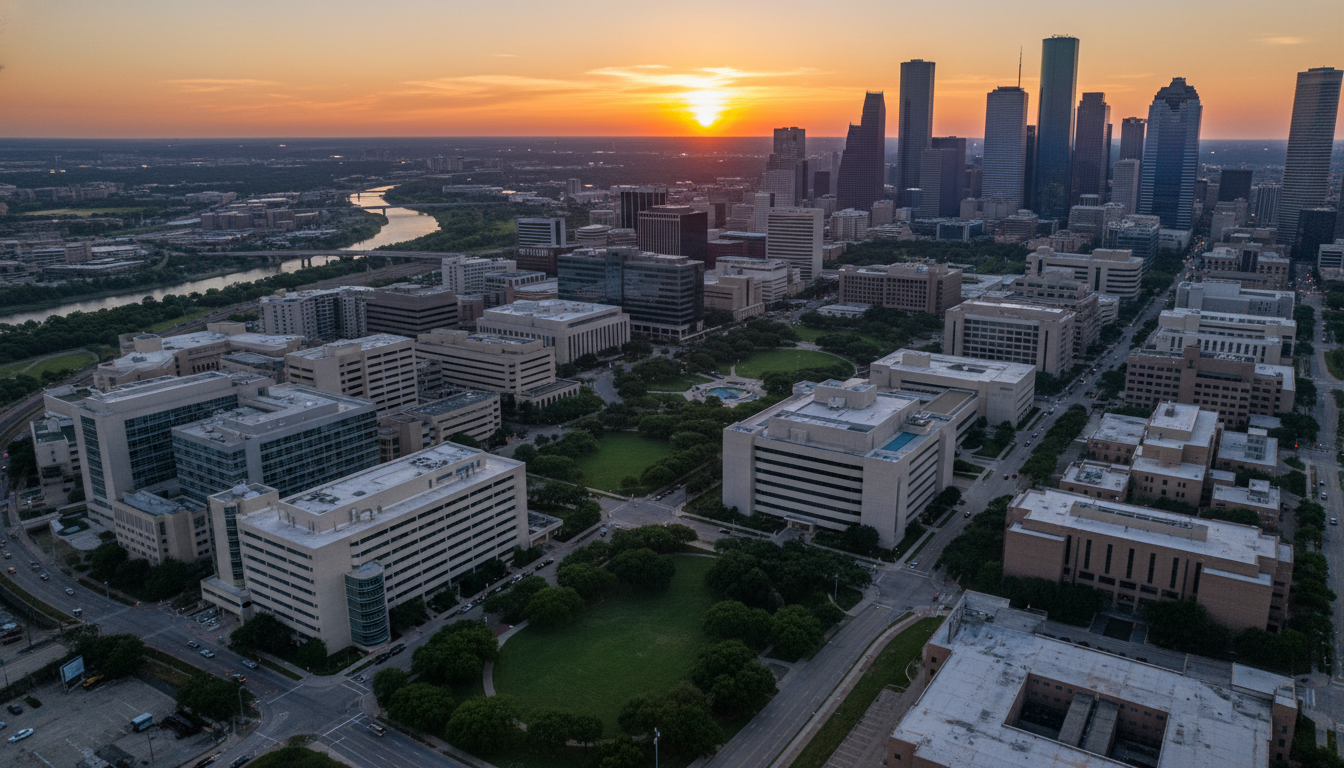
Texas Medical Center (TMC) Hub
The TMC is the world’s largest medical complex, including:- Baylor College of Medicine–affiliated programs
- McGovern Medical School at UTHealth Houston programs
- MD Anderson Cancer Center
- Houston Methodist, CHI St. Luke’s, Texas Children’s Hospital, and more
Many of the most prominent Texas Medical Center residency programs host a large number of IMGs and have well‑established visa processes.
Varied Sponsorship Culture You will find wide variation among Houston residency programs:
- Some J‑1 only
- Some J‑1 and H‑1B (often in more competitive or specialized programs)
- Some no visa sponsorship (requiring US citizenship/green card)
Post‑Residency Practice Opportunities Texas, including the Houston area and surrounding communities, offers:
- Many health professional shortage areas (HPSAs) and medically underserved areas (MUAs)
- Multiple J‑1 waiver programs (Conrad 30, federal waivers, VA waivers)
These are crucial if you choose the J‑1 path and later need a J‑1 waiver job.
Major Employers and Academic Systems Common residency sponsors in Houston include:
- Baylor College of Medicine
- UTHealth Houston (McGovern Medical School)
- MD Anderson Cancer Center
- Houston Methodist
- HCA Houston, Memorial Hermann, and other large systems
Each has its own stance on visa sponsorship; sometimes this even varies by department.
Why this matters: Your visa type can influence:
- Which programs you can rank or accept
- Whether you can moonlight during residency
- How easily you can transition to fellowship or practice in Houston after training
- Your route to permanent residence (green card) later
Core IMG Visa Options for Residency in Houston
For clinical residency training in Houston (and broadly in the US), IMG options are effectively:
- J‑1 Exchange Visitor (ECFMG‑sponsored physician category)
- H‑1B Specialty Occupation
Other visa categories (F‑1, B‑1/B‑2, O‑1, etc.) might be part of your pathway, but they are generally not used as the primary visa to perform residency training.
1. J‑1 Exchange Visitor (Physician) Visa
Who sponsors it?
- Sponsored by ECFMG, not the residency program itself (though the program must support you).
- This is the most common visa used by IMGs for residency training in Houston.
Key features:
- Must return to home country (or last country of permanent residence) for 2 years after training, unless you obtain a J‑1 waiver.
- Duration is limited to 7 years total for clinical training (residency + fellowship), with possible but limited extensions in narrow circumstances.
- Tied to a specific training program and location.
- No dual intent; it is a non‑immigrant visa designed for temporary training/education, not direct immigration.
Pros for residency in Houston:
- Widely accepted: Many Houston programs—especially community and some university-affiliated programs—are comfortable sponsoring or supporting J‑1 residents.
- Administrative burden is lower for the program compared to H‑1B (ECFMG handles most of the paperwork).
- Generally faster and more predictable to obtain once ECFMG issues the DS‑2019.
Cons:
- The 2‑year home residence requirement can be a serious barrier if you do not secure a J‑1 waiver job.
- J‑1 rules may restrict moonlighting and off‑site work.
- Limited total training time may complicate long training paths (e.g., internal medicine + long fellowships).
Common J‑1 waiver options post-residency in Texas/Houston:
- Conrad 30 state waiver (Texas participates; positions often in underserved or rural areas, not always in Houston proper but sometimes within the region)
- Federal agency waivers (e.g., VA, HHS, ARC)
- Persecution or hardship‑based waivers in rare situations
If your long‑term goal is to practice in Houston, you will need to consider whether you are open to spending at least 3 years in an underserved area elsewhere in Texas or another state after residency.
2. H‑1B Specialty Occupation Visa for Residency
Who sponsors it?
- Sponsored directly by the residency program (employer).
Key features:
- A dual‑intent visa (you may pursue permanent residency while on H‑1B).
- Typically granted for up to 6 years total (initial period + extensions), sometimes with exceptions when a green card petition is pending.
- Requires:
- USMLE Step 3 pass before H‑1B filing
- Full state medical license or training license, depending on Texas and program requirements
- The employer must pay the required wage and filing fees
Pros for residency in Houston:
- No 2‑year home residence requirement.
- More straightforward transition to:
- H‑1B jobs after training
- Green card sponsorship by employers
- Within Texas, many large health systems know the H‑1B process well for physicians, especially for attending roles; some are comfortable starting with residents/fellows.
Cons:
- Not all Houston residency programs sponsor H‑1B (some avoid it due to cost, administrative burden, or institutional policy).
- You must pass USMLE Step 3 early (ideally by the time you submit applications or before rank list deadlines if you aim for H‑1B).
- H‑1B cap may apply in non‑academic or non‑cap‑exempt settings, though many Houston academic hospitals are cap‑exempt.
Important nuance:
Residency and fellowship positions at most major academic centers in Houston (university‑affiliated, nonprofit) are usually cap‑exempt for H‑1B—this is a major advantage. Moving to a private practice job later may shift you to cap‑subject H‑1B rules.
J-1 vs H-1B: Strategic Comparison for Houston Residency Programs
Understanding J‑1 vs H‑1B in a Houston‑specific context helps you match your visa pathway to both training and long‑term goals.
Availability Across Houston Programs
- Many community‑based or smaller programs: J‑1 only
- Some mid‑sized or newer programs: J‑1 and H‑1B on a case‑by‑case basis
- Large, established academic programs (e.g., at Baylor, UTHealth, MD Anderson, Houston Methodist): often J‑1 and H‑1B but with specialty‑specific policies
Action step:
Check each program’s website and FREIDA entry for:
- “Visa sponsorship: J‑1 only”
- “J‑1 and H‑1B”
- “Accepts only US citizens/green card holders”
Then email the program coordinator or GME office to confirm, especially if the information is unclear or outdated.
Training Flexibility and Moonlighting
J‑1:
- Moonlighting is typically restricted and may require explicit ECFMG and program approval.
- Off‑site work is harder to arrange; the visa is tied to your primary training site and approved supplemental activities.
H‑1B:
- Moonlighting is often more feasible, especially if the employer adds work sites or sets up concurrent H‑1B arrangements.
- Rules still vary by institution; some Houston programs prohibit resident moonlighting regardless of visa.
If you are planning an expensive family relocation to Houston or need to support dependents, being able to moonlight later in training can matter.
Post‑Residency Plans in Houston
If you want to stay in Houston long term:
On J‑1:
- You will almost certainly need a J‑1 waiver job.
- Some waiver jobs are located within greater Houston or nearby semi‑urban areas; many, however, are in rural Texas.
- You might need to leave Houston for 3 years, then try to return.
On H‑1B:
- You can often transition directly to an H‑1B attending job in Houston or nearby.
- Large hospital systems may be willing to sponsor a green card, particularly in shortage specialties (e.g., primary care, psychiatry, some subspecialties).
Specialty Considerations in the Texas Medical Center
Some specialties in Houston’s academic powerhouse environment have patterns:
Internal Medicine, Pediatrics, Family Medicine, Psychiatry
- Many programs accept J‑1 and some accept H‑1B.
- J‑1 waiver jobs are relatively common in Texas, making the J‑1 path manageable if you are flexible on where you practice initially.
Highly competitive specialties (Dermatology, Plastic Surgery, some surgical subspecialties):
- Programs may prefer to avoid visa complexity or may have limited H‑1B capacity.
- If you are aiming for a competitive field, flexibility on J‑1 vs H‑1B may make you more marketable.
Oncology, Hematology, Subspecialty Fellowships at centers like MD Anderson:
- Many fellows train on J‑1.
- H‑1B may still be possible, but program‑specific.
Practical guidance:
If you strongly prefer H‑1B:
- Aim to pass Step 3 early.
- Prioritize programs that explicitly state they sponsor H‑1B.
- In interviews, ask tactfully whether they have recent H‑1B residents and what their internal process is.

Program-Level Realities in Houston: What to Expect
Visa policy is shaped not just by federal rules but by each institution’s risk tolerance, legal advice, and experience. Here’s how that often plays out across Houston.
Typical Institutional Approaches
Large Academic Centers (e.g., Baylor, UTHealth, MD Anderson, Houston Methodist)
- Often familiar with J‑1 and H‑1B sponsorship for trainees.
- May have clear, system‑wide GME policies.
- Some departments may limit H‑1B to certain positions (e.g., residents who already completed some training elsewhere, or fellows).
- Legal and HR teams are usually involved; processes may be slower but more structured.
Community and Smaller Hospital Programs in the Houston Area
- Frequently J‑1 only due to cost constraints and limited legal infrastructure.
- Some may still do occasional H‑1B sponsorship if candidate is exceptional and leadership is supportive.
- Visa messages on their websites are sometimes outdated; always confirm.
Newer Programs
- Policies might not be firmly set; they may be flexible but uncertain.
- If you are considering a newer program, ask detailed questions about:
- Their prior experience with IMGs
- Their willingness to learn H‑1B processes if you qualify
How Programs Evaluate IMG Visa Requests
When a Houston residency program sees your application, they consider:
Do we sponsor visas at all?
If no, your application may be screened out automatically by filters.If yes, which visas?
- J‑1 only → You must be able to go the J‑1 route.
- J‑1 and H‑1B → They may still prefer J‑1 in many cases unless you’re a particularly strong match.
Are you realistic for their visa category?
Examples:- You are asking for H‑1B but you have not passed Step 3 yet → Some will reject automatically.
- You are vague about your visa needs → Programs may be cautious.
Actionable tip:
In your application, clearly indicate:
- Your current status (e.g., F‑1 with OPT, J‑1 research, outside US)
- Which visa(s) you are open to (e.g., “Open to J‑1 and H‑1B sponsorship” or “Need H‑1B due to prior J‑1 research two‑year rule”)
Programs appreciate transparency and are more likely to engage when they understand your constraints early.
Practical Steps: How to Navigate Visa Choices for Houston Residencies
Step 1: Clarify Your Own Constraints and Priorities
Before applying, be precise about your situation:
- Do you currently have or ever had any J‑1 status in the US (research, observer, student)?
- If yes, are you already subject to a 2‑year home residence requirement?
- Are you willing to:
- Complete a 3‑year J‑1 waiver job in an underserved area post‑residency?
- Potentially leave Houston for those 3 years if needed?
- Do you plan a long training path (e.g., IM → fellowship → possibly advanced fellowships)?
- Consider J‑1’s 7‑year limit vs H‑1B’s 6‑year limit, and when you might begin a green card process.
- Are you realistically able to:
- Pass Step 3 before rank list deadlines?
- Pay potential costs associated with Step 3, travel, and licensing?
Write down:
- “Ideal scenario” (e.g., H‑1B in a TMC internal medicine program, then Houston attending job with green card sponsorship)
- “Acceptable fallback scenarios” (e.g., J‑1 in Houston followed by waiver job in broader Texas)
This helps you make rational decisions during application and ranking.
Step 2: Research Visa Policies of Houston Programs
Use multiple sources:
Program Websites and GME Office Pages
- Look under “Eligibility and Requirements,” “FAQ,” or “GME Visa Information.”
- Some TMC‑based programs have a central GME visa policy page.
FREIDA, ERAS, and NRMP Data
- FREIDA often lists “Visa types sponsored.”
- Cross‑check with recent program communications.
Email Coordinators or GME Offices
- Keep emails short and specific:
- Your graduation year
- Your current citizenship and visa status
- Whether you have Step 3 or expect to take it
- Keep emails short and specific:
Example:
“I am an IMG graduating in 2025, currently outside the US, planning to apply to your internal medicine residency. I am open to both J‑1 and H‑1B sponsorship and expect to take USMLE Step 3 by [month, year]. Could you please confirm whether your program sponsors J‑1 only, or both J‑1 and H‑1B for residents?”
Step 3: Align Application Strategy with Visa Realities
For each program in Houston:
- Mark it as:
- J‑1 only
- J‑1 + H‑1B
- No visa
- Decide:
- Will you accept a J‑1 offer from that program?
- If not, there is little value in applying to J‑1 only programs.
For candidates who strongly prefer H‑1B:
- Focus applications on:
- Large academic centers in the Texas Medical Center
- Programs with documented H‑1B sponsorship history
- Still consider a small number of J‑1 only programs if they are excellent fits and you are open to adjusting your plan.
Step 4: Prepare Required Documents Early
For J‑1 via ECFMG:
- Maintain updated ECFMG certification.
- Prepare:
- Passport
- Medical school diploma and transcripts
- Residency contract/offer letter once matched
- Follow ECFMG’s J‑1 portal instructions; your Houston program’s GME office will guide you.
For H‑1B:
- USMLE Step 3 score report
- Texas training license or eligibility documents
- Detailed CV and experience
- Potential credential evaluation if needed
- Clear copies of all prior I‑20s, DS‑2019s, I‑94s, and visas if you have been in the US before
Timing:
Houston programs typically need to initiate H‑1B procedures soon after Match to ensure approval by the residency start date (often July 1). Delays in Step 3 or missing documentation can jeopardize your start.
Step 5: Communicate Clearly During Interviews and Match
During interviews with Houston residency programs:
- When asked about visa status, answer directly:
- “I am currently on F‑1 with OPT. I am open to J‑1 or H‑1B sponsorship.”
- “I am outside the US and will need sponsorship. I have completed Step 3 and would like to be considered for H‑1B if possible, but I am also open to J‑1 where H‑1B is not available.”
Avoid:
- Overly rigid statements like “H‑1B only, no J‑1” unless you truly cannot take a J‑1 (e.g., due to prior J‑1 home rule issues).
- Vague answers that confuse program staff.
Before finalizing your rank list:
- Reconfirm with any borderline programs how they would sponsor you if you match (J‑1 vs H‑1B).
- Take into account:
- Your risk tolerance for a J‑1 waiver job
- Your spouse/children’s needs (J‑2 vs H‑4 and work authorization timelines)
- Long‑term Houston career plans
Example Scenarios: How Different IMGs Might Navigate Houston Visas
Scenario 1: IMG Outside the US, No Prior US Visa, Wants Internal Medicine in TMC
- Strong USMLE scores, ECFMG certified, no prior US visa history.
- Open to J‑1 but prefers H‑1B.
- Plan:
- Take Step 3 by early application season.
- Apply broadly to internal medicine programs within the Texas Medical Center and across Houston that explicitly support H‑1B.
- List willingness to accept J‑1 at selected strong programs where H‑1B is not offered.
- Outcome:
- Matches at a Houston academic IM program with H‑1B sponsorship.
- After residency, obtains an H‑1B internal medicine job in Houston; employer starts green card process.
Scenario 2: IMG on J‑1 Research in Houston Already, Subject to Home Rule
- Completed two years of J‑1 research at a Houston institution; now subject to 2‑year home residence rule.
- Wants to stay in Houston for residency.
- Options:
- Return home for 2 years and then apply again.
- Seek a J‑1 waiver before starting residency (very challenging for research J‑1s).
- Transition to J‑1 clinical physician status via ECFMG, acknowledging they will eventually need a J‑1 waiver job.
- Practical reality:
- Many Houston residency programs will see this as complex.
- Candidate may be better served planning for a return home and then re‑entering on a clean visa path, or accepting that a rural Texas waiver job will likely follow training.
Scenario 3: IMG Interested in Fellowship and Long Training Path at Texas Medical Center
- Goal: IM residency + Cardiology fellowship + possibly electrophysiology at TMC institutions.
- Concerned about:
- J‑1’s 7‑year limit vs multiple training stages.
- Strategy:
- If strong candidate with early Step 3, target H‑1B residency at a Houston academic center.
- Use H‑1B for residency and fellowship, while starting green card process early during fellowship.
- Alternative:
- If on J‑1, calculate:
- 3 years IM + 3 years Cardiology = 6 years
- Leaves only 1 additional year under J‑1 rules, which may limit advanced subspecialty training.
- If on J‑1, calculate:
Frequently Asked Questions (FAQ)
1. Do all Houston residency programs in the Texas Medical Center sponsor both J‑1 and H‑1B?
No. Sponsorship varies by institution and by specialty. Some major academic programs sponsor both J‑1 and H‑1B; others are J‑1 only for residents but may offer H‑1B for fellows or faculty. Always confirm on the program’s website or by contacting the program coordinator or GME office directly.
2. Is it worth taking USMLE Step 3 early if I want to match in Houston?
If you are aiming for H‑1B, yes. Many Houston programs that sponsor H‑1B require Step 3 to be completed before they can file your petition, and some prefer candidates who already have Step 3 at the time of ranking. Taking Step 3 early increases your options and signals seriousness about H‑1B‑based training.
3. If I match to a Houston program on J‑1, can I later switch to H‑1B during residency?
Switching from J‑1 to H‑1B during the same training program is usually difficult and often not allowed for standard ECFMG‑sponsored J‑1 clinical positions, due to the 2‑year home residence requirement that attaches once you begin on J‑1. Some complex exceptions exist, but in general, plan as if you will remain on J‑1 throughout that training. If H‑1B is essential to you, you should pursue it from the start of residency or fellowship.
4. Are J‑1 waiver jobs available in Houston after residency?
Sometimes, but they are limited and highly competitive. Most Conrad 30 waiver positions in Texas are in underserved or rural locations, which may be outside the immediate Houston metropolitan area. There are occasional waiver‑eligible roles in or near Houston, often in community health centers or specific underserved neighborhoods, but you should not rely on these as guaranteed. Flexibility on geography will significantly improve your chances of securing a waiver position.
Navigating visa options for IMGs in Houston residency programs requires early planning, honest self‑assessment, and clear communication with programs. Whether you pursue J‑1, H‑1B, or remain flexible between the two, aligning your visa strategy with the realities of the Texas Medical Center residency landscape and your long‑term goals will put you in the strongest position for a successful match and career.