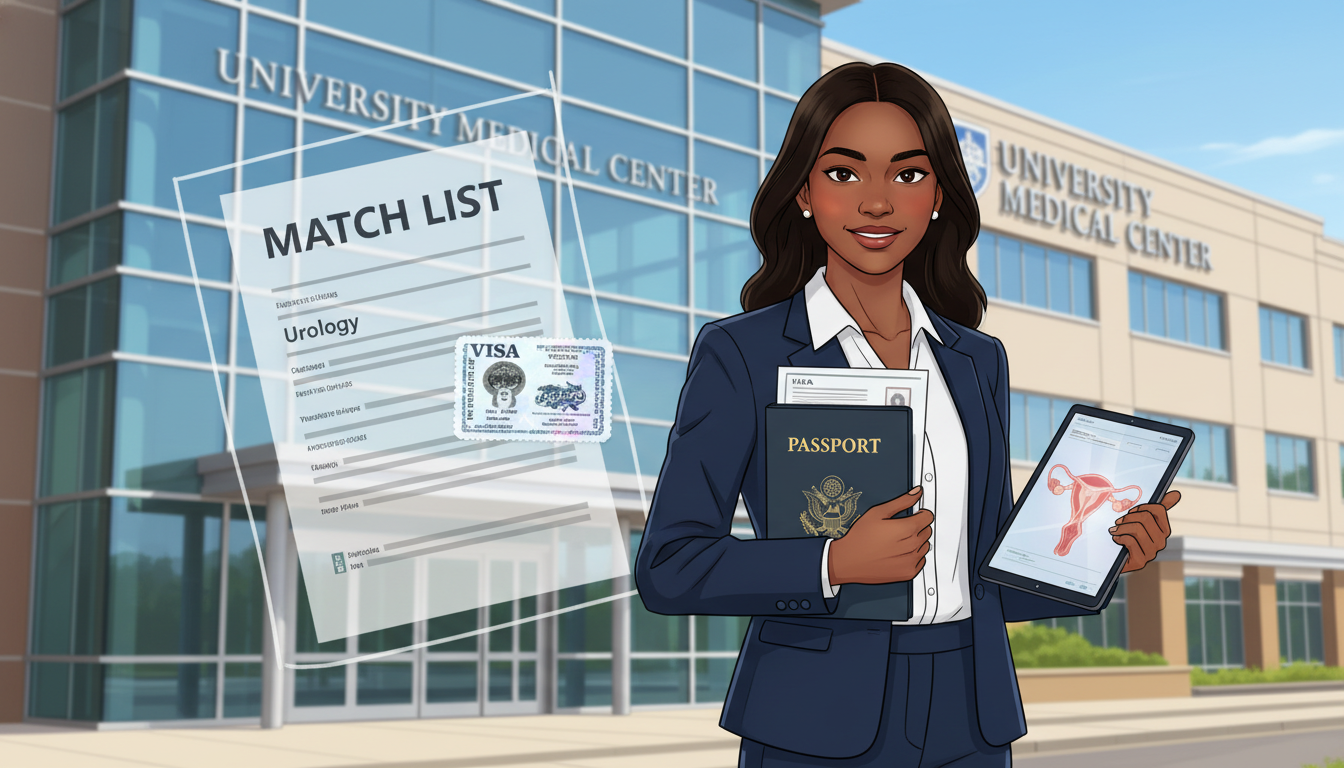
Navigating visas is one of the most complex and stressful parts of the residency journey for any international medical graduate (IMG), and this is especially true in competitive specialties like Obstetrics & Gynecology (OB GYN). A strong understanding of your residency visa options—and how they interact with the obstetrics match process—can significantly improve your chances of training in the United States.
This IMG residency guide is focused specifically on OB GYN residency and will walk you through the major visa categories, strategic planning for the match, and practical steps to protect your long‑term career goals in women’s health.
Understanding the Big Picture: How Visa Status Interacts With OB GYN Residency
Visa status is not just a bureaucratic detail; it shapes:
- Which programs you can apply to
- How competitive you appear compared to U.S. graduates
- Your ability to moonlight, pursue research, or extend training (fellowship)
- Your long‑term ability to stay in the U.S. after training
For an international medical graduate targeting OB GYN residency, three elements work together:
USMLE & Application Strength
- OB GYN is moderately to highly competitive, with rising USMLE expectations.
- IMGs must usually exceed the “average” U.S. graduate profile, particularly when asking a program to sponsor a visa.
Visa Category
- Most common residency visa options: J‑1 and H‑1B.
- Less common or special pathways: EAD (green card applicants, asylum, TPS, etc.), O-1, and dependent visas (H‑4, L‑2, etc.).
Program’s Visa Policy
- Some programs sponsor only J‑1.
- Some sponsor both J‑1 and H‑1B, but may prefer J‑1 for logistical or financial reasons.
- A minority do not sponsor any visas (only accept U.S. citizens/green card holders).
Because OB GYN residency is 4 years with a strong tradition of fellowship training (MFM, Gyn Onc, REI, FPMRS, MIGS), you must think not only about the match year but also about post‑residency flexibility when choosing your visa.
Core Residency Visa Options for IMGs: J‑1 vs H‑1B
Most OB GYN IMGs will train on either a J‑1 (ECFMG-sponsored) or H‑1B (employer-sponsored) visa. Understanding J-1 vs H-1B is central to any IMG visa strategy.
J‑1 Visa for Clinical Residency
The J‑1 Exchange Visitor Physician Visa is the most commonly used visa for IMGs in graduate medical education.
Key Features:
- Sponsor: ECFMG (not the individual hospital)
- Purpose: Graduate medical education (residency and fellowship)
- Duration: Typically up to 7 years total (often enough for OB GYN residency plus one fellowship)
- Work Limitation: You’re authorized only at the approved training site(s) listed in your DS-2019.
Major Advantages:
- Widely Accepted: Many OB GYN programs that sponsor visas will at least sponsor J‑1.
- Predictable Process: ECFMG has standardized procedures and timelines.
- No USMLE Step 3 Required to Start: Unlike H‑1B, you do not need Step 3 completed before residency starts (though many IMGs take Step 3 early to strengthen their profile).
Major Drawbacks – Especially Important for OB GYN:
- Two-Year Home Country Return Requirement (INA 212(e))
- After J‑1 training, you are generally required to return to your home country for two years before applying for:
- H‑1B
- L visas
- Permanent residency (green card)
- Many physicians avoid returning by obtaining a J‑1 waiver.
- After J‑1 training, you are generally required to return to your home country for two years before applying for:
- Need for a J‑1 Waiver Job
- The most common path: a waiver job in an underserved area (often rural or inner-city).
- For OB GYN, waiver jobs may be more limited than for primary care, but they do exist, especially in:
- Rural maternity deserts
- Critical-access hospitals with OB services
- Safety-net hospitals with high obstetric volume
Typical J‑1 Waiver Path for OB GYN IMGs:
- Complete OB GYN residency (4 years) on J‑1.
- Possibly pursue one OB GYN fellowship (e.g., MFM) if within the 7-year J‑1 limit and approved by ECFMG.
- Apply for J‑1 waiver position:
- State Conrad 30 program
- Federal programs (VA, HHS, Delta Regional Authority, etc.)
- Work 3 years full-time in that waiver job.
- Transition to H‑1B and/or permanent residency.
This path is realistic for many IMGs, but it requires early planning and openness to work in underserved regions after training.
H‑1B Visa for Residency
The H‑1B is a temporary worker visa in a specialty occupation, directly sponsored by the residency program or hospital.
Key Features:
- Sponsor: Individual employer (hospital/institution).
- Purpose: Employment as a physician-trainee.
- Duration: Typically up to 6 years total in H‑1B status (including residency, fellowship, and prior H‑1B time).
- USMLE Step 3 Required: You must pass Step 3 before your H‑1B petition is filed; in practice, this usually means before residency starts.
Major Advantages:
- No Two-Year Home Return Requirement
- You can pursue a green card, change employers, or move to another H‑1B job without a J‑1 waiver.
- Potentially Easier Long-Term U.S. Permanence
- More straightforward to transition to fellowship, academic positions, and ultimately permanent residency.
- Fewer Restrictions on Location After Training
- You’re not tied to underserved areas for immigration purposes (though they may still be good career options).
Major Drawbacks:
- Limited Program Availability
- Many smaller or community OB GYN programs do not sponsor H‑1B due to cost or complexity.
- Even some large university programs are “J‑1 only.”
- Early Step 3 Requirement
- You must:
- Schedule and pass Step 3 before residency start.
- Manage this while finishing medical school or clinical work—a challenge if you’re outside the U.S.
- You must:
- Time Limits for Extended Training
- OB GYN residency (4 years) + fellowship (3 years) = 7 years. But H‑1B usually has a 6-year max unless you have a green card process started.
- This can be an issue for IMGs wanting multiple fellowships or extended academic tracks.
J‑1 vs H‑1B for OB GYN: How to Decide
For an international medical graduate targeting OB GYN residency, here’s a strategic comparison:
Choose J‑1 if:
- You are open to:
- Working in underserved or rural areas after training.
- Potentially returning to your home country for 2 years if needed.
- You:
- Want to be eligible for more programs (especially mid-sized or community OB GYN programs).
- Don’t yet have Step 3 and are not sure you can pass it before residency start.
- Plan only one fellowship (or none) and can fit within ECFMG’s training time limits.
Choose H‑1B if:
- You:
- Strongly prefer to stay in the U.S. long-term without mandatory return.
- Hope to pursue competitive fellowships (MFM, Gyn Onc, REI) or academic careers where flexibility is key.
- You are confident that:
- You can pass USMLE Step 3 early, ideally before applying, so programs can see you as “H‑1B ready.”
- You are competitive enough to match into programs that sponsor H‑1B.
- You are prepared for:
- A narrower pool of programs.
- Potentially increased scrutiny on your application (programs sponsoring H‑1B often expect outstanding credentials).

Mapping Visa Strategy to the OB GYN Residency Application Process
Your visa planning should start before you submit ERAS. Here’s how to integrate visa strategy into each phase of the obstetrics match.
1. Pre-Application Phase (12–24 Months Before Match)
Clarify Your Personal Constraints and Goals
Ask yourself:
- Do I absolutely need to stay in the U.S. after training?
- Am I comfortable with potentially working in a rural town or underserved area for 3+ years?
- Can I realistically prepare for and pass Step 3 early?
- What is my current immigration status (student, visitor, another nonimmigrant visa, no U.S. status)?
Your answers will shape whether J‑1, H‑1B, or a mix of both is most realistic.
Build a Competitive OB GYN Profile
Because visa sponsorship adds complexity, program directors often:
- Expect higher USMLE scores from IMGs.
- Value U.S. clinical experience in OB GYN (sub-internships, electives, observerships).
- Look for:
- Strong letters of recommendation from U.S. OB GYN faculty.
- Evidence of commitment to women’s health (research, volunteer work, women’s health advocacy).
For IMGs aiming for H‑1B, excellence is mandatory, not optional.
Decide on Your Step 3 Strategy
- If you prioritize H‑1B:
- Plan to take Step 3 before ERAS submission or at least before interviews.
- Being “Step 3 passed” is a strong signal that you are H‑1B ready.
- If you’re open to J‑1:
- Step 3 can still be helpful (shows strength) but is not mandatory for the visa.
2. Program Selection: Filtering for Visa Policies
This is where many IMGs lose opportunities by not being strategic. A targeted approach is essential for any IMG residency guide.
How to Check Program Visa Policies:
FREIDA & Program Websites
- Look for statements like:
- “Sponsorship: J‑1 only”
- “We sponsor J‑1 and H‑1B visas”
- “Applicants must be U.S. citizens or permanent residents”
- Look for statements like:
Email Programs (Politely and Concisely)
- If unclear, send a brief, professional email:
- Introduce yourself.
- Ask whether they currently sponsor J‑1, H‑1B, or both.
- Mention your Step 3 status if applying for H‑1B.
- If unclear, send a brief, professional email:
Use Alumni and Networks
- Ask former IMGs in that program what visa they’re on.
- Attend virtual open houses and ask about IMG visa options.
Building a Tiered Program List
For example, if your goal is H‑1B but you’re open to J‑1:
- Tier 1: OB GYN programs that explicitly sponsor H‑1B and have a history of taking IMGs.
- Tier 2: OB GYN programs that sponsor J‑1 only but have a strong track record with IMGs.
- Tier 3: Highly competitive, research-oriented programs that occasionally sponsor H‑1B for exceptional IMGs.
Apply broadly within each tier, balancing your competitiveness and visa needs.
3. During Interviews: Discussing Visa Issues Professionally
How you talk about visas during interviews can either reassure or worry programs.
Best Practices:
- Be honest but solution-oriented.
- If you seek H‑1B:
- Clearly state:
“I have passed Step 3 and I’m fully eligible for H‑1B sponsorship if your institution supports it.” - If they prefer J‑1, express flexibility if you’re comfortable with it.
- Clearly state:
- If you seek J‑1 only:
- Clearly state you understand the two-year rule and have thought about waiver options.
- Show maturity: emphasize service mindset and openness to underserved communities.
Topics You Can Ask (When Appropriate):
- “Which visas does your program typically sponsor for IMGs?”
- “Do you currently have residents or fellows on H‑1B or J‑1 visas?”
- “How does your institution’s legal team support incoming international residents?”
Do not make the entire interview about visas; the main focus must remain your fit as an OB GYN resident.
4. Post-Match and Pre-Residency: Completing Visa Paperwork
Once you match, the timeline becomes tight.
If You Matched on J‑1:
- Your program will confirm your position to ECFMG.
- You’ll submit to ECFMG:
- DS-2019 application forms
- Proof of funding (residency contract)
- Required documents (passport, medical school diploma, etc.)
- Once DS-2019 is issued:
- Schedule your visa interview at a U.S. consulate.
- Prepare to demonstrate:
- Ties to your home country (standard nonimmigrant requirement).
- Clear understanding of your training plan.
If You Matched on H‑1B:
- The program’s legal office will initiate your H‑1B petition.
- You must provide:
- Step 3 pass result
- ECFMG certification
- Credentials evaluation, diplomas, and translation if needed.
- Premium processing may be used to ensure timely approval for a July 1 start.

Long-Term Planning: Fellowships, Waivers, and Staying in the U.S.
OB GYN is deeply fellowship-driven, and visa decisions now will shape those options later.
OB GYN Fellowships and Visa Considerations
Common OB GYN fellowships:
- Maternal-Fetal Medicine (MFM)
- Gynecologic Oncology
- Reproductive Endocrinology & Infertility (REI)
- Female Pelvic Medicine & Reconstructive Surgery (FPMRS)
- Minimally Invasive Gynecologic Surgery (MIGS)
- Complex Family Planning
If You’re on J‑1:
- Each additional year of training uses up your limited ECFMG J‑1 time.
- You must request extension approval from ECFMG for fellowship.
- After your final training (residency ± fellowship), you must:
- Either return home for 2 years
- Or obtain a J‑1 waiver (3-year service in a designated job).
For some subspecialties like REI or Gyn Onc, J‑1 waiver jobs may be scarcer; many waiver positions emphasize general OB GYN or MFM.
If You’re on H‑1B:
- OB GYN residency (4 years) + fellowship (3 years) = 7 years. But H‑1B is usually capped at 6 years unless:
- Permanent residency (PERM/I-140) has been filed early, allowing visa extensions beyond 6 years.
- Many academic programs are experienced in sponsoring H‑1B for both residency and fellowship, then later for faculty roles.
Think ahead: if you desire multiple fellowships or extended research, coordinate early with mentors and your program’s legal office.
J‑1 Waivers for OB GYN Physicians
If you finish training on J‑1 and want to remain in the U.S., a J‑1 waiver is often essential.
Common Waiver Paths for OB GYN:
State Conrad 30 Programs
- Each state may grant up to 30 waivers per year for physicians serving in Health Professional Shortage Areas (HPSAs) or Medically Underserved Areas (MUAs).
- Some states prioritize OB GYN or MFM due to maternity care deserts.
- Rural or small-town hospitals often seek OB GYNs desperately and may support waiver sponsorship.
Federal Waiver Programs
- Veterans Affairs (VA)
- Department of Health and Human Services (HHS) clinical programs
- Delta Regional Authority (DRA)
- Appalachian Regional Commission (ARC)
- These may have more specific rules or preferences about specialty and setting.
Key Tips for OB GYN IMGs Planning on J‑1 Waivers:
- Start networking during residency with potential employer sites in underserved regions.
- Seek mentors (often OB GYN faculty who trained on J‑1) who can advise on:
- Which states are more IMG-friendly.
- Which regions offer realistic waiver jobs for OB GYN.
- Keep your CV updated and emphasize:
- High delivery volume.
- Interest in rural medicine or underserved women’s health.
- Any Spanish or other language skills: a real asset in underserved communities.
Other Less Common Visa Pathways (Brief Overview)
Some IMGs enter OB GYN residency under other statuses:
- U.S. Permanent Resident (Green Card)
- Frees you from J‑1 vs H‑1B decisions; treated like a U.S. graduate for visa purposes.
- Dependent Visas (H‑4, L‑2, etc.)
- If eligible to work, some IMGs can join residency without needing a separate employment visa.
- O-1 Visa (Alien of Extraordinary Ability)
- Rare for residency level; possible for academic/research positions later, especially in subspecialized OB GYN with strong publications.
- Asylum, TPS, DACA, etc.
- Case-specific; you should get individualized immigration counsel.
Because these are highly individualized, always consult an immigration attorney to avoid jeopardizing your status.
Practical Action Plan for OB GYN IMGs: Step-by-Step
Here is a concise roadmap to align your visa navigation with your OB GYN residency goals:
12–24 Months Before Match
- Clarify your long-term goals (U.S. career vs flexibility to return home).
- Boost your OB GYN application: U.S. experience, letters, research.
- Decide: Are you going to aim for H‑1B, J‑1, or either?
6–12 Months Before ERAS Submission
- If aiming for H‑1B:
- Schedule and prepare for Step 3.
- Begin building a program list, noting visa policies.
- Set up consultations with senior IMGs and possibly an immigration lawyer for personalized advice.
- If aiming for H‑1B:
ERAS & Interview Season
- Highlight your visa readiness:
- “Step 3 passed, eligible for H‑1B” if applicable.
- During interviews, briefly clarify:
- Your visa preference.
- Your flexibility (e.g., willing to consider J‑1 if that’s program policy).
- Keep the focus on your strengths as a future OB GYN: surgical skill, teamwork, communication, advocacy.
- Highlight your visa readiness:
Post-Match
- Respond quickly to your program’s requests for documents.
- For J‑1:
- Complete ECFMG paperwork promptly.
- For H‑1B:
- Work closely with your GME office and legal team to avoid delays.
During Residency
- For J‑1:
- Start exploring waiver opportunities by PGY-2 or PGY-3.
- For H‑1B:
- Discuss early with your faculty and HR about:
- Fellowship H‑1B extensions.
- Employer-sponsored green card strategies (especially during late residency/early fellowship).
- Discuss early with your faculty and HR about:
- For J‑1:
Frequently Asked Questions (FAQ)
1. Is it harder to match into OB GYN residency as an IMG if I need a visa?
Yes. Visa needs add another layer of complexity and cost for programs. This means:
- You must often outperform average U.S. graduates on exams and clinical performance.
- You should apply more broadly and strategically, prioritizing programs with a track record of supporting IMGs and sponsoring your preferred visa.
- Strong letters, U.S. OB GYN rotations, and a clear commitment to women’s health can significantly offset visa-related hesitation.
2. Should I delay applying to OB GYN residency until I pass Step 3 for H‑1B?
It depends on your overall profile:
- If your primary goal is H‑1B and you can reasonably pass Step 3 in time:
- Taking Step 3 before applying can significantly broaden your H‑1B-friendly program list.
- However, if:
- You have strong scores and clinical experiences already.
- You’re open to J‑1.
- Or Step 3 timing would delay your entire application cycle.
Then it may be better not to delay and instead apply with a strong J‑1 or flexible strategy. Consider discussing your specific situation with an advisor or mentor familiar with OB GYN.
3. Can I switch from J‑1 to H‑1B during or after residency?
In general:
- During residency:
- Switching from J‑1 to H‑1B is usually not allowed without addressing the two-year home country requirement (212(e)).
- You must either:
- Fulfill the 2-year home residency, or
- Obtain a waiver of the 2-year rule.
- After residency (and waiver job):
- Once you have a J‑1 waiver and move into a waiver job, you are typically sponsored under H‑1B.
- That H‑1B can later be moved to other employers after your 3-year obligation, often alongside green card processing.
Always get case-specific guidance from an immigration attorney before planning a switch.
4. Are J‑1 waiver jobs available for subspecialized OB GYN (e.g., MFM, Gyn Onc)?
Yes, but availability varies:
- General OB GYN and MFM are the most common in underserved areas.
- Gyn Onc, REI, and other subspecialties may have fewer waiver positions, and some jobs may require you to do mixed practice (e.g., general OB GYN + specialty consults).
- If you are determined to subspecialize and remain in the U.S. long-term:
- Start researching waiver trends during fellowship.
- Consider flexibility in location and practice mix.
- Maintain strong productivity and outcomes to stand out to potential rural/underserved employers.
Visa navigation is complex, but with early planning, realistic expectations, and a clear strategy, an international medical graduate can successfully match into OB GYN residency, pursue advanced training, and build a long-term career in women’s health in the United States. Use this guide as a framework, and pair it with personalized advice from mentors, GME offices, and qualified immigration counsel to make the best decisions for your future.