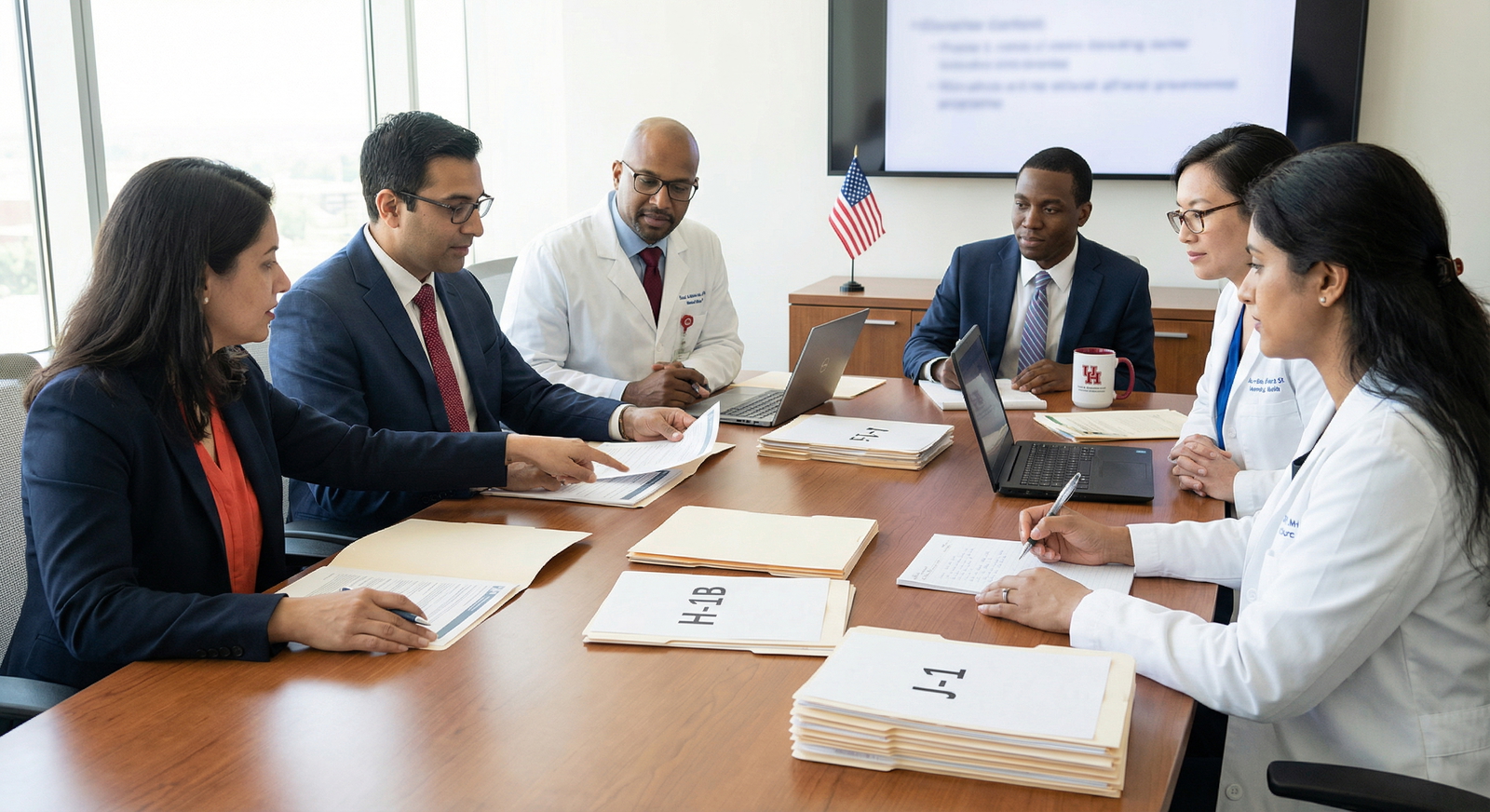
Navigating U.S. visa pathways as an international medical graduate (IMG) is challenging in any state—but doing it for Alaska residency and Hawaii residency programs adds unique geographic, logistical, and lifestyle considerations. This IMG residency guide focuses specifically on visa navigation for residency in these two non-contiguous states, helping you understand how to match, train, and remain compliant with immigration rules while living in Alaska or Hawaii.
Understanding the Visa Landscape for IMGs in Alaska & Hawaii
When planning residency in Alaska or Hawaii, you’re dealing with two overlapping systems:
- Graduate medical education rules (ERAS, NRMP Match, state licensing)
- U.S. immigration law (your status to live and work in the U.S.)
For most IMGs, residency visa navigation revolves around three main statuses:
- J-1 Exchange Visitor (ECFMG-sponsored)
- H-1B Temporary Worker (Specialty Occupation)
- Other statuses that allow training/employment (e.g., green card, EAD)
In Alaska and Hawaii specifically:
- Programs are often smaller and more selective with visa sponsorship because of limited positions.
- Some hospitals/health systems have less experience sponsoring H-1B than large mainland academic centers.
- Both Alaska and Hawaii are considered medically underserved in many regions, important for later J-1 waiver jobs after residency.
Typical Visa Statuses for IMGs Entering Residency
1. J-1 Exchange Visitor Visa (ECFMG-sponsored)
- The most common IMG visa for residency nationwide.
- Sponsored not by the program, but by ECFMG (Educational Commission for Foreign Medical Graduates).
- Requires you to return to your home country for two years after training, unless you obtain a J-1 waiver.
2. H-1B Visa (Temporary Worker)
- Employer-sponsored by the residency program or hospital.
- Often preferred by IMGs who plan to stay in the U.S. long term because it does not carry the 2-year home residency requirement.
- More complex and expensive for programs to sponsor; therefore less commonly offered, especially in smaller or newer programs.
3. Other Statuses (Permanent Residents, EAD holders, etc.)
- If you have a green card, refugee/asylee status, or another Employment Authorization Document (EAD), visa navigation is simpler—you apply as a U.S. applicant, usually without immigration barriers.
- Still, you may be considered an IMG academically (depending on where you graduated).
Being strategic about J-1 vs H-1B in Alaska and Hawaii involves balancing:
- Your competitiveness and exam scores
- The local program’s visa policies
- Long-term career plans (fellowship, practice location, immigration goals)
J-1 Visa for Residency in Alaska & Hawaii
The J-1 visa for physicians is managed through ECFMG and is the predominant pathway for IMGs entering residency in the U.S., including in Alaska residency and Hawaii residency programs.
Core Features of the J-1 Physician Visa
- Sponsor: ECFMG (not the residency program itself)
- Purpose: Graduate medical education (residency, fellowship)
- Duration: Typically up to 7 years total for all GME
- Restrictions:
- Must be in full-time, accredited training
- Must have valid Statement of Need from your home country health authority
- Subject to 2-year home-country physical presence requirement after training (Section 212(e))
Eligibility Requirements for J-1
To secure J-1 sponsorship for Alaska or Hawaii residency:
- ECFMG Certification (including USMLE Steps and clinical skills requirements as applicable)
- A valid residency or fellowship contract from an ACGME-accredited program
- Statement of Need from your home government confirming that:
- There is need for physicians in your specialty
- They support your training in the U.S.
- Proof of sufficient financial support (usually met by your residency salary)
- Compliance with ECFMG’s English proficiency and documentation requirements
Advantages of J-1 for Alaska & Hawaii
Widely accepted
- Many Alaska and Hawaii programs that accept IMGs are more comfortable and familiar with J-1 sponsorship than H-1B.
Streamlined sponsorship
- ECFMG handles much of the administrative work; programs mainly support forms and contracts.
Predictable process and timeline
- Long-established pathway; information and support are widely available.
Disadvantages / Limitations
- 2-year home-country requirement after training, unless you get a J-1 waiver.
- Limited flexibility to moonlight or work outside the approved training site.
- Fellowship and additional training require ECFMG approval and count toward the 7-year total.
J-1 Waivers and Why They Matter in Alaska & Hawaii
After J-1 training, you must either:
- Return to your home country for 2 years, or
- Obtain a J-1 waiver that allows you to stay and work in the U.S.
In Alaska and Hawaii, there are notable J-1 waiver options:
- Conrad 30 State Waiver Programs
- Each U.S. state can sponsor up to 30 J-1 waivers per year for physicians who agree to work in underserved areas for at least three years full-time.
- Both Alaska and Hawaii participate in Conrad 30 and often seek primary care and some specialty providers willing to serve rural/underserved communities.
- Federal Programs (e.g., VA, HHS, ARC)
- Some federal waivers may apply if you work at eligible facilities (e.g., certain community health centers, VA hospitals).
For IMGs doing residency in Alaska or Hawaii, this means:
- Training in these states can position you well to later apply for a J-1 waiver job in the same region.
- Your familiarity with rural/remote medicine in these states may make you more competitive for Conrad 30 slots, which often prioritize rural and underserved communities.

H-1B Visa for Residency in Alaska & Hawaii
The H-1B visa is an employment-based visa category for “specialty occupations” that many IMGs pursue to avoid the J-1’s 2-year home-country requirement. It can be more difficult to secure in Alaska and Hawaii, but understanding the details will help you tailor your application strategy.
Core Features of H-1B for Residency
- Sponsor: The residency program or its parent institution (hospital/university)
- Purpose: Direct employment; you are an employee, not an exchange visitor
- Duration: Initial up to 3 years, renewable to a maximum of 6 years (with some exceptions during green card processing)
- No mandatory 2-year home-country requirement
Eligibility Requirements
Programs that sponsor H-1B for IMGs typically require:
- USMLE Step 3 passed before visa filing (critical point)
- Full ECFMG certification
- Valid state medical license or eligibility for a training license
- A salary that meets or exceeds the prevailing wage for the position
Given the small number of programs in Alaska and Hawaii, and their varying institutional resources, not all will be ready or willing to handle these complexities.
Advantages of H-1B for Alaska & Hawaii
No 2-year home-country requirement
- Frees you to go directly into fellowship or employment in the U.S. after residency without needing a J-1 waiver.
More flexible for long-term U.S. immigration planning
- Easier to transition into employer-sponsored permanent residency (green card) in many cases.
Less restricted on site-of-practice (compared with J-1)
- Though residency duties are still tied to your program, H-1B rules can provide somewhat greater flexibility for certain clinical activities.
Disadvantages / Challenges
Fewer programs sponsor H-1B
- In Alaska and Hawaii, J-1 is generally more common. H-1B sponsorship may be restricted to select specialties or specific institutions.
Higher administrative and legal burden
- Programs must file petitions, pay fees, and sometimes work with immigration lawyers. Smaller or remote programs may lack resources or experience.
Step 3 timing pressure
- You must pass USMLE Step 3 early, often before Match or at least before July 1 start date, which is challenging if you’re finishing Step 2 CK close to application season.
6-year total limit
- Long residency + fellowship pathways (e.g., internal medicine → subspecialty) may approach or exceed the 6-year cap if you don’t begin green card processing early.
Cap-Exempt vs Cap-Subject H-1B for Residency
Many teaching hospitals are H-1B cap-exempt as higher-education or nonprofit research institutions, meaning:
- They can sponsor H-1B at any time of the year.
- They are not limited by the H-1B lottery.
You’ll want to confirm whether your Alaska or Hawaii hospital is cap-exempt. Many (especially those with university affiliations) are, but not all.
This distinction impacts your future career moves—transferring from a cap-exempt residency H-1B to a cap-subject private practice job can trigger the H-1B lottery requirement.
J-1 vs H-1B: Strategic Considerations for Alaska & Hawaii
When choosing your path, think through:
Your profile:
- High scores and strong CV? You may be more competitive at H-1B-friendly programs.
- More marginal scores or non-U.S. clinical experience only? J-1–only programs might be more realistic.
Your long-term goals:
- If you are open to working in underserved or rural settings (very relevant in Alaska and Hawaii), J-1 followed by a J-1 waiver job could be a strong strategy.
- If you are committed to subspecialty fellowship and eventual big-city academic positions, H-1B may better fit your plan—if you can obtain one.
Timing:
- If you can’t realistically take and pass USMLE Step 3 before Match, prioritize J-1–accepting programs.
How Alaska & Hawaii Residency Programs Approach IMGs and Visas
The regional context in Alaska and Hawaii is important when strategizing your visa options.
Program Landscape in Alaska
Alaska has a limited number of residency programs, many of which emphasize:
- Rural and community-based training
- Primary care fields such as family medicine, with rotations in remote and frontier communities
- Training physicians who are likely to stay and serve local populations
Visa-related implications:
- Some Alaska residency programs accept J-1 but not H-1B due to institutional policies or limited administrative support.
- Programs may value IMGs who are:
- Comfortable with remote/rural living
- Genuinely interested in underserved care
- Willing to consider long-term practice in Alaska, including potential Conrad 30 J-1 waiver work after training
Program Landscape in Hawaii
Hawaii residency programs are often based in:
- Honolulu and other larger population centers
- Institutions with a mix of community and academic affiliation
- A broader range of specialties (e.g., internal medicine, psychiatry, pediatrics, some subspecialties)
Visa-related implications:
- Some programs in Hawaii may have more administrative infrastructure for visa sponsorship than small remote sites, but this varies significantly.
- Programs may accept both J-1 and H-1B, but you must verify each program’s specific IMG visa options.
- Hawaii’s diverse population and geographic isolation create strong demand for:
- Primary care physicians
- Specialists willing to serve outer islands and underserved communities
How to Research Visa Policies for Specific Programs
Use a systematic approach to researching Alaska and Hawaii programs:
Program Websites
- Look for “International Medical Graduates,” “Eligibility & Requirements,” or “Visa Sponsorship” sections.
- Note whether they explicitly state J-1 only, J-1 and H-1B, or no visa sponsorship.
FREIDA and ACGME Program Listings
- Check the “Visa” fields, but confirm with the program directly—information can be outdated.
Email Program Coordinators
- Ask concise, specific questions:
- “Do you sponsor J-1 and/or H-1B visas for residency?”
- “Is USMLE Step 3 required for H-1B sponsorship?”
- “Have you sponsored H-1B for IMGs in the past three years?”
- Ask concise, specific questions:
Connect with Current/Recent Residents
- Use LinkedIn, alumni networks, and IMG forums to find residents in Alaska and Hawaii.
- Ask about:
- Visa types commonly sponsored
- Administrative support and timelines
- Any unique institutional requirements

Practical Steps: Designing Your Visa Strategy for Alaska & Hawaii
Turning all this information into action requires a structured plan. Use this IMG residency guide as a blueprint for your personal strategy.
Step 1: Clarify Your Personal Profile and Goals
Ask yourself:
- Are your USMLE scores and CV strong enough to be a competitive H-1B candidate?
- When can you realistically take and pass Step 3?
- Are you open to J-1 waiver service in underserved areas (very likely in Alaska or outer islands in Hawaii)?
- Do you hope to:
- Pursue fellowship?
- Live long-term in Alaska or Hawaii?
- Ultimately practice in the continental U.S.?
Your answers will guide J-1 vs H-1B preferences.
Step 2: Categorize Programs by Visa Sponsorship
Create a spreadsheet listing each Alaska residency and Hawaii residency program you’re interested in, with columns like:
- J-1 sponsorship: Yes/No
- H-1B sponsorship: Yes/No
- Step 3 required: Yes/No/Not applicable
- Number of IMG residents currently in program
- Notes from coordinator or website
This helps you quickly see where your IMG visa options are realistic.
Step 3: Tailor Your Application Strategy
If you cannot take Step 3 before Match:
- Focus mainly on J-1–friendly programs.
- Still apply to H-1B programs if they sometimes sponsor J-1 as backup.
If you will have Step 3 passed before Match:
- Apply to a mix of J-1 and H-1B sponsoring programs, leaning toward H-1B where your profile is competitive.
- Mention your Step 3 status explicitly in your application and emails.
Step 4: Prepare Documentation Early
For either J-1 or H-1B, prepare:
- Valid passport (long enough validity to cover early visa years)
- ECFMG certificate and exam transcripts
- Medical school diploma and transcripts
- Letters of recommendation (especially from U.S. clinical experiences if possible)
- For J-1:
- Understand your home country’s Statement of Need process early.
- For H-1B:
- Plan Step 3 timing
- Keep track of licensing board requirements in Alaska or Hawaii for training licenses
Step 5: Stay Timeline-Aware
Key milestones:
- ERAS application (September)
- Interviews (October–January)
- Rank list certification (February)
- Match Day (March)
- Visa processing window (March–June)
For Alaska and Hawaii, also factor in:
- Longer travel times for visa appointments or document shipping
- Potential delays due to distance, especially if you are abroad
Coordinate closely with your program coordinator once matched; they are your frontline partner in residency visa navigation.
Living and Training in Alaska & Hawaii on a Residency Visa
Beyond the legal aspects, your experience as an IMG in Alaska and Hawaii will be shaped by geography, culture, and logistics.
Considerations for Alaska
Rural and frontier rotations:
- You may travel to small communities accessible only by plane or boat.
- Ensure your visa status and DS-2019/H-1B petition correctly list all training sites.
Cost of living and isolation:
- Some parts of Alaska have a high cost of living and limited access to large international airports.
- Plan finances carefully—especially if you support family abroad.
Weather and mental health:
- Dark winters and remote locations can be psychologically challenging.
- Prioritize mental health care and community-building.
Considerations for Hawaii
Island geography:
- Travel between islands for rotations or conferences requires flights.
- Family visits may also be more expensive compared with mainland cities.
Cost of living:
- Hawaii is one of the most expensive states in the U.S.
- Budgeting your residency salary is essential.
Cultural diversity:
- Highly multicultural environment, with strong local traditions and communities.
- Many IMGs find a supportive sense of community, but it’s important to be culturally sensitive and willing to learn.
Frequently Asked Questions (FAQ)
1. Is J-1 or H-1B better for an IMG aiming for residency in Alaska or Hawaii?
Neither is universally “better”—it depends on your situation:
- J-1 is more widely available, especially in smaller or rural programs, and works well if you’re open to J-1 waiver service in underserved areas (which Alaska and Hawaii have many of).
- H-1B is preferable if you want to avoid the 2-year home residency requirement and keep more flexibility for fellowship and long-term U.S. immigration, but may be harder to obtain, particularly given the limited number of programs in these states that sponsor it.
Most IMGs targeting Alaska residency or Hawaii residency programs apply first wherever their profile fits best, then optimize between J-1 vs H-1B based on the offers available.
2. Do all Alaska and Hawaii residency programs sponsor visas for IMGs?
No. Some programs:
- Do not sponsor any visas and accept only U.S. citizens or permanent residents.
- Sponsor J-1 only through ECFMG.
- A smaller subset may sponsor both J-1 and H-1B.
You must research each program individually through their website, FREIDA listing, and direct communication with coordinators. Never assume sponsorship based on another program in the same state.
3. Can I switch from J-1 to H-1B during residency in Alaska or Hawaii?
Switching from J-1 to H-1B during residency is rare and complex:
- Once you enter the U.S. on a J-1 for physician training, you are generally subject to the 2-year home residency requirement.
- This requirement typically must be fulfilled or waived before most other visa types (including H-1B) can be granted.
- Programs in Alaska or Hawaii are unlikely to plan for mid-residency visa conversions because of the administrative burden and legal complications.
If you want H-1B, you should aim to start residency directly on H-1B rather than hoping to switch later.
4. How does doing residency on J-1 in Alaska or Hawaii affect my chances for a J-1 waiver job later?
Doing residency on J-1 in these states can strengthen your case for a J-1 waiver job, particularly if:
- You gain experience in rural, remote, or underserved settings.
- You demonstrate a commitment to the region and local communities.
- You network with physicians and employers who regularly hire J-1 waiver doctors under Conrad 30 or other federal waiver programs.
Because both Alaska and Hawaii have persistent physician shortages in many areas, they often welcome J-1 waiver applicants willing to commit to longer-term service, which can align well with your training and experience in these states.
Visa navigation for residency as an international medical graduate in Alaska and Hawaii demands early planning, precise information, and realistic expectations. By understanding the core differences between J-1 vs H-1B, carefully researching each program’s IMG visa options, and aligning your long-term goals with the unique practice environments of Alaska and Hawaii, you can build a strong, sustainable pathway from residency training to a fulfilling medical career in these remarkable states.