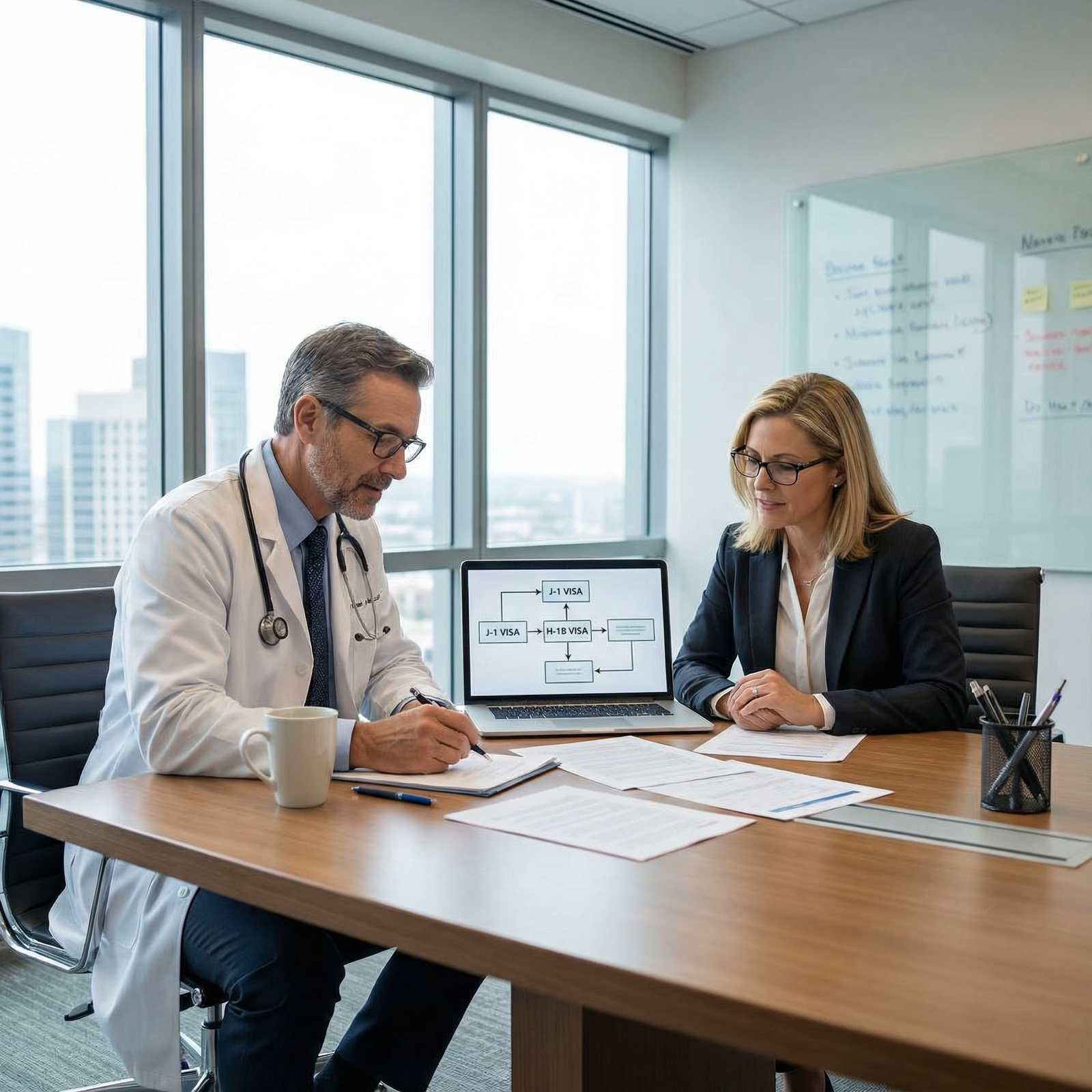
Understanding Visa Basics for IMGs in Diagnostic Radiology
For an international medical graduate seeking a radiology residency in the United States, immigration planning is just as critical as board scores and letters of recommendation. The visa you choose—and how early you understand your options—can shape where you can apply, how many programs you’re eligible for, and even your long‑term career path in the U.S.
This IMG residency guide focuses specifically on visa navigation for diagnostic radiology. It will help you:
- Understand common residency visa categories (J‑1 and H‑1B)
- See how visa choices affect where you can apply for radiology residency
- Anticipate timeline and documentation requirements
- Plan for life after residency, including fellowships and possible long‑term practice
Throughout, you’ll see the IMG visa options framed around situations that are especially common in diagnostic radiology, such as multi‑year training paths, subspecialty fellowships, and academic careers.
Core Visa Options for Radiology Residency: J‑1 vs H‑1B
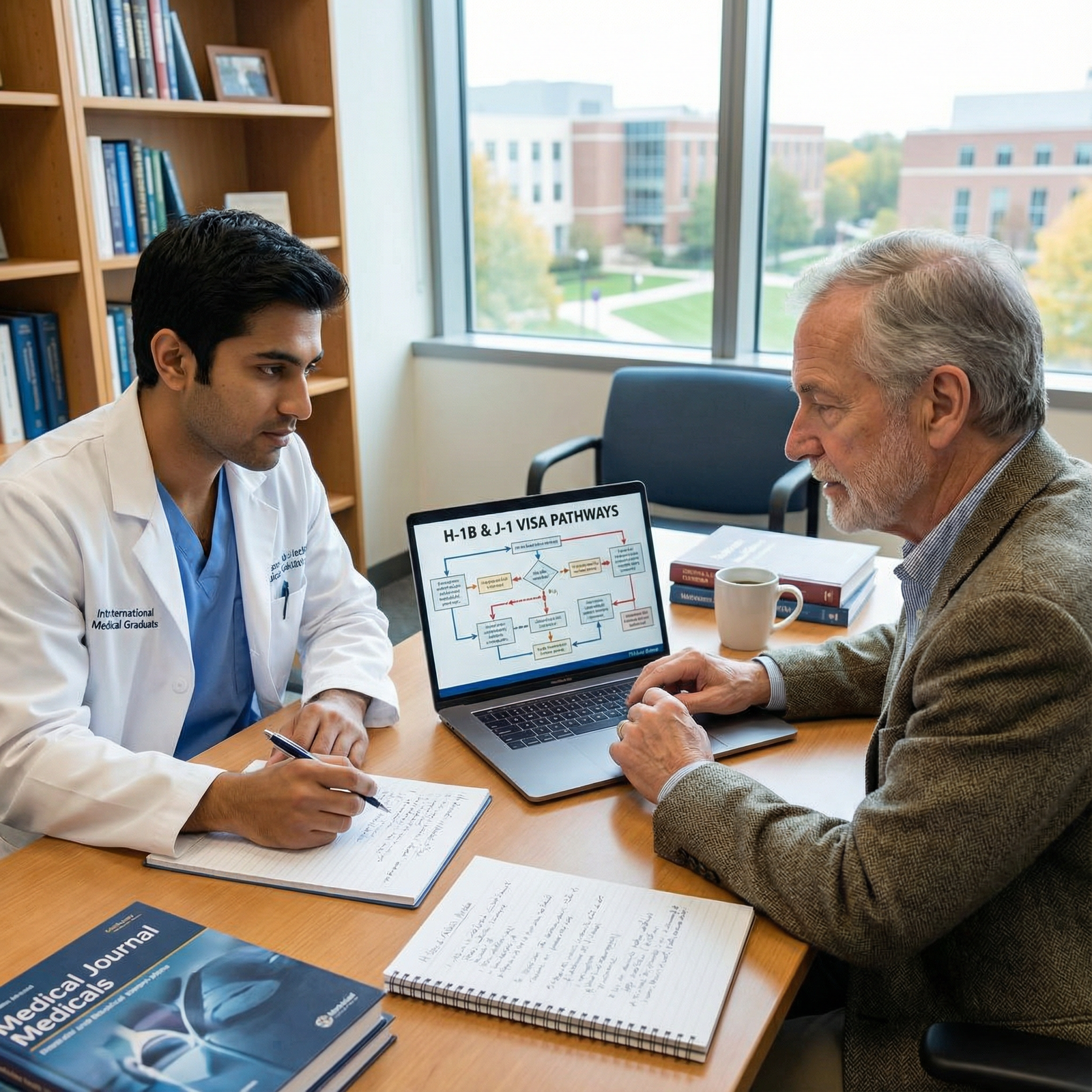
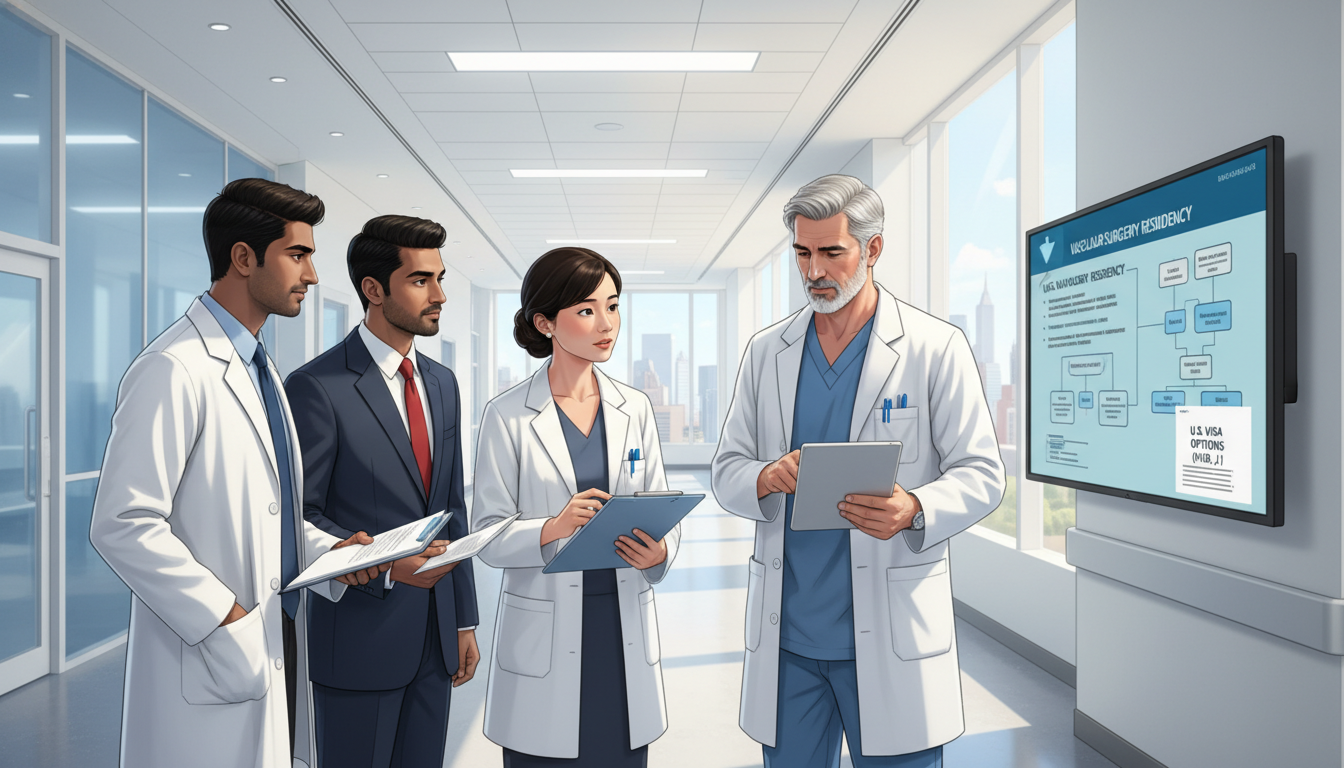
When it comes to residency in diagnostic radiology, two visa types dominate: the J‑1 (ECFMG‑sponsored) and the H‑1B (employer‑sponsored). Understanding J‑1 vs H‑1B in detail is the foundation of any smart visa strategy.
J‑1 Visa for Clinical Training
The J‑1 physician visa is the most common residency visa for IMGs in the U.S.
Key features:
- Sponsor: Educational Commission for Foreign Medical Graduates (ECFMG)
- Purpose: Graduate medical education and training
- Duration: Up to 7 years usually sufficient for diagnostic radiology (4 years) plus most fellowships
- Two‑year home residence requirement (INA 212(e)):
- After training, you are generally required to return to your home country for 2 years or
- Obtain a J‑1 waiver (e.g., via underserved service, academic waiver, or hardship/persecution routes) before most other U.S. visas or permanent residence
Pros of J‑1 for radiology residency:
- Accepted by a large majority of radiology residency programs
- ECFMG provides structured oversight and guidance
- Relatively straightforward and predictable process once you secure a residency position
- Typically faster to obtain compared with H‑1B in many institutions, especially those with streamlined J‑1 processes
- Good fit for IMGs planning to:
- Return to their home country after training, or
- Work in medically underserved areas to obtain a waiver
Cons of J‑1 for radiology training:
- 2‑year home residency requirement can significantly limit:
- Immediate post‑residency employment in the U.S.
- Some pathways to permanent residency without a waiver
- J‑1 does not easily convert to H‑1B or permanent resident status unless:
- The 2‑year requirement is fulfilled, or
- A J‑1 waiver is granted
- Flexibility for moonlighting or secondary clinical work is more restricted and tightly regulated
Practical diagnostic radiology example (J‑1):
- You match into a 4‑year diagnostic radiology residency (PGY‑2–PGY‑5).
- You then pursue a 1‑year neuroradiology fellowship.
- Total J‑1 clinical training time: 5 years (within typical limits).
- After fellowship, you must:
- Return home for 2 years or
- Secure a J‑1 waiver job (e.g., in a rural community hospital, some VA hospitals, or certain academic positions) before moving to a non‑waiver employer.
For a diagnostic radiology IMG who eventually wants urban or highly specialized academic practice in a competitive city, the J‑1 waiver strategy needs to be carefully planned early, sometimes even during residency.
H‑1B Visa for Residency Training
The H‑1B is a dual‑intent work visa used for “specialty occupations,” including physicians.
Key features:
- Sponsor: The residency or fellowship program (employer)
- Purpose: Employment as a physician, including residency
- Duration: Up to 6 years total in H‑1B status (including all previous H‑1B time)
- Dual intent: You can pursue permanent residency (green card) while on H‑1B without violating status
- No automatic 2‑year home country requirement
Pros of H‑1B for radiology residency:
- Avoids the J‑1–linked two‑year home residence rule
- Can transition more directly:
- From residency to fellowship on H‑1B
- From fellowship to attending jobs, then to permanent residency
- Attractive to IMGs seeking:
- Long‑term U.S. careers
- Flexibility to move between institutions without dealing with J‑1 waiver constraints
Cons of H‑1B for radiology residency:
- Fewer radiology programs sponsor H‑1B, especially for categorical or advanced positions
- More paperwork and legal cost for the employer; some departments avoid it for this reason
- Strict requirements:
- Must have passed USMLE Step 3 before H‑1B filing (often before residency starts)
- Must be fully eligible for an unrestricted state medical license or appropriate training license depending on the state’s rules
- H‑1B cap issues:
- University hospitals and many academic centers are cap‑exempt
- Community or private systems might be subject to nationwide H‑1B caps
Practical diagnostic radiology example (H‑1B):
- You complete a transitional or prelim year on a J‑1 or another visa.
- You match into a diagnostic radiology residency at a major academic center with a strong international track record.
- Program sponsors H‑1B for your 4‑year radiology training.
- You later secure an H‑1B transfer for an interventional radiology or neuroradiology fellowship.
- While on H‑1B, your employer begins a green card process (e.g., PERM + I‑140).
- You often can transition to permanent resident status during fellowship or early attending years, bypassing J‑1 waiver service.
This pathway is common for IMGs in diagnostic radiology who aim for long‑term academic or subspecialty‑oriented careers in the U.S.
Other, Less Common Visa Options
While J‑1 vs H‑1B cover most scenarios for the diagnostic radiology match, a few other statuses occasionally arise:
- O‑1 Visa (Extraordinary Ability):
- Rare in residency level
- More plausible for senior fellows or attending radiologists with significant research, awards, and publications
- F‑1 with OPT (Optional Practical Training):
- Mainly for those who completed a U.S. degree (e.g., MPH, MS) before residency
- Typically, you still need J‑1 or H‑1B for full GME training
- Green Card or U.S. Permanent Resident Status:
- If you already have this status, you do not need a residency visa; you are essentially treated as a U.S. graduate for visa purposes
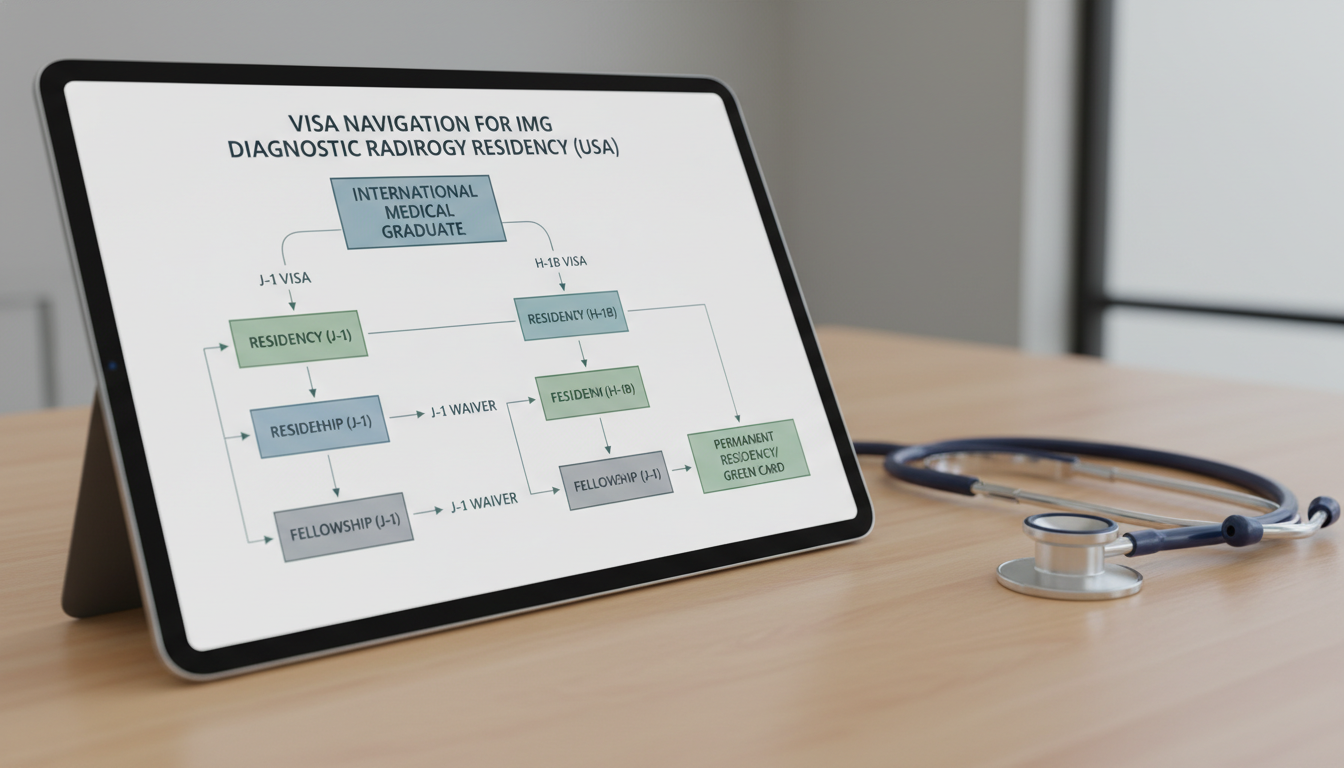
How Visa Choice Affects Your Diagnostic Radiology Match Strategy
The type of residency visa you’re targeting shapes your entire application strategy, from program selection to exam timing.
Program Selection: J‑1‑Friendly vs H‑1B‑Friendly Programs
Diagnostic radiology is competitive and tends to be concentrated in larger academic centers, many of which have structured policies on IMG visa options.
Common policy patterns:
J‑1 only programs
- Most common scenario
- Clearly state “J‑1 only” or “We do not sponsor H‑1B” on their website/ERAS listing
- Often accept large numbers of qualified IMGs annually
J‑1 and H‑1B programs
- Typically larger academic centers or IMG‑friendly radiology departments
- Often specify extra criteria for H‑1B:
- USMLE Step 3 passed by the time of rank list or visa processing
- Limited number of H‑1B slots per year
No visa sponsorship
- A minority, but some radiology programs limit applicants to U.S. citizens/green card holders
Actionable advice:
- Build a program list spreadsheet with columns:
- J‑1 allowed (Yes/No)
- H‑1B allowed (Yes/No)
- Step 3 required for H‑1B (Yes/No + timing)
- Historical IMG match (if available)
- Prioritize:
- Broad J‑1‑accepting programs if you are open to J‑1
- A carefully targeted subset of H‑1B‑friendly radiology programs if H‑1B is your priority
Exam Planning: Step 3 and Visa Timing
Your USMLE sequence affects your residency visa options.
If aiming for J‑1 only:
- USMLE Step 3 is not required for J‑1 residency sponsorship.
- Focus:
- Strong Step 1/Step 2 CK scores (if applicable by your year)
- Clinical experience and letters relevant to radiology
- You can take Step 3 during your intern year or early radiology training if needed later.
If targeting H‑1B for radiology residency:
- Plan to complete:
- USMLE Step 3 by early in the match cycle (ideally before rank list deadlines)
- Timeline example:
- Apply in September
- Interview Oct–Jan
- Step 3 taken by Dec–Jan
- H‑1B petition filed in spring if matched
Lack of Step 3 is a common reason IMGs lose out on H‑1B sponsorship even when the program is open to it.
ERAS and Interviews: How Openly to Discuss Visa Preferences
In applications and interviews, you need to balance honesty with flexibility.
On ERAS:
- Answer visa questions accurately:
- Current status (if in the U.S.)
- Need for visa sponsorship
- If you would prefer H‑1B but are willing to take J‑1:
- Do not claim you “cannot” take J‑1 unless that is truly the case
- Keep options open; many programs decide visa type only after ranking candidates
In interviews:
- Be prepared for questions like:
- “Are you open to a J‑1 visa?”
- “Do you have Step 3 completed if we consider H‑1B?”
- Good response example:
- “I am open to both J‑1 and H‑1B. I have completed Step 3, so if your institution sponsors H‑1B I would be very interested in that pathway, but I’m also comfortable proceeding on J‑1 if that aligns better with your policies.”
This balanced approach maximizes your chances of matching while still positioning you well for longer‑term immigration goals.
From Match to Visa Issuance: Step‑by‑Step Timeline
Once you match into a diagnostic radiology residency, the visa process begins in earnest. Understanding the typical sequence will help you avoid last‑minute delays that can jeopardize your start date.
Post‑Match Steps for J‑1 Visa (ECFMG‑Sponsored)
Match Day / Offer Letter
- Program issues training contract or offer letter.
- You confirm acceptance.
ECFMG J‑1 Application (Form DS‑2019)
- Program’s GME office submits data to ECFMG.
- You complete:
- Online ECFMG application forms
- Proof of medical degree and ECFMG certification
- Statement of need from your home country’s government (critical requirement)
- Proof of finances (sometimes required)
Receive DS‑2019
- ECFMG issues Form DS‑2019 authorizing J‑1 training.
- Carefully check dates and details.
Visa Interview at U.S. Embassy/Consulate
- Book appointment early (delays vary by country and season).
- Bring:
- DS‑2019
- SEVIS fee receipt
- Passport
- Offer letter/contract
- Financial documents and home country ties (as requested)
- Upon approval, get J‑1 visa stamp in your passport.
U.S. Entry and Onboarding
- Enter the U.S. up to 30 days before program start.
- Complete GME and ECFMG orientation, SEVIS validation, and hospital credentialing.
Post‑Match Steps for H‑1B Visa
Match / Offer Confirmation
- Program confirms it will sponsor you for H‑1B.
- You ensure Step 3 and licensing prerequisites are met.
H‑1B Petition Preparation
- Program (often via legal counsel) gathers:
- Copies of your diploma, ECFMG certificate
- USMLE score reports
- CV, passport, previous I‑20/DS‑2019/I‑94 if any
- State training license or evidence of eligibility
- Employer files Labor Condition Application (LCA) with Department of Labor.
- Program (often via legal counsel) gathers:
USCIS Petition Filing
- Employer files Form I‑129 with supporting evidence.
- Premium processing may be used for faster decisions.
- If you are outside the U.S., petition classified for consular processing.
Visa Interview (if abroad)
- Once approved, you receive I‑797 approval notice.
- Schedule U.S. consulate interview.
- Present H‑1B documents, employer letter, and proofs as required.
U.S. Entry and Start
- Enter the U.S. up to 10 days before H‑1B start date.
- Begin orientation and credentialing as scheduled.
Key risk point: Late exam completion, slow document gathering, or consular backlogs can all cause delays. For a 4‑year diagnostic radiology residency, even a 1‑month delay can create significant onboarding and call schedule issues. Communicate early and frequently with your GME office.

Planning Beyond Residency: Fellowships, J‑1 Waivers, and Long‑Term Options
Diagnostic radiology training does not end with residency for many IMGs. Subspecialty fellowship is common—neuroradiology, IR, MSK, pediatric radiology, and others—so your residency visa choice must account for these future steps.
Fellowships on J‑1 vs H‑1B
J‑1:
- ECFMG typically allows additional years for ACGME‑accredited fellowship, within the overall 7‑year limit.
- Process:
- New DS‑2019 issued for each fellowship program.
- You remain under the umbrella of ECFMG sponsorship.
- Consider:
- If you spend 4 years in radiology and 2–3 years in fellowships, you may approach the training time limit.
- Plan which subspecialties you prioritize and confirm your fellowship is J‑1‑friendly.
H‑1B:
- Fellowship program files a new H‑1B petition (transfer).
- Academic centers are often cap‑exempt; less concern about the annual H‑1B numerical cap.
- Keys to success:
- Maintain valid H‑1B status and good documentation.
- Keep track of your total 6‑year H‑1B maximum; multiple long fellowships plus residency can approach this limit, though many begin the green card process early enough to extend beyond 6 years if needed.
J‑1 Waiver Options After Radiology Training
If you train on J‑1 and want to stay in the U.S., you must address the 2‑year home‑residence requirement. Common waiver pathways relevant to radiology include:
Conrad 30 Waiver (State‑Sponsored)
- Each state can sponsor up to 30 J‑1 physicians per year for waiver jobs in underserved areas.
- Historically dominated by primary care and some hospital‑based specialties, but radiology positions do exist, particularly in rural hospitals or smaller communities.
- Requirements:
- Full‑time clinical practice (usually 3‑year service)
- Underserved or underserved‑adjacent location
- Diagnostic radiology caveat:
- Many jobs are teleradiology or mixed urban‑rural coverage; not all qualify.
- Some states are slowly becoming more flexible about subspecialty needs.
Federal Programs (e.g., VA, HHS, ARC)
- Some federal agencies can sponsor J‑1 waivers for physician positions critical to underserved populations or veterans.
- Radiologists in VA systems or certain federal hospitals may be eligible, particularly in shortage areas.
Hardship or Persecution Waivers
- For those who can demonstrate extreme hardship to a U.S. citizen/permanent resident spouse or child, or risk of persecution upon return.
- Complex, legal‑intensive processes; less common but sometimes relevant.
Long‑Term Immigration for Radiologists
Long‑term residence paths, especially for those on H‑1B or those who obtain a J‑1 waiver job, often involve:
- PERM Labor Certification + I‑140 Petition
- Employer shows there is a shortage of qualified U.S. workers for your position.
- Common for hospital or private practice radiology jobs.
- EB‑1 or EB‑2 NIW (National Interest Waiver)
- Some academic radiologists with strong research/training records may qualify for EB‑1A (extraordinary ability) or EB‑2 NIW.
- Diagnostic radiology research, advanced imaging, and AI in radiology can create strong profiles if you have significant publications and impact.
For an international medical graduate in radiology, talking early with both your department and an experienced immigration attorney (especially around PGY‑3–PGY‑4) can ensure your transition from resident/fellow to attending is legally and logistically smooth.
Practical Tips and Common Pitfalls for IMG Visa Navigation in Radiology
Concrete Planning Steps for IMGs
- Start visa thinking early (before ERAS).
- Decide whether you are:
- Open to J‑1
- Strongly preferring H‑1B
- Absolutely needing to avoid J‑1 (e.g., for personal reasons)
- Decide whether you are:
- Align your testing timeline.
- If H‑1B is a serious goal, schedule Step 3 before or during the early part of your application cycle.
- Research programs carefully.
- Use FREIDA, program websites, and email confirmations to build a list of J‑1‑ and H‑1B‑friendly radiology programs.
- Document everything.
- Keep organized copies of:
- Passports and visas
- I‑20s/DS‑2019/I‑94 records
- USMLE score reports
- ECFMG certification
- Keep organized copies of:
- Maintain clear communication with GME offices.
- Once matched, respond promptly to all visa‑related requests.
- Ask explicitly about:
- Expected visa type
- Internal deadlines
- Any licensing or Step 3 requirements
Common Pitfalls to Avoid
- Assuming all radiology programs sponsor H‑1B
- Many do not; check explicitly.
- Delaying Step 3 if you want H‑1B
- Without Step 3, even a supportive program often cannot sponsor H‑1B.
- Ignoring J‑1 waiver realities
- If you choose J‑1, think ahead:
- Are you willing to work in underserved areas?
- Does your long‑term family plan allow for home‑country return if waiver options fail?
- If you choose J‑1, think ahead:
- Relying on informal advice only
- Always cross‑check with official sources:
- ECFMG (for J‑1 specifics)
- USCIS and state medical boards
- Your program’s GME and, when needed, a qualified immigration attorney
- Always cross‑check with official sources:
FAQ: Visa Navigation for IMGs in Diagnostic Radiology
1. Is J‑1 or H‑1B better for an IMG in diagnostic radiology?
“Better” depends on your goals. J‑1 is more widely accepted and often easier to obtain, making it the default for many IMGs. However, it comes with the 2‑year home residency requirement unless waived. H‑1B is ideal if you aim for a long‑term U.S. career and want a more direct green card path, but fewer programs sponsor it and you must have Step 3 completed. Many applicants remain open to both to maximize match chances.
2. Can I switch from J‑1 to H‑1B after finishing radiology residency?
You generally cannot change from J‑1 to H‑1B in the U.S. without first satisfying the J‑1 two‑year home country requirement or obtaining a J‑1 waiver. Once you have a waiver (e.g., a Conrad 30 job), your new employer can usually file an H‑1B petition for you to start the waiver service. Without a waiver or completing the two‑year requirement, switching directly to H‑1B is not feasible.
3. Do all diagnostic radiology programs sponsor visas for IMGs?
No. Visa policies vary widely:
- Some radiology programs sponsor only J‑1
- Others sponsor both J‑1 and H‑1B
- A few do not sponsor any residency visa at all
You should check each program’s website, ERAS information, and, when unclear, email the program coordinator for confirmation. Tailor your program list based on these policies.
4. I am currently on F‑1 as a U.S. master’s student. How does that affect my residency visa options?
Your F‑1 status (especially with Optional Practical Training) can give you more flexibility while in the U.S., but for clinical GME training you still typically need either J‑1 (ECFMG‑sponsored) or H‑1B. Some IMGs use OPT time for research or preliminary work, but when you start a diagnostic radiology residency, you will almost always transition to one of the standard residency visa categories discussed above.
By understanding the nuances of IMG visa options and aligning them with your diagnostic radiology career goals, you greatly increase your chances of not only matching, but also building a sustainable and fulfilling practice in the United States.