
Understanding the Visa Landscape for IMGs in HBCU-Affiliated Residency Programs
Visa navigation is one of the most complex—and most decisive—parts of the residency journey for any international medical graduate (IMG). When you add the unique environment of HBCU residency programs (including Meharry residency and other HBCU-affiliated institutions), the details matter even more. Your visa strategy can affect:
- Where you can apply
- How programs evaluate you
- Your long‑term career options in the U.S.
- Your chances of successfully matching
This IMG residency guide focuses on visa navigation for residency specifically within HBCU‑affiliated programs—institutions that traditionally serve African American communities and often have strong missions in health equity and underserved care. Many IMGs are drawn to these programs because of their focus on service, diverse patient populations, and supportive training environments.
To plan wisely, you need to understand IMG visa options, program policies, and how to align your personal goals (academic, career, and immigration) with the requirements of HBCU-affiliated residencies.
Key Visa Options for IMGs: J‑1 vs H‑1B and Beyond
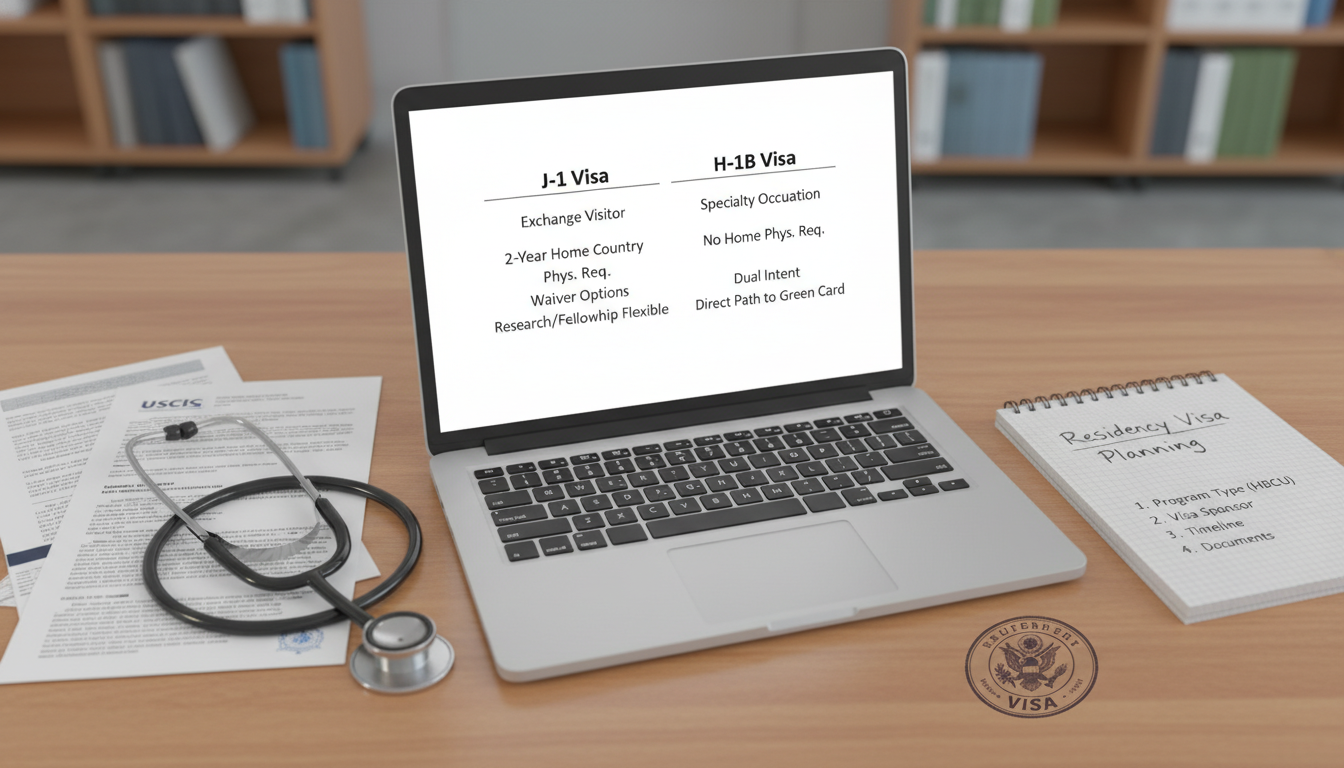
For most IMGs entering U.S. residency, the central decision is J‑1 vs H‑1B. Other categories exist (F‑1, O‑1, green card, etc.), but for residency training, these two dominate.
1. J‑1 Exchange Visitor Visa (ECFMG‑Sponsored)
Who sponsors it?
ECFMG (Educational Commission for Foreign Medical Graduates) sponsors the J‑1 for graduate medical education (GME).
Core concept:
The J‑1 is designed for training, not long‑term employment. It is the most common visa type for IMGs in many university and safety-net hospitals, including some HBCU residency programs.
Pros of J‑1 for residency:
- Widely accepted: Many community and academic programs, including several HBCU‑affiliated residencies, are structured around J‑1 visa trainees.
- Streamlined process: ECFMG manages most of the immigration paperwork; programs are familiar with the steps.
- Training flexibility: Easier to extend for fellowships within the permitted time (up to 7 years of clinical training in most cases).
- Lower cost and burden on the residency program: No prevailing wage, no labor condition application (LCA), simpler onboarding for the institution.
Cons of J‑1 for long‑term planning:
- Two‑year home‑country physical presence requirement: After completing training, most J‑1 physicians must return to their home country for a total of 2 years, unless they obtain a J‑1 waiver.
- Limited ability to moonlight in many settings (varies by program and state).
- You are tied to approved training positions; changing programs requires ECFMG and program approvals.
- Some later immigration options (e.g., green card paths) can be delayed or complicated by J‑1 and waiver requirements.
J‑1 Waiver Basics (for after residency):
To avoid the 2‑year home‑country requirement, many J‑1 physicians obtain a J‑1 waiver to work in a U.S. underserved area (often in primary care or psychiatry, but can include other specialties). Common waiver programs:
- Conrad 30 Waiver Programs (by U.S. states)
- Federal programs (e.g., VA, HHS, ARC, DRA, etc.)
This matters when choosing a residency, especially in HBCU‑affiliated hospitals, because these programs often:
- Serve underserved or minoritized communities
- Have strong ties to safety‑net hospitals
- Are located in areas with high J‑1 waiver demand and more job opportunities for waiver positions after training
2. H‑1B Temporary Worker Visa (Specialty Occupation)
Who sponsors it?
The residency program (employer) sponsors the H‑1B, sometimes with help from the university or health system.
Core concept:
The H‑1B is an employment‑based visa. You are considered an employee, not just a trainee.
Pros of H‑1B for residency:
- No 2‑year home‑country requirement: You can transition more directly to H‑1B in an attending job or to a green card path after residency/fellowship.
- More flexible for long‑term U.S. immigration planning, including EB‑2 or EB‑3 green card petitions later on.
- Some (though not all) states and institutions allow more flexibility in moonlighting (subject to visa and institutional policy).
- Perceived by some applicants as more “secure” for building a permanent U.S. career.
Cons of H‑1B for training:
- Not all HBCU residency programs sponsor H‑1B due to:
- Complex legal requirements
- Higher cost
- Need to meet prevailing wage for residents
- More administrative overhead
- Caps and timing issues:
- Most residency jobs at nonprofit hospitals/universities qualify for cap‑exempt H‑1B, which is good.
- But if you later move to a cap‑subject employer (e.g., certain private practices), you may face the H‑1B lottery.
- You must:
- Pass USMLE Step 3 before H‑1B filing (for most states/programs), and
- Be licensed or eligible for a training license per state rules.
For many IMGs, this requirement alone makes H‑1B more difficult—particularly if you don’t have your Step 3 results ready by the program’s internal deadline (often before January–March of the match year).
3. Other Visa Scenarios Relevant to IMGs
While J‑1 and H‑1B are the core IMG visa options for residency, some IMGs arrive with different statuses:
F‑1 Student Visa with Optional Practical Training (OPT)
Common for IMGs who complete:- U.S. master’s degrees
- U.S. MPH or research degrees
Residency directly under OPT is usually not feasible long term; ultimately you must shift to J‑1 or H‑1B.
Green Card (Permanent Resident)
If you already hold a U.S. green card, your visa navigation is simpler. You apply like a U.S. grad from a legal standpoint, though you are still considered an IMG in the Match.O‑1 Extraordinary Ability Visa
Rare during residency; more commonly used for attending physicians with significant academic or research achievements.
Understanding where you currently stand—and your likely path—helps you decide which residency visa route to pursue.
How HBCU-Affiliated Residency Programs View and Use Visa Options
Historically Black Colleges and Universities (HBCUs) and their affiliated teaching hospitals (including institutions like Meharry Medical College and other HBCU‑connected systems) have missions centered on:
- Training diverse physician workforces
- Serving underserved and marginalized communities
- Addressing health disparities
These missions shape how they approach IMGs and visa sponsorship.
1. Common Visa Practices in HBCU-Affiliated Programs
Policies vary by institution, but you are likely to see some patterns:
A. J‑1 as the default visa
Many HBCU residency programs:
- Accept and are familiar with J‑1 visa residents
- Coordinate with ECFMG routinely
- Rely on J‑1 because it is administratively simpler
For you, that means:
- J‑1 is often the most realistic pathway into these programs.
- You should prepare early for:
- Timely ECFMG certification
- Meeting J‑1 requirements (including Statement of Need from your home country)
B. Limited or selective H‑1B sponsorship
Some HBCU-affiliated programs sponsor H‑1B, but often with conditions:
- They may only sponsor H‑1B for exceptional candidates or certain specialties.
- They may require:
- Step 3 passed with score available early
- Strong academic or research background
- Proof that H‑1B is critical to your recruitment
Others may:
- Not sponsor H‑1B at all due to cost and complexity, or
- Be gradually moving toward J‑1‑only models
You must verify each program’s current policy directly (websites and emails) because policies can change from year to year, and smaller or mission‑driven programs may not update all online materials in real time.
2. Meharry Residency and Similar HBCU Programs: What to Expect
“Meharry residency” refers to training programs associated with Meharry Medical College, one of the best‑known HBCU medical institutions. While details change over time, programs like Meharry share some characteristics common to many HBCU-affiliated residencies:
- Strong emphasis on service to underserved communities
- Patient populations with high burden of chronic disease, often limited access to care
- Training in safety‑net hospitals, community health centers, or public systems
- Active interest in IMGs who:
- Demonstrate commitment to health equity
- Have experience with resource‑limited settings
- Show cultural humility and adaptability
From a visa standpoint, this often translates to:
- Structured systems for J‑1 acceptance (many IMGs in their cohorts)
- A defined—but sometimes narrow—pathway for H‑1B (if offered at all)
- Intense clinical exposure that later supports strong CVs for J‑1 waiver jobs in underserved areas after training
In other words: If your long‑term goal includes underserved or community-based work, training in an HBCU‑affiliated residency can align very well with post‑J‑1 waiver employment.
Strategizing Your Visa Path: Practical Steps for IMGs Targeting HBCU Programs
To use this IMG residency guide effectively, think in three stages:
- Pre‑application planning
- ERAS and interview season
- Post‑match and long‑term planning
1. Pre‑Application: Know Your Constraints and Preferences
Before building your program list, clarify:
A. What visas you are realistically eligible for
Ask yourself:
- Do I already have USMLE Step 3?
- If not, can I realistically pass it and receive scores before late winter of the application year?
- Do I come from a country that easily issues a Statement of Need (for J‑1)?
- Am I prepared to handle the 2‑year home‑country requirement, or pursue a J‑1 waiver later?
If you do not have Step 3 yet and cannot pass it early in the cycle, J‑1 will be your primary path for most HBCU programs.
B. Your long‑term career goals in the U.S.
Consider:
- Do you see yourself:
- Remaining in the U.S. long term?
- Returning to your home country after training?
- Are you open to:
- Working in rural or underserved areas after residency (for J‑1 waiver)?
- How important is:
- Academic research?
- Subspecialty fellowship?
If you strongly value staying in the U.S. long‑term and are flexible about location, J‑1 + waiver + later green card is often very feasible, especially from an HBCU training environment that prepares you for work in underserved communities.
2. Building Your Application List with Visa Realities in Mind
When targeting HBCU-affiliated programs:
A. Research each program’s visa policy
Methods:
- Check the GME office or program websites:
- Many will clearly state “J‑1 only,” “J‑1 and H‑1B,” or “no visas sponsored.”
- Contact the program coordinator or GME office by email:
- Ask specific, concise questions:
- “Do you sponsor J‑1 and/or H‑1B visas for categorical residents?”
- “Do you require Step 3 for H‑1B sponsorship?”
- “Are there any restrictions for applicants needing visa sponsorship?”
- Ask specific, concise questions:
Keep their replies organized in a spreadsheet; visa policy will filter your realistic options.
B. Balance your list based on visa type
If you are open to both J‑1 and H‑1B:
- Include:
- A substantial number of J‑1‑friendly programs (including HBCU programs).
- Some H‑1B‑sponsoring programs where you meet criteria (Step 3 done, etc.).
If you only want H‑1B:
- Understand your risk is higher, especially if you limit yourself to HBCU programs that may not broadly sponsor H‑1B.
- Consider expanding your list to include non‑HBCU academic or community programs known for H‑1B sponsorship.
C. Tailor your personal statement to mission‑driven programs
For HBCU residency programs, including Meharry residency:
- Highlight:
- Experience working in low‑resource settings
- Commitment to equity and social justice
- Language skills and cultural competence
- Clearly explain why training in a historically Black, mission‑focused environment aligns with your career goals.
Visa is technical; mission fit is human. Both matter in your application success.

During Interviews: Talking About Visa Needs Without Hurting Your Chances
Many IMGs worry that discussing visas during interviews will harm their chances. When handled thoughtfully, it can instead show that you are organized, realistic, and committed.
1. When to Bring Up Your Visa Status
- Programs usually know from your ERAS file if you are an IMG needing sponsorship.
- Appropriate times to clarify:
- During Q&A with program leadership
- During one‑on‑one meetings with the program director or coordinator
- In a follow‑up email after the interview
Avoid making visa the first or only thing you talk about. First show that you are an excellent fit clinically and culturally.
2. How to Phrase Visa Questions for HBCU Residency Programs
You might say:
- “As an international medical graduate, I will need visa sponsorship to train. I want to make sure I understand your policies so I can plan responsibly. Does your program sponsor J‑1 and/or H‑1B visas for incoming residents?”
- “If the program sponsors H‑1B, are there particular requirements such as Step 3 completion by a certain date?”
For HBCU-affiliated programs, you can also link to your mission alignment:
- “I am very committed to working in underserved communities long term, and I see a close match with your mission. I want to ensure that my visa pathway aligns with the program’s structure so I can stay and serve in communities like this after training.”
Professional, straightforward communication rarely hurts your chances; it signals that you understand the realities of residency visa requirements.
After the Match: Practical Visa Steps and Long-Term Planning
Once you’ve matched into an HBCU-affiliated residency program, your visa process becomes more concrete.
1. If You Match on a J‑1 Visa
A. Work with ECFMG and your program
Next steps typically include:
- Receiving sponsorship instructions from ECFMG
- Submitting:
- Form DS‑2019 application
- Proof of ECFMG certification
- Statement of Need from your home country
- Financial documentation (if required)
Your residency program’s GME office usually coordinates with ECFMG and provides official training details.
B. Prepare for the consular interview (if outside the U.S.)
You will:
- Schedule a visa interview at a U.S. embassy/consulate
- Bring DS‑2019, SEVIS fee receipt, supporting documents
C. Start thinking early about your J‑1 waiver path
If you plan to stay in the U.S. after training:
- Become familiar with:
- Conrad 30 programs in states where HBCU institutions are located
- Federal waiver options
- Network with faculty who have navigated J‑1 waivers themselves
- Target electives or rotations that expose you to potential future employers in underserved communities
HBCU residency programs may have alumni who have successfully completed J‑1 waivers—valuable mentors as you plan.
2. If You Match on an H‑1B Visa
A. Verify timeline and requirements with GME and immigration counsel
Your program will:
- File an H‑1B petition on your behalf
- Require:
- Proof of USMLE Step 3
- Appropriate state training license
- Credentialing and employment agreements
B. Understand your cap‑exempt status
Most academic/HBCU hospitals are cap‑exempt, meaning:
- You are not subject to the general H‑1B lottery
- You can start based on approval timing, not October 1 cycle
C. Plan your long-term strategy
With H‑1B residency:
- Consider:
- H‑1B for fellowship at another cap‑exempt institution, or
- Transition to cap‑subject H‑1B (with lottery) if moving to private practice
- Explore green card pathways (often EB‑2 for physicians) once in attending roles.
Putting It All Together: A Stepwise IMG Residency Guide for Visa Navigation in HBCU Programs
Here’s a consolidated, action‑oriented pathway:
Clarify your current status and goals
- What visa are you on now?
- Do you already have Step 3?
- Are you open to J‑1 and a future waiver in an underserved area?
Understand J‑1 vs H‑1B trade‑offs
- J‑1: More widely accepted, easier for HBCU programs to sponsor, but requires waiver or return home later.
- H‑1B: Better for long‑term U.S. plans, but fewer programs sponsor and Step 3 is needed early.
Research HBCU-affiliated programs thoroughly
- Identify which:
- Sponsor J‑1
- Sponsor H‑1B
- Have explicit visa limitations
- Look especially at institutions like Meharry residency programs for historical patterns with IMGs.
- Identify which:
Align your ERAS application with each program’s mission
- For HBCU programs, emphasize:
- Health equity
- Underserved care
- Cultural humility
- Mention your visa needs clearly on forms; do not hide them.
- For HBCU programs, emphasize:
Communicate professionally about visas during interviews
- Ask concise, respectful questions about sponsorship.
- Show that you have thought through your visa path and are not relying on the program to solve everything for you.
Post‑match, act early on paperwork
- For J‑1: Work with ECFMG and get your Statement of Need quickly.
- For H‑1B: Provide all documents to your program and understand your obligations.
Begin long-term planning from PGY‑1
- For J‑1: Learn J‑1 waiver options and network with mentors.
- For H‑1B: Track timelines for extensions and potential green card petitions.
With proactive planning, training at a mission‑driven HBCU-affiliated residency program can be a powerful foundation for both your clinical career and your immigration journey in the United States.
FAQ: Visa Navigation for IMGs in HBCU-Affiliated Residency Programs
1. Do most HBCU residency programs sponsor J‑1 or H‑1B visas for IMGs?
Many HBCU‑affiliated programs sponsor J‑1 visas through ECFMG and are quite familiar with that process. H‑1B sponsorship is more variable—some programs offer it for selected candidates, some not at all. You must check each program individually; assume J‑1 is more common unless clearly stated otherwise.
2. Can I get an H‑1B for residency at an HBCU program if I do not have USMLE Step 3 yet?
Usually no. Most programs require Step 3 passed before filing an H‑1B petition, and this must occur early enough in the Match cycle to meet institutional deadlines. If you don’t have Step 3 when applying, plan primarily for J‑1 sponsorship.
3. How does training at an HBCU program affect my chances for a J‑1 waiver job later?
Positively, in many cases. HBCU residency programs often train you in underserved, high‑need settings and may have strong ties to community health centers and safety‑net hospitals—exactly the types of employers who hire J‑1 waiver physicians. Program alumni and faculty can be valuable guides in navigating state and federal waiver options.
4. If I start on a J‑1 visa, can I switch to an H‑1B during or after residency?
Switching during residency is uncommon and complicated because of ECFMG and immigration rules. After residency, you generally must either:
- Fulfill the 2‑year home‑country requirement, or
- Obtain a J‑1 waiver and then change status to H‑1B for employment in a qualifying underserved area.
Planning ahead and understanding these conditions is critical when choosing between J‑1 and H‑1B at the start of residency.