Understanding Visa Navigation for Residency in the Mississippi Delta
International medical graduates (IMGs) considering residency in the Mississippi Delta face a unique mix of opportunity and complexity. This region—spanning parts of Mississippi, Arkansas, Louisiana, and nearby Deep South communities—has high healthcare needs and often welcomes IMGs, but the visa pathway requires careful planning.
This IMG residency guide focuses on visa navigation for residency in the Mississippi Delta, with special attention to J‑1 vs H‑1B, practical timelines, and what program directors in the Deep South actually expect from international applicants.
You’ll learn:
- How the Mississippi Delta and broader Deep South residency landscape treats IMGs
- The differences between J‑1 and H‑1B residency visa pathways
- How to choose the best IMG visa options for your situation
- Documentation, timelines, and common pitfalls
- Special considerations if you intend to stay and work in the region after training
The Mississippi Delta & Deep South Residency Landscape for IMGs
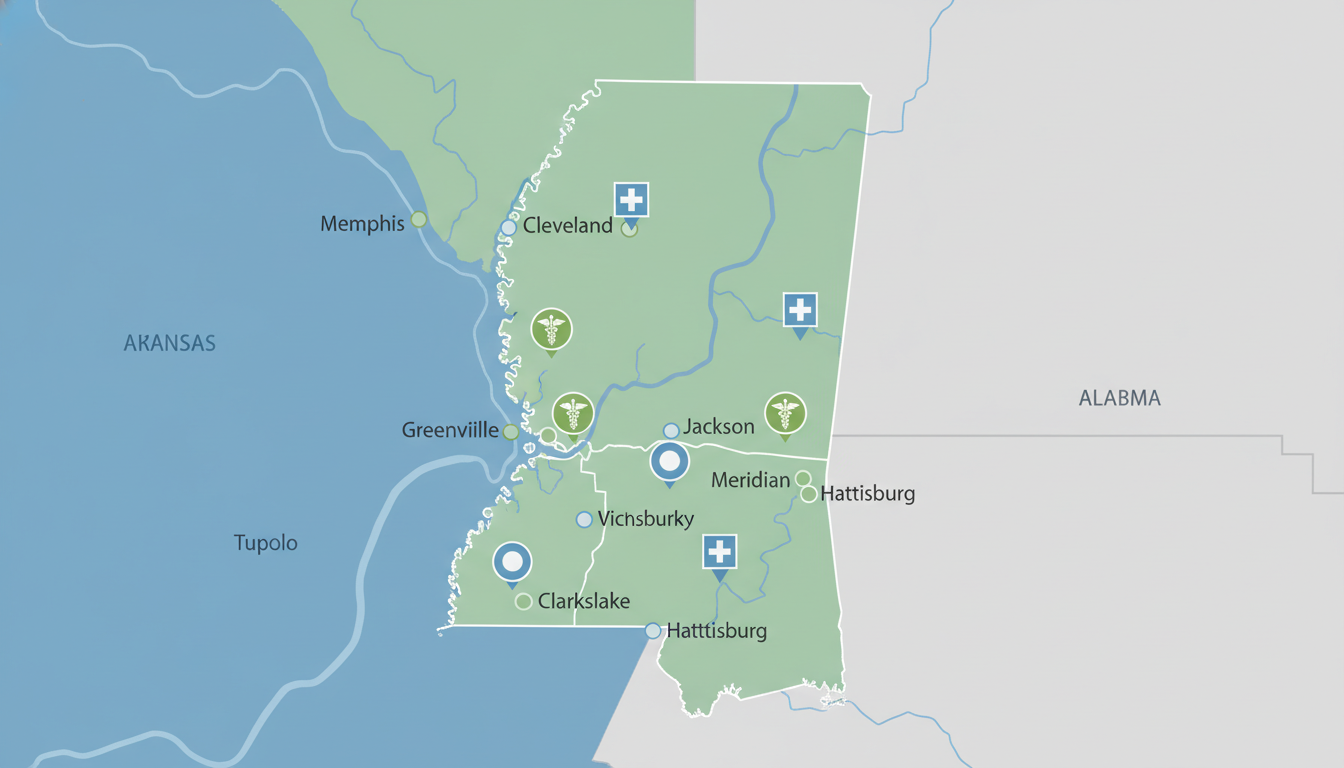
The Mississippi Delta and surrounding Deep South areas (Mississippi, Arkansas, Louisiana, parts of Tennessee and Alabama) are medically underserved in many counties. That creates both:
- High demand for physicians, especially in primary care, internal medicine, pediatrics, family medicine, and psychiatry.
- Institutional familiarity with visa sponsorship for IMGs, especially through the J‑1 pathway and, in some programs, the H‑1B.
Why the Mississippi Delta Is IMG-Friendly (But Still Competitive)
Residency programs in this region tend to:
- Serve rural or semi-rural, underserved populations
- Have a mission-driven focus on health disparities, chronic disease (e.g., diabetes, hypertension, obesity), and community-based care
- Value residents who are committed to staying in the region after training
For IMGs, this often translates into:
- Programs more open to J‑1 sponsorship via ECFMG
- Some programs open to H‑1B, particularly in internal medicine and family medicine
- An expectation that you understand and genuinely embrace the mission of working in a high-need, low-resource setting
Typical Program Types in the Mississippi Delta
You may encounter:
- University-affiliated community hospitals in cities like Jackson or nearby regional hubs
- Community-based programs in smaller cities or towns
- Federally Qualified Health Center (FQHC)-linked programs or those with strong community health components
As an international medical graduate, you should:
- Carefully check each program’s website for visa policies (J‑1 only vs J‑1 & H‑1B vs no visa sponsorship)
- Email the program coordinator if the policy is unclear
- Prioritize programs in the Mississippi Delta that explicitly mention ECFMG sponsorship of J‑1 or H‑1B availability
Core Visa Pathways for IMGs: J‑1 vs H‑1B
The most important decision in visa navigation for residency is understanding J‑1 vs H‑1B and how each impacts your training and long-term career in the United States, especially in the Deep South.
The J‑1 (Exchange Visitor) Visa for Residency
Who manages it?
- For physicians, the J‑1 for residency and fellowship is sponsored by ECFMG (Educational Commission for Foreign Medical Graduates), not directly by the residency program.
Key features:
- Purpose: Training and education, not permanent employment.
- Duration: Typically length of residency + fellowship (up to 7 years in most cases, sometimes more with waivers).
- Home residency requirement: After training, most J‑1 physicians must return to their home country for two years OR obtain a J‑1 waiver before changing to certain other U.S. visas or green card pathways.
- Funding: You are a paid resident; salary is from the hospital or institution, but visa sponsorship is via ECFMG.
Advantages for IMGs in the Mississippi Delta:
- Most programs in underserved regions are very familiar with ECFMG J‑1 sponsorship.
- Administrative burden is relatively lower on the hospital compared to H‑1B.
- Programs may anticipate, and even support, your future J‑1 waiver employment in the same region (e.g., via Conrad 30 or federal waiver programs).
- J‑1 is usually the most realistic and accessible visa option for many IMGs.
Disadvantages:
- Two-year home-country physical presence requirement unless you obtain a waiver.
- You cannot moonlight freely in most cases without special permissions from ECFMG and the program.
- Transition to long-term U.S. practice requires a waiver job, frequently in an underserved or rural area (which can be a positive if you plan to stay in the Mississippi Delta).
The H‑1B (Temporary Worker in Specialty Occupation) for Residency
Who sponsors it?
- Sponsored directly by the residency hospital or institution, not ECFMG.
Key features:
- Purpose: Employment in a specialty occupation.
- Requirements:
- Must have passed USMLE Step 3 (or COMLEX equivalent) before H‑1B petition filing in most states and institutions.
- Must hold a valid license or at least a training license, depending on state rules.
- Duration: Up to 6 years total, including time used in residency and any later employment, with potential extensions under certain green card processes.
- No automatic two-year home country requirement like the J‑1.
Advantages:
- No J‑1 home return requirement.
- Often easier to transition directly from residency to a long-term H‑1B job and potentially to permanent residency (green card).
- Some flexibility in future geography; you are not necessarily tied to waiver jobs or underserved areas.
Disadvantages:
- Many smaller or resource-limited programs in the Mississippi Delta do not sponsor H‑1B due to cost and administrative complexity.
- You must typically have Step 3 completed early, often before rank lists are submitted.
- More vulnerable to USCIS processing delays, RFEs (Requests for Evidence), and annual H‑1B caps (though many teaching hospitals are “cap-exempt”).
Choosing Between J‑1 and H‑1B in the Mississippi Delta
In practice, your “choice” may be constrained by program policy:
- Some programs: J‑1 only
- Some: J‑1 preferred, H‑1B possible for exceptional applicants or certain specialties
- Fewer: H‑1B routinely offered
- A minority: No visa sponsorship
Strategic approach for IMGs:
- Create two target lists of Deep South and Mississippi Delta programs:
- List A: J‑1 sponsorship clearly stated
- List B: H‑1B sponsorship possible/confirmed
- If H‑1B is your priority:
- Ensure USMLE Step 3 is completed before ERAS season, or at least before rank order list deadlines.
- Communicate early and clearly with programs about Step 3 and licensing timelines.
- If J‑1 is acceptable or preferred:
- Focus on programs that are IMG-friendly and have a history of ECFMG J‑1 sponsorship.
- Plan in advance for your post-residency J‑1 waiver pathway, which might include staying in the Mississippi Delta or a similar underserved region.
Practical Visa Navigation Steps for IMGs Targeting the Mississippi Delta
This section walks through concrete, step-by-step guidance on how to manage IMG visa options from early planning through Match and residency start.
Step 1: Early Planning (1–2 Years Before Application)
Academic and exam preparation:
- Complete USMLE Step 1 and Step 2 CK with competitive scores (especially important for IMGs aiming at H‑1B or more selective university-affiliated programs).
- If you are considering H‑1B, schedule Step 3 as early as feasible; some candidates take it during or right after clinical observerships.
Research Mississippi Delta and Deep South programs:
- Use tools like FREIDA, NRMP, individual program websites, and IMG-specific forums to:
- Identify programs in Mississippi, Arkansas, Louisiana, and nearby regions that cover the Delta.
- Check visa policies and “IMG friendliness” (percentage of IMGs, previous visa types sponsored).
- Look for language on websites such as:
- “We sponsor J‑1 visas through ECFMG.”
- “H‑1B sponsorship considered for highly qualified candidates who have passed USMLE Step 3.”
Experience and alignment:
- Seek clinical experience that shows comfort with underserved or rural populations, such as:
- Observerships or externships in community hospitals or FQHCs
- Volunteer work in free clinics or public health projects
- In your CV and personal statement, highlight:
- Interest in health disparities, rural medicine, or primary care
- Willingness to practice in underserved regions like the Mississippi Delta after training
Step 2: ERAS Application Season (June–September)
Document preparation:
- Make sure your ECFMG certification is complete or will be completed before residency starts.
- Gather all necessary official transcripts, MSPE/Dean’s letter, and letters of recommendation (LoRs).
- In your CV and ERAS application:
- Clearly state your current citizenship and visa status (if any).
- Indicate that you are seeking residency visa sponsorship (J‑1, H‑1B, or both).
Personal statement strategy (visa-focused elements):
- For Mississippi Delta and Deep South programs:
- Emphasize commitment to the region’s patient population: chronic disease burden, poverty, health inequities.
- Mention your long-term plan:
- For J‑1: openness to working in underserved areas long-term, understanding of J‑1 waiver realities.
- For H‑1B: long-term goal to practice in the U.S., potentially in similar communities.
Program selection:
- Apply broadly to a mix of:
- IMG-friendly J‑1 sponsoring programs in internal medicine, family medicine, pediatrics, psychiatry, and OB/GYN.
- Select H‑1B friendly programs, especially if your Step 3 is done.
- Mark in your personal spreadsheet:
- Whether a program is “J‑1 only,” “J‑1 & H‑1B,” or “unclear.”
- Follow up via email to clarify ambiguous policies.
Step 3: Interview Season (October–January)
How to discuss visas during interviews:
Be transparent but strategic.
Example phrasing:
If open to both visas:
“I am ECFMG certified and eligible for J‑1 sponsorship through ECFMG. I am also interested in the possibility of H‑1B if your program considers it, and I have/will have USMLE Step 3 completed before the rank list deadline.”
If strongly preferring H‑1B (and Step 3 done):
“I have completed USMLE Step 3 and I’m very interested in an H‑1B residency visa if that’s an option here. I also understand many programs in the Mississippi Delta work primarily with J‑1, so I’m prepared to discuss whichever option aligns best with your institutional policies.”
Red flags to avoid:
- Do not give the impression that visa is your only priority. Programs want to see that your main motivation is training quality and service to patients, not just immigration.
- Avoid sounding unaware of J‑1 obligations. For example, don’t say you plan to immediately get a green card after J‑1 residency without a waiver—that will signal misunderstanding.
Questions you can respectfully ask programs:
- “Does your program sponsor J‑1 and/or H‑1B visas for IMGs?”
- “If you do sponsor H‑1B, what are your expectations regarding USMLE Step 3 timing?”
- “Do many of your IMG graduates stay in the region after residency, perhaps through J‑1 waiver jobs or similar opportunities?”
Step 4: Rank List & Pre‑Match Period
Refining your strategy:
If you are J‑1 focused:
- Rank programs where J‑1 sponsorship is clear and consistent.
- Consider the post-residency pipeline: Are there local hospitals or clinics in the Mississippi Delta that historically hire J‑1 waiver physicians?
If you are H‑1B focused:
- Prioritize programs that explicitly confirm H‑1B sponsorship and your Step 3 timing fits.
- Balance ambition with realism: A few top H‑1B-friendly programs plus a strong base of J‑1 IMG-friendly options.
Step 5: Post‑Match: Visa Processing and Start of Residency
Once matched:
If you matched on J‑1:
- The program confirms your appointment and works with ECFMG.
- You submit Form DS‑3035 and supporting documents through ECFMG’s OASIS system.
- ECFMG issues Form DS‑2019, which you use to apply for a J‑1 visa at a U.S. consulate.
- Attend visa interview; enter the U.S. in time for orientation.
If you matched on H‑1B:
- The employer’s legal team or HR prepares the Labor Condition Application (LCA) and H‑1B petition (Form I‑129).
- You provide all requested documentation (licenses, Step 3 proof, diplomas, ECFMG cert).
- After approval, you attend a visa interview (if outside the U.S.) and then travel for residency start.
For both visa types, always build extra time into your planning to account for administrative delays, security checks, and travel logistics.

Long-Term Planning: J‑1 Waivers, H‑1B Transitions, and Staying in the Mississippi Delta
If you are drawn to the Mississippi Delta, your post-residency visa and career planning can strongly align with the region’s needs.
J‑1 Waiver Pathways in the Deep South
Most J‑1 physicians must complete a two-year home-country return OR obtain a J‑1 waiver. Common waiver options that fit well with the Mississippi Delta:
Conrad 30 Waiver Programs (State-based):
- Each U.S. state can sponsor up to 30 J‑1 waiver slots per year for physicians working in underserved areas.
- Mississippi, Arkansas, and Louisiana typically allocate many slots to:
- Primary care (FM, IM, pediatrics)
- Psychiatry
- OB/GYN and some subspecialties in medically underserved areas
- You must sign a contract to work full-time for 3 years in a designated Health Professional Shortage Area (HPSA) or Medically Underserved Area (MUA).
Federal Waivers (e.g., VA, HHS, Appalachian Regional Commission, Delta Regional Authority):
- Certain federal agencies can sponsor waivers for physicians in rural and underserved settings, including in the Deep South.
- The Delta Regional Authority (DRA) specifically covers parts of the Mississippi Delta, offering opportunities closely aligned to this region.
Research or academic waivers:
- Less common in the Mississippi Delta, but possible if you remain in a university-affiliated research or academic role.
Why the Mississippi Delta is favorable for J‑1 waiver jobs:
- High physician shortages make local hospitals and clinics motivated to hire and sponsor J‑1 waiver candidates.
- Your prior residency training in the region demonstrates familiarity with local health systems and patient demographics, which employers value.
H‑1B after J‑1 Waiver
Many physicians follow this sequence:
- J‑1 visa for residency
- J‑1 waiver job in an underserved area (Mississippi Delta or similar)
- Employer sponsors H‑1B for the waiver position
- Employer later sponsors permanent residency (green card)
If your goal is to stay in the Mississippi Delta long-term, this pathway aligns your professional interests with immigration feasibility.
Direct H‑1B Residency and Beyond
If you completed residency on an H‑1B:
- You may seek H‑1B employment immediately after residency anywhere in the U.S., including the Deep South.
- If your residency institution is cap-exempt, you might need a cap-subject H‑1B when you move to private practice or non-exempt hospitals—timing and employer expertise matter.
- Many employers in rural or underserved regions are accustomed to sponsoring H‑1B and later green cards, especially in primary care.
Factors to Consider When Choosing Your Long-Term Path
Ask yourself:
- Am I comfortable committing to 3 years in a rural or underserved area (which may actually match my interest in the Mississippi Delta)?
- Do I want maximum geographic and specialty flexibility, favoring H‑1B residency from the start?
- How important is family unification, travel flexibility, and long-term U.S. residence timing?
Your answer will influence whether you lean toward J‑1 with a clear waiver strategy or push strongly for H‑1B from day one.
Common Pitfalls and Practical Tips for IMG Visa Success
Frequent Mistakes
- Ignoring program visa policies until late in the season.
- You waste applications on programs that simply cannot sponsor your visa type.
- Not planning Step 3 timing for H‑1B.
- Many talented IMGs lose H‑1B opportunities because Step 3 results are not ready when needed.
- Underestimating documentation requirements.
- Missing ECFMG certification or failing to provide original diplomas can delay or derail visa processes.
- Not understanding the J‑1 two-year home requirement.
- Some IMGs discover this only near the end of residency, causing stress and confusion.
- Overemphasis on immigration in interviews.
- While important, it must be balanced with a genuine discussion of education, patient care, and professional goals.
Practical Tips for Mississippi Delta–Focused IMGs
- Network early with physicians who trained or work in the Mississippi Delta; ask how they navigated J‑1 vs H‑1B.
- Keep scanned, notarized copies of all important documents (passport, diplomas, ECFMG certificates, USMLE scores).
- Track all application deadlines and visa-related timelines in a personal calendar or project management app.
- Use your personal statement and interview answers to show alignment with underserved, rural health missions—this resonates strongly with Deep South residency leaders.
- Stay informed about changing immigration policies, but rely on official sources (USCIS, ECFMG, program GME office) rather than rumors.
FAQ: Visa Navigation for IMGs in the Mississippi Delta
1. As an international medical graduate, is J‑1 or H‑1B better for residency in the Mississippi Delta?
There is no single “better” option; it depends on your circumstances. J‑1 is more widely available and familiar to programs in the Mississippi Delta and the broader Deep South, particularly for primary care specialties. H‑1B offers more flexibility after training and avoids the home-country requirement but is less commonly sponsored, requires USMLE Step 3 early, and is administratively heavier for programs. Many IMGs accept J‑1 for residency and then plan a J‑1 waiver job in an underserved area (often in the same region) followed by H‑1B or green card sponsorship.
2. Do all Mississippi Delta residency programs sponsor visas for IMGs?
No. Some programs do not sponsor any visas, while many sponsor J‑1 only, and a smaller subset support both J‑1 and H‑1B. Always verify on the program’s website or by contacting the coordinator directly. When using this IMG residency guide to shortlist programs, categorize them by visa type: J‑1 only, J‑1 & H‑1B, or no sponsorship.
3. Can I switch from J‑1 to H‑1B directly after residency without a waiver?
In most cases, no. The J‑1 physician category triggers a two-year home-country physical presence requirement. You must either:
- Return to your home country for two years, or
- Obtain a J‑1 waiver (e.g., Conrad 30, federal waiver, or other qualifying waiver) before changing status to H‑1B or applying for permanent residency.
This is why many J‑1 residents in the Deep South plan a waiver job in an underserved area like the Mississippi Delta as their first post-residency step.
4. If I want an H‑1B for residency, when should I take USMLE Step 3?
Ideally, you should complete Step 3 before or very early in interview season, and certainly before programs finalize their rank order lists. Some institutions in the Deep South require Step 3 at the time of offering an H‑1B contract, others by the time they file the H‑1B petition. Taking Step 3 late can severely limit your H‑1B residency visa options. If H‑1B is your priority, schedule Step 3 as early as your state and personal situation allow.
By understanding the J‑1 vs H‑1B landscape, aligning your plans with Mississippi Delta residency realities, and proactively managing documentation and timelines, you can navigate residency visa options effectively as an international medical graduate. Thoughtful planning now will give you both a strong training experience and a viable immigration pathway to serve the Deep South’s communities that need you most.