Understanding the Visa Landscape for IMGs in Neurology
For an international medical graduate (IMG) pursuing neurology residency in the United States, visa navigation is just as important as board scores, research, or letters of recommendation. A strong application can fail at the last hurdle if your visa plan is unclear or unrealistic. Conversely, when you present yourself as a well-prepared candidate who understands residency visa pathways, you become easier to sponsor and more attractive to programs.
This IMG residency guide focuses specifically on neurology residency and the “neuro match” process, but the core visa principles apply to most specialties. You will learn how J‑1 and H‑1B visas work, how to decide between them, how visa status affects which programs you can apply to, and how to time your steps from USMLE to Match to fellowship or practice.
Throughout, remember: the information here is educational only and not legal advice. For individual circumstances, always consult a qualified immigration attorney.
Core Visa Options for Neurology Residency: J‑1 vs H‑1B
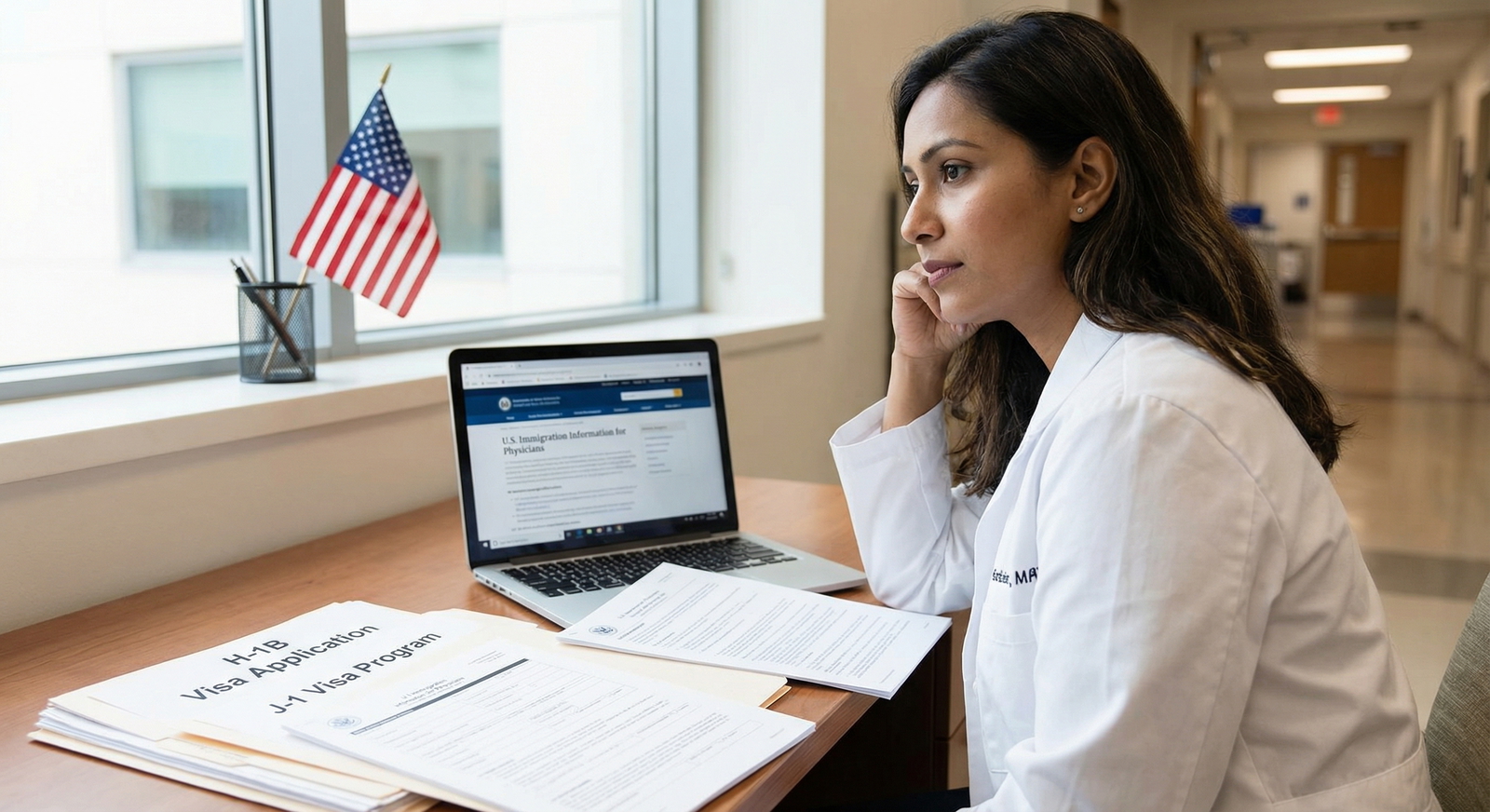
Most IMGs doing neurology residency train on one of two categories: the J‑1 physician visa or the H‑1B temporary worker visa. Knowing the differences early will shape your application strategy, program list, and post-residency plans.
The J‑1 Physician Visa: The Default Path for Many IMGs
The J‑1 Exchange Visitor (ECFMG-sponsored) visa is the most common route for IMGs in residency.
Key features:
- Sponsor: Educational Commission for Foreign Medical Graduates (ECFMG), not the individual program or hospital.
- Purpose: Graduate medical education (GME) and training.
- Duration: Usually for the length of your ACGME-accredited training, renewed annually (e.g., 4 years for adult neurology; 5+ years if including internal medicine preliminary year, or more if combined programs).
- Work location: Primarily at your training institution and its integrated sites; moonlighting is tightly restricted and must be approved by ECFMG.
- Dependent status: Family can accompany you as J‑2 dependents (spouse and unmarried children under 21).
Two-year home residency requirement (INA 212(e))
The single most important feature of the J‑1 physician category is the two-year home-country physical presence requirement:
- After completing training, you must either:
- Return to your home country for an aggregate of two years, or
- Obtain a J‑1 waiver (commonly through a Conrad 30, VA, or other federal waiver program).
- Until this is met or waived, you are typically ineligible for:
- H‑1B status
- A green card (permanent residency) through most pathways
- Certain other non-immigrant statuses
This requirement heavily influences long-term career planning for neurology—especially if you aim for fellowship and then practice in the US.
Advantages of J‑1 for neurology IMGs
- Widely accepted: Many neurology programs sponsor only J‑1, not H‑1B, so your neuro match options are broader.
- Smoother process for programs: ECFMG handles much of the sponsorship work, reducing administrative burden for the institution.
- Predictability: Immigration officers are familiar with the category; processing is standardized.
- Fellowship-friendly: Most neurology fellowships are comfortable with J‑1 sponsorship as a continuation of residency.
Disadvantages / limitations
- Two-year home requirement or waiver: The biggest barrier if your goal is long-term US practice without a return home.
- Moonlighting restricted: Rules are stricter, and additional remuneration needs explicit authorization.
- Less flexibility for non-ACGME work: Research roles, industry jobs, or non-standard training positions can be harder to arrange under J‑1.
The H‑1B Visa: Skilled Worker Route for Neurology Residency
The H‑1B specialty occupation visa is a work visa used by many professionals and some residents/fellows.
Key features:
- Sponsor: The residency program (the hospital or university), not ECFMG.
- Duration: Typically up to 6 years total, including all employers — this includes residency plus any later H‑1B employment.
- USMLE requirement: Most states and institutions require USMLE Step 3 passed before H‑1B petition filing.
- Prevailing wage: Employer must pay at or above a defined minimum wage for the position.
- Dependent status: Family can accompany you as H‑4 dependents; in some cases, H‑4 spouses can obtain work authorization.
Residency-specific aspects
- Many, but not all, neurology programs are willing to sponsor H‑1B visas.
- Some university or county hospitals have institutional policies against H‑1B for residents due to cost, paperwork, and wage rules.
- Physician H‑1Bs in nonprofit academic medical centers may be cap-exempt, which avoids the general H‑1B lottery and allows filing year-round.
Advantages of H‑1B for neurology residents
- No two-year home requirement: You can transition from residency to fellowship to attending jobs without needing a J‑1 waiver or home-country return.
- Pathway to green card: Easier integration with employment-based green card sponsorship during fellowship or early practice.
- More flexible for moonlighting and roles: Subject to institutional policy, but generally more adaptable than J‑1.
Disadvantages / limitations
- Fewer programs sponsor it: Many neurology residencies are J‑1–only; this narrows your neuro match list.
- Requires Step 3 (and time): You typically need to pass Step 3 early enough for the program to file the H‑1B before residency starts.
- 6-year cap: If neurology residency + fellowship (e.g., stroke, epilepsy, neurocritical care) take many years, you must plan your timeline carefully.
- Employer burden: Higher costs, legal fees, and paperwork for the program may make them reluctant.
J‑1 vs H‑1B: Which Is Better for Neurology?
There is no universal answer; it depends heavily on your goals and risk tolerance.
J‑1 may be better if:
- You want maximum match opportunities, including programs that sponsor only J‑1.
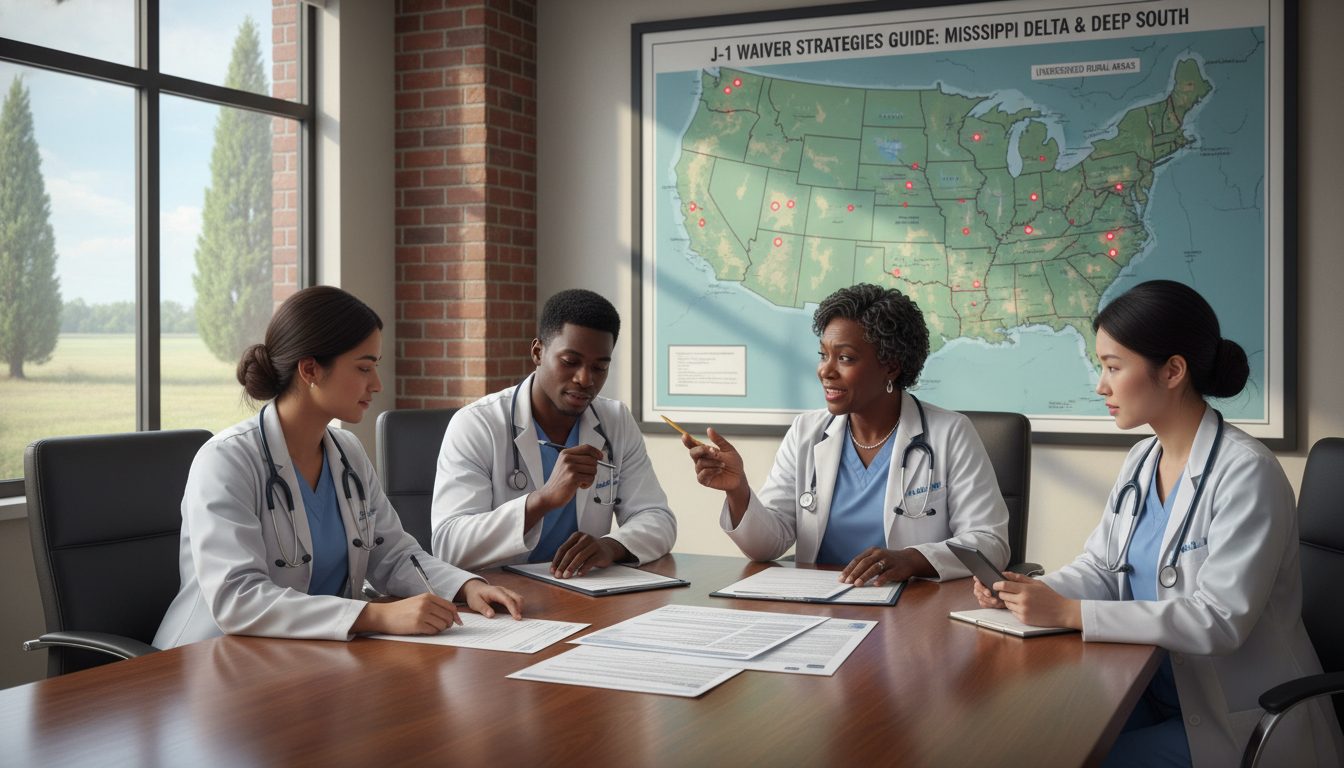
- You are comfortable with the idea of a J‑1 waiver job (often in underserved or rural areas) or with eventually returning home.
- You prioritize ease of obtaining a training visa over long-term immigration flexibility.
H‑1B may be better if:
- Your immediate goal is long-term practice in the US and eventual permanent residency.
- You are ready to take Step 3 early and can handle extra paperwork.
- You are applying to neurology programs known to support H‑1B and understand the 6‑year cap.
For many neurology IMGs, the practical reality is:
- Apply broadly, considering both J‑1 and H‑1B programs, and
- Decide based on actual offers, institutional policies, and your longer-term neurology career plan.
How Visa Status Affects Your Neurology Application Strategy
Visa questions are not separate from your neuro match strategy—they shape it. Smart planning helps you avoid late surprises that jeopardize your position.
Step Timing: USMLE and Visa Requirements
USMLE Steps and their impact:
- Step 1 and Step 2 CK: Required for ECFMG certification and ECFMG J‑1 sponsorship.
- Step 3: Crucial for H‑1B sponsorship; many institutions require a passing score before they file your petition.
Practical recommendations:
- If you are aiming for H‑1B, plan to:
- Complete Step 3 by the time rank order lists are due, or preferably earlier.
- Signal clearly in your application and during interviews that you already passed Step 3 or have a realistic timeline.
- If you anticipate a J‑1, Step 3 timing is more flexible; many residents take it during PGY‑1 or PGY‑2.
Selecting Programs Based on Visa Sponsorship
When constructing a neurology residency program list:
Research each program’s visa policy:
- ERAS and program websites often state “J‑1 only,” “J‑1 and H‑1B,” or “no visa sponsorship.”
- Policies may change, so confirm via email if unclear.
Categorize programs:
- Category A: Sponsors J‑1 only.
- Category B: Sponsors both J‑1 and H‑1B.
- Category C: Explicitly offers H‑1B for residents (with Step 3 requirement).
- Category D: Does not sponsor visas (realistically off-limits unless you are already in a viable US status such as green card or unrestricted work-authorized status).
Match this to your visa goals:
- If you must have H‑1B for long-term plans, focus heavily on Category B/C, but keep J‑1-friendly programs as backup.
- If you are flexible, broaden your net.
Tip: In your personal statement or ERAS application, you do not need to choose a single visa type publicly; simply state you are “eligible and prepared for either J‑1 or H‑1B sponsorship” if that is true.
How Programs Evaluate Visa-Dependent Neurology Applicants
Program directors want to minimize risk and administrative burden. You become more appealing when you:
- Show clear understanding of your visa options and realistic timelines (for example, demonstrating when you expect to take/passed Step 3).
- Avoid last-minute changes, such as insisting on switching from J‑1 to H‑1B late in the process.
- Provide documentation quickly when requested (passports, ECFMG certificates, previous I‑20 or DS‑2019 forms, etc.).
Many neurology PDs report that strong clinical performance and communication skills far outweigh visa concerns, but they appreciate applicants who anticipate visa requirements and don’t require emergency fixes close to July 1.
Planning Your Long-Term Neurology Path Around Visa Rules
For international medical graduates, residency is just one step. Your chosen visa affects fellowship opportunities, waiver obligations, and eventual practice plans.
J‑1 Pathway: From Neurology Residency to Waiver Job
If you choose or receive a J‑1:
Residency and Fellowship:
- You can do neurology residency and most ACGME-accredited fellowships (e.g., vascular neurology, epilepsy, movement disorders, neuromuscular, neurocritical care) under continued ECFMG J‑1 sponsorship.
- Each year, your program confirms your progress and ECFMG extends your DS‑2019.
Post-training options:
- Return home for two years (continuous or accumulated) and then pursue H‑1B or permanent residency later.
- Apply for a J‑1 waiver, commonly through:
- Conrad 30 programs (state-level waivers requiring service in underserved areas)
- Federal programs (e.g., VA hospitals, HHS in some cases)
Neurology in underserved settings:
- Many J‑1 waiver jobs are in rural or semi-rural US regions with shortages.
- Neurologists are in significant demand; this can provide strong negotiating power for salary and contract terms.
- Expect to sign a 3-year contract in a service-obligated position.
Transition to H‑1B and green card:
- Once you secure a waiver job, your employer typically sponsors you for H‑1B (to start practicing) and subsequently for a green card.
- Timelines vary, but many J‑1 neurology physicians obtain permanent residency within a few years of beginning their waiver role.
H‑1B Pathway: From Residency to Fellowship to Practice
If you train in neurology on H‑1B status:
Residency:
- Your neurology program sponsors your H‑1B, typically for the full length of training (possibly extended as PGY‑1 + 3 neurology years).
- Time in residency counts toward the 6-year H‑1B maximum.
Fellowship planning:
- If you pursue fellowship (for example, stroke or epilepsy), you must:
- Ensure your remaining H‑1B time is enough; or
- Work with your institution and attorney to recapture time abroad or explore other nuanced options.
- Many academic medical centers are cap-exempt, which eliminates the lottery but not the 6-year total limit.
- If you pursue fellowship (for example, stroke or epilepsy), you must:
Long-term employment:
- After residency/fellowship, you can move directly into an attending neurologist role with an H‑1B–sponsoring employer.
- Many neurologists on H‑1B begin a green card (EB‑2 or similar) process early with academic or private-practice employers.
Avoiding the J‑1 two-year rule:
- Because you never held a J‑1, you are free of the 212(e) home-residency requirement, offering smoother long-term integration.
Evaluating Your Personal Priorities
When weighing IMG visa options as an aspiring neurologist, reflect on:
- How committed are you to permanent US practice?
- Are you comfortable with underserved or rural practice for 3 years (waiver job) if needed?
- Do you have geographic constraints (family, spouse’s career, etc.)?
- Can you realistically pass Step 3 early enough for H‑1B sponsorship?
Aligning visa type with these factors leads to a more coherent neurology career trajectory and fewer unpleasant surprises.

Practical Steps to Navigate Residency Visa Logistics
This section turns theory into a step-by-step IMG residency guide you can follow during each phase of the neurology application process.
1. Pre-ERAS: Clarify Your Visa Profile
- Confirm your current status:
- Are you outside the US?
- In F‑1, J‑1 research, or another status?
- Have you ever had J‑1 subject to 212(e) before (e.g., research J‑1)? This can complicate later physician J‑1 or H‑1B.
- Create a visa plan document:
- Preferred route (J‑1 vs H‑1B vs flexible).
- USMLE timeline, including when you expect to take/passed Step 3.
- Notes on any dependents and their needs.
This document helps you speak clearly with program coordinators and immigration attorneys.
2. ERAS Application: Signal Readiness, Avoid Red Flags
In the ERAS common application and personal statement:
- Be honest about your citizenship and current status.
- You may state: “I am eligible for ECFMG J‑1 sponsorship and am prepared to sit for USMLE Step 3 early to facilitate H‑1B sponsorship if required” if this is accurate.
- Avoid:
- Insisting on a single visa type aggressively in writing (unless absolutely necessary).
- Providing incomplete immigration history (prior visas, prior SEVIS or DS‑2019 records).
3. Interviews: Discussing Visa Topics Strategically
During visits (virtual or in-person):
- If programs bring it up:
- Be concise and factual. Example: “I am open to J‑1 or H‑1B. I have passed Step 3 / plan to take it in [month, year] and understand the paperwork timelines.”
- You can ask:
- “What visa types does your neurology residency typically sponsor?”
- “Are there institutional limitations I should be aware of regarding H‑1B?”
- Avoid intensive legal debates with PDs; their decisions are often guided by institutional legal offices.
Showing awareness but not anxiety around visas reassures programs that you will be a stable trainee.
4. Ranking Programs: Integrate Visa Reality
When forming your rank order list:
- Mark each program with “J‑1 only”, “J‑1/H‑1B”, or “no sponsorship”.
- Consider:
- If your top programs are J‑1 only, are you comfortable with the J‑1 pathway, including waiver obligations?
- If you strongly prefer H‑1B, do you still include a few J‑1 programs as backups in case H‑1B options do not rank you?
- Balance prestige, training quality, geography, and visa factors.
5. After the Match: Act Quickly on Visa Paperwork
Once you match into neurology residency:
- Contact the program coordinator immediately to understand their exact visa process and timelines.
- For J‑1:
- Your program will provide supporting forms.
- You submit documentation to ECFMG (Form DS‑2019, proof of funding, contracts, etc.).
- Schedule your US consulate appointment once you receive the DS‑2019 (if outside the US).
- For H‑1B:
- The program’s legal office will need your Step 3 results, transcripts, ECFMG certificate, and other documents.
- Pay special attention to deadlines; late petitions can delay your residency start.
Keep organized digital copies of everything: passports, previous visas, DS‑2019s, I‑20s, I‑94 records, and exam scores. Visa processing for residency is paperwork-intensive but manageable with preparation.
Common Pitfalls and How to Avoid Them
Many neurology IMGs run into similar problems on the road to residency. Being aware of these traps can save months of stress.
Pitfall 1: Ignoring Step 3 Timing for Desired H‑1B
Problem: A candidate tells programs they want H‑1B but has not scheduled Step 3, making it logistically impossible to file an H‑1B in time for July 1.
Solution:
- If you are serious about H‑1B for neurology, plan to:
- Take Step 3 before or during interview season.
- At minimum, have an exam date scheduled and realistic score reporting before visa filing deadlines.
- If that’s not feasible, be honest that you may be a J‑1 candidate for residency.
Pitfall 2: Unclear or Incomplete Immigration History
Problem: A prior J‑1 status (e.g., for research) with 212(e) requirement is omitted in the application, discovered later during visa processing, and delays or jeopardizes sponsorship.
Solution:
- Disclose all prior US visas in ERAS and to your program’s immigration office.
- If you had prior J‑1 with possible 212(e), consult an immigration attorney early.
Pitfall 3: Assuming All Programs Sponsor H‑1B
Problem: An IMG neurology applicant builds a program list assuming H‑1B is always possible, only to find that most of their interview offers are J‑1–only.
Solution:
- Verify visa policies for each program as you apply.
- Adjust expectations and strategy: it is common for neurology departments at smaller community programs or certain university hospitals to be J‑1–only.
Pitfall 4: Not Considering Family Needs
Problem: Planning visa options without factoring in spouse work authorization or children’s schooling needs, leading to difficulties after arrival.
Solution:
- Understand differences:
- J‑2 spouses can apply for employment authorization (EAD), but processing takes time.
- H‑4 spouses may have more limited options for work authorization depending on your green card process stage.
- Incorporate these facts into your choice of visa type when possible.
FAQs: Visa Navigation for Neurology IMGs
1. Is it harder to match neurology on H‑1B compared to J‑1?
Not inherently, but your pool of potential programs is smaller. Many neurology residencies—especially smaller or community-based ones—sponsor only J‑1. Larger academic centers are more likely to offer H‑1B, but they are also more competitive overall. If you restrict yourself to H‑1B-only programs, your neuro match chances may drop due to fewer options, not because programs dislike H‑1B specifically.
2. Can I switch from J‑1 to H‑1B during residency or fellowship?
In most cases, not without resolving the two-year home-country requirement (212(e)). Once you engage in J‑1 clinical training in the US, you become subject to this rule. You generally must either:
- Fulfill the 2-year home presence in your home country, or
- Obtain a J‑1 waiver (usually after completion of training via a service-obligated position),
before you are eligible to change to H‑1B status. There are rare exceptions and nuanced legal strategies, but these require case-specific legal advice.
3. Do neurology fellowships sponsor visas independently of residency programs?
Yes. Neurology fellowships (e.g., stroke, epilepsy, movement disorders, neuromuscular, neurocritical care) can sponsor J‑1 or H‑1B independently of your residency program. However, if you are on J‑1 for residency, you typically continue J‑1 through fellowship with ECFMG sponsorship. If you are on H‑1B, your fellowship institution must be willing and able to file a new H‑1B petition or amend your current one. Fellowship directors often coordinate closely with institutional immigration offices; visa feasibility can affect whether you are ranked.
4. How do visa options differ for IMGs already in the US on F‑1 (student) status?
If you are in the US on F‑1, you may have Optional Practical Training (OPT) or STEM OPT time available. However, for neurology residency:
- You will almost always need to transition to J‑1 or H‑1B for clinical training.
- Programs and ECFMG are familiar with F‑1 to J‑1 transitions; this is common for US-IMGs from Caribbean or US-based schools.
- Use the F‑1 period to complete USMLEs (including Step 3 if aiming for H‑1B) and ensure your SEVIS records are clean and complete.
Navigating IMG visa options for neurology residency is complex but manageable with early planning, honest communication, and realistic expectations. By understanding J‑1 vs H‑1B, aligning them with your clinical and career goals, and integrating this into your neuro match strategy, you greatly improve your chances of a smooth path from international medical graduate to practicing neurologist in the United States.