Understanding the Visa Landscape for Pathology-Bound IMGs
For an international medical graduate (IMG) aiming for US pathology residency, the visa pathway you choose is almost as important as your USMLE scores and letters of recommendation. Program directors care about it, hospitals care about it, and ultimately it shapes your training and early career options.
This IMG residency guide focuses specifically on visa navigation for residency in pathology, taking you from pre-application planning through the pathology match and into fellowship and early practice. While the core rules are similar across specialties, pathology has a few unique considerations that can work for you if you understand them well.
Key topics you’ll find here:
- How residency visa policies intersect with pathology training
- J-1 vs H-1B for pathology residents: pros, cons, and myths
- How to research and prioritize programs based on IMG visa options
- Special issues for physician-scientists and AP/CP vs subspecialty planning
- Long-term impact on your career after completing residency on a J-1 or H-1B
Throughout, remember: immigration rules can change. Always verify current details with official sources (ECFMG, USCIS, program coordinators, or an immigration attorney) before making major decisions.
Core Visa Options for Pathology Residency
Most IMGs in the US pathology residency pipeline will train on one of three main statuses:
- J-1 (ECFMG-sponsored) exchange visitor physician
- H-1B specialty occupation worker
- Other non-immigrant statuses (F-1 with OPT, green card holder, etc.)
This section explains what each means in practical residency terms.
1. The J-1 Visa for Pathology Residency
The J-1 is the most common visa category for IMGs entering US residency. It is sponsored by ECFMG, not by individual programs, although programs must agree to support your training.
Key features for pathology-bound IMGs:
- Purpose: Graduate medical education (GME) training
- Duration: Typically up to 7 years total, which is crucial for:
- 3–4 years of AP, CP, or combined AP/CP pathology residency
- Plus one or more 1-year fellowships (e.g., surgical pathology, hematopathology, cytopathology, molecular genetic pathology, transfusion medicine)
- Sponsoring body: ECFMG, which has a standardized set of rules and documentation
Pros for pathology IMGs:
- Widely accepted: Many academic pathology departments are very comfortable with J-1 trainees.
- Less administrative burden on the hospital and department compared to H-1B.
- Clear maximum training period (7 years), usually sufficient for:
- AP/CP (4 years) + 2 fellowships (2 years) = 6 years, still within limit
- Can move more easily between residency and fellowship programs (all through J-1 sponsorship).
Cons / limitations:
- Two-year home-country physical presence requirement after you finish training:
- You must return to your home country (or last country of legal permanent residence) for 2 years
- Or obtain a J-1 waiver before you can change to H-1B or apply for a green card
- Limited moonlighting options: J-1 allows only activities approved as part of your training program.
- Harder to switch to non-training roles during or immediately after residency.
J-1 waiver considerations for pathologists:
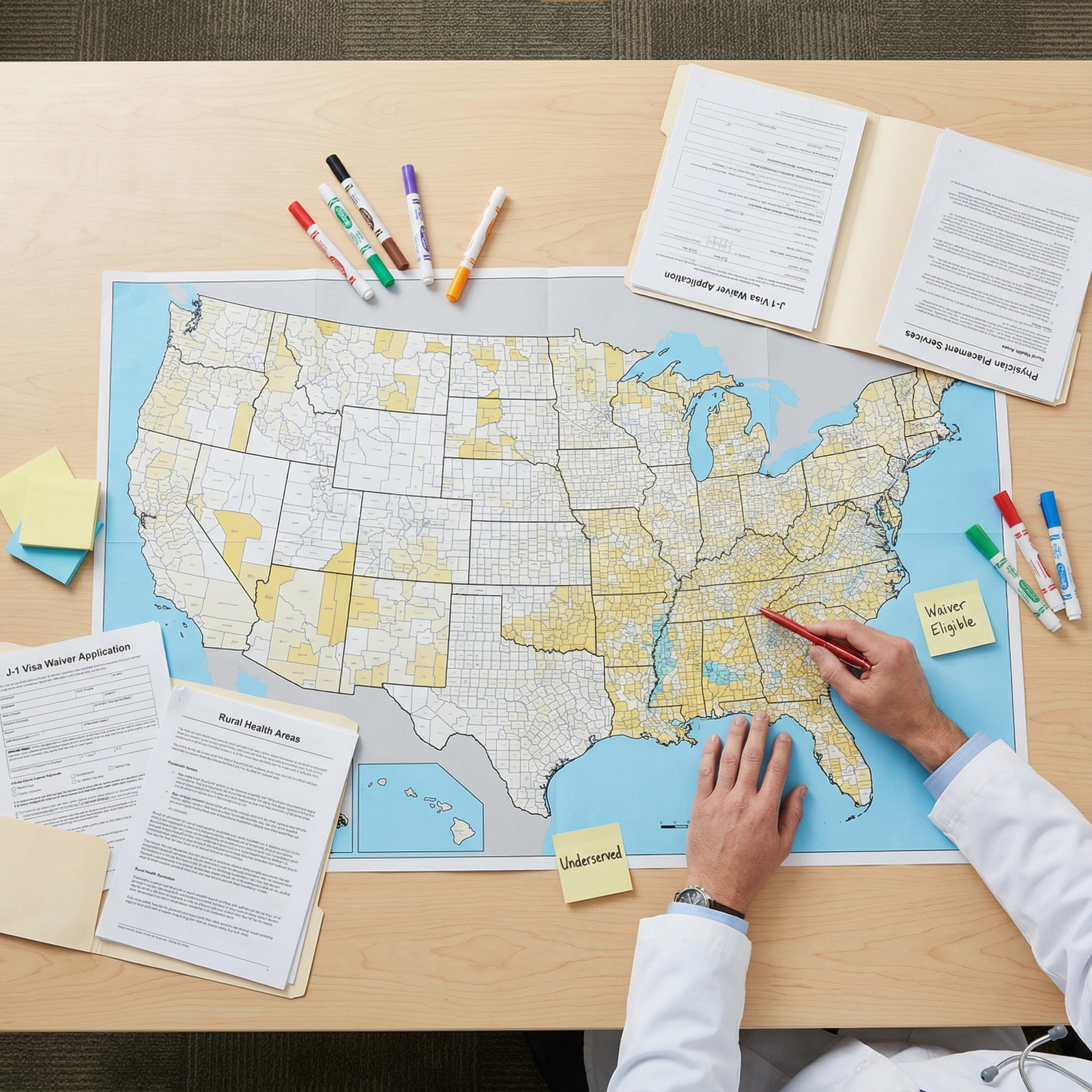
Unlike primary care specialties, pathology has fewer J-1 waiver job opportunities in some states, because many state and federal waiver programs target direct patient-care roles. Still, waiver pathways exist—for example:
- Conrad 30 programs in some states (though pathology positions are less common)
- Federal programs (VA hospitals, HHS waivers, underserved area positions where pathologists are needed)
- Academic positions combining clinical pathology service and teaching/research
If you pursue J-1, plan ahead from early in residency:
- Build a strong CV and networking base in departments with potential waiver opportunities.
- Keep your research and teaching profile strong if you aim for academic pathology, where waiver positions are more likely.
2. The H-1B Visa for Pathology Residency
The H-1B is an employment-based visa for specialty occupations, including physician roles. In pathology residency, the employer sponsor is usually the teaching hospital or university.
Key features:
- Purpose: Employment in a specialty occupation
- Duration: Up to 6 years total (with some possible extensions, usually linked to green card processes)
- Exam requirement: Most institutions require all USMLE Steps (including Step 3) passed before they will petition for H-1B.
Pros for pathology IMGs:
- No 2-year home-country return requirement (unlike J-1).
- Often considered more favorable for:
- Transitioning to fellowship programs willing to sponsor H-1B
- Seamless path toward permanent residency (green card) while staying in the US
- More flexibility for certain moonlighting arrangements (subject to institutional rules and H-1B petition specifics).
Cons / limitations:
- Fewer programs are willing or able to sponsor H-1B for residency:
- Higher legal and administrative burden on the sponsoring institution
- Some institutions or states have blanket policies against H-1B for residents
- You must typically have:
- USMLE Step 3 completed before match or at least before starting residency
- State-specific licensing/permit criteria satisfied
- The 6-year clock on H-1B includes:
- All time spent in H-1B status (residency + fellowships + early attending jobs)
- Because pathology often goes AP/CP + fellowship(s), you need to plan the timeline carefully.
H-1B in the context of AP/CP and fellowships:
Example timeline (typical):
- Year 1–4: AP/CP residency (4 years) on H-1B
- Year 5: Surgical pathology fellowship (1 year)
- Year 6: Hematopathology fellowship (1 year)
You would likely use the full 6-year H-1B window by the end of fellowship, leaving no extra H-1B time for an attending role unless:
- You recapture time spent outside the US, or
- You start a green card process early (e.g., during fellowship or late residency), potentially allowing H-1B extensions beyond 6 years.
This is one reason some pathology trainees consider mixing visas (e.g., J-1 for residency, H-1B for waiver job later) or carefully sequencing their fellowships and employment.
3. Other Statuses: F-1, Green Card, and More
Some IMGs applying to pathology residency may already be in the US in another status:
- F-1 (student) with OPT after a US MD, DO, or research degree:
- You might begin residency on OPT for the first year, but:
- Most programs prefer to convert you to J-1 or H-1B quickly, due to OPT’s short duration.
- You might begin residency on OPT for the first year, but:
- Permanent residents (green card holders):
- You do not need a residency visa.
- You are considered similar to US graduates in terms of immigration status.
- Other visas (e.g., dependent status like H-4, L-2):
- You may be eligible for work authorization (EAD) under certain rules.
- Programs may still prefer converting you to J-1 or H-1B, depending on policies.
If you fall into one of these less common categories, speak with both:
- Your prospective program’s GME office, and
- A qualified immigration attorney, especially if you plan a multi-step pathology training path (AP/CP + fellowship(s)).
J-1 vs H-1B: Choosing the Best Fit for a Pathology Career
The J-1 vs H-1B decision is at the heart of IMG visa options. For a pathology residency, your choice interacts with:
- How many years of training you plan
- Your long-term goal (academic vs private practice)
- How comfortable you are with the J-1 2-year home requirement and waiver process
Side-by-Side Comparison for Pathology IMGs
Eligibility & Exams
- J-1 (ECFMG)
- Must be ECFMG certified (USMLE Step 1 and Step 2 CK)
- Step 3 is not required for J-1 sponsorship
- H-1B
- Most programs require:
- USMLE Step 1, Step 2 CK, and Step 3 passed before start date
- State eligibility for a training license/permit
- Most programs require:
Program Availability
- J-1: Many pathology programs that sponsor IMGs accept J-1 routinely.
- H-1B: A smaller subset of pathology programs offer H-1B; policies vary widely.
Length of Training
- Pathology residency: Typically 3–4 years (AP only, CP only, or combined AP/CP).
- Fellowships: Usually 1 year per subspecialty; many residents complete 1–2 fellowships.
How each visa fits:
- J-1: 7-year cap usually covers the entire training pathway:
- 4 years AP/CP + up to 3 fellowship years (within the limit)
- H-1B: 6-year cap includes all H-1B training and early work:
- 4-year AP/CP + 2 fellowships = 6 years, leaving no buffer without green card steps
Post-Training Options
- J-1:
- Must do 2 years home-country return OR
- Obtain a waiver (e.g., underserved or academic pathology job)
- No green card immediately after J-1 without waiver
- H-1B:
- No 2-year home requirement
- Easier to transition directly into attending roles and start green card processes
Practical Decision Scenarios
Scenario 1: IMG early in process, Step 3 not completed
- You are preparing for pathology applications but have only Step 1 and Step 2 CK.
- You want to apply broadly and maximize chances in the pathology match.
Implications:
- You are more likely to match in a program that uses J-1 visas, since H-1B programs will usually require Step 3.
- Strategy:
- Indicate willingness for J-1 on ERAS.
- Take Step 3 during or after PGY1 if future H-1B opportunities become relevant (e.g., for fellowships or jobs).
Scenario 2: Strong candidate, Step 3 already passed, wants to avoid J-1 waiver
- You have strong scores, US clinical or observership experiences in pathology, and good letters of recommendation.
- You want maximum flexibility to stay in the US and pursue academic or private practice after training, without a J-1 waiver.
Implications:
- You can actively target H-1B–friendly pathology programs, but your overall program list will be smaller.
- Strategy:
- Use filter tools (FREIDA, program websites) to identify programs that previously sponsored H-1B for pathology.
- In personal statement or interviews, be realistic: state you are open to J-1 if H-1B is not possible, unless you truly intend to limit yourself to H-1B programs only (which can be risky).
Scenario 3: Physician-scientist track or research-focused pathology
- You have strong research background and aim for academic pathology with a heavy research component.
- You may need extended training (e.g., research years, combined degrees, or multiple fellowships).
Implications:
- The J-1 7-year cap may or may not be enough if you add pure research years that count against your GME time.
- The H-1B 6-year cap may be tight if you include research years in H-1B status.
Strategy:
- Discuss early with potential mentors and program directors:
- Some academic centers prefer J-1 for pure GME years but may move you to other visas (e.g., O-1, or H-1B for a faculty role) later.
- For long-term academic careers, both J-1 and H-1B can work, but early green card planning is beneficial.
Researching Pathology Programs by Visa Sponsorship
To optimize your pathology match strategy, you must align your visa preferences with realistic program options.
Tools and Sources
Program websites
- Look for sections labeled:
- “Visa Information”
- “Requirements for International Medical Graduates”
- “GME policies”
- Many explicitly state:
- “We sponsor J-1 visas only”
- “We sponsor J-1 and H-1B visas”
- “We do not sponsor visas”
- Look for sections labeled:
FREIDA (AMA residency database)
- Some programs list whether they accept IMGs and what types of visas.
- Cross-check with the most recent program site and GME office; FREIDA may lag.
Program emails or coordinator communication
- If the website is unclear, email the residency coordinator:
- Ask specifically:
“For international medical graduates, what visa types does your pathology residency program currently sponsor?”
- Ask specifically:
- If the website is unclear, email the residency coordinator:
ECFMG and institutional GME offices
- ECFMG’s site explains J-1 policies generally.
- For H-1B, the GME office (or institutions’ immigration services) will have the final say.
How to Build a Visa-Informed Program List
Categorize programs by visa policy:
- Group A: J-1 only
- Group B: J-1 + H-1B (case by case)
- Group C: H-1B only (rare for residency)
- Group D: No visa sponsorship / US citizen or permanent resident only
Match this with your profile:
- If you don’t have Step 3: prioritize Groups A and B.
- If you strongly prefer H-1B and have Step 3:
- Focus on Group B and any rare Group C programs,
- But still consider Group A if you want broad match safety.
Consider program type and your long-term goals:
- Academic, research-heavy programs may be more flexible with complex visa situations over time.
- Large university hospitals often have experience sponsoring IMGs for both J-1 and H-1B.
- Community programs often prefer J-1 only due to resource constraints.
Ask visa questions strategically during interviews:
- Avoid leading with visa demands, but do ask clear, respectful questions:
- “Does your program currently sponsor H-1B visas for pathology residents, or do you primarily use J-1?”
- “Do recent international graduates in your pathology program typically train on J-1 or H-1B?”
- Avoid leading with visa demands, but do ask clear, respectful questions:
Your goal is to leave interview season with a realistic understanding of what each program can and will do for your specific case.

Practical Steps and Timeline: From Application to Match and Beyond
Visa navigation for residency is not a single decision; it is a sequence of steps from application, through the pathology match, to arrival and eventual transition to fellowship or practice.
1. Pre-Application Year (6–18 Months Before Match)
Key tasks:
- Complete or plan USMLE Step 3 if you want H-1B:
- Aim to have your Step 3 score available before ERAS submission if you strongly target H-1B.
- Decide your preference:
- Are you okay with J-1?
- Is H-1B your priority?
- Gather documentation:
- Valid passport
- Medical diploma, transcripts, translations
- ECFMG certificate (or be on track to receive it before residency starts)
- Clarify any prior US visa history, overstay, or status issues:
- Consult an immigration attorney early if you have a complex background.
2. Application and Interview Season
In ERAS:
- Many programs ask if you will need visa sponsorship and what type.
- You can:
- Indicate that you “require visa sponsorship” and mention that you are open to J-1 vs H-1B depending on institutional policy.
- For the IMG residency guide approach, keep your application focused on:
- Pathology strengths (observerships, electives, research, LORs)
- But be prepared to answer questions about your visa needs concisely.
During interviews:
- If visa does not come up, ask near the end:
- “Do you sponsor visas for IMGs in your program? If so, which visa types have you used in the last few years?”
- Take notes, because formal offer letters may come much later, and policies change year to year.
3. After the Pathology Match
Once you match, the residency visa process becomes more concrete.
If you matched to a J-1–sponsoring program:
- The GME office will guide you to ECFMG’s online J-1 application system.
- You will typically:
- Submit your DS-2019 application via ECFMG
- Provide financial documentation (often the residency contract suffices)
- Upload required documents (ECFMG certificate, passport, contract, etc.)
- After ECFMG issues a DS-2019, you will:
- Schedule a visa interview at the US embassy/consulate in your country
- Bring DS-2019, SEVIS fee receipt, and other required documents
- Plan early: US consulates can have long wait times.
If you matched to an H-1B–sponsoring program:
- The hospital or university will typically:
- File an H-1B petition with USCIS on your behalf.
- Require:
- Proof of passing USMLE Step 3
- Proof of eligibility for state medical training license
- Credential evaluations (ECFMG)
- Once H-1B is approved:
- If you are outside the US, you will schedule a visa interview to get H-1B stamped.
- If you are inside the US in another status, you may change status without leaving, depending on circumstances.
4. During Residency: Planning for the Next Step
On J-1:
- Track your total J-1 time carefully, especially if you switch programs or add fellowships.
- Start thinking about:
- J-1 waiver options by PGY2–3
- Which regions, states, or academic centers might sponsor a waiver for a pathologist
- Connect with senior IMGs in pathology who have navigated J-1 waivers; they are invaluable mentors.
On H-1B:
- Track your 6-year clock, including:
- Any prior H-1B employment before residency
- Any breaks that might allow recapturing time
- If you plan multiple fellowships:
- Discuss H-1B planning with both your current and potential fellowship programs.
- Consider early consultation with an immigration attorney about:
- Starting a green card process through an academic institution or employer if possible.
Long-Term Outlook: Visa, Fellowship, and Your Pathology Career
Your visa choice doesn’t only affect residency; it shapes your fellowship options and first attending job.
Impact on Fellowship Applications
- Many pathology fellowships within the same institution will continue your J-1 or H-1B if they are familiar with your case.
- When moving to another institution:
- J-1 transfer is standardized through ECFMG but still needs approval by the new training program.
- H-1B transfer requires a new petition from the new employer.
When comparing fellowship offers, ask:
- “Will you be able to sponsor my current visa type?”
- “Have you successfully sponsored IMGs before on this visa?”
Transition to Practice or Academic Faculty
If you trained on J-1:
- You must either:
- Complete the 2-year home-country return, then apply for work visas/green card; OR
- Secure a J-1 waiver job:
- Some academic pathology jobs may sponsor waivers, especially if they serve underserved areas or have federal designations.
- Build relationships with departments early, present at conferences, and signal your interest in staying long-term.
If you trained on H-1B:
- Transition to a new H-1B employer (e.g., hospital, pathology group, academic center) is relatively straightforward if you are within your 6-year validity.
- Many employers begin green card sponsorship early (e.g., via PERM and I-140), which can allow:
- Extensions of H-1B beyond 6 years in certain stages.
- For long-term academic pathology:
- Both former J-1 and H-1B residents succeed; the main difference is the timing and complexity of your permanent residency process.
FAQ: Visa Navigation for Pathology IMGs
1. Is J-1 or H-1B better for an international medical graduate entering pathology residency?
There is no single “better” option; it depends on your priorities:
- J-1 is more widely available, easier to obtain without Step 3, and usually covers full AP/CP plus fellowship training within the 7-year limit. The trade-off is the 2-year home-country requirement or the need for a J-1 waiver job afterward.
- H-1B provides more freedom to stay in the US and transition to employment or green card processes without a 2-year return, but:
- Fewer pathology programs offer it,
- Step 3 is almost always required beforehand,
- The 6-year limit can be tight when you combine residency and multiple fellowships.
Assess your exam status, program competitiveness, and long-term location goals before deciding.
2. Do most pathology residency programs sponsor H-1B visas for IMGs?
No. While some do, many pathology residencies only sponsor J-1 visas. A smaller subset will consider H-1B, often on a case-by-case basis, and usually only if you already have:
- USMLE Step 3 passed
- Eligibility for a state training license
You should thoroughly research each program’s current visa policy via their website, FREIDA, and direct communication with program coordinators.
3. Can I do AP/CP pathology residency plus multiple fellowships on a J-1 visa?
In most cases, yes. The J-1 residency visa for physicians allows up to 7 years of total training time. A common pathway:
- AP/CP (4 years) + Surgical pathology fellowship (1 year) + Hematopathology fellowship (1 year) = 6 years
This fits under the 7-year cap. If you plan additional labs or research years, you must coordinate closely with ECFMG and your institution to ensure all time is counted and approved appropriately.
4. I am already in the US on F-1 (student) status. How will that affect my pathology match and residency visa?
If you are currently on F-1, for example in a US master’s or PhD program:
- You will likely complete your program and possibly use OPT (Optional Practical Training).
- For pathology residency, most programs will transition you to J-1 or H-1B rather than keep you on F-1/OPT, because residency is a structured GME position.
- Your F-1 history does not prevent J-1 or H-1B later, but be transparent about your immigration history and confirm timing (e.g., completion of studies, OPT dates) to avoid gaps in status.
Navigating IMG visa options for a US pathology residency is complex but manageable when you understand the framework of J-1 vs H-1B, your training timeline, and your long-term career goals. Treat visa strategy as an integral part of your residency planning—alongside strong pathology preparation, research exposure, and clinical experience—and you will be far better positioned for both a successful pathology match and a sustainable career in the United States.