
Understanding the Big Picture: Visa Navigation as an IMG in the Sun Belt
For an international medical graduate, residency visa planning is just as important as choosing specialties or crafting a strong ERAS application. In the Sun Belt—stretching roughly from California and Arizona across Texas and the Gulf states through Florida and the Carolinas—residency programs are diverse, rapidly growing, and often IMG‑friendly. But each program’s visa policy can be very different, and misunderstandings can derail even an otherwise strong application.
This IMG residency guide focuses on visa navigation for residency in Sun Belt states, with an emphasis on J-1 vs H-1B, other IMG visa options, and how to align your immigration strategy with your career goals and timeline.
We’ll assume you already know the basics of the US residency match process. Here, the emphasis is on the intersection of:
- Visa type (J-1, H-1B, etc.)
- Residency visa sponsorship policies
- Long‑term career planning (fellowship, practice location, green card)
- Regional factors in southern residency programs
Core Visa Types for IMGs Entering US Residency
Most IMGs training in the US do so under either the J‑1 exchange visitor visa (ECFMG‑sponsored) or the H‑1B temporary worker visa. A few others train with other statuses (F‑1 OPT, green card, etc.), but J‑1 vs H‑1B remains the central question in residency visa navigation.
1. J‑1 Physician Visa (ECFMG‑Sponsored)
The J‑1 is currently the most common visa for IMGs in US residency, including in Sun Belt states. It is sponsored by ECFMG (Educational Commission for Foreign Medical Graduates), not by the residency program directly (though programs must agree to host you).
Key features:
- Purpose: Exchange visitor/graduate medical education
- Sponsor: ECFMG (primary); program is a host institution
- Duration: Typically valid for the length of your approved training (renewed annually)
- Eligibility basics:
- Valid ECFMG certification
- Match into an ACGME‑accredited residency or fellowship
- Sufficient subject‑specific USMLE steps (per ECFMG policy)
- Proof of funding and health insurance
- Dependents: J‑2 for spouse and children (under 21); J‑2 spouse usually can apply for an EAD (work authorization)
The 2‑Year Home Residency Requirement (HRR)
The main complication: most J‑1 physicians are subject to INA 212(e), the two‑year home country physical presence requirement. This means:
- After finishing all J‑1 training, you must return to your home country for a total of two years before:
- Changing status to H‑1B or L‑1 inside the US
- Applying for an immigrant visa (green card) or permanent residency
- OR you must obtain a J‑1 waiver of this requirement.
For Sun Belt IMGs, this HRR often drives strategic choices:
- Some accept the J‑1 and plan early for a waiver in a Sun Belt underserved area.
- Others aim for an H‑1B from the start to avoid the HRR but face more limited program options.
Pros of J‑1 for IMG Residents:
- Widely accepted: Many southern residency programs only sponsor J‑1.
- ECFMG infrastructure: Clear, standardized process and central oversight.
- Predictable timing: Typically processed in coordination with ERAS/NRMP timelines.
- Multiple training episodes: Can be used for residency and then fellowship, as long as you remain in good standing and within certain limits.
Cons of J‑1:
- 2‑year HRR is a major constraint unless waived.
- Dependence on J‑1 waiver or going home may slow long‑term career or green card plans.
- Some states and specialties have more limited J‑1 waiver options.
2. H‑1B Visa for Residency
The H‑1B is an employment‑based visa for “specialty occupations.” In residency, it is used much less frequently than J‑1 but is highly sought after by some IMGs.
Key features:
- Sponsor: The residency program (as employer); program’s legal/HR team handles petition
- Duration: Up to 6 years total, usually granted in periods up to 3 years at a time
- Eligibility basics:
- Passing USMLE Step 3 before H‑1B petition filing (critical!)
- ECFMG certification
- Program willing and able to sponsor H‑1B (not all are)
- Cap‑exempt status: Many teaching hospitals affiliated with universities or non‑profits are cap‑exempt, meaning:
- No October 1st start limitation
- No need for lottery participation
- Can file and begin H‑1B throughout the year, which fits residency start dates
Pros of H‑1B in Residency:
- No J‑1 2‑year HRR – easier transition to green card or employment after training.
- Perceived long‑term immigration advantage for those pursuing permanent US practice.
- Often advantageous if you want flexibility in practice location after training without needing a service‑based waiver.
Cons of H‑1B:
- Fewer programs sponsor H‑1B, especially in certain southern residency programs that rely heavily on J‑1.
- Must have Step 3 passed early (ideally before rank list submission).
- Programs incur higher legal and filing costs and more administrative burden.
- Duration cap (6 years total) can be tight if you do a long residency plus fellowship(s) without transitioning to a green card.
3. Other Statuses (F‑1, Green Card, etc.)
While J‑1 and H‑1B are the primary IMG visa options for residency, occasionally you’ll see:
- F‑1 OPT (Optional Practical Training):
- Graduates of US medical schools or Caribbean schools with US campuses may be on F‑1.
- Some can do part of residency under OPT, but most programs prefer J‑1 or H‑1B for full training due to stability concerns.
- Green Card / US Permanent Resident:
- If you already have a green card, you are essentially treated as a US grad for visa purposes.
- No residency visa limitations; best case for flexibility.
- Other visas (O‑1, TN, etc.):
- Less common at residency level; more often used in attending‑level practice or research roles.
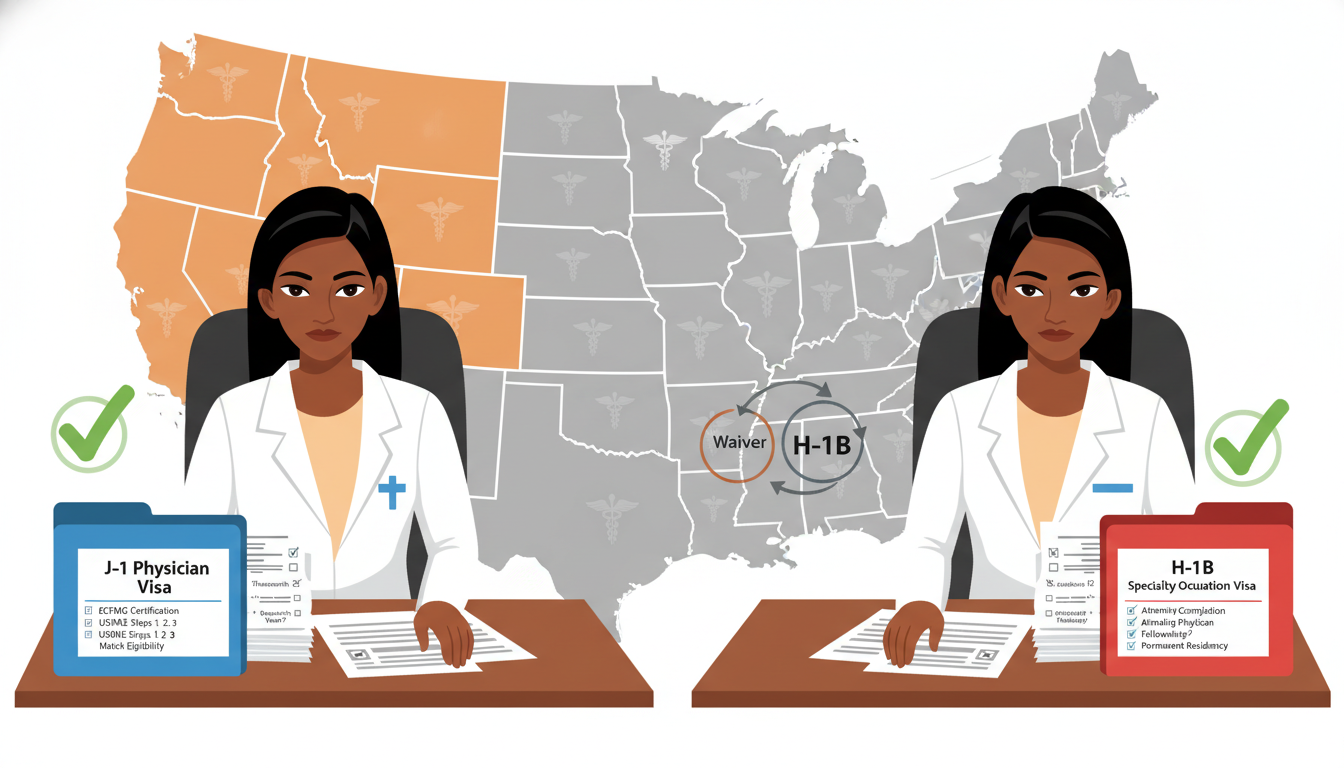
J-1 vs H-1B: Strategic Decisions for Sun Belt IMGs
When reading any IMG residency guide, you’ll see debates about J‑1 vs H‑1B. In the Sun Belt context, your decision is influenced not only by immigration law, but also by regional program behavior and workforce needs.
Program Sponsorship Patterns in the Sun Belt
While practices vary by state and institution, some general trends:
- High J‑1 sponsorship: Many community‑based IM programs in Texas, Florida, Georgia, and other southern residency programs routinely sponsor J‑1 and are comfortable with ECFMG processes.
- Selective H‑1B sponsorship: University‑affiliated programs in Texas, Florida, North Carolina, and some in Arizona often sponsor H‑1B, but sometimes only:
- For certain specialties (e.g., internal medicine but not prelim surgery), or
- For highly competitive candidates, or
- If you’ve already passed Step 3 and can start on time.
- J‑1 only policies: Some programs clearly state “J‑1 only” or “We do not sponsor H‑1B” on their websites. This is common across the Sun Belt, especially in smaller or resource‑limited hospitals.
When researching programs in the Sun Belt:
- Check the GME office website and program FAQ for visa information.
- Look for explicit statements: “We sponsor J‑1 and H‑1B,” “We only sponsor J‑1,” or “We do not sponsor visas.”
- If unclear, email the program coordinator or GME office politely, specifying your status and asking about IMG visa options.
When J‑1 Might Be the Better Choice
J‑1 is often more realistic or advantageous when:
You don’t yet have Step 3:
- Many programs require Step 3 for H‑1B by the contract/signing stage.
- If you’re applying without Step 3, J‑1 is often your only feasible pathway.
You want to maximize the number of programs you can apply to:
- Many Sun Belt residencies will not consider H‑1B, but do accept J‑1.
- If you’re still working to strengthen your application, J‑1 can broaden your options.
You are open to a J‑1 waiver job in the Sun Belt:
- States like Texas, Florida, Georgia, North Carolina, and Arizona regularly use Conrad 30 and other waiver programs to place J‑1 physicians in underserved areas after training.
- If you are interested in working in rural or inner‑city locations, J‑1 + waiver can align well with your goals.
You plan to do multiple fellowships:
- As long as you stay within ECFMG guidelines and your training remains progressive, you can often extend J‑1 across residency and fellowship.
When H‑1B Might Be the Better Choice
H‑1B might be strategically stronger if:
You have a strong application and Step 3 already passed:
- You can target H‑1B‑friendly programs in the Sun Belt (often academic centers).
- You may have more negotiating power and options.
You want to avoid the 2‑year home residency requirement:
- Perhaps you have limited J‑1 waiver options in your home country or anticipate difficulties with returning.
- H‑1B allows a more direct path to employment and green card sponsorship after training.
You want maximum geographic flexibility after training:
- Without needing a waiver, you can compete for attending jobs nationwide without service obligations tied to underserved locations.
You are aiming for long, multi‑step training but with early green card planning:
- For example, a 5‑year surgery residency plus fellowship:
- On H‑1B, you and your employer might start EB‑2 or EB‑1 green card processing during residency/fellowship, reducing odds of hitting the 6‑year limit.
- For example, a 5‑year surgery residency plus fellowship:
Caution: With H‑1B, the 6‑year cap can become tight if:
- You do a long residency plus multiple fellowships, and
- You or your employer do not start green card processing early.
Mixed Strategy: Flexible but Realistic Expectations
Some IMGs enter the application cycle thinking, “I’ll only accept H‑1B.” For many candidates—especially in the Sun Belt where some programs are J‑1 only—this severely limits options.
A practical approach:
- Primary preference: H‑1B (if you have Step 3 and a strong profile).
- Secondary openness: J‑1 at certain programs or in certain specialties if:
- The program is a strong fit, and
- You are willing to later pursue a J‑1 waiver job in the Sun Belt.
Think of your visa strategy as one part of your overall career plan, not an isolated decision.
Step-by-Step: Visa Navigation Through the Residency Application Timeline
To make this more actionable, here’s a phase‑by‑phase approach for an international medical graduate targeting Sun Belt residency programs.
Phase 1: Pre‑Application Planning (12–24 Months Before Match)
1. Clarify Your Long‑Term Goals
Ask yourself:
- Do I want to settle in the US long‑term, or keep flexibility to work elsewhere?
- Am I open to rural or underserved practice (e.g., Texas Panhandle, rural Georgia, Mississippi Delta, inland Florida)?
- Am I targeting competitive specialties (e.g., dermatology, radiology), or broader‑access fields (e.g., internal medicine, family medicine, pediatrics)?
Your answers shape the relative advantages of J‑1 vs H‑1B and help you prioritize visa‑friendly specialties and regions.
2. USMLE Strategy and Step 3 Timing
For an IMG dreaming of an H‑1B in the Sun Belt:
- Plan to complete Step 3 before ranking programs, or at the latest before contract/visa processing begins.
- Many H‑1B‑friendly programs in places like Texas and Florida explicitly require a passing Step 3 score before they will sponsor H‑1B.
For J‑1:
- Step 3 is not required for ECFMG J‑1 sponsorship, although some programs may still prefer it.
3. Research Sun Belt Program Visa Policies
Create a spreadsheet with columns like:
- Program name
- State
- Specialty
- Visa policy: J‑1 only / J‑1 + H‑1B / No visa sponsorship
- Notes (e.g., historically IMG‑friendly, Step 3 requirement, J‑1 waiver pipelines nearby)
Use:
- FREIDA
- Program websites (GME > International Medical Graduates or Visa Information)
- Past applicant blogs/forums (with caution—always verify with official sources)
Phase 2: Application and Interview Season
4. Tailor Your ERAS Strategy
- If you need a visa, mention it briefly and clearly in your ERAS application.
- In the personal statement, avoid turning it into an immigration essay, but you might:
- Indicate commitment to serving underserved populations (valuable for programs with J‑1 waiver ties).
- Show genuine connections or interest in the Sun Belt region (e.g., family, prior rotations, language skills, climate preference).
5. Clarify Visa Questions During Interviews (Tactfully)
When you interview with Sun Belt residency programs:
- Ask only if not clearly indicated on the website:
- “Could you share what types of visas you sponsor for international medical graduates?”
- “How many current residents are training on J‑1 or H‑1B visas?”
- For H‑1B interests:
- “If I have Step 3 passed before contract signing, would H‑1B sponsorship be an option, or do you sponsor only J‑1?”
Be professional and respectful; avoid sounding as if you are negotiating employment rather than applying for training.

Phase 3: Ranking and Match
6. Rank with Visa Policies in Mind
When building your rank list:
- Group programs into categories:
- Category A: H‑1B‑friendly, strong training, good location
- Category B: J‑1‑only, but strong training/fit
- Category C: Visas unclear or no sponsorship
- Rank programs primarily by training quality and fit, but factor in:
- Whether their visa policy aligns with your long‑term goals.
- Whether you are comfortable with J‑1 waivers if needed.
For example, you might rank a J‑1‑only university program in Texas above a weaker H‑1B‑friendly program in a less desirable location, if you value training quality and know you’re open to a Texas waiver job.
Phase 4: Post‑Match Visa Processing
Once you match:
If J‑1:
- You and your program coordinate with ECFMG:
- Submit necessary documentation (Form DS‑2019 request, contracts, ECFMG forms).
- Gather proof of financial support and health insurance.
- Attend a visa interview at a US consulate (if outside the US).
- Timeline is usually well‑structured; ECFMG provides step‑by‑step instructions.
If H‑1B:
- The program’s legal/HR team will:
- Request your documents (USMLE scores, ECFMG cert, medical diploma, CV, passport).
- File a Labor Condition Application (LCA) with the Department of Labor.
- File the Form I‑129 petition for H‑1B with USCIS.
- You may need to pay some costs (e.g., premium processing), depending on program policy, though some programs cover everything.
- If you’re abroad, you will have a US consular interview for an H‑1B visa stamp.
Always keep multiple copies of:
- Contracts
- Approval notices (I‑797)
- ECFMG letters and DS‑2019 forms (for J‑1)
- Passport, I‑94, and other relevant documents
Planning Beyond Residency: J‑1 Waivers, H‑1B Extensions, and Green Card Strategies
Visa navigation doesn’t end with Match Day. Sun Belt states are major destinations for J‑1 waiver jobs and H‑1B‑sponsored positions, given their growth and underserved areas.
J‑1 Waiver Options in the Sun Belt
If you complete training on a J‑1, you will likely need a waiver of the 2‑year HRR to continue working in the US without returning home. Common Sun Belt pathways include:
Conrad 30 Program (State‑Based):
- Each state (e.g., Texas, Florida, Georgia, Alabama, Arizona, North Carolina, South Carolina) can sponsor up to 30 J‑1 waivers per year, usually mostly for primary care and some specialties.
- Jobs are typically in Health Professional Shortage Areas (HPSAs) or Medically Underserved Areas (MUAs), or serve underserved populations.
- Often requires a 3‑year full‑time service commitment.
Federal Programs:
- VA (Veterans Affairs), Delta Regional Authority, or Appalachian Regional Commission waivers may apply in parts of the Sun Belt.
- These have specific geographic and service criteria.
Hardship or Persecution Waivers:
- Based on fear of persecution in the home country or extreme hardship to a US citizen or permanent resident spouse/child.
- More complex and less predictable; legal guidance is crucial.
Sun Belt relevance:
- Large states like Texas and Florida attract many J‑1 waiver seekers, making competition significant.
- Some smaller states (e.g., Mississippi, Alabama, Arkansas, parts of New Mexico) may be less competitive and thus attractive options for IMGs willing to work in rural settings.
H‑1B and Green Card After Training
If you’re on an H‑1B during residency or fellowship:
- Your attending‑level employer (often a hospital or large group) can:
- Extend your H‑1B (within the 6‑year cap, or beyond in some green card scenarios).
- Initiate green card sponsorship (usually EB‑2 for physicians).
- If you never had J‑1 status or already obtained a J‑1 waiver, you can typically move forward with green card processing without a 2‑year HRR issue.
For many IMGs in the Sun Belt:
- The path is Residency → Fellowship → H‑1B attending job → EB‑2 green card.
- Or J‑1 Residency → J‑1 Fellowship → J‑1 Waiver job in underserved Sun Belt area → H‑1B or O‑1 → Green card.
Engage with immigration counsel early (often through your employer) to map out timing, especially if your H‑1B years are approaching the 6‑year limit.
Practical Tips and Common Pitfalls for Sun Belt IMGs
Practical Tips
Start visa planning early.
Don’t wait until Match; integrate visa strategy into your program selection and USMLE timeline.Document everything meticulously.
Keep scanned, backed‑up copies of all visas, I‑94s, DS‑2019s, I‑797s, and ECFMG documents.Be transparent but concise about your status.
Programs appreciate clarity; include your citizenship, need for sponsorship, and any special circumstances in the ERAS application where asked.Network with current residents.
Reach out (politely) to current IMG residents in Sun Belt programs:- Ask what visa types are typical.
- Learn how the GME office handles visa processes.
- Get realistic insight into J‑1 waiver or H‑1B job prospects in that region.
Leverage Sun Belt strengths.
Sun Belt states often:- Have high IMG representation.
- Need physicians in rural and semi‑urban areas.
- Run multiple J‑1 waiver recruitment efforts. Position yourself as someone genuinely interested in serving these communities.
Common Pitfalls to Avoid
Assuming all programs treat visas the same way.
Visa policies can differ dramatically even between neighboring hospitals.Waiting too long to take Step 3 if you want H‑1B.
Late Step 3 scores can block H‑1B sponsorship possibilities.Underestimating the J‑1 2‑year HRR.
Don’t assume it “won’t matter.” If you choose J‑1, plan how you will address the HRR (waiver vs return home) from the beginning.Ignoring state‑specific J‑1 waiver rules.
Each Sun Belt state has different Conrad 30 timelines, priorities, and specialty preferences.Relying solely on forums rather than official sources.
Use forums for anecdotes, but always verify with program websites, ECFMG, or an immigration attorney.
FAQs: Visa Navigation for IMGs in Sun Belt Residency Programs
1. Which visa is more common for IMGs starting residency in the Sun Belt: J‑1 or H‑1B?
In most Sun Belt states, J‑1 is more common for IMGs. Many community and some university programs sponsor only J‑1. H‑1B is more frequently seen at large academic centers and select community programs that have strong HR/legal support and are accustomed to H‑1B processing.
2. Can I switch from J‑1 to H‑1B after residency without doing the 2‑year return home?
Generally, no, not without addressing the J‑1 2‑year home residency requirement. To change to H‑1B (or get a green card) after J‑1, you must either:
- Complete the 2‑year physical presence in your home country, or
- Obtain a J‑1 waiver (e.g., through a Conrad 30 job, federal waiver, hardship, or persecution).
Once the HRR is satisfied or waived, you can then move to H‑1B or permanent residency.
3. Do all Sun Belt programs that sponsor H‑1B require Step 3 before interviewing me?
Not necessarily. Some programs will interview without Step 3 but require a passing Step 3 before they can start the H‑1B petition process and finalize your contract. Others explicitly prefer that Step 3 be passed before ranking you highly for H‑1B sponsorship. Always check program policies and timelines carefully.
4. How do I find out if a Sun Belt residency program sponsors J‑1, H‑1B, or both?
Use a combination of:
- Program and GME websites: Many list “Visa Information” or “For International Medical Graduates.”
- FREIDA database: Check the program’s entry for visa policies.
- Direct email to the program coordinator or GME office: Politely ask, specifying your citizenship and that you will need a residency visa.
- Current residents: When possible, ask about what visas are currently held by trainees.
Always rely on official sources for final decisions, and keep in mind that policies can change year to year.
By understanding the nuances of J‑1 vs H‑1B, the structure of residency visa sponsorship in southern residency programs, and the downstream impact on waivers and green cards, you can enter the US Match as an international medical graduate with a clear, realistic strategy—one that leverages the opportunities of the Sun Belt while protecting your long‑term immigration and career goals.