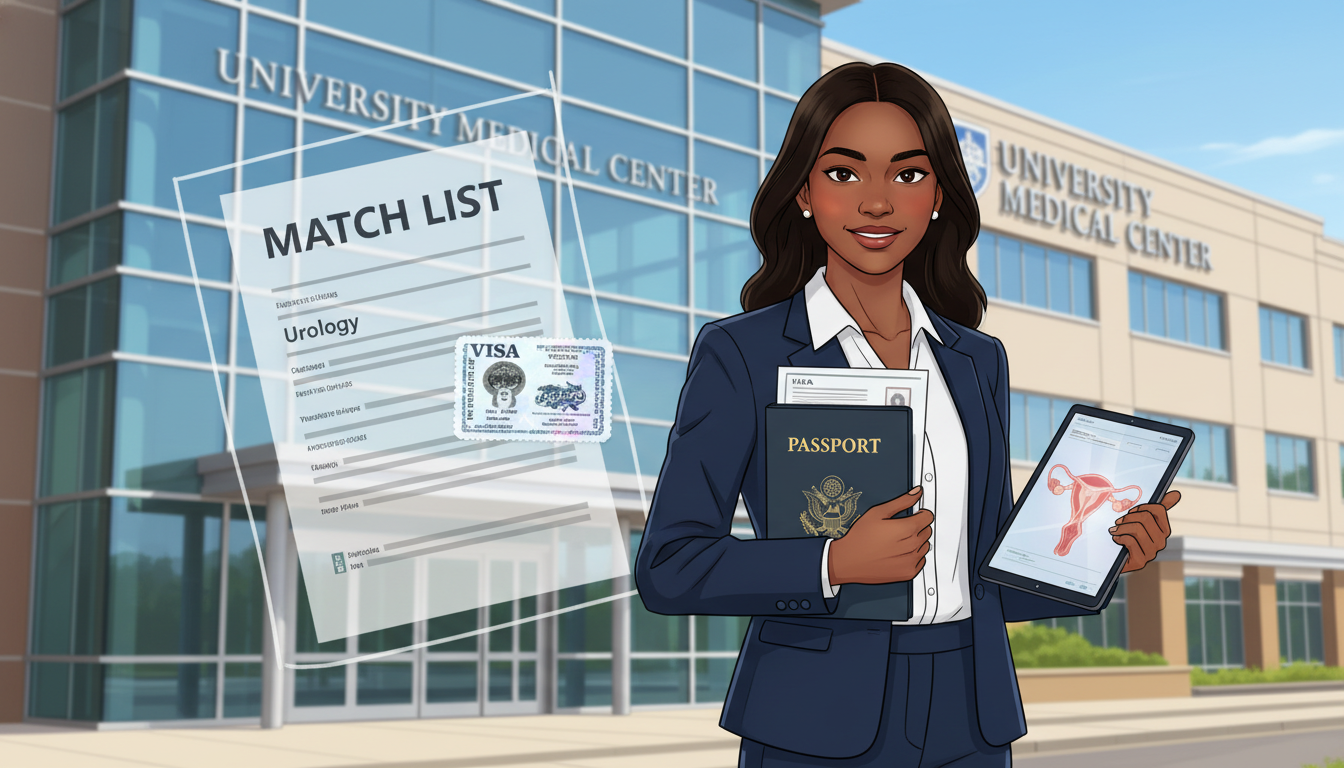
Visa navigation is one of the most confusing and high‑stakes parts of the residency journey for any international medical graduate (IMG). In the Washington DC, Maryland, and Virginia (DMV) region—home to federal agencies, major academic centers, and community programs—the rules, risks, and opportunities around visas are especially important to understand.
This IMG residency guide focuses on practical, DMV‑specific advice on residency visa options, with clear explanations of J‑1 vs H‑1B, timelines, and strategy so you can apply confidently and avoid preventable setbacks.
Understanding the Basics: Visa Status, ECFMG, and Match Timeline
Before comparing J‑1 vs H‑1B, you need to understand how visa issues fit into the residency application timeline and ECFMG requirements.
Key Definitions for IMGs
IMG (International Medical Graduate)
A physician who graduated from a medical school outside the U.S. or Canada, regardless of citizenship.ECFMG Certification
Required for IMGs to start residency. Involves:- Verified medical school credentials
- Passing the required USMLE/COMLEX exams (depending on pathway)
- Meeting additional ECFMG requirements in place at the time of application
Visa Sponsorship
Residency programs in DC, Maryland, and Virginia must decide whether they:- Sponsor H‑1B visas directly, or
- Accept residents on ECFMG‑sponsored J‑1 visas, or
- Accept both
Many DMV programs prefer J‑1 because it is standardized and handled centrally by ECFMG, while H‑1B sponsorship requires significant institutional effort and legal coordination.
Where Visa Fits in the Timeline
6–18 months before Match (ERAS season)
- Clarify your current immigration status
- Decide your preferred path: J‑1 vs H‑1B
- Shortlist programs in DC, Maryland, and Virginia based on visa policies
- Prepare documentation (passports, prior DS‑2019 or I‑20, exam scores, etc.)
During Interviews
- Ask programs specifically:
- “Do you sponsor H‑1B for residency?”
- “Do you accept only J‑1, or both?”
- “Have you previously matched IMGs on this visa type?”
- Ask programs specifically:
After Match (March–June)
- Coordinate with:
- Program’s GME office
- ECFMG (for J‑1 sponsorship)
- Employer’s or your own immigration attorney (for H‑1B)
- Prepare for visa appointments at U.S. consulates if you are abroad.
- Coordinate with:
Understanding this big picture helps you choose strategically instead of reacting late in the process.
Overview of Residency Visa Options for IMGs in the DMV Region
Although there are many U.S. visa classifications, only a few are commonly used for residency in DC/MD/VA.
1. J‑1 Exchange Visitor (Physician) – Sponsored by ECFMG
Most common visa for IMGs in residency nationwide, and also widely used in DMV residency programs.
Key Features:
- Sponsorship: ECFMG is the official visa sponsor, not the residency program.
- Purpose: Graduate medical education (residency/fellowship) with the intention of returning to your home country.
- Duration: Up to 7 years total in most cases (covers residency + many fellowships).
- Two‑Year Home Residency Requirement (INA 212(e)):
- After completing training, most J‑1 physicians must:
- Return to home country for 2 years, OR
- Obtain a J‑1 waiver (e.g., Conrad 30, federal programs) before changing to H‑1B or permanent residence in most cases.
- After completing training, most J‑1 physicians must:
2. H‑1B Temporary Worker (Specialty Occupation) – Employer Sponsored
Less common than J‑1 among residents, but important in the DMV region, especially in larger academic centers or programs familiar with IMG visa options.
Key Features:
- Sponsorship: The residency program (employer) files the H‑1B petition.
- Requirements for IMGs:
- Passed all required USMLE Steps/COMLEX equivalents including Step 3 (or COMLEX Level 3) before H‑1B filing.
- Eligible medical license/permit in the state (DC, Maryland, or Virginia).
- Duration: Typically up to 6 years (can be extended in certain green card pathways).
- No built‑in 2‑year home requirement like J‑1.
- Cap Exemption:
Many academic hospitals and some non‑profit institutions in the DMV are H‑1B cap‑exempt, meaning:- They can file anytime (not tied to the April lottery).
- No annual numerical limit for these specific positions.
3. Other Statuses Seen in DMV Programs
While not traditional “residency visas,” some IMGs already in the U.S. might hold:
- F‑1 (Student) with OPT or STEM OPT – Occasionally transitioning from U.S. graduate programs or MPH. You must change to J‑1 or H‑1B to start residency.
- Green Card / Permanent Resident – No need for residency visa; you apply as a U.S. person.
- U.S. Citizen / Dual Citizen – No visa issue, but still counted as IMG if med school is outside U.S./Canada.
- Other work visas (e.g., O‑1) – Rare at the residency level but sometimes possible for highly accomplished individuals; must be carefully coordinated with the program’s legal counsel.
However, in practical terms, your main comparison for DMV residency will almost always be J‑1 vs H‑1B.

J‑1 vs H‑1B for IMGs in DC/MD/VA: Detailed Comparison and Strategy
Choosing between J‑1 and H‑1B is one of the most strategic decisions for an international medical graduate. The DMV region—rich in both academic centers and underserved areas—offers distinct advantages and tradeoffs for each path.
Eligibility & Practical Requirements
J‑1 (ECFMG‑Sponsored)
- Requires:
- ECFMG certification
- Valid contract from an accredited residency program
- Sufficient financial support
- No disqualifying immigration history
- USMLE Step 3 is NOT required to start residency on a J‑1 visa.
H‑1B (Employer‑Sponsored)
- Requires:
- ECFMG certification (for foreign medical graduates)
- USMLE Step 3 passed before filing the petition
- State license/temporary training license in DC/MD/VA
- Employer willing and able to sponsor H‑1B
- Timing is critical:
If you want H‑1B for PGY‑1, you must:- Pass Step 3 early enough for the employer to file the petition and get approval before residency start date.
Program Policies in the DMV Region
DC, Maryland, and Virginia differ slightly in practice:
District of Columbia (DC) Residency Programs
- Several large academic centers and university‑affiliated hospitals.
- Many accept J‑1 as the default.
- Some sponsor H‑1B selectively for certain specialties or highly competitive candidates.
Maryland Residency Programs
- Home to major academic centers (e.g., in Baltimore) and community hospitals.
- Many are J‑1 friendly and accustomed to IMGs.
- Some academic institutions are H‑1B cap‑exempt and do sponsor H‑1B for residency and fellowship.
Virginia Residency Programs
- Mix of academic centers (e.g., in Charlottesville, Richmond, Norfolk) and community/regional hospitals.
- Many programs, especially in suburban or rural regions, are involved with J‑1 waiver/Conrad 30 recruitment later on—this makes them very familiar with J‑1 pathways.
- H‑1B sponsorship exists but may be more limited and competitive.
Always confirm current policy by:
- Checking program websites (visa section)
- Reviewing FREIDA and ERAS program descriptions
- Asking directly during interviews or via email:
- “Do you sponsor H‑1B visas for incoming residents?”
- “Have you recently had H‑1B residents, and in which specialties/years?”
Training Experience & Flexibility
In terms of clinical training, both visas allow you to function as a resident or fellow. Differences arise in future flexibility:
J‑1 Pros:
- Commonly accepted; more programs available to you.
- Centralized process through ECFMG; programs are often very familiar with the steps.
- Easier to transition from residency to fellowship (J‑1 to J‑1) within the 7‑year limit.
J‑1 Cons:
- Two‑year home residency requirement after training unless:
- You secure a J‑1 waiver job, OR
- You qualify for another limited exception (e.g., hardship, persecution waivers).
- Fellowship timing and total training length must fit within J‑1 maximum duration.
H‑1B Pros:
- No automatic 2‑year home requirement.
- Often seen as more straightforward when transitioning to:
- Long‑term H‑1B employment in DMV region or elsewhere
- Employment‑based green card pathways.
- Helpful if you want flexibility to work in certain high‑specialty or urban jobs that may not offer J‑1 waivers.
H‑1B Cons:
- Fewer programs are willing to sponsor; your target list shrinks.
- Must have Step 3 passed early—a bottleneck for many IMGs.
- More legal and administrative complexity for the program; some simply refuse H‑1B for residents.
- In some cases, fellowship H‑1B sponsorship may be more limited than J‑1.
Long‑Term Career Impact in the DMV Region
The DMV region is rich with J‑1 waiver opportunities and federal agencies, which influences your strategy.
If you train on J‑1:
- After residency/fellowship, you will likely need a J‑1 waiver job to stay in the U.S. without returning home for 2 years.
- Common pathways:
- Conrad 30 waivers in:
- Maryland
- Virginia
- (Note: DC has its own waiver processes but fewer total slots than entire states.)
- Federal J‑1 waiver programs (e.g., VA, HHS, ARC, DRA, etc.)—some based in or near the DMV.
- Conrad 30 waivers in:
- Many waiver jobs are in underserved, rural, or semi‑urban areas, though some are within commutable distance of DC or major cities.
If you train on H‑1B:
- You can usually transition to:
- H‑1B hospital or group positions (many in the DMV), or
- Immigration‑friendly employers who sponsor green cards.
- Some employers in the DMV may still prefer candidates with waiver obligations satisfied (for J‑1) or those who do not require employer sponsorship (green card holders), but H‑1B physicians remain in high demand.
Strategic takeaway:
In the DMV region, both J‑1 and H‑1B can lead to long‑term careers, but they follow different early‑career routes. J‑1 often involves a structured waiver job step; H‑1B may offer more direct transitions to long‑term positions and permanent residency.
Step‑by‑Step: How to Navigate Visa Choices as an IMG Targeting DC/MD/VA
This section turns the concepts into a usable action plan.
Step 1: Assess Your Profile and Constraints
Ask yourself:
Citizenship & Current Status
- Are you currently abroad or in the U.S.?
- Are you on F‑1, J‑1 research, other status, or no U.S. status yet?
USMLE/COMLEX Progress
- Have you passed USMLE Step 3 (or COMLEX Level 3)?
- If not, can you realistically pass it before programs would need to file H‑1B?
Career Goals
- Do you plan to:
- Settle long‑term in the U.S.?
- Return to your home country eventually?
- Work in academia vs community vs underserved/rural areas?
- Do you plan to:
Flexibility on Location After Training
- Are you open to J‑1 waiver service in Maryland or Virginia (which may be outside major metro areas)?
- Or do you strongly prefer to stay near DC/urban centers immediately?
Your answers shape whether J‑1 or H‑1B is more realistic and aligned with your goals.
Step 2: Build a DMV‑Focused Program List Based on Visa Policies
As you research DC, Maryland, and Virginia residency programs:
Categorize programs into:
- J‑1 only
- Both J‑1 and H‑1B
- Rare cases: H‑1B only (uncommon for residency)
Use:
- Program websites (section on “International Medical Graduates” or “Visa Sponsorship”)
- FREIDA filters for visa sponsorship
- Email program coordinators if unclear
Example:
An IMG targeting Internal Medicine in the DMV might organize:
- Tier A: Programs that sponsor H‑1B and are IMG‑friendly
- Tier B: Programs that accept J‑1 only but have strong fellowship pathways in the region
- Tier C: Programs uncertain or silent about IMGs/visas (need direct confirmation)
Apply broadly within the DMV region, but anchor your expectations:
- If Step 3 is pending or tight on time → lean more heavily on J‑1 programs.
- If you’re already Step 3‑certified → you can prioritize H‑1B‑friendly programs but still add J‑1 options as backup.
Step 3: Communicate Clearly During Applications and Interviews
In ERAS and during interviews:
- Be honest and consistent about your visa needs.
- If open to both:
“I am open to either ECFMG‑sponsored J‑1 or employer‑sponsored H‑1B, depending on your institutional policy.” - If you strongly prefer H‑1B (and meet requirements):
- Mention that you have already passed Step 3.
- Ask early in the season whether they are truly willing to sponsor H‑1B.
Step 4: After Match – Operational Steps for J‑1 vs H‑1B
If matched with J‑1 sponsorship:
- Coordinate with GME office and ECFMG.
- Submit:
- DS‑2019 application
- Proof of funding, contract, and required documents
- Schedule your visa interview at a U.S. consulate (if outside U.S.).
- Enter the U.S. with your J‑1 visa and DS‑2019 and attend orientation as directed.
If matched with H‑1B sponsorship:
- Program’s HR/legal team begins the H‑1B petition process.
- You provide:
- ECFMG certification
- USMLE Step 3 results
- Medical degree and transcripts
- License or training permit approvals from DC/MD/VA board
- Prior immigration history documents
- USCIS must approve the H‑1B petition.
- If abroad, you then obtain the H‑1B visa stamp at a consulate and enter the U.S.
Timeliness is critical; answer emails from GME and legal offices promptly.

J‑1 Waivers, Post‑Residency Options, and Long‑Term Planning in DMV
For many IMGs, residency is only the first phase of visa navigation. Thinking ahead—especially in a region like DC/MD/VA—helps you avoid dead‑ends.
J‑1 Waivers: How They Work
If you train on a J‑1 and want to stay in the U.S. without returning home for 2 years, you typically pursue a J‑1 waiver job.
Common paths:
Conrad 30 State Waivers (Maryland and Virginia)
- Each state can recommend up to 30 J‑1 physicians per year for waivers.
- Usually require:
- Employment in a Health Professional Shortage Area (HPSA) or Medically Underserved Area/Population (MUA/P).
- A 3‑year full‑time service contract.
- Specialties:
- Many slots are for primary care and psychiatry, though some states accept specialists.
- Timing:
- Applications generally open once per year with deadlines—plan during late residency.
Federal Waiver Programs
- Examples:
- U.S. Department of Health and Human Services (HHS)
- Veterans Affairs (VA)
- Appalachian Regional Commission (ARC), Delta Regional Authority (DRA), etc.
- Some positions in or near the DMV region may qualify.
- Examples:
Interested Government Agency (IGA) Waivers
- Certain federal agencies based in DC can sponsor waivers for physicians involved in research or care that serves specific federal interests.
After the waiver is granted and status changed from J‑1 to H‑1B, you typically:
- Work the required 3 years in that role.
- Then you can pursue permanent residency (green card) or other long‑term plans.
Post‑Residency Path on H‑1B
If you trained on H‑1B:
- You may transition directly:
- From H‑1B residency to H‑1B employment in a hospital, practice, or academic job.
- To an H‑1B fellowship if your institution sponsors it.
- Many employers in the DMV:
- Are accustomed to filing employment‑based green cards for physicians.
- Appreciate the lack of J‑1 waiver obligation.
You still must be mindful of total H‑1B time limits (commonly 6 years, with exceptions if green card is in process), but you avoid the 2‑year home requirement entirely.
Choosing Your Long‑Term Path as an IMG in DC/MD/VA
Ask yourself early in residency:
- “Am I open to practicing in underserved areas of Maryland or Virginia for 3 years?”
- If yes, J‑1 with a waiver can be a structured and realistic path.
- “Do I strongly want academic or subspecialty work in the DC metro area?”
- Both J‑1 (with strategic waivers) and H‑1B can work, but H‑1B may offer more direct transitions in certain high‑specialty roles.
Stay in communication with:
- Your program director and GME office
- Institutional immigration attorneys
- Mentors who previously navigated J‑1 waivers or H‑1B transitions in the DMV region
Practical Tips and Common Pitfalls for IMGs Targeting the DMV Region
Practical Tips
Start Visa Planning Early
- Treat visa strategy as part of your overall residency application plan, not an afterthought.
- Decide early if you will aim for Step 3 before Match to keep H‑1B options open.
Document Everything
- Keep organized copies (digital and physical) of:
- Passports
- Previous visas and DS‑2019/I‑20 forms
- USMLE scores
- ECFMG certificate
- Employment/observership documents
- Keep organized copies (digital and physical) of:
Communicate Clearly with Programs
- Don’t wait until March to clarify whether a program supports your visa type.
- A polite, concise email pre‑ or post‑interview is appropriate.
Leverage Regional Strengths
- DMV region has:
- Strong academic centers: good for H‑1B cap‑exempt roles and fellowships.
- Multiple states (MD and VA) participating in Conrad 30 waivers: beneficial for J‑1 physicians.
- Federal agencies: unique research and public health roles where prior DC training is attractive.
- DMV region has:
Common Pitfalls to Avoid
Assuming all IMG‑friendly programs sponsor H‑1B
Many IMG‑heavy programs are J‑1 only. Always confirm.Delaying Step 3 if you strongly want H‑1B
Without Step 3, your H‑1B options shrink dramatically at the residency level.Not understanding the 2‑year home requirement on J‑1
It influences your post‑residency and fellowship planning; don’t ignore it until graduation.Ignoring state‑specific rules
Licensing, training permits, and Conrad 30 policies differ slightly between DC, Maryland, and Virginia; always check official board and state websites.Relying solely on informal advice or social media
Use peers’ experiences as context, but final decisions should be guided by official policies and, when needed, a qualified immigration attorney.
FAQs: Visa Navigation for IMGs in DC/MD/VA Residency Programs
1. Is it easier to match into DC residency programs on J‑1 or H‑1B as an IMG?
Most DC residency programs that accept IMGs are more comfortable with J‑1, as it is standardized through ECFMG. H‑1B positions exist but are more limited and often more competitive. If you want to maximize your chances of matching in DC, being open to J‑1 usually helps, while still applying to H‑1B‑friendly programs if you qualify.
2. If I match into a Maryland or Virginia residency on J‑1, can I still do fellowship in the DMV region?
Yes. Many IMGs complete residency and fellowship on J‑1 within the allowed duration (often up to 7 years). You must ensure that:
- The combined length of residency + fellowship fits within ECFMG’s permissible timeline.
- Each fellowship program also accepts and supports J‑1 physicians.
After fellowship, you would generally seek a J‑1 waiver job in Maryland, Virginia, or another state if you plan to remain in the U.S.
3. Do I need a lawyer to handle my residency visa as an IMG?
For most J‑1 residents, ECFMG and the institution’s GME office guide you through the process; many IMGs complete residency on J‑1 without a personal attorney. For H‑1B, the employer’s immigration counsel usually handles filings. You may consider your own immigration lawyer if:
- You have complex immigration history, prior denials, or status violations.
- You want a detailed long‑term strategy (green card, waiver options, etc.).
It’s not mandatory, but can be very helpful in complex cases.
4. Which is better for long‑term U.S. career in the DMV region: J‑1 or H‑1B?
Neither is universally “better”; it depends on your profile and goals:
- J‑1:
- More widely accepted for residency and fellowship.
- Requires a 2‑year home return or waiver, but DMV states offer solid J‑1 waiver opportunities.
- H‑1B:
- Fewer residency options, but easier long‑term path toward employment and green card without a waiver obligation.
In the DMV region, both can lead to stable, long‑term careers if you plan strategically. Your exam timeline (especially Step 3), openness to waiver service, and career vision should drive the choice.
- Fewer residency options, but easier long‑term path toward employment and green card without a waiver obligation.
By understanding your IMG visa options, especially the tradeoffs between J‑1 vs H‑1B, and how they operate specifically within DC, Maryland, and Virginia residency programs, you can design a realistic and powerful strategy for your training and long‑term medical career in the U.S.