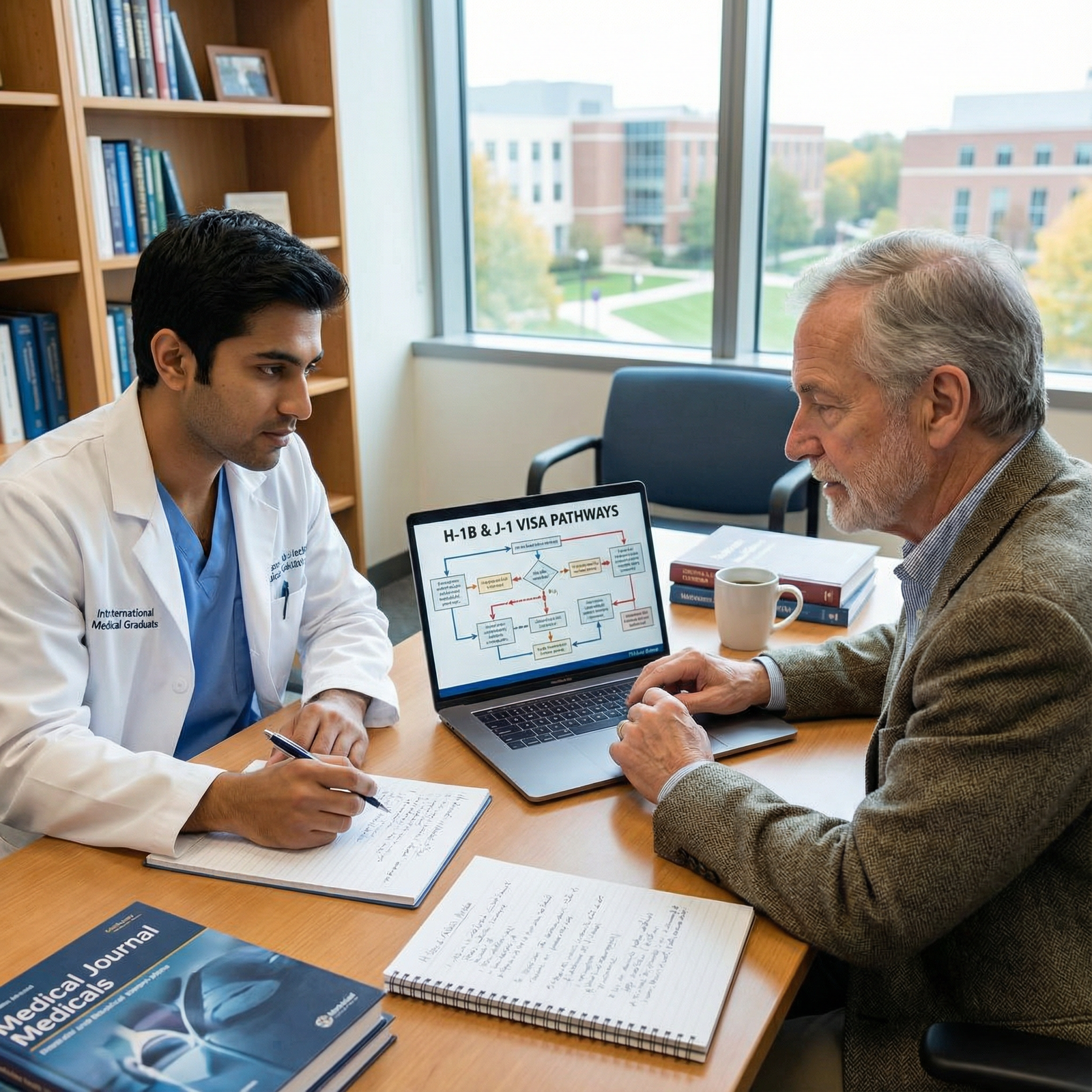
Understanding the Landscape: Internal Medicine, J-1 Visas, and the Border Region
For international medical graduates (IMGs) pursuing internal medicine residency in the United States, the US–Mexico border region—especially Texas border residency programs—offers unique opportunities tied closely to J-1 waiver pathways. Many internal medicine residency graduates who train or work in these areas ultimately secure a Conrad 30 or other underserved area waiver, allowing them to remain in the U.S. beyond their J-1 visa period.
This guide focuses on J-1 waiver strategies specifically for internal medicine (IM) applicants targeting or graduating from border region residency programs (primarily in Texas, but also applicable to New Mexico, Arizona, and California border areas). You’ll learn:
- How J-1 visas and waivers actually work for IMGs
- Why the US–Mexico border region is strategically important for your IM match and waiver options
- How to plan during residency for a successful waiver job
- Practical steps to secure a waiver in Texas and neighboring border states
- Common pitfalls and FAQs
The goal is to help you think several years ahead: from internal medicine residency → J-1 waiver job → long-term immigration strategy (e.g., H-1B, permanent residency) in a realistic, structured way.
J-1 Waiver Basics for Internal Medicine Residents
Before getting into border-specific strategies, it’s crucial to understand the fundamentals of J-1 waiver options for IMGs who complete an internal medicine residency in the U.S.
What is the J-1 Requirement?
Most IMGs who train in ACGME-accredited IM programs use an ECFMG-sponsored J-1 visa. By law, J-1 physicians must:
- Return to their home country for at least two years after training
or - Obtain a waiver of this home-residency requirement by working in a qualifying setting (usually in an underserved area).
Core J-1 Waiver Options Relevant to Internal Medicine
For an internal medicine resident, the most commonly used waiver pathways are:
Conrad 30 Waiver (State Program)
- Each state can sponsor up to 30 J-1 waivers per year.
- Most states—including Texas, New Mexico, Arizona, and California—allocate many of these for primary care and general internal medicine.
- Typically requires:
- A 3-year, full-time employment contract (usually 40 hours/week).
- Work in a Health Professional Shortage Area (HPSA) or Medically Underserved Area/Population (MUA/P), or otherwise underserved as defined by the state.
- You convert from J-1 to H-1B (or occasionally O-1) with the sponsoring employer.
Federal Agency Waivers
- Examples: VA, HHS, ARC (Appalachian), DRA (Delta Regional), DHS, etc.
- Some are not very applicable to the border region; however, HHS Clinical Waiver can sometimes be relevant if the position is in a high-need area and meets strict criteria.
- Tend to favor primary care and high-shortage areas; internal medicine hospitalist and outpatient roles sometimes qualify.
Hardship or Persecution Waivers
- Based on extreme hardship to U.S. citizen or permanent resident spouse/child, or fear of persecution if you return home.
- Complex, legal-evidence-heavy, and typically not the main planning pathway during residency.
For strategic planning around Texas border residency or other border region residency programs, Conrad 30 and certain HHS waivers are the main focus.
Why the US–Mexico Border Region is Strategically Important
The US–Mexico border region has a high density of communities that meet federal definitions of “underserved”, making it a strong fit for J-1 waiver jobs—especially in internal medicine.
Key Characteristics of the Border Region
- High proportion of HPSA/MUA areas
Many border counties and cities (e.g., in the Rio Grande Valley, Laredo area, El Paso region, and rural New Mexico/Arizona) qualify as shortage areas. - Persistent physician shortages in primary care and internal medicine
Clinics and hospitals often struggle to recruit and retain internal medicine physicians. - Medically and culturally complex populations
Large Spanish-speaking populations, high prevalence of chronic disease (diabetes, hypertension), and limited access to specialty care.
This combination makes the region a natural fit for many Conrad 30 and underserved area waiver placements. States actively encourage IMGs to consider working here after training.
How This Links to Internal Medicine Residency
For the IM match process, a border region internal medicine residency gives you advantages:
Early networking with waiver-eligible employers
- Many community clinics, hospitalist groups, and FQHCs in border areas are used to hiring J-1 waiver physicians.
- They know the paperwork, deadlines, and expectations.
Demonstrated commitment to underserved populations
- Having trained in a Texas border residency or similar program signals to future employers and state waiver committees that you are serious about serving these communities.
Language and cultural familiarity
- Workplace Spanish and understanding of cross-border healthcare issues are valuable; you can build these skills during residency.
Higher likelihood of IM job offers in shortage areas
- Border region employers often recruit from local residency programs first, especially for internal medicine roles (outpatient IM, hospitalist, hybrid positions).

Planning During Residency: Step-by-Step J-1 Waiver Strategy
To maximize your odds of success, you should treat your J-1 waiver strategy as a multi-year project starting early in residency.
Step 1: Know Your Timeline and Deadlines
Key milestones for a typical 3-year internal medicine residency (PGY1–PGY3):
PGY1
- Learn the basics: J-1 rules, what a J-1 waiver is, differences between Conrad 30 programs by state.
- Start asking upper-year residents how they found their waiver positions.
PGY2 (early–mid)
- Begin exploring where you might want to work (state, region, type of practice).
- Understand the Conrad 30 application cycle for your target states:
- Some open on October 1 and fill quickly (often within weeks).
- Some accept applications on a rolling basis until 30 slots are filled.
- Some prioritize primary care or rural locations, but may include hospitalist or subspecialty IM positions.
PGY2 (late) to PGY3 (early)
- Start applying for waiver-eligible jobs (12–18 months before graduation is typical).
- Negotiate contracts that fulfill state requirements (3-year term, full-time, correct site designation).
PGY3 (early–mid)
- File Conrad 30 or federal waiver applications via your employer and attorney.
- Once approved by the state/federal entity, file with USCIS to change status to H-1B.
Working backward from your graduation date ensures you’re not scrambling at the last minute when many waiver slots may already be taken.
Step 2: Learn the State Differences—Especially in the Border Region
For IMGs targeting the US–Mexico border region, you’ll mainly be considering:
- Texas
- New Mexico
- Arizona
- California
Each state has its own priorities and rules for Conrad 30:
- Some may reserve a percentage for primary care, including general internal medicine.
- Others may allow a larger portion for hospitalists or specialists.
- Some prioritize rural over urban HPSA areas.
- Application windows and required documents differ.
For example (illustrative, exact rules change frequently):
Texas Conrad 30 may:
- Strongly favor primary care, including outpatient internal medicine.
- Accept hospitalists if they are in qualifying locations and meet need criteria.
- Require evidence of recruitment efforts and service to underserved populations.
New Mexico or Arizona Conrad 30 may:
- Allow a mix of primary care and some specialties.
- Have slightly different scoring or priority systems for rural vs. urban.
Action item: Early in PGY2, download and carefully review the current-year guidelines for Conrad 30 programs in each target state. Then adjust your job search:
- If a state heavily prefers outpatient IM: focus on clinic-based opportunities or hybrid roles.
- If hospitalist roles are common waivers in that state: broaden your search to border-region hospitals.
Step 3: Align Your Career Interests with Waiver Realities
Not every internal medicine pathway has equal waiver potential. Consider:
High waiver potential
- Outpatient internal medicine in FQHCs, RHCs, county clinics, or community health centers in HPSA/MUA areas.
- Hospitalist positions in border hospitals located in designated shortage areas.
- Hybrid IM roles that combine inpatient and outpatient in underserved communities.
More challenging (but sometimes possible)
- Pure subspecialty IM (e.g., cardiology, GI) right after fellowship, especially in non-rural urban settings.
- Very large metropolitan areas that are not underserved.
If your dream is academic subspecialty practice in a major city, you may need a two-stage strategy:
- Work your 3-year J-1 waiver commitment in a border region underserved area (e.g., hospitalist or outpatient IM in a Texas border county).
- After completing the waiver, transition to academic or subspecialty roles elsewhere on H-1B or green card.
Step 4: Leverage Your Border Region Residency Networks
If you match into an internal medicine residency in the US–Mexico border region, you gain strategic advantages:
Attendings and alumni are often former J-1s
- Ask them:
- How they found their waiver job
- Which employers are reliable with immigration processes
- Which states are IMG-friendly
- Ask them:
Local employer familiarity
- Border FQHCs and hospitals recruit residents from nearby programs.
- Many already have J-1 waiver physicians on staff, so they understand the process and deadlines.
Letters of support
- Residency program leadership can often provide letters describing your work with underserved populations and language skills—helpful for state waiver applications.
Step 5: Understand Contract and Immigration Details Early
Work with a qualified immigration attorney (ideally one with J-1 physician experience in Texas or other border states) before signing any contract. Key items:
- Contract length: Minimum 3 years of full-time work.
- Site designation: Must be at an eligible facility (HPSA/MUA or state-accepted exception).
- Job description: Match what is presented in the waiver application (outpatient vs inpatient, clinic locations).
- Non-compete clauses: Could severely limit your options after the 3-year commitment; negotiate carefully.
- H-1B sponsorship: The employer must be willing to sponsor and pay for the H-1B petition and J-1 waiver processing.
Texas Border Residency and Other Border States: Practical Job Search Strategies
Once you’re progressing through PGY2 and PGY3, you’ll need concrete steps to secure a position that can support your J-1 waiver.
Targeting Employers in the Border Region
Focus on employers that:
- Are in or near HPSA/MUA-designated areas (many along the US–Mexico border).
- Have a history of employing J-1 waiver physicians.
- Offer internal medicine roles matching your interests: outpatient, hospitalist, or hybrid.
Examples of common employers:
- Federally Qualified Health Centers (FQHCs) serving border communities.
- County or public hospitals in border counties.
- Non-profit community clinics with chronic disease management programs.
- Regional hospitals with high Medicaid/uninsured populations.
For a Texas border residency graduate, likely regions include:
- Rio Grande Valley (McAllen, Brownsville, Harlingen, Edinburg, etc.)
- Laredo area
- El Paso and surrounding areas
- Smaller border towns in West or South Texas
Each area may have multiple clinics and hospitals that regularly recruit IMGs with J-1 waivers.
Application Tactics for J-1 Waiver Positions
Start early (PGY2 late / PGY3 early)
- Employers and states know J-1 timelines; some positions are advertised as “J-1 waiver eligible.”
- Let recruiters know up front that you are on a J-1 and will need a Conrad 30 or equivalent waiver.
Use Residency Connections
- Ask program faculty and recent graduates for introductions to known employers.
- Attend regional job fairs and conferences that include FQHCs and community hospitals.
Read job postings carefully
- Look for phrases like:
- “J-1 waiver candidates welcome”
- “HPSA-designated site”
- “Conrad 30 eligible”
- If not clearly stated, ask the recruiter:
- “Is your site in a HPSA/MUA, and do you sponsor J-1 waiver positions?”
- Look for phrases like:
Be flexible on geography within the border region
- You may need to consider smaller or more rural locations to maximize waiver chances.
- Working in a very underserved town for three years can open many doors later.
Highlight relevant strengths in your CV and interviews
- Experience serving Spanish-speaking or uninsured populations.
- Research or QI projects on chronic diseases prevalent in border communities.
- Any community outreach, migrant health, or public health work.
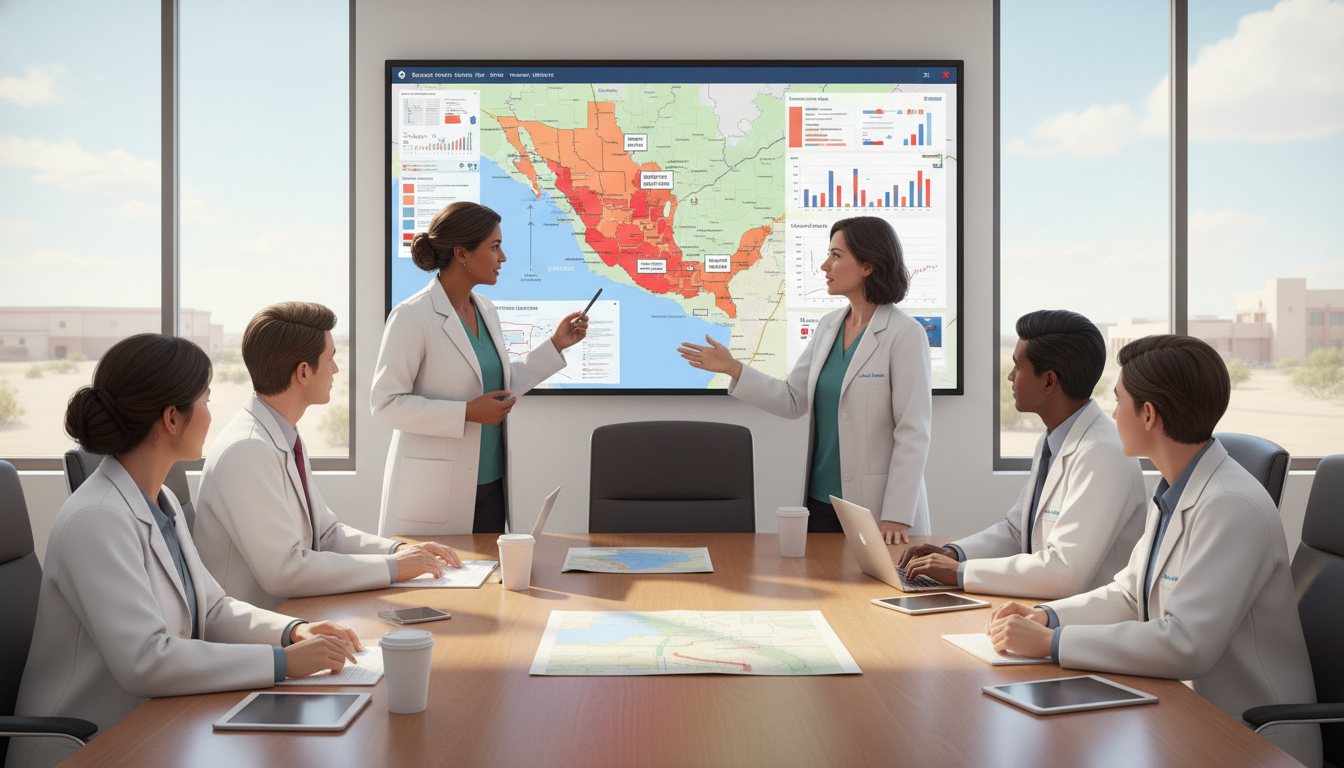
Long-Term Strategy: Beyond the J-1 Waiver
Your J-1 waiver job is a critical 3-year commitment, but it should also fit into a longer-term immigration and career plan.
Typical Post-Residency Pathway for IMGs in the Border Region
- Complete Internal Medicine Residency (often in a border region program).
- Secure J-1 Waiver Job in an underserved border community (via Conrad 30 or other waiver).
- Work for 3 Years under waiver commitment on H-1B:
- Build clinical reputation.
- Strengthen ties with community and employer.
- Pursue Permanent Residency (Green Card):
- Common routes:
- EB-2 PERM (employer-sponsored labor certification).
- EB-2 NIW (National Interest Waiver), especially if you have a strong record of service in underserved areas.
- Many IMGs in border communities have successfully used EB-2 NIW based on healthcare service to shortage areas.
- Common routes:
- After completing both:
- J-1 waiver commitment
- Green card process (or stable H-1B)
→ You have much more flexibility to move, subspecialize, or pursue academic roles.
Using Border Work to Support an NIW Case
If you’re thinking long-term about an NIW (National Interest Waiver):
- Document:
- Service to high-need patient populations in HPSA or MUA areas.
- Leadership in quality improvement, chronic disease management, or community health initiatives.
- Any data showing impact: reduced hospitalizations, improved control of diabetes/hypertension, etc.
- Collaborate:
- Work with your employer’s quality team.
- Publish or present any impactful projects at conferences or in journals.
Your time in a border region residency plus your J-1 waiver job in an underserved border area can form a coherent narrative of national interest service in internal medicine.
Avoiding Common Pitfalls
- Waiting too long to job search
- Many Conrad 30 slots fill quickly. Late PGY3 job hunting is risky.
- Assuming all hospitalist jobs qualify
- Some states or locations do not accept hospitalist roles; confirm with state guidance.
- Signing a contract without legal review
- Restrictive non-competes or unclear site designations can cause long-term problems.
- Not meeting full-time requirements
- Waiver positions must be full-time; any reduction can jeopardize status.
- Changing jobs before finishing 3 years
- Very risky without formal, approved transfers and legal guidance.
FAQs: Internal Medicine, J-1 Waivers, and the US–Mexico Border Region
1. Do I need to train in a border region residency program to get a J-1 waiver job there?
No, it’s not mandatory, but it’s highly beneficial. Training in a Texas border residency or other border region residency gives you:
- Strong local contacts with employers who regularly sponsor waivers.
- Familiarity with the patient population and healthcare challenges.
- A powerful narrative when states evaluate your commitment to underserved communities.
However, many IMGs who train elsewhere still obtain Conrad 30 or underserved area waiver positions in border areas, especially if they have language skills, relevant experience, and start their job search early.
2. Can internal medicine hospitalists get Conrad 30 waivers in the border region?
Often yes, but it depends on the state and specific year’s rules. Some key points:
- Texas and other border states may allow hospitalist positions if they are in HPSA/MUA areas and serve critical needs.
- Outpatient internal medicine often has higher priority in some states, but hospitalist roles are increasingly recognized as essential.
- Confirm with the state Conrad 30 program guidelines and involve an experienced immigration attorney before assuming a hospitalist job is waiver-eligible.
3. What if I want to subspecialize after my internal medicine residency?
You have several options:
- Subspecialize first, then seek a waiver job
- If you do a fellowship on J-1, you still need a waiver afterward; subspecialty positions can be harder to find in underserved areas.
- Complete a 3-year waiver job as a general internist or hospitalist first
- After completing your waiver and immigration process, you can pursue fellowship on a different visa or as a permanent resident.
- Hybrid strategy
- Some IMGs accept waiver jobs that allow them to maintain or build subspecialty-relevant skills during their 3-year commitment (e.g., hospitalist roles with significant cardiology exposure).
The key is to be realistic: general internal medicine roles in underserved border areas are often easier to obtain for waiver purposes than pure subspecialty posts.
4. How competitive are J-1 waiver slots in Texas and other border states?
Competition varies by year, but consider:
- Texas is a large and popular state; Conrad 30 slots can fill quickly, but the state also has many underserved areas and employers.
- Some border states may not use all 30 slots every year, particularly if recruitment is challenging, which can favor committed IMGs willing to work in remote locations.
- Internal medicine physicians—especially those with Spanish skills and genuine interest in underserved populations—tend to be very attractive candidates for border-region employers.
Starting early, targeting employers strategically, and aligning your goals with state priorities will significantly improve your chances.
By understanding the interplay between internal medicine residency, IM match decisions, and J-1 waiver options in the US–Mexico border region, you can design a realistic path that serves both your career goals and the communities that need you most. The earlier you start planning—and the more you leverage border-region training, networks, and experience—the stronger your position will be when it’s time to secure your J-1 waiver job.