
Understanding the J-1 Landscape for Family Medicine in the US–Mexico Border Region
The US–Mexico border region—especially South Texas, El Paso region, and parts of Arizona and New Mexico—offers unique opportunities for international medical graduates (IMGs) pursuing family medicine residency and long-term practice in the United States. For many IMGs, the central challenge is navigating the J-1 visa and identifying realistic strategies to remain in the U.S. after training.
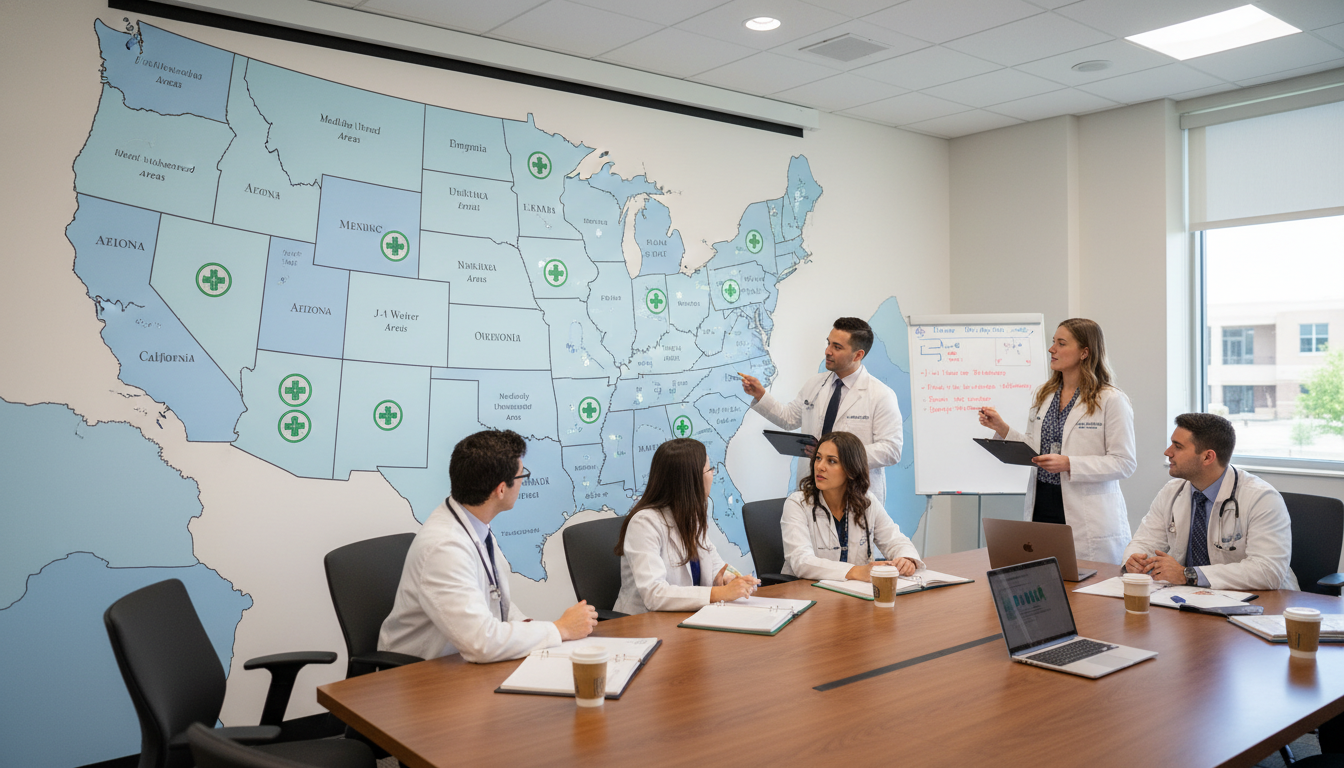
If you are targeting a family medicine residency in a Texas border residency or other border-region programs, understanding J-1 waiver pathways is not optional—it is strategic. These areas are heavily designated as Health Professional Shortage Areas (HPSAs) and Medically Underserved Areas/Populations (MUAs/MUPs), which means they frequently qualify for key waiver mechanisms such as the Conrad 30 program and other underserved area waiver options.
This guide walks you through:
- How the J-1 visa works in the context of family medicine residency
- Why border region residency programs are uniquely aligned with waiver opportunities
- Practical strategies to position yourself for the FM match with a long-term waiver plan
- Detailed breakdown of the Conrad 30 and other J-1 waiver options
- Timelines, pitfalls, and actionable tips specifically for the US–Mexico border region
J-1 Visa Basics for Family Medicine Residents
Before talking strategy, you need a firm foundation on what the J-1 visa implies for your future plans.
What is a J-1 Visa for Graduate Medical Education?
Most IMGs in US residency training hold either:
- J-1 exchange visitor visa (sponsored by ECFMG), or
- H-1B temporary worker visa (sponsored by the residency program/employer).
For family medicine residency, particularly in the US–Mexico border region, J-1 is more common for several reasons:
- Many community-based and safety-net programs have longstanding J-1 relationships with ECFMG.
- Some border-region residencies do not have the funding or institutional support required to sponsor H-1B visas.
- J-1 remains administratively simpler for many hospitals and schools of medicine.
The Two-Year Home Residency Requirement
The critical legal element is the “two-year home-country physical presence requirement” under INA §212(e). After J-1 training, you must:
- Return to your home country (or country of last permanent residence) for an aggregate of two years,
OR - Obtain a waiver of this requirement through one of several mechanisms.
Without a J-1 waiver, you generally cannot:
- Get an H-1B or L-1 visa
- Adjust status to permanent resident (green card) in the U.S.
Why Family Medicine and Border Areas Fit Well with J-1 Waiver Goals
Family medicine is strategically aligned with most J-1 waiver pathways because:
- Waiver programs are heavily focused on primary care shortage areas.
- Border counties along the Rio Grande Valley, Laredo, El Paso, and parts of Arizona/New Mexico are frequently designated as HPSAs/MUAs.
- State health departments prioritize physicians willing to serve high-need populations—precisely what family medicine excels at.
In other words, choosing family medicine residency in a border region is not just about training—it is a built-in alignment with post-residency waiver opportunities.
Why Border Region Family Medicine Residencies Are Strategic for J-1 Waivers
If your long-term career plan involves staying in the U.S. after residency, where you train can significantly impact your waiver prospects. For IMGs, the relationship between border region residency and the FM match is more than geographic—it is strategic.
1. High Concentration of Underserved Area Designations
The US–Mexico border region includes multiple counties and communities designated as:
- Health Professional Shortage Areas (HPSAs)
- Medically Underserved Areas/Populations (MUAs/MUPs)
- Rural or frontier communities
These designations are central to multiple waiver programs (especially Conrad 30 and federal shortage area waivers). Texas border residency programs and neighboring states’ border residencies are often located in or closely affiliated with such areas.
Practical impact:
Training in a location that naturally leads to employment offers from nearby clinics/hospitals with HPSA/MUA status gives you a structural advantage when seeking a waiver job.
2. Employer Familiarity with J-1 Waiver Processes
Hospitals and clinics in border communities:
- Routinely rely on IMGs to staff family medicine, pediatrics, internal medicine, and OB care.
- Often have legal counsel or HR teams experienced in Conrad 30 and other waivers.
- May have “template” waiver job offers and established relationships with state health departments.
You are not fighting to educate the employer about the process; instead, you are plugging into a system that already knows:
- The timelines for filing
- The need for three-year service commitments
- Documentation and recruitment requirements
3. Strong Alignment with Mission-Driven, Community-Oriented Training
Family medicine programs in border communities often emphasize:
- Cultural and linguistic competency (especially Spanish)
- Caring for uninsured or underinsured populations
- Migrant health, border-crossing populations, and chronic disease in high-risk groups
The same factors that make you successful and valued in these residencies also make you highly competitive for:
- Conrad 30 waivers in border states
- Federally Qualified Health Center (FQHC) positions that qualify for underserved area waivers
- Long-term roles in community-based family medicine
4. Strategic Networking for Post-Residency Jobs
Many border region residencies have:
- Clinical tracks or rotations in rural or border-adjacent clinics
- Graduate networks (former residents) currently on waiver positions
- Program directors and faculty deeply connected with regional employers
You can use residency years to:
- Build relationships with potential waiver employers
- Understand which clinics regularly sponsor J-1 waivers
- Learn from recent graduates who successfully navigated the J-1 waiver process
Example:
A PGY-2 in a Texas border residency may rotate at a critical access hospital 60 miles from the border. The hospital already employs two former residents on Conrad 30 waivers. This setting is a high-yield environment for you to secure a waiver job and start paperwork early in PGY-3.
Core J-1 Waiver Pathways Relevant to Border Region Family Medicine
There are multiple potential J-1 waiver pathways, but some are far more realistic for family medicine residents in border regions. Understanding each route early in residency helps you make informed decisions about job search and timing.
1. Conrad 30 Program (State-Based Waiver)
What it is:
Each U.S. state (and some territories) can sponsor up to 30 J-1 waiver physicians per year under the Conrad 30 program. These are usually prioritized for:
- Primary care specialties (family medicine, internal medicine, pediatrics, psychiatry, OB/Gyn)
- Practice sites in HPSAs/MUAs/MUPs or designated flex slots
For US–Mexico border-focused FM graduates, important states include:
- Texas (especially Rio Grande Valley, Laredo, El Paso region)
- New Mexico
- Arizona
- California (for Imperial County and other border communities)
General requirements (varies by state):
- Full-time employment (typically 40 hours/week) for three years
- Work in a qualifying underserved area (or flex slot)
- Evidence of recruitment efforts for U.S. physicians
- Valid, unexpired J-1 status and completion of training
- No objection from your home government (if applicable)
Why it’s powerful for border region family medicine:
- Strong demand for primary care physicians
- Many border sites are longstanding waiver employers
- States like Texas and New Mexico often have specific rural/border priorities in their Conrad 30 policy documents
Strategic tips:
Study your target state’s Conrad 30 rules by PGY-2
- Identify application opening dates (often early fall).
- Note if they prioritize primary care or rural border areas.
- Confirm whether FQHCs and rural health clinics in your region are “favored.”
Target employers who have successfully filed Conrad 30 cases before.
- Ask current residents/grads where they matched to waiver jobs.
- Ask potential employers directly: “Have you sponsored J-1 Conrad 30 waivers for family medicine before?”
Time your job search correctly.
- Many states open Conrad 30 filing around September–October of your PGY-3 year.
- For high-demand programs (like Texas), early filing and complete packets are crucial.
2. Federally Qualified Health Center (FQHC) and Underserved Area Waivers
While Conrad 30 is the most common route, some waivers are administered or strongly supported through:
- Federal agencies (e.g., Department of Health and Human Services for certain specialties)
- Employment in FQHCs, rural health clinics, or critical access hospitals in HPSA/MUA areas
For family medicine in border regions, FQHCs are particularly important because:
- They often serve low-income, uninsured, migrant, and mixed-status populations.
- Many are directly in or near US–Mexico border communities.
- They are often repeat sponsors for both J-1 waivers and subsequent H-1B extensions.
Key actions:
- During residency, identify FQHCs in your rotation sites and ask if they employ waiver physicians.
- Maintain contact with clinic leadership who value bilingual/bicultural skills.
3. Hardship and Persecution Waivers (Less Common for Border FM)
Other J-1 waiver categories include:
- Exceptional hardship waiver (to a U.S. citizen or permanent resident spouse/child)
- Persecution waiver (fear of persecution upon return)
These are more individualized and legally complex. While possible, they are less “pathway-based” and more fact-specific. They also often take longer and require specialized immigration counsel.
For planning purposes, most border region FM residents should treat these as backup or alternative strategies, not the primary route—unless personal circumstances clearly point in that direction.
Step-by-Step J-1 Waiver Strategy During Family Medicine Residency
To maximize your chances of staying in the U.S. after training, integrate J-1 waiver planning into your FM residency timeline from day one.
PGY-1: Laying the Foundation
Clarify Visa Status and Long-Term Goals
- Confirm your current visa type (J-1 vs H-1B) and any special conditions.
- Decide whether you intend to pursue long-term practice in the U.S. Be honest with yourself early.
Understand Your Border Context
- Learn which counties and clinics in your residency network are HPSA/MUA.
- Ask your program director:
- “Do many of our graduates go into Conrad 30 or underserved area waiver positions?”
- “Which employers along the border frequently hire our graduates?”
Start Building Your Profile
- Develop Spanish or other regional language skills if not already fluent.
- Choose continuity clinic and electives that expose you to rural/border settings.
- Document your interest in underserved care—this will matter for employers and state health departments.
PGY-2: Research and Early Positioning
Research State Conrad 30 Policies
- Read policy guidelines for Texas, New Mexico, Arizona, and/or California, depending on your preferred region.
- Pay attention to:
- Specialty priorities (family medicine is usually favorable)
- Rural or border preference categories
- Application cycles and deadlines
- Required documentation (employment contract, recruitment evidence, etc.)
Identify Potential Employers
- Keep a running list of FQHCs, community health centers, and hospitals that:
- Are in border or near-border regions
- Are in HPSAs/MUAs
- Have hired former residents from your program
- Ask PGY-3s and recent graduates about their job search experiences.
- Keep a running list of FQHCs, community health centers, and hospitals that:
Enhance Competitiveness
- Aim for strong clinical evaluations and letters of recommendation.
- Consider leadership roles in quality improvement or community health projects focused on underserved or border populations.
- Attend regional conferences, state academy meetings, or border health symposia to expand your network.
PGY-3: Execute the Plan
This is the most crucial year for your J-1 waiver strategy.
Targeted Job Search (Start 12–15 Months Before Graduation)
- Begin serious job searching around July–September of PGY-3.
- Prioritize employers:
- Located in HPSA/MUA or border counties
- With a history of sponsoring Conrad 30 waivers
- Offering genuine primary care roles (not hospitalist or specialty-heavy unless permitted by state rules)
Ask the Right Questions in Interviews
- “Have you previously sponsored Conrad 30 J-1 waivers for family medicine?”
- “Do you have internal or external legal support for the process?”
- “Are you planning to apply for a Conrad 30 waiver placement in [state name]’s upcoming cycle?”
- “Is this position full-time outpatient primary care in an underserved area?”
Coordinate Timelines
Typical sequence for a border-region J-1 waiver via Conrad 30:
- Secure job offer and signed employment contract.
- Employer prepares the Conrad 30 application to the state health department.
- Once approved, case goes to USCIS for final J-1 waiver adjudication.
- After waiver approval, you can shift to H-1B status for the waiver position.
Because states have annual caps and opening dates, missing the first filing window can seriously delay or jeopardize your waiver.
Engage an Experienced Immigration Attorney
- Strongly recommended, particularly for:
- Reviewing employment contracts
- Aligning start dates, waiver filing, and H-1B petitions
- Handling any complex issues (prior immigration history, gaps, etc.)
- Strongly recommended, particularly for:
Practical Considerations for FM Match and Border Residency Applicants
If you are still applying for family medicine residency and considering border programs with an eye on J-1 waiver strategies, here’s how to plan from before the match.
Choosing Programs with Strong J-1 and Waiver Support
When you research family medicine residency programs:
Look for border region residency programs explicitly mentioning:
- Experience training IMGs
- J-1 sponsorship (not all FM programs sponsor J-1)
- Community-based or FQHC-focused continuity clinics in underserved areas
During interviews (or by email if appropriate), consider asking:
- “How many of your recent graduates have pursued Conrad 30 or other underserved area waivers?”
- “Do you have alumni practicing along the US–Mexico border under J-1 waiver obligations?”
- “Do you partner with FQHCs or rural clinics that routinely hire our graduates?”
Programs genuinely invested in serving the border region will usually be transparent and enthusiastic discussing these topics.
Ranking Strategy for the FM Match
If you are relatively certain you will be on a J-1 visa, it is rational to rank highly those programs that:
- Are located in or near border communities with high unmet need.
- Have strong community partnerships and a track record of placing graduates into regional jobs.
- Are in states with well-organized, IMG-friendly Conrad 30 programs (e.g., Texas, New Mexico).
This is not purely an immigration decision; it is about aligning your clinical interests, language skills, and long-term settlement goals with a realistic waiver pathway.
Building a Border-Region Profile from Day One
From the moment you start residency:
- Embrace opportunities to work with Spanish-speaking or migrant populations.
- Seek mentors who are themselves former J-1 physicians now on H-1B or permanent residency.
- Participate in quality improvement or research projects addressing border health issues (diabetes, obesity, maternal health, infectious disease, etc.).
This combination of clinical experience + regional focus + service to underserved populations will make you a compelling candidate both to border-area employers and to state health departments evaluating Conrad 30 applications.
Common Pitfalls and How to Avoid Them
Even well-prepared IMGs can face obstacles in the J-1 waiver process. Awareness allows you to proactively prevent setbacks.
Pitfall 1: Waiting Too Long to Start Job Search
Many J-1 residents:
- Assume they can find a job in late PGY-3 and “figure out the waiver later.”
- Discover that Conrad 30 slots for their preferred state are already filled for that fiscal year.
Solution:
Begin serious waiver-oriented job search by early PGY-3, and know your target state’s cycle.
Pitfall 2: Accepting Jobs That Do Not Qualify
Some attractive offers:
- Are in suburban or affluent areas without HPSA/MUA designation.
- Involve too much inpatient hospitalist or niche work outside primary care.
- Lack the full-time, three-year continuity requirements.
Solution:
Always verify:
- The site’s HPSA/MUA status (can be checked via HRSA data explorer or state resources).
- That the position meets your target state’s Conrad 30 requirements for family medicine.
Pitfall 3: Underestimating Contract and Legal Details
Common issues include:
- No clear commitment to sponsor the waiver in the offer letter.
- Unreasonable non-compete clauses that can trap you in the region beyond your waiver.
- Salary or benefits lower than typical market standards because the employer assumes your immigration need equals leverage.
Solution:
- Have an immigration-savvy attorney review the contract.
- Negotiate clearly defined waiver support language in the agreement.
- Compare the offer with other family medicine compensation benchmarks for the region.
Pitfall 4: Over-Focusing on a Single State or Employer
Relying exclusively on one state (or one employer) can be risky if:
- That state’s Conrad 30 slots fill quickly.
- The employer’s internal approval or funding falls through.
Solution:
- Maintain at least 2–3 active job prospects if possible.
- Consider border-adjacent options (e.g., if you train in Texas, don’t ignore New Mexico or Arizona, if practical for your goals and family).
Frequently Asked Questions (FAQ)
1. Is family medicine a good specialty choice if I know I’ll be on a J-1 visa?
Yes. Family medicine is one of the strongest specialties for IMGs on J-1 visas, especially in the US–Mexico border region. Most J-1 waiver pathways—Conrad 30, underserved area waivers, FQHC positions—prioritize primary care. Border communities have chronic shortages of family physicians, making you highly marketable after residency.
2. Should I try to get H-1B instead of J-1 for my family medicine residency?
If a program offers H-1B sponsorship and you meet all exam and licensing requirements in time, H-1B can bypass the two-year home residency requirement entirely. However:
- Many community and border-region programs do not sponsor H-1B for residency.
- J-1 + a strong waiver plan (e.g., Conrad 30 in a Texas border residency) is often more realistic and still leads to long-term U.S. practice.
Prioritize high-quality training and strong underserved-area connections; visa category is one factor, but not the only one.
3. Do I have to stay in the same state as my residency program for my J-1 waiver job?
No. Your J-1 residency and your waiver job can be in different states. For example, you might complete family medicine residency in a Texas border residency program and then accept a Conrad 30 waiver job in New Mexico or Arizona. However, staying in the same region often helps because of established networks and familiarity with local employers.
4. How early should I talk to my program director about my J-1 waiver plans?
Ideally during PGY-1 or early PGY-2. Program directors in border region residencies often have:
- Experience guiding J-1 residents through Conrad 30 and underserved area waiver options.
- Connections with employers along the border who routinely sponsor waivers.
- Insight into which graduates have navigated these paths successfully.
Being open about your long-term immigration goals allows them to mentor you more effectively and connect you with the right people.
Planning your J-1 waiver strategy alongside your family medicine residency—especially in the US–Mexico border region—turns a potential obstacle into a structured, achievable pathway. By understanding the core waiver types, leveraging border-region opportunities, and starting early, you can move from FM match to a stable, mission-driven career serving the communities that need you most.