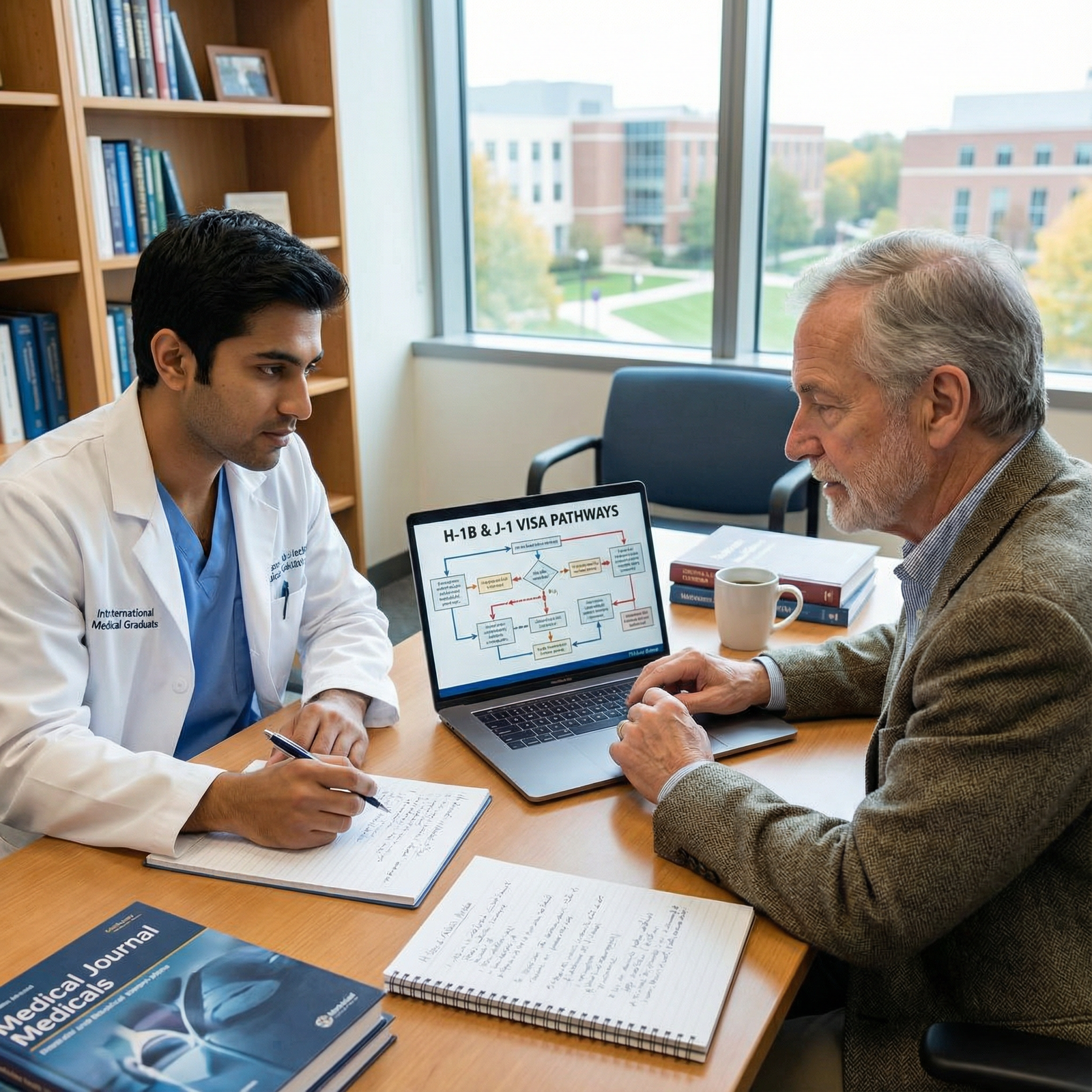
Understanding the J-1 Landscape in the US–Mexico Border Region
Residency programs in the US–Mexico border region occupy a unique space at the intersection of immigration policy, workforce shortages, and public health need. Programs in Texas border residency sites, southern New Mexico, Arizona, and California struggle with limited physician supply while serving high-need, medically underserved communities. At the same time, many talented international medical graduates (IMGs) training on J-1 visas would like to remain and serve these regions after residency.
For program leaders, the question is not only “Can we sponsor J-1 residents?” but also “How can we position our graduates for successful J‑1 waiver pathways that ultimately stabilize our physician workforce?” This article focuses on practical, program-level strategies—especially for border region residency and Texas border residency programs—so you can better advise trainees and design recruitment and retention plans.
We will cover:
- Core J‑1 and waiver basics for residency programs
- Key waiver routes relevant to the border region (Conrad 30, federal waivers, and underserved area waivers)
- Program-level strategies to attract and retain J‑1 physicians
- Best practices for collaborating with hospitals, health systems, and attorneys
- Common pitfalls and how to avoid them
Important disclaimer: This article is for educational purposes, aimed at residency program education and strategy. It is not legal advice. Waiver rules and interpretations change; always direct physicians and employers to experienced immigration counsel for case-specific guidance.
J-1 Visa and Waiver Basics for Border Region Programs
Before designing strategies, program leadership and coordinators must have a clear mental model of how the J‑1 system works and where residency programs fit into the process.
Core J-1 concepts for residency program leaders
- The J‑1 is a training visa, typically sponsored by ECFMG for IMGs in ACGME-accredited programs.
- Home-residency requirement (2-year rule): Most J‑1 physicians are subject to a requirement to return to their home country (or last country of legal residence) for two years after training, unless they obtain a waiver.
- Residency programs do not file J‑1 waivers. These are requested by an employer (often post-residency) and supported by a state agency or federal agency. But your program’s structures, rotations, and institutional relationships can heavily influence how feasible it is for graduates to obtain a waiver.
Why waivers matter so much in the US–Mexico border region
The US–Mexico border region is among the most medically underserved areas in the United States. Counties and cities along the border frequently qualify as:
- Health Professional Shortage Areas (HPSAs)
- Medically Underserved Areas/Populations (MUAs/MUPs)
- Rural or frontier areas
This makes them ideal for multiple underserved area waiver pathways, including:
- State Conrad 30 programs (the most common route)
- Federal interest waivers (e.g., VA, HHS for some primary care/mental health, Delta Regional Authority in some parts of Texas, etc.)
- Certain flex or “non-shortage-area” slots that still serve local underserved patients
For a border region residency, properly leveraging these pathways can:
- Enhance recruitment of strong IMGs who want a long-term US career
- Improve post-residency retention in your local communities
- Support hospital and health system staffing in hard-to-recruit specialties
Key Waiver Pathways Relevant to Border Region Residency Programs
Understanding the major J‑1 waiver options helps program directors and advisors provide realistic guidance to trainees. The two most critical categories are state Conrad 30 programs and federal interest waivers.
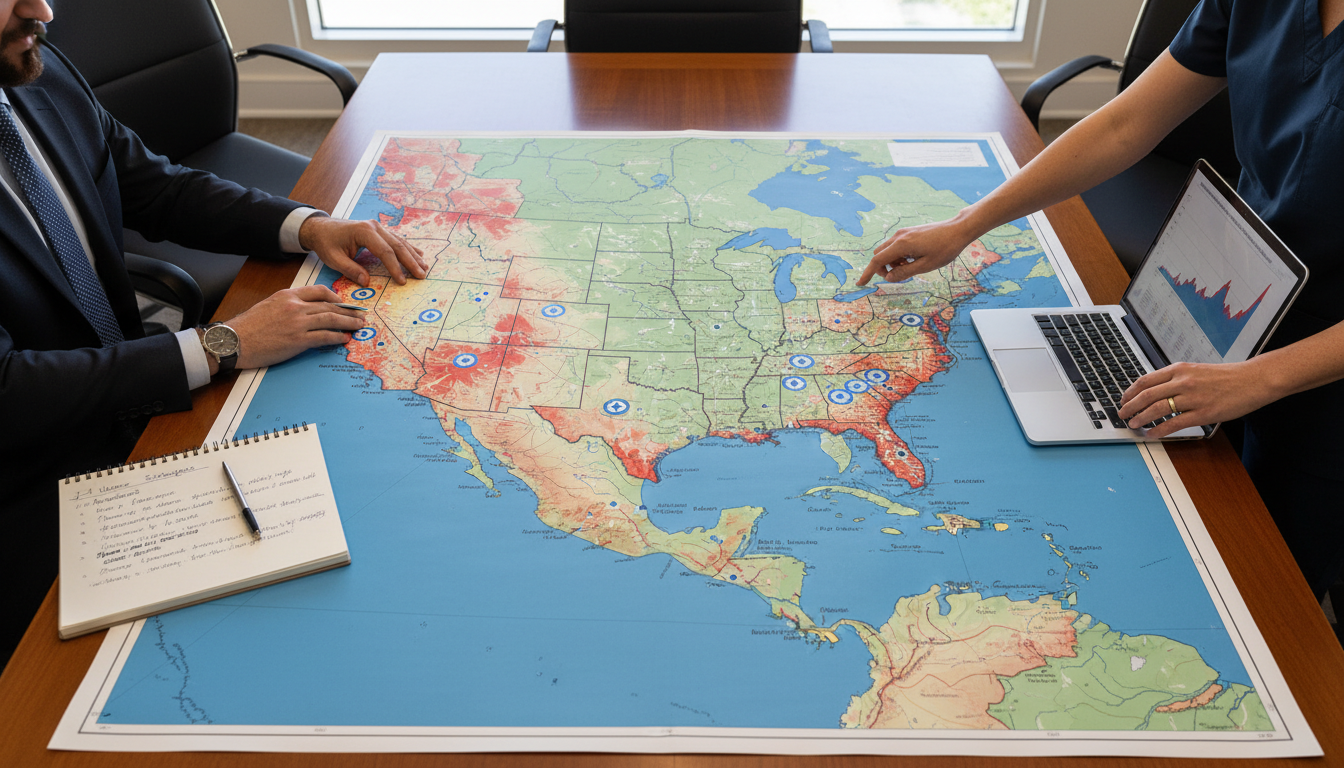
1. Conrad 30 Waiver Programs
The Conrad 30 program is the backbone of J‑1 waiver strategies nationwide. Each state’s health department (or equivalent agency) can recommend up to 30 waivers per year for J‑1 physicians who agree to:
- Work full‑time (usually 40 hours/week; check state rules)
- In a qualifying site (HPSA/MUA/MUP, or approved flex slot)
- For at least three years
- In a clinical (not purely research or administrative) role
Special considerations for border region and Texas Conrad 30
States along the US–Mexico border—especially Texas—have distinct priorities and processes:
Texas Conrad 30 (Texas border residency relevance)
- Historically competitive in some specialties (e.g., psychiatry, internal medicine, family medicine in metro areas), but rural and border communities may have more openings.
- Texas often emphasizes primary care, mental health, and high-need specialties for underserved populations.
- Some slots may be reserved or prioritized for rural or border regions, creating strategic opportunities for residents training nearby.
- Application windows and processes are strictly defined; employers must plan 6–12 months in advance.
New Mexico, Arizona, California
- These states also run Conrad 30 programs, with varying emphasis on rural, Native American, and border communities.
- Some may offer “flex slots” in non‑HPSA hospitals that serve significant underserved populations (e.g., safety‑net hospitals in larger cities treating border communities).
- Competition, timelines, and documentation vary by state; residency programs should keep updated state guidance on hand.
How residency programs should engage with Conrad 30
Even though you don’t sponsor the waiver directly, border region residency programs can:
Educate residents early
- Host annual or semiannual visa/waiver workshops.
- Invite an immigration attorney familiar with Conrad 30 and underserved area waiver work in your state.
- Explain that many J‑1 residents in border region residencies ultimately stay locally via these waivers.
Map local opportunities
- Maintain a list of regional employers (FQHCs, rural hospitals, community mental health centers, etc.) in HPSA/MUA areas who have a history of hiring J‑1 waiver physicians.
- Track which employers regularly use Conrad 30 slots versus other waiver routes.
Align curricula and rotations
- Ensure residents have meaningful rotations in federally qualified health centers, rural clinics, and border-area hospitals where they might later seek waiver employment.
- Consider continuity clinic sites that double as potential J‑1 waiver employers.
2. Federal Interest Waivers
Some J‑1 waivers are recommended by federal agencies rather than states. These are often called “federal interest waivers.” They can be especially valuable when:
- State Conrad 30 slots are fully allocated
- A job doesn’t fit the exact state criteria
- The employer is a federal facility or a facility funded/supervised by a federal program
Common examples relevant to border region residency programs:
Department of Veterans Affairs (VA)
- VA hospitals and clinics near the border may sponsor J‑1 waivers directly through VA’s federal interest authority.
- Particularly relevant for internal medicine, psychiatry, neurology, and some surgical specialties.
Health and Human Services (HHS) waivers
- Historically for physicians in designated shortage areas or specific high‑need specialties, especially primary care and mental health.
- HHS policies evolve; check current guidance regularly.
Other agencies (e.g., Delta Regional Authority, ARC)
- These may be less directly relevant to the US–Mexico border region than to other parts of the US, but certain Texas counties may intersect with specific regional authorities. Verify availability with counsel.
Residency programs should:
- Identify nearby VA or other federal facilities that routinely recruit IMGs.
- Invite federal facility representatives to talk with residents about career and waiver options.
- Incorporate rotations at those facilities when possible, building familiarity and professional relationships.
3. Other Underserved Area Waivers and Related Pathways
While not “J‑1 waivers” strictly speaking, several related pathways matter strategically:
National Interest Waiver (NIW) for physicians (I‑140 NIW based on service in a shortage area)
- This is an employment-based green card category for physicians who commit to working in HPSA/MUA areas for 5 years.
- It does not replace the J‑1 waiver, but can be used later in tandem (e.g., after a Conrad 30 waiver job).
- Border region residency graduates working long-term in underserved clinics or hospitals are prime candidates.
H‑1B cap-exempt employment
- If the waiver employer is a nonprofit hospital affiliated with a university or a government research organization, positions might be exempt from the H‑1B cap.
- This can reduce timing risk when moving from J‑1 to H‑1B after the waiver is approved.
These pathways reinforce the long-term attractiveness of the border region for international graduates—one of your program’s strongest recruiting messages.
Designing Program-Level J-1 Waiver Strategies
Constructing effective J‑1 waiver strategies for a border region residency is less about filling out forms and more about building ecosystems: relationships, pipelines, and expectations that extend beyond graduation.

1. Build a Transparent Advisory Framework for IMGs
Offer structured, staged guidance, especially to incoming J‑1 residents:
PGY‑1 / Early orientation
- Provide a visa overview: J‑1 basics, 2‑year rule, broad waiver options.
- Clarify that long-term US practice is possible but requires strategic planning.
- Highlight that the US–Mexico border region is rich in underserved area waiver opportunities.
PGY‑2 / Career planning phase
- Offer individual meetings to discuss career goals (subspecialty vs. generalist, academic vs. community).
- Explain which paths are more straightforward for J‑1 physicians in your region:
- Primary care and psychiatry in border communities
- Certain hospitalist or ED roles in HPSA areas
- Subspecialties may be more constrained and need earlier planning.
PGY‑3 and above
- Host annual workshops with:
- An immigration lawyer experienced in Conrad 30 and other waivers.
- Representatives from local FQHCs, rural hospitals, or VA facilities that hire J‑1 waiver physicians.
- Encourage residents to start their job search 12–18 months before graduation, especially in competitive specialties or states.
2. Develop Employer Partnerships in Underserved Areas
Residency programs can become trusted partners for local employers who regularly hire J‑1 physicians. This is particularly valuable in the border region, where many clinics and hospitals are chronically understaffed.
Identify key employer types:
- Federally Qualified Health Centers (FQHCs) serving border communities
- Rural critical-access hospitals and regional community hospitals
- County health systems and public hospital districts
- Community mental health centers and substance use treatment programs
- VA and other federal facilities
Create structured pipelines:
- Elective rotations or continuity clinics at potential waiver employers.
- Memoranda of understanding (MOUs) or informal agreements that:
- Allow regular resident rotations
- Provide mentorship opportunities for residents
- Signal preference for hiring your graduates when possible
Practical Example:
A Texas border residency program in internal medicine partners with three FQHCs and a rural hospital within a 90‑minute radius. PGY‑2 and PGY‑3 residents rotate there for continuity clinic. When graduation approaches, these sites are often the first to offer Conrad 30 waiver positions, already familiar with the residents’ clinical and language skills.
3. Align Training Experience with Community and Waiver Needs
Waiver programs inherently focus on service to underserved populations. Your curriculum can emphasize this mission in ways that:
- Improve care for border communities
- Strengthen waiver applications (demonstrated commitment to underserved care)
- Enhance your residency’s attractiveness for mission-driven IMGs
Key strategies:
- Robust community medicine curriculum:
- Border health, migrant health issues, infectious diseases common to the region, chronic disease management in low-resource settings, and cross‑border care coordination.
- Language and cultural competence:
- Spanish language electives or medical Spanish curricula.
- Training in culturally and linguistically appropriate services (CLAS), focusing on US–Mexico border demographics.
- Population health and public health rotations:
- Collaborations with county health departments or binational health initiatives.
- Exposure to public health surveillance, vaccination campaigns, and chronic disease programs.
These experiences not only benefit resident education but also create compelling narratives in waiver applications and future green card processes (e.g., NIW), demonstrating a consistent track record of service in underserved areas.
4. Support for Academic Career Paths and Subspecialists
Not every J‑1 resident will pursue a generalist or rural path. Border region academic centers can also support more complex career plans:
Academic positions with waiver eligibility:
- If your institution is university-affiliated and in a shortage area, it may itself be a strong waiver site.
- Some Conrad 30 programs treat academic centers favorably, especially in high‑need specialties.
Fellowship-to-waiver planning:
- For residents who will do fellowship on J‑1, start the waiver conversation early:
- Is a post‑fellowship job in a border or underserved area realistic in their subspecialty?
- Are there academic–community hybrid positions (e.g., split time between tertiary center and outreach clinics in HPSA areas)?
- For residents who will do fellowship on J‑1, start the waiver conversation early:
Research and binational collaborations:
- Projects addressing border health, migrant care, or chronic diseases in underserved Hispanic/Latino communities can underscore the physician’s fit for long‑term service in the region.
- These can later support NIW arguments about national importance and underserved impact.
Collaborating with Legal Counsel and Institutional Leadership
J‑1 waiver strategies cross administrative boundaries—GME, HR, legal, and executive leadership must work in concert.
1. Establish a Network of Trusted Immigration Attorneys
Residency programs should maintain a short list of:
- Institutional counsel or outside firms that your hospital uses for J‑1 and H‑1B issues
- Private immigration attorneys with strong experience in:
- Conrad 30 in your state
- Federal interest waivers
- Physician NIW and green card strategies
Encourage J‑1 residents to consult these attorneys early, but make clear:
- The attorney represents the physician, not the residency program.
- The program’s role is educational/supportive, not legal.
2. Coordinate with Hospital and System Leadership
If your institution is in a shortage area and open to hiring your graduates:
- Advocate for internal use of Conrad 30 or federal waivers for your own J‑1 alumni.
- Ensure HR, recruiting, and C‑suite leaders understand:
- The chronic shortage of physicians in the border region
- The value of converting residents to long‑term attending staff
- The complexity and lead time required for employer‑sponsored waivers
Encourage your institution to:
- Budget for immigration costs as part of recruitment, especially in high‑need specialties.
- Standardize timelines for offering positions to graduating residents so waiver preparation can begin early.
3. Create Clear Internal Policies and Communication
Common pain points can be mitigated with clear internal policies:
- When can a J‑1 resident begin exploring post‑residency employment with your hospital?
- Who in HR or legal coordinates waiver and H‑1B processes for new hires?
- Does the employer cover legal fees? Government filing fees? Premium processing?
Document and share these policies during resident meetings so that expectations are realistic and consistent.
Common Pitfalls and How Border Region Programs Can Avoid Them
Despite your best efforts, J‑1 waiver processes are complex and time-sensitive. Awareness of common challenges can help you design better systems.
Pitfall 1: Waiting Too Long to Discuss Waivers
Residents—especially those unfamiliar with US immigration—may assume that staying after training is automatic. Delayed planning can lead to:
- Missed application windows for Conrad 30
- Limited job offers in appropriate shortage areas
- Heightened stress in the last months of training
Program solution:
Institutionalize early and repeated education on visa and waiver options, particularly for J‑1s. Use recurring sessions through PGY‑2 and PGY‑3.
Pitfall 2: Misalignment Between Career Goals and Waiver Reality
Some goals (e.g., narrow subspecialty in a major metro area with few HPSAs) may not match readily available underserved area waiver options in the border region.
Program solution:
- Encourage honest, practical discussions with mentors and attorneys by mid‑residency.
- Present alternative models:
- A few years in an underserved area followed by a geographic move
- Academic positions tied to service at outreach clinics in shortage areas
- Combination of Conrad 30 + NIW for long-term stability
Pitfall 3: Underutilizing Local Border Opportunities
Ironically, some border region residency programs do not fully leverage their geographic advantage for J‑1 waiver strategies.
Program solution:
- Map all HPSA/MUA sites within 1–2 hours’ drive.
- Engage with FQHC networks and rural hospitals as longitudinal educational partners.
- Showcase success stories of alumni who obtained waivers in local underserved communities.
Pitfall 4: Poor Coordination Between Program, Employer, and Attorney
Last-minute miscommunication can cause:
- Incomplete waiver packets
- Missed state submission deadlines
- Delays in H‑1B transition, risking gaps in work authorization
Program solution:
- Encourage incoming waiver employers to involve immigration counsel early.
- Provide internship/residency completion dates and training verification promptly.
- Consider having a GME point person to assist with document requests related to training.
Frequently Asked Questions (FAQ)
1. Can our residency program “sponsor” a J‑1 waiver directly for a graduating resident?
No. Residency programs and training institutions do not sponsor J‑1 waivers. The waiver is sponsored by a post‑training employer (clinic, hospital, health system, VA, etc.) and supported by a state Conrad 30 program or federal agency. However, your program can facilitate education, relationships, and rotations that lead to viable waiver job offers.
2. Do all Texas border residency graduates on J‑1 visas have to take jobs in rural areas to get a waiver?
Not necessarily. Many Conrad 30 and federal interest waivers require service in shortage or underserved areas, and many of these are rural. But there are also:
- Urban or semi‑urban HPSAs and MUAs along the border
- Flex slots in some states that allow work in non‑HPSA hospitals serving underserved patients
- Federal facilities (e.g., VA) that may be near larger cities
The key is that the job meets the criteria set by the state or federal agency providing the waiver.
3. What is the difference between a J‑1 waiver and a National Interest Waiver (NIW)?
A J‑1 waiver removes the 2‑year home-residency requirement so the physician can change status (usually to H‑1B) and continue working in the US. It typically involves a 3‑year service commitment in a qualifying underserved or priority area.
A National Interest Waiver (NIW) for physicians is a green card category that requires 5 years of service in HPSA/MUA (which can overlap with or follow J‑1 waiver service). Many border-region physicians do both: first a J‑1 waiver to clear the 2‑year rule, then pursue NIW for permanent residence.
4. How can we make our border region residency more attractive to IMGs on J‑1 visas?
Focus on:
- Clear, honest education about J‑1 waiver options in your region
- Strong rotations in FQHCs, rural hospitals, and VA or safety‑net settings
- Demonstrated track record of alumni successfully obtaining Conrad 30 and other waivers locally
- Supportive GME infrastructure (visa workshops, access to experienced immigration counsel, mentorship for underserved careers)
Highlight that your border region residency is embedded in communities where underserved area waivers are abundant, creating a realistic path to long-term US practice.
By intentionally integrating J‑1 waiver strategies into your residency’s educational mission, you not only support your international trainees but also build a more stable, community-focused physician workforce for the US–Mexico border region.