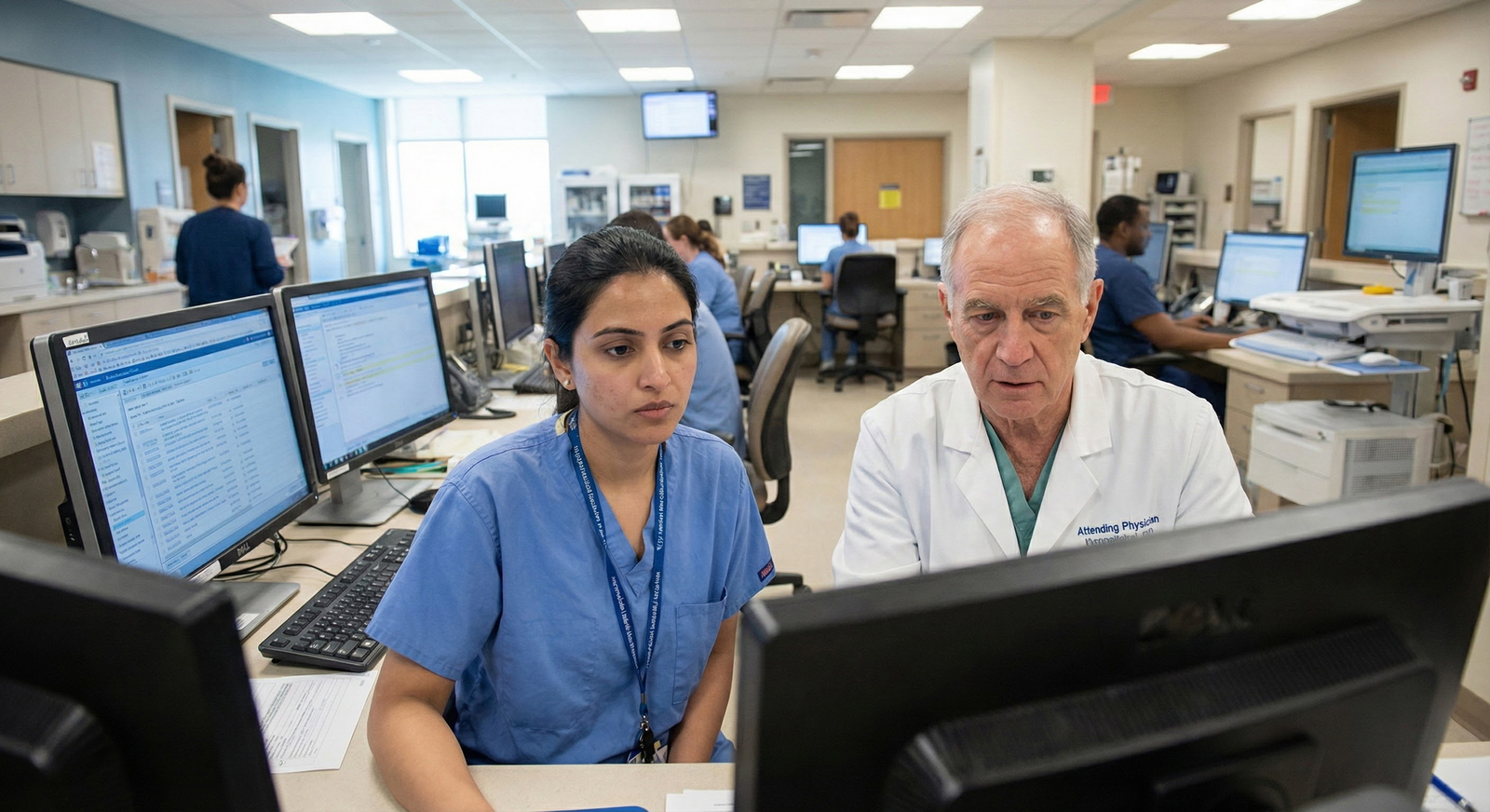
Mastering the H-1B Visa Application for IMGs: A Comprehensive Guide
The pathway from International Medical Graduate (IMG) to practicing physician in the United States is both exciting and complex. For many IMGs, the H-1B Visa is a central part of that journey, especially if you aim to complete residency training and ultimately build a long-term medical career in the U.S.
Compared with the J-1 visa, the H-1B can offer more flexibility for future employment and permanent residency pathways, but it also comes with strict eligibility rules, documentation requirements, and timing pressures. Understanding how to position yourself early—academically, professionally, and logistically—can significantly improve your chances of success.
This expanded guide walks you step-by-step through the H-1B process as it applies to IMGs, with practical visa application tips, examples, and strategic advice tailored to residency applicants and early-career physicians.
Understanding the H-1B Visa for International Medical Graduates
Before you commit to the H-1B route, it’s crucial to understand how this visa works specifically for IMGs.
What Is the H-1B Visa in the Medical Context?
The H-1B visa is a U.S. non-immigrant visa for workers in a “specialty occupation”—a role that usually requires at least a bachelor’s degree in a specific field. For physicians and residents, this generally includes:
- ACGME-accredited residency and fellowship positions
- Attending physician jobs in hospitals or private practice
- Academic and research positions combined with clinical work (if licensure allows)
In practice, most IMGs first encounter the H-1B during the residency application and Match process, when they must decide whether to seek J-1 or H-1B sponsorship.
Key Advantages of the H-1B for IMGs
Many IMGs prefer the H-1B because it can offer:
- No two-year home-country return requirement (unlike most J-1 visas)
- Dual intent: You can pursue a green card while on H-1B
- More straightforward transition from residency to attending positions (if managed well)
- Often easier to navigate long-term permanent residency plans
However, these benefits come with higher eligibility thresholds and more complex timing, especially regarding licensure and exam completion.
Core Eligibility Requirements for IMGs
To qualify for an H-1B in a clinical residency or fellowship, you typically must meet:
Valid Job Offer
- From a U.S. employer (e.g., residency program, hospital, university, clinic)
- For a position that clearly qualifies as a “specialty occupation”
Minimum Qualification for Specialty Occupation
- Medical degree equivalent to a U.S. MD or DO (verified via ECFMG)
- Meeting program-specific academic and clinical qualifications
Licensure and Examination Requirements
- ECFMG Certification
- USMLE exams:
- Step 1 and Step 2 CK are generally required for ECFMG certification
- Step 3 is often required by many states/programs for H-1B, but rules vary
- Appropriate state medical license or training license/permit:
- Many states require Step 3 before granting a training license for H-1B
- Some states allow an H-1B with incomplete Step 3 under limited circumstances (less common)
Because these licensure rules are state-specific, a residency that can sponsor an H-1B in one state may not be able to in another unless you’ve completed Step 3 and meet their licensing criteria.
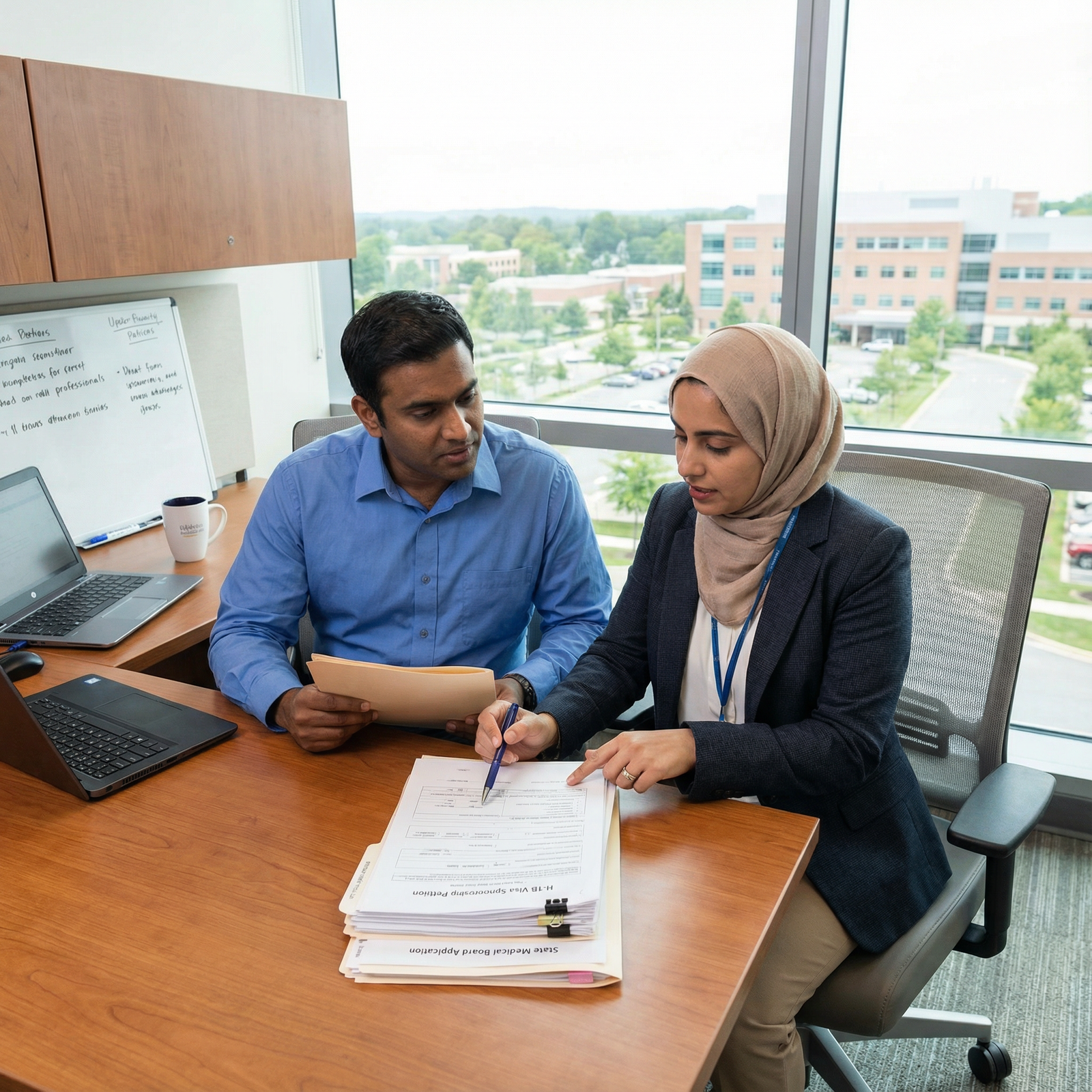
Laying the Groundwork: Preparation Before Applying
Successful H-1B sponsorship doesn’t start with the visa petition—it starts months (often years) earlier during your exam planning and residency application strategy.
1. Strategically Choose Programs and Employers
Not all residency programs sponsor H-1B visas, and among those that do, not all will sponsor them for first-year residents (PGY-1). You need to align your Match strategy with your visa goals.
Target H-1B-Friendly Programs
When researching programs:
Check official program websites
- Look for statements about “Visa sponsorship” or “IMG policies”
- Some explicitly state “J-1 only” whereas others say “J-1 and H-1B considered”
Use forums and alumni networks
- Ask recent IMGs: “Did your program sponsor H-1B?”
- Look on NRMP/ERAS program descriptions and IMG-focused websites
Prioritize cap-exempt institutions
Many teaching hospitals fall into categories that make them exempt from the H-1B cap, such as:- Non-profit organizations affiliated with universities
- University-based medical centers
- Certain research institutions
For IMGs, these cap-exempt H-1B positions are valuable because they are not subject to the annual numerical lottery for private-sector H-1Bs.
Evaluate Employer Experience and Support
When selecting programs or employers, consider:
- Their track record sponsoring H-1B visas for residents/fellows
- Whether they have in-house legal teams or external immigration attorneys
- How clearly and confidently they answer your questions about:
- Deadlines
- Step 3 expectations
- State license timing
- Transition from training to attending positions
A program that understands IMG visa issues can mean fewer delays and less stress.
2. Build a Strong, H-1B-Ready Profile
A strong residency or job application increases your chances of getting offers from programs willing to sponsor an H-1B.
Academic and Exam Preparation
Aim to complete USMLE Step 3 before residency starts if you are targeting H-1B. This can:
- Satisfy many state licensing requirements
- Reassure programs that you’re a feasible H-1B candidate
- Reduce anxiety around tight licensing and petition timelines
Keep USMLE transcripts and ECFMG certificates easily accessible in digital and physical form for your petition.
Professional Documentation
Prepare and regularly update:
- Curriculum Vitae (CV) tailored for U.S. clinical settings
- Personal statement emphasizing:
- Long-term commitment to U.S. clinical practice
- Interest in academic medicine or underserved care (important for some pathways)
- Letters of recommendation (LORs)—especially from U.S. physicians if you have observership/exposure
- Copies of medical diploma, transcripts, and translations (if applicable)
Having a well-organized document set will greatly speed up both your residency and H-1B application processes.
3. Proactively Secure a Job Offer and Clarify Visa Details
Once interviews begin, you should carefully and professionally clarify each program’s stance on visas.
During Interviews
Approach visa questions strategically:
Ask in a neutral, professional manner, for example:
- “Could you share how your program usually handles visa sponsorship for IMGs?”
- “Do you sponsor both J-1 and H-1B visas, and are there specific requirements (such as Step 3) for H-1B?”
Take notes on each program’s answers to guide your Rank Order List:
- Programs that say “J-1 only” should not be ranked highly if H-1B is essential for your plan
- If H-1B is an option, ask specifically about past residents who successfully obtained it
After Receiving an Offer or Matching
Once you match:
- Confirm in writing that the program is willing and able to sponsor an H-1B
- Clarify deadlines for:
- Completing Step 3 (if pending)
- Applying for state licensure or training permit
- Initiating H-1B petition filing
Open communication now will be critical in ensuring timely submission and avoiding delayed start dates.
Navigating the H-1B Application Process: Step-by-Step for IMGs
After securing a residency or job offer, the formal H-1B petition process begins. Much of the filing is handled by your employer, but understanding each step helps you anticipate what is needed from you.
Step 1: Labor Condition Application (LCA)
Before filing the H-1B petition, your employer must file a Labor Condition Application (LCA) with the U.S. Department of Labor (DOL).
The LCA certifies that:
- You will be paid at least the prevailing wage for your role and region
- Your employment will not negatively affect the working conditions of U.S. workers
- The employer will comply with posting and record-keeping requirements
For residency programs and academic institutions, this is usually routine, but:
- Timing matters: LCAs can take several days to be certified
- Your employer’s legal team will coordinate, but you may need to provide:
- Copies of credentials
- Details of job roles/responsibilities
Step 2: H-1B Petition Filing (Form I-129)
Once the LCA is certified, your employer files the H-1B petition (Form I-129) with U.S. Citizenship and Immigration Services (USCIS).
The petition package typically includes:
- Form I-129 and H Classification Supplement
- Certified LCA
- Offer letter or contract specifying duties, salary, and start date
- Detailed job description emphasizing specialty occupation requirements
- Evidence of the employer’s cap-exempt status (if applicable)
- Your supporting documents:
- Passport biographic page
- Medical diploma and transcript (plus certified translation if not in English)
- ECFMG certificate
- USMLE transcripts (Step 1, 2 CK, and often Step 3)
- State medical license or training permit (or proof of pending application, depending on the state’s rules)
- CV and any relevant certifications
Many teaching hospitals use premium processing, which significantly speeds up USCIS decisions, but this is at the employer’s discretion.
Step 3: USCIS Review and Possible Outcomes
USCIS will review the petition and may:
- Approve the petition
- Deny the petition
- Issue a Request for Evidence (RFE) if additional clarification is needed
RFEs are common and do not necessarily mean the petition is weak. They may ask for more:
- Proof that the job is a specialty occupation
- Evidence of your qualifications
- Clarification on wage levels or cap-exempt status
- Confirmation of state licensing eligibility
How You Can Help With an RFE
- Respond quickly and completely through your employer’s attorney
- Provide any additional documents or explanations requested
- Stay in active contact with your program coordinator and legal counsel
Delays can affect your ability to start residency training on time, so your responsiveness matters.
Practical Tips for a Strong and Timely H-1B Application
Beyond the technical steps, strategy and communication can greatly influence how smooth your H-1B experience will be.
Maintain Clear and Proactive Communication With Your Employer
From Match Day onward:
- Identify the contact person for visa matters (GME office, HR, legal team)
- Confirm deadlines and expectations for:
- Form completion
- Document submission
- Scheduling exams (if needed)
Responding quickly to emails and requests builds trust and avoids last-minute issues.
Example:
If your GME office emails requesting your ECFMG certificate and Step 3 transcript, try to respond within 24–48 hours with clean, legible PDFs rather than phone photos. This small step can prevent delays in petition filing.
Stay Updated on Immigration and Licensing Regulations
U.S. immigration rules and state medical licensing regulations can change:
- Regularly check:
- Your state medical board website (for licensing/USMLE and Step 3 rules)
- Official USCIS and Department of State websites
- Consider joining IMG or specialty-specific organizations that share updates
- Ask your program or attorney if any policy changes may affect your start date or status
Being informed helps you recognize potential problems early.
Consider Working With an Experienced Immigration Attorney
While employers usually engage attorneys for the petition, many IMGs also seek independent legal advice to understand:
- Long-term planning (H-1B to green card)
- Options if you change employers
- Strategies if a petition is delayed, denied, or receives an RFE
- Transition from residency H-1B (cap-exempt) to private practice (cap-subject)
Look specifically for lawyers with experience in physician and healthcare immigration, as your issues are more complex than those of many other professionals.
Plan Beyond Residency: Think H-1B as a Step in Your U.S. Career
The H-1B is typically granted initially for up to three years, with total duration usually capped at six years, though there are exceptions when you are in the green card process.
As you progress through training:
- Discuss with mentors and attorneys:
- Green card strategies: EB-2 NIW (National Interest Waiver), employer-sponsored PERM, or other categories
- Whether your future employer is cap-exempt or cap-subject
- Timing of green card filing to avoid gaps when your H-1B time is nearing six years
Thinking ahead can help you avoid rushed decisions when your H-1B end date approaches.

Common Challenges and How IMGs Can Address Them
Even well-prepared applicants encounter difficulties. Recognizing these early allows you to plan workarounds.
Challenge 1: Completing USMLE Step 3 in Time
Many programs require Step 3 for H-1B sponsorship. If you’re late scheduling the exam:
Strategies:
- Register for Step 3 as early as you are eligible if you are committed to the H-1B path
- If there is limited test availability, consider alternative testing centers or earlier eligibility windows
- Discuss with your program whether they can sponsor a J-1 initially and transition to H-1B later (varies by program and legal advice)
Challenge 2: State Licensing Delays
State boards may process applications slowly, especially around common start dates (e.g., June–July).
Strategies:
- Apply for your state training license as soon as your program instructs you to do so
- Ensure all required documents (exam scores, verifications, ECFMG status reports) are sent promptly
- Track your application status and politely follow up if timelines seem prolonged
Challenge 3: Confusion About Cap-Exempt vs Cap-Subject H-1Bs
Residency and fellowship positions at teaching hospitals are often cap-exempt, meaning they are not subject to the annual H-1B numerical cap and lottery. Private practice or community hospital jobs may be cap-subject.
Why this matters:
- You may transition smoothly between cap-exempt employers (e.g., from one academic center to another) without going through the H-1B lottery
- Moving from cap-exempt (residency) to cap-subject (private practice) may require entering the H-1B cap lottery, which has its own strict timeline
Knowing your employer’s cap status helps you plan your post-residency career moves.
Frequently Asked Questions About H-1B Visas for IMGs
1. Can I apply for a U.S. residency on an H-1B visa if I haven’t passed USMLE Step 3 yet?
It depends on the state and the program. Many states require Step 3 for granting a training license under H-1B. Some residency programs therefore only sponsor H-1B for applicants who have already passed Step 3. A few states/programs may allow H-1B with Step 3 pending, but this is less common. If H-1B is your goal, plan to complete Step 3 as early as possible and discuss specific requirements with each program.
2. How long can I stay in the U.S. on an H-1B visa as a physician?
The standard maximum period on H-1B is six years total, usually granted in increments (e.g., three years, then extension). Under certain circumstances—particularly if you are in the process of obtaining a green card (permanent residency)—you may qualify for extensions beyond the sixth year. Many IMGs use this window (residency + fellowship + early attending years) to start or complete their green card process.
3. What happens if my H-1B petition is denied or delayed close to my residency start date?
If a petition is denied, options depend on your specific situation:
- Your employer and attorney may consider refiling, addressing the reasons for denial
- If time allows and the program supports it, some IMGs switch to J-1 sponsorship instead
- You may need to adjust your start date or, in rare cases, defer training
If processing is delayed, premium processing can sometimes help, but this must be arranged by your employer. In all cases, you should work closely with your program, their legal team, and potentially your own immigration attorney to identify the safest path forward.
4. Can I change residency programs or employers while on an H-1B visa?
Yes, but your new employer must file a new H-1B transfer petition on your behalf. For cap-exempt employers (like many teaching hospitals), the process is generally more flexible. However:
- You cannot begin working for the new employer until the new petition is properly filed (and in some cases, approved, depending on legal advice).
- Frequent changes can complicate immigration history and future applications, so discuss any planned move with an immigration attorney.
5. What other visa options do IMGs have if H-1B is not feasible?
Common alternatives include:
- J-1 Exchange Visitor Visa: Widely used for residency training. Often easier to obtain initially but typically comes with a two-year home-country return requirement (or a waiver process).
- O-1 Visa: For individuals with extraordinary ability in sciences, education, or medicine, often used by highly accomplished researchers or sub-specialists.
- In some cases, physicians may also explore TN (for Canadians/Mexicans) or other niche categories depending on nationality and job type.
Each pathway has different implications for your long-term medical career in the U.S., so it’s wise to compare them with professional legal advice.
By understanding the H-1B visa framework, planning your USMLE and licensing timelines carefully, targeting H-1B-friendly residency programs, and collaborating closely with your employer and legal counsel, you can significantly increase your chances of a smooth and successful transition into residency training and beyond.
Thoughtful preparation now will pay off throughout your medical career in the U.S., giving you more flexibility and stability as you advance from trainee to independent practitioner.